In an alternate Burgundy & Gold universe…

The year is 2020. A worldwide pandemic halted the sports world, but after four months, some have slowly crept back. The Nationals opened the 2020 MLB season and their title defense against the New York Yankees on July 23. The Capitals and Wizards are starting their respective playoff pushes this week. The threat of another shutdown continues to linger, and the plug could be pulled on any of these sports at any time.

As society tries to re-enter normalcy, constant changes and restrictions remind us just how far from normalcy we are. We have gone one-third of a year under these conditions and there’s no clear end in sight. In a perfect world, this would all be behind us.

But we don’t live in a perfect world. So many things have gone wrong this year, it’s hard not to think “what if,” about a lot of things. All that fixation on the hypothetical led me to think about even crazier “what if” scenarios. And thus the most recent series for The Wildcard was born.

“In an alternate universe…” will take a look at a world in which each Washington team got a major player they missed out on. We started with the most recent (and most realistic) scenario with the Wizards, and will continue to move back in time (and even further out of the realm of possibility) as we look into how a single player would alter life as we know it.

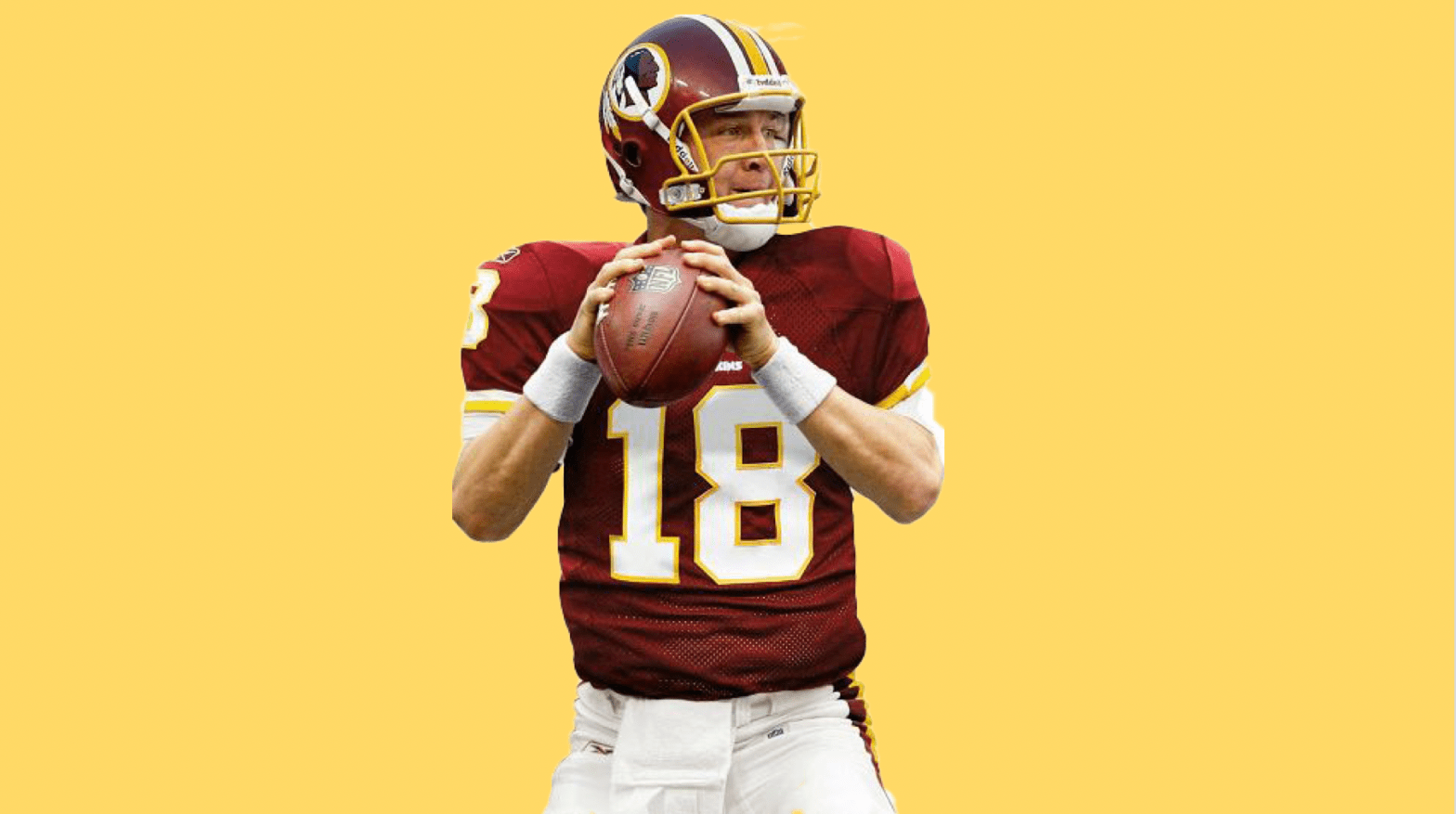
Peyton Manning signs with the Burgundy & Gold in 2012
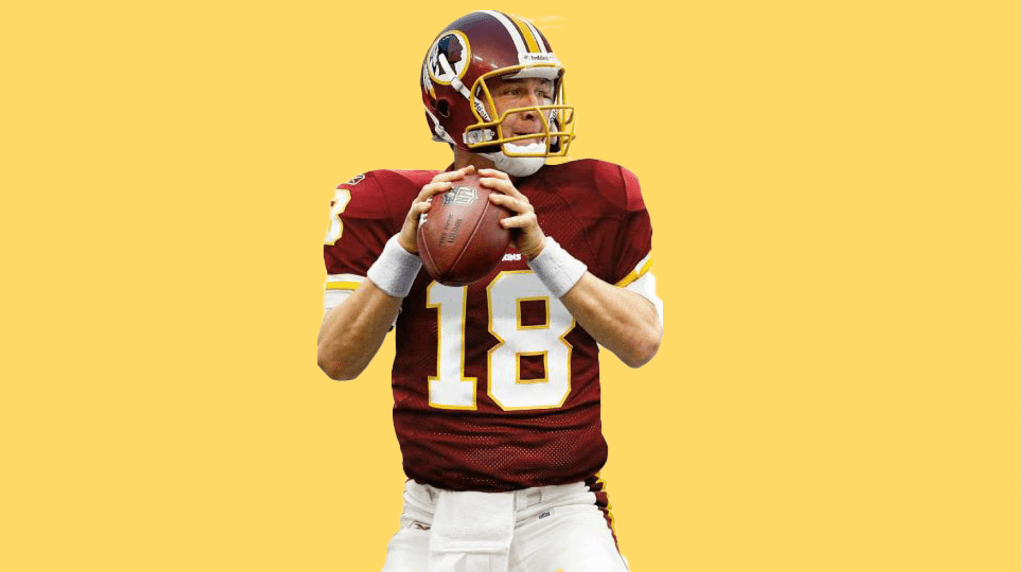
Photo Credit: RosterWatch

In 2012, after 14 seasons with the franchise that drafted him first overall in 1998, four-time MVP Peyton Manning was released from the Indianapolis Colts. He sat out the entire 2011 season recovering from an offseason neck surgery, and with no guarantee that he would return to form, the Colts didn’t want to pay the $28 million owed to him in 2012.

With the top pick in the 2012 NFL Draft, the Colts had their sights set on Stanford signal caller Andrew Luck, who according to some was the most “sure thing” quarterback prospect since Manning himself. Indy felt secure in its future, but Manning had decisions to make.

A dozen teams reached out for his services, and he wound up going to Denver, where he won his record-fifth league MVP award and went to two Super Bowls, winning the latter in his final pro season. However, there was a chance Manning would never end up in Denver.

According to a recent story by NBC Sports Washington, which cites an oral history of Manning’s 2012 free agency in The Athletic, Manning seriously considered coming to Washington. He was intrigued by Mike and Kyle Shanahan’s offensive system, and Washington was in desperate need of quarterback talent.

With Manning’s brother, Eli, leading the division rival New York Giants, it would have meant the Manning brothers played twice a year, but the day before Peyton met with the Shanahans, Washington sealed its quarterback fate. A handful of picks were sent to the St. Louis Rams to trade up from the sixth overall pick to No. 2, where the team planned to take Heisman Trophy winner Robert Griffin III as the quarterback of the future, right after Luck would go to Indianapolis.

So what if the team formerly known as the Washington Redskins held off on the trade, kept their draft picks and instead signed Manning as a win-now quarterback? Would he achieve the same success that he did in Denver? Would the team had won its fourth Super Bowl? Let’s look into it:

2012 Draft

Well, first let’s look at the ramifications of the RG3 trade that wasn’t. The Burgundy & Gold stay at the sixth pick, but perhaps more importantly, keep their 2013 and 2014 first-round picks. The Cleveland Browns were also in the running to trade into the second overall pick, so in this situation they do so. In real life, St. Louis traded the sixth pick to Dallas, so we’ll just assume Dallas trades with St. Louis in this scenario and now sit at third overall.

The Colts take Luck, the Browns take Griffin III, the Cowboys get their man in Morris Claiborne, the defensive back out of LSU who turned in an underwhelming career. Matt Khalil goes to Minnesota at four, Justin Blackmon goes to Jacksonville at five, which means star Alabama running back Trent Richardson falls right into Washington’s lap at six.

The thought of pairing Manning with a do-it-all young running back is making fans salivate over the new-look backfield. However, maybe the Cowboys would have taken Richardson in that scenario, and the Burgundy & Gold would have been left to take Claiborne. I’m not gonna fixate on that; neither really panned out, so it’s not all that important, but to keep Alfred Morris in the equation, we’ll have Claiborne going sixth to Washington.

2012 season

Manning brings the first strong quarterback play to Washington in a long time. With Pierre Garçon, a target of Manning’s in Indianapolis, joining him in Washington, they reestablish their connection. Morris emerges as the top running back and goes for 1,613 yards and 13 touchdowns, second only to league MVP Adrian Peterson’s 2,097 yards.

Santana Moss has a career-year at age 33 with Manning throwing him passes, and Washington wins the division for the first time since 1999, going 11-5. They keep the fourth seed in the NFC playoff picture, but Manning does NOT tear his ACL against the fifth-seed Seattle Seahawks, and so he leads Washington to the divisional round.

The team falls in the next round against the No. 1 Atlanta Falcons, but there is optimism surrounding the future of the team with a revitalized Manning at the helm.

2013 Season

The team originally finished with the 22nd pick, which belonged to St. Louis and was traded to Atlanta, but after making it further, they wind up with the 25th overall pick in the Manning universe, and actually get to keep it.

With the 25th pick in the 2013 NFL Draft, Washington selects Xavier Rhodes, the perfect player to make up for Claiborne. This offseason would be crucial in stacking the team with win-now talent to help Manning back to the Super Bowl. However, with the cap penalty the team faced from 2010, Washington was docked $18 million in 2012 and 2013, shrinking the pool of available free agent talent.

They don’t add enough to markedly improve, and while the offensive core of Manning, Morris and Garçon remains intact (plus the addition of third-round pick Jordan Reed, who I still have going to Washington, which would have picked 87th overall in this scenario instead of 85th). If Manning can make Julius Thomas play like a Pro Bowler, he can make Reed look like an All-Pro… whenever he’s actually on the field.

Either way, in his second year in Shanahan’s system with a strong offensive supporting cast, Manning still wins MVP in 2013, passing for over 5,200 yards, 45 touchdowns and 12 interceptions. Garçon leads the league in receptions and yards, and Reed has a breakout rookie campaign. The offense remains top five in the league, but the defense is the downfall.

Brian Orakpo and Ryan Kerrigan shined at the outside linebacker positions, but the defensive line and secondary left something to be desired. The team made the playoffs, going 11-5 again instead of 3-13, but it’s still not enough to get to the Super Bowl, and the team falls in the divisional round again.

2014 Season

With their 2014 first-rounder, the team trades back to 28th to take Kelvin Benjamin as a high-upside target to replace the aging Moss in the receiving core. With a full salary cap, Manning is willing to run it back in Washington but is getting impatient. He knows the team is close to contending, but the clock is ticking on his career.

In free agency, the team makes a splash on a starter or two on defense, maybe safety TJ Ward to join Claiborne and Rhodes in the secondary, or defensive tackle Linval Joseph to bolster the defensive line. Either way, Manning makes Washington an attractive option in free agency, and the team improves.

Shanahan is still head coach, while the younger Shanahan left to take a head coaching job elsewhere, meaning the little-known tight ends coach Sean McVay is elevated to offensive coordinator. With a better defensive core and the offense remaining as strong as ever, Washington is finally ready to contend.

The team goes 13-3, winning the division for the third year in a row and earning the top seed in the NFC playoff picture. They make it to the NFC Championship, where they face the reigning Super Bowl champion Seattle Seahawks. The Seahawks defense overwhelms Washington immediately; the center snaps the ball way over Manning’s head on the first play, resulting in a safety, and there was no looking back. Washington gets stomped 43-8. (Since Manning never played the Seahawks in Super Bowl XLVIII, I figured that had to manifest itself in some way).

Even worse, Manning discovers a concerning spot on his scalp after the game. Team doctors assure him it’s benign, much to Manning’s relief. Disheartened about the tough loss, but confident in the team’s ability to get to the mountaintop, Manning locks in for 2015. Until it all comes crashing down.

2015 Season and beyond

After getting the spot on his head looked at by a personal doctor, Manning found out it was actually not benign and required immediate removal. The procedure went perfectly and did not affect his status for the 2015 season, but had he waited longer it could have been much worse.

Already bothered at the organization for the misdiagnosis, team president Bruce Allen and owner Dan Snyder stepped in to do what they do best: make things worse.

Manning originally signed a five-year/$96 million deal to join the Burgundy & Gold back in 2012 (I’m just replicating what he actually signed for in Denver), and despite the team’s salary cap issues being behind them, Allen believes if Manning were to restructure his deal, the team could get that one missing piece to win the Super Bowl, especially after that medical scare.

Manning does not take that request well.

Insulted by Allen and Snyder pinning the blame of not winning the Super Bowl on him having too large a contract, despite the fact that he made Washington a championship contender to begin with, Manning realizes he no longer wants to play for this organization. The medical staff failed him, and the front office is ungrateful for what he turned the team into, so he demands a trade, knowing he won’t be able to fully succeed under the inept leadership of the organization.

John Elway and the Denver Broncos swoop in to finally get the quarterback they always desired, while Washington scrambles and is forced to start three-year backup Kirk Cousins, the kid from Michigan State they selected in the fourth round of 2012 as insurance for Manning.

Denver, who already had a terrific defense in place and was one good quarterback away from contending, goes on to win Super Bowl 50 with an ultra-motivated Manning leading the way. His play starts to decline, but he sticks around for another year or two, the fiasco in Washington ultimately adding life to his career out of pure spite.

Washington, meanwhile, gets a solid year out of Cousins, but finish second in the division and miss the playoffs. With Manning gone, most of the big-name players who signed because of him depart once their contracts are up, and Washington slowly sinks back down to the basement over the next few years.

They trade for Alex Smith prior to the 2018 season, but we all know how that played out, and Dwayne Haskins was drafted in 2019. Manning, meanwhile, wrote a book upon retirement chronicling his tumultuous exit in Washington and how it gave him the internal strength to go out and win his second Super Bowl in Denver. He constantly makes jokes about his time there, whether it’s while hosting the ESPYs or on his show Peyton’s Places.

This is the best-case scenario. Manning is one of the greatest quarterbacks of all time, and while I’m positive the team would get close to hoisting the Lombardi with him at the helm, especially in his 2013 form, there is no way the organization wouldn’t mess it up at some point. Manning would give fans genuine excitement for a few good years, but it wouldn’t last long.

He made the right move going to Denver. He landed in a great situation, and ended his career on a high note. We’ll never know for sure how things would have actually turned out had he gone to Washington, and that’s probably for the best.
In an alternate Wizards universe…

The year is 2020. A worldwide pandemic halted the sports world, but after four months, some have slowly crept back. The Nationals opened the 2020 MLB season and their title defense against the New York Yankees on July 23. The Capitals and Wizards are starting their respective playoff pushes this week. The threat of another shutdown continues to linger, and the plug could be pulled on any of these sports at any time.

As society tries to re-enter normalcy, constant changes and restrictions remind us just how far from normalcy we are. We have gone one-third of a year under these conditions and there’s no clear end in sight. In a perfect world, this would all be behind us.

But we don’t live in a perfect world. So many things have gone wrong this year, it’s hard not to think “what if,” about a lot of things. All that fixation on the hypothetical led me to think about even crazier “what if” scenarios. And thus the newest series for The Wildcard was born.

“In an alternate universe…” will take a look at a world in which each Washington team got a major player they missed out on. We’re starting with the most recent (and most realistic) scenario, and will continue to move back in time (and even further out of the realm of possibility) as we look into how a single player would alter life in Washington sports as we know it.

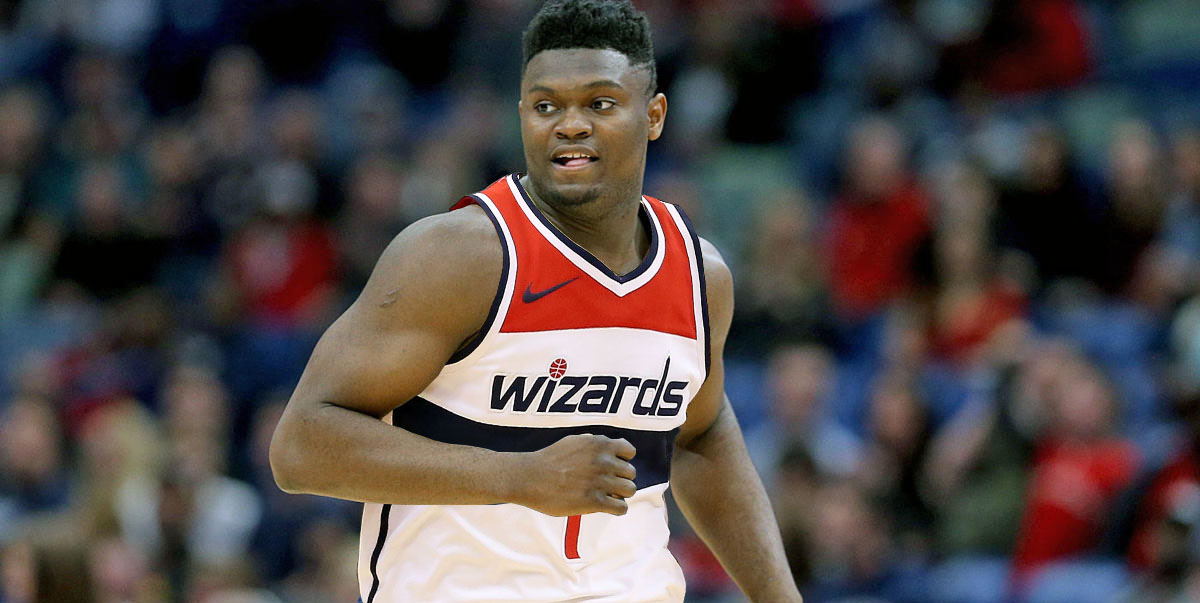
Wizards win 2019 Draft Lottery, select Zion Williamson first overall in draft

Original Photo Credit: CBS Sports; Jersey swap by Joe Pohoryles

This alternate universe is the most unknown, as Zion Williamson has not yet spent a full year in the NBA. In limited playing time, he’s looked as game-changing as advertised, and his potential looks sky-high. Though he scored 13 points with just one assist and no rebounds in 15 minutes during his first game back on July 30, Williamson averaged 23.6 points, 6.8 rebounds and 2.2 assists in the 19 games he played before the stoppage.

He was the belle of the ball in the 2019 Draft Lottery, and the Wizards had a nine percent chance at earning the rights to draft him. It went to New Orleans instead, giving the Pelicans an instant replacement for the LA-bound Anthony Davis, but what if the ping pong balls bounced in Washington’s favor?

First, it would give Washington a cornerstone for the future. John Wall hasn’t played a game in 18 months since his Achilles injury in Dec. 2018, but he still had the fourth-highest salary in the league this season, with a contract that runs through 2023. Bradley Beal is playing at an All-NBA level, but lacks a proper supporting cast. Williamson could either help revitalize the All-Star backcourt or be the reason to dismantle it.

Since Wall’s massive deal makes him practically untradeable, and his combination with Beal has led to playoff appearances in the past, it’s safe to assume the Wizards would try to run it back with Wall and Beal.

Williamson originally injured his knee on July 5 against the Knicks during the 2019 Summer League, and he continued to deal with knee issues throughout the preseason that kept him out until his debut on Jan. 22. The Wizards did not play on July 5, so he would not have injured his knee there, but given his injury history, it’s safe to assume those issues would have followed him anywhere.

Still, no matter how many games he played in 2019-20, it’s unlikely the Wizards would perform significantly better than they did in real life. Williamson would only do so much to aid the Wizards’ terrible defense, but having Beal as a running mate would make for some awesome highlights on the offensive end. All excitement in Washington would be focused on Wall’s return to the mix in 2020-21.

As a result of Williamson coming to Washington, the Wizards would not have taken Rui Hachimura, so the Japanese Jordan would be putting together an All-Rookie season elsewhere. Hachimura was one of the few bright spots in Washington this year, so it would be a shame to not have him, but Williamson as a Wizard would so much more electric.

In a pandemic-less 2019-20 season (yes, I’m removing COVID-19 from this universe. It’s sad enough having it in the real universe), the Wizards finish just outside the playoff picture and enter the 2020 Draft Lottery. They don’t have as much luck as the year prior, winding up with 10th overall pick.

Despite Wall’s return, the lack of depth at guard and question marks surrounding the 2010 top pick’s health lead the Wizards to draft a high-upside guard at No. 10 to set up Williamson with a long term partner.

The 2020 Draft Pool is confusing, with no real consensus for who will be the top pick, but if we look at the 10th pick, some guards that come to mind are Killian Hayes from France and UNC’s Cole Anthony, among others. The Wizards make their pick (let’s just go with Hayes; he’s young and I like his upside at 10th overall) and take one more step towards stabilizing their future.

With a healthy Wall, a refreshed Beal and Hayes rotating at guard plus Williamson, Thomas Bryant, Moe Wagner and Troy Brown Jr. leading the frontcourt, the Wizards make the 2021 playoffs before falling in the second round.

The team spends the remaining years of Wall and Beal’s contracts flirting with playoff runs but ultimately never reach the conference finals. The aging guards come off the books, freeing a ton of cap space for the 2023 free agent class. Williamson is just 23 and gets re-signed to a mega deal, and Hayes is just 22 and emerging as an elite guard, making Washington an attractive destination for the first time in, well, ever.

While it’s possible Wall and/or Beal are re-signed, it would be with much smaller contracts, and there’s still enough room to add the final piece or two that would make Washington a contender. Perhaps it’s a player from Williamson’s draft class looking to team up and win a championship, like former Duke teammate RJ Barrett, whose rookie contract will expire in 2023.

Maybe a veteran with championship experience decides to take one last shot at the Larry O’Brien without having to be the top guy. Kevin Durant, who will be 35 by the 2023-24 season, decides to come home to Washington and serve as a productive, older compliment to Williamson as the Wizards are finally championship contenders.

With Williamson, Hayes and Durant leading the way, Washington appears in three NBA Finals over the next five years (Durant retires after three years), winning two as the Wizards become the latest burgeoning dynasty on the NBA landscape.

At the end of those five years, it’s 2028. Williamson and Hayes are still in their prime, at 28 and 27, respectively, making it seem like this pair could win three or four more rings if they wanted to. They win one more championship before Hayes decides he wants to be the number one guy somewhere else and leaves Washington. The Wizards try to get a new running mate for Williamson, and they continue to be a threat in the playoffs, but they can’t get back to the mountaintop.

Williamson finishes out his career in Washington, or maybe he jumps ship in his mid-30s to try and win one more with a younger core elsewhere, but when all is said and done he’s remembered as a Wizard, and the greatest player in franchise history at that.

Williamson jerseys can still be found all over the stands 20 years after his retirement, and no one else wears No. 1 in Washington again. This, of course, would be one of the best case scenarios. Another entirely possible scenario is that his knee problems persists and he flames out of the league. Either way, it won’t be happening in Washington.

It’s crazy to think about the possibilities on the table if the ping pong balls bounced the Wizards’ way last year. Hachimura is great and will hopefully remain a staple in the Wizards’ lineup for years to come, but Zion’s potential as a generational player could have made the Wizards a championship team in the future.

He may reach that same fate in New Orleans, and maybe the Wizards will stumble upon their own superstar and become champions again. For now, it’s about trying to make something out of Wall and Beal’s remaining years, but an alternate universe with Zion on the Wizards would have been special. We can only sit and wonder “what if.”

Wizards look on-brand in first real game back

The Wizards played their first real game since Mar. 10 this afternoon, taking on the Phoenix Suns in a 125-112 loss. Devin Booker and Deandre Ayton led the way for Phoenix; Booker led the team with 27 points while chipping in five rebounds and four assists. Ayton totaled a double-double with 24 points and a team-high 12 rebounds. Dario Šarić continued the trend of highly productive Suns players with a ‘D’ first name by pouring in 16 points, six rebounds and three assists off the bench.

The Wizards were without Bradley Beal and Dāvis Bertāns — the two highest-scoring players on the team this year — so other players had to step up. Rookie Rui Hachimura led the way with 21 points and eight rebounds, while Ish Smith led the team with seven assists and Jerome Robinson scored 20 points off the bench.

The Wizards opened the game on a strong note, specifically Robinson, who scored 13 first half points, but a sloppy second quarter put them down 67-52 at halftime. The team tried to make a few pushes to cut the deficit throughout the second half, but there just weren’t enough stops and Phoenix strolled to a 13-point victory.

Aside from a string of nice passing plays that led to easy scores, it was a tough game to watch. The team’s youth was apparent, and the porous defense carried over from before the break. This team is not in Orlando with high expectations, but it’s looking more and more like their stay in the bubble will last just eight games.

Phoenix is the lowest-seeded team in the West taking part in the restart, and the easiest opponent the Wizards will face, at least on paper. With a stripped down Brooklyn team coming next, the Wizards still have a chance to cut the gap in the Eastern Conference standings, but their chances of forcing a play-in don’t look any better than they did entering the restart.

Looking at the positives, Hachimura looked like one of the best players on the court. He was taking the ball up most of the time, and looked like a natural point forward. While other main ball handlers such as Smith and Shabazz Napier made plays here and there, they caused too many unnecessary turnovers. Hachimura, meanwhile, made plenty of great passes, handled fast breaks well, and called his own number for a few crisp finishes.

Even on defense, Hachimura seemed to be one of the few Wizards actually making plays, but it wasn’t enough. Booker looked like the second coming of Steph Curry while Ayton probably deserved a call to the principal’s office the way he was bullying guys in the post.

The poor defense led to plenty of fouls, and the Suns capitalized, hitting 30 of 32 free throw attempts. In a game with a 13-point margin of victory, that’s huge. The defensive problem won’t be fixed in Orlando, but committing fewer fouls should be a high priority entering the next seven games.

If nothing else, this should be about the development of younger players. Facing all these playoff caliber teams won’t help the team’s chances this year, but giving Hachimura & Co. experience against these teams will hopefully serve them well in the future. Hachimura already looks like he’s benefitting from a larger role, and it won’t be surprising if Troy Brown Jr., Thomas Bryant and others will follow suit.

There are a lot of improvements to look for in the next game against Brooklyn, but overall the Wizards looked as expected in their first game back: young and struggling.

Cover Photo Credit: Kim Klement/USA TODAY Sports

What to make of Nats’ start

The Nats are off to a 2-4 start. Not ideal, but in any normal year, no real reason to worry. If they can win the next couple series, it’s back to smooth sailing. Except this year is not any normal year. The normal 162 games are condensed to just 60, making every game count nearly three times as much as it normally would.

Last year, the team bounced back from a 19-31 start to win the World Series, but they can’t afford to go 19-31 this year. 10 percent of the season is already gone, and it just started a week ago. Juan Soto and Stephen Strasburg have yet to appear on the field this year. Last night’s 4-0 win over the Toronto Blue Jays could have gone either way, and a loss would have been disastrous.

The New York Yankees were as great as advertised on the rain-shortened Opening Day. The team didn’t really have a chance to overcome the 4-1 deficit, but given how Gerrit Cole was pitching, I’m not sure they would have. The team bounced back in Game 2, with Victor Robles leading the team to a 9-2 win. Rounding out the opening series was a Patrick Corbin gem wasted by the bullpen in late innings. It felt like a reverse of all the elimination games in the 2019 postseason; Will Harris even gave up the tying run.

What followed was a lack of offense and a surplus of frustration. Aníbal Sánchez allowed six hits, walked one batter and struck out seven across five innings of work. Not shabby. The only problem: four of those six hits were home runs. All solo shots. Austin Voth allowed just four hits the following night… two of which were solo home runs. The Nats scored just one run in each game.

Last night saw the team nearly waste a Max Scherzer gem. Two days after turning 36, Mad Max pitched 7.1 innings, allowing just three hits, three walks and zero runs all while striking out 10 batters. Toronto’s Nate Pearson made his MLB debut and was kept to just five innings of work, but he looked filthy. The eighth-ranked prospect in baseball allowed just two hits, walked two additional batters and struck out five.

The game was 0-0 after nine innings, thanks to an incredible 1.2 inning, three-strikout night for Daniel Hudson and a strong showing from the Toronto bullpen that allowed just one hit between four relievers. Nats fans then got to see the new extra innings rule up close.

With Emilio Bonifácio starting the inning on second and Carter Kieboom and Andrew Stevenson drawing walks in two stellar at bats, Robles and Trea Turner struck out, leaving Adam Eaton in a do-or-die situation to get a run across the plate. An infield single led to a photo finish at second base between Stevenson and Toronto second baseman Cavan Biggio. After a lengthy review, the safe call was upheld and the Nats officially led 1-0 with the bases still loaded.

The next at bat, designated hitter Asdrúbal Cabrera smacked a clutch base-clearing triple to pad the lead at 4-0. Tanner Rainey struck out the next three batters in the bottom of the 10th, except the third batter reached first on a wild pitch strike three, keeping Toronto’s hopes alive. The next batter flew out to center, and the Nats won just their second game of the season. It may be the narrowest 4-0 victory in recent memory.

The Nats and Blue Jays will face off once more today at 4:05, where Erick Fedde will make his second start in place of Strasburg against last year’s NL Cy Young finalist Hyun-Jin Ryu. A win will put the team just one game behind .500, where a loss will keep them at the bottom of the NL East.

In such a short season, a string of losses could quickly become an insurmountable hole, even this early in a season with an expanded playoff field. The 60-game equivalent to a 19-31 start is about 7-11, though to be fair, I’m not sure that’s really comparable. Being four games under .500 is a lot easier to overcome than 12.

Still, a 2-4 start can’t just be brushed off as it would in normal years. It’s not a doomsday scenario just yet, but if the team can’t start scraping together wins soon, then they may not even have the chance to repeat. The suspension of the Miami Marlins’ season and the complications that have just arisen with the Philadelphia Phillies puts the state of the division in flux — possibly two NL East teams that will have to make up games at a later date — so the standings may get complicated.

The Nats are technically last in the division at 2-4, while the Atlanta Braves and New York Mets are both 3-3. Both Miami and Philadelphia have played just three games; Philly is 1-2 and Miami is 2-1 (they played each other in the opening series). With every team playing each team in their own division 10 times, the Nats will have plenty of chances to elevate themselves.

How will they do that? As expected, the starting pitching has been a strength. Scherzer struck out 10-plus batters in both starts, and every other pitcher has looked solid in their first outing… except for when it comes to allowing home runs. Of the 18 runs the team has allowed so far this season, 11 were off home runs. Seems obvious, but if the pitching staff can start keeping the ball in the park, it will be a significant boost.

The offense, meanwhile, is desperately missing Soto. They’ve encountered several strong pitching performances, such as Cole in the opener and Pearson in his debut last night, but there have been times where it looks like the team can’t even hit a beach ball.

Outside of the usual suspects (Turner, Eaton and Robles), there has not been much offense. Cabrera and Starlin Castro have been decent, while the rest have had minimal success, albeit with a small sample size. Hopefully the pitching staff will start allowing fewer home runs, but even that won’t matter if the lineup can’t provide run support, so everyone will have to step up at the plate.

One interesting thing to note is that the team is 2-0 with Kieboom in the lineup and 0-4 without. The rookie is starting at third base again tonight, so hopefully that trend will continue. In two games this year, Kieboom is 2-for-7 with one walk and three strikeouts, and he has yet to tally a home run or RBI. The growing pains are there, but hopefully he will continue to develop over the next few weeks.

The team was supposed to play Miami following the series with the Blue Jays, which would have provided a prime opportunity to snatch up some much-needed wins, but instead the team will have to wait until Aug. 4, where they will spend roughly the next two weeks alternating between series against the Mets and the Baltimore Orioles. It will be here where the team needs to catch fire in order to put themselves in a good position, as better teams like Atlanta, Tampa Bay and possibly Philadelphia will lie ahead.

These first six games have not been promising, but the Yankees are one of the best teams in baseball, and the Blue Jays have proven worthy opponents. It also doesn’t help to miss two of your biggest stars. There’s still time for things to fall into place for the Nationals, but a win tonight would go a long way.

Cover Photo Credit: Curly W MLB Blog

Takeaways from scrimmage vs. Hurricanes

The Capitals played their first real hockey game since Mar. 9, a 3-2 shootout loss to the Buffalo Sabres. In their lone exhibition match before the three-game round robin to open the postseason, the Capitals beat the Carolina Hurricanes 3-2. There was so much rust between both sides, the ice nearly turned orange, but hopefully it was enough action to have the Caps primed and ready for their first meaningful game on Aug. 3.

The return of live hockey was much-needed after so many months off, but now it gets serious. Here are my takeaways from the tune-up against Carolina as the team prepares to face the Tampa Bay Lightning in their first round robin game.

The penalty kill looked fairly sharp

Both teams looked pretty rusty on the outset of the game, which is to be expected, but the PK unit snuffed out every chance pretty easily on the first Canes power play a few minutes in. Subsequent penalty kills in the second period looked good as well, and while the Canes were able to scrap a few good possessions, the defense hunkered down.

The Caps faced a 5-on-3 kill early in the third (way to help out the new guy in net), and despite a couple good opportunities to clear the puck, the Caps just couldn’t get it out and the Canes struck. You could also point to rust on Carolina’s side, but overall the penalty kill looked good.

The power play needs work

After four-and-a-half months off, you can’t expect everything to be on point, but the power play looked pretty rough. It took nearly 90 seconds to actually secure the puck in the offensive zone for the first power play, and they consistently lost the opening face-off in subsequent chances.

Ovi managed to score with just three seconds left in the first power play, but that had more to do with the Canes doing a poor job clearing; they won’t always be that lucky. It may take a few in-game reps to sharpen up, but that can’t afford to be a weak point in the long term.

It took until their fourth attempt to really get a solid possession. Give some credit to Carolina’s penalty kill, but there wasn’t a lot of good to say about the Caps’ unit, which was three seconds away from going 0-for-5.

Not having Samsonov will hurt

This has less to do with the exhibition game, but it should be stressed in general. Braden Holtby was going to start regardless, but Ilya Samsonov was the stronger goalie down the stretch, and would have been a great backup if Holtby falters or gets hurt.

Samsonov is out with an undisclosed injury, and so the Caps will have to rely on their two AHL netminders: Vitek Vanecek, a young netminder with zero NHL experience*, and Pheonix Copley, who has not played at the NHL level since 2018-19 and had lesser numbers than Vanecek in the AHL this year.

The asterisk applies to Vanecek since he actually got his first taste of non-preseason NHL experience tonight, playing the entire third period of the game, although it won’t officially count. The young Czech looked a bit shaky, which would be expected. He failed to secure a few shots that he probably should have, and he allowed a forgivable goal on Carolina’s 5-on-3 power play, but otherwise it was a solid showing.

I stated multiple times that Copley’s experience as a backup goaltender at the NHL level would give him the edge entering the playoffs, but it appears Vanecek may be the choice at No. 2. Holtby’s play tonight didn’t provide any cause for concern, which is good, because the team’s chances at contention essentially live and die with the pending free agent.

Ovechkin looks READY

Alex Ovechkin wasted no time making an impact, scoring from his office to open the scoring midway through the first period. He later assisted Evgeny Kuznetsov’s goal, corralling an absolute laser from Dmitry Orlov and placing it right into Kuzy’s stick for a perfect tic-tac-toe goal.

Tom Wilson did most of the work on the third goal, bringing it all the way up from the defensive zone, shrugging off multiple defenders and slinging a perfect pass to set the Great 8 up, but the finish was vintage Ovechkin. The captain is hungry for a second Stanley Cup, and it showed in this exhibition.

The counterattack looks like the best phase of the offense

The first goal can be pointed to a poor clearance on Carolina’s part, but that second goal was purely great forechecking and strong passing. The Caps got a lot of quick turnarounds from the defensive zone in the first period, and that led to all their best chances. As mentioned, the third goal was all Wilson, who pushed a counter by himself.

The offense as a whole was alright, the passing especially looking pretty sharp for first-time game action, but most of the best plays came off Carolina turnovers. This is an encouraging sign.

The possession should only get better as the team gets back into the groove of playing together, and showing the ability to capitalize on opponents’ mistakes will be huge if the team can keep that up through the round robin and beyond. Every team, the Capitals included, will be prone to more mistakes in the early rounds, so the teams who can pounce on those mistakes the most will have an advantage.

This game doesn’t mean anything in the grand scheme of things, but starting off with a win will hopefully help the team get into a winning groove. Buckle up for Aug. 3, folks, it will be the very first game in what should be a wild summer of hockey.

Cover Photo Credit: The Athletic

Introducing the ‘whatta night’ rule of three

April 21, 2015 is an important date in Washington sports history. At first glance, it may not seem significant. You may not remember where you were on this day, and you may not even remember what took place, but it was a great day for Washington, D.C. sports.

That day, the Capitals, Wizards and Nationals all won games on the same day. The Capitals and Wizards were locked into First Round playoff battles while the Nationals were getting their 2015 season started. The Caps defeated the New York Islanders 2-1 in Game 4 of their First Round series thanks to a Nicklas Backstrom overtime goal. With the series now knotted at 2-2, the Caps would go on to advance in seven games.

The Wizards, meanwhile, defeated the Toronto Raptors 117-106 to give themselves a 2-0 series lead. The Wizards went on to sweep the Raptors and advance to face the top-seeded Atlanta Hawks in the Second Round.

The Nationals, while playing just their 14th game of the season instead of a high-stakes playoff matchup, finished in similar fashion as the Capitals did. Playing the St. Louis Cardinals, the scoreline was exactly the same (2-1) as was the means of victory: a walk-off score after regulation ended. Of course, there’s no extra time in baseball, just extra innings, but it was Yunel Escobar’s solo shot in the 10th inning that sealed the win for the Nats, bringing their record to 7-7 on the year.

The Caps and Wizards would both lose in the following round, and the Nats failed to make the postseason that year, but Apr. 21 remains a seminal moment in recent DC sports history, if for nothing else than a single tweet that would help name the phenomenon of three teams winning games on the same day.

This simple five-year-old tweet from a random Maryland middle schooler seemingly deserves no special attention. However, this 33 character message coined the perfect phrase to describe this rare feat.

Had Ethan Reff, a good friend of mine since the seventh grade and now a student at the University of Maryland, written “what a night” instead, it would have been like any other celebratory tweet.

The fact that he so inexplicably blended “what a” together into one word and added an extra ‘t’ so that it a.) contains the same number of syllables that it would normally, and b.) uses the same number of characters, is perfect. It neither makes the phrase shorter to say nor write/type out. But that unnecessary spelling makes all the difference.

“Whatta night” (pronounced “watt-uh”) has since turned into an inside phrase to describe when three DC teams win on the same day. This hat trick of wins still applies when the Washington Football Team is one of three to win, and it could even include other Washington teams such as the Mystics or DC United, but the natural “whatta night” includes just the Capitals, Nationals and Wizards.

“[Saying] ‘what a’ just wasn’t good enough,” Reff said when asked about the reasoning behind the spelling, “I think I was just excited after seeing my teams all win, like you never see that happen.”

While more traditionally used toward three wins on the same day, it can also be used to refer to any rule of three. For example, last weekend Juan Soto, Ilya Samsonov and Stephen Strasburg were all ruled out for varying periods of time. Three S-name players, all very important to their teams, made unavailable. I tried to voice the connection properly, but autocorrect got the best of me:

It should have said “whatta nightmare,” but the sentiment remains nonetheless.

So why do I bring all this up? Well, with the NBA, NHL and MLB all being suspended due to the ongoing pandemic, all three leagues will be playing at the same time through the summer. Baseball has already returned, but is now at risk of halting again, while NBA and NHL play officially resumes later this week.

The Capitals, Nationals and Wizards will all be playing at the same time, so the opportunity for a rare “whatta night” exists. The Wizards will likely only be playing eight games total this summer, so the chances are slim, but here are the dates to circle on your calendar.

August 9 (all times EST):

Wizards vs. Oklahoma City Thunder @ 12:30 pm

Nationals vs. Baltimore Orioles @ 12:35 pm

Capitals vs. Boston Bruins @ TBD

August 11:

Wizards vs. Milwaukee Bucks @ 9 pm

Nationals vs. New York Mets @ 7:10 pm

Capitals vs. TBD*

August 13:

Wizards vs. Boston Celtics @ TBD

Nationals vs. New York Mets @ 1:10 pm

Capitals vs. TBD*

Both Aug. 11 and 13 are uncertain, as the Capitals don’t have any games scheduled beyond their three-game round robin. The First Round will commence after Aug. 9, so it’s safe to assume that the Capitals will play on at least one of those two dates, but that has yet to be announced.

The first and only guaranteed opportunity is Aug. 9. Like all “whatta nights,” it’ll take a miracle, as the Bruins entered the stoppage as the best team in hockey, while the Thunder are just four games behind the second seed in the Western Conference. Even the Orioles, one of the worst teams in baseball, could score a win that night in this mess of a season.

Looking forward, the Wizards’ chances of winning against either the Bucks or Celtics put doubt into the possibility of a “whatta night.” Still, all it takes is some luck. The release of the NHL First Round schedule will be worth looking out for, to see if the 11th and 13th will be “whatta night” opportunities.

Plus, if the Wizards somehow sneak into the NBA playoffs, there will be more opportunities from that as well, so if you’ve lost all reason to hope the Wizards make the playoffs, make this the primary one.

Hopefully we have the opportunity to celebrate this rare occurrence in August, and you can add Reff’s “whatta night” to your own vernacular.

Cover Photo Credit: Peter Llewellyn/USATI; Bruce Bennett/Getty Images; Greg Fiume/Getty Images

Hail to the Football Team?

After several weeks of deliberation, the team formerly known as the Washington Redskins has picked a temporary name to use for the 2020 season: the Washington Football Team.

It is reported that an actual permanent name will be chosen for the 2021 season and beyond, and I sincerely hope that’s the truth. In an earlier post breaking down potential team name choices, I said this about potentially calling the team “Washington FC”:

While many new names have been floated around, some have suggested simply renaming the team ‘Washington Football Club’ or ‘Washington FC.’ This is a horrendous idea.

Names like that are common in soccer, or the “real” football for those around the world, and that’s perfectly fine. However, in a sport like American football, in a league where every team has its own distinct team name and mascot, changing the name to ‘Washington FC’ would be the blandest, least creative cop out.

I’m not anti-soccer, but to become the only team in the league without a real team name would be odd. It just doesn’t fit the sport, and I don’t see the appeal from a branding/marketing standpoint.

Needless to say, I am not pleased. A team name provides an extra sense of identity. Without one, the identity remains in limbo. There are obviously legal hoops to jump through when settling on a new name, and I assume those processes would not have been completed in time for the 2020 season, so this buys the franchise more time, but it’s gonna be a bizarre year.

If they truly keep this name for just one year, fine. We’ll get through the season, pick an actual team name, and move forward. My fear is that they’ll get lazy, get through the season as the “Washington Football Team,” and come out on the other side saying, “you know, we could just stick with this,” and we’ll be the team with no name for the rest of time. I certainly wouldn’t put it past them.

In the meantime, new uniforms were released, and we finally get an update to the jerseys the team has worn for so long. The most striking difference is the removal of the logo from the helmet in lieu of the player’s numbers, similar to the University of Alabama football team. With so many former Crimson Tide players on the roster, perhaps that’s the most fitting move.

In addition, the team will have “Washington” across the front instead of “Redskins.” That change was obvious. For the subtle changes, the gold and white stripes on the sleeves were removed, leaving just a single gold bar on the tip of the sleeve.

Photo Credit: Adam Schefter on Twitter

This is far from a long term solution, and I’m hoping the organization pays attention to what the fans want. The surge in popularity over the Redwolves remains strong, and I am well on that bandwagon, but I’d take practically any name over “The Washington Football Team.” Hopefully we get that name in a year.

Cover Photo Credit: Adam Schefter on Twitter

Baseball is back: What to watch for in season opener vs. Yankees

The wait is over. After over four months of no major American sports, baseball makes its return today with the World Series champion Nationals taking on the New York Yankees at 7 pm.

A single game won’t answer every question about how the team will perform this season, much less the season opener, but in a 60-game season, every game will mean much more in the race to the playoffs. The Yankees boast a strong lineup, and the Nats’ performance against the Bronx Bombers will be an early test in the quest to repeat.

While it’ll be nice to sit back and enjoy the sights and sounds of real-life, competitive baseball, there are several things to look out for in the opening series with the Yankees this weekend.

Will Scherzer shake off his rusty return?

Max Scherzer will take the mound against Gerrit Cole this evening, replicating the pitching matchup for Game 1 of the World Series, except this time Cole will be in a different uniform. The 2019 AL Cy Young runner-up signed the biggest contract for a pitcher in history this offseason and will look to bring the Yankees their 28th World Series title.

The Nats got the best of Cole in Game 1 in October, but lost against him in Game 5. How they perform against him tonight will be worth watching, but the real pitcher to watch is Scherzer. We last saw him put out a gritty, five-inning performance in Game 7, resulting in the team’s first ever championship.

The three-time Cy Young winner had a rough go when he made his first real appearance in non-intrasquad action. In a scrimmage against the Phillies on July 18, Scherzer got shelled, allowing seven runs in the first two innings, including two three-run home runs by Didi Gregorius and former teammate Bryce Harper, respectively. He settled down over the next three innings, but it was a concerning sight even for a scrimmage.

As one of the fiercest competitors in the game, there’s no question that Mad Max will be as mentally prepared as anyone when he gets on the mound tonight, but against a healthy Yankees lineup (a rare sight to behold), will the rust persist, or will he shut things down as usual? We can only sit and watch.

Is Kieboom ready to play at third full-time?

The Nats lost their best all-around player this offseason, as Anthony Rendon signed with the Los Angeles Angels fresh off an NL MVP finalist season. Rumors floated around about the team bringing in a high-caliber replacement, such as former MVPs Josh Donaldson or Kris Bryant, but the team directed its money into other resources.

Instead, the organization’s top prospect Carter Kieboom is expected to slide in at third base. He struggled in 10 games of major league action in 2019, and is not a third baseman by trade, which could lead to growing pains early in the year.

The lineup cards have not come out as of the time this was posted, and there’s a chance that Kieboom starts the season on the bench with veteran infielder Asdrúbal Cabrera opening the season at third. Whether he starts tonight or not, Kieboom will be given reps at some point, and in a shortened season with a slimmer margin for error, the team will need him to fall into place sooner rather than later.

How much will the lineup miss Rendon’s presence, and who will step up in his place?

As mentioned, Rendon brought so much to the Nats’ offense, and the team will need to replace it elsewhere. Kieboom is just a rookie and can’t be relied on to make up for all of that production, so other players will have to chip in. So who will that be?

Juan Soto is one of the first players to come to mind, but as someone who was already playing at a high level, it would be humanly impossible for his production to jump significantly higher from where it already is.

Howie Kendrick, the team’s October hero is one of the best pure hitters in the game, but as a 37-year-old likely getting limited playing time at DH, he can’t shoulder all the responsibility either.

Really the biggest X-factors are Victor Robles, Trea Turner and Starlin Castro. Robles is already a defensive stud, so his biggest room for growth is at the plate. He turned in solid numbers as a rookie in 2019, but his bat practically disappeared by the World Series. If there was any time for Robles to turn things up offensively, it would be now. He won’t be a slugger by any means, but the more Robles can get on base and use his speed on the base paths, the easier it’ll be to replace Rendon’s production.

Turner, meanwhile, is just 27 years old but is already one of the longest-tenured position players on the team. Like Robles, Turner isn’t a huge home run hitter (although he has hit plenty of big shots in crucial moments), but a boost in offensive numbers would be huge for the team. Turner hit just under .300 last season with practically nine fingers, and he matched his career-high home run total (19) in 40 fewer games. At the peak of his physical prime, Turner could break out in a big way.

It feels like it’s been a long time since Castro was playing at an All-Star level, but he last made the Midsummer Classic in 2017 with the Yankees. He hasn’t been in the limelight in recent years as he played for the lowly Miami Marlins, but he quietly set career-highs in home runs (22) and RBI (86) last season while slashing .270/.300/.436. At 30 years old in a much better lineup, it would be no surprise if Castro experienced a renaissance of sorts. He has been batting third in the order in recent exhibition games, which would be prime territory for great numbers.

More questions will surface as the season goes on, and while the prospects for this season are uncertain, it’ll be nice to bask in the World Series title for one more day before defense mode officially kicks in. Go 1-0 everyday, starting tonight at 7.

Cover Photo Credit: Michael Reaves/Getty Images

Nationals reach 100 games in Baseball-Reference 2020 Simulation

With Major League Baseball starting this week, I decided to check in on Baseball-Reference’s simulated 2020 season. I utilize the information held in this database constantly, so when I saw the site was simulating a full 162-game season for 2020, I wanted to see how the Nats were performing.

The site is simulating the entire league through Out Of The Park Baseball 21, a decked-out baseball video game able to simulate Major League action to the fullest extent. The only thing the game has turned off is injuries, but everything else is on the table.

Through 100 games of the simulated season, a lot has happened that’s worth reporting. Here are some of the biggest storylines.

Soto looks like an MVP

Juan Soto has been on the Nationals’ stage since he broke into the majors in 2018, but he did not really make waves on the national stage until the 2019 postseason. With Anthony Rendon gone, the 21-year-old outfielder will be relied on this season to be the team’s best bat. In this 2020 simulation, he’s not only the best bats on the team, but the best in the entire sport.

Soto is playing like a prime MVP candidate; he leads the majors with 98 RBI, .445 OBP, .669 slugging percentage, 1.115 OPS and 245 total bases. He leads the National League with a .342 batting average, and is just second in the majors behind Houston’s Michael Brantley (.372). His 29 home runs are fifth-most in the majors, and his 6.1 WAR is the second-highest in baseball behind 2019 NL MVP Cody Bellinger (6.3).

Soto is a major reason why the Nationals are neck-and-neck with the Atlanta Braves for first in the NL East with a 62-38 record. One can only hope that Soto will provide this type of production when baseball actually restarts in 2020, but Soto may very well walk away with his first NL MVP award in this simulation.

Robles, Kieboom taking big strides

Rendon’s absence leaves a big hole to be filled in 2020, and while Soto putting up league-best numbers helps, probably the biggest X-Factor for the Nats this season is Victor Robles. The 23-year-old outfielder put up solid numbers last season as a rookie hitting at the bottom of the lineup.

This simulation is really showing the best case scenario for the Nats, because Robles is shining in this simulated 2020. His 20 home runs and 60 RBI are both second on the team behind Soto, and he’s hitting just below .300 with a .299 batting average. His 4.7 WAR is eighth-best among position players in the majors.

Perhaps even more impressively, his 81 strikeouts are one shy of Soto, who is universally acclaimed for his eye at the plate. Robles also earned his first All-Star appearance alongside Soto, both of whom joined Max Scherzer and (surprisingly) Kurt Suzuki as the only Nats at the Midsummer Classic, but we’ll get to the results of that later.

An even bigger question mark entering 2020 is Rendon’s expected replacement at third base, Carter Kieboom. The 22-year-old rookie was the Nats’ top prospect entering this season. He struggled in 10 games in the majors in 2019, but he’ll be relied on to pull his weight.

In this simulation, he’s doing respectably for a rookie. Kieboom is slashing .259/.337/.411 with 11 home runs and 49 RBI. Baseball-Reference isn’t showing defensive stats, so there’s no real way to know how well the natural shortstop is adjusting to his role on the hot corner, but given that he’s started 96 games, it’s probably safe to assume that he hasn’t been a major defensive liability.

Scherzer poised for Cy Young No. 4?

The soon-to-be 36-year-old Scherzer is still mowing down batters. His 5.4 WAR leads all pitchers, and with his major league-leading 216 strikeouts and 13.531 strikeouts per 9 IP, Scherzer looks like he hasn’t slowed down one bit. His 2.63 ERA leads the team, and ranks fifth in the majors (the top eight ERAs belong to NL pitchers).

Two-time reigning Cy Young winner Jacob deGrom of the New York Mets is in the top 10 in just three major categories: WAR (tenth among pitchers with 3.4), strikeouts (sixth in the majors with 166) and innings pitched (tied for sixth with 139.0). There’s still 62 games left, but it seems the NL Cy Young race will come down to Scherzer and the LA Dodgers’ Walker Buehler, who leads the majors with an astounding 1.99 ERA and ranks highly in multiple other categories.

Four Nats at the All-Star Game in a 5-1 win for the NL

As mentioned, Scherzer made his eighth consecutive All-Star Game and earned starting honors for the National League. He pitched one perfect inning, retiring the likes of Francisco Lindor, Brantley and Mike Trout, whom Scherzer struck out for his only K of the evening.

Soto earned the start in left field, where he went 1-3 with a decisive two-run home run in the bottom fifth inning. With the game tied 1-1, Soto went yard off Tampa Bay’s Blake Snell to bring home Atlanta’s Ozzie Albies and give the NL a 3-1 lead. Soto’s other two plate appearances resulted in strikeouts. Albies would hit a two-run homer of his own in the seventh inning to solidify the NL victory and earn himself MVP honors for the game.

Robles, meanwhile, came in off the bench for Milwaukee’s Christian Yelich in center field. Robles went 0-2, striking out both times. Suzuki earned his second All-Star nod, his first coming in 2014 with the Twins. The 36-year-old catcher did not enter the game, but it was his .316 batting average combined with a thin pool of candidates at the position that earned him the spot.

New faces on pitching staff costs team top prospect

With Scherzer, Stephen Strasburg, Patrick Corbin and Anibal Sanchez making up the top four spots in the starting rotation, the fifth spot is up for grabs. Joe Ross was considered a favorite to earn the role in real life before he opted out of the 2020 season, but in this pandemic-free simulation, he remains active.

Rather than pick from an in-house candidate, however, the team traded for one. The team traded for 29-year-old Kevin Gausman of the San Francisco Giants in exchange for four minor league prospects, including 19-year-old infielder Luis Garcia. Garcia entered the 2020 season as the Nats’ highest-rated prospect behind Kieboom, and was the only other prospect in the organization ranked among the Top 100 prospects in baseball (97th).

Garcia AND three other prospects seems like a hefty price for Gausman, who posted a career-worst 5.72 ERA for the Braves and Cincinnati Reds last season. As much as team president/general manager Mike Rizzo prioritizes starting pitching, this trade seems fairly short-sighted.

In 15 starts with Washington, Gausman has gone 7-6 with a 5.00 ERA, 65 strikeouts and 16 walks. Not the results one would envision for the price of the team’s top prospect, but luckily Garcia remains in Washington in real life.

In better news, the team made a move to bolster their notoriously weak bullpen, grabbing 33-year-old Kirby Yates and immediately signing the All-Star to a two-year deal. The Nats sent the San Diego Padres minor league reliever Brigham Hill in exchange. Adding Yates to a bullpen highlighted by Sean Doolittle, Daniel Hudson and Will Harris, the simulated Nats appear stocked to fire on all cylinders in October, assuming they reach the postseason.

Zimmerman is no where to be found

Ohtani opted out of the 2020 season in real life, but in this simulation, those opt outs don’t apply. Ross, one of the team’s other opt-outs, is still on the roster and has simulated stats. Zimmerman, meanwhile, does not appear on the Nats’ roster. He signed a one-year contract this offseason, so he should be there, but for whatever reason he doesn’t appear.

I then checked his Baseball-Reference page, where the 2020 Simulated Stats are listed for every individual player. There was a chance that he was traded off the team (no way that happens in real life), but unlike every other active player, no simulated 2020 stats are listed.

The only logical conclusion is that he retired before the start of the 2020 season in the simulation. He’s technically an active player, so it’s a shame the simulation doesn’t have him, especially since we won’t see him in real life this season either.

Rendon takes a step back on new team

Last year’s NL MVP finalist departed the team after winning the World Series to join Trout’s Los Angeles Angels after signing a massive seven-year/$245 million deal. The Angels have the potential to be an offensive juggernaut, with Rendon joining not only Trout, but also two-way star Shohei Ohtani and 40-year-old Albert Pujols, the legendary first baseman/designated hitter who currently sits fourth all-time with 656 home runs (not including the simulated 2020 stats).

The 2020 simulation has other plans. Through 100 games, Rendon’s numbers have taken a dip. While he is leading the team with 66 RBI, he’s tied for third on the team with 15 home runs, and he’s slashing .254/.343/.452, giving him a .795 OPS. For someone who hit well over .300 last season and posted an OPS north of 1.000, those numbers are disappointing.

That said, his 2.9 WAR is third-highest on team behind Trout (5.7) and Andrelton Simmons (4.2), and the Angels are just 2.5 games back in the AL West, sitting at 57-42.

Turner is sent packing

You read that correctly: Turner was released by the Nationals on June 17. In a shocking turn of events, Trey Turner gets kicked to the curb for no apparent reason. He was a big piece of the franchise and to inexplicably get rid of him for nothing just seems-

Wait, that isn’t the same Turner; starting shortstop Trea Turner is here to stay. Instead, minor league relief pitcher Trey Turner (no relation) is the one released by the club. Trey spent time in Hagerstown and Auburn in 2019, and there’s nothing in his profile to indicate that he’s no longer with the organization, but seeing “Trey Turner released” under the transactions page certainly warrants a double take.

Trea is putting up solid numbers; he has 15 home runs (third on the team), 48 RBI (sixth) and a team-leading 17 stolen bases.

Nats sign Chris Paul

Who knew the Oklahoma City point guard had a knack for baseball too? Well turns out he doesn’t. The baseball Chris Paul in question is a free agent infielder originally drafted to the Minnesota Twins.

LA Dodgers are far and away the best team in baseball

Looking at the league as a whole, the Dodgers continue their reign over the NL West, as they have a major league-best 76-24 record. The Dodgers are 11 games ahead of the second-best record in the majors, which belongs to the 65-35 Cleveland Indians.

The combination of Bellinger, Max Muncy, newcomer and former AL MVP Mookie Betts has proven lethal in this simulation, and Buehler (1.99) and Clayton Kershaw (2.17) boast the two lowest ERAs in the majors among qualified pitchers. David Price, who joined Betts in LA from the Red Sox and opted out for the real 2020 season, is also putting together solid numbers with a 2.57 ERA and 112 strikeouts.

Falling short year after year, the incredibly deep Dodgers look poised to strike gold in the 2020 simulation, but we’ll have to wait and see how they hold up in real life.

To check out every player’s simulated stats and want to follow along for the rest of the simulated season, click here.

Cover Photo Credit: NBC Sports Washington

The Pohory-list: Top 10 first overall picks in city history

With several sports making a comeback, with MLS and UFC already holding events and the NBA, NHL and MLB returns on the horizon, there is a lot to look forward to in the next few weeks. For the past four months, the country has effectively been on lockdown, and without many live sporting events to talk about, major media outlets and small blogs like this have had to bend over backwards to find content to write/report about.

One of the few interesting events to take place were the entry drafts, where every team gets a new crop of players to look forward to. The NFL and MLB held their respective drafts remotely, while the NHL Draft Lottery created some controversy, awarding the first overall pick to a mystery team who made the 24-team restart.

That mystery team will be selected among the losers of the best-of-five qualifying round, meaning the Capitals have no shot at landing it. The Caps would have made the playoffs in a normal season anyway, so there was never a real chance that Alexis Lafrenière, the presumptive top pick for 2020, would become the 11th first overall pick in Washington sports history. The list remains at 10, and today I will be ranking the success and impact of those 10 players, from worst to best.

No Washington team has selected first overall since 2010, so enough time has passed for even the most recent players to be judged fairly.

10. Ernie Davis, Redskins RB (1962)

Photo Credit: Associated Press file

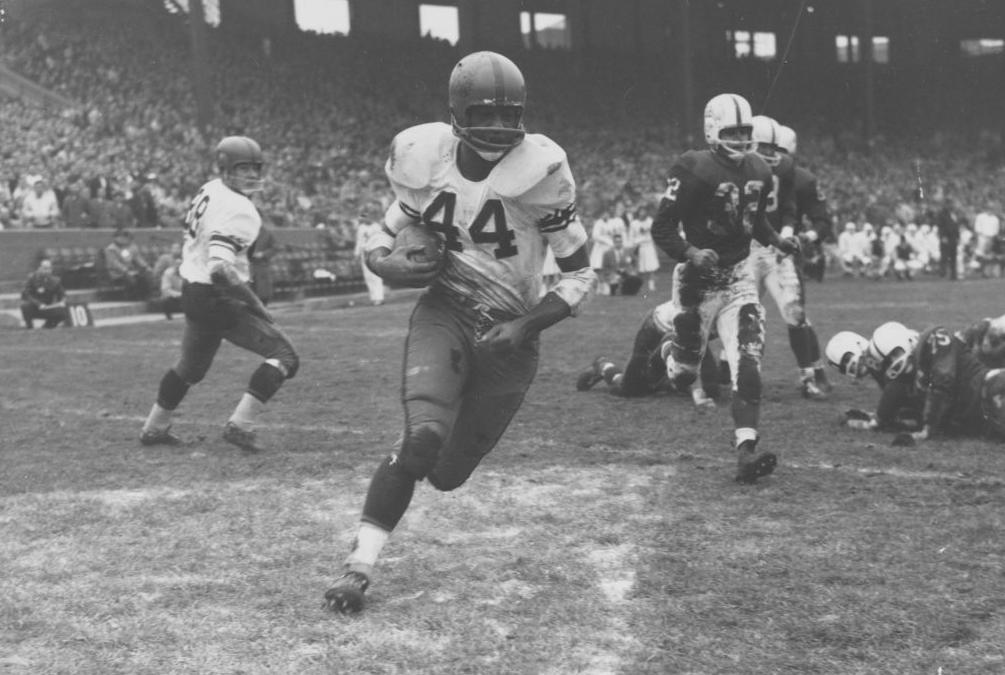
The 1961 Heisman Trophy winner out of Syracuse did not spend much time as a Redskin. Team owner George Preston Marshall had kept the team entirely white even after the league had integrated in 1946. Marshall only budged when the team’s stadium lease was threatened to be revoked unless a black player was signed.

Sound familiar? A Washington football owner putting money over morals and fans? I can’t quite put my finger on it… but I digress.

Davis was selected first overall, but given Marshall’s beliefs and philosophies, immediately demanded a trade. The Cleveland Browns swooped in, sending Washington a package that included Bobby Mitchell, who became the team’s first Black player instead of Davis. Davis, meanwhile, was able to join his college roommate, offensive tackle John Brown, and fellow Syracuse Heisman Trophy winner, fullback Jim Brown in Ohio.

Unfortunately, Davis was diagnosed with leukemia the summer after he was drafted, and died less than a year later without playing a professional down. He’s last on this list by default, and even though he would not have played in Washington anyway, he would have been much higher on this list had he lived out a full life and played in the NFL.

9. Greg Joly, Capitals D (1974)

Photo Credit: William Smith/AP

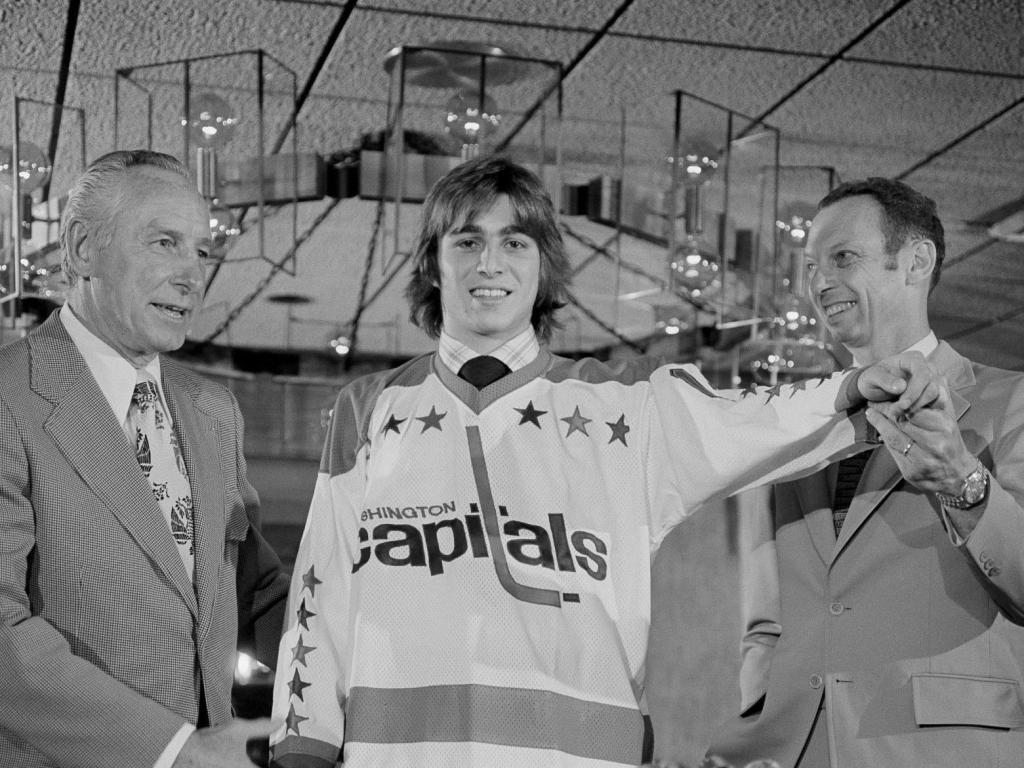
Joly marked the first ever selection in franchise history, and Capitals’ general manager Milt Schmidt said the new club got itself “the next Bobby Orr.” Yeah, not quite. Joly appeared in 44 games as a rookie for the all-time worst Capitals of 1974-75, where he totaled as many points as the team did wins (eight; one goal and seven assists).

Joly played in 54 games the following year, upping his point production to 25 (8g, 17a), before he was traded to the Detroit Red Wings in exchange for veteran blueliner Bryan Watson in 1976. Joly spent seven seasons in Detroit, appearing in over 50 games just three times. He was out of the NHL by 1983, at 28 years old.

Regarded as one of the biggest draft busts in NHL history, the pressure on Joly to help elevate an expansion franchise made up of the rest of the league’s scraps was unfair, so the blame is not all his. However, with the selection of Joly, the Capitals passed up on future Hall of Famers Clark Gillies (fourth overall), Bryan Trottier (22nd) and Mark Howe (25th).

8. Kwame Brown, Wizards C (2001)

Photo Credit: Joel Richardson/TWP

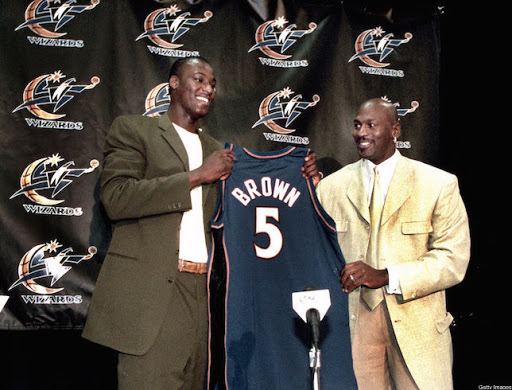
Speaking of all-time draft busts, Brown is in the conversation for biggest draft bust in NBA history. The center was considered one of the top high school players in the nation, and after entering the 2001 NBA Draft, Wizards’ president Michael Jordan drafted Brown with the first overall pick, making him the first high schooler to be taken with the top pick.

Brown averaged just 4.5 points and 3.5 rebounds in 57 games as a rookie. His numbers improved slightly over the next couple seasons, but not nearly to the level of a first overall pick. His 10.9 points and 7.4 rebounds per game in 2003-04 were career-highs, and any flashes of potential never persisted.

After clashing with point guard Gilbert Arenas and head coach Eddie Jordan, Brown was traded to the Los Angeles Lakers prior to the 2005-06 season in exchange for Caron Butler and Chucky Atkins. This was a year after Brown rejected a five-year/$30 million offer from the Wizards, wanting to reach free agency instead. (I don’t know which side was more mistaken.) The Lakers later flipped Brown, who continued to underachieve, to Memphis in a package for All-Star Pau Gasol, who went on to win two championships with Kobe Bryant in LA. (Ok, Memphis was most mistaken here.)

Brown, despite his draft bust status, managed to stick around the NBA for a total of 12 seasons, last playing with the Philadelphia 76ers in 2012-13.

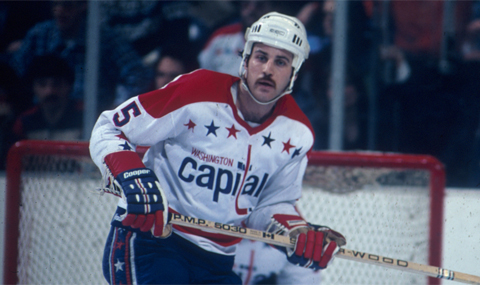
7. Rick Green, Capitals D (1976)

Photo Credit: Getty Images

Two years after taking Joly, the Caps held the first overall pick again, taking another D-man in Green. Green, while not a superstar, turned out better than Joly did, spending his first six NHL seasons in Washington. The Caps didn’t experience any success on a team level during Green’s stint in Washington, but Green himself consistently finished as a top two or three scorer among defensemen on the team.

Green was traded prior to the 1982-83 season to the Montreal Canadiens along with Ryan Walter in the deal that brought Rod Langway, Craig Laughlin, Doug Jarvis and Brian Engblom to DC. Green won the Stanley Cup with Montreal in 1986, then finished ninth in Norris Trophy voting the following season.

Green didn’t bring the game-changing play expected from a first overall pick, but netting Langway was a good trade-off.

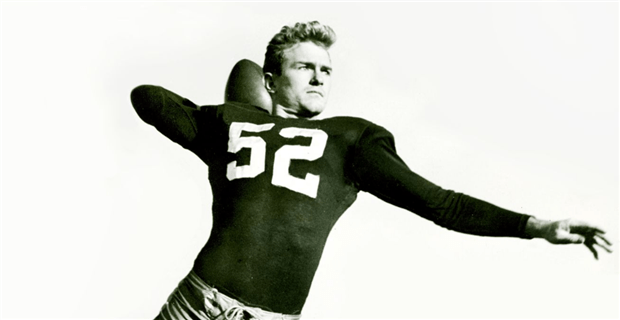
6. Harry Gilmer, Redskins QB/HB/DB (1948)

Photo Credit: The Bryant Museum

Gilmer was selected first overall after a legendary career at the University of Alabama. After appearing in just one game as a rookie, Gilmer played quarterback behind the veteran legend Sammy Baugh, who at this point was in his mid-30s and approaching the end of his career.

Gilmer’s second year saw him start three games at quarterback (though he appeared in all 12), where he totaled 869 passing yards, four touchdowns and 15 interceptions with a 37.1 completion percentage. Lining up at halfback as well, Gilmer tacked on an additional 204 scrimmage yards. His best passing season came the following year, when he passed for 948 yards, eight touchdowns and 12 interceptions to make his first Pro Bowl.

Gilmer made the Pro Bowl again in 1952, though more for his performance on the ground. In addition to 555 passing yards, Gilmer ran for 365 yards on 100 rushing attempts (eighth-most attempts in the league that season) and added 143 receiving yards. On the defensive side of the ball, his five interceptions in 1951 were tied for most on the team, and his three fumble recoveries were tied for second. He spent the final two years of his career with the Detroit Lions.

The Skins never reached the playoffs during Gilmer’s stint, but the two-time Pro Bowler is still the best first overall pick in franchise history (even if it is by default).

5. Jeff Burroughs, Senators OF (1969)

Photo Credit: eBay

The first MLB Draft took place in 1965, several years after the original Washington Senators moved to Minnesota. The second version of the Senators, meanwhile, earned the first overall pick in 1969, where they selected Burroughs.

Burroughs played just six games in the majors during 1970, then just 59 games in ’71 before the franchise moved to Texas. In 1974, Burroughs was one of the best players in the American League. He led the AL with 118 RBI while slashing .301/.397/.504 to earn his first All-Star selection and win the 1974 AL MVP award. His 25 home runs led the team, but without much offensive help, the Rangers finished 84-76, second in the AL West and missing out on the ALCS.

He hit 29 home runs the following year, but his batting average fell to .226 as he led the AL with 155 strikeouts. Burroughs didn’t make the All-Star game again until 1978 when he was with the Atlanta Braves (despite hitting 41 home runs in 1977). He led the majors in walks (117) and on-base percentage (.432) while mashing 23 home runs and 77 RBI. His .301 batting average matched that of his ’74 MVP season, and marked the only other season in his career in which he hit above .300.

Burroughs spent 16 years in the majors, posting a .261 career batting average to go with 240 home runs and 882 RBI. He barely broke into the majors by the time baseball left Washington, but his two elite seasons plus an overall solid career puts him in the top half of this list.

4. John Wall, Wizards PG (2010)

Photo Credit: Michael Hickey/USA TODAY Sports

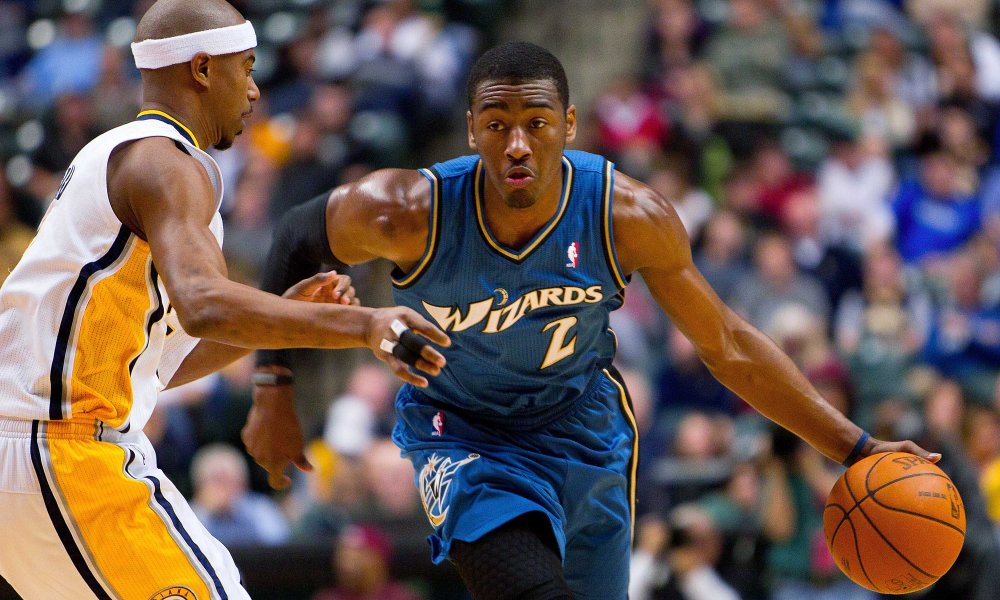
With the Wizards starting to crumble after the Arenas locker room incident, Wall was the perfect player to come in and usher a new era. His impact was immediate, averaging 16.3 points and 8.3 assists as a rookie, and within a few years, with addition of other players like Bradley Beal, Nenê and Marcin Gortat, the Wizards became a perennial playoff threat.

With Wall as the face of the franchise, he steadily improved every season, becoming one of the best point guards in the Eastern Conference. He led the league with 721 assists in 2013-14, when he made his first All-Star Game, then led the league with 157 steals in 2016-17 when he was named to the All-NBA Third Team. The five-time All-Star averaged a double-double in three consecutive seasons (’15-’17), and has led the team to four playoff appearances.

Wall suffered an Achilles tear in Dec. 2018, keeping him out for the rest of the 2018-19 season and the entirety of 2019-20. Coming off such a serious injury entering his age 30 season brings a lot of question marks, and with one of his greatest strengths — speed — likely diminished, the best may be behind him. Still, he made the Wizards competitive before, and he’ll try to bring them back to the playoffs when he returns next year.

3. Bryce Harper, Nationals OF (2010)

Photo Credit: For The Win

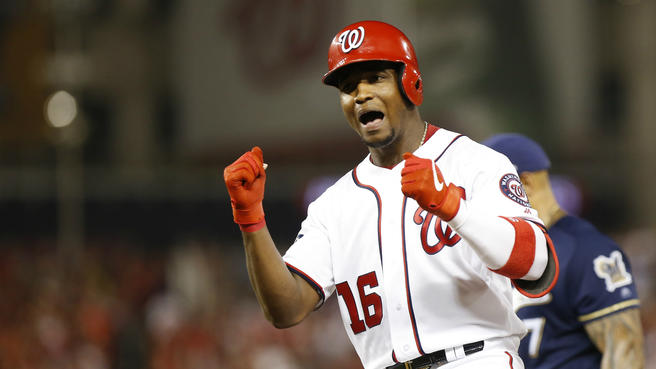
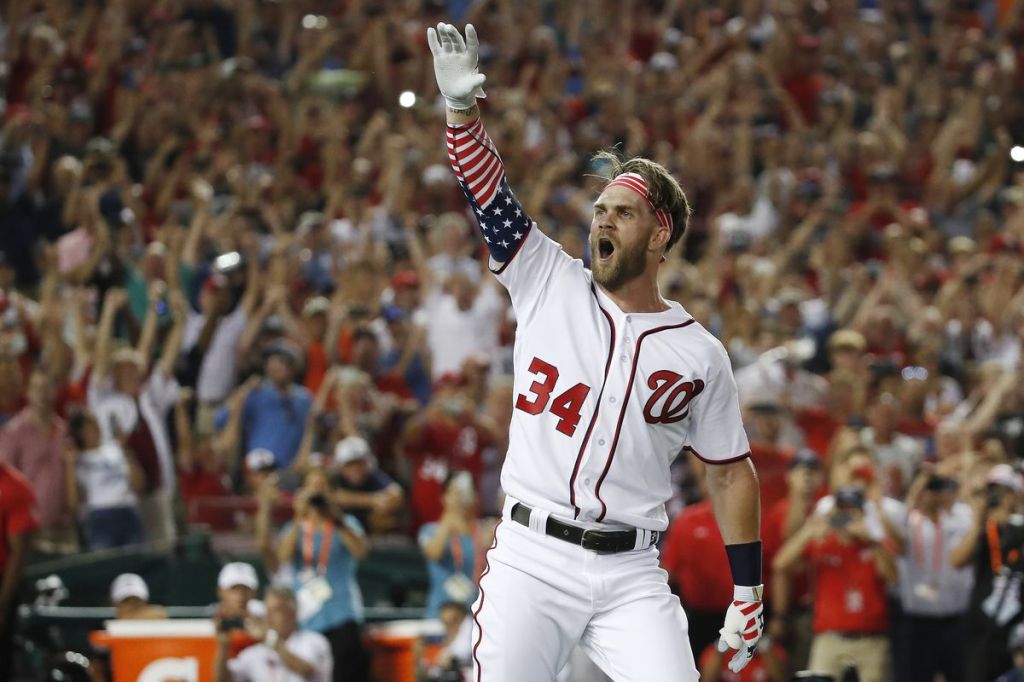
The kid who graced the cover of Sports Illustrated at just 16 years old fell right into the Nationals’ lap in 2010. Harper reached the majors in 2012, and at 19 helped the team win the NL East and make the playoffs for the first time. He was named an All-Star and NL Rookie of the Year after hitting 22 home runs and 59 RBI while slashing .270/.340/.477.

From then on, Harper was the face of the franchise and one of the most recognizable names across the league (for better or worse). His only non-All-Star season during his Nationals career came in 2014, but he bounced back with his best career season in 2015, where he led the National League in home runs (42) and runs (118), while leading the majors in on-base percentage (.460), slugging percentage (.649), then inherently OPS (1.109) and OPS+ (198) to become the youngest unanimous MVP in baseball history at age 23.

The Nats failed to make the playoffs that season, but they made it two more times in 2016 and ’17, not making it past the NLDS either time. The team missed the playoffs in 2018, and after years of speculation over his future, Harper departed for the rival Philadelphia Phillies in free agency. After six All-Star selections and four playoff appearances in seven years, the most electric homegrown player in the team’s short history inked a 13-year deal with the Phillies.

The Nats won the World Series the following year, while Harper’s Phillies failed to make the playoffs. Most fans held some degree of animosity towards him when he left, given the Nats had offered a similarly lucrative 10-year/$300 million deal earlier in free agency (although it contained a lot of deferred money).

Still, the impact Harper had on the franchise is undeniable, and he consistently put up strong numbers even with sky-high expectations to live up to. He may be remembered more as a Philly when his career is over, but he was still an all-time great first overall pick for the city.

2. Stephen Strasburg, Nationals RHP (2009)

Photo Credit: Associated Press

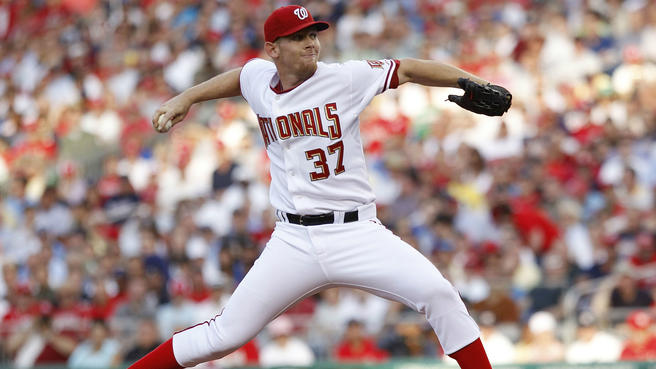
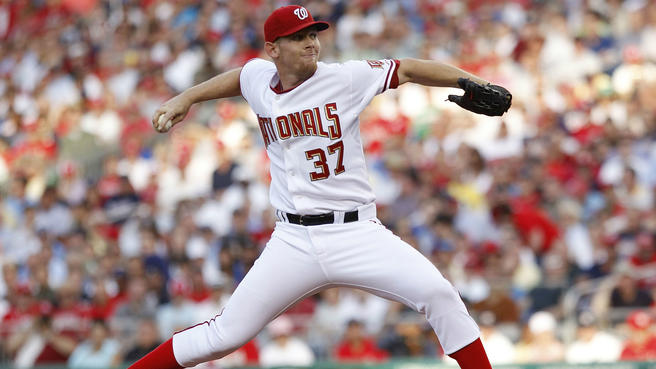
If Harper was the most hyped positional prospect in baseball history, then Strasburg was the most hyped pitching prospect, and the Nationals got both of them in back-to-back years. Strasburg electrified the city in his 14-strikeout debut 10 years ago, and while a slew of injuries slowed him down, and the arrival of Max Scherzer put him out of the limelight, he shined the brightest last October.

The even-keeled hurler has made three All-Star teams and finished in the top five of Cy Young voting twice (third in 2017, fifth in 2019), and of course blew away every opponent in his path to finish 5-0 in the 2019 postseason and earn World Series MVP.

After 10 years with the team, Strasburg signed a seven-year/$245 million deal this offseason in what will hopefully make him a National “for life.” He has a championship under his belt, and while he’ll be turning 32 this week, he still has time to solidify his legacy as one of the great pitchers of his generation. Harper may have a stronger regular season resume, but the Nats would not have a championship without Strasburg.

1. Alex Ovechkin, Capitals LW (2004)

Strasburg, Harper and Wall all turned their teams around, but Ovechkin completely altered the league’s landscape. As the greatest scorer in the history of the game, Ovechkin was climbing up the all-time goals list before the season was suspended, and throughout his 15-year NHL career he’s accomplished nearly everything possible in this league.

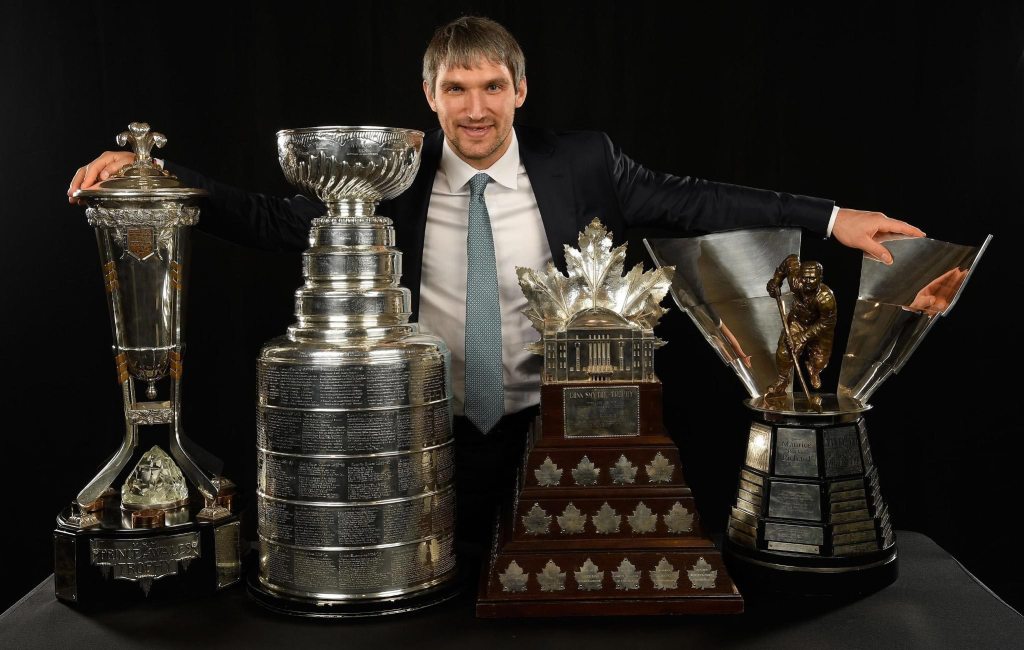
Ovechkin is a three-time Hart Trophy winner and three-time Lester B. Pearson (now Ted Lindsay) Award winner as MVP, a nine-time Maurice “Rocket” Richard Trophy winner as top goal scorer, and – after a long wait and numerous playoff exits — a Stanley Cup champion and Conn Smythe Trophy winner for postseason MVP. He was named team captain in Jan. 2010, and the Caps went on to be the winningest team of the decade.

His chances of breaking the all-time goals record have taken a hit with all the missed time, but regardless of whether or not he passes Wayne Gretzky, he will go down as the greatest player in Capitals history, and one of the greatest players of all time. At 34 years old and still producing, Ovi still has at least a few strong years left in him, so fans should appreciate his talents while they last, and hope Ovi can help win at least one more Cup before it’s all said and done.