Evaluating the Era of Curse-Breaking (WTBU Sports)

This post was originally published with WTBU Sports.

Everyone loves a good underdog story. To see the Davids of the world take down the Goliaths makes us feel better. It allows us to believe that if those people can overcome the odds and accomplish something seemingly impossible, then maybe we can too – Disney has been profiting off of this feeling for decades.

But what happens when the Goliath keeps getting knocked down by a bunch of Davids? At a certain point, these supposed “villains” develop a bit of an underdog reputation of their own, and the tables are turned to where they are viewed as the hero. 

No, I’m not talking about the 2010 DreamWorks film Megamind, and not because it’s one of the few films Disney is not profiting off of, but for nearly half a decade, this dynamic has dominated the North American sports landscape when it comes to struggling athletes and suffering fanbases.

Since 2016, the four major American sports leagues have seen a constant trend of perennial chokers (the Goliaths-turned-Davids) or teams in the midst of long championship droughts (the Davids-turned-Goliaths) finally reaching the pinnacle and getting that classic movie ending.

The Los Angeles Dodgers are now the most recent example. The Dodgers have been the best National League team of the decade… when it comes to regular season success. They have won eight straight division titles and made their third Fall Classic since 2017. The last time they won fewer than 90 games in a full season was 2012. They are Goliaths in every sense of the word, but the one thing maring this great stretch in Dodger history was the lack of hardware.

They have choked in the playoffs so many times in recent years, that despite being the top-seeded team in the National League, yet again, for the 2020 postseason, it would have no longer been a surprise to see them come up short. These Dodgers were the most prominent playoff chokers in North American sports today, but they just became the next Goliath-turned-David to reach the mountaintop.

The city of Los Angeles isn’t exactly starved of a championship – the Lakers just won the NBA title a few weeks ago – but the Dodgers ended the franchise’s 32-year championship drought. It also solidified the legacy of Clayton Kershaw, arguably the greatest pitcher of his era.

Kershaw himself was the most prevalent individual embodiment of a Goliath-turned-David. For years, he’s dominated on the mound, winning three Cy Youngs and one NL MVP award. Whenever he takes the mound before October, he is the pitcher to be feared, but after multiple postseason meltdowns, he often felt like the underdog in the playoffs.

Kershaw won both of his World Series starts, putting the Dodgers in a great position to clinch, which they did last night. The Dodgers are the most recent example, but let’s look back on the incredible, ongoing run of curse-breakers and choke-shakers.

2016

Going back to 2016, two major droughts were broken when the Cleveland Cavaliers and Chicago Cubs each won championships. 

LeBron James was already a two-time champion with the Miami Heat but had yet to bring his hometown team to the promised land. He had gotten close and fallen short numerous times with the Cavs, including Finals losses in 2007 and 2015. But after trailing 3-1 to the 73-9 Golden State Warriors, James battled back and won the city of Cleveland its first title since 1964.

Cleveland nearly got its second title in months when the Indians took on the Chicago Cubs in the 2016 World Series, but it was the Cubs’ turn to break a drought, ending their 108-year gap between championships. There was no real individual player on that roster that fit the Kershaw mold, and the Cubs hadn’t really choked in any playoff series since 2003, but the drought was so notorious that it undoubtedly fit the narrative.

These two monumental drought-ending championships opened the floodgates for more like them to follow.

2017

2017 continues the trend, but it contains a few caveats as two legendary athletes were able to add to their legacies. First was Kevin Durant with the Golden State Warriors. The elite forward had scoring titles, All-NBA selections and an MVP award to his name, but was unable to capture a championship with the Oklahoma City Thunder. Prior to the 2016-17 season, he famously signed with the 73-9 Warriors that had knocked his Thunder out of the Western Conference Finals and narrowly lost to the Cavs in the Finals.

Golden State instantly became title favorites, and they followed through to give Durant his first NBA championship. That said, the Warriors had just won the championship two years prior and were in the Finals for the third year in a row, meaning there was no drought to erase, and the team became an even bigger Goliath than it was before, taking away any favorite-turned-underdog notion. Still, Durant had fallen short in the playoffs plenty of times before, but finally got his ring in 2017.

Many fans still debate the legitimacy of Durant’s rings today, but an even bigger controversy surrounds the 2017 Houston Astros, who cheated their way to their first World Series title in franchise history, giving Houston its first champion since 1995. Not to mention it also gave legendary pitcher Justin Verlander a ring, who like Kershaw was a Cy Young winner and MVP and is among the top pitchers of his time.

Of course, the entire sign-stealing scandal throws the legitimacy of that championship up in the air, if not entirely out the window, but at the time it was viewed as yet another athlete, franchise and city that had received its first championship after many years of waiting.

2018

The following year saw two more major droughts fall down. First was the Philadelphia Eagles, who won their first Super Bowl in franchise history and made the NFC East the first division to have each of its franchises be Super Bowl winners.

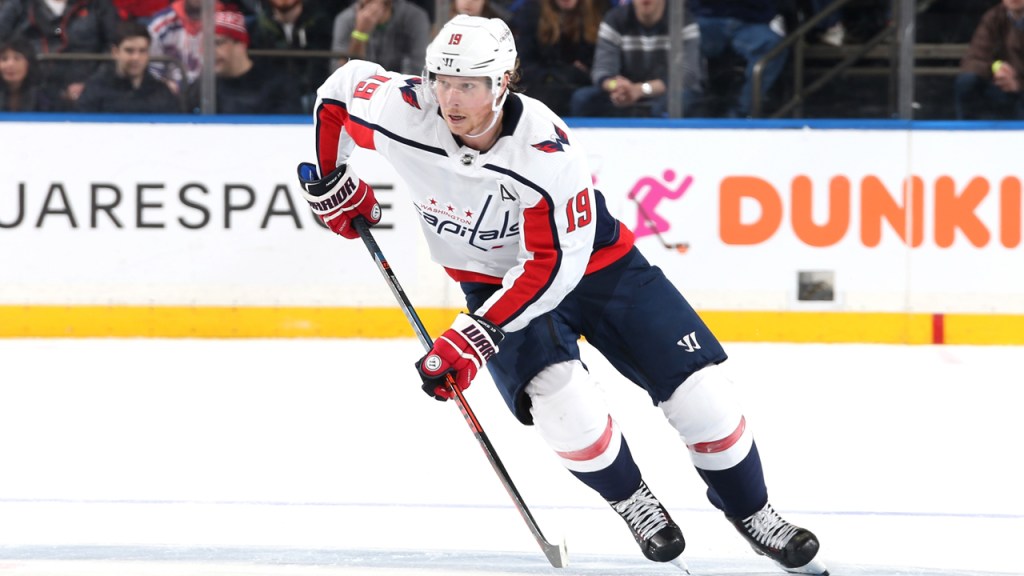
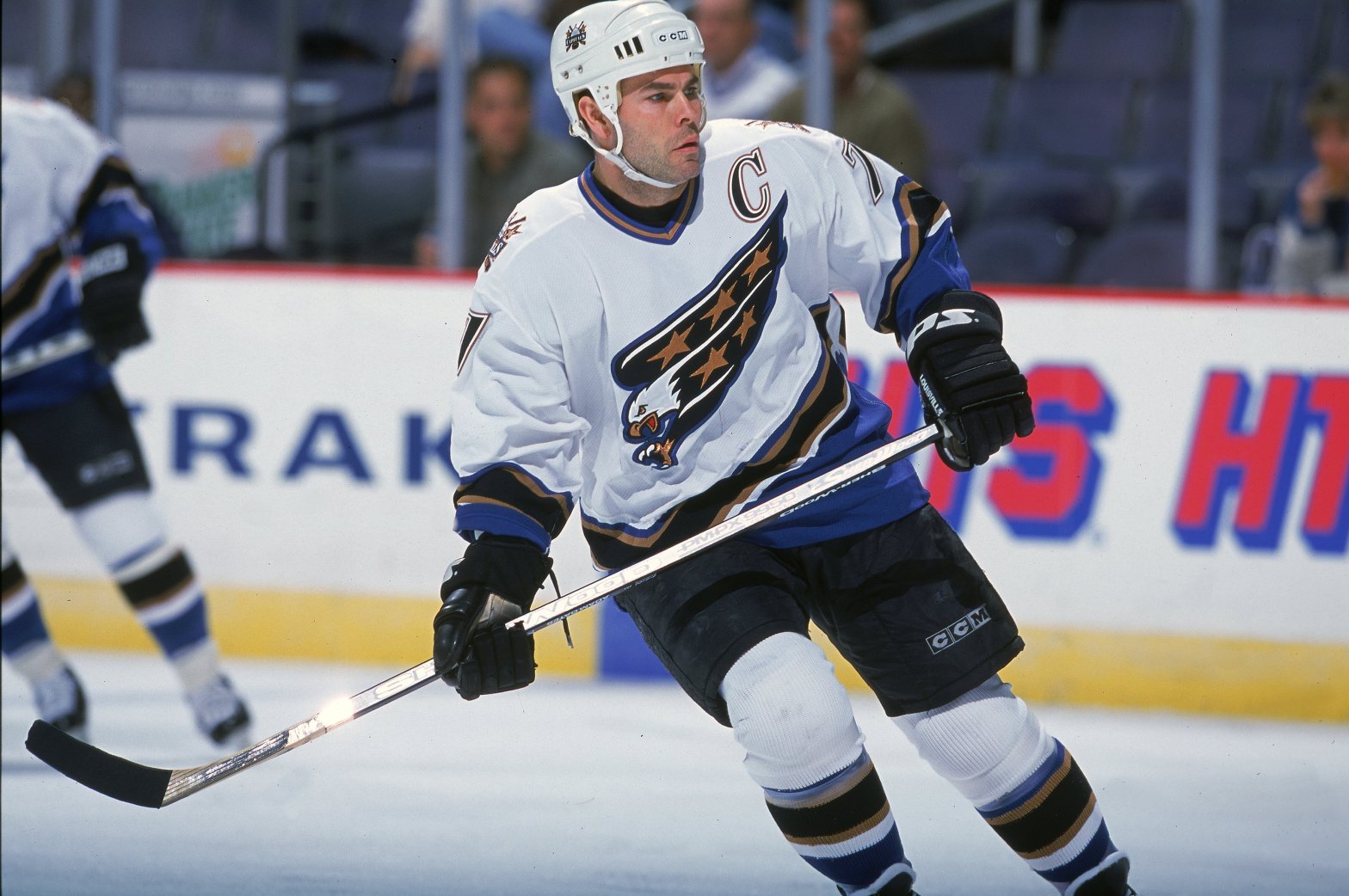
Then, that summer the Washington Capitals won their first Stanley Cup in franchise history, giving the nation’s capital its first championship since 1992. The Capitals were prominent playoff chokers, winning the President’s Trophy as regular season champions three times and faltering in the second round or earlier before they got over the hump in 2018. 

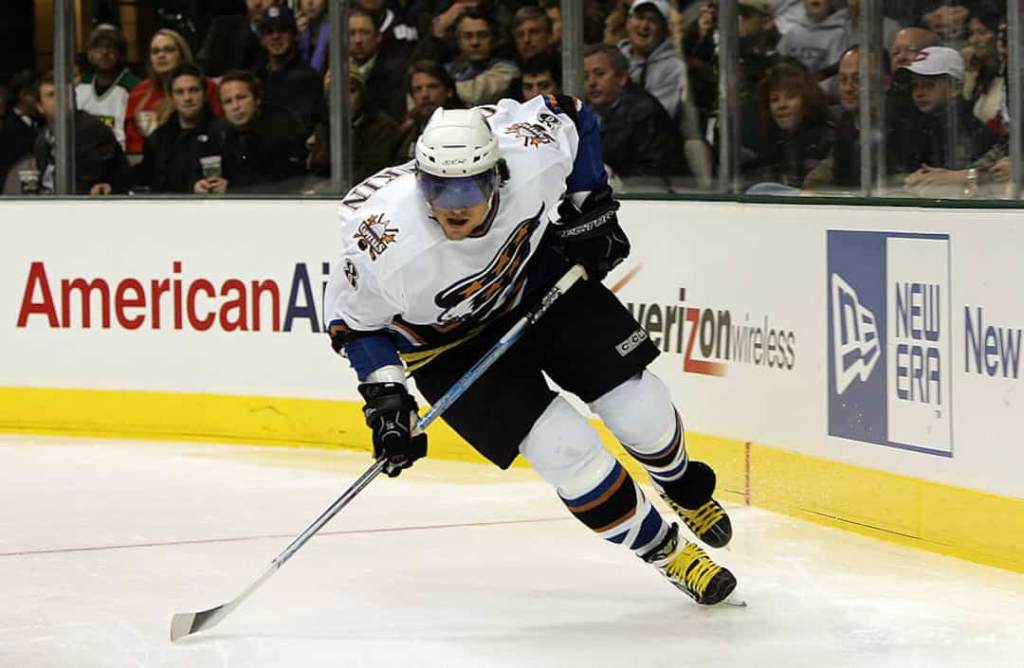
The win also gave Alex Ovechkin a much-deserved Stanley Cup, solidifying him as one of the greatest players of his era. Ovechkin and the Caps were one of the best regular season teams of the 2010s, but early exits became expected. Finally in 2018, they had something to show for it.

2019

Last year saw three teams make major breakthroughs. The St. Louis Blues won the first Stanley Cup in their 51-year history, rallying from the league’s worst record in January to becoming the World Champions in June. Over the seven years prior, the Blues continually made the playoffs but always fell short, making it as far as the Western Conference Finals in 2016. They even missed the playoffs entirely in 2018 before finally lifting the Cup in 2019.

The Washington Nationals, who like their NHL counterpart had developed a reputation for choking in the playoffs, followed a similar script as the Blues. They held one of baseball’s worst records in May, but battled into the playoff picture and took down two 100-plus win teams in the Dodgers and Astros en route to the franchise’s first championship. It also gave three-time Cy Young winner Max Scherzer a championship to add to his Hall of Fame resume.

In between the Blues and Nats, the Toronto Raptors won their first championship as well, giving the NBA its first ever international champion and the city’s first championship since 1993. Also like the Blues and Nats, the Raptors had spent years trying to get over the hump, sandwiching a Conference Finals loss in 2016 between two first-round and two second-round exits from 2014 through 2018.

2020

This year alone has seen two championships with major legacy implications. The Kansas City Chiefs won their first Super Bowl since 1970, giving head coach Andy Reid his first championship in his 21st year as an NFL head coach. Reid also had a reputation for not being able to get his teams to the top in the postseason, but he became the latest figure to secure his legacy back in February.

The Capitals’ championship two years earlier led to the Tampa Bay Lightning taking the mantle as the NHL’s most prominent postseason choker, but Tampa got their due and won the franchise’s second Stanley Cup. Captain Steven Stamkos was one of the few players on the shortlist of “Greatest active players that did not have a Cup,” but he finally took his name off.

Granted, Stamkos rarely played during the postseason, so it was not as redeeming as some of the other players mentioned before, but it was still a breakthrough championship for a Lightning franchise that often fell short of winning the Cup outside of their 2004 victory.

We’ve seen plenty of redemption arcs come to a happy ending in the past; the Los Angeles Lakers in 1972 after losing so many Finals in the 1960s, Michael Jordan and John Elway in the 1990s, the Boston Red Sox in 2004 and so on. However, never before have there been so many teams and athletes winning monumental championships in such a short period of time.

Now that the Dodgers have climbed the mountain, who will be next in line? The Atlanta sports landscape has been long-suffering, but the Braves nearly made the World Series this year and have the roster to make runs in 2021 and beyond. Perhaps the Vegas Golden Knights can reach the top for the first time after all the close calls in their brief history. Maybe Giannis Antetokounmpo will be the next NBA star to earn his first ring, giving Milwaukee a rare championship. The narratives are there, so it’s certainly on the table.

It’s an unprecedented time in American sports history; every year it seems as if a different perennial choker finally gets to breathe the air of greatness. Who knows when this period will end, but soak it in, Dodger Nation, you finally got your Hollywood ending.

Cover Photo Credit: Eric Gay/Associated Press
Nationals Offseason Preview

The 2020 World Series has come down between the Tampa Bay Rays and the Los Angeles Dodgers. We can still say the Nationals are still the last team to win a non-asterisked World Series given the exotic nature of this season, but in reality, the torch will soon be passed.

The Nats had a rough 2020 season, and if there is any hope of competing in October for 2021, moves will need to be made to bolster the roster. The three-headed monster of Max Scherzer, Stephen Strasburg and Patrick Corbin will all be back in the rotation, but this will be Scherzer’s final season under contract.

There’s no Bryce Harper/Anthony Rendon-type of free agent in risk of walking this offseason, so the team can focus on bringing in outsiders rather than retaining (or rather, making offers) to their own big free agents.

The lineup needs improvement, especially in terms of power, and the backend of the starting rotation could benefit from a new face as well. There is a lot to look at, so let’s look at the team’s outgoing free agents and some players on other teams that the Nats should target.

Notable outgoing free agents:

Aníbal Sánchez ($12 million club option)

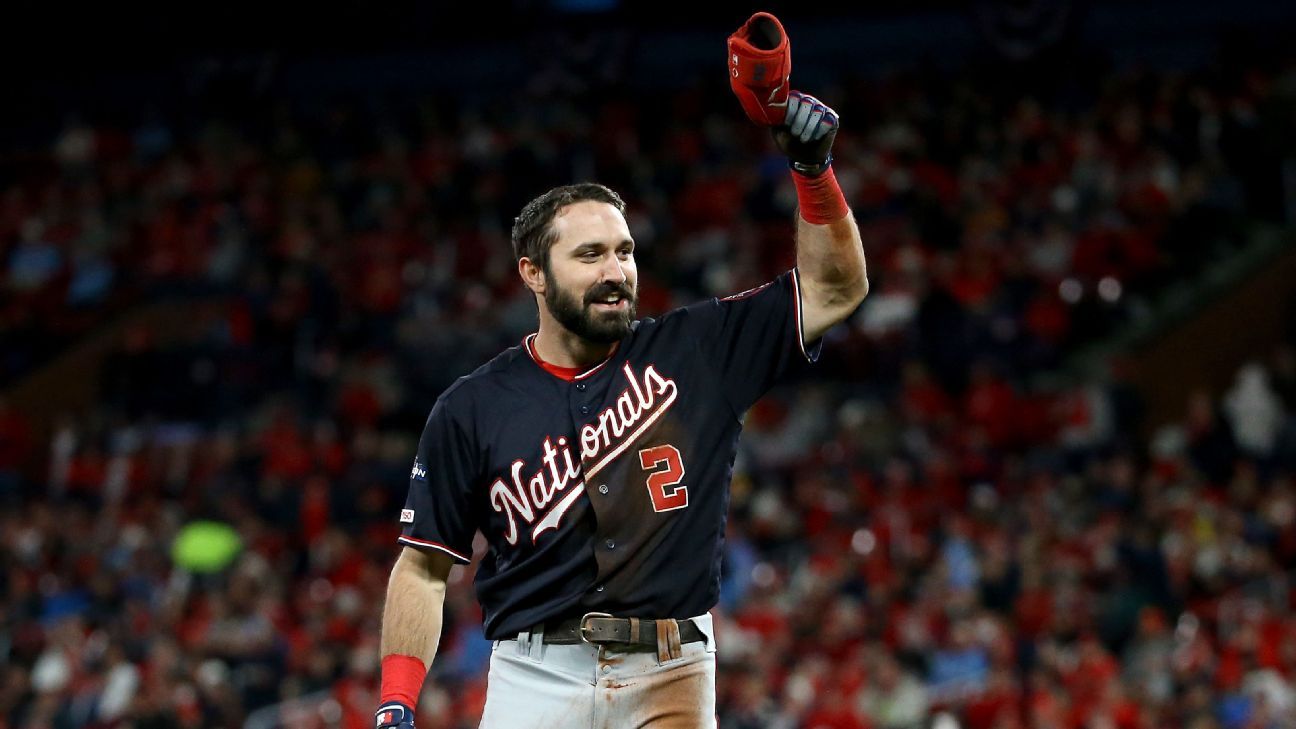
Adam Eaton ($10.5 million club option)

Howie Kendrick ($6.5 million mutual option)

Eric Thames ($4 million mutual option)

Sean Doolittle

Kurt Suzuki

Michael A. Taylor

Asdrúbal Cabrera

Ryan Zimmerman

Sam Freeman

From what I’ve seen so far, most of these players will not return. Doolittle made a social media post not too long ago that said everything short of an explicit “good-bye.” Taylor cleared waivers and will test the free agent waters. Zimmerman, Suzuki and Kendrick are all retirement risks, although if Zimmerman and/or Kendrick decide to play in 2021, it will be with the Nats; Suzuki will probably not be back regardless.

Sánchez’s $12 million option will not be picked up, as that is far too much money to hand to a 37-year-old coming off a horrendous 2020 campaign, and there’s a real possibility Eaton’s option is not picked up either. He did not have a good 2020 season, and the Nats may decide to move on from the oft-injured outfielder.

Thames has a relatively low-paying option for next season, but I don’t see any real incentive for the Nats to opt in to another year, especially if they want to get younger.

That leaves Freeman and Cabrera. Freeman appeared in just five innings across seven games. His numbers were good for the small sample size, but he will be 34 in 2021. He made just $575,000 (before prorating to 60 games) in 2020, so it should be very easy for the Nats to re-sign him should they decide to do so.

Cabrera, meanwhile, played a much larger role than Freeman, serving as a decent bat and a versatile infielder for the Nats to utilize nearly every day. Cabrera will be 35 next season, and while he wouldn’t demand an outlandish salary, the organization’s desire to get younger could spell the end of Cabrera’s second stint in Washington.

Assuming all or most of the names on that list will not return, here is a list of all the positional needs the Nats have to fill before Opening Day 2021:

  • Starting pitcher (fourth or fifth in rotation)
  • 1-2 first basemen
  • Starting third baseman
  • Starting outfielder
  • Catcher
  • A handful of bench outfielders/infielders
  • A couple relief pitchers

Those are a lot of needs to address, but third base and outfield will likely be the biggest ones.

There are very few starting-caliber third basemen in the free agent market this year. Justin Turner of the Dodgers will be the best available option, but he’ll be 36 next year. A short-term deal might be worth a high price, as Carter Kieboom underwhelmed at third this year.

Other less expensive options include Kansas City’s Maikel Franco, who hit .278 and eight home runs this season after making just $3.34 million (Turner, batting .307 with four home runs, made $20 million by comparison; both salaries before prorating). Milwaukee’s Jed Gyorko has a $4.5 million team option, so he may be worth watching if not picked up, but Turner is the only big name that really moves the needle.

There are more exciting options for a third outfielder to pair with Juan Soto and Victor Robles. Former World Series foe George Springer of the Astros and Atlanta’s Marcell Ozuna will be the top options on the market. Signing Ozuna seems unlikely, but Springer is a realistic option who would bring much-needed power to the lineup.

Springer’s teammate, Michael Brantley, is also a free agent and would be less expensive, but he doesn’t possess the same power that Springer has, although he is a great hitter. Brantley averaged exactly .300 this year.

Boston’s Jackie Bradley Jr. would be a great choice defensively, and LA’s Joc Pederson, while not a consistent hitter, would certainly add power to the lineup for a less expensive salary.

In my opinion, Springer, then Brantley should be the team’s first priorities for the outfield. As odd as it would be to welcome in someone from the Astros, either would improve the lineup immensely. (Plus, only Springer was on the disgraced 2017 Astros; Brantley did not arrive in Houston until 2019).

As for catcher, an intriguing option would be bringing Wilson Ramos back home. While the Nats have shown interest in bringing in Phillies star JT Realmuto, the team’s money would probably be better spent elsewhere. If the Mets go after Realmuto with incoming owner Steve Cohen looking to make a splash, the “Buffalo” will become expendable.

The Nats obviously have a lot of holes to fill, and if there’s any hope of returning to the postseason in 2021, this will have to be a busy winter.

Cover Photo Credit: ESPN

Capitals Free Agency Review

NHL Free Agency opened last Friday, and although the Capitals did not have much cap space to work with, the team made several key signings while also making one tough goodbye. While other deals will trickle in until the start of the season, including a likely trade of one of the team’s blueliners, the brunt of the action is behind us. Here is my take on the team’s additions, departures and returners.

Major additions:

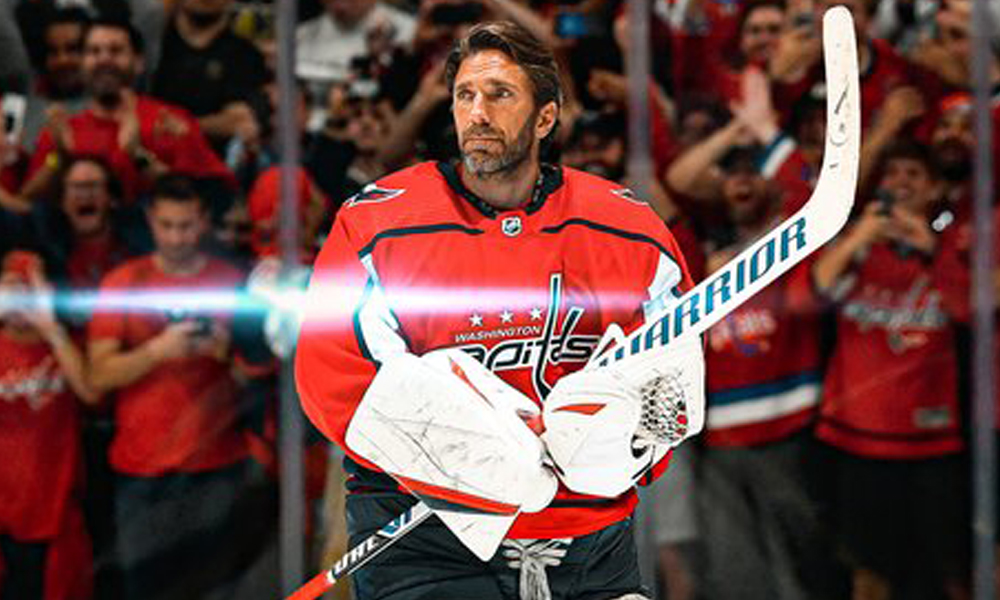
G Henrik Lundqvist: One year, $1.5 million (Oct. 9)

Oddly enough, the crowned jewel of the Caps’ free agent class won’t be a starting player. Granted, the King will garner plenty of starts, but he will serve more as a “1B” behind Ilya Samsonov, who is now officially the man in the crease after just 26 games of NHL experience.

This is why the Lundqvist signing is so important. The Caps urgently needed a cheap, but productive veteran to not only serve as a safety net for Samsonov, but also to mentor the 23-year-old as he navigates his second NHL season. Lundqvist is past his prime and was unceremoniously dumped by the New York Rangers after posting a career-worst .905 save percentage and 3.16 goals against average this past season.

His presence alone won’t help bring the Caps back to the Cup Final, unless he is rejuvenated by the change of scenery, but of all the free agent options the Capitals could afford to bring in as a backup and mentor, Lundqvist was likely the best option. After 15 years in New York, Hank is looking for a Ray Bourque ending in Washington. Now we’ll see if the Caps can pull it off.

D Justin Schultz: Two years, $8 million (Oct. 9)

The right side of the defense was a major concern throughout all of last season. Behind Norris Trophy finalist John Carlson, neither Nick Jensen nor Radko Gudas were able to lock down the second pair spot. Jensen was one of the Caps’ best defensemen in the bubble, but there weren’t many good takeaways from that experience to begin with.

Gudas is gone, and Jensen could be out the door next with the addition of Schultz, the former Pittsburgh blue liner who will be relied on to play behind Carlson on the second pair.

Schultz is a puck-moving defenseman that has missed extensive time due to multiple injuries over the past couple seasons. Throwing a $4 million AAV contract his way could blow up right in the team’s face, but if he can stay healthy and his production can improve it could turn out well.

He will presumably be paired with Dmitry Orlov, who would be an upgrade from his previous partner in Pittsburgh, but there is still a lot of question marks and risk that come with this signing.

D Trevor van Riemsdyk: One year, $800,000 (Oct. 10)

In another effort to beef up the right side of the defense, Brian MacLellan brought in van Riemsdyk on an inexpensive, low-risk deal that should slot him in on the third pair. Formerly seen as a future top-four defenseman when he entered the league with the champion Chicago Blackhawks in 2015, TVR failed to make his mark at his next stop in Carolina.

After holding a $2.3 million cap hit last season, this contract is very much a “prove it” deal for the 29-year-old. Carolina boasts a lot of talent in its defensive corps, but van Riemsdyk will have every opportunity to gain his footing on the Caps’ third pair. While the Schultz signing has a great chance of backfiring, the van Riemsdyk signing could turn into a massive bargain.

The only issue now is that the team is over the salary cap with two extra defensemen under contract. Someone will need to be traded, and of the defensemen that did not receive a new deal this offseason, Carlson is probably the only one safe. Not that I believe Orlov will be traded, but it’s certainly on the table, especially if the team feels it can bring back the most value that way.

Major re-signings:

RW Daniel Sprong: Two years, $1.45 million (Sept. 18)

Sprong was brought in last year and spent the rest of the season with Hershey before joining the Caps in the bubble as a black ace. Of the black aces, Sprong had the most NHL experience by far due to his days in Pittsburgh and Anaheim before he fell out of favor and settled in the AHL.

Still just 23, the former second-round pick is looking to rebound in Washington, and given the other options at forward, he may have a chance. The Capitals need to get under the salary cap, so a trade will be coming, and if the team cannot get an established NHL winger to play in the bottom six, Sprong will have a great opportunity to earn that spot.

It will take a strong training camp, but his low cap hit will work in his favor. He’s no guarantee, but he’ll be someone worth watching as the regular season draws closer.

D Brenden Dillon: Four years, $15.6 million (Oct. 6)

Dillon was the biggest signing for the Caps this offseason, as the deadline acquisition is now here in Washington to stay, likely on the top pair alongside Carlson. Dillon is a strong five-on-five defenseman and complemented Carlson’s offensive nature as a more “stay-at-home” defenseman.

Now the pair has a whole offseason to really gel, and the defense will hopefully stabilize after such an inconsistent 2019-20 campaign.

Major departures:

G Braden Holtby (VAN): Two years, $8.6 million

The writing was on the wall as soon as the ink dried on Nicklas Backstrom’s extension, but it didn’t take the sting away, especially given the context. After Sergei Bobrovsky was signed by Florida to a seven-year/$70 million deal over a year ago, it seemed Holtby was in line for similar compensation, no matter where it came from.

Now, given the financial hardships brought on by the pandemic and Holtby’s declining play, he was forced to take a short-term pay cut in Vancouver. You can’t feel too sorry for someone making $4.3 million a year given the economic struggles many more people around the world are facing, but relative to the NHL landscape, Holtby really deserved better.

Interestingly, Holtby did not have a No-Movement Clause in his contract, so there is a good chance he will be exposed in next year’s Expansion Draft, and he could possibly be the first starting goaltender in Seattle Kraken history. For now, he’ll be working with breakout youngster Thatcher Demko up in British Columbia. We’ll miss you, Holts. Thanks for everything.

D Radko Gudas (FLA): Three years, $7.5 million

Gudas was brought in last season in the Matt Niskanen trade due to his smaller cap hit. Niskanen is now retired, and Gudas landed himself a nice deal in Florida. He was nothing more than a third pair defenseman, and the Caps replaced him with an inexpensive, yet higher upside option. His departure is a win for all sides involved, except maybe for Florida. (Three years? You’re committing to “Dadko” for three years? Interesting…)

C Travis Boyd (TOR): One year, $700,000

Boyd was caught in NHL limbo: Too good to stay in the AHL, but not quite good enough to have a full-time role in the Caps’ bottom six. While Toronto is loaded with forward talent, Boyd should still be able to earn a spot in their bottom six barring a significant change in personnel.

Boyd was called upon to fill in for the injured Backstrom in the bubble, but he eventually lost his spot to Brian Pinho. While there has been a coaching change in DC, it seems Boyd was better off going elsewhere.

Other signings/re-signings:

C Brian Pinho: Two years, $1.45 million (Sept. 17)

D Lucas Johansen: One year, $700,000 (Oct. 3)

D Cameron Schilling: One year, $700,000 (Oct. 10)

D Paul LaDue: One year, $700,000 (Oct. 10)

LW/RW Daniel Carr: One-year, $700,000 (Oct. 11)

All of these other deals won’t hold much significance for the Caps this season, if ever. Pinho got very limited playing time in the bubble during Backstrom’s absence from the lineup, and he at least has a chance to make the roster as an extra forward, but he doesn’t look like he’ll be a huge factor either way.

Johansen is a former first-round pick that has struggled to break through, partially because of a slew of injuries, but this one-year deal seems like his final chance with the organization. He was projected to be in the NHL by now, but it just has not worked out. If he doesn’t make any significant strides this year, expect him to move on to another franchise next offseason, if not sooner.

Schilling, LaDue and Carr are all AHLers that will hopefully bolster Hershey. Schilling and LaDue each totaled over 20 points with their respective AHL teams last year, and Carr tallied 50 points in 47 games with Nashville’s AHL affiliate.

Way-too-early, post-free agency lines prediction

Forwards:

Alex Ovechkin – Evgeny Kuznetsov – Tom Wilson

Jakub Vrana – Nicklas Backstrom – TJ Oshie

Richard Panik – Lars Eller – Daniel Sprong

Carl Hagelin – Nic Dowd – Garnet Hathaway

Brian Pinho

It’s not quite “post-free agency,” as there will still be changes made to the roster, but for now, here is what the team will probably look like.

Unless new coach Peter Laviolette decides to shake up the top two lines, those aren’t changing. Even if it’s shuffled a bit, those top six forwards are pretty much set in stone.

Lars Eller is locked in as the 3C, and Nic Dowd and Garnet Hathaway will presumably hold on to their fourth line roles, but the other three winger slots are still up in the air. At this point in his career, Carl Hagelin is probably better suited in a fourth line role, but Richard Panik seemed to fit better on the fourth line as well. Barring a trade, one of them will need to play on the third line, and my gut pick is Panik at this point. He improved as the season went on after a rough start.

I have Sprong on the other third line wing because I don’t see any other options currently in-house. Again, a trade acquisition or new signing could change the situation entirely, but at this point, I think Sprong will have every opportunity to earn the spot in training camp. I have Pinho as the extra forward simply because he passed Boyd in the pecking order in the bubble, but we have no clue who Laviolette will favor, and once the team gets under the cap, it could just as likely be an outside candidate. We’ll have to wait until camp.

Defensemen:

Brenden Dillon – John Carlson

Dmitry Orlov – Justin Schultz

Jonas Siegenthaler – Trevor van Riemsdyk

Martin Fehervary

Michal Kempny will be on longterm injured reserve, so he’ll be out of the picture for a good chunk of the season. Jensen could sensibly stay on as the seventh defenseman rotating in with van Riemsdyk or anyone who misses time with an injury, but Fehervary is an up-and-coming prospect who was NHL-ready last season and forced to wait. The Caps would be ill-advised to hold him back again. The best thing for the team and Fehervary’s development is to make him a full-time NHLer.

Or they will trade Fehervary and keep Jensen, but I would be very surprised. Fehervary has the chance to be a major defensive contributor for the Caps down the road, so he should be favored. His lower cap hit ($791,667 compared to Jensen’s $2.5 million) would also help the Caps tremendously. He showed flashes in the postseason, but clearly needs to adjust to the NHL level.

Siegenthaler still needs to be re-signed, so another possibility is that they let him walk and keep both Jensen and Fehervary, but that seems to be another unlikely scenario, as Siegenthaler is another young blueliner with upside and a low price tag. MacLellan has all but assured Siegenthaler will be re-signed. A trade is coming, we just have to wait and see who it involves.

Goaltenders:

Ilya Samsonov

Henrik Lundqvist

Not much else to say about this that I didn’t already cover at the top. Samsonov is the 1A and Hank is the 1B, but the split will likely be closer to 50-50 than what we see with traditional tandems. Vitek Vanecek will be first in line to be elevated if either Samsonov or Lundqvist can’t play.

Cover Photo Credit: NHL Trade Talk

Why the Lakers can thank the Wizards for their 2020 NBA Championship

The Los Angeles Lakers are the 2020 NBA Champions. LeBron James has won his fourth NBA title, and he’s now the first player in NBA history to win Finals MVP with three different franchises, adding one more accomplishment to his all-time great legacy.

Anthony Davis, LeBron’s running mate, now has his first NBA title. Davis spent the first seven years of his career with the New Orleans Pelicans, the franchise that drafted him first overall in 2012. The Pelicans traded their disgruntled franchise star and got back a haul of exciting young contributors: Brandon Ingram, Lonzo Ball and Josh Hart. After winning the 2019 Draft Lottery, the Pelicans immediately got a new franchise cornerstone in Zion Williamson.

The Lakers can thank New Orleans for giving them the missing piece, but that isn’t the only team the Lakers should thank. In fact, there was a third trade partner in the Davis deal that arguably helped the Lakers even more than the Pelicans: the Washington Wizards.

This is what the full Davis trade looked like:

The Los Angeles Lakers receive:
  • Anthony Davis – from NOP
The New Orleans Pelicans receive:
  • Brandon Ingram – from LAL
  • Lonzo Ball – from LAL
  • Josh Hart – from LAL
  • Three future first-round picks – from LAL
  • $1.1 million in cash considerations– from WSH
The Washington Wizards receive:
  • Moe Wagner– from LAL
  • Isaac Bonga– from LAL
  • Jemerrio Jones-from LAL
  • Future second-round pick– from LAL

It’s evident how selfless the Wizards are as an organization. The other two teams helped themselves immensely, but not the Wizards. The Lakers got a top five player to help them win immediately, and the Pelicans got a package of players and draft picks to help build around Williamson for the future. The Wizards got… two bench players, one G-League player and a second-round pick.

Granted, it only cost them $1.1 million, so it’s not like they really had anything to lose. Wagner has developed into a solid forward off the bench and Bonga… is a guard. You could do much worse for $1.1 million. We don’t even know who the second-round pick is yet, it will be used in 2022. It could be the next Admiral Schofield!

All jokes aside, the Wizards are locked into John Wall and Bradley Beal until 2023 (assuming both players pick up their player options, which they would be dumb not to), so adding young, inexpensive players with potential has been a priority. The Lakers needed to clear cap space and roster spots, and the Wizards capitalized on the fire sale.

Of course, the Lakers would not have Davis without the Pelicans agreeing to give him up, but they also wouldn’t have him if the Wizards didn’t take those other contracts off their hands. Sure, the Pelicans are the ones who actually gave up AD, so maybe they deserve the most thanks.

Well that’s only if you take into account the Davis trade. Looking at other players on the Lakers roster, it’s clear the Wizards had a greater impact in this 2020 championship than you may have realized.

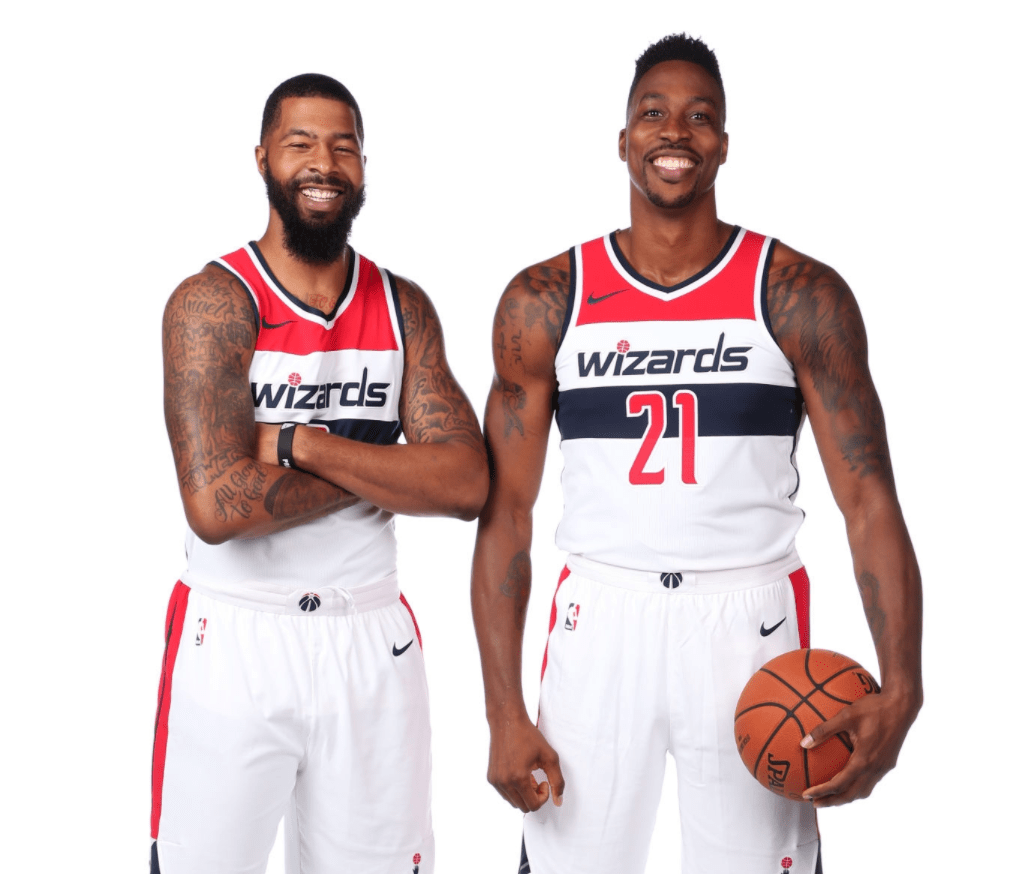
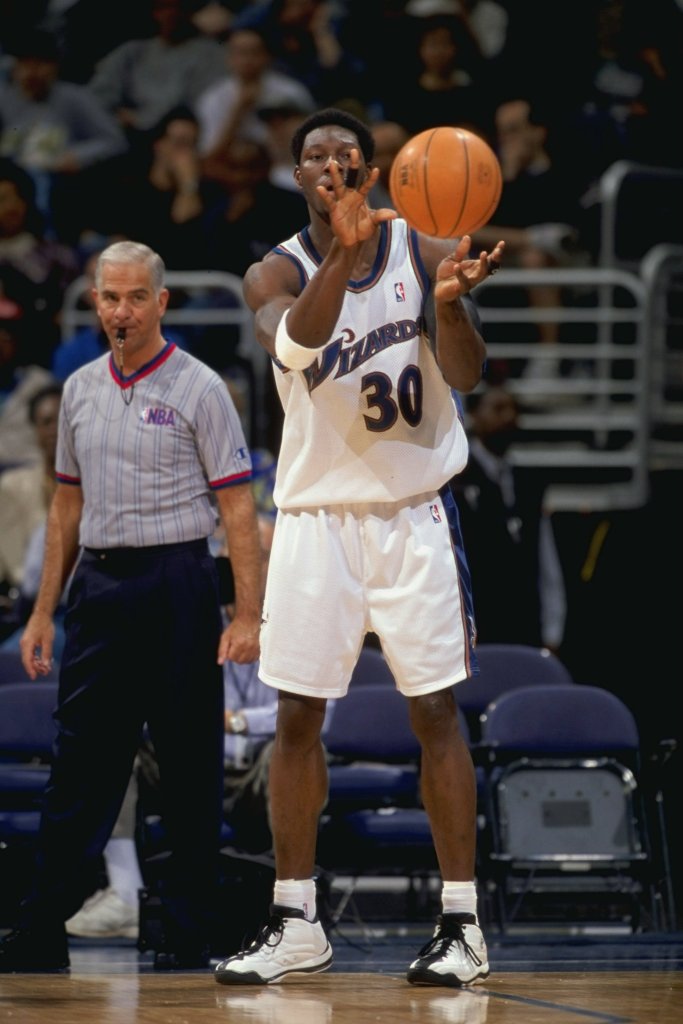
Markieff Morris, Dwight Howard and Jared Dudley are three former Wizards that played for the Lakers in these finals. Dudley logged just three total minutes across three games, but both Morris and Howard had actual roles.

Morris played 21.3 minutes per game off the bench, averaging 7.5 points, 3.3 rebounds and 1.2 assists per game. Howard logged just under 12 minutes per game, starting every game except the clincher. He averaged 2.8 points and 2.8 rebounds. Morris was the starting power forward for parts of four seasons in DC, while Howard played nearly as many games in these Finals alone (six) as he did for the Wizards (nine).

And who could forget JaVale McGee? He did not play at all in these Finals, but the now-three-time NBA champion got his start with the Wizards all the way back in 2008. Granted, he has not played in Washington since 2012, but that’s still another former Wizard contributing to the Lakers title effort (at least off the court).

I write this all somewhat facetiously (although the trade did help the Lakers get Davis, so there’s some legitimacy to these claims), but when the Wizards franchise has been so irrelevant in the NBA landscape since the 1979 title defense that fell just short, it’s weird knowing that the Washington Wizards actively contributed to a championship.

It would be nice if they were the ones winning the championship, but baby steps. Can’t go from finishing 1-7 in the NBA bubble to hoisting the Larry O’Brien trophy right away.

Only the Lakers could pull this off: Spend a bunch of the years in the draft lottery, picking mediocre talent and floundering in the league basement before the best player in the world decides he wants to live in Los Angeles, and then soon after recruits another All-World superstar to team up and become contenders again.

The Lakers didn’t build into anything; LeBron came to town, then Davis, and that was all it took. In fact, the organization did not draft a single player on their Finals roster, unless you count Kyle Kuzma, whom the team traded for on draft day. So good for you, Lakers fans. This “long-suffering” franchise [eye roll] is finally back on top. After sending death threats to one of your own players, despite still leading the series, you get your “deserved” outcome: a 12th championship.

Amidst your celebration, you could at least have the decency to thank those who helped you get there, but since you won’t, I’m left with no choice but to do it for you.

On behalf of the Los Angeles Lakers organization, and Lakers fans everywhere, thank you, Wizards, for acting as the middle man in LA’s ascent back to the top. Maybe LA can return the favor someday. I doubt they will.

Cover Photo Credit: Ned Dishman/NBAE via Getty Images

The Pohory-list: Ranking every starting QB under Dan Snyder

Tomorrow, Kyle Allen will be the 22nd different player to start at quarterback for the Washington Football Team during Dan Snyder’s reign as owner. After an underwhelming start to the season, incumbent Dwayne Haskins Jr. was not just benched, but sent all the way down the depth chart, as Alex Smith is now QB2.

We have yet to see what type of statement coach Ron Rivera is making with that decision, whether he wants Haskins to have a chance to sit back and learn the system without the on-field pressure, or it’s the beginning of the end for Haskins in Washington. There are valid arguments both for and against his benching, but now it just comes down to how he’ll respond.

Allen’s Washington career is just starting, and no matter how long (or short) it may end up lasting, it seems premature to measure him against the rest of the Washington quarterbacks in the Snyder era, so he will not be included. It may also be premature to judge Haskins, but since he has 13 games to look at, he will be included on the list. Hopefully he can rebound, elevate his ranking and become the quarterback the franchise envisioned when it drafted him. If not, then his current spot is likely where he’ll stay.

The rankings will be based solely on each player’s tenure with the franchise. Donovan McNabb, for example, probably has the best overall career out of the players on this list, but he is by no means the top Washington quarterback over the past 20 years.

The success of these quarterbacks will be measured based on individual statistics as well as team success. They have been broken up into five tiers ranking from worst to best. Putting this together was not fun; it was a sad reminder of whom the Washington offense has had to put their trust into for the past 22 years.

I’m not sure what is more upsetting: the number of terrible quarterbacks that have started a game for this team, or how the quarterbacks at the better end of the spectrum are just extremely underwhelming. In any case, here are the definitive rankings of every Washington quarterback to start a game in the Snyder era. Try not to cry.

Tier 5: The Scrubs

21. Mark Sanchez (2018)

  • 2 GP, 0-1
  • 138 yds, 0-3 TD-INT

20. John Beck (2011)

  • 4 GP, 0-3
  • 858 yds, 2-4 TD-INT

19. Josh Johnson (2018)

  • 4 GP, 1-2
  • 590 yards, 3-4 TD-INT

18. Tim Hasselbeck (2003)

  • 7 GP, 1-4
  • 1,012 yards, 5-7 TD-INT

17. Danny Wuerffel (2002)

  • 7 GP, 2-2
  • 63 compl%, 719 yards, 3-6 TD-INT

16. Jeff George (2000-2001)

  • 8 GP, 1-6
  • 1,389 yards, 7-6 TD-INT in 2000
  • 168 yards, 3 INT in 2 starts in 2001

15. Shane Matthews (2002)

  • 8 GP, 3-4
  • 1,251 yds, 11-6 TD-INT

This entire list of quarterbacks is uninspiring, so to qualify for the bottom tier is truly impressive in the worst possible way. Mark Sanchez was far removed from his back-to-back AFC Championship appearances with the Jets, and did so poorly in his limited sample size that he falls to the bottom. John Beck wasn’t much better, going 0-3 in 2011 after replacing the struggling Rex Grossman, who promptly took over after Beck squandered his opportunity.

Josh Johnson and Tim Hasselbeck each managed to win one of their starts, but otherwise didn’t amount to anything else. The same can be said of the remaining three players in this tier. Neither were here for long, and Jeff George’s atrocious 2001 stat line puts him squarely in this tier among the worst.

Tier 4: The ‘Meh’ at Best

14. Colt McCoy (2014-2019)

  • 12 GP, 1-6
  • 1,679 yards, 8-7 TD-INT

13. Case Keenum (2019)

  • 10 GP, 1-7
  • 64.8 compl%, 1,707 yds, 11-5 TD-INT

12. Dwayne Haskins Jr. (2019-present)

  • 13 GP, 3-8
  • 2,034 yds, 10-11 TD-INT

11. Patrick Ramsey (2002-2005)

  • 33 GP, 10-14
  • 5,649 yds, 34-29 TD-INT

10. Rex Grossman (2010-2012)

  • 17 GP, 6-10
  • 3,151 yds, 16-20 TD-INT in 13 games in 2011

9. Donovan McNabb (2010)

  • 13 GP, 5-8
  • 3,377 yds, 14-15 TD-INT

8. Tony Banks (2001)

  • 15 GP, 8-6
  • 2,386 yards, 10-10 TD-INT

This tier is made up of two types of quarterbacks: 1.) the backups who were thrusted into more playing time than what they were meant for, and 2.) some failed long-term experiments. Colt McCoy is a solid NFL backup, but is nothing more. Case Keenum was merely a bridge to Haskins, neither of whom performed well, although the supporting cast shares some of the blame (and the door isn’t quite yet closed on Haskins).

Patrick Ramsey stuck around, but just wasn’t a good enough starter at this level, and Grossman spent his time in Washington moving up and down the depth chart. McNabb was brought in to stabilize the quarterback position, but that quickly fell apart before the 2010 season ended.

Tony Banks actually did somewhat decently after replacing George in 2001, and is one of the few players on this entire list to boast a winning record in Washington.

Tier 3: The Playoff QBs*

7. Alex Smith* (2018-present)

  • 10 GP, 6-4
  • 62.5 compl%, 2,180 yds, 10-5 TD-INT

6. Todd Collins (2006-2009)

  • 8 GP, 3-0
  • 63.8 compl%, 888 yds 5-0 TD-INT in 4 games in 2007 at 36 years old

5. Mark Brunell (2004-2006)

  • 35 GP, 15-18
  • 9-6, 3050 yds, 23-10 TD-INT in 2005

4. Jason Campbell (2005-2009)

  • 52 GP, 20-32
  • 10,860 yds, 55-38 TD-INT

All of the quarterbacks in this tier helped lead the team to the playoffs in one season, but didn’t do much else beyond that. Smith is the lone exception, but the team was 6-3 entering the fateful game in which Smith’s famous leg injury occurred. The game was still in reach when Smith went out, but whether they would have been 7-3 or 6-4, I believe the team would be in the playoff hunt all the way down to the wire.

Smith may also return, but he likely won’t even be close to the same player that was stretchered off the field nearly two years ago. Todd Collins, meanwhile, took over for an injured Jason Campbell in 2007, winning out to earn the team a Wild Card berth. Despite ending the season with a 106.4 QBR, Collins threw two pick-sixes en route to a 35-14 loss in the Wild Card round.

His limited sample size is what drops Collins below the rest on this list, but considering his single month as a starter was better than over two-thirds of the other quarterbacks on this list just proves how little success this franchise has achieved under Snyder.

Mark Brunell had a relatively strong season two years prior to bring the team to the Wild Card round in 2005, where they beat the Tampa Bay Buccaneers before losing to the Seahawks in the Divisional round. That 2005 win over Tampa is the last time Washington has won a playoff game.

Campbell, meanwhile, was drafted in 2005 but didn’t debut until 2006. While he didn’t get a single playoff start, he put the team in position to reach the playoffs when he went down in 2007 and Collins took over. Campbell is one of just seven players to have thrown for over 10,000 total yards with the franchise, but the team never got close to any major success in his time here.

Tier 2: The One-Year Wonders

3. Robert Griffin III (2012-2015)

  • 37 GP, 14-21
  • 2012 Pro Bowl
  • 2012 Offensive Rookie of the Year
  • 8,097 yds, 40-23 TD-INT

2. Brad Johnson (1999-2000)

  • 28 GP, 17-10
  • 1999 Pro Bowl
  • 4000-yd season in 1999
  • 6,510 yards, 35-28 TD-INT

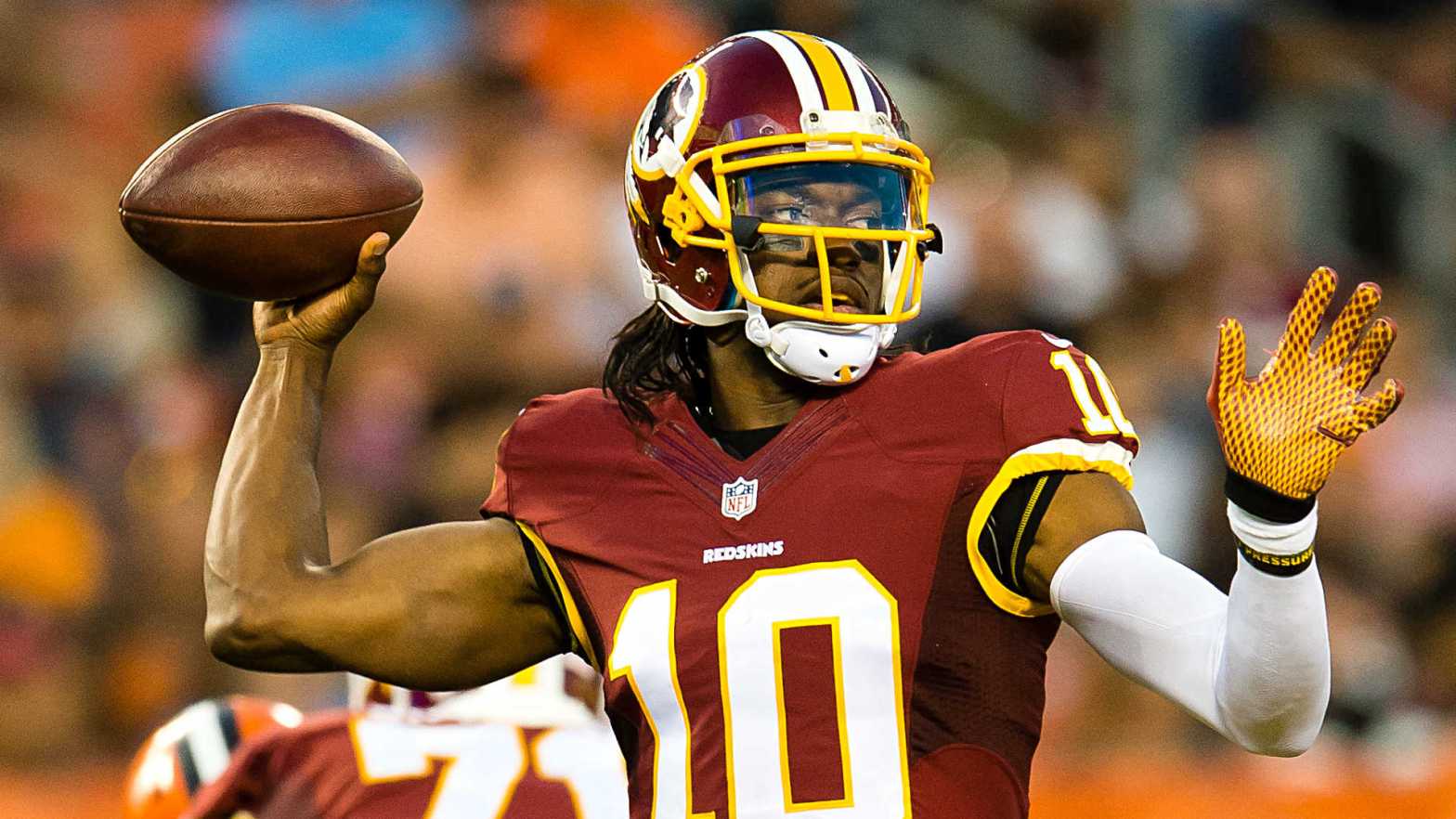
The three remaining quarterbacks on this list are the only ones who made a Pro Bowl in the Snyder era, and they also happen to be the only quarterbacks who led the team to a division title. We all know Robert Griffin III’s story, and while his career in Washington will go down as one of the biggest disappointments in recent franchise history, his incredible 2012 season alone is enough to make him the third-best passer in the Snyder era.

Brad Johnson led the team to the division title in 1999 and also made the Pro Bowl that year passing for 4,005 yards and 24 touchdowns to go with 13 interceptions. His performance dipped in 2000, but he still had a 7-4 record as the starter.

Johnson signed with Tampa Bay in 2001 as Washington turned to George as starter. Johnson had a bounce-back year with Tampa in 2001 before winning the Super Bowl in 2002, while the Washington quarterback search went on.

Tier 1: Kirk Cousins

1. Kirk Cousins (2012-2017)

  • 62 GP, 26-30-1, 24-23-1 as full-time starter
  • 2016 Pro Bowl
  • 16,206 yds, 99-55 TD-INT
  • Had three of the four highest single-season passing yards in franchise history, including franchise-record 4,917 in 2016

As underwhelming as it may seem, Cousins was far and away the best quarterback Washington has had over the past 22 years. He played more games with the team than anyone else in this span, and while he never had the talent or supporting cast to lead the team far in the postseason, he flourished statistically under the Jay GrudenSean McVay offensive system.

He made a Pro Bowl, he won a division title, and he broke the franchise single-season passing record in each of his first two years as the main starting quarterback, breaking Jay Schroeder’s original record of 4,109 in 1986 with 4,166 in 2015 before smashing that mark the following season with 4,917. Cousins’ 4,093 yards in 2017 were just behind Schroeder’s former record and the two marks he set in 2015 and ’16.

His 16,206 passing yards with the franchise are the fourth-most behind Joe Theismann, Sonny Jurgensen and Sammy Baugh, which is pretty impressive considering all three spent seven years or more as the team’s primary starter, while Cousins only spent three.

There really isn’t much room for debate when it comes to the top spot. Cousins was (and still is) a fine starting quarterback. He won’t take any team over the top, but he can put up strong numbers and can hold down the position securely. Washington is still looking for a transcendent quarterback to not only lift this franchise out of the basement, but also keep it at a winning level for an extended period of time. If the past 22 years is any indication, it could be awhile until we find one.

Cover Photo Credit: ESPN

Caps strum the right chord by selecting Hendrix Lapierre in 2020 first round

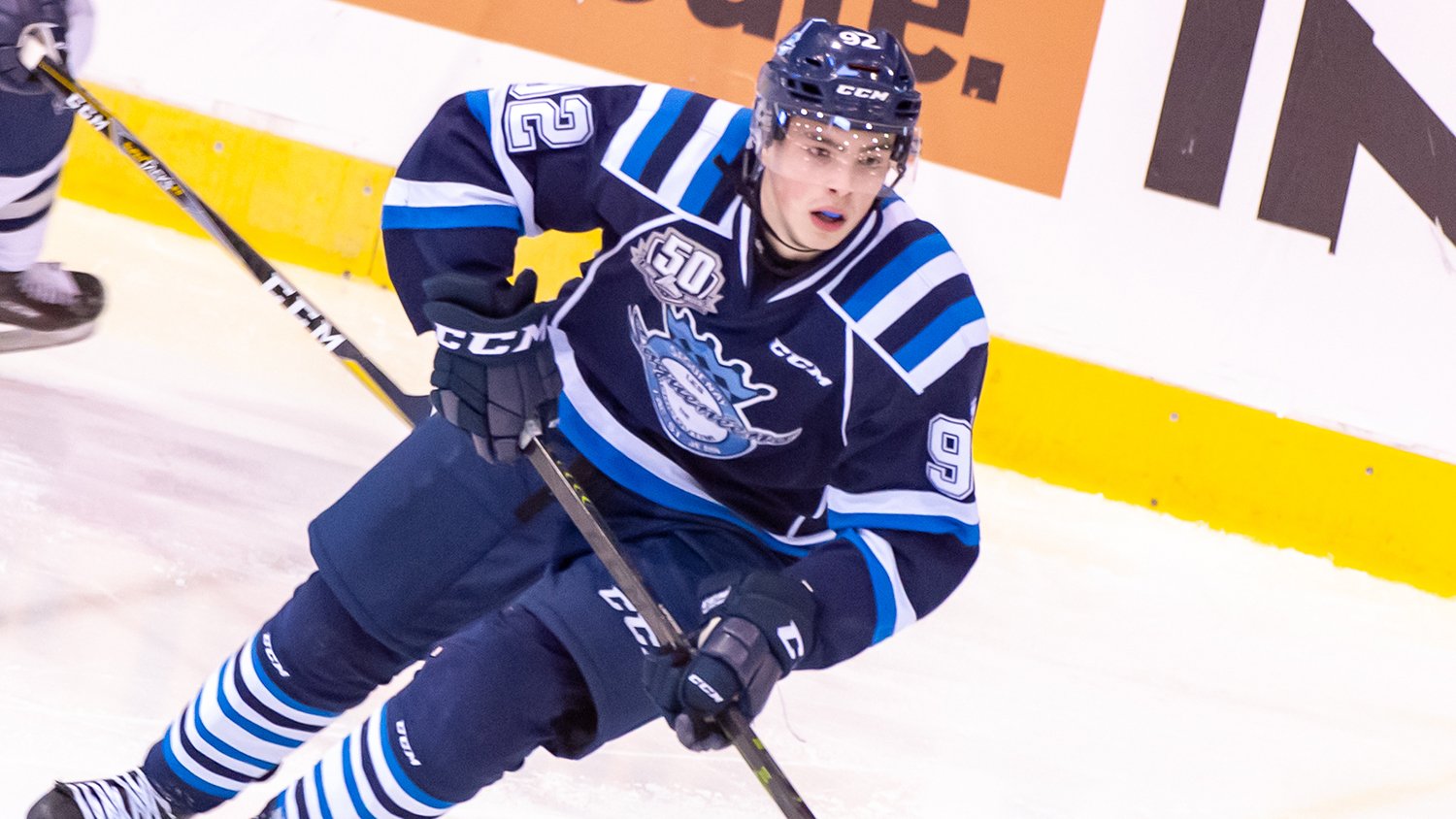
The Capitals didn’t have the 2020 playoffs they hoped for, but now all focus will be on the 2020-21 season. The first offseason move comes in the 2020 NHL Entry Draft, where the Capitals traded up to the 22nd overall pick and used it to select forward Hendrix Lapierre. While the Caps may have snagged the best name in the draft, only time will tell whether Lapierre was the right move.

Assistant GM Ross Mahoney stressed the team’s approach was going to take the “best player available.” That’s a seemingly obvious plan of action, especially for a team that has one of the lowest-ranked prospect pools in the NHL, but the Caps really took a swing for Lapierre, trading up from 24th to 22nd and giving up their third-round pick (80th overall) in the process.

From a pure talent standpoint, the Caps probably did take the best player available. Lapierre had top 10-15 buzz before he suffered three concussions between February and November of 2019. He was later diagnosed with a craniocervical traumatic injury by renowned Boston-based athletic therapist Dan Dyrek. The injury required treatments to his vertebrae which he supposedly got fixed. He was cleared to play again in April 2020.

Lapierre, playing with the Chicoutimi Saguenéens, was the Quebec Major Junior Hockey League’s (QMJHL) 2018-19 Offensive Rookie of the Year, and he scored two goals and two assists to open the 2020-21 season this past weekend, his first game back after being medically cleared.

Despite all the injuries last season, Lapierre posted 17 points (2g, 15a) in just 19 games in the QMJHL, and as mentioned is already off to a hot start this year. We won’t see him in NHL action for at least a couple years, but there’s a lot to look forward to when evaluating the potential he brings to the table.

If Lapierre can stay healthy, he has the potential to develop into a franchise center and the biggest steal of the first round. His player comparison was Chicago Blackhawks captain Jonathan Toews, and while those comparisons should always be taken with a grain of salt, it’s quite the praise.

With 2019 first-rounder Connor McMichael already in the organization, adding Lapierre to the mix gives the Caps two very enticing prospects at center for the future. His head injuries are obviously worth monitoring, but it could pay off big time for the Capitals if things break the right way.

Like many players from his generation, Lapierre named Alex Ovechkin as one of his favorite players growing up, and the said Caps have been one of his favorite teams to watch since he was younger. On a surreal personal note, Lapierre is officially the first player younger than me to be drafted into the Capitals organization. Weird.

Cover Photo Credit: NBC Sports

The Pohory-list: Top 10 Rookie Seasons in DC History

While the Washington Wizards had an uneventful end to their season in the NBA bubble, rookie forward Rui Hachimura shined and wound up earning NBA Second Team All-Rookie honors after a strong first campaign.

Washington Football Team defensive end Chase Young has had a massive impact on Washington’s defense with 2.5 sacks through two games and one quarter. A groin injury in Week 3 will keep him out for Week 4 and possibly beyond, but it’s looking likely that the newest Washington star will be back on the field in the near future.

These are just two examples of rookies that have made an immediate impact with their respective teams, which makes you think which rookies have had the greatest starts to their career. Some rookies are one-hit wonders and flame out, while others start balling right away and never look back.

Today we’ll be looking at the 10 greatest rookies in Washington sports history. The player’s overall career has no impact on the list, it’s strictly based on the rookie season. Individual statistics, awards and contribution to team success all hold equal weight when taking into account which seasons were the best.

As always this list is based on Washington, D.C. sports only, so while the Bullets history is inextricably linked with the franchise’s tenure in Baltimore, it will not be included in this list. As such, Wes Unseld’s legendary 1968-69 season in which he became the second rookie to ever win MVP will not be included. (For the record, if Unseld were included, his rookie season would easily be No. 2. Read the full list to see the only one who would beat him.)

Additionally, Mike Gartner would be a contender for this list, but he was never technically a rookie with the Capitals. He played one professional season with the Cincinnati Stingers of the World Hockey Association (WHA) before the league folded and he entered the 1979 NHL Entry Draft, where the Capitals selected him fourth overall. Gartner led the team in goals and points in his first season, but the NHL ruled former WHA players were not eligible for the Calder Trophy (Granted, Wayne Gretzky would have won it had he been considered a rookie as well).

Here are the 10 greatest rookie seasons in DC history:

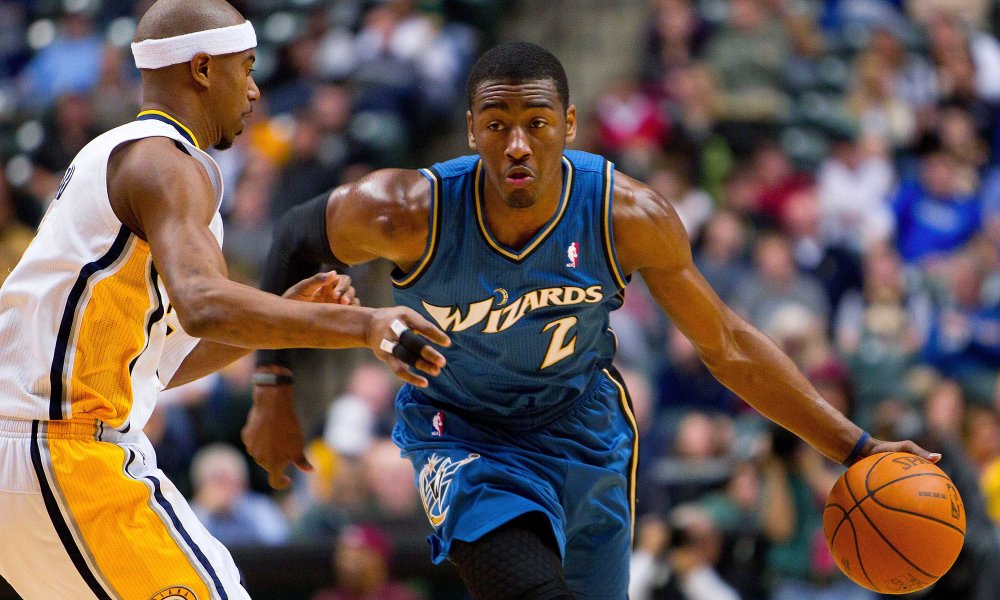
10. John Wall, Wizards PG (2010-11)

Photo Credit: Michael Hickey/USA TODAY Sports
Rookie Season Accolades/Accomplishments:
  • First Team NBA All-Rookie
  • NBA Rookie of the Year Finalist
  • NBA Rookie Assists Leader
  • Led team in Assists per game

When the Wizards won the 2010 NBA Draft Lottery, everyone knew Wall was headed to DC. He signaled a new chapter for the franchise as a point guard to build around. Despite the hype surrounding him, Wall had little help in 2010-11, and the team finished 23-59 and entered the lottery again. That said, the new face of the franchise put together a strong rookie season.

He averaged 16.4 points, 8.3 assists and 4.6 rebounds per game, starting 64 games. His scoring average was second-highest among all rookies behind Rookie of the Year Blake Griffin (22.5), and his 8.3 assists per game not only led all rookies, but was tied for the sixth-highest average in the entire league. Wall finished second in Rookie of the Year voting, and is currently looking to revitalize his career after missing the last 18 months due to an Achilles injury.

9. Nicklas Backstrom, Capitals C (2007-08)

Photo Credit: Jared Silber/NHLI via Getty Images
Rookie Season Accolades/Accomplishments:
  • Calder Trophy Finalist
  • NHL Rookie Assist Leader
  • Capitals Assist Leader

Backstrom took the NHL by storm right away, becoming one of the league’s best passers from the jump. Giving budding superstar Alex Ovechkin a teammate of Backstrom’s caliber did wonders for the Russian; his career-high 65 goals and 112 points earned him his first Hart Trophy.

Focusing on Backstrom, his 55 assists were 11th-most in the NHL that season and tops among rookies. His offensive firepower alongside Ovechkin allowed the Caps to reach the postseason for the first time since 2002-03. He finished second in Calder Trophy voting behind Patrick Kane (21g-51a-72p).

Backstrom also joined the likes of Sergei Fedorov, Eric Staal, Rick Nash, Joe Pavelski, Sean Avery and 11 others in 65th place of Selke Trophy voting, receiving just one fifth-place vote. Backstrom gave Ovechkin an official running mate, and he continues to be under appreciated for his accomplishments to this day.

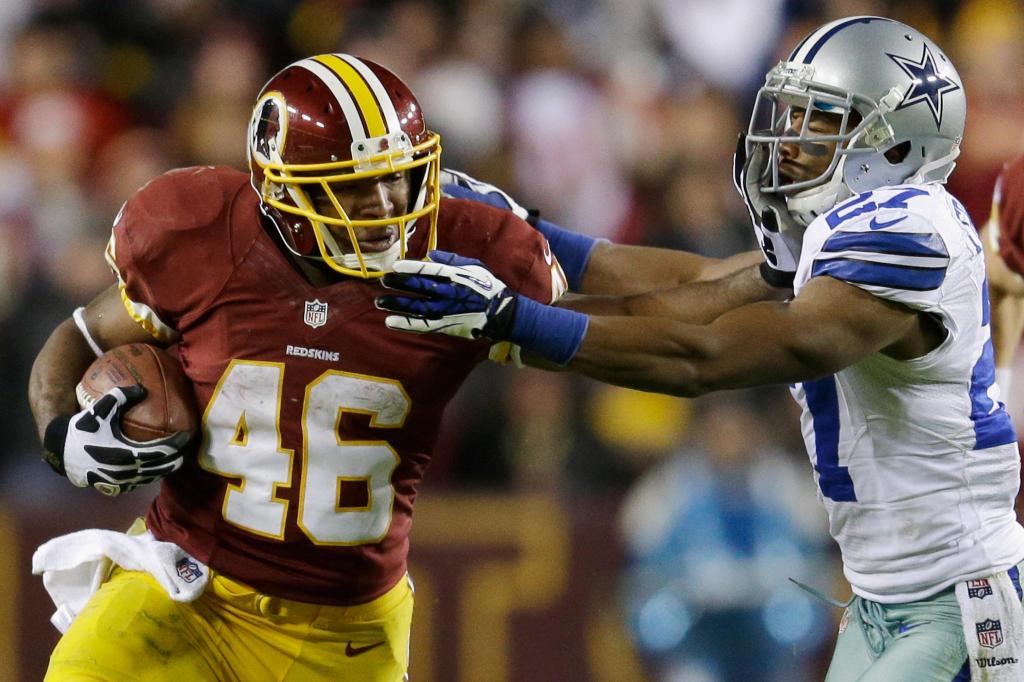
8. Alfred Morris, Washington RB (2012)

Photo Credit: Rob Carr/Getty Images
Rookie Season Accolades/Accomplishments:
  • NFL Rookie Rushing Leader
  • Team Rushing Leader
  • 2nd-most rushing yards in NFL
  • 7th-most scrimmage yards in NFL
  • NFC East Champion

Morris’ rookie year was slightly overshadowed by someone further down on this list, but he came out of no where as a sixth-round pick from Florida International to put up one of the greatest rushing seasons in franchise history. Had Adrian Peterson not put up his MVP-winning 2,097 rushing yards, Morris would have won the NFL rushing crown with 1,613 yards to go with 13 touchdowns.

Morris averaged over 100 rushing yards per game, and he finished the year off with 200 yards and three touchdowns against the Dallas Cowboys in Week 17 to help Washington win the NFC East for the first time since 1999. Despite Morris’ terrific season, he was snubbed from the Pro Bowl and the All-Pro teams, but he established himself as a top running back regardless.

Morris made the Pro Bowl in the following two seasons instead, but never quite reached the level that he started with in 2012. Morris last played with the Arizona Cardinals in 2019 after brief stints with the Cowboys and San Francisco 49ers.

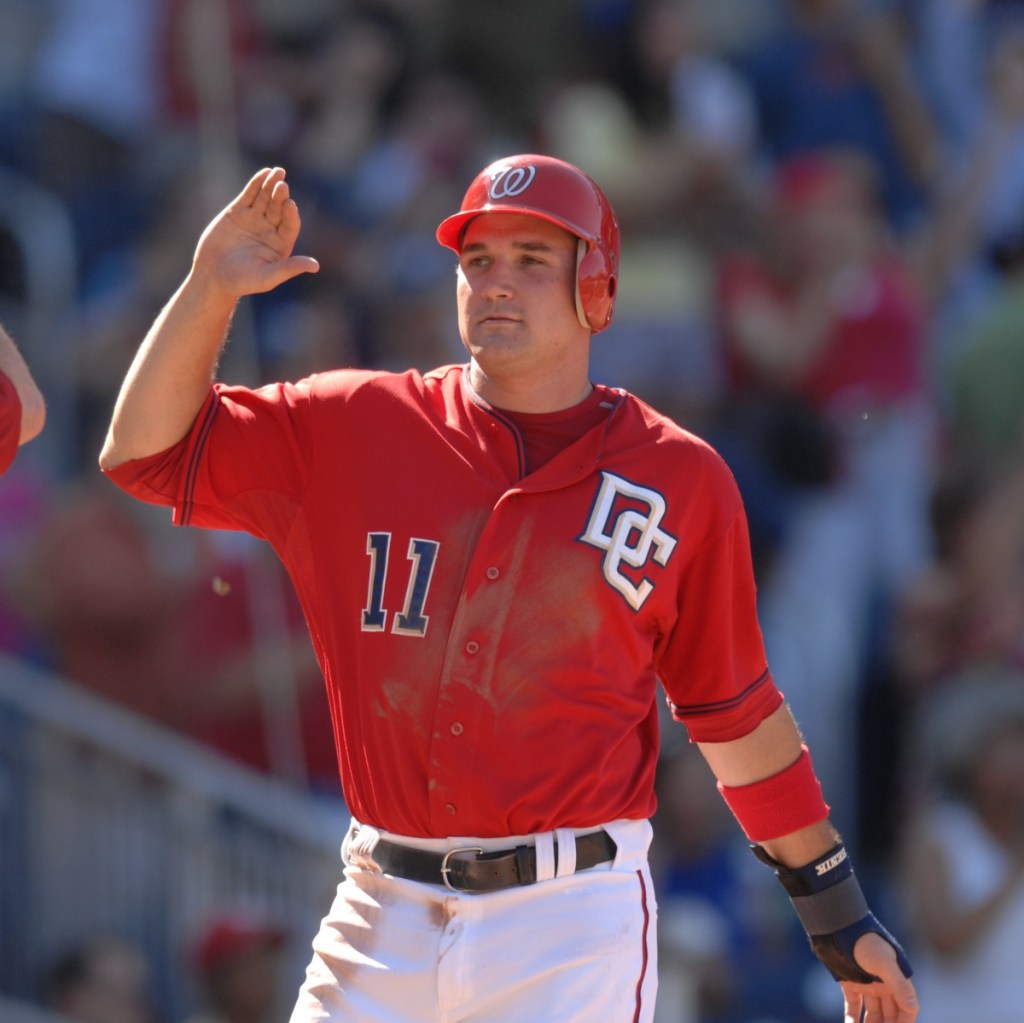
7. Ryan Zimmerman, Nationals 3B (2006)

Photo Credit: Curly W MLB Blogs
Rookie Season Accolades/Accomplishments:
  • NL Rookie of the Year Finalist
  • MLB Rookie RBI Leader
  • Nats Leader in RBI
  • NL 3B Putout Leader
  • NL 3B Fielding Percentage Leader*

Zimmerman made his major league debut in the Nats’ inaugural season in 2005, but didn’t exceed his rookie limits until 2006, where he immediately stepped up as one of the club’s top players.

Zimmerman slashed .287/.351/.471 to go with 20 home runs and a team-leading 110 RBI. Despite being teamed up with All-Star Alfonso Soriano and the plate-disciplined Nick Johnson, the Nationals finished with a 71-91 record due to lack of firepower around that core trio and an abhorrent pitching staff.

While Zimmerman established himself as a rare bright spot in the Washington lineup, he displayed his defensive prowess as well. His 152 putouts led all National League third basemen, which could speak more to how Nationals pitchers had trouble striking batters out, but is still a testament to Zimmerman’s ability to hold down the fort in the hot corner. Of third basemen who played at least 100 games, Zim was tied for the best fielding percentage among NL third basemen (.965).

6. Bryce Harper, Nationals OF (2012)

Photo Credit: Joy R. Absalon/US PRESSWIRE
Rookie Season Accolades/Accomplishments:
  • NL Rookie of the Year
  • NL All-Star
  • NL Rookie WAR Leader
  • NL East Champion

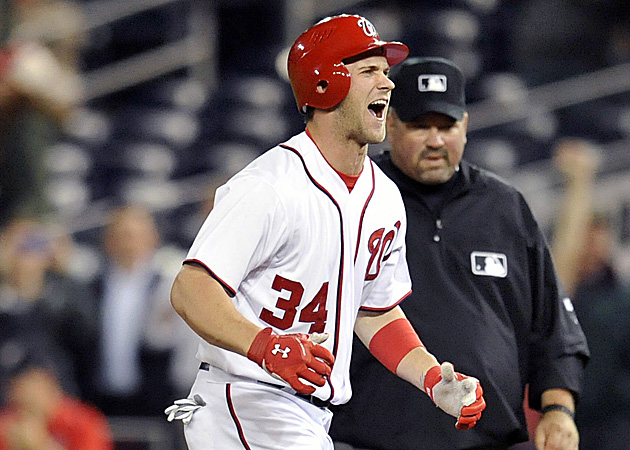
Harper was one of the most hyped baseball prospects of all-time, and the 2010 No. 1 overall pick brought a lot excitement to DC when he debuted in 2012. He didn’t lead in any major offensive categories for rookies, but he was among the best in all of them, which helped him earn Rookie of the Year honors.

Beyond individual statistics, Harper’s arrival sparked the Nationals’ first playoff appearance in team history. With Zimmerman, Adam LaRoche and Ian Desmond leading the way offensively, the 19-year-old Harper brought yet another effective bat to the lineup, and his athleticism in the outfield helped on defense as well.

We all know how the rest of his Nationals career played out, and he will likely be better known as a Philadelphia Philly by the time his career is over (or is it Phillie? Who cares, it’s a dumb team name no matter how you spell its singular form), but his rookie season in Washington was unforgettable.

5. Mike Thomas, Washington RB (1975)

Photo Credit: Getty Images
Rookie Season Accolades/Accomplishments:
  • AP Offensive Rookie of the Year
  • NFL Rookie Rushing Leader
  • Led team in rushing yards, third in receiving yards
  • Fifth-most scrimmage yards in NFL

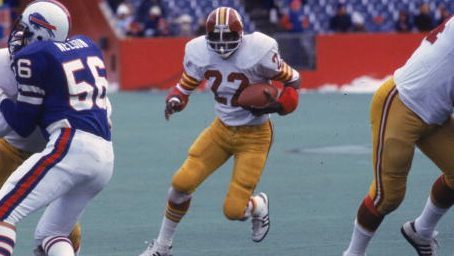
Most of the names on this list developed into significant pieces of the franchise’s history, but not Thomas. The running back spent just six years in the NFL, but looked like one of the brightest young rushers in football as a rookie in 1975.

With 919 rushing yards across 14 games, Thomas finished with the 10th-most rushing yards in the NFL. In addition to elite rushing, Thomas also made his presence known in the passing game. He was third on the team in receptions (40) and receiving yards (483) in 1975 behind an aging Charley Taylor and third-year receiver Frank Grant.

With 1,402 scrimmage yards, Thomas trailed only OJ Simpson, Chuck Foreman, Lydell Mitchell and Franco Harris. That’s quite the list, and Thomas looked poised to join them in the annals of NFL history. But it never happened.

After a Pro Bowl sophomore season, in which he rushed for 1,101 yards and five touchdowns, Thomas took a step back in year three, then got injured in 1978. He was traded to San Diego, where he spent the next two seasons before getting waived and being forced to retire at 27. He died just over a year ago at 66 years old.

4. Charley Taylor, Washington WR/RB (1964)

Photo Credit: Washington Football Wire/USA TODAY Sports
Rookie Season Accolades/Accomplishments:
  • AP Offensive Rookie of the Year
  • Pro Bowl
  • Team Rushing Leader
  • NFL Rookie Rushing Leader
  • Top 10 in NFL Rushing & Receiving
  • T-2nd-most Scrimmage Yards in NFL

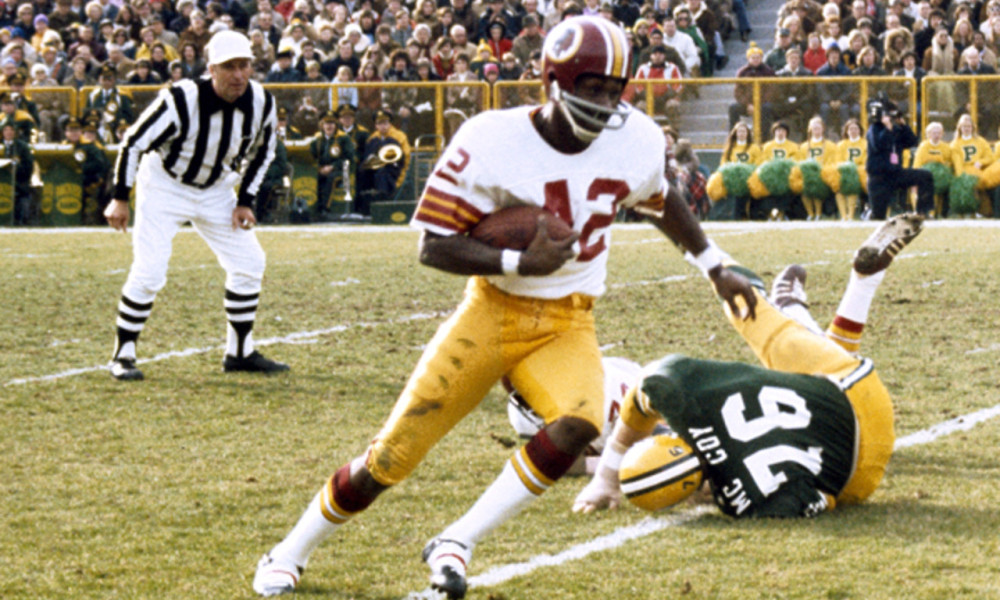
Taylor would later transition into a full-time receiver role, but in his first few seasons he served as a hybrid back and receiver, especially as a rookie. He was the fifth-leading rusher and put up the 10th-most receiving yards in the NFL, immediately establishing himself as one of the biggest offensive threats in the league. He was even the first rookie in 20 years to finish in the top 10 in both categories.

The eventual Hall of Famer scored 10 total touchdowns to tie Bobby Mitchell for most on the team and finished behind just three other players for the league lead. The team itself was mediocre at best, finishing 6-8, and Washington was a long time away from contending, but Taylor was an elite player from the very beginning.

3. Robert Griffin III, Washington QB (2012)

Photo Credit: Getty Images
Rookie Season Accolades/Accomplishments:
  • AP Offensive Rookie of the Year
  • Pro Bowl
  • NFL QB Rushing Leader
  • T-Lowest Interception Rate
  • NFL Yards per Pass Attempt Leader
  • NFL Yards per Rush Attempt Leader
  • NFC East Champion

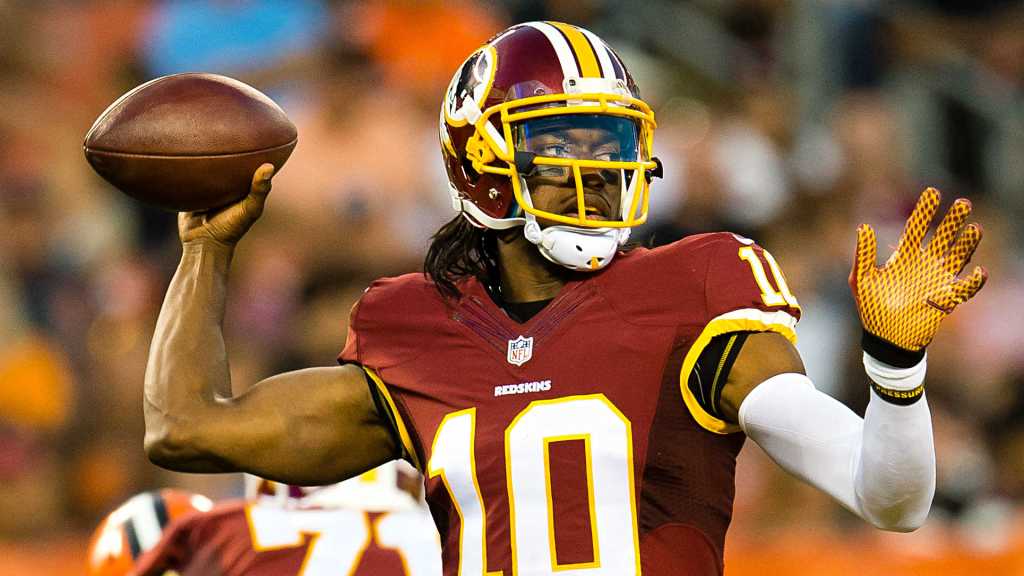
As much as Harper lit the city on fire with the Nationals in 2012, RG3 was the explosive gender reveal party that set the area further ablaze. And it really felt like an actual party. That magical 2012 season had Washington fans everywhere believing the team had finally found its franchise quarterback for the next 10-15 years.

With 3,200 passing yards, 20 touchdown passes and just five interceptions on 65 percent passing, Griffin looked like a pro’s pro in the backfield. He was no dink-and-dunker either, as he led the league with 8.1 yards per pass attempt. His rushing ability was jaw-dropping; with 851 yards, seven touchdowns on the ground and a league-leading 6.8 yards per carry, Griffin was a top 20 rusher in the entire league and topped all quarterbacks in yards.

Much like Harper did for the Nats, Griffin helped drive the team to their first division win of the 21st century, and took home Offensive Rookie of the Year as well as a spot in the Pro Bowl. He suffered multiple injuries as a rookie, culminating in an ACL tear in the Wild Card loss to the Seattle Seahawks, and the downward spiral of his career began, but for one season, the rookie RG3 had the city of Washington hopeful for the first time in decades.

2. Alex Ovechkin, Capitals LW (2005-06)

Photo Credit: NoVa Caps Fans
Rookie Season Accolades/Accomplishments:
  • Calder Trophy winner
  • NHL First-Team All-Star
  • NHL Rookie Shots Record
  • NHL Rookie Goals, Points Leader
  • Led NHL Rookies in Points per game
  • T-Third-most Goals in NHL
  • Team Goals, Assists & Points Leader

Ovechkin had to wait an extra year to debut in the NHL because of the 2004 NHL lockout, but it was worth the wait. Ovi scored two goals in his first game, and never turned back. The budding superstar led the Caps in scoring by a wide margin with 106 points (Dainius Zubrus was closest with 57). His 52 goals were tied for third in the league and first among rookies.

Ovi’s 52 goals still stand as the third-most from a rookie in NHL history, and the most of any rookie in the 21st century. His 106 points are also the third-most in a rookie season in NHL history. With a rookie record of 425 shots, Ovi posted the fourth-highest single-season shot total in NHL history.

His explosive first year earned him the Calder Trophy and ensured the Capitals had a legitimate franchise player to build around. Ovi became the first rookie in 15 years to be selected First Team All-Star, and no rookie has been selected since, which proves just how incredible Ovechkin’s rookie season was.

1. Sammy Baugh, Washington QB (1937)

Photo Credit: The New York Times/Associated Press
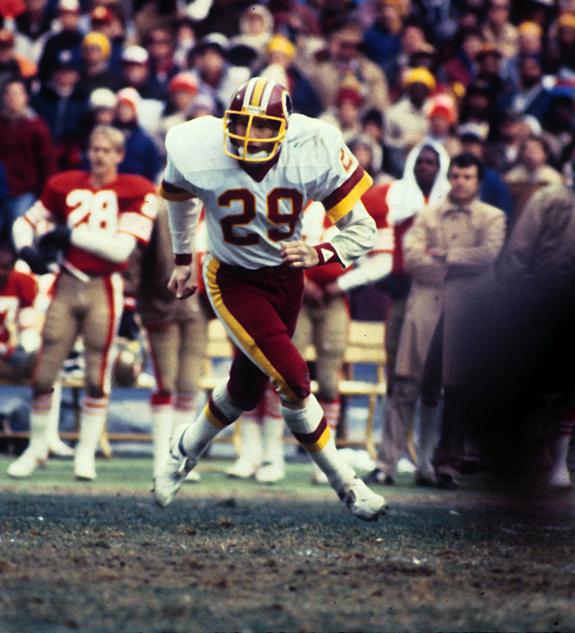
Rookie Season Accolades/Accomplishments:
  • NFL Passing Leader
  • NFL Yards per Pass Attempt Leader
  • NFL Passing Touchdown Percentage Leader
  • Would have been Rookie of the Year*
  • Would have been MVP*
  • NFL First Team All-Pro
  • NFL Champion
  • Would have been NFL Championship MVP*

Baugh accomplished pretty much everything a quarterback could dream of in his first season. In 1937, neither the Rookie of the Year nor MVP awards existed, but you can pretty much guarantee Baugh would have won both awards if they did. The 23-year-old gunslinger led the league in passing (1,127 yards), and despite leading the league in interceptions (14), his eight passing touchdowns were tied for the second-highest total. Astonishingly, his 47.3 percent completion percentage was also second-highest in the league. It truly was a different era.

Baugh added 240 yards and one touchdown on the ground, making him a top three rusher on the team. He led Washington to an 8-3 record to top the NFL East, and absolutely unleashed on the Chicago Bears to win the franchise its first NFL championship. With three passing touchdowns of 35-plus yards (55, 78, 35) and an unprecedented 335 passing yards (after averaging a league-best 102.5 yards per game), Baugh absolutely lit up the 9-1-1 Bears in the 28-21 victory. If Championship MVP honors were awarded, Baugh would have easily won that too.

Baugh was ahead of his time, revolutionizing the quarterback position while putting together one of the most impressive pre-modern NFL careers, all with Washington. He was a legend from Day One, putting together the greatest rookie season in Washington sports history, if not sports history in general.

Nationals 2020 season review

The 2020 MLB postseason begins today, and the reigning World Series champion Washington Nationals will not take part. After a 26-34 season, the reigning World Series champions finished fourth in the NL East (with the exact same record as the last place New York Mets) and will hold the 11th overall pick in the next amateur draft.

The World Series champion Washington Nationals will only lay claim to the title for about one more month, which is why I will milk it as long as I still can, so let’s break down what went wrong, and what there is to look forward to in 2021 and beyond for the World Series champion Washington Nationals.

Injuries, injuries, injuries

With Juan Soto missing the first eight games of the season due to a positive COVID-19 test (he reportedly tested negative the following 10 times he was tested) and Stephen Strasburg making just two starts before being shut down for the season, the team was hit hard from the beginning.

Adding in a broken wrist from Starlin Castro and trips to the IL for Adam Eaton, Howie Kendrick and Sam Freeman among others, the list of aches and pains goes on. It was less a championship hangover and more The Hangover (2009). The Nats were Zach Galifianakis, and 2020 was Mike Tyson and Ken Jeong.

With Ryan Zimmerman and Joe Ross opting out before the season was even played, that adds two more regular contributors whom the team missed in 2020. The team wasn’t ravaged up and down the lineup, but it certainly made an impact. If the team can make a few improvements and experience better health next season, they should find themselves back in the playoff hunt.

Inconsistent offense

No team’s offense will look the same when its best player leaves, but the Nats still had the talent on paper to be a good offensive team. It showed on some nights, but it was more often the Soto-Turner show at the plate.

Soto’s .351 batting average made him the youngest player to ever win the NL batting title (21), and his astounding .490 on-base percentage and .695 slugging percentage led the majors. Trea Turner had a career-year (or career half-year) with 12 home runs, 41 RBI (most on team), and a .335/.394/.588 slash line.

The next-best hitter (min. 40 games played) may surprise you, but it was actually rookie infielder Luis García with .276. The 20-year-old Garcia became the first player born in the 2000s to reach the major leagues, and his debut came after Castro, coincidentally the first 1990s-born player to reach the majors, went down with his wrist injury.

Garcia wasn’t expected to reach the majors until 2021 at the earliest, but his promotion allowed the Nats to find another young player to build around. With Soto, Garcia, Victor Robles and Carter Kieboom (who had an up-and-down year but should improve with time) all 23 or younger, the Nats have themselves a solid young core to build around.

Outside of the good was plenty of bad. Eaton, Robles and Asdrúbal Cabrera all hit south of .250, although each displayed great flashes at certain points in the season. Midseason acquisitions Josh Harrison and Brock Holt were decent in their limited time, but both were meant to serve as bench players to begin with.

Kendrick could only play a limited as a 36-year-old designated hitter, and he’s even mulling retirement next year, but he managed to hit fairly well in the 25 games he played. With no one to pick up for his reduced production, the offense struggled.

There wasn’t much to praise at the plate outside Soto and Turner, but in a breakneck 60-game season, maybe there just wasn’t enough time for everyone else to hit their stride. In any case, the offense has to be better, and hopefully the supporting cast will step up in 2021.

Pitching woes

Strasburg going down so early was a back-breaker, and the starting pitching, which was the team’s biggest strength in 2019, was arguably the biggest weakness in 2020.

Max Scherzer was great as always, striking out 12.3 batters per nine innings and posting a 3.74 ERA. Patrick Corbin was solid, but outside of a few relievers, pretty much everyone else struggled.

Aníbal Sánchez and Austin Voth allowed a ton of runs, and Erick Fedde, who replaced Strasburg in the starting rotation, was certainly better than Sanchez and Voth, but not amazing.

Out of the bullpen, Daniel Hudson and Sean Doolittle each struggled at various points, but other arms were able to emerge, such as Tanner Rainey, Kyle Finnegan and Wander Suero. If this cluster of relief pitchers can somehow find a way to be consistently good all at the same time, the Nationals could have a strong bullpen for the first time ever in 2021. It’s wishful thinking, but it will be harder to get worse in that facet.

My end of season awards

Both Turner and Soto would be in the running for NL MVP if the Nats hadn’t finished so low in the standings, and while there likely won’t be any Nats picking up individual hardware this year, these are my picks for team-wide awards. Most I’m stealing from MLB or other sports, but a few I’ll be making up myself.

MVP: Juan Soto

Cy Young: Max Scherzer

Rookie of the Year: Luis García

Most Improved: Tanner Rainey

Best newcomer: Starlin Castro

Defensive Player of the Year: Victor Robles

Mr. Reliable: Trea Turner

The Gerardo Parra Clubhouse Engine Award: Yadiel Hernández

The Where’s Waldo Award: Adam Eaton

The Drew Storen “Oh not him again” Award: Ryne Harper

The Michael A. Taylor Boom-or-Bust Award: Michael A. Taylor

You could pick either Soto or Turner for MVP and be correct. I went with Soto simply due to his league-best hitting and strong defense in left field. Scherzer gets team Cy Young for obvious reasons, although it pales in comparison to his real Cy Youngs. Kieboom was slated to walk away with Rookie of the Year, and while he put together some good at bats, García stole the show and will hopefully take a leap in 2021.

Rainey went from shaky relief option with tons of velocity in 2019 to a flamethrower with tons of velocity in 2020. His performance dipped a bit by the end of the season (his ERA was 1.10 on Sept. 3, and it ended at 2.66), but he looked like he had the stuff of a future shutdown closer. Rainey’s the real deal.

Castro’s season was cut short after 16 games, but he brought solid offense and good defense as the everyday second baseman. The only silver lining of his injury is that it cleared the way for Garcia’s emergence. Hopefully both trailblazers will be top contributors next season.

It would have been nice if Robles established himself as a reliable offensive player, but it was a quiet year for him at the plate. Despite those struggles, Robles showed time and time again that he is the best defensive center fielder in baseball. When he can get his bat going consistently, he will be an even bigger force on the diamond.

Turner didn’t get my MVP vote, but as the second-best hitter this year, the team’s best infielder and one of just three players on the team to appear in over 50 games (he was just one shy of playing in all 60), Turner was easily the most consistent, reliable player on the team this year. Add in his 16-game hit streak in August through early September, and he’s the no-brainer pick.

Yadiel Hernández made his major league debut on Sept. 10 at 32 years old, but he had his moment on Sept. 22 when he hit a walk-off home run — the first home run of his MLB career — against the Phillies to secure an 8-7 win for the Nats. Hernández joined the team midseason, he hit a walk-off for his first home run as a Nat, and he served as a great energizer in the dugout through the rest of September. He channeled Gerardo Parra in every way.

Robles and Eric Thames were among the players who disappointed at the plate, but after hitting the first home run of the season back in July, Eaton just seemed to disappear for much of the season. His -0.9 WAR was tied for worst on the team, and with a slash line of .226/.285/.384, his normally strong offensive output was diminished.

The “oh not him again” award is named after former Nats reliever Drew Storen because of the intense feelings of dread I felt whenever he came in to close a game. Despite putting up solid regular season numbers, Storen blew leads in two crucial playoff games (Game 5 of the 2012 NLDS and Game 2 of the 2014 NLDS) which eventually led to the Nats ouster in the playoffs.

This year the reliever that gave me that similar feeling was Ryne Harper. Harper had plenty of seamless outings, in fact he had more 0 ER games than 1+ ER games, so credit where credit is due, but he still had a handful of blow-ups. Harper’s 29 hits allowed and 20 earned runs were the most among Nats relievers. Remarkably, despite the handful of bad outings, he finished with a 1-0 record.

I’ve said it before, and I’ll say it again: Michael A. Taylor only either hits home runs or strikes out. I’ve seen him hit a home run more often than I’ve seen him get a base hit, and I’ve seen him strikeout more than any of those outcomes combined. Surely I’m exaggerating, but when looking at the stats, it’s not too far off.

Despite batting a measly .196, Taylor’s five home runs were the fourth-most on the team. His 27 strikeouts were the ninth-most, but every player with more had at least 123 at bats (except Kieboom, who had 99), while Taylor himself had just 92.

Looking closer at the home runs, Taylor had just 18 hits this season. Five were home runs, meaning 27.8 percent of his hits were home runs. That is absurd. The three players ahead of him in the home run count had 46 hits or more. The two players right behind him with four home runs had 31 hits or more. The next-highest “home run percentage,” as in the amount of hits that were home runs was 24.1 percent from Soto. No one else is even close to that.

Soto, as we’ve seen, is obviously a much more complete hitter. Taylor having a percentage that high makes little sense. Taylor had six doubles, zero triples and five home runs. He had nearly as many home runs as he did other extra base hits. I always had this sense, but the numbers back it up: Michael A. Taylor is the biggest boom-or-bust hitter I’ve ever seen, so he not only deserves the namesake of this award, but he earned it this year as well.

After such an incredible 2019 season, 2020 fell flat. It will be an interesting offseason, as this team still has the pieces to get back to the playoffs, but the World Series champion Washington Nationals will be able to fly that 2019 flag forever.

Cover Photo Credit: John Minchillo/Associated Press
The Washington Football Team falls back down to Earth in loss to Cardinals

When the Washington Football Team defeated the Philadelphia Eagles in Week 1, there was a lot to be excited about: the defensive line dominated, Dwayne Haskins looked in control and the Eagles looked atrocious.

A week later, against a much more formidable opponent, the team looked closer to what everyone expected coming into the season. They’re still technically in first place in the NFC East, but that will likely come to an end in the next week or two.

No one expected them to be a super team after last week; this is still very much a rebuild, but after seeing the starts to their division rivals’ games, it wasn’t out of the question to wonder if Washington had the best team in the division.

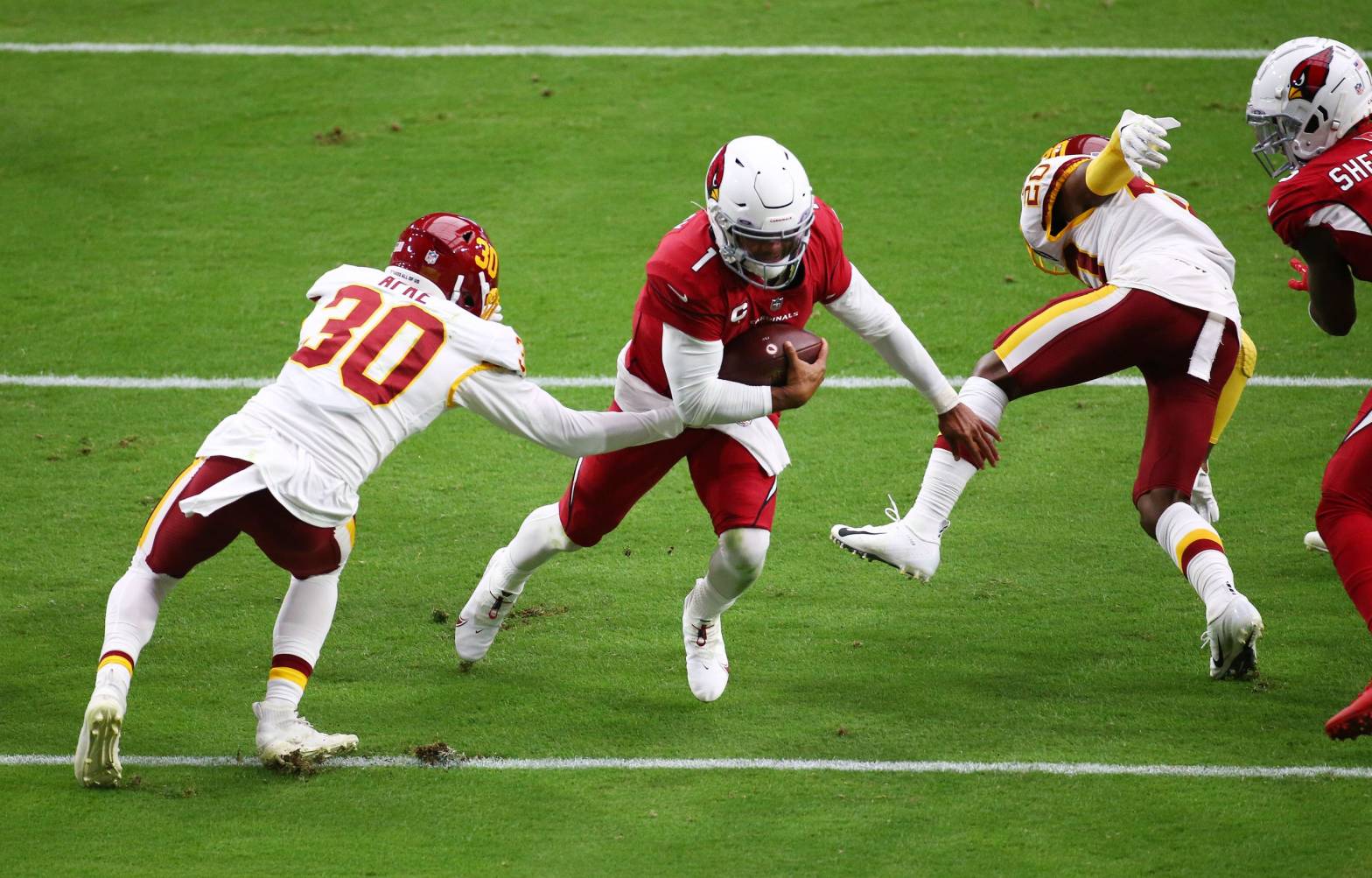
Then later that afternoon, the Burgundy & Gold proceeded to fall down 20-0 by halftime before eventually losing 30-15. Kyler Murray and the Arizona Cardinals, to their credit, have been named dark horse contenders by so many people that they probably can’t even be considered dark horses. Still, the growing pains were evident for Washington.

The defense was fine, but not great. They let up too many points too early, but managed to hold Arizona at 20 points for a large stretch. The offense, like last week, couldn’t get anything going, and an already dreadful offensive line lost their best piece when Brandon Scherff went down with a knee injury.

Here’s a scary thought: Chase Roullier is now our best offensive lineman. Geron Christian is simply not a starting left tackle, and Wes Martin has not looked good at left guard either. Some people will blame the offensive ineptitude on Haskins, but when you can’t get blindside protection, it’s hard to do well in the NFL.

Rounding out the line is Morgan Moses, one of the highest-paid right tackles in the league, who he has not seemed to recapture the form that earned him his contract.

As I mentioned last week, the schedule isn’t getting any easier in the coming weeks, and with Scherff now out for three to five weeks, our offense could struggle mightily.

There was buzz earlier in the week that perhaps Allen Robinson wanted out of Chicago, but that has since been shut down. The Bears’ star wide receiver would have been a perfect addition to this offense. Giving Haskins an established, veteran threat to throw to besides Terry McLaurin would have done wonders. Suddenly the offense wouldn’t look too bad beyond the offensive line.

Instead, Robinson appears to be staying put. The pass-catchers looked about as expected as well; McLaurin had a great game (7 rec-125 yds-1 TD), but the rest of the squad was mediocre at best.

Tight end Logan Thomas was peppered with targets for the second week in a row, with Haskins looking his way nine times. Only McLaurin (10) was targeted more. Despite all the attention, Thomas looked out of sync with Haskins for much of the day, grabbing just four receptions for 26 yards.

Maybe Thomas just needs more time to gel with the offense, or maybe he doesn’t have what it takes to be a starting tight end in the NFL. Haskins seems to trust him as a target, so he’ll have plenty of opportunities to prove himself.

The biggest pleasant surprise on offense was JD McKissic. Brought in as a receiving back, McKissic rushed for 53 yards on just eight carries (6.63 yards per carry). He broke off for several long runs that often saved the drive for the offense. Rushing isn’t his calling card, so it’s nice to see that he was able to produce on the ground as well.

As for the other running backs, Peyton Barber was the lead back a week ago, taking 17 carries, but this week Barber had just one carry for one yard. Rookie Antonio Gibson had the most carries this week (13) for 55 yards and a late touchdown. Gibson looked shifty, explosive and perhaps already the best all-around back in this offense.

I still think keeping Adrian Peterson around would have been helpful. He can still play, and if the team is only giving Barber a single carry (in which he converted on 4th & 1), and McKissic and Gibson are more rushing/receiving hybrids, then Peterson seems like a valuable veteran presence in the backfield. Oh well.

We’ve seen the Washington Football Team face a dumpster fire and a legit playoff contender in back-to-back weeks. I think it’s fair to say they fall somewhere in between, at least at this point. This is not a playoff team; they can’t really compete with the best out there (although in this year’s NFC East, who knows?). At the same time, there are a handful of teams in more destitute situations so far.

The offense has to start getting points early, and the defense needs to make more stops early in the game, but I would be shocked if there is no improvement between now and Week 17. At least All-Pro punter Tress Way looked sharp as always; we can definitely count on him.

Cover Photo Credit: Rob Schumacher/The Arizona Republic via USA TODAY NETWORK

The Pohory-list: Top 10 undrafted players in DC history

I’ve ranked the top 10 first overall picks and have named the best players selected in each first-round draft slot in the past, so today I’m going to look at the other end of the spectrum. First-round picks, especially the first overall selections, enter the league with high expectations. They are the future stars that teams build around.

Unlike those destined stars, there are plenty more that never hear their name called on draft day. If they’re lucky enough to get signed, they have to fight every step of the way to earn a permanent spot on the roster and then push even more to receive actual playing time.

Most slip through the cracks and are forced to either play overseas or just retire. A rare few are able to prove every team’s front office wrong and show they deserved to be as coveted as the highest-drafted players.

For this list, a player’s entire career will be taken into account, but his time in Washington will be prioritized most when compared to others. So while some players on this list may have had a better overall career than a player ahead of them on the list, they are ranked lower due to their stint in Washington not being as strong as the other’s.

In addition, I won’t be including any of the great Washington Senators of the past. The MLB Draft was not implemented until 1965, so while a legend like Walter Johnson would easily top this list of undrafted players, it wouldn’t be an accurate representation since nobody in that era was drafted. The same rules apply to any player in another sport who began their career before their league’s draft was implemented.

Baseball also has the luxury of extracting international free agents from other countries without going through a traditional draft. Juan Soto, Victor Robles and Luis Garcia are just three players in recent years that signed with the team as international free agents out of the Dominican Republic. Technically none of them were drafted, but they all would have been if they were included in the draft pool, so including any of them would skew the rest of the list.

As such, no Nationals players made the list, as the number of rounds in the MLB Draft make it nearly impossible for anyone who reaches the majors to be undrafted. In any case, here are the top 10 undrafted players in city history:

10 – Ben Wallace, Washington Wizards C (1996-99)

Photo Credit: Doug Pensinger/Allsport

Wallace is arguably the best undrafted player in NBA history, but he falls so low on this list because he achieved his greatness after leaving the Bullets/Wizards. After spending his first three years in Washington, Wallace went on to become the best defensive player in the league, making six All-Defensive Teams and winning Defensive Player of the Year four times with the Detroit Pistons. He was instrumental in Detroit’s NBA Championship win in 2004.

The two-time rebounding champ wasn’t close to the caliber player he would become in Detroit during his stint in Washington. He averaged just under six minutes per game as a rookie, but by his third season he was averaging 6.0 points, 8.3 rebounds, 2.0 blocks and 1.1 steals per game in a rotational role. That’s pretty good for an undrafted player, but it pales in comparison to what he became.

9 – Geoff Courtnall, Washington Capitals LW (1988-90)

Photo Credit: SCORE

Courtnall spent just two seasons in Washington, but made the most of his time here. He finished as the second-highest scorer on the team in both years, totaling 80 points in 1988-89 before finishing with 74 in ’89-90.

Courtnall played just 31 total games with the Edmonton Oilers prior to joining the Caps in 1988, but he managed to help the Oilers win their fourth Stanley Cup in five years. In 19 playoff games, Courtnall contributed just three assists.

Despite spending more time with Boston, St. Louis and Vancouver, Courtnall’s two years as a Cap were two of three seasons in which he received All-Star Team votes. (The only other season was with St. Louis in 1997-98 at 35 years old.) Courtnall didn’t spend a lot of time with the Caps, but with a Stanley Cup and 799 points in 1,048 career games played, Courtnall is one of the better undrafted players in NHL history.

8 – Dino Ciccarelli, Washington Capitals RW (1989-92)

Photo Credit: Denis Brodeur/NHLI via Getty Images

Ciccarelli is one of the few Hall of Famers on this list, but he comes in at eight purely because he played just three full seasons with the Caps. Much like Courtnall, Ciccarelli was consistently among the team’s top scorers.

In his first full season with the team in 1989-90, Ciccarelli led the team with 79 points (41g, 38a). He played just 54 games the following season, which dropped him down to 39 points (eighth-most on the team), but he bounced back in ’91-92, where his 38 goals and 38 assists put him back among the top three scorers on the team.

He played 19 years in the NHL, scoring exactly 1,200 points in 1,232 games. His 608 career goals are 19th-most in NHL history.

7 – Mark Murphy, Washington Redskins S (1977-84)

Photo Credit: Redskins Historian

Murphy played just eight NFL seasons — all in Washington — with one of the strangest careers arcs I’ve ever seen. Essentially a non-factor in his first two seasons, Murphy abruptly became a full-time starter by his third season and started every game from 1979-82, and he missed just one game the following year in ’83.

Murphy was an absolute ball-hawk in his prime, finishing in the top 15 in interceptions league-wide three times in four years from 1980-83, culminating with a league-leading nine interceptions in ’83, coinciding with his first and only Pro Bowl and All-Pro selections.

Following that all-time great season, Murphy started just two games in 1984 in what would be his final NFL season at just 29 years old. Many speculate his active role in the union during the 1982 NFL strike had something to do with his ouster from league circles. Regardless, Murphy’s elite play helped Washington win its first Super Bowl, and he made a great career out of an undrafted start.

6 – Neal Olkewicz, Washington Redskins LB (1979-89)

Photo Credit: Redskins Collect

The Washington Football Team dominates this list, as the Super Bowl teams of old were supplemented by undrafted players who broke out in big ways. Olkewicz is one of them; he spent his entire 11-year career in Washington and helped the team win its first two Super Bowls.

Olkewicz never made a Pro Bowl or All-Pro team, but he started every game from 1982-86 and was a constant force in the middle for Washington. Not many defensive stats were tracked back then, but he ironically finished with his career-high for single-season sacks (3.0) in the shortened 1982 Super Bowl season.

He may not be regarded among the very best players in team history, but his impact earned him the distinction of being named one of the 70 Greatest Redskins in 2002.

5 – Jeff Bostic, Washington Redskins C (1980-93)

Photo Credit: Leader In Sports

Bostic was a fixture at center for the famed Hogs offensive line group, and he spent his entire 14-year career with Washington, making him one of only eight players to spend at least 14 years with the franchise. Bostic made just one Pro Bowl in his career (1983), but he was the starting center for all three Super Bowl victories, snapping the ball to a different quarterback in each one.

Bostic’s role in franchise history earned him a spot in the franchise’s Ring of Fame, where he was enshrined in 2015. While he doesn’t garner the same Hall of Fame nomination buzz that teammates Russ Grimm and Joe Jacoby did, he remains an all-time great Washington player.

4 – Mike Ridley, Washington Capitals C (1987-94)

Photo Credit: NHL

Ridley started his career with the New York Rangers but was traded to Washington in his second season in the Bobby Carpenter trade. He finished fourth on the team in points during his first full season in 1987-88, and spent the remaining six years among the top three scorers on the team.

In fact in 1989-90, Ciccarelli, Courtnall and Ridley made up the top three scorers on the team. All three of them undrafted, all three on this list. Ridley was fifth on the team in points in ’91-92, but led the team in ’88-89 and ’93-94, and finished second or third in every other year. That consistent offensive output landed Ridley on the top 10 franchise leaderboard for goals (fifth with 218) and points (eighth with 547).

Ridley also brought a solid defensive component to his game, earning himself votes for the Selke Trophy in three different seasons. He made one appearance in the All-Star Game in 1989.

3 – London Fletcher, Washington Redskins LB (2007-13)

Photo Credit: Scott Cunningham/Getty Images

Fletcher got himself a Super Bowl ring early in his career with the St. Louis Rams in 1999, but he didn’t arrive in Washington until 2007 at 32 years old. In seven seasons with Washington, Fletcher started every single game, extending an incredible starting streak to 215 games, an NFL record among linebackers.

His durability allowed him to be a reliable force commanding the defense. Fletcher led Washington in tackles, often by wide margins, in every season except his final one, when he trailed team-leading Perry Riley (115 combined tackles at 25 years old) by just four (111 at 38). He led the league with 166 tackles in 2011.

Fletcher also totaled 12 interceptions and 11.5 sacks across those seven seasons, and he made the Pro Bowl four years in a row from 2009-12. He only recently became eligible for the Hall of Fame, where he will hopefully be (and should be) inducted within the next few years.

2 – Adam Oates, Washington Capitals C (1997-2002)

Photo Credit: Doug Pensinger/Allsport

Oates is another player on this list who has a bidding to the title of greatest undrafted player in the history of his sport, but he didn’t come to Washington until his 12th NHL season at age 34. Despite his (relatively) advanced age, Oates accomplished a lot in his five-year stint.

In his first full season, Oates was second on the team in points (76) behind Peter Bondra, and his 58 assists more than doubled the next-highest total (Bondra’s 26). His 17 points (6g, 11a) in the playoffs that year co-led the team as the franchise reached its first Stanley Cup Final in 1998.

Oates was named captain prior to the 1999-2000 season, and he led the team in points over the next two years. At 38 years old in 2000-01, Oates co-led the NHL with 69 assists, and he led the league again the following year with 64. A trade to Philadelphia in 2002 marked the beginning of the end for his playing career, but he was inducted into the Hockey Hall of Fame in 2012.

We won’t talk about his coaching stint — this is purely about Oates as a player.

1 – Joe Jacoby, Washington Redskins OT (1981-93)

Jacoby was also a member of the Hogs, and he tops this list as one of the greatest, if not underappreciated, offensive tackles of his time. Like Bostic, Jacoby was on the team for all three Super Bowls. He primarily played left tackle, but was shifted to the right and briefly played guard in the latter stages of his career.

The fact that the Hogs contained two undrafted players as keystone pieces is mind-boggling; it’s either terrific scouting or terrific luck, but either way, Jacoby established himself as one of the top offensive linemen of the 1980s. He was a two-time AP First Team All-Pro selection, and he earned four consecutive Pro Bowl selections from 1983-86.

Jacoby has been nominated for the Hall of Fame multiple times over the past decade, but he reached 20 years of eligibility in 2018 without being inducted. He still has a chance as a “senior” candidate down the line, but his exclusion to this point is head-scratching. Jacoby spent his entire 13-year career in Washington, and lays claim to the greatest career of an undrafted player in city history.