The Capitals were robbed of Henrik Lundqvist before he even had a chance to take the throne. In a brutal twist of fate, the Capitals’ netminder-to-be announced he will be sitting out the 2020-21 season after being diagnosed with a heart condition.
Whether this spells the end for Lundqvist’s illustrious NHL career is a conversation to be had later, once he is able to sort out what’s best for him and his health. For now, the biggest concern is that this condition won’t affect his off-ice life negatively in any way, and if he must move on from hockey, he can do so without any issue.
With all of that in mind, this really stings from a hockey perspective. A tandem of Lundqvist and Ilya Samsonov was going to be one of the better goalie pairs in the league. Now, the Caps will have to rely on Samsonov as the clear-cut No. 1 despite the young Russian having just 26 NHL games under his belt.
For a team with aspirations of returning to the Stanley Cup Final, this is far from the ideal situation. Lundqvist was poised to be a strong veteran presence to help the team and mentor Samsonov as well. With a good season and the right amount of luck, the Caps could perhaps help Hank win a Stanley Cup to round off his terrific resume.
Now the Caps will have major issues if Samsonov cannot perform to the team’s standards. There was no guarantee Lundqvist would be a savior if Samsonov faltered, as he was coming off a season with career-worst numbers, but coming to a better team in Washington with a defensive-minded coach in Peter Laviolette, a rebound was expected.
While Samsonov’s inexperience is a valid concern, that happens to be the only worry with him when looking at his numbers last year. He finished 16-6-2 with a .913 save percentage and a 2.55 goals against average, outperforming longtime starter Braden Holtby. He was the fastest rookie in franchise history to reach 10 career wins, needing just 12 games to do so.
There is no doubting his ability and long term potential. However, the growing pains of jumping from 26 games as the secondary option to a full-time NHL starter in a full season is the biggest issue. It will help that this season won’t be a full 82 games, but in a league that continues to transition to goalie tandems rather than a single starter, the Caps are now officially behind the curve after it looked like they’d be getting ahead of it.
Replacing Lundqvist will be Vitek Vanecek, the 24-year-old former second-round pick that split the crease with Samsonov for the Hershey Bears in 2018-19 and went to the Toronto bubble as Holtby’s backup this past summer. He was named an AHL All-Star each of the past two seasons.
Vanecek appeared in a single period, the final frame against the Carolina Hurricanes in the squad’s tune-up game before the round-robin games. Otherwise, he has zero NHL experience.
The team could conceivably choose to bring up Pheonix Copley instead, or sign another free agent, but Vanecek has the highest upside, the lowest cap hit and appears to have the inside track. He was chosen over Copley as the backup in Toronto, meaning the Caps overlooked his inexperience and recognized him as the more talented netminder. That said, that was also with Holtby, a former Vezina Trophy winner with Stanley Cup experience, on top of the depth chart.
With the inexperienced Samsonov, the Copley may be the choice instead. The soon-to-be 29-year-old got the bulk of his NHL experience as Holtby’s backup in 2018-19. He posted a .905 save percentage and 2.90 GAA in 24 starts. Copley split time evenly with Vanecek in Hershey last season, and this is how the two performed:
2019-20 Hershey
Games Played
Minutes Played
W-L record
Save Percentage
GAA
Shutouts
Goals Against
Saves
Vitek Vanecek
31
1,832
19-10-1
.917
2.26
2
69
758
Pheonix Copley
31
1,868
17-8-6
.905
2.47
2
77
733
Their numbers are fairly similar, but Vanecek performed slightly better, which was one reason why the team chose him over Copley to back up Holtby this summer. The club views Vanecek as a viable NHL backup in the future, but the tandem of Samsonov and Vanecek could be on display much sooner than the Caps assumed (or wanted).
An interesting wrinkle is that when Vanecek and Samsonov split time in Hershey the year prior in 2018-19, it was Vanecek who had the better numbers, if only slightly:
2018-19 Hershey
Games Played
Minutes Played
W-L Record
Save Percentage
GAA
Shutouts
Goals Against
Saves
Vitek Vanecek
38
2,219
21-10-6
.907
2.62
2
97
945
Ilya Samsonov
37
2,202
20-14-2
.898
2.70
3
99
868
Samsonov had a slow start to begin his first season in North America, but got better as the year went along. That said, Vanecek was the more consistent player and ended with slightly better stats for 2018-19.
Another thing to consider is the NHL’s possible implementation of “taxi squads,” which would allow teams to hold a larger number of players on their roster to reduce the number of people moving between the parent club and minor league’s training site. The extra room would allow for the Caps to bring up both Vanecek and Copley to join Samsonov.
There are a handful of free agents still on the market, but none that would be worth using extra cap room for over Vanecek. It will be risky entering this season relying on two unproven goaltenders, but it seems they’ll be forced to roll the dice with a development that puts a dent in the team’s outlook for this upcoming season.
Another, less pressing question is if Lundqvist does play again, will it be in Washington? His deal was for just one season, and he will be in the free agent market again next year. Will he take another team friendly deal to play in Washington or decide to go elsewhere? Will he even be ready to come back for 2021-22?
Is this the last we’ve seen of Lundqvist on the ice? The man will be 39 in March and has a family that he may just want to settle down with after a Hall of Fame-worthy NHL career. I suppose those answers will come within the year.
Regardless, it’s a gut-punch of a development on all accounts, and a player like Lundqvist deserves to leave the game on his own terms. For now, the Caps need to sort out their goaltending situation yet again, and will have to hope Samsonov and Vanecek are up the task.
Cover Photo Credit: Johan Rylander/The Daily Goalhorn
With a record of 6-7 and three games left in the regular season, the Washington Football Team is leading the NFC East. The last time the team led the division with three games remaining was 2015, where the team was also 6-7 and ended the season on a three-game winning streak to claim the division crown.
That 2015 season was the last time Washington was in the playoffs, and despite the packed race that is the 2020 NFC East, Washington is in the driver’s seat, sitting a game ahead of the New York Giants and 1.5 games ahead of Philadelphia.
The division is still far from locked up, but after taking a close look over the remaining schedule, here are a bunch scenarios in which the Washington Football Team will win the division, and a couple others where they fall just short.
Scenario 1: Everyone runs the table (minus division games)
Week 15
Week 16
Week 17
Final Record:
WFT (6-7)
W vs SEA
W vs CAR
W vs PHI
9-7*
Giants (5-8)
W vs CLE
W vs BAL
W vs DAL
8-8
Eagles (4-8-1)
W vs ARI
W vs DAL
L vs WAS
6-9-1
Cowboys (4-9)
W vs SF
L vs PHI
L vs NYG
5-11
This one is pretty simple; as it stands, if we manage to win the remaining three games, we win the division. It wouldn’t matter what the rest of the division does, as evidenced by the second-place Giants also winning out and still not overtaking the top spot. This scenario is unlikely, but it’s comforting (or maybe concerning) knowing that this team controls its own destiny.
Scenario 2: WFT drops season finale (2-1 finish)
Week 15
Week 16
Week 17
Final Record
WFT (6-7)
W vs SEA
W vs CAR
L vs PHI
8-8*
Giants (5-8)
L vs CLE
W vs BAL
W vs DAL
7-9
Eagles (4-8-1)
W vs ARI
W vs DAL
W vs WAS
7-8-1
Cowboys (4-9)
L vs SF
L vs PHI
L vs NYG
4-12
Scenario 3: WFT drops season finale (1-2 finish)
Week 15
Week 16
Week 17
Final Record
WFT (6-7)
L vs SEA
W vs CAR
L vs PHI
7-9*
Giants (5-8)
L vs CLE
L vs BAL
W vs DAL
6-10
Eagles (4-8-1)
L vs ARI
W vs DAL
W vs WAS
6-9-1
Cowboys (4-9)
L vs SF
L vs PHI
L vs NYG
4-12
If Washington can pull off another upset in Seattle, it will put them in an even greater position, but if they fall short as expected, and even lose to Philly in Week 17, there will still be hope as long as they win in Week 16 against Carolina.
If Washington sandwiches a Week 16 win with losses in Weeks 15 and 17, the Giants would have to go 2-1 or better over than same span, or Philly would have to win out in order for either team to overtake the division lead. The results in Week 15 will create a much clearer picture as to which team will be the biggest threat.
Scenario 4: Dallas wins out
Week 15
Week 16
Week 17
Final Record
WFT (6-7)
L vs SEA
W vs CAR
L vs PHI
7-9*
Giants (5-8)
L vs CLE
W vs BAL
L vs DAL
6-10
Eagles (4-8-1)
W vs ARI
L vs DAL
W vs WAS
6-9-1
Cowboys (4-9)
W vs SF
W vs PHI
W vs NYG
7-9
As long as Washington wins at least one of the next three games, Dallas will officially be out of the playoff picture. The only way Dallas can make the playoffs is if they win all of their next three games and Washington loses all three. (The Giants would also have to finish 7-9 or worse; Dallas owns the tie-breaker between the two.)
When it comes to Washington winning the division, Philadelphia wouldn’t have a chance in this scenario even if they win their other two matchups. A Giants loss to either Cleveland or Baltimore would mean Washington still wins the division despite Dallas ending the season 3-0 and Philly ending 2-1.
Scenario 5: Jalen Hurts our chances
Week 15
Week 16
Week 17
Final Record
WFT (6-7)
W vs SEA
W vs CAR
L vs PHI
8-8*
Giants (5-8)
W vs CLE
L vs BAL
W vs DAL
7-9
Eagles (4-8-1)
W vs ARI
W vs DAL
W vs WAS
7-8-1
Cowboys (4-9)
L vs SF
L vs PHI
L vs NYG
4-12
Scenario 6: Jalen kills our chances
Week 15
Week 16
Week 17
Final Record
WFT (6-7)
L vs SEA
W vs CAR
L vs PHI
7-9
Giants (5-8)
L vs CLE
W vs BAL
W vs DAL
7-9
Eagles (4-8-1)
W vs ARI
W vs DAL
W vs WAS
7-8-1*
Cowboys (4-9)
L vs SF
L vs PHI
L vs NYG
4-12
Rookie quarterback Jalen Hurts gave the Eagles new life in their 24-21 upset win over the New Orleans Saints in Week 14. The Saints share the best record in the NFC with the Packers (10-3), so the whole league should pay close attention to how Hurts leads the Eagles moving forward. Philly’s tie with the Bengals in Week 3 could be their saving grace (or crushing blow) depending on how the season works out.
If Philly wins out and Washington goes 1-2, including a Week 17 loss to the Eagles, then Philadelphia will have the edge by half a game and win the division. That said, if the Giants win out or Washington goes 2-1 over this stretch, the Eagles will fall short, even if they finish 3-0.
Scenario 7: New York wins out
Week 15
Week 16
Week 17
Final Record
WFT (6-7)
L vs SEA
W vs CAR
W vs PHI
8-8
Giants (5-8)
W vs CLE
W vs BAL
W vs DAL
8-8*
Eagles (4-8-1)
W vs ARI
W vs DAL
L vs WAS
6-9-1
Cowboys (4-9)
L vs SF
L vs PHI
L vs NYG
4-12
Speaking of the Giants winning out, that would be the biggest threat to Washington’s division title. Even if Washington goes 2-1 over the next three games, it wouldn’t matter if the Giants go 3-0. New York own the tiebreaker after beating Washington twice this year, so the only way to overcome the Giants winning out is if Washington wins out as well. Prepare to become big AFC North fans over the next couple weeks.
Scenario 8: Washington… as a Wild Card?
Week 15
Week 16
Week 17
Final Record
WFT (6-7)
L vs SEA
W vs CAR
W vs PHI
8-8^
Giants (5-8)
W vs CLE
W vs BAL
W vs DAL
8-8*
Eagles (4-8-1)
W vs ARI
W vs DAL
L vs WAS
6-9-1
Cowboys (4-9)
L vs SF
L vs PHI
L vs NYG
4-12
There is a scenario in which both the Football Team and Giants finish 8-8, but both teams still make the playoffs. The Giants would still win the division and host the 4/5 matchup, but Washington would finish as the No. 7 seed and face off against the No. 2 team in the NFC, but only if the following results occur in addition to what the table depicts above:
Week 15:
Minnesota defeats Chicago
Week 16:
San Francisco defeats Arizona
New Orleans defeats Minnesota* (If Chicago beats Minnesota in Week 15, this matchup won’t matter)
Jacksonville defeats Chicago* (ONLY IF Chicago beats Minnesota in Week 15)
Week 17:
Green Bay defeats Chicago
LA Rams defeat Arizona
Detroit defeats Minnesota
As you can see, Minnesota, Chicago and Arizona are the other teams in the running for the final Wild Card spot. The funny thing is, most of these outcomes seem likely, with the exception of SF/Ari and Jax/Chi in Week 16 as well as Det/Min in Week 17, but crazier things have happened.
SF/Ari and Det/Min are division matchups, which tend to be more volatile, and Jax/Chi won’t matter if Minnesota beats Chicago in Week 15. The least likely part of this scenario is the Giants finishing 3-0.
The prospect of TWO (2) NFC East teams making the playoffs after how historically bad this division has performed would be the turnaround of the century, even if both teams would be 8-8. It’s not the outcome I’m rooting for, but I’d take it over missing the playoffs.
Scenario 9: Six-Win Champion?
Week 15
Week 16
Week 17
Final Record
WFT (6-7)
L vs SEA
L vs CAR
L vs PHI
6-10*
Giants (5-8)
L vs CLE
L vs BAL
L vs DAL
5-11
Eagles (4-8-1)
L vs ARI
L vs DAL
W vs WAS
5-10-1
Cowboys (4-9)
L vs SF
W vs PHI
W vs NYG
6-10
If that last scenario seemed crazy, well buckle up for this one: the Washington Football Team could lose their next three games and still win the division. The scenario above is the only way it can happen. A late surge by Dallas would put them up to second place, but the tie-breaker would give Washington the division title, and the worst record for a division winner in NFL history.
The possibility is also on the table for New York and Philly; the Giants could finish 6-10 and win the division if Washington also finishes 6-10. Philly could go 2-1 and could win at 6-9-1 as long as the other three teams are 6-10 or worse. You can use many words to describe the NFC East, but ‘boring’ can’t be one of them.
Scenario 9: My Prediction
Week 15
Week 16
Week 17
Final Record
WFT (6-7)
L vs SEA
W vs CAR
W vs PHI
8-8*
Giants (5-8)
L vs CLE
L vs BAL
W vs DAL
6-10
Eagles (4-8-1)
W vs ARI
W vs DAL
L vs WAS
6-9-1
Cowboys (4-9)
L vs SF
L vs PHI
L vs NYG
4-12
We can speculate all we want about the wild, unlikely outcomes, but at the end of the day, this is my prediction for the NFC East’s performance over the remainder of the season. Maybe it’s skewed optimistically given my bias, but I truly believe Washington will win their final two games, and the Giants will have trouble against the two playoff-caliber AFC North teams coming up in the schedule.
If my prediction for how the rest of the league will turn out comes true (which almost certainly won’t happen), then the 8-8 Washington Football Team will be hosting TomBrady and the Tampa Bay Buccaneers in the first round of the playoffs. I can’t imagine how bizarre that sentence would look if I typed it a year ago.
Nothing immortalizes a player like a number retirement. In doing so, a franchise essentially declares, “this player was so incredible that anyone who wears this number after him would be insulting his legacy.”
Ok maybe not that extreme, but it does signify a player who had a legendary impact on the franchise. As of right now, among the four major DC teams, 11 numbers are officially retired. The Wizards lead the way with five, followed by the Capitals with four, and the Washington Football Team has two.
The Nationals have reissued the numbers initially retired by the Montreal Expos, so no number has been retired by the Nationals (although that will change as soon as a certain someone decides to hang it up, which could be as soon as this year). Jackie Robinson’s 42 has been retired leaguewide, but that doesn’t really count for the purpose of this post.
After the recent John Wall–Russell Westbrook trade, some have been calling for the Wizards to retire Wall’s No. 2 once all is said and done, while Westbrook opted to wear No. 4 in Washington after wearing No. 0 his entire NBA career. 0 is not officially retired by Washington, but the number has not been assigned since the departure of Gilbert Arenas in 2011.
Which leads to the phenomenon of “semi-retired” numbers, which are not officially retired by the team, but have not been issued to any other player since it was last worn by a franchise legend.
Right now, the Washington Football Team has more semi-retired numbers than officially retired. Bobby Mitchell’s No. 49 was only the second to be officially retired, and until this past summer it was only Sammy Baugh’s No. 33. At the same time, SonnyJurgensen (9), Darrell Green (28), Art Monk (81), John Riggins (44), Sean Taylor (21) and Charley Taylor (42) are all the last players to wear their respective numbers. JoeTheismann was also on that list until he granted permission for Dwayne Haskins Jr. to wear No. 7.
Now for the Wizards, it seems Arenas’ No. 0 is getting the same treatment (although the team was reportedly willing to make an exception for Westbrook), and I’d be shocked if the team assigns the No. 2 anytime soon, making both semi-retired. All this number retirement talk got me thinking, “which numbers will actually be retired next?” And that’s what we will be exploring today.
I’m in the camp that number retirements should be reserved only for the best-of-the-best, because if too many people have their numbers retired, the honor starts to lose its meaning. That said, if any player deserves to have their number officially retired, it’s Green, and you could argue most of those other names above deserve the official immortalization as well, but it seems they’ll have to settle for the informality.
In a tiered format, I’ll be naming the players in contention to have their numbers retired from “locks” to “unlikely.” I’m going to limit the entry pool to active players, as the names mentioned above are practically retired anyway. Among active players, however, there are plenty of possible candidates.
I will also exclude players that have not yet played five professional seasons, like young greats such as Juan Soto, Terry McLaurin, Jakub Vrana and Rui Hachimura. It’s way too early to speculate about these players, as they have a long way to go in their careers.
Locks
Alex Ovechkin (Capitals No. 8)
Of the 11 retired numbers in Washington, Ovechkin has had the best career of all of them (except maybe Baugh, but I give Ovi the edge). This is the lock of all locks. It was clear early in his career that he would be the last to wear No. 8 for the Capitals.
Ryan Zimmerman (Nationals No. 11)
Zimmerman isn’t the all-time great that Ovechkin is, but within the context of the Nationals, he’s the most important player in team history as of 2020. He was there from the beginning, as the team’s first ever draft pick. He was the team’s lone bright spot in the early years, and he contributed to multiple playoff runs leading up to the 2019 World Series.
As soon as he officially leaves the franchise, No. 11 will be off limits. It’s “Mr. National,” and he’s the only choice for the team’s first number retirement. He is the exact type of player that gets their number retired. He won’t be going to Cooperstown, but he will always be an all-time Nat.
Nicklas Backstrom (Capitals No. 19)
What would the Ovechkin era be without Backstrom? The ever-underappreciated center is a major reason behind the Caps’ successes over the past decade-plus. We still have a good five years or so before this will happen, but Backstrom will get this much-deserved honor and have his No. 19 hang in the rafters of Capital One Arena right next to No. 8 for the rest of time.
Max Scherzer (Nationals No. 31)
Mad Max is entering his seventh and final season of his contract, and while he could re-sign after this season, he has already solidified his status as the best player in Nationals history up to this point. He’s been among the best pitchers in baseball, and despite earlier stints in Arizona and Detroit, I’d anticipate he will be the first player to enter Cooperstown with a Curly ‘W’ on his cap.
He has the second-highest WAR in Nats history (38.4), and he’ll pass Zimmerman (38.5) this season. For perspective, Zimmerman has played parts of 15 seasons with the Nats, and Scherzer nearly matched his WAR in five years (plus the shortened 2020 season). As a National, he’s a three-time NL strikeouts leader, two-time Cy Young winner and a World Series champion. No one’s wearing No. 31 on the Nats again.
Ryan Kerrigan* (Washington Football Team No. 91)
I put an asterisk next to Kerrigan because he won’t have his number officially retired, as there is a long list of players ahead of him “in line,” but of everyone to come through the Washington organization over the past 10 years, Kerrigan is the most deserving.
He became the franchise sack leader this year, and until recently, has been the team’s best player. The ultra-reliable outside linebacker/defensive end did not miss a game until 2019, and it would be a crime to assign this number to anyone again. I expect it to join the list of “semi-retired” numbers. He’ll be the only Football Teamer worthy of this honor for a long time.
Likely:
Stephen Strasburg (Nationals No. 37)
Strasburg still has six years left on his contract and aims to be a “National for life.” By then, I’d expect him to own franchise records in pretty much every major pitching category, and maybe, just maybe, could have a case for Cooperstown. He still needs to add a bit to his resume before that conversation can happen, but for the Nats, he’s already accomplished a lot.
His arrival to the majors in 2010 signaled a huge change in the trajectory of the franchise, and he quickly became a fan favorite despite his reserved nature. Injuries hampered him multiple times over the past 10 years, so I think he needs a few more great seasons and franchise records before he’s a full lock. I definitely believe he’ll get there, especially since the Nats don’t have any retired numbers yet and he’s already accomplished so much.
John Wall (Wizards No. 2)
At this point, there are only two Wizards from the past 10 seasons even worthy of the discussion, and Wall has the best chance. Even then, it’s not a guarantee. He holds the franchise records for assists and steals by a wide margin, and is a five-time All-Star with one All-NBA nod. His impact in the DC community is even more of a reason to give him this honor.
This honor is reserved for the best in franchise history, and Wall is the franchise’s best player since the Wes Unseld/Elvin Hayes era. He’s so loved by the fans, and of the five retired numbers, all were done playing by 1981 or earlier, so if the Wizards decide they could use a modern player to join them in the rafters, Wall will be the first choice.
Braden Holtby (Capitals No. 70)
2020 has been rough for plenty of reasons in ways that are much more significant than sports, but the DC sports community has had to say a tough goodbye to two legendary players that have spent the past 10 years in Washington.
Holtby leaves DC as arguably the best goaltender in franchise history, and the former Vezina trophy winner was crucial in securing the Caps their first Stanley Cup championship. He is towards the top of many franchise leaderboards, and was another fan favorite. With Ovechkin and Backstrom guaranteed to get their numbers retired, the club may want to be restrictive, but Holtby would definitely be next in line.
Jury’s still out:
Bradley Beal (Wizards No. 3)
Besides Wall, Beal is the only other Wizard over the past 10 years worthy of consideration, and I think we need to wait a few more years before coming to that conclusion. Beal is now officially the guy in Washington, even if Wall hasn’t played in two years, and he’ll have to achieve tangible success with the team to help bolster his case.
He has the second-most points in franchise history, and has blossomed into one of the league’s best offensive players, so if he plays the bulk of his career in a Wizards jersey and goes on a few more playoff runs, he’ll have a greater chance.
John Carlson (Capitals No. 74)
With Carlson being the team’s best defenseman during the recent Ovechkin era, who has two All-Star Team selections as well as three top five finishes for the Norris Trophy (including second last year), he has a resume that continues to grow.
With at least two or three players from his era who will receive this honor, Carlson may be the odd man out, but if he remains a top tier defenseman for the majority of his time as a Cap and nabs a Norris Trophy, rises in franchise leaderboards and/or helps win another Cup, then he could have a chance.
Evgeny Kuznetsov (Capitals No. 92)
I’m less optimistic about Kuzy’s chances, but he has only played six full seasons and is still just 28, giving him plenty of time to bolster his resume. He put together a Conn Smythe-worthy performance in the 2018 playoffs to help the Caps win the Stanley Cup, and he looked like one of the best players in the world.
Since then, he’s trended up and down, but he’s still one of the team’s top producers. Still, many feel a player with his talents should be producing more. His work ethic has been called into question, and he still has more to accomplish, but if Kuzy can ever get close to his 2018 form and stay there for most of his career, he will have a shot.
Tom Wilson (Capitals No. 43)
This one is really out there, as Wilson is not the top-level league-wide talent that nearly every other player on here is/was, but he could soon enter the number retirement discussion. He’s been a regular NHLer since he was 19, and despite being despised across the league, he’s a fan favorite.
Wilson is an established top line winger and his offense continues to improve each season. With over 500 NHL games under his belt despite being just 26, some have pegged Wilson as a future captain once the current regime ages out. If he stays in Washington well into his 30s, and continues to produce at a high-level, he could be the team’s next Dale Hunter, the former Capitals captain and enforcer whose No. 32 hangs in the rafters of Capital One Arena after plenty of points and plenty more penalty minutes.
Trea Turner (Nationals No. 7)
Turner is only 27, and despite being the longest-tenured position player currently on the roster (unless Zim returns), he hasn’t quite reached franchise icon status. He reaches free agency in 2023, and if he departs then, it will certainly be a long shot, but if he spends his whole career with the Nats and remains a top player in the lineup, it’ll help his case.
Otherwise, I think enough players will be prioritized ahead of him that he won’t receive the honor. There is still plenty of time for that to change.
Unlikely:
Mike Green (Capitals No. 52)
Green only just recently retired, so I’m including him in this list, and despite the fact that he has not played in Washington in five years, he’s worthy of discussion. He was a defining member of the early Ovechkin era, and he put together some of the best offensive seasons from a defenseman, including his 31-goal season in 2008-09, which remains the highest single-season goal total from a defenseman in the 21st century.
He played 10 seasons in Washington and made The Wildcard’s 2010s All-Decade Team, but I think there are too many other prominent Caps ahead of him when it comes to earning that number; they can’t retire every number, nor should they. That said, No. 52 is an obscure enough number that it could fall under the “semi-retired” category.
Trent Williams* (Washington Football Team No. 71)
If Kerrigan was the team’s best defensive player over the past 10 years, Williams was the team’s best offensive player in that time span. The seven-time Pro Bowler was one of the lone bright spots, a constant in an offense that saw plenty of turnover.
Even despite his messy exit, Williams will have a spot in the Football Team’s Ring of Fame, but his number won’t be retired, not even unofficially. Offensive linemen just don’t see that happen. Not even all-time greats like Russ Grimm and Joe Jacoby have had their numbers semi-retired; there are just too many offensive linemen on a roster at a given time that teams can’t afford to make some numbers off limits. Wes Schweitzer is already wearing No. 71.
Anthony Rendon (Nationals No. 6)
Rendon was an instrumental part of the Nationals’ rise to postseason glory, and was the team’s best offensive player in their championship season. He never broke out on a national scene until 2019, where he earned his first All-Star appearance, finished third in MVP voting and won the World Series, but all Nats fans knew he was an All-Star caliber player well-before then.
He finished fifth in MVP voting back in 2014 in his second major league season, and he continued to improve from 2016-2018 after an injury-marred 2015. He played seven great years in Washington, and walked out a champion, but I just don’t think it’s enough to warrant a number retirement. I still love ya, Tony Two-Bags.
Bryce Harper (Nationals No. 34)
I think all the salt towards Harper should be let go at this point. He chose a better contract with a team that hasn’t made the postseason since before he entered the majors, and the Nats won a championship. It’s been two years. We should get over all the trolling; it’s no longer worth it.
That said, Harper won’t receive this honor. After winning Rookie of the Year and MVP in DC, Harper was well on his way, but given the nature of his departure and the fact that he’ll likely end up remembered more as a Phillie than a Nat, the team won’t honor a rival. No matter how much he did to elevate the franchise to a winning level, Harper has seemingly burned the bridge in DC, and the two sides have moved on.
The Washington Wizards traded longtime franchise star John Wall and a protected 2023 first-round pick to the Houston Rockets for former MVP Russell Westbrook. Wall, once thought to be untradeable due to his contract ($42.8 million annual average) and his recent injury history (Dec. 26, 2018 was the last time he played in an NBA game), will now team up with James Harden in Houston.
The Wizards now bring in a point guard with a similar salary ($41.3 annual value) and a higher floor, but trending downwards in terms of production. The framework for this deal was floating around the league circles a few weeks ago, then died down. GM Tommy Sheppard even dismissed the notion that Wall was going anywhere. But here we are.
My initial reaction was shock and dismay. I saw the Woj bomb on Twitter, and “Marvin’s Room” by Drake started to play in my mind. Wall has been such a major part of my life as a Wizards fan.
In fact, only Udonis Haslem and Steph Curry had been with their respective teams longer than Wall prior to this trade (among active players). I was waiting two years to see him make a return, and right before the season begins, he’s shipped off to Houston.
I was anticipating him teaming back up with Bradley Beal and proving all the doubters wrong. Were they going to contend for an NBA title? Of course not, but I was hoping to see Wall prove he could still play at a high level and help push this team in the right direction. I thought we were saddled with his contract until 2023, so I was in it for the long haul.
Now Westbrook, who is two years older than Wall, will be partnered with Beal in an All-Star backcourt. Westbrook is coming off a rough performance in the 2020 NBA bubble and a tumultuous partnership with Harden, leaving many (myself included) in doubt of how well he can fit in with Beal in Washington.
Speaking of Beal, this much has to be clear: There is no way Sheppard made this trade without making sure Beal was at least open to the idea. Beal had been looking forward to getting back on the court with Wall this season, but other teams’ fanbases have been chomping at the bit waiting for Beal to announce a trade demand. If the Wizards are truly intent on not trading Beal away, then he had to have been ok with it.
(Quick sidebar to Lakers fans: A trade package headlined by Kyle Kuzma and a first-round pick will not get you Beal. You have nothing to send here. Please move on.)
If Sheppard wants to blow things up and trade Beal, fine, but you don’t pull a move like this behind his back to make him unhappy, demand a trade and lower your leverage.
Now to look at the key changes brought on by the trade itself, which from a distance, does not seem significant. Westbrook and Wall have pretty similar play styles, as both rely on explosive speed to get to the rim and aren’t terrific shooters. That said, Wall is less ball-dominant, and Westbrook is a better rebounder.
Westbrook is older, and it doesn’t appear his game is going to age well, so there’s risk in taking him on, but Wall poses the much bigger risk for Houston. After two years off, Wall could return close to original form, (I am as optimistic as anyone about that), but the reality is that is far from certain. Players around the league have said he looks really good, which I hope is the case, but physically, Westbrook will have the fewest question marks.
Now how will Westbrook and Beal mesh in DC? It’s clear that Beal will be the top dog, which is a role Wall seemed unwilling to relinquish upon his return. Westbrook was willing to come in behind Harden in Houston, so one would assume he’s fine with doing the same in Washington. This is Beal’s team, and he knows it.
Westbrook played incredibly under coach Scott Brooks in Oklahoma City, and their relationship is reportedly still very close, so if there’s any coach best prepared to fit Westbrook into a system, it’s Brooks.
Given the shooting ability from Beal and Dāvis Bertāns, Westbrook will have two premier three-point shooting options to distribute the ball to on offense, and hopefully his relentless motor will boost the team defensively.
If he can overcome his bubble performance, and return to the level of play in which he set career-highs in numerous offensive categories, the Wizards will have a higher floor entering the season, but what about the ceiling? Does it really change?
We can argue all day about whether swapping out Wall for Westbrook will improve or worsen the team, but it doesn’t really alter the team’s trajectory too much at the end of the day. When both are healthy, they have each proven they can lead non-contending teams to above-.500 seasons and make the playoffs.
The East has a lot of talented teams, though. Already, the Milwaukee Bucks, Miami Heat, Brooklyn Nets, Boston Celtics, Toronto Raptors and Philadelphia 76ers will be better than the Wizards (in no particular order), meaning the Wizards will have to contend with Indiana, Orlando and possibly Atlanta and Charlotte for the bottom-two seeds in the conference.
I think this would be the case if Wall were still on the team, so at the end of the day, this won’t change the outcome of the Wizards’ season, unless Westbrook’s fit is dramatically better or worse than expected.
A big reason why this deal was pulled off is because of how similar their contracts are. As mentioned, the average annual value of their contracts are practically the same, and both have player options for 2022-23. Given how much money they’re each scheduled to make that last season compared to how much a team would give them on the open market, chances are both will sign their player options, meaning both will be free agents in 2023.
Westbrook will be 36 by the end of the 2022-23 season, so the back end of his deal could really hamper the Wizards’ progress, especially with Rui Hachimura and Deni Avdija developing and requiring extensions around that point. Not everyone can be paid, so this could cause multiple headaches down the road.
No matter how this will turn out, it’s a hard pill to swallow knowing that watching Wall leave the court nearly two years ago would end up being the last time he wore a Wizards uniform.
Wall started as a rookie doing the Dougie during pregame introductions with an entire song about him that had elementary schoolers all over the DC area (myself included) flexing and rotating their fist back and forth. He leaves DC as a former All-NBA, five-time All-Star point guard that led the franchise on multiple playoff pushes, just barely missing out on the Eastern Conference Finals back in 2017.
He defines the post-Gilbert Arenas resurgence era, and his presence in helping out the Washington community will be sorely missed. This team never reached the heights of the greatest teams in the league, and the Wizards are not a prominent team in NBA circles, but Wall meant a lot to this city.
The love DC had for John Wall far exceeded any that he received on a national NBA level Not many stars embrace a place, connect with it & represent it the way he did. He didn't win a championship in his 10 years but he won over hearts. This breakup will be hard for many to accept
He had an incredible impact on the franchise, and he deserves an ovation the next time he returns to Capital One Arena — even if the ovation is virtual.
After adding Israeli superstar Deni Avdija and former All-American CassiusWinston in the 2020 NBA Draft a couple weeks ago, the Wizards made a few moves to round out their roster for 2020-21. There was one huge re-signing, one medium-sized signing and multiple low-impact contracts handed out. Today, we’ll break down all of them.
The Wizards, especially in their current state, are not a major free agent destination. With so much cap space committed to John Wall and Bradley Beal, there isn’t much room to sign big-time players anyway. But with Ian Mahinmi’s disaster of a contract finally off the books, the Wizards had a bit of breathing room, and they used it to bring back an important piece of the offense.
Dāvis Bertāns is in DC to stay. Mahinmi was making an average of $16 million per year, and Tommy Sheppard threw all of that space at the Latvian sharpshooter, handing him $80 million across five years. That’s a huge commitment, but if Bertans plays like he did last season, it will be worth it.
Bertāns, a 6’10” power forward, brings a rare combination of size and shooting ability. He knocked down 42.4 percent of his threes last season, which was the sixth-highest percentage league-wide, and of the five players ahead of him, only Miami’s Duncan Robinson had more attempts.
In today’s NBA, great three-point shooting is crucial to a successful offense, and having someone like Bertāns, who can knock down threes and use his height to shoot over everyone, is extremely valuable.
Bertāns has an interesting NBA career path; he was drafted 42nd overall in 2011 by the Indiana Pacers, but his draft rights were traded to the San Antonio Spurs in a package that included fellow draftee Kawhi Leonard. Bertāns did not make his NBA debut until 2016, and he spent three seasons with San Antonio before getting sent to Washington in a three-team deal in which the Wizards only gave up Aaron White, whose draft rights went to the Brooklyn Nets.
White is currently playing in Greece, while Bertāns quickly broke out in his largest NBA role to date, and he cashed in this offseason. Bertāns still came off the bench in his first season in Washington, starting only four of the 54 games he played, but he averaged nearly 30 minutes per game and was second on the team in scoring with 15.4 points per game.
Had Bertāns walked, it would have been impossible to replace that scoring production on the open market, so locking up Bertāns, who is 28 and well within the prime of his career, was the most important priority this offseason. Assuming no major trades occur before the start of the season, and that Avdija will be ready for an NBA starting role, the starting lineup will look like this:
G – John Wall
G – Bradley Beal
F – Deni Avdija
F – Rui Hachimura
C – Thomas Bryant
Bertāns will be the sixth man, rotating with Rui Hachimura at the four, and Troy Brown Jr. figures to be very involved off the bench as well after his showing in the NBA bubble, and perhaps could be starting at the three over Avdija to start the season, if not Isaac Bonga. If all these players can play to their potential, the Wizards will be in the playoff mix, and Bertāns is a big reason for that.
The other signing of note for the Wizards was bringing in veteran center Robin Lopez on a one-year, $7.3 million deal. Lopez is perhaps better known for his antics with opposing teams’ mascots than he is for his on-court play, but this signing is significant in a number of ways.
First, $7.3 million for a player of his caliber is a sizable amount. Granted, it’s only one season, but this signing was mocked all over the internet, especially since it came shortly after the news broke that Wall wanted to be traded.
Looking at Lopez as a player, and he could contribute to filling a desperate need for the Wizards, and that’s defense. The Wizards were the worst defensive team in the league last season — only the Hawks allowed more points per game (119.7 compared to the Wizards’ 119.1), which offset the impact of their top 10 scoring offense.
Thomas Bryant is entrenched as the starter at center, and while he has been improving every season, his defense remains questionable at best. The 32-year-old Lopez, meanwhile, is one of the better defensive centers in the league. He isn’t an elite shot blocker, but he gets the job done around the rim and is fundamentally sound, which should complement Bryant well.
He is not going to completely flip the situation on its head; he won’t play a crazy amount of minutes, and even if he does, it won’t turn the Wizards into a top defensive team, but his presence should remedy the situation.
On the offensive side of the ball, Lopez only contributed 5.4 points per game last season, but that was with a Milwaukee Bucks team that has Giannis Antetokounmpo, Khris Middleton and his brother Brook Lopez, among others. With Beal, Wall and Bertāns leading the way in scoring, plus Hachimura and Avdija providing offensive upside as well, Lopez won’t be needed to carry the offense anyway.
All in all, it’s a solid depth signing despite the salary. Best case scenario: He adds a much-needed boost on defense. Worst case scenario: He doesn’t make an impact, stops seeing the court and either gets his contract moved by the trade deadline or simply moves on the following offseason. There really isn’t much risk on the Wizards’ part.
They don’t have many short-term deals on their roster, and if Lopez does play well and a contending team would be interested in taking on his services as a rental, the Wizards would be able to get an asset or two back at the deadline. There are multiple outcomes for Lopez’s tenure with the Wizards this year, but they all range from beneficial to relatively inconsequential.
The Wizards added a third NBA contract by signing guard Raul Neto to a one-year, $1.88 million deal. The 28-year-old Brazilian spent last season on the Philadelphia 76ers, where he averaged 5.1 points and 1.8 assists per game. Neto spent the first four years of his NBA career with the Utah Jazz, making the Wizards his third team in six seasons.
This move won’t be significant; he signed as a reserve guard and that’s exactly what he’ll be. Just a cheap contract to add depth in the backcourt. It will be interesting to see where he’ll stack up on the depth chart with Winston.
The Wizards also brought in former South Carolina Gamecock and Virginia Cavalier Anthony Gill. The 6’8″ forward has spent the past three years playing in Russia after he went undrafted in 2016. Gill averaged 8.3 points and 4.5 rebounds per game with BC Khimki last season, and he shot an impressive 56.7 percent from the field, and shot 44 percent from three (22 out of 50 attempts).
Gill will look to establish himself in the NBA, and should have a chance to off the bench, although he will have Hachimura, Bertāns and Moe Wagner to compete against for minutes, so he won’t have a huge role.
Besides bringing back Bertāns and adding Lopez, Neto and Gill, the Wizards also brought back Garrison Mathews on a two-way contract. The 24-year-old guard appeared in 18 games last season, and also spent time with the Capital City Go-Go in the G-League.
Mathews averaged 5.4 points and 1.3 rebounds per game with the Wizards, but he exploded for 28 points against the eventual Eastern Conference champion Miami Heat on Dec. 30 last season. Now back for this season, Mathews will split time again, but could see more NBA-level action than he did last year, especially if spots are opened by injuries.
Finally, the Wizards added a few more players who may not even be on the roster by opening night, but could have roles with the Go-Go.
Washington teams are really starting to like players out of Liberty University, as the Washington Football Team drafted Liberty wide receiver Antonio Gandy-Golden in the fourth round of the 2020 NFL Draft, and now the Wizards added Liberty guard Caleb Homesley as an undrafted free agent.
The reigning Atlantic Sun Conference Player of the Year was signed to an Exhibit 10 contract, which is a one-year, non-guaranteed minimum. He had a great collegiate career at Liberty, earning First Team All-Atlantic Sun honors twice, but Homesley won’t have any impact with the Wizards this year, if he’s even kept on the roster.
The same applies to Yoeli Childs, the former BYU standout who also signed to an Exhibit 10 deal. The 6’8″ forward averaged 22.2 points, nine rebounds and two assists as a senior in Provo last season, and he leaves BYU as the sixth-highest scorer in program history.
The Wizards also signed former LSU forward Marlon Taylor to an Exhibit 10 deal. Taylor played his first two seasons of college ball at Panola College in east Texas before transferring to Baton Rouge.
Taylor averaged 6.4 points per game across two seasons with the Tigers, and is almost certainly headed to the G-League.
A few more signings could trickle in, but the Wizards are already over the maximum 15 roster slots, and will have to start cutting down their roster before the season starts, so this will probably be it.
There was only one priority move to be made, and the Wizards got it done by bringing back Bertāns. They aren’t set up for an NBA Finals run by any means, but they’re at least set up to take a step forward.
As long as Wall can come close to his previous level of play, Beal and Bertāns continue to produce, and all the young players take a leap in their development, that’s all you can ask for.
With winter on the horizon, MLB free agency will soon be in full swing. Although given the financial strain of the pandemic, the big moves will be few and far between. Still, there are a handful of big names on the market that will alter the league landscape, and the NL East will be at the forefront of those shifts.
The Braves have already added pitcher Charlie Morton to their rotation. Morton helped bring the Tampa Bay Rays to the World Series in October, and will be a valuable veteran presence.
In addition, new Mets owner SteveCohen has pledged to spend aggressively to build the team back into contenders, meaning some big names will be arriving to Flushing in the coming weeks.
Not only that, but the Phillies are at risk of losing catcher JT Realmuto, the best catcher in the game by a wide margin, and Bryce Harperreally wants him back in Philly. If Realmuto walks, it could negatively affect the Phillies on and off the field.
Finally, the Marlins made the historical hire of Kim Ng as their general manager, and she could be looking to make a splash in her first year on the job. The bottom line is this will be a huge offseason for the NL East, and the Nationals will need to make a big move or two if they want any hope of getting back to the postseason in 2021.
The Nats have reportedly been pursuing New York Yankees infielder DJ LeMahieu. The 2020 AL MVP Finalist is one of the best pure hitters in baseball, and one of the few Yankees that can actually stay healthy through a full season. He’s 32 years old, but would be a great fit in a Nats lineup that needs better bats. He’s primarily a second baseman, but he has experience at third and first, so the Nats could play him wherever they feel he’d fit best.
Unfortunately, it seems LeMahieu is more likely to re-sign with the Bronx Bombers, so the Nats will have to look elsewhere, despite Juan Soto’s interest in LeMahieu. Now, talks about trading for Cubs’ third baseman Kris Bryant have intensified.
I think going down that path would be a mistake.
Playing Carter Kieboom at third base was a failed experiment in 2020, and the Nats need better bats in the lineup to supplement Soto and Trea Turner. Enter Bryant, the 2016 NL MVP who played an instrumental role in ending the Cubs’ 108-year World series drought.
The Las Vegas native will turn 29 in January, and he will make around $18 million this year in his final season before hitting free agency. Since his meteoric rise in 2015-16, Bryant has been up and down; he had a solid year in 2017 before taking a step back in 2018. He returned to form in 2019 with 31 home runs, 77 RBI and a .282/.382/.521 slash line, which is the type of production the Nats would really benefit from.
2020 was a different story; Bryant played just 34 of a possible 60 games and hit just four home runs and 11 RBI. He struck out 40 times and hit a horrendous .206. Obviously the sample size was much smaller, and he did deal with injuries, but those numbers translate to about 18 home runs, 52 RBI and 176 strikeouts across 150 games. To put that into perspective, Bryant’s career-lows are 13 home runs and 52 RBI, and his career-high 199 strikeouts led the NL in 2015.
Not only that, but Bryant can also be a liability defensively. He finished with a .947 fielding percentage in 2019, the lowest among eligible major league third basemen that year. He has obviously proven he can play third base at an MVP level and hold down the fort on the hot corner, but if his offensive game continues to decline, his defensive performance could turn ugly fast.
Those are just a handful of basic stats that don’t paint the full picture, but clearly Bryant was not on the upswing in 2020. In such an abnormal year, his performance is less of a red flag than it would be in a full season, but it still isn’t encouraging. It is very possible Bryant resurges in 2021, especially if it’s in a new environment, but it’s no guarantee.
So Bryant isn’t as great as he was five years ago, but does Washington have any better alternatives? Thrusting Kieboom back at third won’t happen, at least not full time, and Asdrúbal Cabrera is 35 years old and a free agent. LeMahieu could theoretically play third if signed, or Starlin Castro could move to third while LeMahieu plays second, but none of that matters if LeMahieu doesn’t sign here.
I mentioned Justin Turner as a free agent choice last month, but his chances of signing in DC are even slimmer than LeMahieu’s at this point. Looking at all the options, Bryant would still be the best play at third by far. Despite the concerns, he’s a proven everyday third baseman, and unless his offensive numbers completely fall off a cliff like they did in 2020, then he would improve the lineup.
His experience in left field could also help the team throughout the season as a fill-in for any injuries or lineup shuffling. His $18 million salary is also less than Anthony Rendon’s $35 million average annual value (AAV) and Josh Donaldson’s $21 million, and both were on the Nationals’ radar a year ago. (Of course Rendon was already on the Nats, but they were looking to re-sign him.)
Looking at it purely from a personnel perspective, Bryant would be a figurative and literal home run acquisition for this team. However, there is more than one perspective when it comes to evaluating signings and trades, and the others suggest the Nats may want to pass on him.
Bryant’s contract status and the Nationals’ farm system put a major stink on a potential trade. Bryant’s $18 million sounds nice, but as a free agent next year with Scott Boras as his agent, Bryant will command much more. Granted, if his poor play from 2020 carries over to 2021, he likely won’t receive a huge salary bump, but then in that scenario, he wouldn’t be worth paying what he’d receive on the open market.
With Mike Rizzo’s track record with premium non-pitcher free agents, it’s likely Bryant could walk after just one season, which leads to the other problem: what it would take to bring him here.
Bryant is not a free agent, so he would have to be acquired by trade, which would require shipping out prospects. Washington’s farm system is depleted and low rated as is (no Nats prospects are ranked in the MLB Top 100 this year), and bringing in a player of Bryant’s caliber would require parting ways with high-level prospects.
The Nats are reportedly “determined” to keep their top two prospects, Jackson Rutledge and Cade Cavalli, but with other suitors in the trade market for Bryant’s services, a deal would require one or both of those pitchers to outbid the other teams.
Kieboom was an enticing piece a year ago, but he tanked all of his trade value this season. He still has hope of making it in the majors, but he needs more time. He is no longer a headlining prospect in a trade package.
With Max Scherzer’s getting up there in age, the Nats will need one or both of those guys to come in and succeed in order to keep the team competitive once Scherzer departs or retires. That’s still a few years away (if Scherzer re-signs in 2022), but shipping those guys away for one season of Bryant is not worth it.
Even if Bryant comes to Washington, re-signs the following year and stays in DC on a long-term contract, he will be 30 in 2022, and any contract that keeps him with the Nats will pay him big money well into his mid-to-late 30s.
The Nats will see Turner hit free agency in 2023, and Soto and Victor Robles will follow in 2025. Bryant’s contract would extend through all of that, and make it more difficult to retain one or more of those key players.
There’s no doubt Bryant would make the Nationals a better team in 2021, but at what cost? Worth giving up our top prospects in an already weak system? Worth trading for just one season of his service? Or instead, worth throwing a big contract at him at the risk of him declining even further? Worth losing one of Turner, Soto or Robles? I don’t think so.
The options at third base beyond Bryant are slim, but with everything they could lose, it’s in their best interest to explore the alternatives.
The popular sketch comedy show, Key & Peele, ran from 2012-2015 on Comedy Central. The show starred Keegan-Michael Key and Jordan Peele in what became a classic show of the 2010s. One of their most classic sketches, “the East/West Bowl,” made fun of the crazy player names that come out of college football.
If you’re not familiar, please take the time to watch all three installments below (or at least the first one):
The first installment has nearly 54.5 million views at the time this post was published.
While the second one is not as strong as the first one (in my opinion), it still managed to churn out some all-time great player names.
The final installment was released prior to Super Bowl XLIX in 2015, and featured several real-life NFL players with interesting names, including D’Brickashaw Ferguson, the inspiration behind the sketch.
While it has been over five years since the last episode of Key & Peele aired, there are still plenty of interesting names that will be entering the college football world in the coming years, including Decoldest “ToEvaDoIt” Crawford and General Booty.
In the spirit of the Key & Peele East/West Bowl, I will be ranking the 10 most interesting names of Washington players all-time. Whether they played in DC for just one game or for 20 years, any player who has ever suited up for Washington qualifies.
Recent Capitals draft picks Hendrix Lapierre and Bear Hughes may one day be in the running for this list, but since they have yet to actually play for Washington (and they likely won’t for at least a few years), they do not qualify. This applies for all minor league players that never played with a Washington team despite being within the organization.
For most of the series we do here at The Wildcard, statistics, performance and overall impact are all major factors. Here, none of that matters. This is purely about the most uniquely named people to ever play in Washington.
10. Rod Breedlove, Washington Football LB (1960-64)
Photo Credit: Pinterest
There’s nothing crazy about the name Rod, but combining it with the last name ‘Breedlove’ is just mean. I can’t imagine the jokes he constantly had to suffer through, but the 1960s is probably the best time to have that name.
If he were around and playing today, he probably wouldn’t be able to log on to Twitter without seeing a joke about his name, and if he was in his prime in the 1970s and ’80s, he might have been in a different line of work that much better suits his name…
The best part about Breedlove is that for one season he was teammates with quarterback Dick Shiner. The 1964 Washington Football Team had Rod Breedlove and Dick Shiner on their roster; what a time to be alive.
9. Admiral Schofield, Washington Wizards PF (2019-20)
Photo Credit: Brandon Dill/Associated Press
The second-year forward was just recently traded to the Oklahoma City Thunder on Draft Day along with the 37th overall pick in exchange for the 53rd overall pick (which the Wizards used on Cassius Winston) and a 2024 second-rounder. Schofield didn’t make too much of an impact in his rookie season, averaging 3.0 points, 1.4 rebounds and 0.5 assists in 11.2 minutes per game, splitting time between the Wizards and the G-League’s Capital City Go-Go.
Stats aside, looking at his name, you’d think he was a World War II officer for the Royal Navy (he was even born in London). The best part is he actually has a brother named General.
Hopefully Admiral can take the next step forward and establish a solid NBA career in OKC, but after just one season in Washington, he made a great impact in the name department.
8. Errol Rausse, Washington Capitals LW (1979-82)
Photo Credit: Wikimedia Commons
Upon a quick Google search of the meaning behind the name “Errol,” I found “warrior,” “prince,” and “boar wolf,” among others. There aren’t too many Old English names that we see today, but I’d imagine Rausse was still in rare company back in the ’80s.
The Canadian forward played just 31 games at the NHL level, all with the Caps, and spent most of his professional career in the AHL with the Hershey Bears. Playing 24 games in 1979-80 at 20 years old, Rausse totaled a career-high eight points (6g, 2a).
Hockey names are tricky because there are a lot of European players who have names that are considered to be rare among North Americans, but are still common enough in their native countries. For Canadians, however, Rausse is certainly in the more obscure category.
7. Lastings Milledge, Washington Nationals OF (2008-09)
Photo Credit: Al Messerschmidt/Getty Images
Milledge was the everyday center fielder for the 2008 Nationals that finished 59-102. While the team was terrible, Milledge was actually relatively productive. His 14 home runs and 61 RBI led the team, and he hit decently with a .268 average.
A poor start in 2009 led to Milledge being optioned down to Triple-A ball, and by June he was traded to the Pittsburgh Pirates in a deal that brought in franchise legend Nyjer Morgan to Washington. He was out of Major League Baseball for good by 2011.
“Smithson” is a fairly tame last name, but it doesn’t matter. If your first name is “Fish,” you will make it on any name-related list. Unfortunately, the former Washington safety loses some points here because his birth name was Anthony; otherwise he’d be on the Mount Rushmore of DC sports player names.
Regardless, he is still listed on NFL rosters and databases as “Fish Smithson,” and that warrants recognition. What’s even better is he doesn’t know how to swim and received the nickname “Fish” from his grandmother because he was afraid of the animal.
The Baltimore native began his college career at Hartnell, a community college in Salinas, California. He transferred to Kansas his sophomore year in 2015, where he went on to lead the nation in solo tackles and earn Second Team All-Big 12. He posted a career-high four interceptions and two forced fumbles as a senior in 2016 and earned First Team All-Big 12.
He went undrafted in 2017, but appeared in two games for Washington, which remain his only two regular season NFL appearances to date.
5. Delbert Cowsette, Washington Football DT (2001-02)
No this isn’t a farmhand from a Disney movie, this is a former NFL defensive tackle who spent two seasons in the NFL, both with Washington. He didn’t make any starts, but he never missed a game, recording two career sacks. He spent the rest of his playing days in and out of arena football.
The University of Maryland alum started coaching with the Terps in 2008, and has since served different roles throughout the collegiate and professional circuit. He’s currently back in College Park as a defensive line coach.
Cowsette himself is from Ohio, but his name just sounds like a friendly man from Mississippi who smokes some of the best ribs you ever tasted. Obscure comparison, yes, but I wish I could be a defensive linemen at Maryland because I would run through a brick wall for Coach Cowsette.
A three-time Pro Bowler defensive end, Lander Bacon spent his last four NFL seasons with Washington to wrap up his 14-year career. With the middle name “McCoy,” he went by “Coy Bacon,” giving him one of the greatest names in Washington sports history.
His name literally translates to “bashful pig meat,” but you could describe Bacon as anything but reserved on the football field. He began his career behind the Fearsome Foursome defensive line with the LA Rams, and soon after elevated to a starting role, where he made his first two All-Pro Second Teams in 1971 and ’72.
After a stint with the San Diego Chargers, he was traded to the Cincinnati Bengals, where in 1976 he posted a league-high 21.5 sacks, before the stat was officially recorded. Some sources claim he posted 26 sacks that season, which would best Michael Strahan’s current NFL record of 22.5 by an absurd margin. Either way, it’s widely agreed that Bacon finished with around 130 career sacks (unofficially), right around three Hall of Famers in Lawrence Taylor (132.5), Rickey Jackson (128) and DerrickThomas (126.5).
Despite these incredible feats, Bacon was never named First Team All-Pro and was never even a semi-finalist for the Hall of Fame. Being in the Hall of Fame of player names isn’t much of a consolation, but he earns that spot nonetheless.
3. Terrmel Sledge, Washington Nationals OF (2005*)
Sledge holds two very important places in Nationals history despite playing just 20 games in the nation’s capital. He was the first player to hit a home run as a Washington National, and he was included in the trade that brought All-Star Alfonso Soriano to DC prior to the 2006 season.
Sledge began his career in 2004 with the Montreal Expos, where he had his best major league season by far. He was third on the team in both home runs (15) and RBI (62) and he slashed .269/.336/.462. He finished tied for sixth in NL Rookie of the Year voting (receiving just one vote), and he moved with the franchise for their inaugural season in DC. That first home run was his only big moment as a Nat, however. After playing 20 games, Sledge ruptured his hamstring on May 2 and was out for the season, and he was shipped away that offseason.
Let’s not get away from why he’s on this list and in the top three, though. His name sounds like it came straight out of the East/West Bowl. I wouldn’t be surprised if he was the long-lost cousin of Torque [construction noise] Lewith. It’s not everyday you meet a guy named Terrmel, and adding on the last name Sledge just makes it all more perfect.
2. Ha Ha Clinton-Dix, Washington Football S (2018)
Photo Credit: Mark Tenally/Associated Press
The former Pro Bowl safety had a pretty uneventful nine-game stint in Washington at the end of the 2018 season, but it was more than enough time to set himself up as one of the greatest names in DC history. Unlike most of the players on this list, the attention surrounding his name has been in the mainstream since he entered the league in 2014 with the Green Bay Packers.
In some ways, it’s become normalized, but that shouldn’t take away from the mystique of a man’s first name being a literal laughing sound (although his full first name is Ha’Sean). The fact that he is named Clinton-Dix and he played in Washington about 20 years after the Bill Clinton–Monica Lewinsky scandal also adds an intense level of irony.
All references aside, Clinton-Dix has since went on to play for the Chicago Bears, and was later released from the Dallas Cowboys prior to this season. He clearly wasn’t much of a fit in Washington, but given Troy Apke’s performance at safety this season, it may not hurt to try and bring him back in for a redo. Regardless, he easily has one of the best names in city history.
You’d be hard-pressed to find a name greater than this. This top slot isn’t even up for debate. The late-90s Providence star is considered one of the greatest ball-handlers in the history of basketball, and is the namesake for the famous “Shammgod” crossover.
Shammgod played basketball all over the world, and is currently a player development coach with the Dallas Mavericks, but he played just 20 career NBA games, all with the Wizards. He was drafted 45th overall in the 1997 NBA Draft and averaged 3.1 points, 1.8 assists and 0.4 steals in 7.3 minutes per game in his lone season.
His best game was on Apr. 9, 1998, where he played a career-high 23 minutes and posted career-highs in points (12) and rebounds (2) while adding on three assists (his career-high was seven). Despite having such a short NBA career, Shammgod continues to have an extreme impact on the basketball world, and it is an honor that his entire NBA career was spent in Washington.
Bonus Pohory-list: Top 10 Old-Timey Senators Nicknames
Ok I know what you’re thinking:
Wow, what a treat. Two lists in one post? Guess I know what I’ll be thankful for this Thanksgiving.
Yes, you’re welcome. Here’s some extra reading material to enjoy.
The reason I make these two separate lists is because when I say the best names in DC sports history, that obviously includes the Washington Senators. Thing is, back in the days of the original Senators, pretty much every player had a nickname, each one more ridiculous than the last.
Even though a few players on the list above went by their nicknames, I felt they were modern enough to be worthy of exception. If I included the many odd nicknames from the Senators, they would probably fill up most of the list and take away from the people with wilder birth names. So to compromise, here is a list of the 10 best nicknames from the Washington Senators:
10. General Crowder, pitcher (1926-27, 1930-35)
Alvin Crowder served in the army during World War I, but never reached General. His nickname was instead based on General Enoch Crowder (no relation), who served in that rank from 1911-1923.
This name isn’t completely out there and unprecedented, as we’ve already encountered General Booty and General Schofield in this article alone, but it warrants mention.
9. Dizzy Sutherland, pitcher (1949)
Howard Sutherland made just one major league appearance, making a start against the St. Louis Browns. He lasted just one inning; despite allowing just two hits, he walked six batters and allowed five earned runs for a career ERA of 45.00.
I couldn’t find anything on the origin of his nickname, but it probably had to do with having to keep track of all the guys he let on base. Coincidentally, he was born in Washington, played his only game in Washington and died in Washington.
8. Happy Townsend, pitcher (1902-05)
John Townsend couldn’t have been happy in 1904 when he led the majors with 26(!) losses and 19(!) wild pitches. I know it was a different era but jeez, get a grip John.
7. Chief Youngblood, pitcher (1922)
“Chief,” as you’ll see later in this list, was a common nickname in baseball. This name combination is just awesome, and is much cooler than his real name, Albert Youngblood.
He appeared in just two games and pitched 4.1 innings in the majors, allowing nine hits and seven earned runs to give himself a career 14.54 ERA. That ain’t it, Chief. (I cringed just typing that, but I’m leaving it so you can cringe too).
6. Hippo Vaughn, pitcher (1912)
James Vaughn played in the majors from 1908 to 1921, but only 12 games came in a Washington uniform. His nickname stems from his size (6’4″, 215 pounds).
For reference, Clayton Kershaw is 6’4″ and 225 pounds, which isn’t small by any means, but certainly not deserving of comparison to a hippo. This just epitomizes how much humans, especially athletes, have revolutionized over the past 100 years.
5. Jug Thesenga, pitcher (1944)
Arnold Thesenda was another pitcher with a short major league stint. He pitched just five games and 12.1 innings, allowing seven earned runs for a 5.11 ERA.
The nickname apparently came from the saying at the time that curveballs looked like jug handles, which seems oddly unspecific to Thesenga himself. I feel like pretty much all major league pitchers could throw curveballs, even back then. Given Thesenga’s track record, it didn’t seem like he was the best at throwing curveballs either, which makes the nickname extra confusing. Either way, Jug is a funny name.
4. Firpo Marberry, pitcher (1923-32, 1936)
Firpo. I don’t think that needs any explanation. His real name was Frederick, and he received his nickname due to his resemblance to Argentine boxer Luis Firpo, so… pretty obscure.
Marberry is the most accomplished player on this list though, as he led the majors in saves five times. He was a great bullpen arm in an era that didn’t have too many.
This one almost angers me. His real name was William. Nicknames should be simple and less complicated to say. Boileryard is just a mouthful.
He apparently got the name because he had a “terrible voice that could be heard all over the diamond.” Ok? Boileryard was the best they could come up with? At least it sounds like a name from the East/West Bowl.
2. Chief Hogsett, pitcher (1938)
As mentioned, Chief isn’t a rare nickname, but pairing it with Hogsett is a wild combination. Elon Hogsett is quite the name as well, but Chief adds a certain je ne sais quoi.
The name Hogsett almost sounds a little dirty; I feel like he’d be friends with Rod Breedlove, if not colleagues.
1. Coot Veal, shortstop (1961)
Orville Veal could be a distant ancestor of Coy Bacon, as his nickname pretty much translates to an “crazy old baby cow.” He received the name from his high school coach, and it managed to stick.
He spent one uneventful season with the second version of the Senators, but this absolutely bizarre name makes the top of this list easily. This could fit into the East/West Bowl sketch seamlessly.
Honorable Mention: George “Showboat” Fisher would have made this list, but he didn’t receive the nickname Showboat until 1930 with the St. Louis Cardinals, six years after he left the Senators that won the 1924 World Series.
After a long wait, the 2020 NBA Draft finally took place last night, and the Washington Wizards used their ninth overall selection on Israeli superstar Deni Avdija. The 6’9″, 220-pound wing was projected by many experts to go in the top five, but he fell all the way to ninth for the Wizards to snatch up.
In my early evaluations of draft prospects back in April following the lottery, I actually put Avdija in the “avoid” section, citing the fact that he seemed like a fairly raw prospect, and his numbers were also not great, especially when it came to shooting.
Taking all of that into account, landing him ninth overall certainly looks like a bargain. With John Wall and Bradley Beal poised to lead the offense along with last year’s ninth overall pick Rui Hachimura, Avdija won’t be pressured into a primary offensive role to start off, but he still has the talent to contribute right away.
Avdija should serve as a boost defensively, especially off the ball, which is a welcome sign for the Wizards. The team had the worst defense in the league last season, and could use all the help they can get.
As I said in April, he could end up being one of the best players in this draft, or he could be just ‘meh.’ Now it’s up to how the franchise develops him, and how he can adjust to the NBA.
Avdija has experience as a guard and small forward, which the Wizards could really use. With Wall and Beal leading the back court, Hachimura and hopefully Davis Bertāns playing at the four and Thomas Bryant holding down the center spot, Avdija will get to rotate with Troy Brown Jr. at small forward.
If those guys can all mesh and play to their potential, there is every reason to expect the Wizards to get back into the playoffs next season, likely in the six- to eight-seed range. Obviously the upcoming free agency period could change the league landscape, but there aren’t really any franchise-altering players in this year’s class, assuming AnthonyDavis runs it back with the Lakers, which is pretty much a done deal.
It’ll take a bonafide top five league-wide player to put the Wizards into legit championship contention, and while it doesn’t seem as if Avdija will reach that level, this franchise will be able to take a step forward.
In the second round, the Wizards used the 37th overall pick on Vit Krejci, a low-ranked point guard from the Czech Republic. He averaged 3.2 points in nine minutes per game last season with Casademont Zaragoza in the Spanish league. The 20-year-old is recovering from an ACL injury and likely won’t enter the league for a few years.
The pick was a bit puzzling considering Duke’s Tre Jones, Michigan State’s CassiusWinston and Arizona’s Nico Mannion were all still on the board and would all have a good chance to break in as a backup guard immediately. But then, the Wizards pretty much instantly traded Krejci away to the Oklahoma City Thunder in exchange for the 53rd overall pick and a future second-rounder.
With our luck, Krejci will turn into the next Luka Dončić, but I still like the player the Wizards took with the 53rd pick: the aforementioned Winston. Winston was a three-year starter at point guard in his four seasons at Michigan State, where he won Big Ten Player of the Year after leading the Spartans to the Final Four in 2019. He also was named Second Team All-American in each of his final two seasons.
The Wizards needed reserve guard help, and they get that in Winston, who at 22 years old is considered a low ceiling prospect, but should still be able to contribute as a reserve right away. After taking a big swing on Avdija, nabbing Winston late in the second round seems like a great compliment.
Second-round picks don’t usually hit big, and Winston likely won’t be any exception to that, but if he can come in and serve as a reliable guard off the bench to pour in some extra points and assists, that’s all you can ask for. He shot 44.8 percent from the field and 43.2 percent from three in his final season, which should give Washington some nice shooting depth. He’s a Michigan State legend who will hopefully be able to carve out a solid role in the NBA.
Immediate reaction: The Wizards walk away with two solid prospects with upside that fill positions of need. We obviously have to see how things materialize, but it looks like a good draft.
I just wish they could have drafted Arkansas’ Isaiah Joe as well. Selfishly, I would love to have a real NBA jersey that just says “Joe” on the back. I suppose I could still get one, but I’m not sure I want Philly gear in my closet. Guess I’ll have to wait until he’s on another team.
Cover Photo Credit: Antonio Calanni/Associated Press
Adidas partnered with the NHL to create a new series of jerseys for all 31 NHL teams. The new alternate jerseys take a spin on a retro jersey from the franchise’s past. The Capitals have their classic late-90s era “Screaming Eagle” sweater, although now the color scheme is red, white and blue as opposed to the original blue, black and gold.
The immediate reception online is mixed. Some are already emptying their pockets while others are revolted by the combination of the old logo and new color scheme. For an alternate jersey to be worn on occasion, I think it works.
I personally hated the blue, black and gold color scheme and nearly all of the jerseys that came with it. The original white Screaming Eagle was the only one I could stomach, so I think Adidas made a good choice reprising that one.
I’ll admit the Screaming Eagle looks unnatural in red, white and blue, but that doesn’t make it a bad thing. I would not mind adding it to my jersey collection, and I think it’s a nice switch-up from the normal logo in front.
Maybe I’m biased, but I think this Reverse Retro jersey looks better than most of the other ones around the league, especially when teams like the Oilers, Islanders and Flyers have ones that barely look different.
Back in April, I ranked the four DC teams’ alternate uniforms over the past 15 years, and if I add these new Reverse Retros to the rankings, I’d say they fall somewhere in the 5-7 range. These are far from the worst, but I wouldn’t call them the best alternates in recent memory.
I’m really looking forward to seeing these on the ice in real life, as that will be the true environment to judge how good they look, but for now, it’s nice to get some NHL buzz going as the offseason slowly moves along.
Despite being just 2-5, the Washington Football Team is still in the playoff hunt. If there’s an opportunity to get into the playoffs, coach Ron Rivera will take it. While in previous years, a 2-5 record would make Washington sellers at the trade deadline, but that was not the case this year.
On one hand, after so many years of losing, it would make sense for Rivera to want to establish a winning culture, even if it is taking advantage of the 2020 NFC East, arguably the worst division in NFL history. Giving this roster even one game of playoff experience would be helpful for the young players on the team.
On the other hand, there is still a long way to go until this team can legitimately contend, so perhaps they would have been wise to part way with some players in order to add some assets that would help in the long term.
On Tuesday, the NFL Trade Deadline came and went, and the Washington Football Team, along with the rest of league, didn’t really do anything. There were three total trades, but none had any major impact, and it seemed like every team was content with moving forward as they were.
The Washington Football Team, however, could have really benefitted from moving a few of their players and setting themselves up with extra draft assets going forward.
Entering the deadline, it seemed like at least three players could have been on the move. Ryan Kerrigan, who has been with the franchise longer than everyone on the roster besides long snapper Nick Sundberg, had reportedly requested a trade after seeing his playing time diminished. Kerrigan is 32 and still a productive pass-rusher, and likely would have returned a mid-round pick.
Instead, the team made clear to other teams that the franchise sack leader will not be moved, and Rivera has pledged to use Kerrigan more, saying he values his leadership and experience on a relatively young roster.
That’s all fine, but with Kerrigan on an expiring contract, it’s much more likely that he leaves for nothing this offseason rather than him re-signing. Any sentimental fan does not want Kerrigan to leave at all, myself included, but if he is going to leave this offseason anyway, it would have made sense to try to get something in return for him.
Now, if he re-signs this offseason, then it makes more sense not letting him go at the deadline. Given the lack of action across the league, it’s also possible that there weren’t any compelling offers. Kerrigan can still produce, so hopefully Rivera sticks to his word and makes keeping Kerrigan worthwhile.
The other big name with trade rumors was Dwayne Haskins Jr. The second-year quarterback was benched after Week 4 this season and was dropped down to third on the depth chart behind Kyle Allen and Alex Smith. There have been conflicting reports about his future with the team, with his camp reportedly expecting an “inevitable” trade at some point, and Rivera saying he still has a future in Washington.
At this point, Washington will likely either finish with a top 10 first-round pick or somehow win the division and not pick until the 16-20 range. There are three quarterback prospects expected to go in the first round should Washington decide to start over at quarterback.
Clemson’s Trevor Lawrence is the presumptive first overall pick and it would take a lot for Washington to get the top pick. Ohio State’s Justin Fields will likely go in the top 3-5; he’s a more realistic option if Washington can sink that low. North Dakota State’s Trey Lance could realistically wind up anywhere at this point, but he has the most question marks of the three.
If Washington wins the division, there’s a good chance they miss on all three barring a trade, and at this point it seems like Lance would be the only one still around by the time the team would pick in the top 10. If they choose not to select a quarterback in the first round, it is possible Haskins would have a chance to win the starting job back, unless the bridges are truly burnt.
If Haskins’ camp is correct and there truly is no going back, and Washington does not draft an adequate replacement at quarterback, then who do they turn to in 2021? Allen is not a starting-caliber quarterback in this league; that much is clear. Smith just won’t be a factor, and the team will probably get out of his contract anyway. Just like every year, it seems like the Washington quarterback situation will be a major question mark entering 2021.
Ryan Anderson has been the subject of trade rumors since the offseason, but the defensive end/linebacker remains on the team. Like Kerrigan, Anderson is on the final year of his contract. Now both players will be free agents this offseason, and there’s a decent chance both players walk.
Given the lack of action league-wide, it’s harder to criticize the team for standing pat during the deadline, but if none of these players return next season, it would be tough not to look back and wonder why nothing was done.
To be fair, the team reportedly did not receive any good offers for Haskins, and they likely received no calls for Anderson. You can’t make any trades if you can’t find a partner, but it’s disappointing they could not have set themselves up better for the future, especially leading into an offseason where they are expected to have over $50 million in cap space, and that’s before you factor in Smith’s likely release.
The team still has half the season left to play, so they have plenty of opportunities to move around in the draft order. Now we’re left to see if the inaction was the best action.


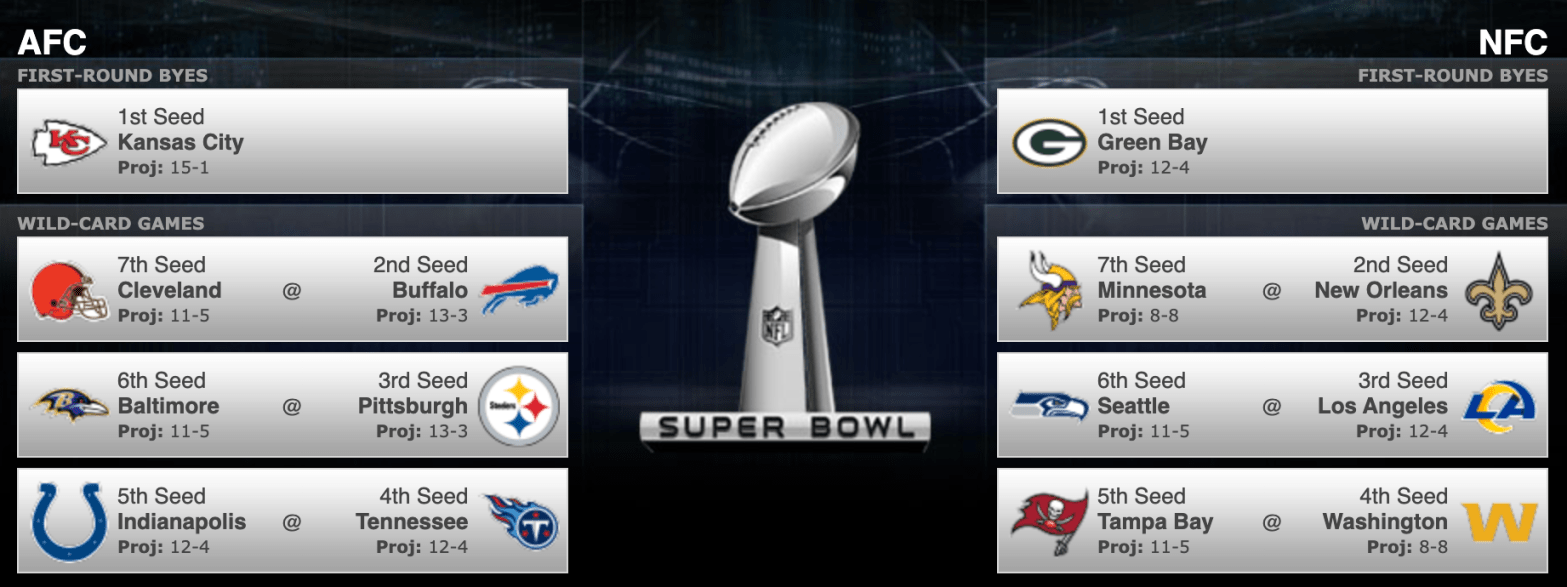
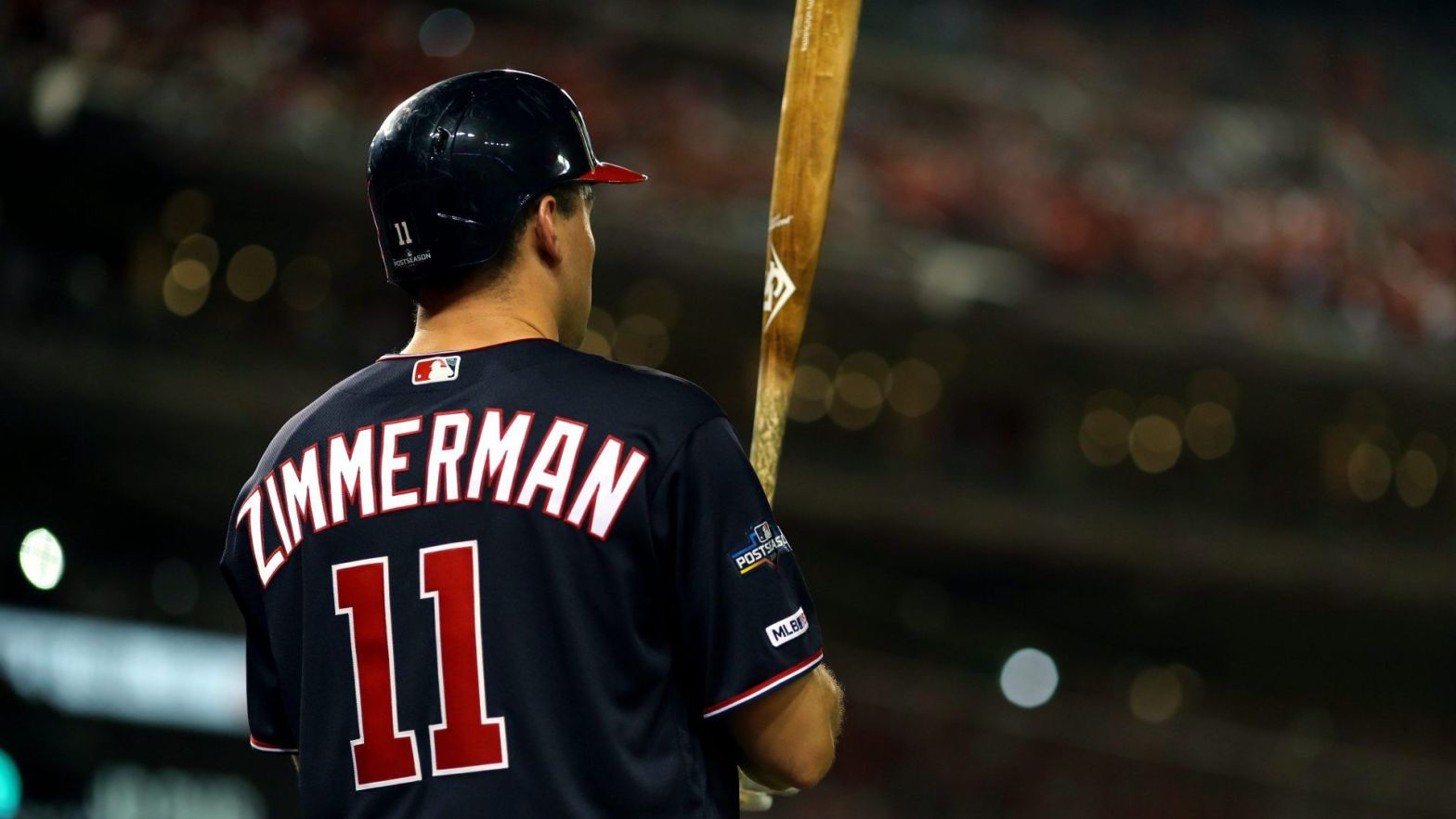
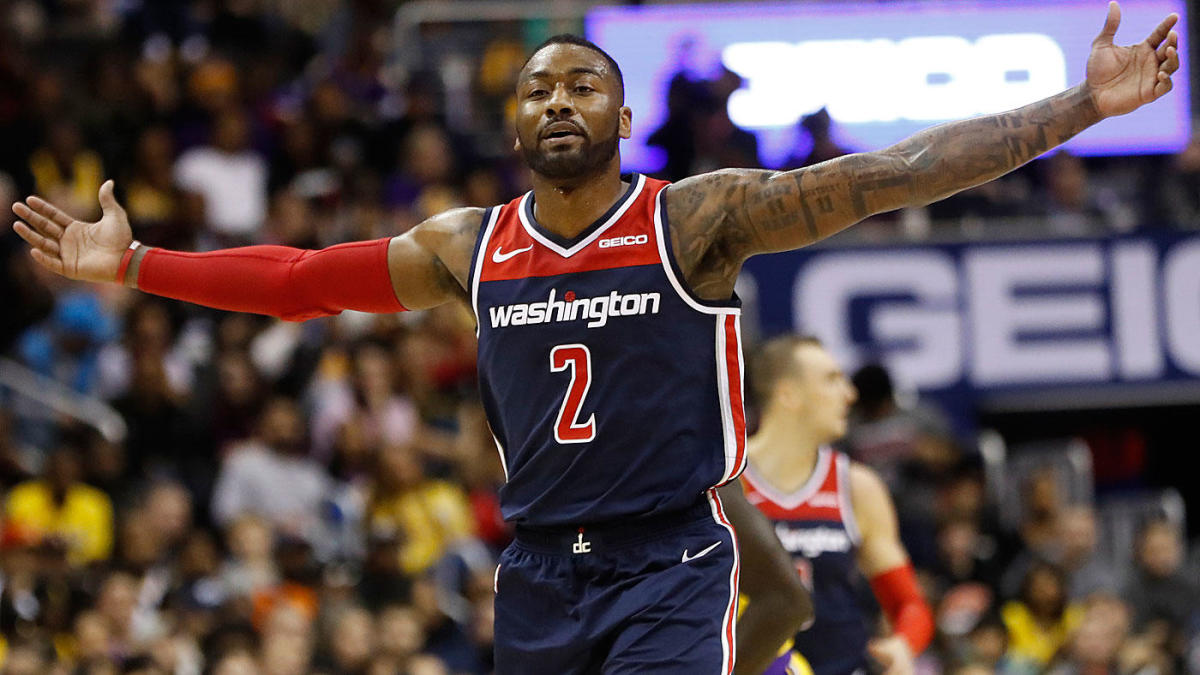
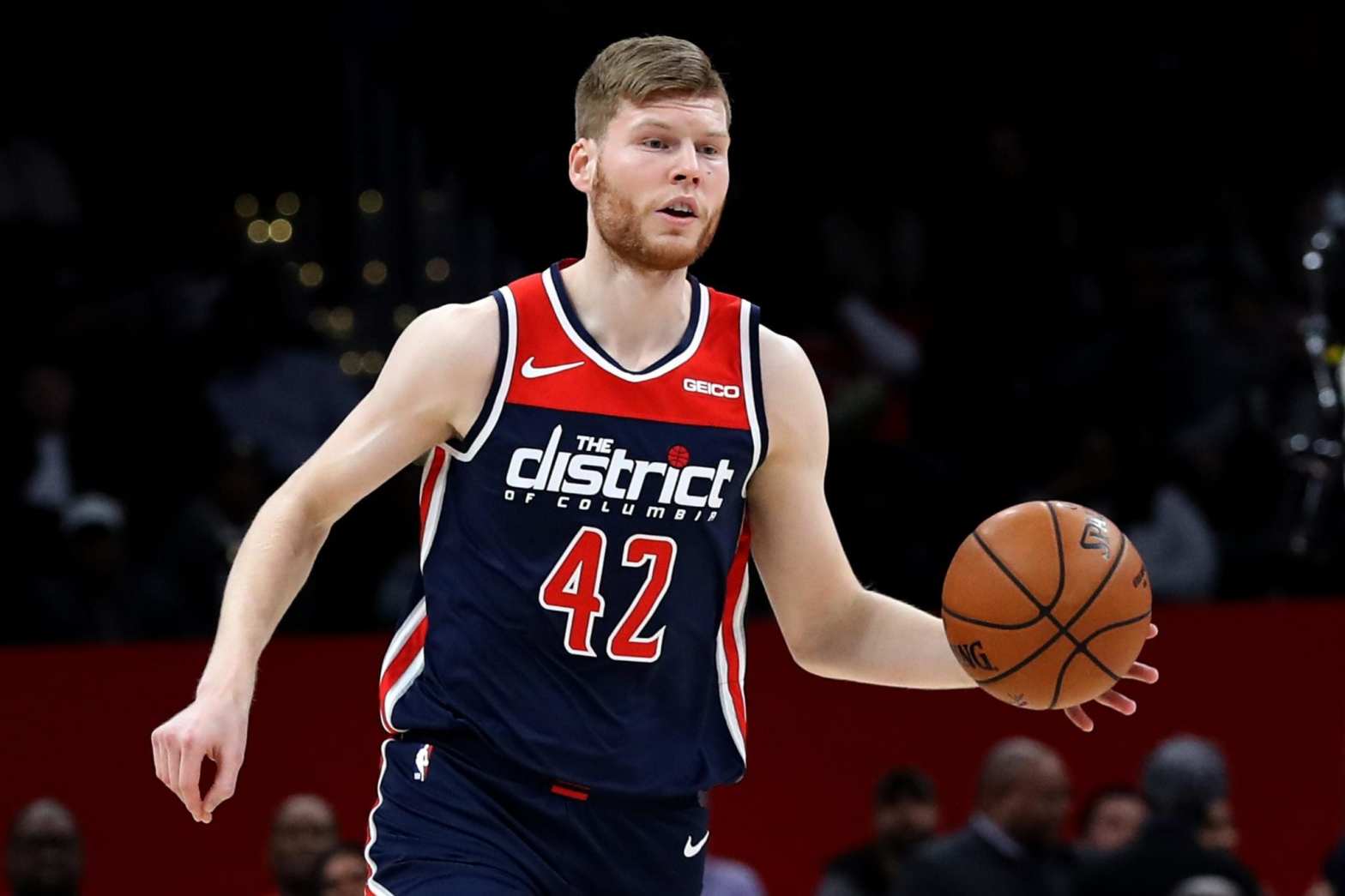
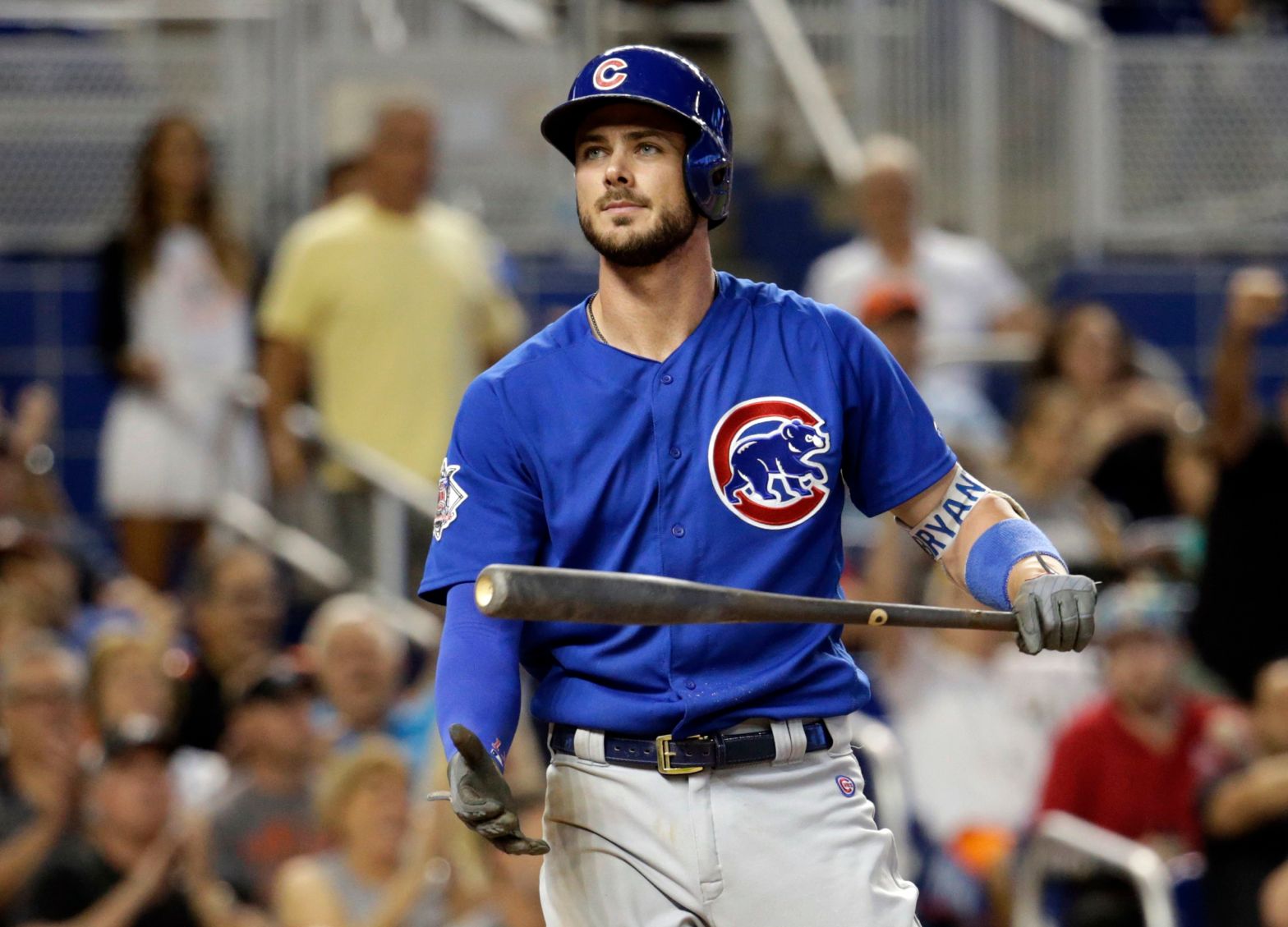
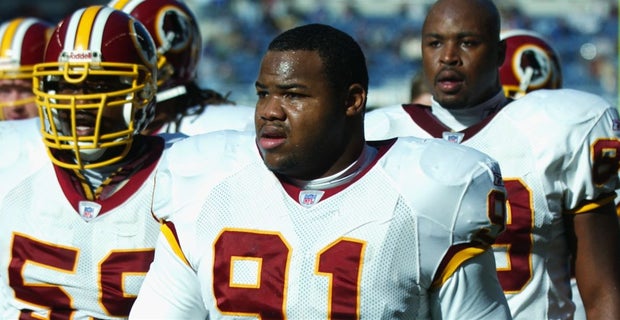

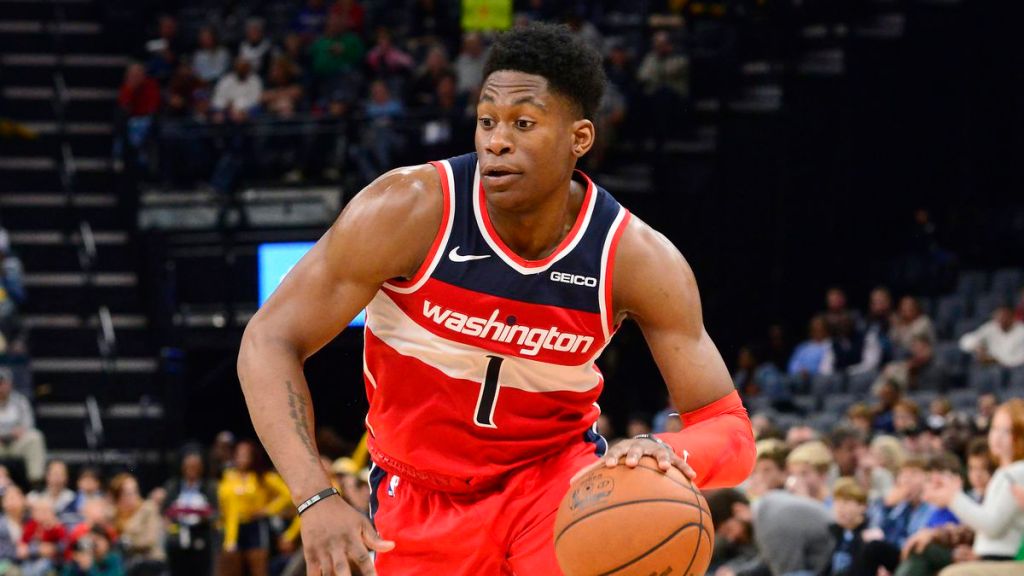
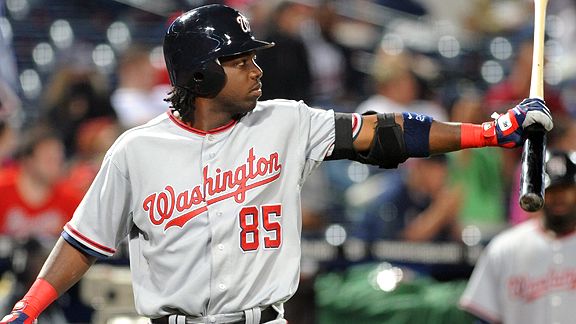
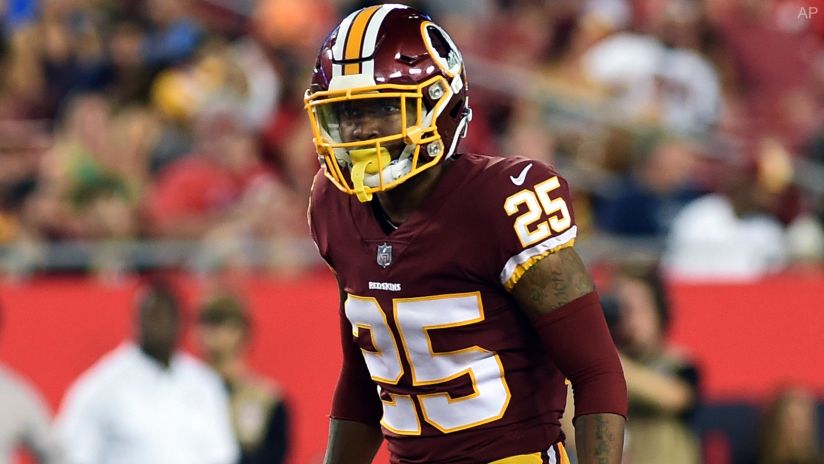
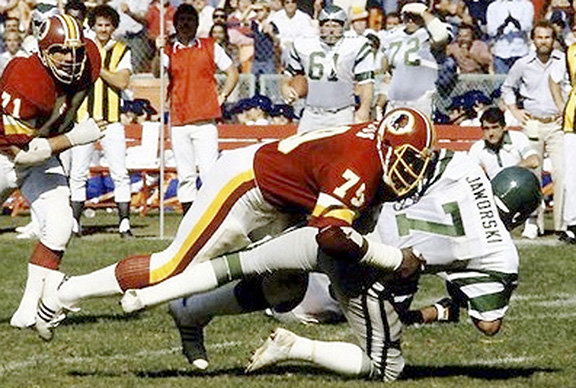
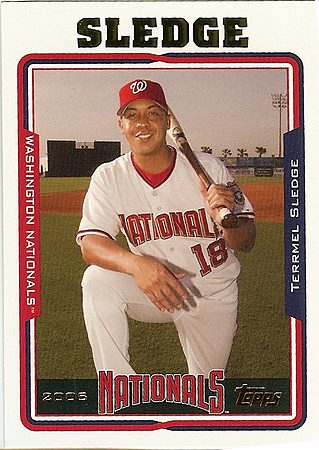
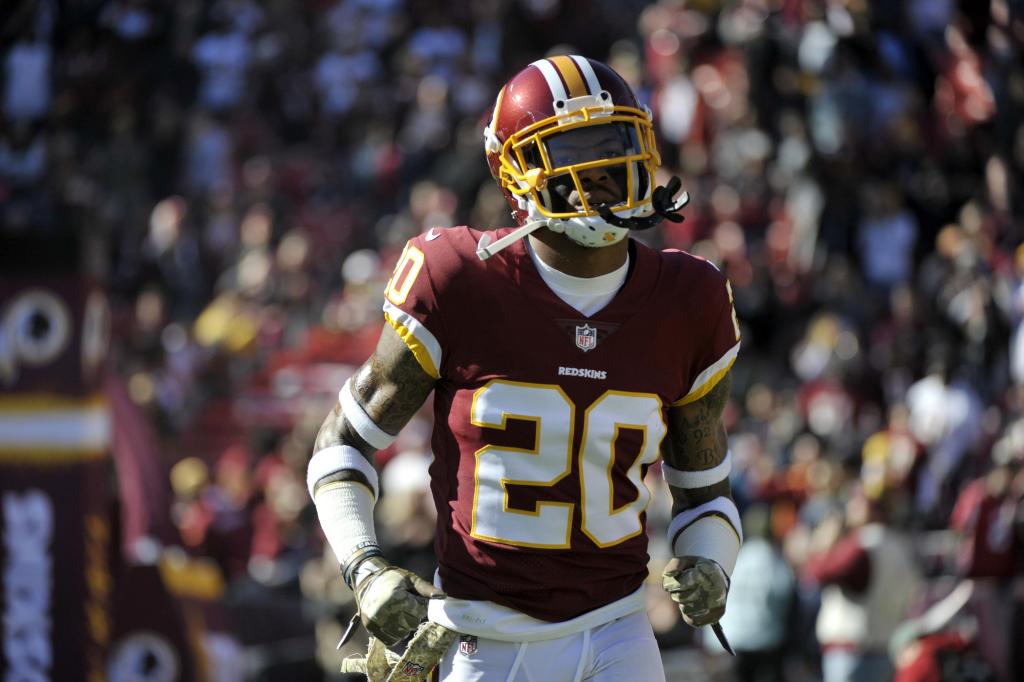
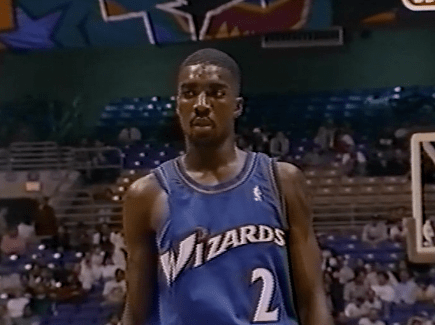
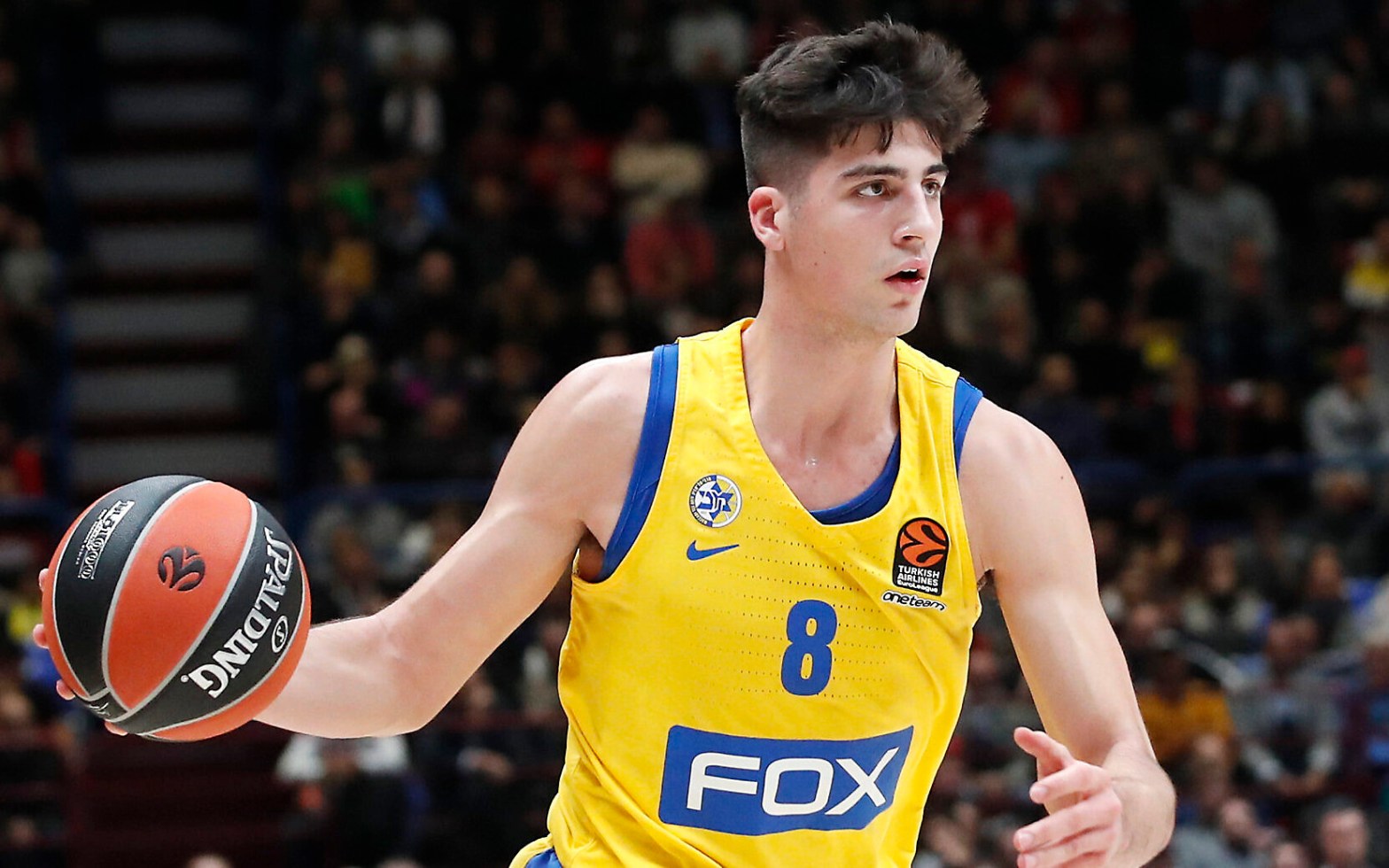
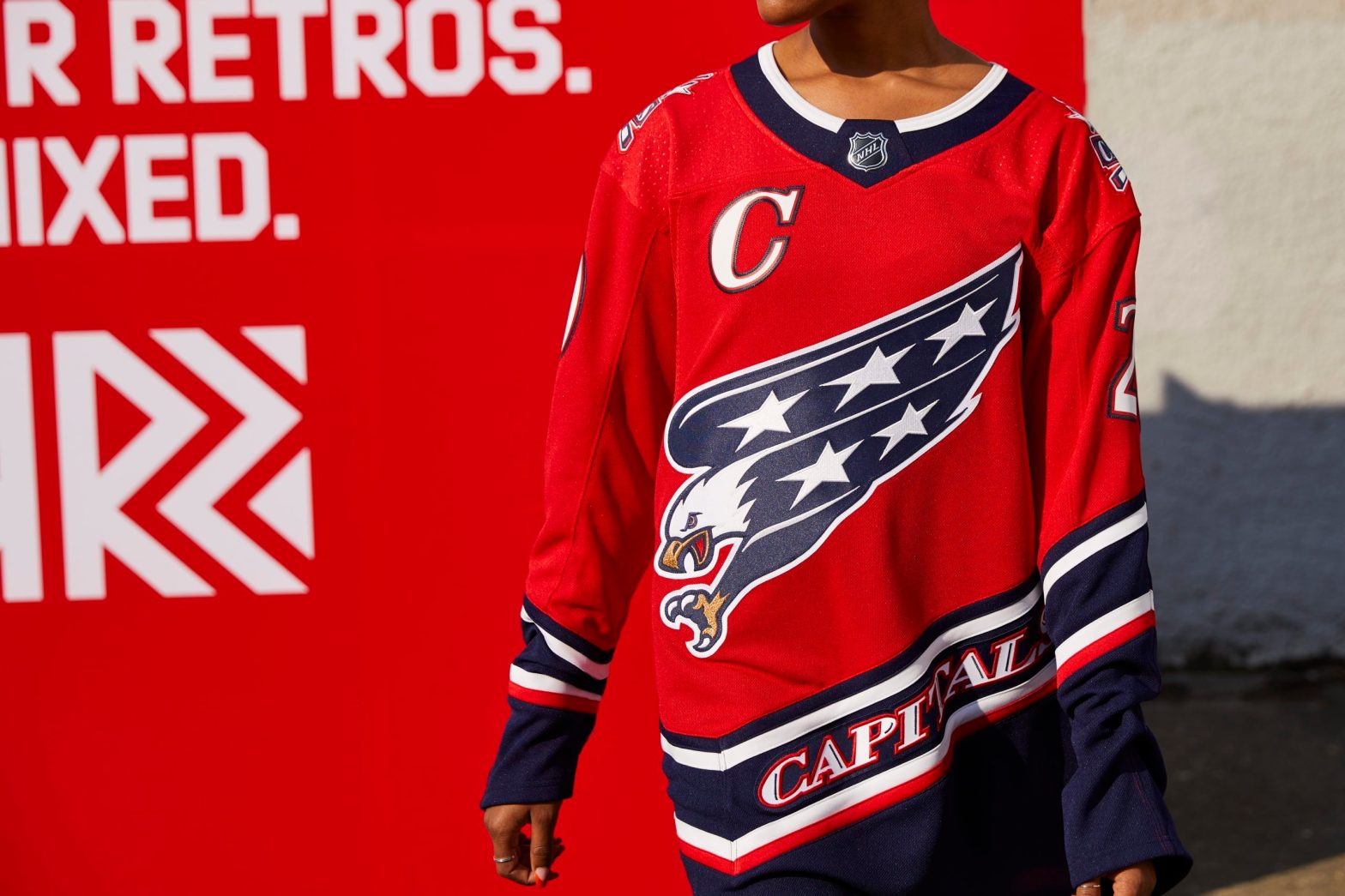
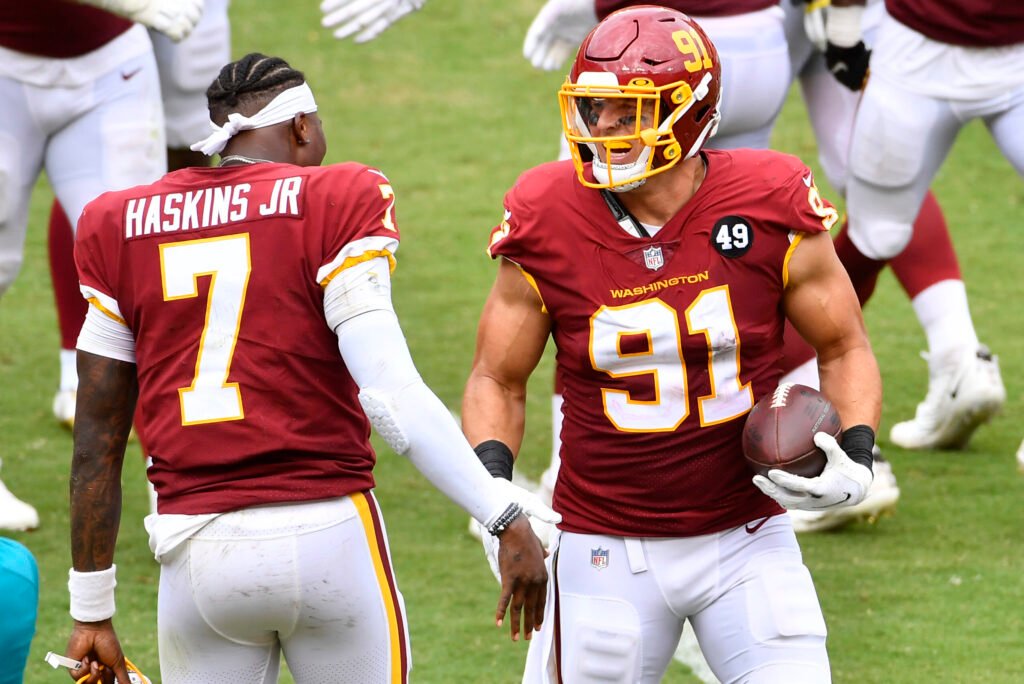
 The Wildcard