From XFL backup to NFL playoff starter, Taylor Heinicke shocked the world by bringing the Washington Football Team to the brink of an upset over the Tampa Bay Buccaneers. Tampa ended up winning 31-23, but Heinicke was far from the reason Washington came up short.
In just his second career NFL start, Heinicke delivered the best all-around performance from a Washington quarterback in over three years. Heinicke went 26/44 for 306 passing yards with a touchdown and interception. The 27-year-old undrafted Old Dominion product added 46 yards on the ground and a rushing touchdown that required his best Superman impression.
Washington was the underdog coming in, but when the news arrived that Alex Smith wouldn’t make the start due to his nagging calf injury, nearly all hope was lost. Putting all your faith in a quarterback making just his second career start in a playoff game against Tom Brady was a harrowing thought. And yet Heinicke rose to the occasion, giving Washington its only chance of victory.
Tampa focused on stopping the run, taking breakout rookie running back Antonio Gibson out of the equation almost entirely. Even though Gibson has been dealing with turf toe for over a month, Tampa prevented Washington from getting anything on the ground. Gibson finished the night with just 31 yards on 14 carries, while JD McKissic had five yards on two carries, although two of those yards came while punching in the team’s first touchdown of the game.
Tampa already boasts the best run defense in the league, so their intense focus on stopping the run meant Heinicke was left to try and beat Tampa all by himself. Well maybe not all by himself, since Washington’s defense could have done their part and stopped the Tampa offense.
With Brady at the helm, the Bucs offense ultimately overpowered the Washington defense, even after putting up a handful of impressive stops throughout the game. Tampa has a terrific offensive line which kept Brady untouched for most of the night. There were multiple instances of holding that should have been called, but holding penalty calls have been down across the league this year, so that could have been accounted for coming in.
That said, it’s hard to imagine the league would have wanted the Heinicke-led 7-9 team to knock out “Tompa Bay” in the Wild Card round. I’m not much of a conspiracy theorist, and the Bucs are the more talented team, but I don’t think it’s a stretch to say the officials were more partial to Tampa. That’s not an excuse for losing, but it certainly made the mountain even higher for Heinicke to climb.
But man, did he nearly crest it. With everything going against Washington in this game, losing by only eight points is nothing to sneeze at, especially when looking at the alternative.
If Smith had started the game, it would have been over by halftime at the latest. I hate to say that about Smith given everything he did to get Washington to this position and his incredible comeback story, but actually having a mobile quarterback that could comfortably throw the ball more than 10 yards downfield made the offense look unrecognizable in the best possible way.
While Heinicke deserves all the praise and recognition for his performance, I’m not quite on the “2021 starter” bandwagon that much of the fanbase jumped on. Seeing the best WFT quarterback performance since 2017 was intoxicating, but let’s pump the brakes here.
I’m all for bringing Heinicke into training camp and letting him compete for the spot, but if an overzealous team gives him the Matt Flynn-treatment and throws him a sizable offer in free agency, I wouldn’t feel comfortable getting in on a bidding war. Maybe he can be a legit full-time starter in this league, and for the right money, I’d love to see him give it a shot in Burgundy & Gold. Let’s just not go crazy and peg him as the full-fledged starter in 2021 with the money to match it.
The most likely scenario is that he will spend the next eight years — give or take — as a trusted backup around the league, and that’s terrific for him. He has the chance to make a ton of money without putting his body at significant risk.
Whether or not Heinicke will be in the quarterback mix in 2021, he gave this team plenty to be excited about beyond a potential playoff victory. Quarterback play was by far the worst part about the team this year, and Heinicke provided a glimpse at where good production under center can take this team.
This offense could use another reliable pass-catcher or two, and the offensive line would benefit from an upgrade on the left side (but shout out to Cornelius Lucas and Wes Schweitzer for holding down the fort this year; both deserve major props), but if this team can finally solve the quarterback situation, Washington has real potential to reach greater heights.
As long as Dan Snyder is owning the team, I’m not so confident they will get there, but if he can for once keep his hands off football operations — or the league gives him the Jerry Richardson treatment — then the Football Team may have a shot.
I don’t know what to expect at quarterback in 2021; what I do know is I will hereby refer to Lamar Jackson as “Taylor Heinicke Lite.” I hope we can feel this electricity in 2021 and beyond:
A year ago, in one of the first dozen posts in The Wildcard’s history, I listed my Top 25 DC sports players under the age of 25. In what I am now establishing as a new annual tradition, this list will provide a glimpse at where the young talent among the four major DC sports teams stand against each other.
This list does not rank the potential of each player, but rather where each player currently stands based on their performance from the past year. To see last year’s list, click here. If the player was under 25 as of Jan. 1, 2021, they qualify for this list.
Amazingly, only two players from last year’s list “graduated.” Jonathan Allen (2020 No. 2) and Terry McLaurin (2020 No. 4) are now both 25 and no longer eligible to be included on this list, opening two top five slots from the get-go. Despite only two players exceeding eligibility, there are eight new faces on this list.
The other six spots opened due to eligible players who fell out of the rankings for one of several possible reasons. Here are the six that fell out:
Washington QB Dwayne Haskins Jr.* (2020 No. 13)
Washington WR Kelvin Harmon* (2020 No. 18)
Washington OT Geron Christian (2020 No. 19)
Washington OG Wes Martin (2020 No. 20)
Wizards F Admiral Schofield* (2020 No. 22)
Capitals C Connor McMichael (2020 No. 25)
McMichael was 25th on the list last year despite not playing in the NHL or even the AHL. The fact of the matter is it was way too premature to list him despite his incredible season in the OHL, so he didn’t do anything poorly to lead to his exit from the list; there were just more deserving players ahead of him. As long as he remains in the Caps organization, expect to see him back on this list (and perhaps near the top) in the next few years.
Schofield was traded away in the Cassius Winston deal and no longer qualifies for this list, but even if he was still on the Wizards, he would have fallen out. Schofield was on the edge last year as well, and his limited role with the Wizards allowed more people to pass him.
Harmon, meanwhile, tore his ACL over the summer and was unfortunately unable to play this year. It’s pretty difficult to get back on this list if you don’t play, but hopefully the recovered Harmon (still just 23) will make a return to the field and this list next year.
The three other departures, meanwhile, fell off due to their play. Haskins lost the starting job in Washington, and had not one, but two COVID-19 infractions, showing a complete lack of maturity off the field and an inability to prove himself as a true starter on the field. He was released just 20 months after being drafted.
Martin and Christian have been turnstiles on the offensive line. Both entered the season with tremendous opportunities to establish themselves as key players on the line opposite Morgan Moses and First Team All-Pro(!) Brandon Scherff. Instead, both rated as the two worst offensive linemen in the entire National Football League, and lost their roles in the offense.
Now that we’ve established the eight departures, without further ado, here is The Wildcard’s “Top 25 under 25” list for 2021:
25. Capitals D Martin Fehervary, 21|Last year: No. 24
24. Wizards F/C Moe Wagner, 23|Last year: No. 15
23. Wizards G Jerome Robinson, 23|Last year: N/A
22. Nationals 3B Carter Kieboom, 23|Last year: No. 23
Fehervary is right on the edge of becoming a full-time NHL defenseman, and could see some time at the top level this season, although the addition of Zdeno Chara could bury him even further down the depth chart. Fehervary is a work-in-progress, but profiles as a future top four blue liner.
Wagner has barely appeared in the Wizards first few games and appears to have taken a step back in Washington’s rotation. He’ll have a chance to get on the court more at some point this season, but the front court is already crowded… Robinson plays minimal minutes off the bench and was added from the Clippers last season. He won’t be anything more than a depth guard.
Kieboom was tapped to take over at third base full-time in 2020, but he struggled in his first full MLB season, batting just .202 without any home runs in 99 at bats. He may have a chance to establish himself in Washington in 2021, but there’s already talk about bringing in a replacement.
21. Wizards F Isaac Bonga, 21|Last year: No. 17
20. Washington WR Steven Sims Jr., 23|Last year: No. 16
19. Nationals 2B Luis Garcia, 20|Last year: N/A
18. Washington LB Khaleke Hudson, 23|Last year: N/A
17. Washington WR Cam Sims, 24*|Last year: unranked
Bonga received starting nods in Hachimura’s absence but has barely played in recent games. It’s his third NBA season and he’s still just 21, meaning there’s still plenty of time for growth, but the growing pains are apparent and lead to multiple sloppy plays when he’s on the floor. He has a ways to go.
Steven Sims was injured for a chunk of the 2020 season but has returned to receiving/returning duties. He has not had a huge impact on the offense, but I blame that more on quarterbacking play. Still, he has dropped numerous catchable catches and has muffed several kicks this season, contributing to his drop from last year. It should be easier for Sims to find his footing next season.
Garcia was rushed into the majors after Starlin Castro broke his wrist early in the season, and he had the distinction of becoming the first player born in the 2000s to hit a home run in Major League Baseball. Garcia will likely play a bench role in 2021, but he should be a key part of the Nats infield in the coming years… Hudson has gained more playing time with injuries to the linebacking corps and has thrived on special teams. The 2020 fifth-round pick could take a huge leap in 2021.
Cam Sims has emerged as the clear No. 2 wide receiver behind McLaurin. Tight end Logan Thomas and receiving back JD McKissic receive more targets, but Sims has been the secondary wideout this year. The undrafted Alabama product has tried to crack onto the NFL roster several times and finally got his shot. He barely makes this list as he turned 25 two days ago.
16. Wizards F Troy Brown Jr., 21|Last year: No. 14
15. Capitals D Jonas Siegenthaler, 23|Last year: No. 9
14. Washington DT Tim Settle, 23|Last year: No. 21
13. Wizards F Deni Avdija, 19|Last year: N/A
12. Nationals OF Victor Robles, 23|Last year: No. 5
11. Washington LB Cole Holcomb, 24|Last year: No. 10
Photo Credit: Ned Dishman/NBA Photos
Brown is another young third-year pro that has a solid defensive game, but has otherwise struggled to start the 2020-21 season. A leap in production would help the 2-6 Wizards tremendously (if Brooks gives him more playing time again)… Siegenthaler would be a staple on the bottom pair of the defense once again if Chara was not in the picture, so hopefully his development won’t be hindered too much by the drop off in playing time.
Settle has excelled in a reserve role on the defensive line, racking up 5.0 sacks and 19 combined tackles. It’s hard to stand out in such a loaded defensive front, but Settle has gotten better every season and could be in for a larger role if the team can’t retain all of their former first-round picks when their contracts are up… Avdija has already established himself as the Wizards’ starting small forward, and while the rookie still needs much more experience before we can get a true read on him, he should only get better as the season goes on.
Robles was ranked fifth last year, but a down year at the plate and in the field has dropped him down to 12. There’s no reason he can’t get back toward the top of the list. He must return to form as the best defensive center fielder in baseball and make strides at the plate if the Nats want to contend again… Holcomb spent most of the early season injured but has since returned as a starting outside linebacker in the defense’s 4-3 formation. He’s among the team’s leading tacklers on a game-to-game basis (72 on the season) and looks even more like the fifth-round steal that he was last year.
10. Wizards C Thomas Bryant, 23|Last year: No. 7
Bryant has had an up-and-down start to his career, but at just 23 he has established himself as the top big man in Washington. His defensive game needs to improve, but offensively Bryant makes his presence known around the rim and has a clean stroke when shooting from outside. He should thrive as a secondary scoring option behind Russell Westbrook and Bradley Beal.
9. Washington RB Antonio Gibson, 22|Last year: N/A
Photo Credit: Roger Steinman/Associated Press
Gibby was a pleasant surprise this year. I labeled him as the worst value pick in the 2020 draft class because the running back room seemed so loaded, and I wasn’t sure Gibson would make a big impact right away. Then Derrius Guice got released and Bryce Love remained injured, and Gibson established himself as a top rookie running back, finishing the year with over 1,000 scrimmage yards and 11 touchdowns in 13 full games. A turf toe injury late in the season hindered his momentum, but he’ll be relied on to boost the offense against Tampa in this weekend’s Wild Card game.
8. Washington DT Daron Payne, 23|Last year: No. 12
Payne is yet another dominant force on the Washington defensive line, serving as the premier run-stopper of the unit. He doesn’t get the same recognition as the rest of the players on the line, but he gets tackles (54 combined, 3.0 sacks) and has proven to be a solid investment since Washington took him 13th overall in 2018.
7. Wizards F Rui Hachimura, 22|Last year: No. 8
Hachimura had a strong rookie campaign last year, earning himself Second Team All-Rookie honors, and he’ll continue to take steps forward as he becomes one of the top options in the Wizards’ front court. With Beal and Davis Bertans sitting out of the NBA Bubble, Hachimura was able to shine against playoff-caliber opponents (14.4 points, 6.6 rebounds and 2.4 assists per game) and was consistently the best all-around player on the team. With Westbrook now in the mix, Year Two could be very exciting for the Japanese forward once he gets back up to speed.
6. Washington S Kamren Curl, 21|Last year: N/A
Photo Credit: Daniel Kucin Jr./Associated Press
There were not many expectations for Curl when he was selected in the seventh-round this year out of Arkansas, but after Landon Collins went down for the year with an Achilles injury, Curl was elevated to a starting role and thrived. He led the team in solo tackles (63) and was second behind Kendall Fuller with three interceptions. While some may argue (in vain) that Panthers safety Jeremy Chinn deserves DROY honors over Chase Young, Chinn may not even be the best rookie safety when comparing his numbers with Curl’s:
These stats through Week 16 show Curl has been better than DROY hopeful Jeremy Chinn, even though Curl has not received as much recognition. (Credit: Hogs Haven)
5. Capitals G Ilya Samsonov, 23|Last year: No. 6
Samsonov enters his second season with the Capitals with much more responsibility than he had last year. Initially expected to split time with future Hall of Famer Henrik Lundqvist, the King’s recently diagnosed heart condition has sidelined him for the season, and Samsonov will be forced to shoulder the role as the full-fledged No. 1 netminder. He impressed in his first NHL season and — despite the limited experience — is one of the best young talents in Washington this year.
4. Capitals LW Jakub Vrana, 24|Last year: No. 3
Photo Credit: James Guillory/USA TODAY Sports
It’s hard to believe Vrana is just 24 since he’s been an established top six forward for a few years now. He did not have a great stint in the 2020 NHL Bubble, highlighted by a crucial missed shot in overtime of Game 3 that would have cut the first-round series deficit to 2-1 against the New York Islanders. Still, Vrana set new career-highs in goals, assists and points despite the shortened regular season and will continue to improve as one of the few young pieces on an old Capitals roster.
3. Washington DE Chase Young, 21|Last year: N/A
It’s hard to put up insane numbers when you’re getting double- and triple-teamed as a rookie, but Young still opens his career in a top three spot on this list. The favorite for Defensive Rookie of the Year finished the regular season with 7.5 sacks, four forced fumbles, three fumble recoveries and a touchdown. Young made numerous impact plays that this defense needs, and became the team’s first rookie Pro Bowler since Robert Griffin III in 2012. He’ll be a mainstay at the top of this list for his remaining three years of eligibility.
2. Washington DE Montez Sweat, 24|Last year: No. 11
The second-year pass rusher takes a big leap this year as he establishes himself as one of the best players on the Washington Football Team. He led the team with 9.0 sacks and was first among front seven players with six passes defended. Looking past the stat sheet, Sweat made impact plays down the stretch that played a big role in the team’s four-game winning streak, including a late pick-six against Dallas on Thanksgiving. While I have Sweat barely edging out Young this year, the two should be staples on this defensive line for years to come.
Soto retains his top spot from last year, and in all likelihood, will probably remain at the top until he ages out of this list. Despite being just 22 years old, Soto has established himself as arguably the best hitter in Major League Baseball, and is one of the biggest stars in the game. He finished fifth in MVP voting in 2020 despite playing just 47 games, and likely would have finished in the top three had he played a full 60 games. As long as he continues to wear a Nationals uniform, he’ll be among the biggest stars in DC.
Cover Photo Credit: L – Christian Peterson/Getty Images; R – Ashley Landis/Getty Images
Nothing sums up the Wizards season so far quite like last night’s game against the Philadelphia 76ers, where Bradley Beal scored a career-high 60 points but the Wizards still lost 141-136. The team was down by as much as 21 points during the third quarter, but couldn’t come back despite a run early in the fourth quarter.
Beal tied the franchise record for most points in a single game, joining Gilbert Arenas. An impressive feat, but considering Beal was sitting at 57 entering the fourth quarter, it’s a bit disappointing that his scoring output fell off in the final frame.
But complaining about Beal’s offensive production in any context is just petty. The Wizards, now 2-6 on the season, have plenty of problems and Beal is one of the few positives.
It doesn’t take much investigating to understand what the main problems are in Washington: The defense is borderline nonexistent and coach Scott Brooks hasn’t seemed to figure out his best lineups.
The lack of defense isn’t new; the Wizards have been a bottom-tier defensive team for what seems like years now, and that wasn’t going to magically change in one offseason, even if these are Wizards.
Though the sample size is limited, the Wizards currently have the worst defense in the league (122.9 points allowed per game), which negates their top-end scoring of 120.8 points scored per game, second behind the Milwaukee Bucks. The trend was similar last season, which proves the major additions from this offseason have yet to right the ship.
Biggest among the additions was Russell Westbrook, the former MVP who arrived to DC in the blockbuster trade that sent John Wall and a protected 2023 first-round pick to Houston. Westbrook has been the same triple-double machine that he always has been, but that has not translated to wins.
This isn’t entirely his fault; he drives the offense, getting countless buckets by driving to the hoop and kicking the ball out to open shooters when he can. His rebounding prowess also slightly helps on the defensive end. Still, he is not a great defensive player and inexplicably continues to hoist up threes in the waning minutes of the game.
The point guard has gained the nickname “West-brick” among some fans due to his relatively poor shooting numbers, and that trend has also continued into this season. Taking an open three while down five in the middle of the second quarter is one thing, but to see Westbrook taking semi-contested shots from long range during crunch time is inexcusable.
Obviously opposing defenses will only give so many good looks during a possession, but Westbrook should be one of the last players shooting from long range late in the game. Problem is, he constantly finds himself in that position due to how often the ball is in his hands. Westbrook operates best when driving to the basket, and yet there have been numerous occasions late in close games where he’s pulling up from behind the arc and essentially giving the ball back to the other team.
That said, it also doesn’t help that one of the players Westbrook should be kicking it out to is struggling as well. Davis Bertans was second on the team in scoring last season in a breakout year. He was a top five three-point shooter league-wide and was the team’s highest priority signing this offseason.
But it’s been a rough start for the Latvian Laser in a pretty avoidable way, which makes it all the more frustrating. Bertans sat out the NBA Bubble this summer.
Ok sure, he wants to conserve his value going into free agency without risking injury. Smart, no beef there.
He got the contract he desired: a five-year/$80 million deal keeping him in DC for the foreseeable future.
A little hefty, yes, but a necessary re-signing for a team that doesn’t attract major free agents.He is such a big part of the offense, it would be impossible to replace in the near future.
During the preseason, Brooks held him out for all but the final game.
Ok… I feel like he could have used some of those in-game reps, but then again most of the veterans were held out. I trust Brooks and Bertans to do the right thing here.
Bertans is shooting just 32.8 percent from three after connecting at a 42+ percent clip each of the past two seasons. Again, the sample size is low, but all you hear from Wizards color commentator Drew Gooden on broadcasts is that Bertans is “still working back into game shape” and is “not yet at 100 percent.”
Uh, seriously?
What do you think the preseason is for, Scott Brooks? If he still needed time to get back up to speed, why did he sit in two out of three of the tune-up games. Now we’re losing games in part because the guy we rely on for consistent long-range shooting is bricking shots in crucial situations.
Defense is the main kryptonite for this Wizards team, but the weak shooting from Bertans (and Westbrook) has also been killer. I blame Brooks and Bertans equally for his specific situation.
Looking more positively toward a couple other newcomers, rookie Deni Avdija and 28-year-old guard Raul Neto have been two bright spots on the team so far. Neto is getting plenty of playing time off the bench, and by one metric, he has been among the team’s best two-way players.
Avdija, meanwhile, is not scoring a ton, but continues to progress as a legitimate NBA starter. According to NBC Sports Washington’s Chase Hughes, Avdija has the highest net rating of anyone on the team so far this season:
Wizards' top players so far in net rating: 1. Deni Avdija 10.5 2. Rui Hachimura 9.6 3. Thomas Bryant 4.0 4. Isaac Bonga 3.6 5. Russell Westbrook 2.2 https://t.co/ElQxMzZZSk
Net rating essentially measures how a specific player impacts their team (i.e. does the team play better or worse when said player is in the game?) Avdija still has plenty of room to improve, but the early returns have been promising. His off-ball defense is as good as advertised, and in time the rest of his game should catch up as well.
As for the other young players, Rui Hachimura continues to prove his importance to the team despite working back from his preseason pink eye absence. Thomas Bryant, entrenched as the starting center, has taken a real step forward offensively, benefitting from Westbrook’s presence. However, his defense remains flawed and is holding him back from reaching an even higher level.
Isaac Bonga is one of the better defensive players on the team, but he’s such a disaster with the ball in his hands that he can’t be relied on for consistent minutes.
Speaking of Bonga, Brooks seems to not have any real idea about what to do with the young bench players on this roster. Bonga, 21, was starting in Hachimura’s absence to begin the season, but has now played just once (for five minutes) in the past four games.
Troy Brown Jr., the 21-year-old former first-round pick, has seen his minutes dwindle with each game and has now sat out each of the past two contests. Moe Wagner and Jerome Robinson, both 23, have seen inconsistent playing time as well. None of these guys have played well enough to warrant major minutes, but at the same time, this constant lineup shuffling is preventing the team from establishing an identity.
It’s a double-edged sword; obviously if things aren’t working, changes have to be made to the lineup, but too much experimentation can be detrimental to the team and the individual players’ development.
None of these young players were ever going to be superstars, and a short preseason doesn’t help matters, but it’s clear Brooks still doesn’t know what to do with this roster, and it will soon be too late if he ever finds out. Can the Wizards turn it around and find a way to sneak into a bottom playoff spot? They certainly have the pieces, but until they execute, there could be a high-lottery pick in this team’s near future.
The Washington Football Team is the 2020 NFC East champion.
It feels good to write that. It feels good to know that as the truth. Does it mean a likely defeat at the hands of Tom Brady and the Tampa Bay Buccaneers? Yes. Does it mean a more difficult schedule in 2021? Unfortunately.
Despite that, this team took a step forward. Fighting for a better draft pick every season does not build a winning culture; winning builds a winning culture. The Washington Football Team lost more games than they won, but in this division, going 7-9 was enough.
Playoff experience, even if it’s just one game, is huge for the team’s young core. If one day soon, hopefully, this team is built for legit contention, it means this group can roll into the -offs knowing it ain’t their first rodeo. Knowing they’ve been there before will make future success a whole lot easier, should it ever come.
Of course much controversy came from the WFT’s Week 17 matchup that decided the winner of the NFC East, and there’s a lot to unpack from it.
It was underwhelming to clinch the division in a sloppy, close win over an Eagles team that seemed to do everything in their power to lose the game, but despite what every one of their fans will tell you, the New York Giants were not robbed of a playoff spot.
The Giants won six (6) games and lost ten (10). If that’s a record deserving of a playoff berth, then why don’t we expand the entire postseason to field all 32 teams? To say the Giants were deserving of a playoff spot is just wrong.
Well Joe, 7-9 isn’t much better. It’s still a losing record. Washington doesn’t deserve a spot either.
You’re not wrong, but here’s the difference: I’m not saying Washington deserves a playoff spot. I don’t believe any team in the NFC East deserved a playoff spot this year, but by rule, someone had to make it, and the team with the most wins got it by default. Let’s not act like the Giants had the spot ripped away from them.
Entering Sunday, Washington was in the driver’s seat. They were in control of their own destiny, regardless of what happened in the Giants-Cowboys tilt. If the Giants want to be mad about losing something they never had, they can join their neighboring Jets pouting about missing out on Trevor Lawrence.
Speaking of Lawrence, how about that double standard? The Jets are encouraged to “Tank for Trevor” and are ridiculed when they mess it up, but the Eagles aren’t allowed to try and better their own draft position? I understand the Eagles won’t have Lawrence sitting there at the sixth overall pick, but the principle is still the same.
In nearly every case, I don’t think tanking is worth it, and even I question the thinking behind coach Doug Pederson’s decisions last night. Yet I find it funny how the Eagles are shamed for their supposedly deliberate losing when just three years ago, some Giants fans actively rooted for their team to lose enough games to have the 2018 second overall pick and select Saquon Barkley.
Not all Giants fans felt that way, but of all the people I saw complaining last night, I know many of those people did. You know who you are.
The Giants are only mad about the situation because it was worse for them. Sorry, but don’t expect another team to do anything other than what’s best for themselves (or what they believe to be what’s best for themselves at least). You want to get to the playoffs? Win enough games so you’re in the driver’s seat and won’t have to rely on anyone else to get you there.
But if the Eagles won, then New York and Washington would have had the same number of wins, and New York beat Washington twice, so the Giants really were robbed.
“If” is such a great word. We can use it to spin any hypothetical into reality, and at the end of the day, it still doesn’t matter, because the “if” didn’t actually happen.
If the Eagles won… let’s address that first. The Eagles effectively “rolled over” with just over 12 minutes left in the game by replacing Jalen Hurts with Nate Sudfeld at quarterback. Can we all agree on that? Until then, they were in it to win it? Well at that point, Washington was up 17-14.
Are we forgetting that Washington led the entire game? I don’t blame you if you did forget; it certainly didn’t feel like a lead given how the Washington offense looked, but let’s not act like the Eagles were up by three scores and fumbled the lead away.
The Washington offense was bad, and Hurts was doing well with moving the ball with his legs, but to just outright assume the Eagles would have won the game if Hurts stayed in is just wrong. It could have happened. In fact, it easily could have happened, but Washington also could have held on and won. Say what you want about how likely either outcome was, but a lead is a lead is a lead.
Don’t get me wrong, Sudfeld was atrocious, and absolutely contributed to the Eagles losing the game. (Poor guy, he didn’t ask for this.) Taking out Hurts effectively ended any chance the Eagles had of winning, but keeping him in would not automatically mean a win for Philly.
Still not satisfied? Let’s keep playing the “If” game. New York beat Washington twice. That’s true, but what if Washington had won one or both of those games? It certainly could have happened.
In Week 6, Washington scored a touchdown trailing 20-13 with 36 seconds left to cut the score to 20-19. An extra point would have tied the game, likely sending it to overtime. Instead, Washington went for the two-point conversion and the immediate win. They failed, and the Giants won.
You could argue Washington handed the Giants that victory. If Washington had kicked the extra point and sent the game to OT, they could have won.
But they didn’t.
In Week 9, New York had a 20-3 lead over Washington entering halftime. The game ended 23-20 in New York’s favor. If Washington had managed to pull off a complete comeback, or not allow New York to get as far ahead as they did in the first half, then Washington would have won.
But they didn’t.
We can spew as many “ifs” as we want, but it just doesn’t matter. If Washington had defeated the Giants in one of those games, Washington would be 8-8 and the Giants would be 5-11, and the Giants would be out of the running entirely.
Tough breaks happen all the time. The Giants have benefitted from some and have been screwed by others; same goes for Washington. If the season had broken one way, the Giants would be 8-8 division champs. In another way, they would have been 4-12 and not in the conversation to begin with.
At the end of the day, they didn’t win enough games to secure themselves a spot, so they have no one to be mad at but themselves.
And honestly, if the Giants had won the division at 6-10, would that be any more respectable? Everyone has rightfully viewed the NFC East as a trash division all season long, and it would have been that way no matter who won the division.
You want to be upset about missing the playoffs? That’s perfectly reasonable. I know I would be upset. Building up hope for that final game only to have it ripped away in that fashion is understandably frustrating.
But to feel entitled to that spot this year is just silly. Go ahead and cry, no one should feel sorry for you.
You want to feel sorry for a team? How about the 10-6 Miami Dolphins that also missed the playoffs? At least they had a winning record. Between the Dolphins, Giants and WFT, Miami deserves a postseason spot the most.
And yet that’s not how the NFL works.
The Washington Football Team won the NFC East and is going to the playoffs. It may not be pretty, but take it for what it is, Washington fans: a trip to the playoffs. Enjoy the ride unapologetically. If this is a Mickey Mouse division championship, then hot dog, hot diggity dog.
With the additions of Conor Sheary, Zdeno Chara and possibly Craig Anderson, the Capitals are putting the final moves in place before the 2020-21 season begins. As it stands, the team is more than $3.5 million over the salary cap (according to CapFriendly), but more on the cap situation later.
For now, Chara becomes the ninth defenseman on the roster, which doesn’t include Michal Kempny, who will spend the season on Long Term Injury Reserve (LTIR) recovering from an Achilles injury. Recently signed Paul LaDue figures to be sent to the AHL, which leaves eight defensemen vying for what should be seven spots.
Among the eight defensemen, the top four is certain:
Brenden Dillon will be with John Carlson on the first pair, and Dmitry Orlov and newly signed Justin Schultz figure to make up the second pair. Orlov and Schultz have similar play styles, as puck movers who aren’t considered “stay-at-home” defensemen, so they may fit better with more defensive-minded counterparts, but in any case, they are both guaranteed to be in one of the three pairings.
That leaves Nick Jensen, Jonas Siegenthaler, Trevor van Riemsdyk and Chara. I figured Martin Fehervary would have a shot at becoming a full-time NHLer this season, but it appears he’s going to spend another year in the AHL.
Chara wasn’t signed this late for no reason; he will be a fixture in the bottom pair. At this stage in his career and at his age, he could be poised for a part-time role where he’ll be a healthy scratch in a portion of the team’s games this year. That wouldn’t exactly fit the 6’9″ former Norris Trophy winner’s M.O. He played 68 games last season at 42 years old.
With Chara in the mix, it’s hard to predict who the odd man out will be. Siegenthaler is 23, the youngest defenseman on the team by far, and just signed a one-year deal this offseason as a restricted free agent. He has been one of the best bottom pair defensemen in the league. Chara and Siegenthaler are both left-shot defensemen.
Jensen and van Riemsdyk, meanwhile, are right-shots. Jensen is the only one of the bottom four making over $1 million ($2.5 million cap hit). van Riemsdyk was brought in this offseason with Schultz to add depth to the right side of the defense.
Jensen was initially re-signed to be on the second pair prior to last season, but he couldn’t nail down the position and ceded it to Radko Gudas, who also fit much better on the bottom pair. Jensen progressed as the season went along and looked much more comfortable on the third pair; he was arguably the team’s best defenseman in the bubble.
The Caps still have all of training camp to decide how to field their lines, but the more pressing question is how the team will get under the salary cap in time for the season. With the team still needing a 13th forward and a backup goaltender, changes will need to be made.
The team signed Sheary, a former Penguins forward, and he should slide into a bottom six role, likely replacing Ilya Kovalchuk’s spot on the third line. Before Sheary signed, Daniel Sprong was on the inside track to be brought up from Hershey and compete for the job. With his $725,000 cap hit, he could still theoretically be brought up as the 13th forward once space is cleared, but the extra forward spot tends to go to centers/more versatile forwards and Sprong only plays on the wing.
In addition, with Henrik Lundqvist and his $1.5 million cap hit being moved to LTIR, the team will need to bring in one of Vitek Vanecek, Pheonix Copley or Anderson, who signed a Professional Tryout Agreement earlier this week.
If the team decides not to sign Anderson to a full deal, Vanecek has the edge over Copley given the Czech’s smaller cap hit (~$716k vs. $1.1 million) and the fact that Vanecek beat out Copley for Braden Holtby’s backup spot in the playoffs last summer.
Looking at the roster as a whole, moving Kempny and Lundqvist to LTIR clears up $4 million and brings the team right below the cap, but there won’t be many options to fill the rest of the roster.
With those two contracts on LTIR, and adding in the eight defensemen, 12 forwards and one goaltender currently on the NHL roster, the Caps have slightly less than $1.5 million left to fill their remaining holes. The team will be forced to work strictly with minimum contracts unless a trade is made.
With two spots left to fill on the 23-man active roster, the best bets for the extra forward are either Sprong or Brian Pinho, who got limited playing time in the postseason. Both hold a $725,000 cap hit and would leave the cap space at about $720,123. That’s just the right amount of space for Vanecek, but otherwise it would mean Anderson wouldn’t be able to receive any more than $720,000. Since the NHL minimum is $700,000, that isn’t impossible, but it will be interesting to see what direction the club goes in.
That does spell doom for Copley’s chances, as his $1.1 million hit would put the team over the cap, and he’s not the type of player the team should bend over backwards trying to fit under the cap. He’ll likely be on the taxi squad or stay in the AHL, but I would be shocked if the team tries to finagle him into the active roster; Vanecek or Anderson would be much simpler.
Final, Pre-Training Camp Line Predictions
Forwards
Alex Ovechkin – Evgeny Kuznetsov – Tom Wilson
Jakub Vrana – Nicklas Backstrom – TJ Oshie
Carl Hagelin – Lars Eller – Conor Sheary
Richard Panik – Nic Dowd – Garnet Hathaway
Brian Pinho
Defense
Brenden Dillon – John Carlson
Dmitry Orlov – Justin Schultz
Zdeno Chara – Nick Jensen
Jonas Siegenthaler
Goaltenders
Ilya Samsonov
Craig Anderson
I personally would prefer if Hagelin dropped to the fourth line and Panik moved up to the third, but as of now it seems like Panik will remain on the fourth line since that’s where he thrived last season. I still like Panik’s upside moving back up to the third over Hagelin’s at this point in the their careers. Hagelin offers so little offensively these days that his speed and defensive prowess would fit better on the fourth line.
I also want to see what Sprong brings to the table as the extra forward, but I expect a center like Pinho to fill that spot while Sprong gets more time to develop in the AHL or on the taxi squad. That said, the 13th forward spot is far from locked down.
As for defense, you could easily swap Chara and Siegenthaler; Chara regressed last season and will continue declining the older he gets, and Siegenthaler will be best developed as a regular on the third pair, not as an extra defenseman.
That leaves van Riemsdyk as the odd man out. Given Schultz’s recent injury history and Chara’s age factoring into his durability going forward, van Riemsdyk will be good injury insurance who will still get occasional playing time. When you consider the number of back-to-backs scheduled for this year, he may come in to relieve one of the other defensemen regularly.
Finally for goaltender, I’d be surprised if the team decides to roll with Samsonov and Vanecek given the lack of collective experience. As much as Anderson is declining, Ottawa hasn’t had a winning team since 2016-17, and Anderson should perform slightly better behind a better defensive group. Samsonov will still have to be the clear No. 1 if this team wants to succeed, but Anderson seems like a safe backup at this point in his career.
Also, if the team takes on Vanecek as the backup and puts Copley on the taxi squad, or vice versa, Hershey will be left out to dry with no one besides Zach Fucale between the pipes. With Anderson stepping in as the experienced backup this team needs, one of Vanecek or Copley will be available off the taxi squad while the other will split time with Fucale in Hershey. It’s the ideal setup for both the parent club and the minor league system.
The cap situation does look messy from afar, but the cleared $4 million makes the situation less stressful, although it is unfortunate to lose both Kempny and Lundqvist. Training camp starts in three days and the season begins just over a week after that, so we should know the roster for sure within the next week or two.
Out of no where, it was announced today that longtime Boston Bruins defenseman Zdeno Chara is signing with the Caps on a one-year, $795,000 deal. The oldest team in the NHL just added the oldest active player, as the 43-year-old blue liner will come in and compete for time on the third pair.
I say “compete” because there are now nine(!) defensemen on the active roster, and besides Paul LaDue, it’s not yet clear who the other odd man out will be by the time the season opens on Jan. 14 against the Buffalo Sabres.
So what do we have in Chara? Well if Henrik Lundqvist were still playing this season, we’d have the best core in the NHL… in 2008. You know, the year where Alex Ovechkin won his first Hart Trophy at 22, Nicklas Backstrom finished second in Calder Trophy voting at 20, Lundqvist finished third in Vezina Trophy voting at 25 and Chara finished third in the Norris Trophy race at… 30.
This man was a seasoned veteran entering his 30s when Ovi and Backstrom were babies in this league. After bringing in 39-year-old Craig Anderson on a Professional Tryout Agreement following Lundqvist’s exit, this team just seems hell-bent on becoming as old as possible.
The average age of the Capitals forwards is 29.9, and the addition of Chara brings the defensemen average to 30.5 years old. I know the Caps minor league system isn’t loaded with high-end young prospects, but this is getting insane.
Chara made his NHL debut on Nov. 19, 1997. His new teammate, Jonas Siegenthaler, was five months old. Chara is now the 11th player on the roster aged 30 or older (12 if you include Lundqvist), and there are four more who are 29.
This team looked old and sluggish in the bubble this summer, and the team responds by bringing in a player that makes Lundqvist and Ilya Kovalchuk look like spring chickens.
To be fair, Chara isn’t just any 43-year-old that needs to be coddled; he played in 68 games last season. That said, he still (understandably) regressed this past season, and he will continue to decline as he gets older.
As much as Bruins fans will miss their former captain, isn’t it telling that Chara could have been re-signed for less than a million dollars and the Bruins still let him walk? They have a couple promising young defensemen, but there was still room for Chara if they wanted him back. That seems a bit concerning, especially given the overwhelming sentimental value he holds with the franchise.
In Lundqvist’s case, his play was declining and the Rangers have a couple netminders waiting in the wings, which made Lundqvist’s presence and cap hit impractical. Aside from the declining play, that wasn’t the case with Chara in Boston. The Bruins simply decided to move on.
At the end of the day, it’s an inexpensive, one-year deal that won’t have any long term ramifications if Chara’s play really falls off a cliff. The bigger question is why wasn’t that money placed somewhere that could use it more, namely depth scoring?
Conor Sheary was added this week and could turn out to be a great addition to the bottom six forward group, but there’s still a need for a 13th forward and the Caps are currently more than $3.5 million above the salary cap, according to CapFriendly. Not to mention, the Caps still need to commit to a backup goaltender, which will put them further over budget.
Peter Laviolette is a defensive-minded coach, and bringing in a widely respected former captain with Stanley Cup experience will be great for the locker room, but I’m not sure how much it really improves the team on the ice. This team’s championship window is closing rapidly, and maybe Chara brings an extra component of leadership that this team needs to get back to the top.
One thing is for sure: If the Stanley Cup was a hardest shot competition, the Caps would be the most overwhelming contender in years. Ovechkin, Chara and John Carlson on the same roster should land any opposing goaltender’s head in witness protection.
After much uncertainty, the NFL has nearly completed the regular season. There were plenty of bumps along the way, but ultimately no games needed to be canceled/postponed to the end of the season. Best of all, fantasy football could be played without a hitch.
Last year, I published my ballots for the All-Fantasy Football Teams. To my knowledge, I’m the only person who makes a ballot like this, but it’s still something I enjoy doing. Traditional fantasy rankings are flawed, only taking into account total points while totally ignoring outliers performances and which players consistently put up the best numbers.
I wrote this in last year’s 2019 All-Fantasy Team post:
Since 2016, I’ve constructed my picks for All-Fantasy teams, similar to the All-Pro teams we see in the real NFL. Fantasy football is entirely based on statistics, so differentiating the good from the great is fairly easy, but I don’t stick to the simple rankings based on total points scored. It’s the players who put up consistently great numbers week to week that are truly fantasy football All Stars. Would you rather have a player who, through four games, scores 35, 5, 24, and 7, or a player who puts up 17, 21, 16, and 13?
Personally, I want a player like the latter, someone who I can consistently rely on to put up double-digit points, with potential for a big-time game rather than a player like the former who, while capable of monster performances, cannot be trusted due to several lackluster scores that can cost you an entire matchup. In this scenario, Player A scored 71 points through four weeks, while Player B put up 67. Under standard ranking systems, Player A would be ranked above Player B, but is he really the better player?
This is why I don’t trust the point-total rankings and try to look at the context. I even came up with my own adjusted points per game metric to eliminate outlier performances in an effort to determine who the best week-to-week players are. It’s a fairly simple process, and hardly advanced analytics, but I believe it’s a good indicator.
Here’s how it works:
I count the player’s scores from Weeks 1-16. Most fantasy seasons end in Week 16, as many starters on NFL playoff teams sit out Week 17.
Factoring in the bye week, a player who plays every game in a fantasy season will have 15 games.
I then look for their two highest-scoring performances and two lowest-scoring performances, and throw them away.
This adjusted point total is then averaged out among the remaining games (i.e. four games removed from a 15-game player will have their new total averaged out across 11 games. 14-game players will be averaged out across 10, and so on).
In close cases, I also took into account who posted fewer low-scoring games/more high-scoring games as well as who performed better in the playoffs (Weeks 14-16)
These new averages paint a picture of who truly was the best, most consistent player. It eliminates the outliers, both high and low, without compromising the sample size.
Beyond the adjusted points per game (aPPG), the number of games played is also taken into account. Cleveland’s Nick Chubb had the fourth-highest aPPG among running backs, which would normally be good enough for Second Team honors. However, while most running backs played 14-15 games, Chubb played just 11 due to injuries, which knocks him back a few spots. A major part of being the best, most consistent player is actually being available to play. With Chubb’s adjusted point total (aPT) being averaged out across just seven games, the sample size is less reliable.
Most of what goes into these rankings is pure statistics, and numbers never lie, but there still is room for subjectivity. Jacksonville’s James Robinson had 16.78 aPPG and Chicago’s David Montgomery had 16.77 aPPG. With averages that are practically identical, it comes down to which factors you prioritize more; do you rank the guy with more 20-plus point games higher or the one who had fewer single-digit point games? Do you prioritize the player who performed better in the fantasy playoffs, and was thus more likely to help you win the championship? They’re all important factors, but it comes down to personal preference in terms of which are more important.
I take it all into account, and so without further ado, here are The Wildcard’s 2020 All-Fantasy Teams, which includes the All-Bust Team, All-Breakout Team, All-Injured Team and All-Rookie Team. (Note: These rankings are based on the PPR scoring format)
First Team All-Fantasy
QB: Kyler Murray, Ari (25.15 aPPG)
RB: Alvin Kamara, NO (23.65 aPPG*)
RB: Dalvin Cook, Min (22.46 aPPG)
WR: Davante Adams, GB (26.24 aPPG**)
WR: Stefon Diggs, Buf (20.14 aPPG)
TE: Travis Kelce, KC (21.95 aPPG)
FLEX: Tyreek Hill, KC (20.17 aPPG)
D/ST: Steelers, Pit (9.27 aPPG)
K: Younghoe Koo, Atl (11.30 aPPG*)
Total aPPG: 180.33
(Bold = Fantasy MVP; * = 14 GP, ** = 13 GP; *** = 12 or fewer GP)
You could easily argue that Alvin Kamara or even Travis Kelce deserves Fantasy MVP honors, but the fact that Davante Adams has the highest aPPG in the entire league (even more than any quarterback), and that he tops the next-best in his position by over six points per game makes him the pick for me.
He missed two games early in the season, but that’s the only knock against him. During his touchdown streak between Weeks 7-14, he racked up 12 trips to the pay dirt, and his 11 rec – 142 yd – 3 TD stat line in Week 16 for 43.2 fantasy points was the cherry on top. He led the league in receiving touchdowns (17) and was fourth in receiving yards (1,328).
For the first time in my history of making All-Fantasy Teams, a receiver has earned MVP honors. Here is the full history of my Fantasy MVPs:
2016: RB David Johnson, Ari
2017: RB Todd Gurley II, LAR
2018: QB Patrick Mahomes, KC
2019: RB Christian McCaffrey, Car
2020: WR Davante Adams, GB
The reason Stefon Diggs has the edge over Tyreek Hill despite having a slightly lower aPPG is Diggs’ significantly better playoff performance. Both players had the same number of games scoring fewer than 15 points (three) as well as the same number of games scoring greater than 25 points (five), but Diggs averaged 32.1 fantasy points per game in the playoffs, while Hill averaged 18.
Second Team All-Fantasy
QB: Aaron Rodgers, GB (24.86 aPPG)
RB: Derrick Henry, Ten (18.77 aPPG)
RB: David Montgomery, Chi (16.77 aPPG*)
WR: Calvin Ridley, Atl (19.75 aPPG*)
WR: Deandre Hopkins, Ari (18.72 aPPG)
TE: Darren Waller, LV (15.25 aPPG)
FLEX: James Robinson, Jax (16.78 aPPG*)
D/ST: Rams, LA (9.18 aPPG)
K: Jason Sanders, Mia (10.73 aPPG)
Total aPPG: 150.81
Third Team All-Fantasy
QB: Josh Allen, Buf (25.05 aPPG)
RB: Nick Chubb, Cle (18.30 aPPG***)
RB: Aaron Jones, GB (16.72 aPPG**)
WR: DK Metcalf, Sea (17.21 aPPG)
WR: Keenan Allen, LAC (17.01 aPPG*)
TE: Mark Andrews, Bal (12.43 aPPG**)
FLEX: Adam Thielen, Min (16.95 aPPG*)
D/ST: Colts, Ind (8.36 aPPG)
K: Daniel Carlson, LV (9.64 aPPG)
Total aPPG: 132.03
All-Fantasy Honorable Mention
QBs:
Patrick Mahomes, KC (24.29 aPPG)
Deshaun Watson, Hou (22.75 aPPG)
Russell Wilson, Sea (22.68 aPPG)
RBs:
Jonathan Taylor, Ind (15.06 aPPG*)
Chris Carson, Sea (16.27 aPPG***)
Ezekiel Elliott, Dal (14.84 aPPG*)
Antonio Gibson, Was (13.99 aPPG**)
Kareem Hunt, Cle (13.48 aPPG)
WRs:
Will Fuller V, Hou (17.24 aPPG***)
Allen Robinson II, Chi (16.81 aPPG)
AJ Brown, Ten (16.88 aPPG**)
Justin Jefferson, Min (15.63 aPPG)
Brandon Aiyuk, SF (16.36 aPPG***)
TEs:
TJ Hockenson, Det (11.93 aPPG)
Hunter Henry, LAC (10.62 aPPG*)
Robert Tonyan, GB (10.35 aPPG)
Logan Thomas, Was (10.26 aPPG)
D/STs:
Dolphins, Mia (7.36 aPPG)
Football Team, Was (7.00 aPPG)
K:
Rodrigo Blankenship, Ind (9.55 aPPG)
It was a four-horse race at quarterback, and Patrick Mahomes was the odd man out. Besides having the lowest aPPG (by just a slight margin), Mahomes also had the lowest playoff PPG with 21.23. Here are the comparisons between the top four quarterbacks:
Quarterbacks
aPPG
Games with <20 points
Games with 30+ points
Playoff PPG
Kyler Murray, Ari
25.15
4
4
22.33
Aaron Rodgers, GB
24.86
3
2
24.79
Josh Allen, Buf
25.05
6
6
29.43
Patrick Mahomes, KC
24.29
4
4
21.23
The margins are slim, and you could put any quarterback at First Team QB and not be wrong… except for Mahomes. Kyler Murray is better than or the same as Mahomes in all four major categories. Murray’s elite rushing production helps him keep pace with the other three, who are real-life MVP candidates.
Josh Allen, meanwhile, has the most 30+ point performances of the group, but also the most games with fewer than 20 points. With only three games between 20-30 points, Allen had the most inconsistent, “boom-or-bust” type of season of the four, which puts him out of the running for First Team in my eyes, despite his terrific overall production and top-end fantasy playoff averages.
Conversely, Aaron Rodgers had the fewest 30+ point games, but he also had the fewest games with under 20 points and had the second-highest playoff average. With 10 games between 20-30 points, Rodgers had the most consistent year while also playing at an elite level in the playoffs. For those reasons, Rodgers gets the Second Team nod.
From there, it’s a toss-up between Allen and Mahomes, but I gave Allen the edge due to his better averages. Even if Mahomes was slightly more consistent than Allen throughout the year, Allen averaged 8.20 more points per game in the playoffs, which is a major difference in a championship push. Putting Mahomes as the Third Team or even Second Team quarterback is reasonable, but for the reasons above, I have him falling just short.
As for the other two Honorable Mention quarterbacks, Deshaun Watson and Russell Wilson, both finished with near-identical aPPG, and no other quarterback averaged more than 22 aPPG, putting the cut-off at those two for Honorable Mention.
The other biggest controversy is Third Team tight end. Kelce is the only reasonable First Team tight end, and Darren Waller is the clear Second Teamer, but the Third Team was up for grabs.
It’s a shallow position group, and while Mark Andrews missed two games and was fairly inconsistent, TJ Hockenson was not consistent either. While both players had the same amount of single-digit games (five), Andrews had three games with 20 points or more. Hockenson had zero such games. Andrews also averaged 14.67 points per game in the fantasy playoffs, while Hockenson averaged just 8.13. This choice is much easier than quarterback.
And now, here are the bonus teams:
All-Bust Team
QB: Carson Wentz, Phi
RB: Miles Sanders, Phi
RB: Clyde Edwards-Helaire, KC
WR: Michael Thomas, NO
WR: Chris Godwin, TB
TE: Zach Ertz, Phi
FLEX: Kenyan Drake, Ari
D/ST: 49ers, SF
K: Harrison Butker, KC
The Eagles dominate this list, as multiple playmakers on their offense had high expectations for the season. Carson Wentz got benched and was drafted as a top 10 quarterback in most leagues. Miles Sanders didn’t have a terrible year by any means, and was overall a solid back, but given the fact he was drafted as a late first/early second-round pick in most leagues, he underdelivered.
The same goes for Clyde Edwards-Helaire and Kenyan Drake. Neither were awful, but CEH was a consensus first-rounder, and Drake was an early second-rounder in most leagues, and neither lived up to expectations.
Michael Thomas, meanwhile, frustrated fantasy owners everywhere with suspensions, holdouts and injuries in a year where he completely slipped out of the “Best Receiver in the League” conversation. Chris Godwin had a decent year, but still didn’t perform up to par. He missed four games to injury, but never became the consistent force he was last year, making many regret their second/third-round pick. Ironically, these two were the top two receivers on the 2019 First Team. How the mighty have fallen.
Zach Ertz also missed a chunk of the season due to injury, but even when he was healthy, he was lucky enough to get more than three receptions per game. Blame it on Wentz or the Eagles as a whole, but with Ertz picked as a consensus top three tight end in fantasy drafts, he fell well short of expectations.
All-Breakout Team
QB: Ryan Tannehill, Ten
RB: David Montgomery, Chi
RB: Mike Davis, Car
WR: Calvin Ridley, Atl
WR: DK Metcalf, Sea
TE: TJ Hockenson, Det
FLEX: AJ Brown, Ten
D/ST: Colts, Ind
K: Younghoe Koo, Atl
While I’ve included rookies on this team in the past, I’ve decided to make it exclusively non-rookies that have made a major leap in production. Whether it’s a sophomore jump or a veteran finally taking stride, they’re eligible for this list, and all these players are pretty self-explanatory.
All-Injured Team
QB: Dak Prescott, Dal
RB: Christian McCaffrey, Car
RB: Saquon Barkley, NYG
WR: Kenny Golladay, Det
WR: Julio Jones, Atl
TE: George Kittle, SF
FLEX: Austin Ekeler, LAC
K: Josh Lambo, Jax
This team is made up of players that missed a significant amount of time due to injury, but had they remained healthy would have been among the top scoring players in their positions.
If it wasn’t already clear that Dwayne Haskins Jr. should not take the field for the Washington Football Team again, it became undeniable this afternoon when a former XFL backup who was on the practice squad until this week outperformed the ever-regressing former first-round pick in just half-a-quarter’s worth of playing time.
Haskins finished the game with 154 passing yards on 14/28 attempts with two interceptions and a (controversial) fumble. Mercifully bailed out in the fourth quarter, Taylor Heinicke finished the game with 137 yards and a touchdown on 12/19 attempts, and seemed capable enough of leading a second-half comeback had he entered the game earlier.
Heinicke did make a throw early in his first drive that should have been intercepted, but otherwise he looked sharp for a practice squad quarterback making his first NFL appearance since 2018.
Haskins, meanwhile, looked as hapless as ever attempting to run the offense that, in fairness, was missing Terry McLaurin and also wasn’t catering to its strengths (Antonio Gibson received just 10 carries; JD McKissic did not start getting consistent targets until later in the game).
Game script aside, offensive coordinator Scott Turner should have used his running backs more from the beginning, and head coach Ron Rivera should have pulled the plug on Haskins much sooner.
I’d honestly prefer Washington come out in the second half strictly rolling wildcat packages with Antonio Gibson, JD McKissic and Logan Thomas. Maybe even over Steven Montez/Heinicke
Perhaps my preferred personnel package would have been a bit extreme, but there was no excuse for Haskins to return to the field in the second half. Anyone would have been better, or at the very least would not have been worse. With a chance to seal the division title, with a defense that did not allow any points in the second half, Haskins continually pissed away any chance at winning the game, and Rivera made the switch too late for it to matter.
The officiating didn’t help. A would-be scoop-and-score was called dead despite the ball being loose on the ground for two full seconds before whistles were blown, and as mentioned, the Haskins fumble in the first quarter was a close call. Despite the bad breaks, the Washington offense did not play winning football, and it came down to No. 7.
On the bright side, there still is a chance to win the division next Sunday. The Philadelphia Eagles were officially eliminated today in their loss to the Dallas Cowboys, so now if Washington beats them next week, the division title will be theirs. If they lose, it will go to the winner of the Giants/Cowboys game.
If Alex Smith’s leg is healed up, I like Washington’s chances, but the NFC East is as unpredictable as ever, and the Eagles can definitely beat Washington no matter who is under center. Even if Smith isn’t ready to go, it became abundantly clear that Washington has a better chance winning with Heinicke than Haskins, especially if the former has a full week of reps with the first team.
Haskins has been under fire all season, and it intensified this week when he was caught partying with strippers without a mask. Under normal conditions, the guy can do what he wants in his free time; no one should have any issues with that. However, these are not normal circumstances, and violating COVID protocols for the second time this season with a head coach that just recently beat cancer is selfish at best and reckless at worst. Enough has been said about Haskins’ mistake last weekend, so I’ll leave it at that.
The fact that this team has shown so much progress from last year, especially on the defensive side of the ball, and that Haskins is primarily responsible for holding the team back is frustrating. Granted, he cannot shoulder all the blame; Kyle Allen wasn’t too good himself, the play calls have been questionable at times and the offense could use another playmaker or two.
Still, this team is a legitimate quarterback away from being playoff-caliber, as hard as that is to believe, and it’s never been more obvious that Haskins just won’t be that guy. You could have said that two months ago (as I have), you could have said it last week (as I have), but it’s been confirmed today, and all Washington fans should hope that Haskins has taken his final snap with Washington.
The future of the quarterback position is perpetually uncertain, and if Washington wants to capitalize on this current group of young players, the answer better be in this upcoming draft class or the free agent/trade market.
The Nationals made the first significant trade of the offseason by bringing in Pirates first baseman Josh Bell in exchange for pitchers Wil Crowe and Eddy Yean. The Nats needed to bring in more power to the lineup and find a new first baseman, and they filled both of those needs in this deal.
They could still use some more offensive firepower, but Bell is certainly a good start. The 28-year-old had a forgettable 2020, batting just .226 with eight home runs and 22 RBI in 57 games, but he was an All-Star in 2019 after hitting 37 home runs and 116 RBI with a .277 batting average.
With Howie Kendrick retiring, Eric Thames departing this offseason and RyanZimmerman not under contract and no longer a viable ‘every day’ option, first base was a major position of need. With the addition of Bell, the team can now focus on other positions of need.
While his numbers in 2020 are concerning, there were plenty of other big-name players that struggled in the shortened season and are poised for a rebound in 2021. Bell may not achieve the same statistical success as he did in 2019, but if he can get close to that level, it will be a major win.
The best part about the trade is that it did not require the team to move any of their “untouchable” prospects. Crowe, 26, made three starts in the majors last season, allowing 11 earned runs (including five home runs) and striking out eight batters in 8.1 total innings pitched. He posted a 4.70 ERA across 149.1 innings in Double-A and Triple-A ball in 2019, allowing 48 walks while striking out 130 batters. He was the third-ranked prospect in the Nats’ system prior to the trade, behind Jackson Rutledge and Cade Cavalli.
Yean is a 19-year-old prospect from the Dominican Republic. He put up a 3.50 ERA across 10 starts in Rookie and Low A ball, walking 17 batters while striking out 48. Yean was the team’s sixth-ranked prospect prior to the trade.
The Nats have a relatively weak farm system, so it’s important the team hang on to as many of their top prospects while still being able to build a competitive team today. Giving up two top six prospects isn’t ideal, but given Crowe’s age, it is unlikely he’ll turn into a superstar at this point. Bell fills an immediate need for a team looking to compete, and as long as Rutledge, Cavalli and Mason Denaburg stay with the organization, the top of the farm system will stay in decent shape.
Bell should slide in at the top half of the lineup near Juan Soto and Trea Turner, but the rest of the offseason needs to pass by before looking at the full lineup order. The Nats still have numerous positions to address, including a second catcher, an outfielder and possibly a third baseman if the team does not want to roll with Carter Kieboom.
Bell is set to make just $6 million this season and will be arbitration eligible until he reaches free agency in 2023. That means there will be just under $40 million available before reaching the luxury tax threshold. The team reportedly has been in talks with the Cincinnati Reds about trading for third baseman Eugenio Suarez, which would bolster the lineup even more, and there have even been connections to top free agent JT Realmuto, the consensus best catcher in baseball.
There’s no certainty behind either of those moves, and it’s looking more and more like Realmuto will be re-signing in Philly, but the trade for Bell is a great first step in building this team back into a playoff contender, which will be imperative to keep up with the loaded Atlanta Braves and soon-to-be big spending New York Mets in the division.
Adding Bell is a nice holiday treat for Nats fans, and hopefully won’t be the last big move this offseason.
Cover Photo Credit: Matt Freed/Pittsburgh Post-Gazette
The Washington Football Team defense has proven itself as one of the better units in the NFL. Fans and analysts nationwide are beginning to take notice of Washington as a team on the rise. Most notably, ESPN’s Domonique Foxworthbelieves the team’s Super Bowl window opens next season.
Personally, I am not as optimistic, but this is a team on the rise that’s just a few pieces away from becoming a legitimate force in the NFC. Only issue is that one of those pieces is a quarterback, which happens to be the most important position for a team’s success.
Washington thought they had their quarterback of the future after drafting Dwayne Haskins Jr., the Heisman finalist out of Ohio State, with the 15th overall pick in the 2019. After nearly two seasons, it is evident that Haskins is not the answer. Maybe his career can be salvaged elsewhere, but with the trajectory this team is on, Haskins would hold the team back if he remains as starter in 2021.
He cannot reliably throw the ball more than five yards down the field, and he has a tendency to force throws leading to costly interceptions. The offense is powerless with Haskins under center, and it does not look like that will change next season.
The other incumbents under center are Kyle Allen, who was also underwhelming and will be coming off a season-ending ankle injury, and Alex Smith who, despite being 36 years old and coming off a life-altering leg injury (understatement of the year), was the most functional option as the signal caller.
None of the options above are the long term solution, and frankly I don’t want Allen back in the building for 2021, and I wouldn’t hate if Haskins was gone as well. I certainly don’t want him to enter 2021 as the starter. The question is who can come in as a competent replacement?
A big reason why Washington is in a prime opportunity to make noise over the next three to four years is the number of high-impact players on low-paying contracts. Star wideout Terry McLaurin and edge rushers Montez Sweat and Chase Young are on rookie deals, as is breakout running back Antonio Gibson.
Recent offseason signings Kendall Fuller, Logan Thomas and JD McKissic have proven to be great fits at their respective positions, and all for bargain price tags. With so many players outperforming their contract value, Washington has to take advantage before most of these guys will be in need of new contracts.
In order to do so, they need a new quarterback. Smith won’t “win” games at this point in his career, but at least he won’t lose them, which cannot be said about Haskins or Allen. Washington needs a bona fide stud who can lead the offense competently and win football games.
We can’t afford to let Haskins take two more years to develop into a starter-level quarterback; this team should enter 2021 in win-now mode. So how can the position be addressed?
2021 Draft Class
The draft is the first answer. There will be plenty of signal callers up for grabs in the first round alone, but the question is whether any of them will be ready to step in right away and lead this team. Washington has a rough history when it comes to developing quarterbacks, and it is difficult for rookies to become winners right away.
Ben Roethlisberger and Russell Wilson won Super Bowls in their second NFL season, and Carson Wentz was an MVP candidate during his second season in 2017 (before the Eagles went on to win the Super Bowl without him). It can be done, but the odds of that happening, especially with this group of prospects, is slim.
Trevor Lawrence looks like the best quarterback prospect since Andrew Luck, but he’s going first overall no matter what. We don’t know what pick Washington will have just yet, but it will likely be outside the top 10, which limits the quarterbacks available to them at that point.
BYU’s Zach Wilson, North Dakota State’s Trey Lance and Alabama’s Mac Jones could all be first-round picks, but they all hold their own question marks and don’t have the potential anywhere close to Lawrence. Taking a chance and missing on any one of these 2021 passers will destroy any potential of this team accomplishing anything in the near future.
So if not a draft pick, then who can they target?
There are four veteran passers that could really take this team to the next level, but I’m not confident in any of their availability for next year.
Matthew Stafford
The longtime Lions quarterback has been among the NFL’s most underrated passers for years now, primarily because Detroit has not achieved any success in his time there. Still, Stafford has incredible arm talent and is proven in the clutch; his 31 fourth quarter comeback wins are fourth-most among active quarterbacks. The three players ahead of him — Tom Brady, Drew Brees and Roethlisberger — each entered the league at least five years before Stafford did (and the former two came nearly 10 years before.)
Stafford is also notable for his durability. He’s played through countless injuries through his career, and he’s even playing through broken rib cartilage right now. Granted, all that wear and tear could catch up to him, but he is without a doubt a great player that has been failed by the Lions organization.
He has two more years on his contract after this season, but there is an out that the Lions could take advantage of if they feel it’s time to move on. If Detroit does cut ties with the former No. 1 overall pick, Washington should try hard to go after him.
The biggest concern around Stafford is his injury history, as mentioned. He will be 33 in February and all the hits he’s taken over the years could come back to bite him. He should continue to be effective even through his mid-30s, but if he starts to decline, it will be a major detriment. There would be some risk to his signing, especially given the potential cap hit, but he would be a much better option than anyone currently in the building.
Matt Ryan
The former MVP is a less enticing option that likely won’t be available anyway. There has been chatter in Atlanta that the Falcons may try to move on from their franchise quarterback this offseason, but that’s far from guaranteed.
The Falcons have let so many near-wins pass them by despite great offensive talent. There will be a new coach and general manager next year, so the organization may decide to blow it up and start over. If that’s the case, Ryan will be available for trade, and for not as high a price as one would expect for a former MVP.
Ryan has three years left under contract, but his cap hit leaps from a modest $19 million in 2020 to nearly $41 million in 2021. Washington will have plenty of cap space entering 2021, but do you really use up that much space for a declining quarterback who will be 36 at the start of next season? He certainly fits the bill of an experienced veteran with winning experience, but to give up assets for an aging quarterback with a massive contract that could turn ugly is not the smart move.
If Washington truly wants to capitalize on this youth movement, they can try with Ryan, but I don’t see it as the best option on the table.
Dak Prescott
This would be an odd one, and I don’t see it coming to fruition because all signs point to Prescott agreeing to a mega deal with Dallas, but if for some reason Jerry Jones does not want to pony up major money, Prescott should certainly be on Washington’s radar.
Call it bias, but I think Prescott is overrated. That is not to say he isn’t a good starting quarterback and wouldn’t dramatically improve Washington immediately — he is and he would — but for the money he’s about to make, I just don’t love the investment.
Prescott is poised and can win games; that alone is attractive enough for Washington, but I have long maintained that the Cowboys have only sustained “success” with Prescott because his minimal salary allows them to spend big elsewhere. That’s a valid recipe for winning in the NFL, but if you hand Prescott $40+ million of cap space and have to cut back on spending everywhere else, then I don’t think it will work out as well.
Prescott has gotten better, and we can see how much the Cowboys miss him now that he’s out for the year, but I don’t see him as a quarterback on the same level as Wilson, Patrick Mahomes, Aaron Rodgers and others that can still lead their teams to victory and contend for Super Bowls despite taking up so much cap room.
Even discarding this season when Prescott got injured, the Cowboys have gone 13-3, 9-7, 10-6 and 8-8 in Prescott’s career. That’s good, winning football, but it helps when the most important position on the field was earning less than a million dollars in his first three seasons and just over $2 million last year. Turn that into $40 million, and you’ll have to get real creative with spending in order to maintain “success”.
I put “success” in quotes because when it comes to the Cowboys in the Prescott era, I’m not sure how much that word really applies. In any case, the fact Washington is paying most of its best players on smaller deals perhaps makes a Prescott signing easier to stomach, but I would still hesitate to pay him over $40 million a year. $30-35 million? It’s a home run, but that extra $5-10+ million in cap space will go a long way toward re-signing the young players once their contracts are up.
Of all the options both in free agency and the draft, Prescott is clearly the best option, but is he truly good enough to turn Washington into a perennially winning team? At his projected price tag, I’m not so convinced.
Maybe I’m wrong, but it may not matter. Dallas seems likely to bring him back, and even if they don’t, who knows if Prescott would even want to play in Washington after these past five years in Dallas?
Although, if Washington offered him the most money, it would be a prime spot to get back at Dallas for not giving him the contract he wanted. I’m not holding out hope for this one, and I’d have mixed feelings about it anyway.
Deshaun Watson
Now if Prescott to Washington is unlikely, then Watson to Washington is impossible, but humor me here and follow along with what would be the clear best-case scenario for the future of Washington’s quarterback situation.
First looking at Watson himself: He is just 25 years old and is established as one of the most talented quarterbacks in the league. He is under contract until 2026, and his four-year, $156 million extension does not kick in until 2022. He has a winning pedigree, with a national championship under his belt from his time at Clemson, and he would instantly turn Washington into a Super Bowl contender.
But there isn’t anyway Houston lets him go anytime soon.
Bearing in mind that this is all a pipe dream, here is the four-step scenario in which Watson ends up in Washington.
Step 1: Houston hires Louis Riddick as their new GM
Riddick is a prominent figure in the NFL world on ESPN. He has been an analyst on plenty of TV shows and now makes up one-third of the new Monday Night Football booth that seems to change every year.
Riddick played safety back in the 1990s and spent the early 2000s in the front office of multiple teams, including Washington from 2001-2004, serving as a scout and director of pro personnel.
Riddick is reportedly interviewing for the vacant GM positions with the Detroit Lions and Houston Texans:
ESPN Monday Night Football analyst Louis Riddick is interviewing today for the Houston Texans’ general manager job, sources tell @mortreport and me. Riddick then is scheduled to interview Friday for the Lions’ GM job.
Riddick has been very open in his support of Haskins, predicting over the summer that he would have a “monstrous” 2020 season, and has blamed Washington’s ineptitude as an organization for his struggles.
Riddick can even be spotted in Haskins’ Instagram comment section, hyping the quarterback up:
Riddick commented, “They will try. Be prepared,” in response to Haskins’ caption “Don’t be a fan later.”
It’s obvious Riddick is a big believer in Haskins and, if he takes the reins in Houston, may be interested in bringing him to Houston. More on that later.
Step 2: Houston lets Will Fuller V walk in free agency (perhaps signing with Washington…?)
Houston is a sinking ship. They are currently 4-10 this season and are poised to have a top 10 draft pick that they can’t even use because it belongs to the Miami Dolphins. The pick was sent in the trade that landed the Texans offensive tackle Laremy Tunsil. Tunsil is now making an absurd $22 million per year because Houston gave up so much for him in the trade, but did not address his expiring contract until the offseason when Tunsil had all the leverage.
The Texans also traded away consensus top five receiver and Watson’s favorite target, Deandre Hopkins, for a declining David Johnson and two draft picks, neither first-rounders. Coach/GM Bill O’Brien, the brains(?) behind the operation, is gone, but the repercussions of those moves are long lasting.
The Texans do not have a first- or second-round pick this year and could lose out on Watson’s new favorite target, Fuller, in free agency. Fuller was a potential trade piece during the recent trade deadline, but nothing materialized. Watson said “it would have been hell,” if the Texans traded Fuller away. If Fuller departs in free agency, it’s pretty clear Watson will not just be unsatisfied with the direction of the franchise, but openly against it.
If Washington, who could use more receiving talent, decides to bring Fuller in as a strong deep threat opposite McLaurin, that not only improves Washington’s offense significantly but makes it an even more attractive spot if…
Step 3: Deshaun Watson demands a trade
If the Texans don’t bring back Fuller and essentially leave Watson stranded, then it isn’t a stretch to assume Watson would demand a trade. Given that possibility, Fuller should be a major priority for Houston. If for some reason he isn’t, that could be the final straw for Watson.
Since Watson is under team control for five more years, Houston would not necessarily be leveraged to make a trade, but if Watson truly wants out, he would have plenty of suitors, and Washington could certainly throw its hat in the ring.
If Houston parts ways with Watson this offseason, they’d be in full rebuild mode without their top two picks in 2021. If Riddick is in the front office and needs to make a move, he may try to land a favorite quarterback of his to try and rebuild around.
Step 4: Washington trades Dwayne Haskins Jr., one or two more player(s) and a handful of draft picks to Houston in exchange for Deshaun Watson
With a young, improving defense, a handful of playmakers in McLaurin, Thomas Gibson and McKissic (plus Fuller, potentially) with a ton of cap space, Washington would be an attractive destination for Watson.
To clarify, Haskins would not be the headliner on Washington’s end. Washington would have to send first- and second-round picks from 2021 and 2022 and probably several other picks plus a player or two in order to land Watson’s services.
That is a hefty price tag, but it’s one I would pay to get Watson. If Foxworth is correct and the Super Bowl window opens in 2021, then Washington needs to land a Super Bowl-caliber quarterback, and Watson is one of the handful of quarterbacks who fit that bill in my eyes.
In this deal, Washington gets their quarterback and enters championship mode, while Houston gets a bevy of picks to make up for the Tunsil deal plus a project quarterback that has the support of the GM.
There is no way this will ever happen, so I don’t know why I waste my own time entertaining these hypotheticals, but this would without a doubt be the best outcome.
In reality, this offseason will have major implications for the next few seasons, and an improvement from Haskins isn’t just ideal if this team wants to make a serious step forward. It’s imperative.

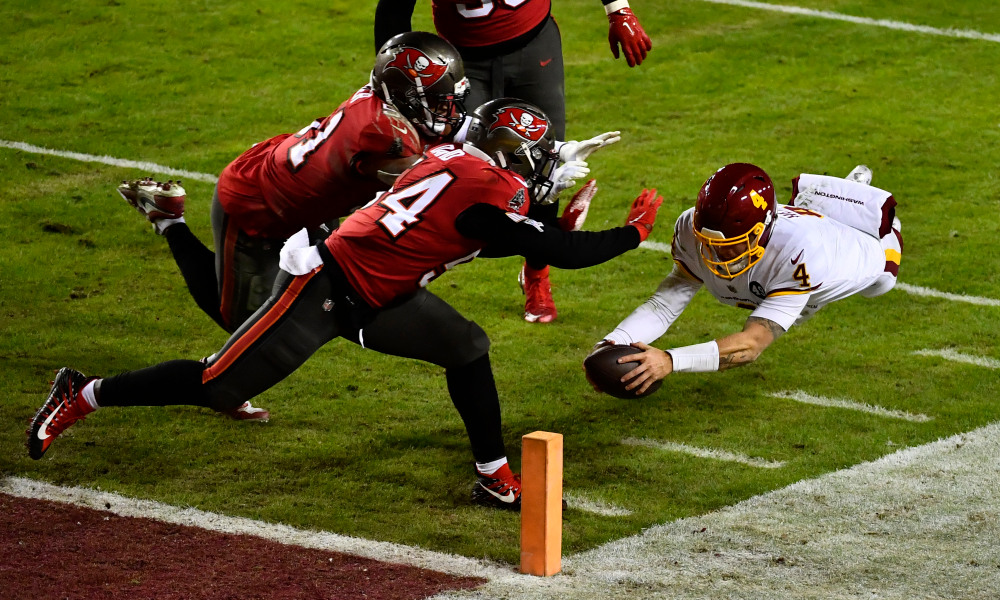
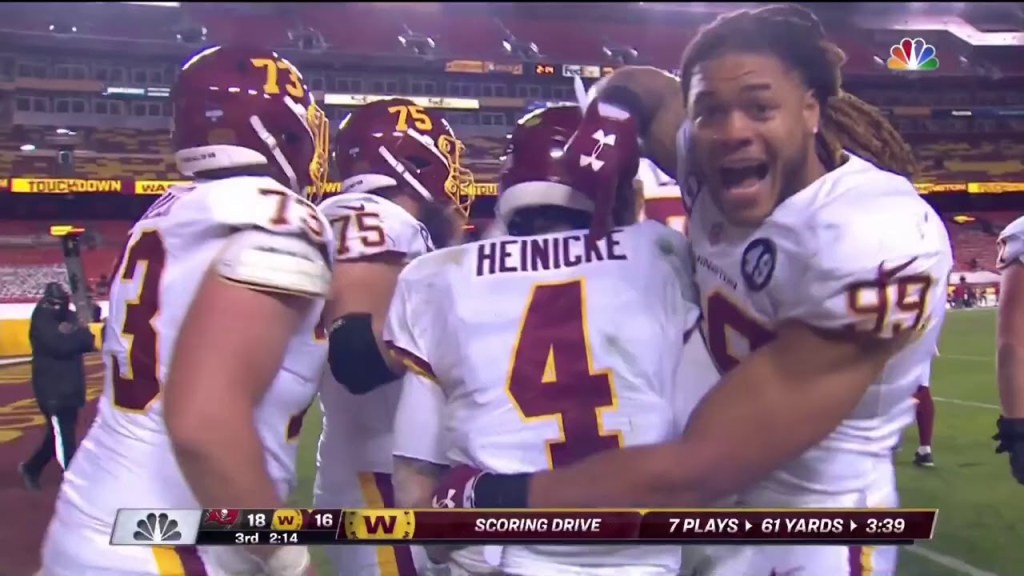
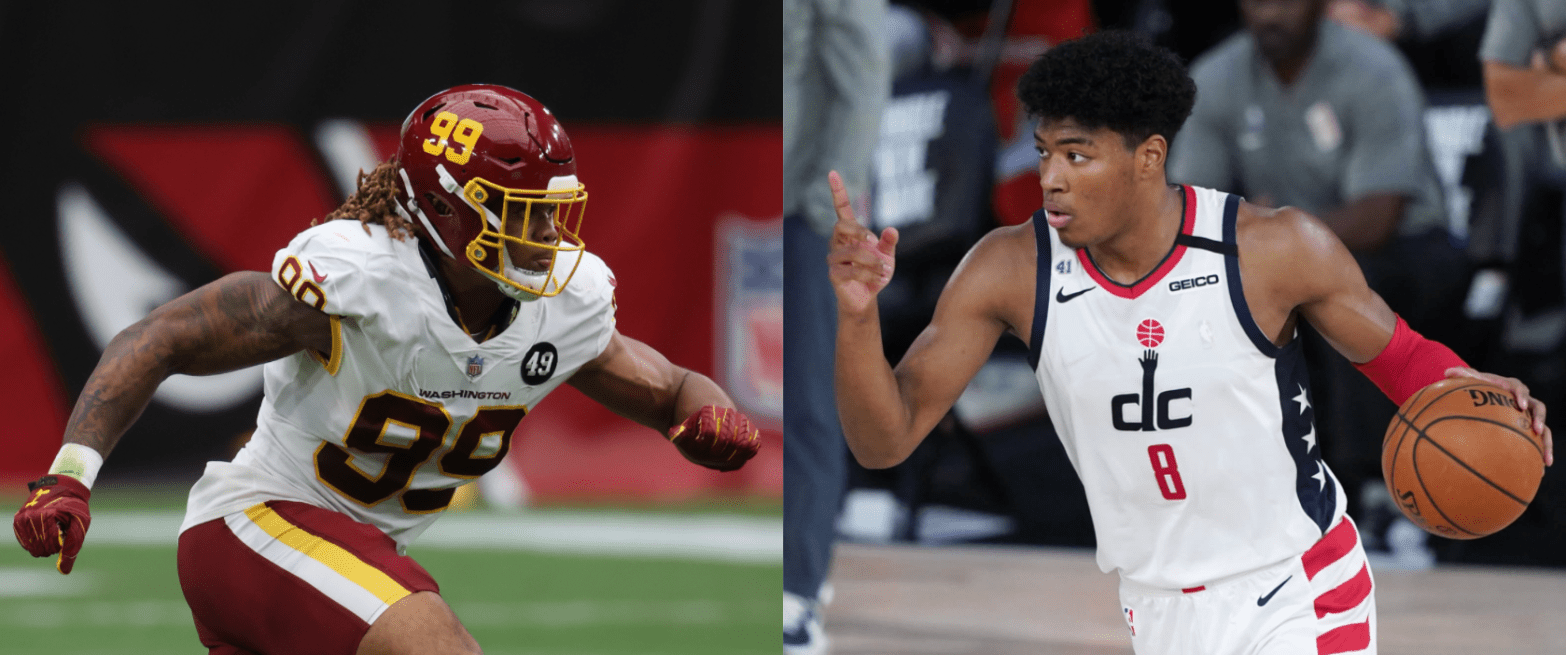

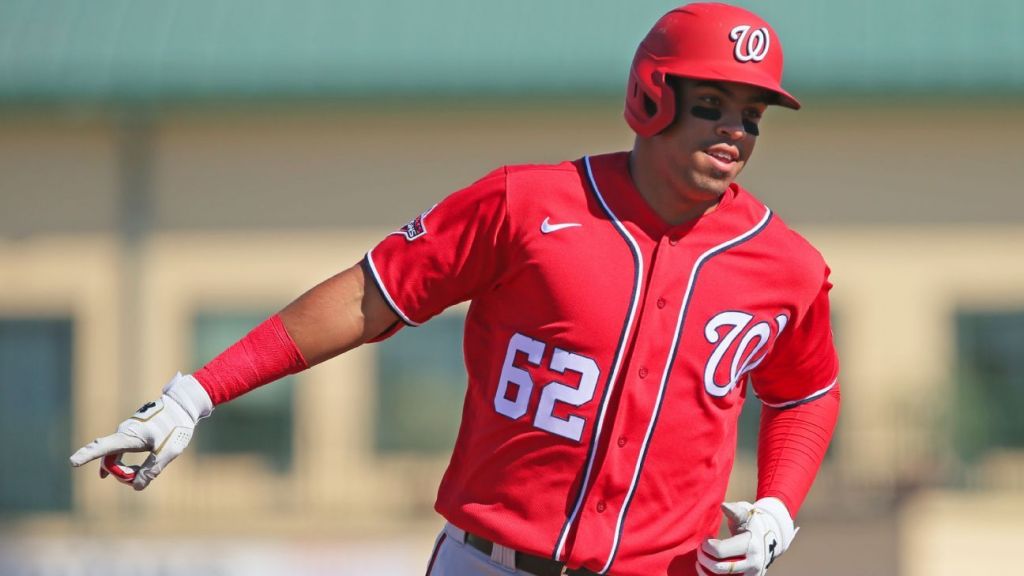
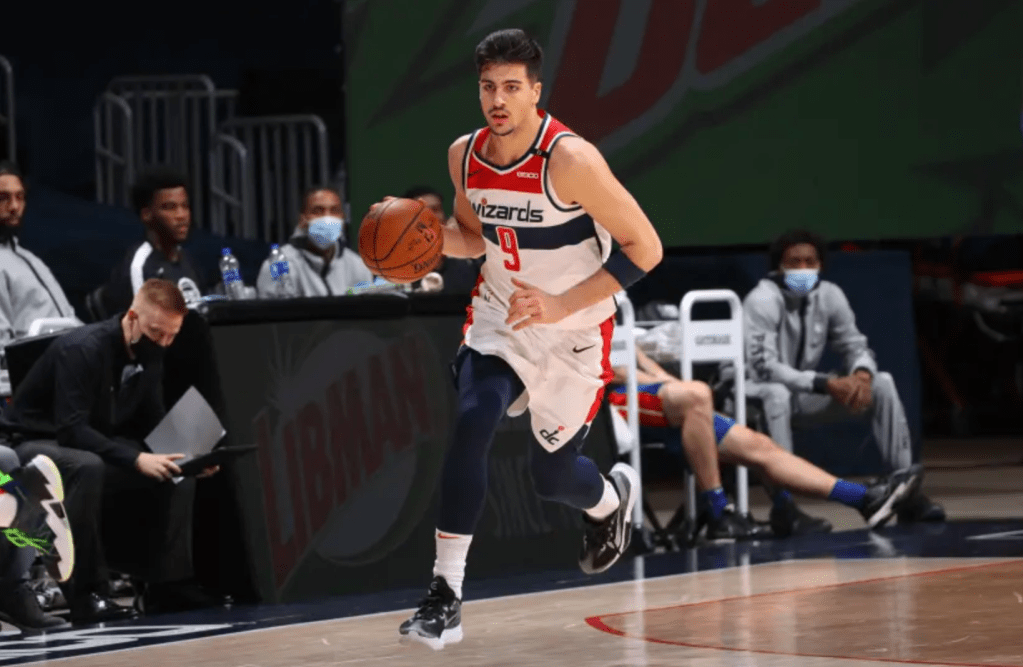
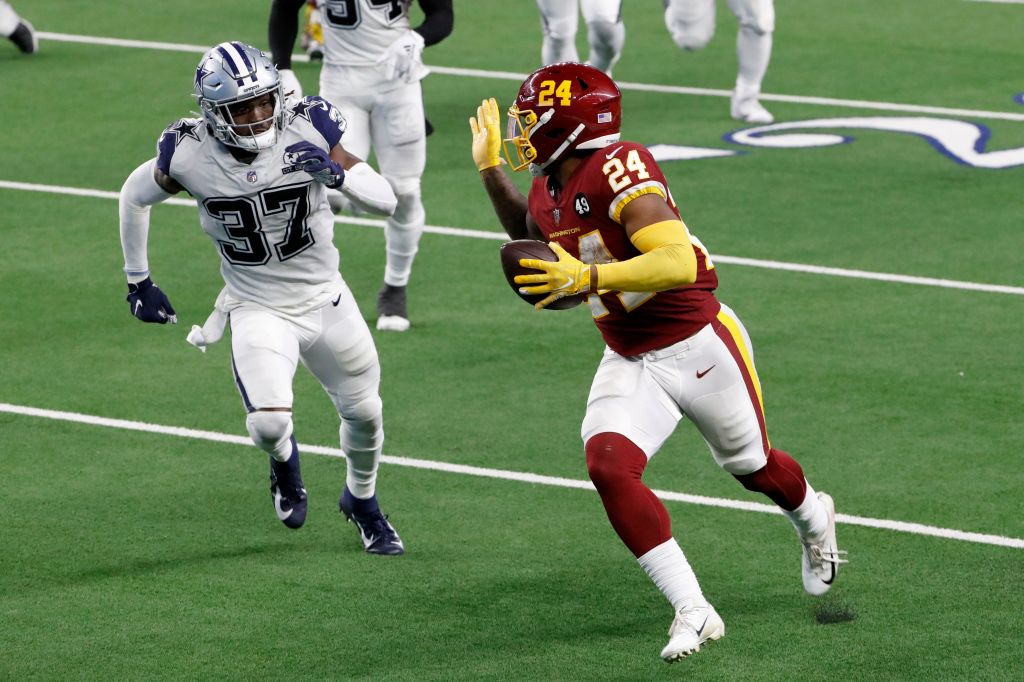
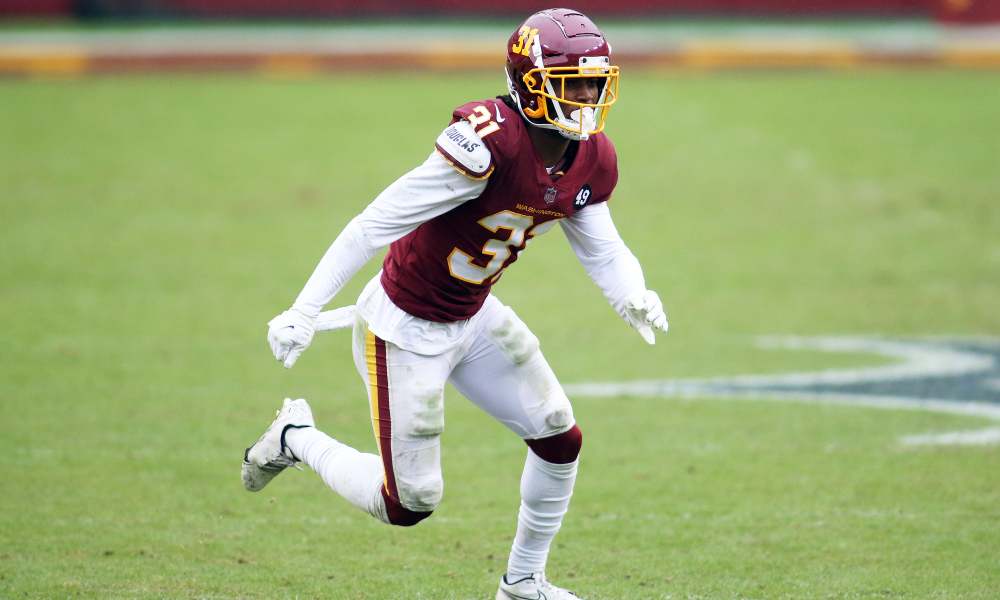
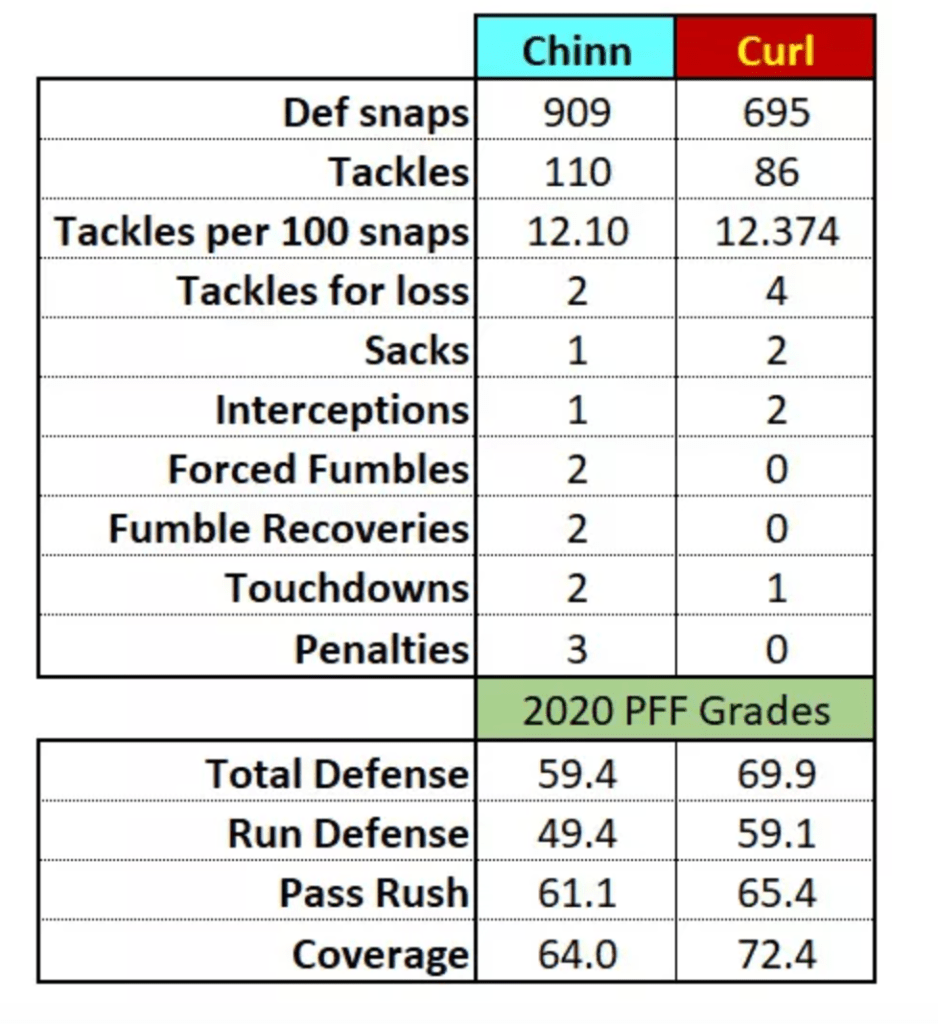
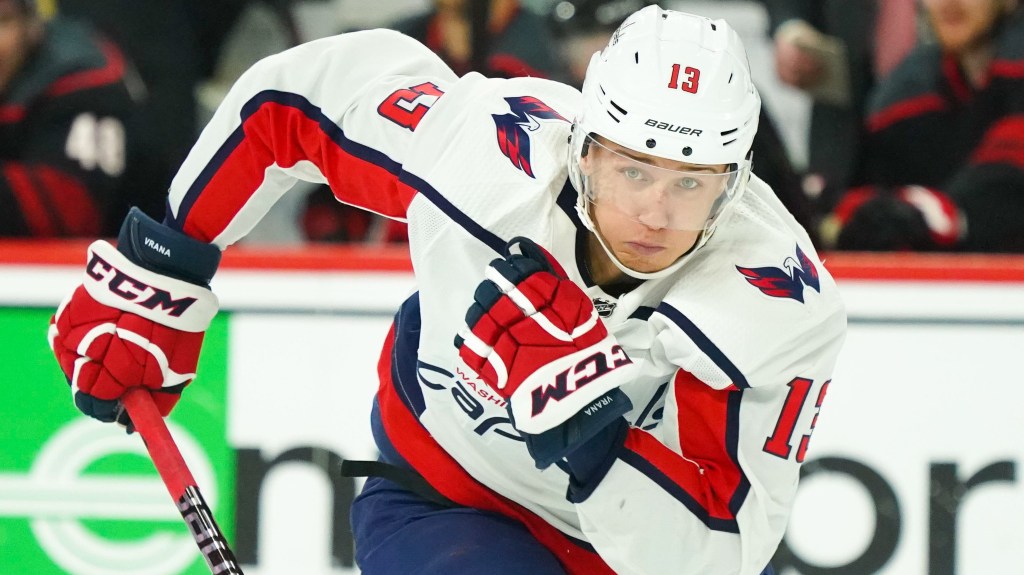
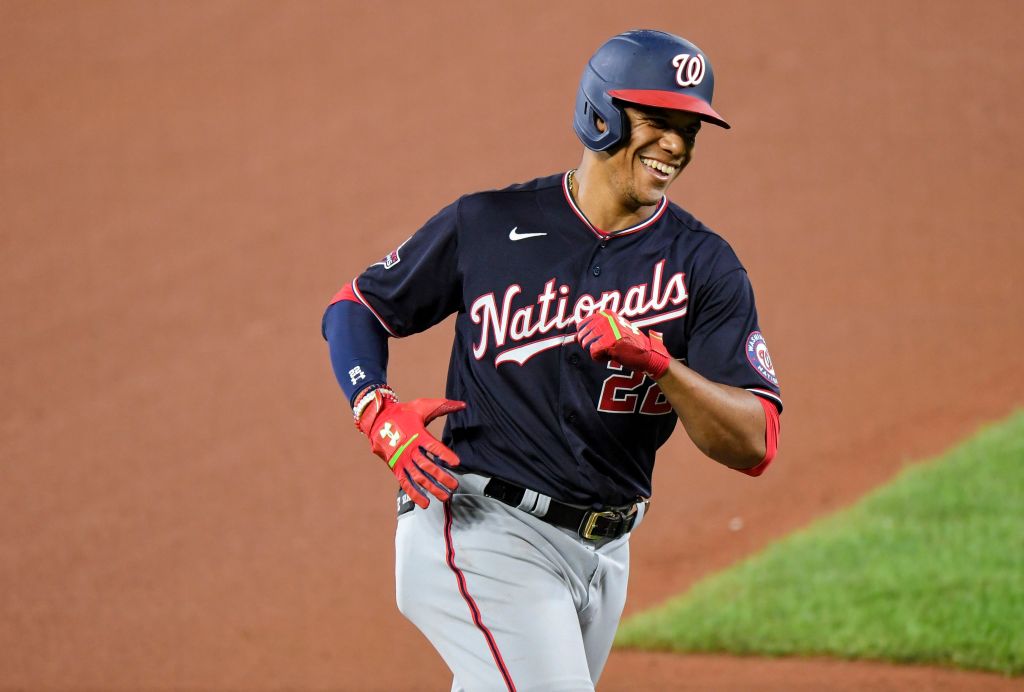
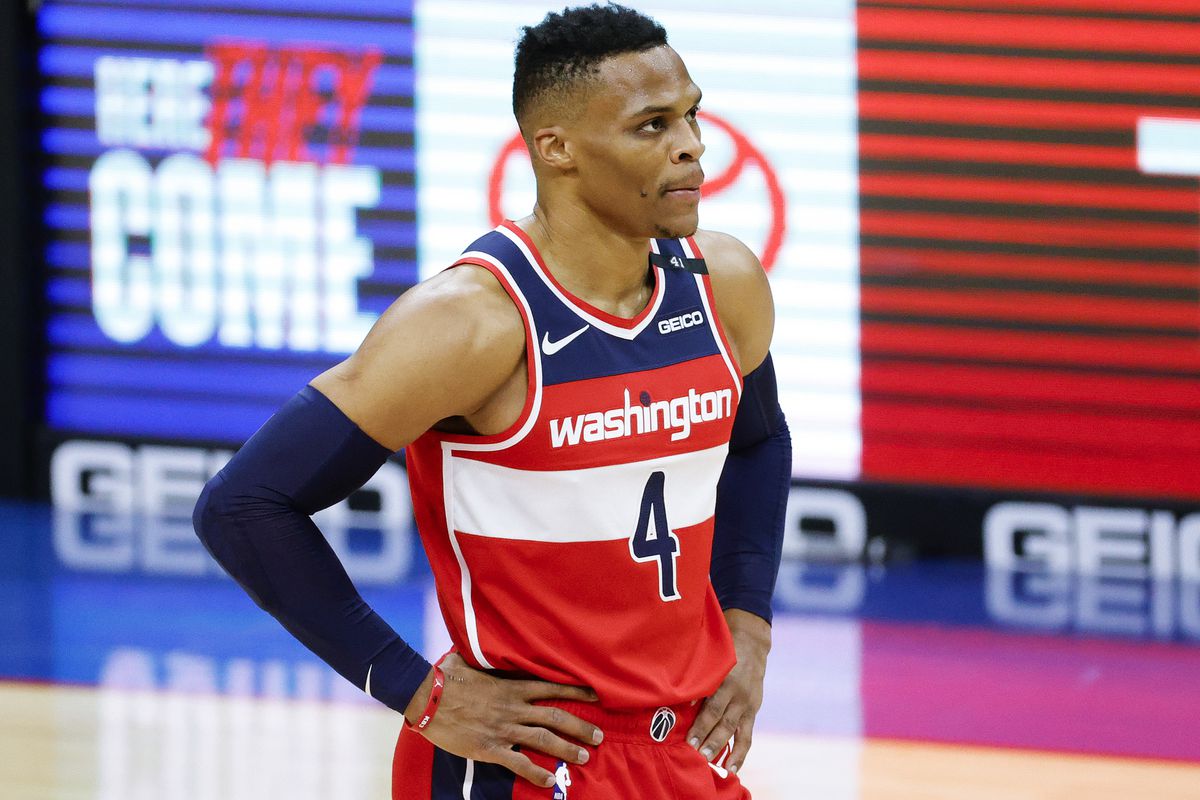


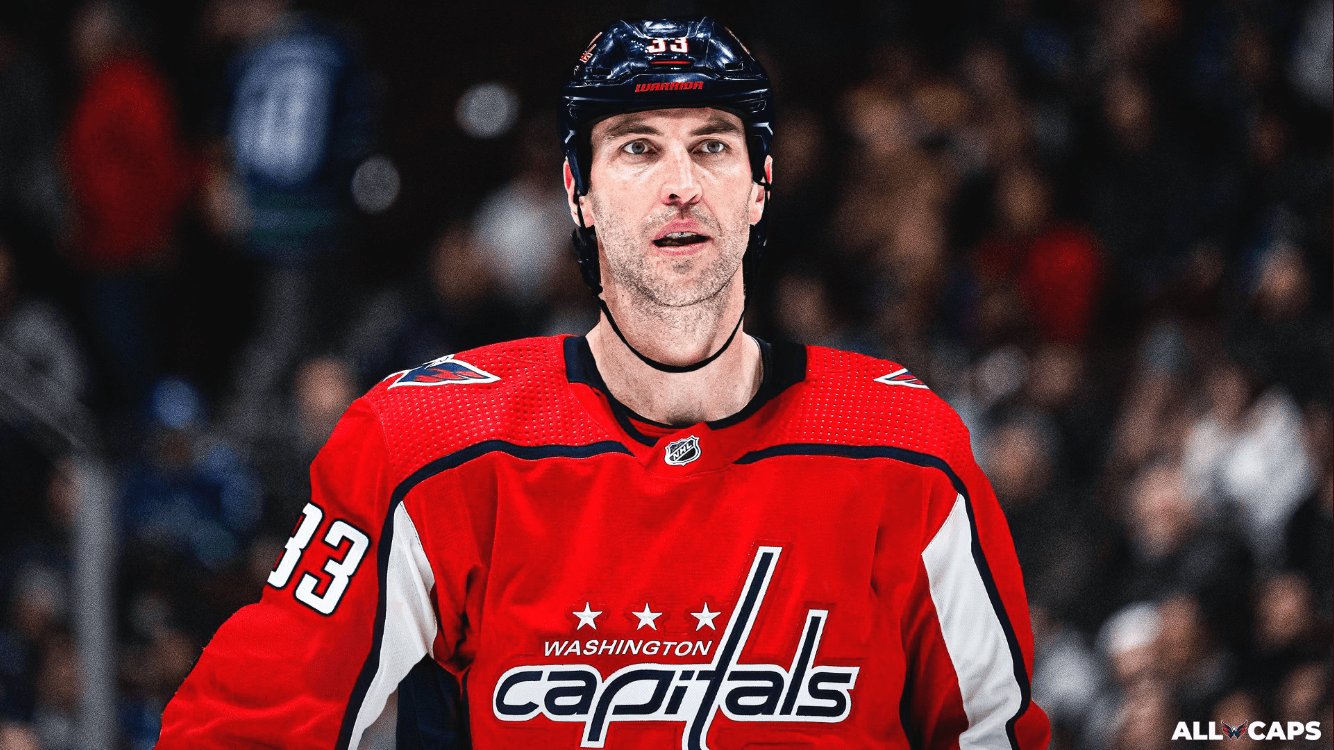
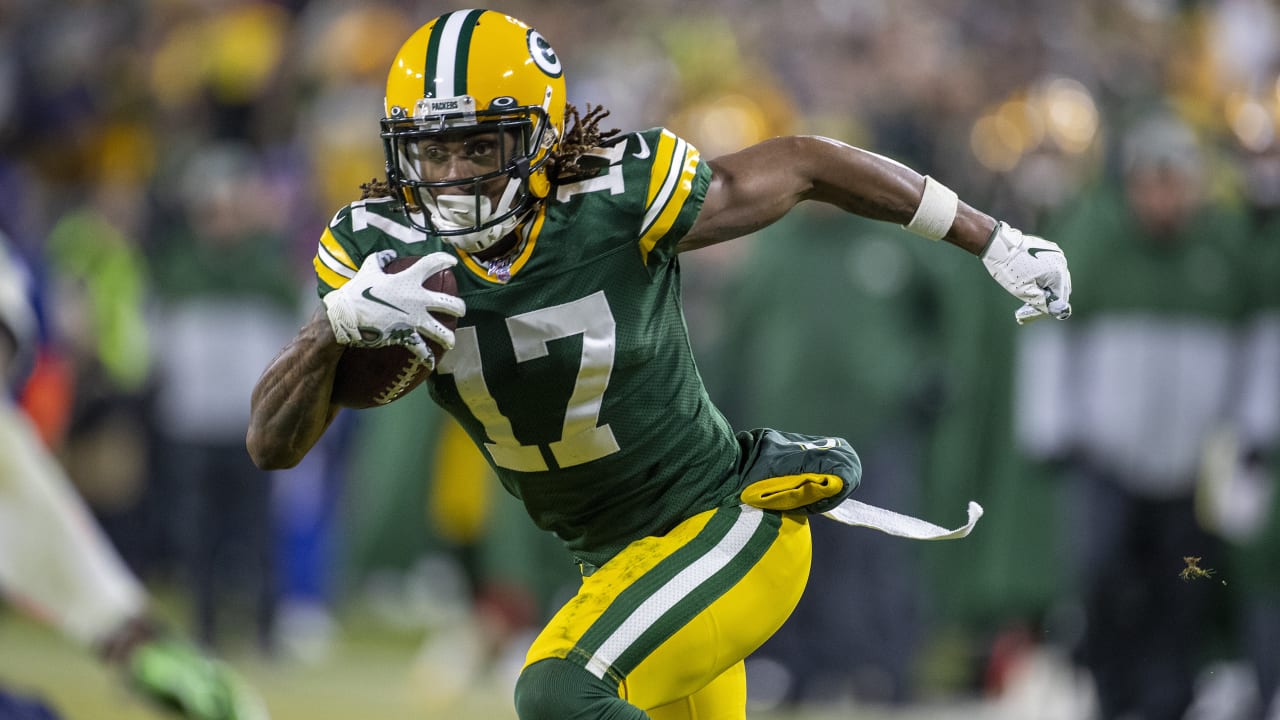
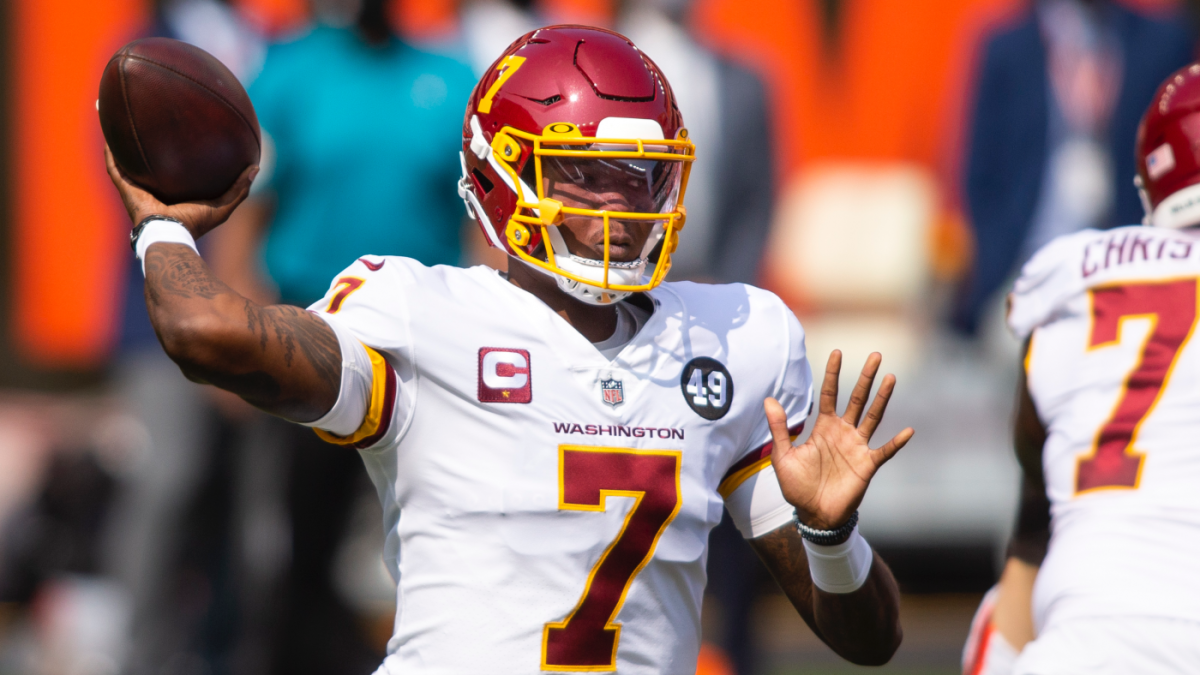

 The Wildcard