Evaluating the Alex Smith trade as his time in Washington ends

By: Joe Pohoryles

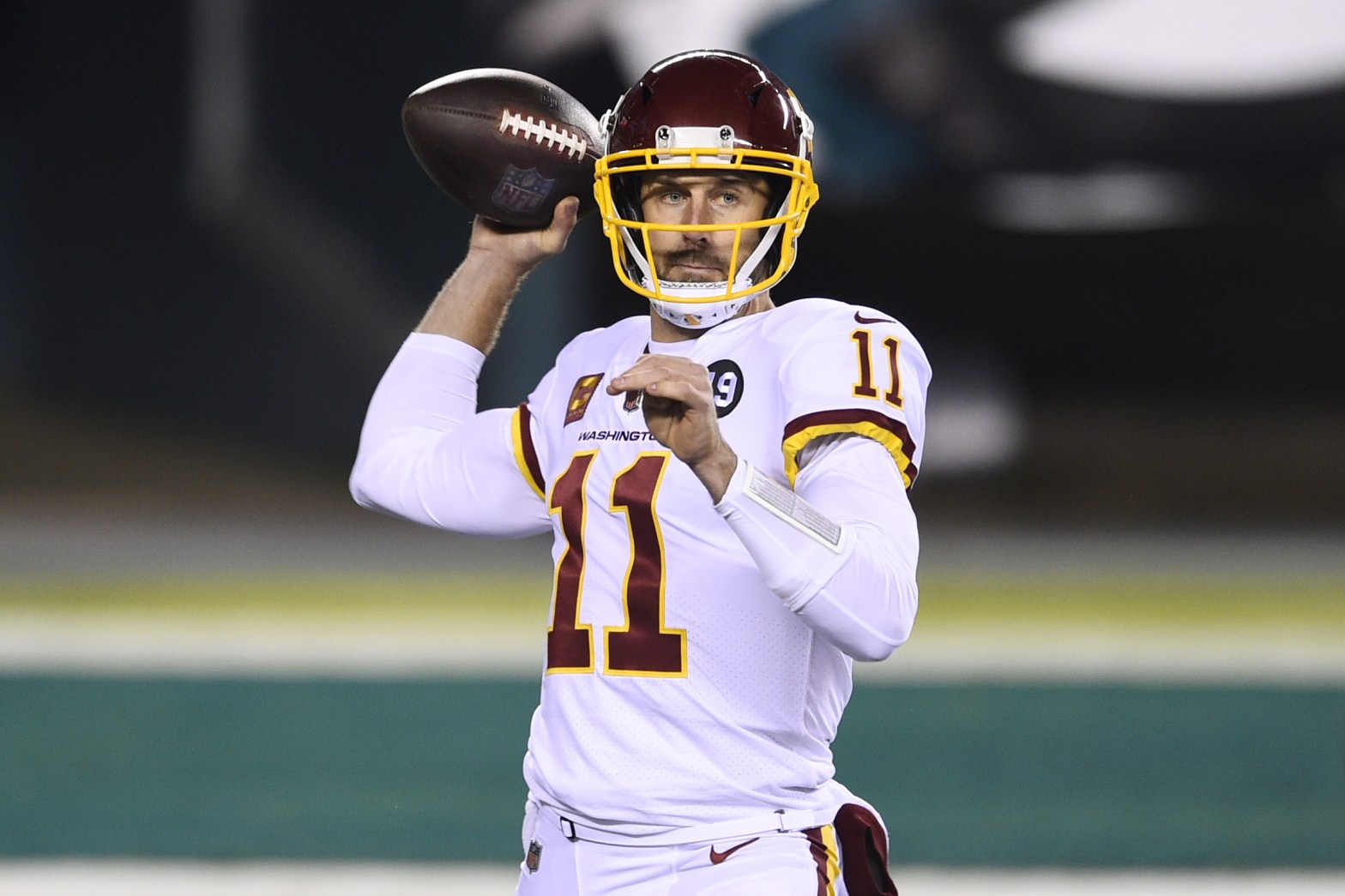
Over three years ago, the Washington Football Team made a move to stabilize the quarterback position, trading cornerback Kendall Fuller and a 2018 third-round pick to the Kansas City Chiefs for Alex Smith.

With Kirk Cousins heading out the door (he signed with the Vikings two months later), and with the Chiefs ready to unlock Patrick Mahomes, Smith and Washington became a good match.

Smith, who was a Pro Bowler in 2016 and 2017, would bring solid play to the Washington offense, allowing the team to build the rest of the roster before bringing in a longterm franchise face (ideally). The four-year/$94 million deal seemed pricey, but would be well worth the investment, assuming Smith could stay on the field.

But this is the Washington Football Team, so of course it didn’t work out as expected. A whole Disney movie later, and here we are today: Smith was officially released, clearing nearly $15 million in cap space.

So who won the trade? Clearly Kansas City, who has made three straight AFC Championship appearances and two Super Bowl trips (winning one), has been the big winner.

However, when looking at the trade pieces sent to the Chiefs in the deal and what Washington ultimately gained, it wasn’t really lopsided. Fuller helped Kansas City win the championship, then immediately returned to Washington in free agency. He’s now a top defensive back on the team.

The 2018 third-rounder, the 78th overall pick, was traded with the 54th pick by the Chiefs in exchange for the Bengals’ second-rounder (46th) and fifth-rounder (100th). With No. 46, Kansas City selected defensive end Breeland Speaks, who made played all 16 games in 2018 (four starts) before spending all of the 2019 championship season on injured reserve.

Speaks served a four-game suspension for a substance-abuse policy violation during that stretch in 2019 and was waived prior to the 2020 season. He’s bounced around a few practice squads and most recently signed a future/reserves contract with the Giants for 2021. Not the best start for a second-round pick.

The 100th pick was used on OLB Dorian O’Daniel, who amassed just one sack (the only one of his career) and nine total tackles in 11 games last season. Again, not a game-changer by any means.

So at the end of the day, Washington didn’t give up all that much in terms of assets, especially with Fuller returning just two years later. Kansas City ultimately won a championship, but that had little to do with what Washington sent their way.

The biggest loss was the contract size, and that wasn’t even Smith’s fault. Smith wasn’t lighting it up prior to his injury, but he was winning games. Washington was 6-3 and leading the division entering the game that Smith went down. The complete mess of a quarterback situation ruined the rest of the season, as the team finished 7-9 and missed the playoffs.

The low hopes of Smith returning prompted the team to draft Dwayne Haskins, which was a disaster. Had Smith stayed healthy, the team probably would have avoided the Ohio State quarterback and would have been able to take Montez Sweat (originally going 26th) without having to part ways with the 2020 second-rounder.

That would have been nice, but with a healthy Smith leading the way in 2019, I’d have a hard time believing the team would be bad enough to get the second overall pick for 2020, which of course turned out to be Chase Young.

Even though Smith didn’t work out quite as well as expected (and to absolutely no fault of Smith), the trade worked out much better than it may seem at the surface.

In taking on Smith, one of the few Washington quarterbacks of the past 20 years with a winning record (11-5), Washington wasted the 15th pick on Haskins, but still netted Sweat and Young, as well as an NFC East division title.

All it cost were two years of Fuller, who eventually returned, plus one pick that turned into two reserve defensive players and the 34th overall pick in 2020, which ended up being Michael Pittman Jr.

A young receiver like Pittman would be nice to have right now, but his loss isn’t a back-breaker. And while the quarterback position is still unsolved, the team would still be looking for a replacement if Smith played out his entire contract anyway.

When looking at what Washington gained from a personnel and cultural standpoint compared to the little they lost, I’d still make this trade another 10 out of 10 times.

Smith would deserve all the respect in the world even if the trade was a complete disaster, and even though his stint in Washington wasn’t what it should have been, it still reaped plenty of benefits.

Thank you, Alex Smith. On behalf of all Washington fans, I wish you the best wherever your career takes you next.

Cover Photo Credit: Derik Hamilton/Associated Press

Wizards coming into form before the All-Star break

By: Joe Pohoryles

The Wizards look much different than they did a month ago.

Despite blowing a five-point lead with less than a minute left against the Boston Celtics last night, the Wizards have been hot. Since losing to the New York Knicks 109-91 on Feb. 12, the Wizards have gone 7-2. That stretch included wins over the Lakers, Trail Blazers and the Nuggets twice. All three are currently playoff teams in the West.

The Wizards find themselves 12th in the East, but the overall weakness of the conference have the standings extremely jammed. Despite seeming so far out of the playoff picture, Washington is just 2.5 games behind the eighth spot, and just 3.5 out of fourth.

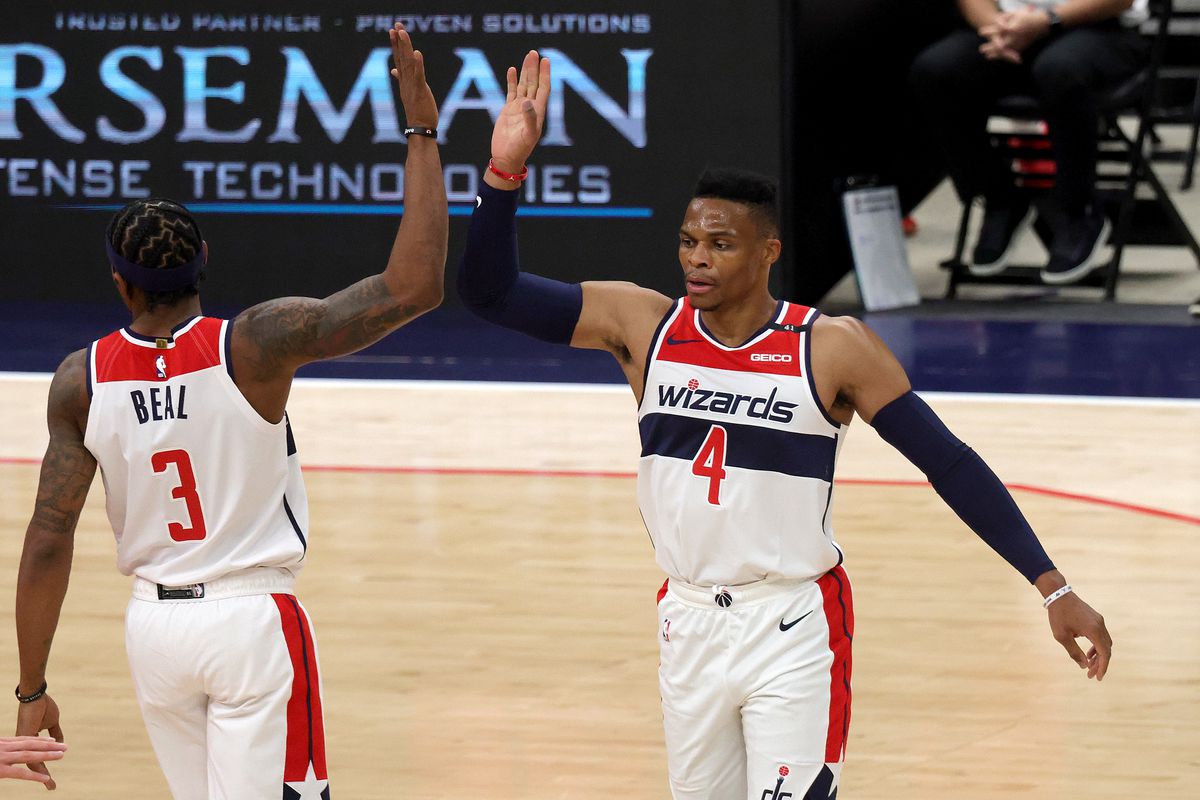
With Bradley Beal continuing to score at an elite rate, Russell Westbrook now contributing triple-doubles in winning efforts and a consistent rotation finally solidifying, this team is starting to shift in the right direction.

After overcoming the COVID-19 breakout that ravaged practically the entire roster, the Wizards are establishing some semblance of a real team. The biggest development is a consistent starting lineup that I don’t think anyone envisioned prior to this season.

Westbrook at the one and Beal at the two was obvious. Even Rui Hachimura at the four could be expected as well, but with center Thomas Bryant tearing his ACL early in the season and no obvious candidate to lock down the three, Scott Brooks was left to cycle through combinations.

For now, he’s found the right fit. Of all people, Garrison Mathews and Moe Wagner have been the final pieces of the starting lineup during this winning stretch. That hasn’t translated to starter-level minutes for either player; neither plays more than 20 minutes in a typical game, but it’s what’s working.

While Deni Avdija has fallen out of the starting rotation, the rookie gets a solid amount of minutes every night and still clearly has room to grow. Davis Bertans, meanwhile, has been a bit of a let down in the first year of his new contract. After shooting 42.4 percent from three last season, Bertans is 83rd among qualified players this season, shooting 38.4 percent from beyond the arc. He’s not terrible, but he’s been streaky.

When his shots are falling, his scoring can take over a game, but when he gets cold he becomes more of a liability than a player worth paying $16 million a year. If he can get his numbers up and can start playing at his contract value, this team will only get better, but that’s far from a given.

With the East seemingly loaded with mediocre and underwhelming teams, the Wizards have a real shot to break in somewhere. Philadelphia, Brooklyn and Milwaukee have separated themselves from the rest, but 4-8 could really go to anyone at this point. If the Wizards can hang on to the momentum they’ve built over the past couple weeks, it won’t be long before they’re in the playoff picture.

That said, there’s an equal chance of things going south. We’ve seen how bad things can get regardless of how well Beal plays, and it could easily happen again. The center rotation of Wagner, Robin Lopez and Alex Len isn’t terrible, but won’t elevate the team in any way.

With Beal and Westbrook taking on a ton of minutes and Ish Smith injured, Raul Neto has really been the only other guard getting minutes lately. Like the centers, Neto is a fine reserve player but won’t be the X-Factor.

The biggest disappointment has been Troy Brown Jr. falling out of the rotation. The third-year wing is down to playing 14.3 minutes per game after averaging 25.8 minutes last season, and his playing time has gone down even more during this two week stretch.

Brown over the past two weeks:

  • Played just five minutes against Boston on Feb. 14
  • DNP four games in a row after that
  • Played four minutes in a 19-point loss to the Clippers
  • Reached 16 minutes against the Nuggets on Feb. 25 (4 pts, 4 reb)
  • Played four minutes in a 16-point win over the Timberwolves
  • DNP last night against the Celtics

The 2018 first-round pick has been slipping out of favor and has regressed from what we saw in the Bubble this past summer. Another losing streak could force a shake up and give him another chance, but the fact that the Wizards have been largely successful without him on the floor is a tough sign.

The Wizards still have a steep hill to climb after the All-Star break, and they certainly don’t have everything figured out yet, but these past two weeks have been a major development compared to the early parts of the season.

Cover Photo Credit: Rob Carr/Getty Images

Chasing Gretzky IV: The Road Gets Bumpier

By: Joe Pohoryles

With the NHL well underway and this being the first “eighth” of the season, the Chasing Gretzky series is finally back.

Before the pandemic hit, Alex Ovechkin was a month removed from arguably the greatest scoring stretch of his career, and was contending with Boston’s David Pastrnak and Toronto’s Auston Matthews for the Rocket Richard Trophy, awarded to the league’s top goal-scorer. He ended up sharing the honor with Pastrnak, making it the Great Eight’s ninth Rocket Richard of his career.

Since the last installment of this series, a lot has happened.

The chance of Ovi catching up with Gretzky was already a tall task, but the past year has made the mountain a whole lot steeper to climb. Over a week ago, I wrote in to NBC Sports Washington’s JJ Regan for his Capitals Mailbag, which I strongly recommend reading every week if you’re a Caps fan.

I asked where he believes Ovechkin stands in the record chase now that the 2019-20 and ’20-21 seasons have been shortened. Taking into account the games he also missed for breaking COVID protocols, he has even less time do so. You can find the entire article here, but this is what he responded to my question:

I was amazed that Ovechkin made it seem possible he could catch Gretzky’s record of 894 goals, but that was as far as I was willing to go. I only ever saw it is possible, but never likely. Currently sitting at 707 goals, the margin was thin enough that a handful of games missed at the end of the 2019-20 season and the shortened 2021 season makes me think, sadly, that 894 is going to be out of reach.

This was published on Jan. 29, and Ovi now sits at 711 goals, but the sentiment remains. Of course, this is just one writer’s opinion, but it’s one I may have to agree with.

Prior to the pandemic, I strongly believed that if Ovi stayed in the NHL well into his late 30s, even past his 40th birthday, that the record would be his. Any major injury would throw him severely off course, but given the Russian Machine’s durability, that seemed like an afterthought.

Now, with all the games trimmed off, it’s as if Ovechkin has went through a significant injury. Despite my concerns, I will remain as hopeful as possible and continue to track the pace.

Ovechkin has five goals through eight games so far, giving him a 0.625 goals per game (GPG) rate to start the year. It’s a small sample size, but it falls pretty close to his career GPG of 0.613. While Ovechkin finished last season with 0.706 GPG, it’s promising to see his scoring output hasn’t slowed down relative to his entire career.

With the COVID issues running rampant through this team, it’s been difficult for the Great Eight to get into a true rhythm as well, so the sooner this team gets back to full strength, the better.

Ovi has tied and passed Caps legend Mike Gartner to take sole possession of seventh on the all-time list. Phil Esposito lies just ahead at 717, meaning Ovi needs just seven more goals to leapfrog into sixth.

The Caps have 44 games left on the schedule, and if Ovi continues his current rate of scoring, he’ll finish with 30 goals (if we factor in a few missed games). That would give him 736 all-time, sandwiched evenly between Marcel Dionne (731) and Brett Hull (741) for fifth on the all-time list.

Given the shortened schedule and his ability to tear it up in stretches, one could assume he’ll pick up the pace by the end of the season. With that in mind, 30 seems like a reasonable mark to reach this season, with any additional goals helping the overall cause. If everything goes as expected (and given the times, it probably won’t), Ovechkin should finish the regular season fifth on the list, and will be poised to pass Hull and Jaromir Jagr to have sole possession of third by the end of 2021-22.

2022-23 and beyond will be the real test. It’s a long way away, and I’ll continue tracking until then, but the two major hurdles will be the only two players to score 800 career goals. Ovechkin will be 37 entering that season, and while it’s difficult to predict what total he’ll be at, we can look at how the two ahead had been progressing.

Gordie Howe, entering age 37 season:

  • 19 seasons – 1,259 games played – 595 career goals
  • 29 goals in 70 games in age 37 season (moving up to 624)

Wayne Gretzky, entering age 37 season:

  • 18 seasons – 1,335 games played – 862 career goals
  • 23 goals in 82 games in age 37 season (moving up to 885)

Ovechkin will also be entering his 18th season by 2022-23, and — if we assume there will be a full 82 games for 2021-22 — should be hovering around 1,280 career games. Gretzky had slowed down significantly at this point in his career, and he retired after his age 38 season. Ovi is still scoring at a high rate, so the key to catching Gretzky will be playing well past 38.

It’s a good thing 43-year-old Zdeno Chara is now his teammate; he will hopefully share some of his tips for longevity.

Cover Photo Credit: Nick Wass/WiscNews

With Stafford off the table, is it ‘Watson or bust’?

By: Joe Pohoryles

The LA Rams went big when acquiring longtime Detroit Lions quarterback Matthew Stafford, sending away two first-round picks, a third-rounder and former first overall pick Jared Goff in return for Stafford, who turns 33 on Sunday.

The Washington Football Team was reportedly in the mix to gain his services, apparently offering the 19th overall pick and a third-rounder to Detroit. It didn’t come to pass, continuing the Football Team’s quarterback search.

The team swung big and missed on Amari Cooper last offseason, offering him a five-year/$100+ million deal only for the receiver to re-sign in Dallas. The team moved on without bringing in a comparable receiver as a “Plan B.”

That can’t be the case this year, and Washington cannot settle for less.

There are a handful of quarterbacks on the trade block, but barely any are worth giving up valuable assets for:

Matt Ryan is a former MVP and has been to a Super Bowl, but he’s 36 and will be owed over $40 million next year. It’s also uncertain the Falcons will actually trade him. Still, hard pass.

Derek Carr is a proven NFL starter, but he won’t take any team over the top. I wouldn’t want to part ways with any Day 1 or 2 draft pick to land him, and that’s probably what it would it take, if not more.

Marcus Mariota, Jameis Winston, Mitchell Trubisky, Jimmy Garoppolo and Sam Darnold are all generally unappealing options as a longterm fix. Darnold could maybe find a second life elsewhere given how hard it is to play for the Jets, but I don’t trust him to develop any better in Washington. (Trubisky will be a free agent, so it wouldn’t require a trade, but I still wouldn’t want him, despite his NVP resume).

Cam Newton can’t reliably pass the football anymore. To pay him $50 million, which Adam Schefter suggested Washington might do, would without a doubt be the worst signing since Albert Haynesworth in 2009.

Any other lower-tier quarterback I missed here probably isn’t worth mentioning. So who does that leave?

In free agency: Dak Prescott. On the trade market: Deshaun Watson.

Is either quarterback a realistic target for this team? The Cowboys could make things simple and re-sign Prescott from the jump, and there are other teams with more assets than Washington to give for Watson.

We won’t know until moves are actually made, but until then, we can speculate.

Awhile back, I called a trade for Watson a “pipe dream.” After all, how could any team trade a bona fide franchise superstar quarterback, a requisite for any team that wants to contend for a championship? Now, it is seeming more realistic.

Houston has five years of control, so they don’t necessarily have to give in to Watson’s demands, but if they do, Washington should take their best shot. I am admittedly scared to see what it would require to land Watson, but the value Watson brings would likely be worth whatever it takes.

One tweet piqued my interest when it came to what bringing in Watson could take:

I don’t know how reputable this person is, but the news is coming from Rotoworld and The Houston Chronicle, so there’s some significance there. Going by this hypothetical, there are some packages that would be feasible for Washington.

One thing to get out of the way is Chase Young should not be going anywhere. Even though a franchise quarterback is more valuable than a defensive lineman, you need to support the offense with great defense, and taking Young out of the equation would set the team back.

He’s the Defensive Rookie of the Year favorite with DPOY potential down the line. You build your defense around a guy like him. He’s a non-starter in any trade talks.

Anyone else on the defensive side of the ball can be on the table. It would stink to move one of the other defensive linemen, but when you consider the fact that one will likely move on in free agency at the end of his rookie deal, it may make sense to incorporate them in a deal so Washington could at least net a player like Watson.

I would hate to lose Montez Sweat, Daron Payne or Jonathan Allen. Even Matthew Ioannidis would be tough to part with; prior to his injury early in 2020, there was an argument that he was the team’s best interior lineman.

If two firsts, two seconds and two defensive starters are the starting bar, then it should be worth mentioning that Sweat, and perhaps even Payne are themselves worth the equivalent of a first-rounder; they’re more than just starters. Any package that would include them means taking out at least one of the picks from the deal.

Looking away from the defensive line, Landon Collins would be an interesting piece to throw in. The former All-Pro has a huge contract, which may lower his overall value, but he is still a talented player. His fit in Washington hasn’t been tremendous, and it’s possible that the emergence of 2020 seventh-rounder Kamren Curl has made Collins more expendable.

It all depends on which players Houston values, but a package of two firsts, two seconds, Allen and Collins seems like a good offer that wouldn’t completely waste away the roster. It still leaves Young, Sweat, Payne, Ioannidis and also Tim Settle on the defensive line, and the defense has already proven it can play well without Collins.

It would be difficult to see both guys leave, but if that is all it would take to get Watson, I would be able to stomach it. It appears coach Ron Rivera and new front office brain trust Martin Mayhew and Marty Hurney will look for an upgrade but (understandably) won’t decimate the rest of the roster for one. Getting Watson may require that.

So if not Watson, and if not another trade target/free agent, it’ll come down to some mix of Alex Smith, Kyle Allen, Taylor Heinicke and a rookie. As of now, it seems five quarterbacks could be gone by the time Washington picks at 19, so trading up would probably be necessary. I wouldn’t sell the farm for any of these prospects outside of Trevor Lawrence, but that won’t be an option.

With Stafford off the market, Watson remains the only attractive quarterback option (in my eyes, anyway), and we still don’t know how likely a trade is at this point. The team has to take advantage of all the impact players on rookie contracts over these next few years, but it’s looking more and more like 2021 won’t be the season to capitalize.

Cover Photo Credit: Eric Christian Smith/Associated Press

Arriola Joins Swansea City on Loan, What Does it Mean for D.C. United?

By: Jonathan Yuhas

On Feb. 1, it was confirmed that D.C. United loaned Paul Arriola to Swansea City for the remainder of the English Championship season, giving the winger a great opportunity to play overseas for the first time and aid Swansea in their race for promotion to the Premier League. Arriola joins Swansea on a loan with no option to buy, meaning he will return to D.C. United after the English Championship season ends.

What it means for D.C. United:

Should Arriola return to D.C. United after Swansea’s season ends, he will have only missed five weeks of MLS play. That’s very good news for D.C. United fans and new head coach Hernán Losada.

MLS training camps open on Feb. 22, which is much later than the typical start due to the coronavirus pandemic and may present United with a good opportunity. Joining Swansea allows Arriola to stay active without relying on international games. He’ll be joining his U.S international teammate and Seattle Sounders star Jordan Morris in Swansea.

The MLS season is slated to start Apr. 3, but with recent labor negotiations and owner disputes with the players’ association regarding coronavirus rules, this date seems more like an expectation than an official start to the season.

Losada will be left with some roster flexibility before Arriola’s return as he looks to employ his “attacking-minded tactics” to the club. After United’s sluggish and poor performance in the 2020 MLS season without Arriola, Losada’s tactics will be welcomed. 

The potential month of Arriola’s absence will be Losada’s opportunity to prove his ability as a coach in comparison to his predecessor, longtime head coach Ben Olsen. Olsen lost Arriola to an ACL tear, which left the team in disarray. United was one of only four teams to not make the playoffs in the Eastern Conference last year.

The only downside for D.C United in this loan is a potentially slow start to their season. Entering the year without an established starting XI and top player, while also employing a new head coach could be the formula for a poor start, but no team will be better equipped for a rebound than D.C. United. 

As they’ve shown in the 2018 season and in spurts of the 2020 season, they can overcome adversity and slow starts. These two seasons are also firm evidence in United’s ability to come out strong from a major change in the organization. 

In 2018, United’s record improved tremendously after the addition of Wayne Rooney and the opening of Audi Field.  In 2020, United rebounded from being last in the Eastern Conference with a 2-9-5 record, earning a draw against the first-place Philadelphia Union and winning the next three games under interim head coach Chad Ashton.

D.C United fans should be left with a sense of optimism and satisfaction from Arriola’s loan to Swansea City. Losada will be left with time to evaluate and build his team without Arriola, while Arriola will gain European soccer experience for himself. The move will benefit the player, team and club finances as they search for another playmaker.

Players such as Yamil Asad, Ola Kamara, Julian Gressel and Edison Flores will need to be able to score the goals under Losada’s system if there is any hope of a decent start to the season. But when Arriola returns to D.C. United, look to see a more polished and passing-minded player that will raise the team to a new level. 

Cover Photo Credit: Geoff Burke – USA TODAY Sports

Nats add helping Hand to bullpen, make other roster moves

This is somewhat old news, but I haven’t had the time to address the few significant signings the Nationals have made over the past week or so. Until now.

On Jan. 18, three-time World Series champion Jon Lester agreed to a one-year deal to join the Nationals rotation. The 37-year-old pitcher was an All-Star as recently as 2018, but is no longer the ace-caliber pitcher that he was in Chicago.

Instead, the lefty is expected to slide in behind Max Scherzer, Stephen Strasburg and Patrick Corbin in the rotation as the fourth starter. Joe Ross figures to be the fifth starter in the rotation, but should have competition with Austin Voth.

Getting a former ace with an incredible postseason resume to pitch in the back of the rotation is just what this team needed. Lester may be past his prime, but he could help this team tremendously as the season goes on, especially if they can find their way into the postseason.

With the Atlanta Braves looking as imposing as last year, and the New York Mets loading up with a new owner (and new money), competition for the top of the NL East will be stiff. The next major move will hopefully help close the gap.

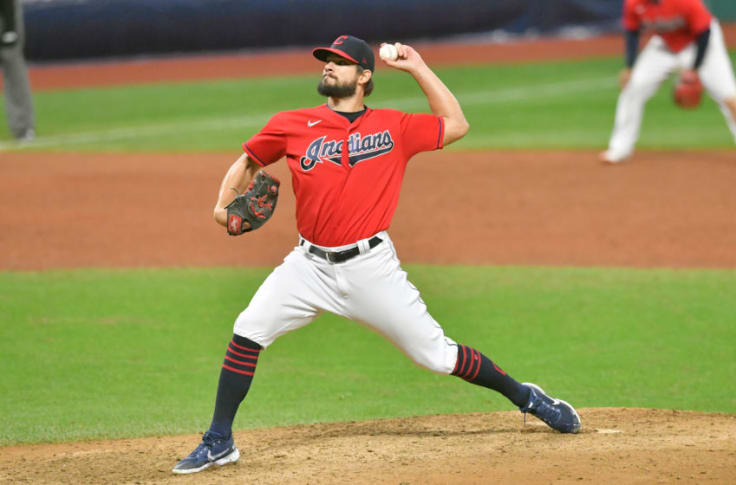
With the bullpen being a longtime weakness for this team, the signing of relief pitcher Brad Hand on Jan. 24 could be huge. Hand was one of the top free agent relievers this offseason and could potentially be the best closer this team has had in recent memory.

Despite getting blown up in Game 2 of the 2020 Wild Card series against the Yankees, Hand was named to the 2020 All-MLB Second Team after leading the majors with 16 saves. He began his career with the Florida/Miami Marlins before stints with the San Diego Padres and Cleveland Indians.

Hand, who was named an All-Star in each season from 2017-2019, posted a 2.05 ERA in 2020, striking out 29 batters and walking four in 22.0 innings pitched. With Sean Doolittle departing in free agency, the Nats needed a replacement, and Hand is more than suitable.

Hand was even speculated to sign with the Mets a couple weeks before he signed with Washington, so keeping him away from a division rival is major.

Hand now joins a bullpen that includes Daniel Hudson, Will Harris and Tanner Rainey. Rainey put together a breakout 2020 campaign and has the looks of a future closer. Hudson and Harris have their shaky moments, but overall are solid relievers with closing experience. The three H’s and Rainey looks like the strongest bullpen this team has had in a long time.

Finally, the team added Alex Avila as a reserve catcher. The 2011 All-Star was teammates with Scherzer in Detroit, with Lester in Chicago and with Corbin in Arizona, giving this rotation a familiar face to work with on nights Yan Gomes doesn’t play.

Avila appeared in just 23 games in 2020, batting just .184 with one home run and two RBI, but for just one year and $1.5 million, it’s simply a low risk move to fill a position of need.

And of course, the team got Mr. National back when Ryan Zimmerman re-signed on a one-year/$1 million deal after sitting out the 2020 season. We haven’t seen him on the diamond since the Nats won Game 7 in Houston, so it’ll be great to have him back.

There’s still time for more additions, but for now, here is what the depth chart is looking like for the Nats in 2021:

Fielders:

C: Yan Gomes/Alex Avila/Tres Barrera

1B: Josh Bell/Ryan Zimmerman/Jake Noll

2B: Starlin Castro/Luis Garcia

3B: Carter Kieboom/Josh Harrison

SS: Trea Turner

LF: Kyle Schwarber

CF: Victor Robles/Andrew Stevenson

RF: Juan Soto/Yadiel Hernandez

Pitchers:

SP: Max Scherzer/Stephen Strasburg/Patrick Corbin/Jon Lester/Joe Ross

LR: Austin Voth

RP: Daniel Hudson/Tanner Rainey/Will Harris/Wander Suero/Kyle Finnegan

CL: Brad Hand

Cover Photo Credit: Jason Miller/Getty Images

Washed-ington DC: How the nation’s capital became the retirement home for America’s best athletes (Part II)

You can find Part I here.

We left off in 2010, so here is how the next decade shaped up when it came to aging athletes arriving in the district:

2011-2015: Quantity over Quality

After seeing three Hall of Famers come to Washington, the next period saw just one potential HoFer among a wave of other solid aging talent.

Paul Pierce, the Boston Celtics legend and 2008 Finals MVP, played one season with the Wizards that included one of the greatest playoff moments in recent franchise history. His buzzer-beating bank shot where he famously “called game” against the top-seeded Atlanta Hawks in the 2015 Second Round was unforgettable, and a moment I was lucky enough to witness in person.

Pierce was gone after one season, but he overlapped with longtime NBA guard Andre Miller, who arrived to DC via trade in 2014 as a 37-year-old backup point guard. Miller was never an All-Star, but he led the league in assists per game (10.9) back in 2001-02 with the Cleveland Cavaliers, and he stuck around for 17 seasons in the NBA. He played 79 games across two seasons in Washington.

The Caps added longtime NHL winger Mike Knuble prior to 2011, but he quickly established himself as a valued team leader while still producing on offense. He spent his age 37-39 seasons in Washington, and is best remembered for assisting the Joel Ward overtime winner in Game 7 against the Boston Bruins in the 2012 First Round.

The Caps also added 34-year-old Brooks Orpik before the 2014-15 season, and the former Penguin defenseman eventually became an alternate captain and helped the Caps win their first Stanley Cup in franchise history in 2018 at 37.

The Nats brought in a ton of guys in their mid-30s or older in this period, but the most notable was six-time All-Star Jonathan Papelbon in 2015. The 34-year-old reliever is best remembered in a Nats uniform not for what he did on the field, but for choking Bryce Harper in the dugout towards the end of the 2015 season. He finished 30 games in the 2016 season, losing four games and earning 19 saves in what would be his final year as a Major Leaguer.

The Nats also added three-time All-Star infielder Dan Uggla for the back half of the 2015 season, but the 35-year-old didn’t make much of an impact in what would be his final MLB season as well.

All the way back in 2011, at 43 years old, Matt Stairs spent the 19th and final season of his MLB career with the Nats, making just 74 plate appearances and batting a lowly .183 with no home runs and two RBI. Stairs began his career in 1992 with the Montreal Expos, and coincidentally ended his career with the same franchise.

The most significant Washington Football Team “old guy” signing in this period was safety Ryan Clark. The 2011 Pro Bowler played in Washington in 2004 and 2005 before an eight-year run with the Pittsburgh Steelers that included a Super Bowl championship. Clark returned to Washington in 2014 for his age 35 season, starting 15 games and appearing in all 16 to quietly close out his 13-year NFL career.

2016-2019: The Valley

The years immediately leading up to 2020 did not see as many older players come to Washington, but there were a select few that made a significant impact.

Longtime Phillies reliever and two-time World Series champion Ryan Madson spent parts of 2017 and 2018 with the Nats, bringing varying success in his age 36 & 37 seasons. The following year, three-time All-Star Fernando Rodney won his first World Series at 42 years old in his 17th and final MLB season.

The Wizards, meanwhile, got just nine games from former All-NBA center Dwight Howard in the 2018-19 season when the three-time Defensive Player of the Year was 33 and well-past his prime. Howard dealt with a lingering lower back injury for most of the season and moved on to the Lakers the following year after a forgettable stint in DC.

There were a few Pro Bowlers that arrived in Washington between 2018 and 2019, starting with quarterback Alex Smith. The former first overall pick arrived in Washington before his age 34 season via trade, and is one of the few Washington quarterbacks in the Snyder era that boasts a winning record with the team (11-5).

His return to the field after his horrific and life-threatening leg injury in 2018 was nothing short of inspiring, and even if he doesn’t come back to Washington in 2021, Smith will always be revered for the determination he displayed.

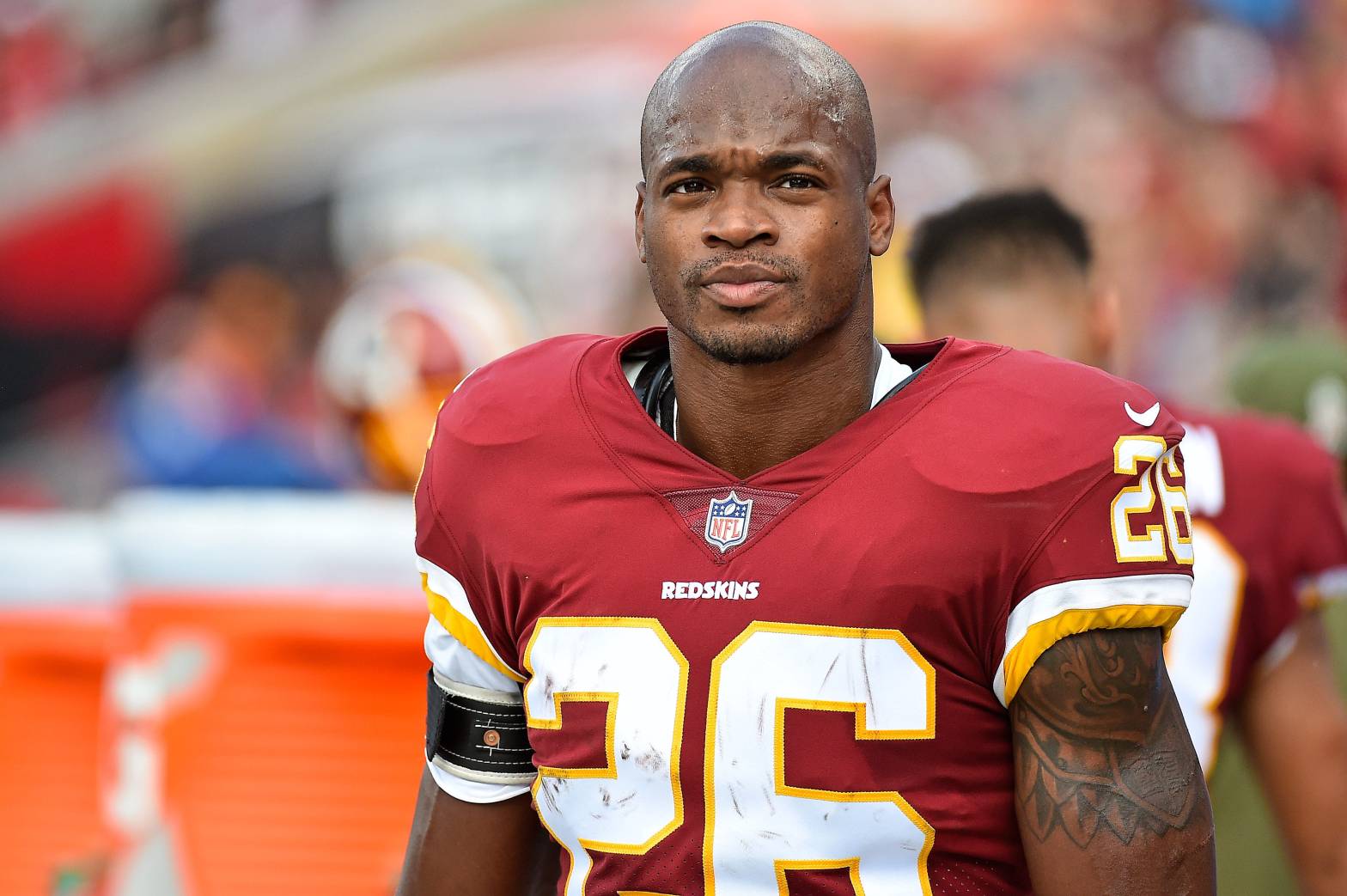
The team also signed legendary running back Adrian Peterson in 2018. The 33-year-old was the team’s starter for two seasons, eclipsing 1,000 yards in 2018. He was cut prior to the 2020 season after the emergence of rookie Antonio Gibson and free agent signing JD McKissic in training camp.

2019 also saw the last-second arrival of three-time Pro Bowler Donald Penn, who filled in as the starting left tackle as Trent Williams sat out the season. Despite being 36, Penn appeared in all 16 games and started 15 in what would be his final NFL season.

As for the Caps, three-time Stanley Cup champion Justin Williams was added to the roster for the 2015-16 season when he was 34, in hopes that his championship pedigree would help Washington get over the hump. After two seasons in which he scored over 20 goals, Williams moved on empty-handed, and the Caps would go on to win the Cup the following year.

2020-present: The Second Spike

These days, ‘spikes’ don’t have a good connotation when it comes to how things are trending, but when it comes to aging stars, it seems the last year alone has seen the greatest uptick in all-time great players coming to Washington on their last legs, especially with the Capitals.

Former first overall pick and 2012 First Team All-Star Ilya Kovalchuk, 36, was brought in at the 2020 trade deadline in an attempt to bolster the team’s third line. A friend of Alex Ovechkin and in search of his first Cup, Kovalchuk had an unproductive stint with the Caps and totaled just five points (1g, 4a) in 15 games with the club.

The Caps then had an eventful offseason bringing in 38-year-old Henrik Lundqvist to serve as a second netminder behind Ilya Samsonov. The 2012 Vezina Trophy winner had spent the past 15 seasons with the New York Rangers, and unfortunately will not play with the Caps this year due to a recently discovered heart condition.

As insurance, the team brought in 39-year-old Craig Anderson as a candidate in net. The 18th-year netminder is currently on the Caps Taxi Squad and has been serving as the backup with Samsonov on the COVID-19 reserve list.

Finally, longtime Boston Bruins captain Zdeno Chara was signed late in free agency and has been a regular on the team’s third defensive pair. The 43-year-old is playing his 23rd NHL season and is the oldest active player in the NHL.

The Washington Football team brought in 2015 First Team All-Pro Thomas Davis as a reserve linebacker. The 37-year-old reunited with former Panthers head coach Ron Rivera in what would be his 15th and final NFL season this past year, but injuries limited him to just seven games.

It may be a stretch to call him “aging” in sports terms, but 32-year-old Russell Westbrook was notably traded to the Wizards in exchange for longtime franchise cornerstone John Wall. The Wizards have had a rough start to 2020-21 as a whole, and despite Westbrook dropping a triple-double in each of his first four games, the former MVP seems beyond his prime. There’s time for things to turn around, but Westbrook is yet another big name coming to DC after their peak.

And finally (for now), the Nationals added three-time World Series champion Jon Lester to their starting rotation. As mentioned in Part One, Lester should slide in as the fourth starter. The 37-year-old is just seven wins shy from the 200 career wins milestone, and has a great chance to reach it with the Nationals this year.

Over the past 20-plus years, Washington has proven to be a beacon for over-the-hill stars, and while not every player mentioned was among the best of the best in their sport, you’d be hard-pressed to find another city with this type of Leisure World-level attraction.

Cover Photo Credit: Jasen Vinlove/USA TODAY Sports

Washed-ington DC: How the nation’s capital became the retirement home for America’s best athletes (Part I)

Major League Soccer has long attracted aging world-class superstars such as David Beckham, Kaká, David Villa and plenty others to spend the twilight years of their careers in the United States. Their best years are behind them, but name recognition alone makes them valuable commodities to their new clubs from a business standpoint.

Wayne Rooney, the all-time great English striker who spent one-and-a-half seasons with DC United from 2018-2020, fits that description. He also falls under the category of players who actually improved their teams dramatically. Rooney made numerous highlight reel plays and led DC United to the playoffs twice.

It’s only fitting Rooney spent some of the final years of his playing career in Washington (he just retired from playing earlier this week) because over the past 20-plus years, it seems as if the major American sports teams in the nation’s capital have taken a page out of MLS’s book, titled “The Retirement Home of World Soccer.”

MLS has been growing into a league that develops more home-grown stars, but still has not shed that label. Meanwhile, the major DC Sports teams are still bringing in aging stars past their prime left and right, the most recent example coming just three days ago.

Jon Lester, the 37-year-old left-handed pitcher fresh off a six-year stint with the Chicago Cubs, signed a one-year deal with the Nationals. Lester should slide into the fourth spot of the starting rotation still headlined by Max Scherzer, Stephen Strasburg and Patrick Corbin.

Lester is a three-time World Series champion and a five-time All-Star. He’s finished top five in Cy Young voting three times, although his best finish was second in 2016. Those days seem far behind him, as he posted a 4.46 ERA in 2019 and allowed an NL-leading 205 hits, but he was also an All-Star just a year prior in 2018.

Adding Lester on as a back end starter appears like a solid move to help improve the rotation as a whole, and it means Lester won’t be relied on to perform like the Cy Young finalist he was in the past, but it’s just another name in the long list of over-the-hill stars brought into DC on their last legs.

A little over a year ago, I wrote about the Top 10 too early/too late signings in DC Sports history, which means the best players that came to Washington either before or after they had peaked. Most of the players on that list came after, and these signings have continued to this day.

Here’s the first half of an unofficial timeline of how Washington became Washed-ington in the US Sports landscape:

1999-2001: Snyder’s Infancy

Infancy, of course, refers to the first years of Dan Snyder’s ownership of the Washington Football Team, but it doubly applies to his general temperament as an owner, which unfortunately has not been outgrown.

Snyder came in with deep pockets and little patience, aggressively signing washed up players to come to Washington. Only a handful were big stars that got a ton of money, but here are a few notable old guys brought in well-past their primes:

QB Jeff George:

  • Age/Experience: 33/11th season
  • Year: 2000
  • Contract: Four years/$14.8 million
  • Games played in Washington: 8

K Eddie Murray:

  • Age/Experience: 44/19th season
  • Year: 2000
  • Contract: One year/$440,000*
  • Games played in Washington: 6^

*= Estimated salary

^ = He played the full 1995 season with the team in a previous stint

DE Bruce Smith:

  • Age/Experience: 37/16th season
  • Year: 2000
  • Contract: Five years/$23 million
  • Games played in Washington: 62

DB Deion Sanders:

  • Age/Experience: 33/12th season
  • Year: 2000
  • Contract: Seven years/$56 million
  • Games played in Washington: 16

P Bryan Barker:

  • Age/Experience: 37/12th season
  • Year: 2001
  • Contract: Unconfirmed
  • Games played in Washington: 44

RB/WR Eric Metcalf:

  • Age/Experience: 33/12th season
  • Year: 2001
  • Contract: Unconfirmed
  • Games played in Washington: 10

Only Smith and Sanders were Hall of Famers, and Smith wasn’t all that bad given the production he brought for four seasons at his age, but they both highlighted the first signs of old stars coming to Washington. This narrative grew exponentially with the arrival of the most notable over-the-hill athlete to ever play in this city.

2001-2003: The Real Last Dance

After his second retirement from the NBA, Michael Jordan became a part owner and president of basketball operations for the Wizards. This was the birth of his rocky career as an NBA executive, his most notable move coming in the 2001 NBA Draft where he selected Kwame Brown first overall.

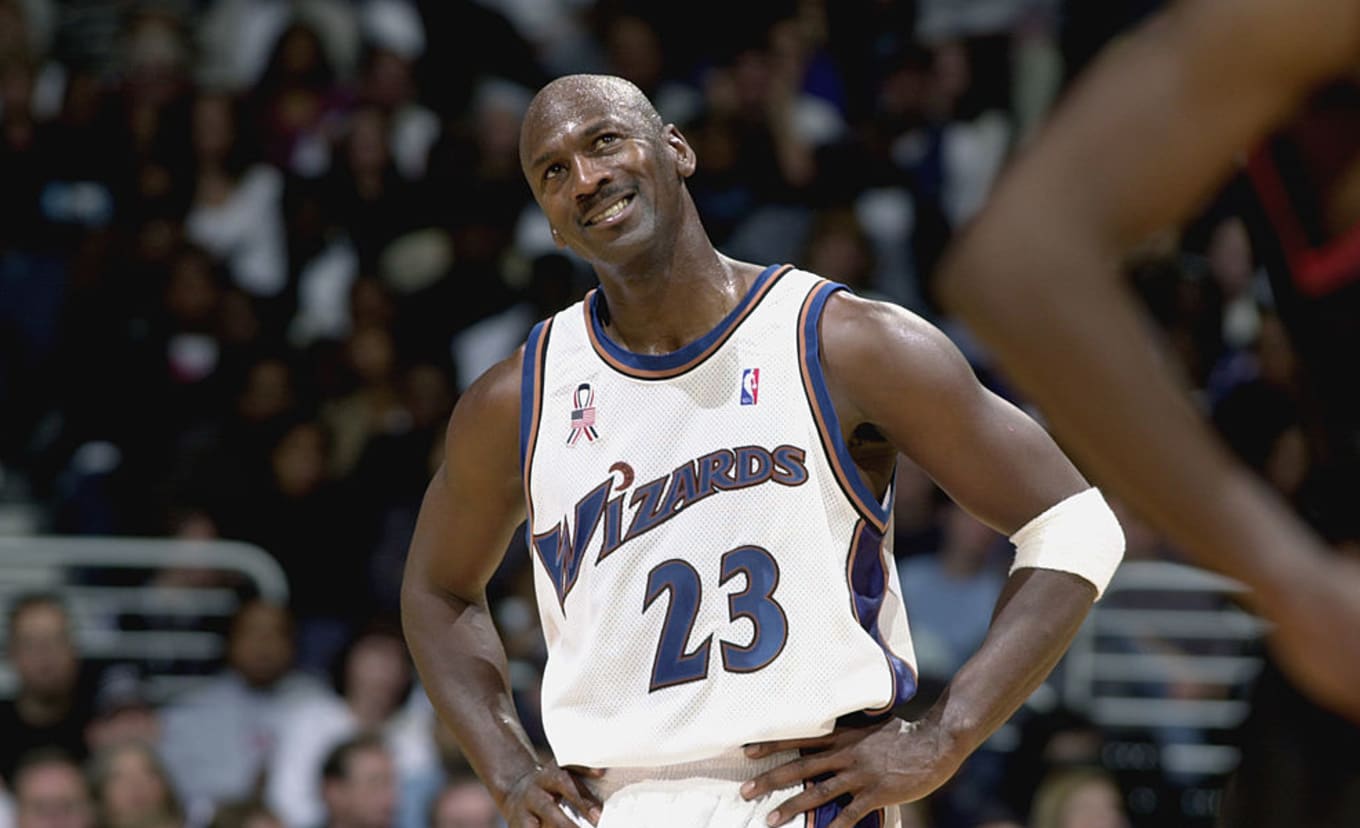
Brown became one of the biggest busts in NBA history, but Jordan soon joined his prize draft pick as a teammate by coming out of retirement a second time. Suiting up for Washington at 38, MJ led the team in points (22.9), assists (5.2) and steals (1.4) per game and made the All-Star Game. Whether this says more about the Wizards’ lack of talent or about Jordan’s greatness can be debated, but Jordan was far less washed than other former stars to finish up in Washington.

That said, he was naturally far removed from his peak in Chicago. Jordan retired for good after two All-Star seasons with the Wizards. He was fired from the Wizards front office by owner Abe Pollin after a handful of disagreements and eventual falling out during Jordan’s tenure with the team.

2004-2006: Nats and Caps join the Retirement Party

This was a relative down period for major “old guy” signings, but as the Expos were transitioning to the Nationals and the Capitals began building around Alex Ovechkin, both teams began inking old players to fill in the gaps.

The Caps brought in 36-year-old center Andrew Cassels and 34-year-old defenseman Jamie Heward in 2005, then added 35-year-old winger Donald Brashear in 2006. None were All-Star caliber players at any point in their careers, and they weren’t ‘ancient’ in hockey terms, but it followed the trend.

The Nationals, meanwhile, brought in five players aged 35 or older for their first season in Washington.

  • LHP Mike Stanton (38)
  • INF Vinny Castilla (37)
  • INF Carlos Baerga (36)
  • C Keith Osik (36)
  • RHP Hector Carrasco (35)

Stanton, Castilla and Baerga were each former All-Stars, and also happened to be the three oldest players on the ’05 Nats. Castilla was the starter at third base before Ryan Zimmerman had established his place here. None of the five players above were paid lucratively, but it reveals a lot about the conditions of the Nationals when they first started.

In 2006, the Nats added 37-year-old RHP Pedro Astacio and 1997 All-Star shortstop Royce Clayton, who at that point was 36.

As an added bonus, the Washington Football Team signed Ray Brown in 2004, who played with the team from 1989-95 in a previous stint. The offensive lineman played in all but one regular season game from 2004-2005 in his age 42 and 43 seasons.

Former All-Pro corner Troy Vincent also played part of his age 36 season with Washington in 2006 after stints with the Dolphins, Eagles and Bills.

2007-2010: The Old Guy Renaissance

In this period, a handful of significant aging player signings were made on every major DC team except for the Wizards.

Career backup quarterback Todd Collins was signed in 2006 at 35, but his most significant season came in 2007 when he replaced the injured Jason Campbell to finish the season. Collins went 3-0 in his three starts and helped lead the team to the playoffs. In four regular season appearances, Collins passed for 888 yards and five touchdowns with zero interceptions. However, he went 29/50 for 266 yards plus two touchdowns and two picks in the Wild Card loss to Seattle.

The Capitals acquired Russian legend Sergei Fedorov at the 2008 Trade Deadline, allowing Ovechkin to play with one of his idols. The Hall of Famer posted 46 points (13g, 33a) in 70 regular season games with the team, but his most notable moment came in the first round of the 2009 playoffs when he scored the game-winning goal in Game 7 against the New York Rangers.

The Nationals brought in former Yankees playoff hero Aaron Boone for the 2008 season at 35 years old, but nothing significant came from it. The bigger moves around this time was the return of Liván Hernández in 2009 and the signing of Iván Rodríguez in 2010.

Hernández was one the Nats’ first All-Stars in 2005, but he came back to the team in 2009 at 34 years old with a much smaller role. “Pudge” meanwhile played 111 games at catcher at 38 years old in 2010. He hit .266 while knocking in four home runs and 49 RBI. He played a bench role in 2011 in what would be his final MLB season.

The Washington Football Team, meanwhile, brought in a future Hall of Famer of their own in 2008. Jason Taylor, two seasons removed from winning Defensive Player of the Year honors, was traded to Washington for one second-round and one sixth-round pick after 11 seasons with Miami Dolphins.

His tenure here was so short and forgettable that I actually had no clue he even played in Washington until writing this article, despite being old enough to remember the 2008 season. The 34-year-old defensive end appeared in 13 games, making eight starts and garnering just 3.5 sacks on the season after compiling 12, 13.5 and 11 in the three seasons prior. He was released that offseason after refusing to attend practices, wishing to be closer to home, and he returned to the Dolphins for the 2009 season.

Then in 2010, 34-year-old quarterback Donovan McNabb was traded to Washington after a long career with the rival Eagles. He clashed with the coaching staff, lost the starting job after 13 games and was gone by that offseason. Joey Galloway, the then-39-year-old receiver, spent his 16th and final NFL season in Washington, accumulating just 12 receptions and 173 yards across 10 games in 2010.

That’s one future Hall of Famer on all three teams (Fedorov, Rodríguez and Taylor) spending what would only become a footnote in the story of their entire career, but it was a distinctive time nonetheless.

There is still an entire decade of Washed-ington history to go through, so make sure to check back in for Part Two.

Cover Photo Credit: Doug Pesinger/Getty Images

First impressions from the Caps’ opening back-to-back

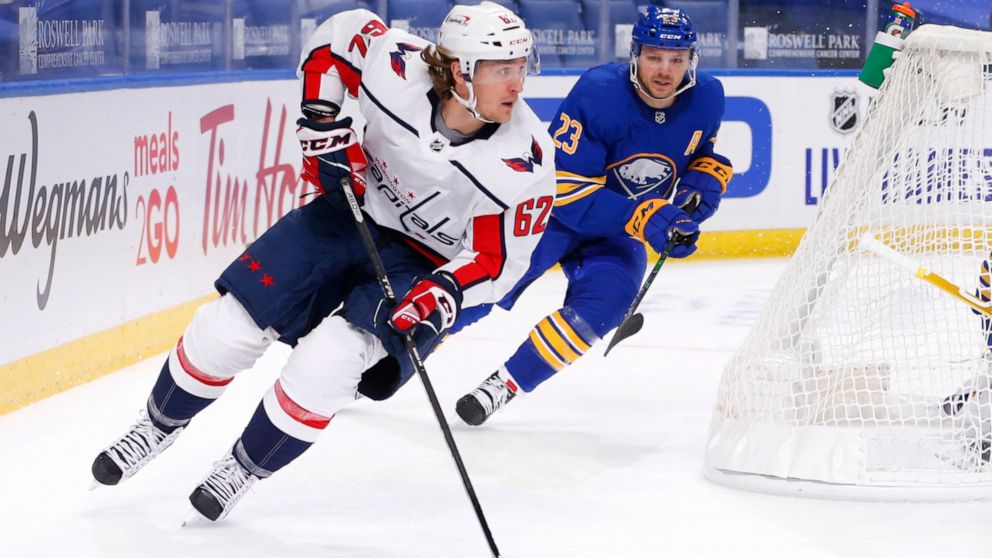
Capitals hockey is finally back, and the team now sits 2-0-0 after a back-to-back with the Buffalo Sabres to open the season. This was the team’s first action since getting bounced by the New York Islanders in the 2020 postseason.

A sluggish, frustrating performance in the NHL bubble led to a lot of questions surrounding the direction of the franchise and resulted in several big changes, most notably the hiring of Peter Laviolette as head coach and the departure of Braden Holtby (although the latter was expected even before the bubble).

It was clear this offseason that this team needed some energy added to the forward lines, some reinforcements added to the defense and better leadership added to the locker room. GM Brian MacLellan aimed to address all of those in the offseason, and through two games, it has showed.

While the Buffalo Sabres have been spiraling as an organization, the team boasts a handful of world-class talents, including (but not limited to) superstar Jack Eichel, 2018 first overall pick Rasmus Dahlin and newly acquired Taylor Hall, a former Hart Trophy winner.

This MassMutual East Division should be the most competitive in the league, but the Capitals have showed they will be in the mix for the top spot. Here are some major takeaways from the first two games.

The boys are juiced up

The Caps have been starting seasons on a high note in recent years; they haven’t lost their season-opener since 2016, and that did not change this year. It wasn’t all perfect as the team nearly lost the 4-1 lead they had built, and were ultimately gifted the game-winner, but the energy was markedly different from the bubble.

Of course, first-game adrenaline will fire any team up across the league, so it’s too early to determine whether this will carry over through most of the season, but Laviolette has a reputation for holding everyone accountable and hopefully won’t let the energy slip.

And with the new postgame headgear award ritual Laviolette has established this year, you can already tell the locker room is jelling nicely:

Samsonov showed his youth

Ilya Samsonov is the man in net for the Caps this season, and the team will need him to build off his promising 26-game performance last season if there’s any hope of getting further in the postseason. We have awhile until the postseason talk starts up, but for now, Samsonov looks like he needs a little time to settle into the season.

He made a handful of terrific saves down the stretch, but he did look a little lost at times. There were also a handful of moments where he was playing really far out from the net, which has always been a tendency of his and can lead to some costly opportunities for the opposing team. No one could have expected him to look like a superstar right away, but his performance will be the biggest X-Factor for this team down the stretch.

Vanecek gets off to a good start

Looking at the other goaltender, Vitek Vanecek shined in his NHL debut, making 30 saves in the team’s 2-1 win in the second game. The 25-year-old had to fend off five Buffalo power play chances and was successful in all of them.

You can’t make a season-long prediction off of just one game, but Vanecek has already proven himself to be among the best AHL netminders over the past two years, and has wasted no time getting it done on the NHL level. It’ll be Samsonov and Vanecek holding down the fort all season, and if this first weekend is any indication, this could be a winning tandem in DC.

The usual suspects are producing up front

The Caps have the oldest roster in the league, but those old guys are still getting it done to start the year. The very first point of the season was an Alex Ovechkin assist to Nicklas Backstrom, and TJ Oshie scored three points in the first game. John Carlson, who was on a torrent scoring pace last season and should follow up by scoring at a similar clip, added a goal and assist as well.

Tom Wilson did not get on the score sheet in the opener, but notched an assist and the winning goal in the second game. Jakub Vrana, who had been dealing with a scoring drought to end last season took advantage of a poor play from Buffalo’s Jeff Skinner to net his first goal since Feb. 25 and his first point since March 7. He scored again the following night to give himself two goals in two games.

Evgeny Kuznetsov hasn’t scored a point yet, but with the rest of the top six already going strong, he should be following suit in due time. These younger guys will all need to step up their production if this team wants to reach the Cup Final again.

The third line is falling into place

If Samsonov is the biggest X-Factor this season, the third line isn’t far behind. Depth scoring was a major issue down the stretch last season, but it was one of the biggest strengths in the 2018 Cup run, so that depth needs to be rediscovered this season.

Lars Eller is back centering the third line, and while Richard Panik is starting out on the third line again this year after being demoted to the fourth line earlier last season, two new faces in Conor Sheary and Daniel Sprong will be relied on to add an extra spark to the bottom six.

Sheary and Eller registered assists on Brenden Dillon’s goal in the season-opener, and while they didn’t get on the score sheet in the second game, look fairly solid. It took awhile for last year’s third line of Carl Hagelin-Eller-Panik to establish chemistry and it ultimately didn’t work out, so to see this new third line starting to produce right away is a good sign.

Discipline needs to improve

There’s only so much you can take away from two games against an admittedly weaker opponent, but starting 2-0-0 is the best you can ask for. Still, if there’s any nitpicks, the biggest has to be in the penalty department.

All great teams need to be physical, but that physicality can have consequences. The Caps allowed the Sabres eight power play chances through two games. The penalty kill fared pretty well, but committing that many penalties should not be a trend that continues.

It’s a fine line to walk, because playing too carefully will diminish that physicality, but as the guys get further into game shape, it should become more manageable.

Cover Photo Credit: Jeffrey T. Barnes/Associated Press

Nats add big bat Kyle Schwarber to outfield

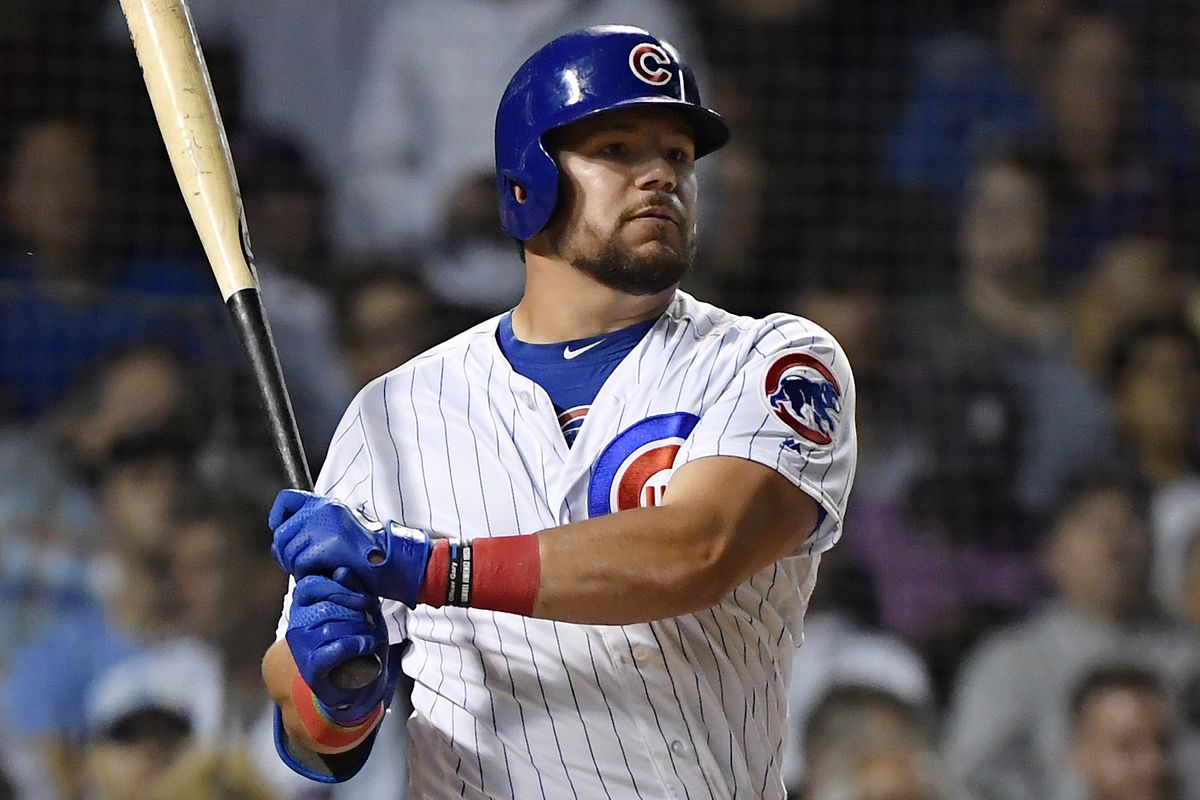
With the Washington Football Team competing in the NFL Wild Card round, this news got slightly buried in the DC area, but we can finally address it: The Nats signed former Cub Kyle Schwarber to a one-year/$10 million deal.

This move marks the second major signing of the offseason, as the Nats are clearly hoping their moves for Schwarber and Josh Bell add much-needed power to the offense. The presence of both players in the lineup should prevent opposing pitchers from pitching around superstar Juan Soto… if they can return to pre-2020 form.

Both Bell and Schwarber had rough 2020 seasons offensively, and both are question marks defensively. With the Atlanta Braves and money-flushed New York Mets looking more and more imposing leading up to the 2021 season, these two additions will have to pay off if this team wants any chance to compete in October.

Schwarber mashed 11 home runs in 59 games last season but hit just .188 with a .306 OBP. This offense needs more power in their lineup, so Schwarber should help in that department, but that will all be nullified if he can’t even hit his own weight.

However, Schwarber’s best career-year offensively was 2019, where he hit 38 home runs, 92 RBI and slashed .250/.339/.531. If he can bring that type of production in 2021 (or something close to it), the top half of the lineup could be lethal.

Schwarber has a history of mashing in Nats Park, although not exactly in a real game context. Bryce Harper’s memorable Home Run Derby victory in the 2018 All-Star festivities at Nats Park was nearly foiled by Schwarber, who made it to the Finals and just barely lost 19-18. Two-and-a-half years later, it’s now Schwarber that will be electrifying the home crowd at Nats Park (hopefully).

Schwarber, while not a great defensive player, should slide in as the everyday left fielder, moving Soto to right field while Victor Robles remains in center. Andrew Stevenson will be the fourth outfielder on the depth chart, and he should see plenty of time as a defensive substitution and pinch runner. If the National League adopts the Designated Hitter in the next couple years and Schwarber is still on the team, then he will be the prime choice for that position.

As for how the batting order looks now, manager Dave Martinez already laid out his initial plans with how the roster currently stands, according to NBC Sports Washington:

  1. SS Trea Turner
  2. RF Juan Soto (L)
  3. 1B Josh Bell (S)
  4. LF Kyle Schwarber (L)
  5. 2B Starlin Castro
  6. C Yan Gomes
  7. CF Victor Robles
  8. 3B Carter Kieboom
  9. [Pitcher]

Of course, there is still time for more moves to made. The team has been in talks with the Cincinnati Reds around third baseman Eugenio Suarez, who is on a team-friendly deal and would provide yet another boost to the team offensively. However, the Nats’ unwillingness to include top prospects Jackson Rutledge and Cade Cavalli in a potential deal has stalled any progress towards a deal, according to MLB Insider Jon Heyman.

Even if the Nats don’t add Suarez, the team still needs a second catcher, so the JT Realmuto situation is one worth monitoring, but at this point I’m not holding my breath on that.

Besides catcher and potentially third base, the only other needs remaining for the team are a pitcher for the back of the rotation and likely another reliever or two. That won’t impact the batting order, but it still means that this team isn’t done assembling for 2021.

Cover Photo Credit: Quinn Harris/USA TODAY Sports