Due to my Frozen Four coverage in Boston this weekend, I didn’t have time to get around to this month’s installment until after it ended, which is why this is coming out slightly later than the usual eighth of each month. There will be a full-season wrap up in May.
By Joe Pohoryles
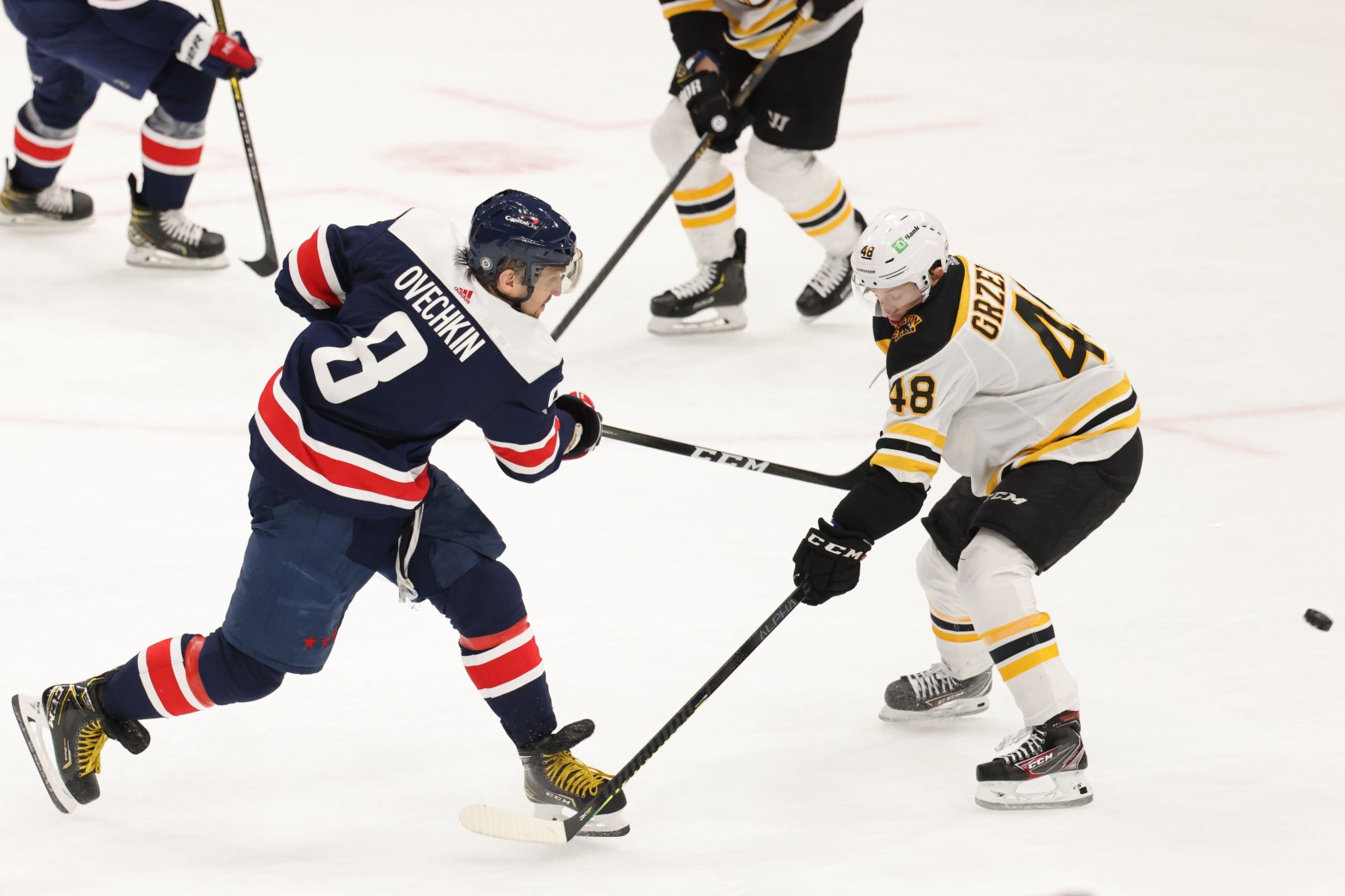
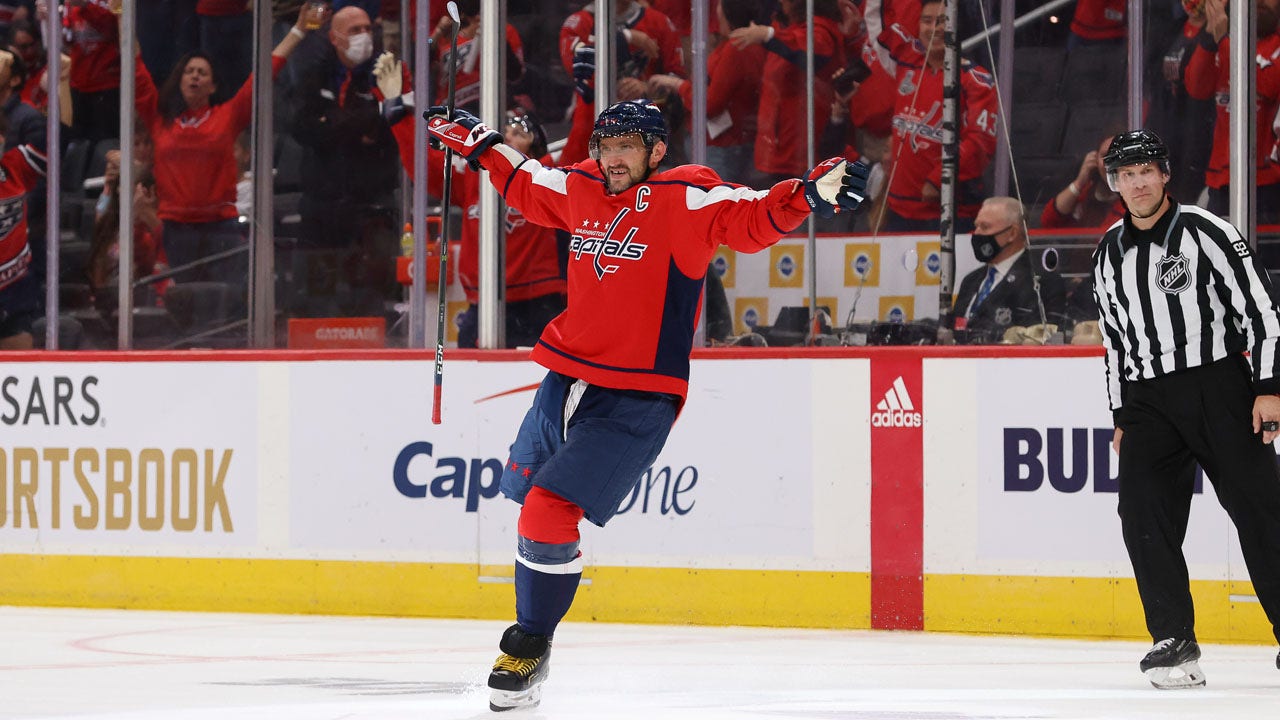
Just 10 games remain in the 2021-22 regular season, but Alex Ovechkin (and the Capitals for that matter) are just picking up steam. Three straight wins against playoff teams Tampa, Pittsburgh and Boston have the Capitals hot at the right time, and Ovechkin having a goal in each game puts him in the same place.
With 45 goals in 70 games, Ovechkin now has 775 for his career, needing just 27 to pass Gordie Howe for second on the all-time list. That won’t come until next season, so for now we can gather a pretty good idea of how many goals he will end this season with.
A red-hot start to the season all the way back in October and November gave way to a bit of a lull midseason, as to be expected. Now, with the finish line approaching, Ovi is scoring at a high rate again. He scored 11 goals in the past 15 games since the last installment, which is .733 goals per game.
If he keeps that pace up, which is conceivable given there’s only 10 games left, he will end the year with 52 goals, which would be his highest single-season total since 2014-15 (53).
If we go a little more conservatively and use his entire season’s average to make a projection (.643), he will wind up with 51. Even 50 exactly will require him to score once every other game, and if any multi-goal games lie ahead, that would bump up the expected finish line even more.
We can reasonably expect Ovi to finish between 50-52, which would mark three more NHL records for the Great Eight. Teemu Selanne currently has the most goals scored in a player’s age 36 season, with 48. With just four more goals over the next 10 games, Ovi will add that record to his growing list.
Additionally, if Ovechkin does reach 50, he would become the oldest player to ever score 50 goals in a season. Longtime Boston Bruin Johnny Bucyk scored 51 in his age 35 season in 1970-71, and Jaromir Jagr scored 54 with the Rangers in 2005-06 at 33.
Finally, and this one may not be the most impressive, but it’s worth noting: If Ovechkin scores one more empty net goal it will mark his 10th of the season, which would pass Pavel Bure’s record of nine in a single-season from 1999-00.
Even if you think empty net goals soften the argument towards Ovechkin’s goal-scoring ability, Wayne Gretzky’s 56 career empty netters are the most in NHL history. Ovechkin scored his 48th career empty netter yesterday, so even if he passes the Great One in that all-time category as well, it’s obvious that both relied on ENG’s for a slight boost to their all-time numbers.
The Capitals have more important goals on the horizon, but as the regular season winds down and the annual pause on the all-time goals chase commences, keeps those handful of records in mind.
BOSTON — Only three Washington Capitals prospects currently play college hockey. All three made the NCAA tournament. Two of them scored in this year’s tourney, and the other is a goaltender – Harvard’s Mitchell Gibson (2018 4th round).
North Dakota’s Brent Johnson (2021 3rd round) scored in the Fighting Hawks’ first-round loss to Notre Dame, and Thursday night was Benton Maass’ turn.
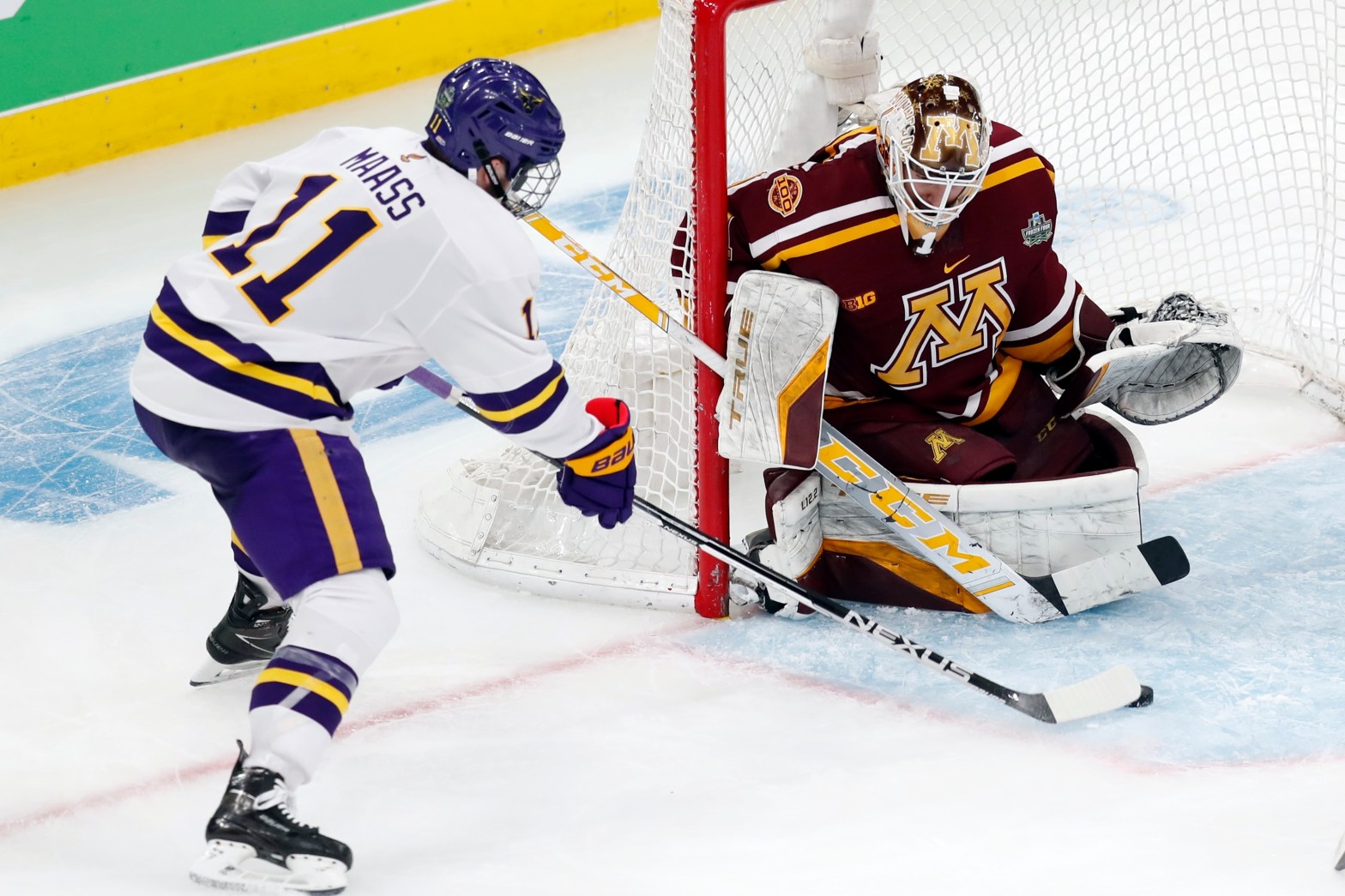
The Minnesota State defenseman scored the game-tying goal just over six minutes into the second period in the Mavericks’ 5-1 win over Minnesota in the Frozen Four semifinals. Maass & co. punched themselves a ticket to the national title game against Denver tonight at TD Garden.
It was only Maass’ third goal of the season (3-11—14), but it was a big one. Working deep in the offensive zone, he skated around behind Minnesota goalie Justen Close’s net, wrapping the puck in to tie the game 1-1.
From there, the Mavericks scored four more unanswered goals. The Mavericks were dominating the offensive production all game long up to that point, but a first period turnover at the blue line led to a two-on-zero chance for the Golden Gophers, where Matthew Knies capitalized on Minnesota’s first shot on goal of the game to take an early 1-0 lead.
Minnesota State kept their foot on the gas, but needed to get one breakthrough. Maass saw the opportunity and seized it, even if he had to rely on good fortune.
“I saw I had more time and space than I thought, and I was able to try and just get to the side of the net,” Maass said after the game. “I kind of just threw it on net and hoped for a rebound ‘cause I knew we had guys in front, and fortunately it was able to go in the far side.”
In Thursday night’s semifinal, Maass and his defensive partners – minus the turnover that led to the two-on-oh breakaway goal – successfully shut down a lethal Minnesota attack, headlined by Hobey Baker Hat Trick finalist Ben Meyer.
Minnesota State coach Mike Hastings liked how his guys responded after the early mishap.
“There wasn’t a lot of panic on the bench or in the locker room, and they just, as they have this entire season, they stuck with it, and they were rewarded for it,” Hastings said.
The Capitals selected Maass in the sixth round of the 2017 NHL Entry Draft, with the 182nd overall pick. Maass played four seasons at the University of New Hampshire, skating 120 games on the blue line and totaling 37 points (10g, 27a). He wore an ‘A’ in his senior season.
“(Playing in New Hampshire) was a great time, I consider it a second home,” Maass said in his Friday afternoon media availability.
The Elk River, Minn. native would not have had a fifth year to play if it weren’t for the extra year of eligibility due to COVID. Suddenly, Maass could play another year, this time close to home and on a much bigger stage.
Joining a program coming off a Frozen Four run the year before, Maass has a chance to help finish the job. The Mavericks have 38 wins this year alone, and are currently riding an 18-game winning streak into the championship.
After years playing at the bottom of Hockey East with the Wildcats, who haven’t made the Frozen Four since 2003 and won 43 games total across Maass’ four years, it didn’t take long for Maass to decide to take his talents to Mankato, which he had considered when going through recruiting the first time around.
“I had a good Zoom with Coach Hastings, and I think I committed to him about 20 minutes later, so it all went pretty quick, and I couldn’t be happier with the decision,” he said.
Hastings recognized the upside Maass and the other transfers — Josh Groll (Michigan) and David Silye (Clarkson) — would bring to the program, both on and off the ice.
“All three of those young men have had an impact on our program in a very short period of time,” Hastings said. “I think a lot of that has to do with the makeup of the human beings and the young men themselves.”
Maass plays an important role on one of the best defensive teams in the country. The Mavericks allow just 1.3 goals per game this season, tied with Quinnipiac for least in the nation. They also average 4.1 goals per game, which ranks second-most in the nation… behind Denver (4.3).
Minnesota State will need that stout defense tonight. Facing another Hobey Baker finalist, the nation’s leading scorer Bobby Brink (14-43—57), and the rest of the Pioneers’ squad, it will be two well-rounded teams fighting for the championship.
Eight-time champion Denver has a chance to tie Michigan for the most championships all-time. Maass and Minnesota State face the opportunity to win the program’s first title.
“It would mean everything to this program,” Hastings said about the chance to win Minnesota State’s first title in a major college hockey city like Boston. “Just because of the work that these young men have put in from Day One til today.”
Whether Maass has developed enough to become a big piece within the Capitals organization remains to be seen, as it’s increasingly difficult for late-round picks to work their way into the fold. But until he can focus on his future, Maass will be hoping to make history tonight.
Entering the first season of Alex Ovechkin’s new five-year contract, 33 was the magic number. To break Wayne Gretzky’s record in five seasons, Ovechkin would have to average 33 goals across each of those seasons.
He’s now at 34 this season. For every goal he scores above 33 this year, the lower the necessary average will become for the remaining four. Anyone would have expected Ovechkin to score over 33 goals this season, and even next season. But at 40 years old?
If any player could score over 33 goals at 40, it would be Ovi, but these next couple years will be huge in making the job easier down the line. Now that he’s eclipsed 33 this season, every goal from now on will set a new average.
This past month, Ovechkin scored five goals and five assists across nine games. He currently has 34 goals and 34 assists in 55 games this season. With 25 games left, Ovechkin is now on pace for 49-50 goals if he doesn’t miss another game. His pace slowed considerably since his red-hot start, but he’s scoring .618 goals per game this season, which is in line with his .610 career average.
However, after posting a .769 rate through the first two months of the season, Ovechkin is now scoring at a .483 pace across the past 29 games. If that rate continues, he will finish the year with 46 goals. One hot streak in this final stretch of games could boost the final total up a few more, so the opportunity to hit 50 is still there.
If he does manage to reach exactly 50 this season, the new average needed to catch Gretzkty in four years will be ~29 goals per season, which Ovechkin should easily exceed next year barring a shortened schedule or a major injury (knocking on every piece of wood).
Next season, 50 seems like a long shot, but if Ovechkin can reach 45, the average for the remaining three seasons will become 23-24 goals per season. For Ovechkin to lower his needed seasonal average by 10 in just two years would be monumental.
Even 40 goals next year would make the average 25 goals per game across the final three years, a mark Ovechkin could continue exceeding to the point where he may need less than 20 by the time the final year comes.
His days of 50-goal seasons may be behind him, but if a 41-year-old Ovechkin needs just 15 goals to pass Gretzky in his final season, I would bet the house on him getting it done. This is why every passing game and every goal he adds to this year’s total will be so important for the rest of his contract.
Moving on from averages to totals, another major milestone is on the horizon for this upcoming month. Sitting at 764 in his career total, Ovechkin is just two goals shy of tying Jaromir Jagr for third on the all-time goals list. Once he passes Jagr this month, all eyes will be on two of the greatest players to ever lace up skates.
Gordie Howe’s 801 should be passed next season, and then it’ll be all about Gretzky.
Tonight’s game against Calgary also has the special distinction of being the 1,000th game Ovechkin and Nicklas Backstrom have played together. The milestones continue to stack up for this legendary pair, and tonight will be just the start of several exciting developments that should occur this month.
By Feb. 1, Alex Ovechkin was the only Washington Capital to play in every single game this season. On Feb, 2, that came to an end. A positive test put Ovechkin into COVID protocols, forcing him to miss Washington’s 5-3 loss to Edmonton.
Ovi entering protocol was always a possibility, but the silver lining is that with it coming right before the All-Star break, he will only miss one game, as it’s been reported that he’s full go for tonight’s game against Columbus. He will apparently miss the game against Montreal on Thursday due to Canada’s quarantine rules, but otherwise looks ready to roll after the break.
And hopefully he will start rolling again. Prior to tonight, Ovi failed to register a point in his last four games, and scored just five goals across 11 games this past month. Currently sitting at 29 goals this season, and with 35 games left (34 for Ovi if you exclude the Montreal game), Ovechkin is now on pace for exactly 50 goals.
We’ve seen the ups and downs when it comes to Ovi’s production this season, so it’s reasonable to expect him to regress (or progress?) to the mean and hopefully make it to 50 by season’s end. If he misses more than just the Montreal game down the stretch, and will only play in, say, 30 more games, he will have to score 0.70 goals per game.
In a short sample size, and with Ovi likely to be more motivated to hit 50 the closer he gets, that’s certainly doable. He is going to have to start ramping it up soon, and hopefully a change to the power play will supplement that.
Coach Peter Laviolette announced he was swapping Evgeny Kuznetsov out of the first unit and replacing him with Lars Eller. Kuzy’s creativity will hopefully spark the second unit, but regardless it was clear a change had to be made.
Eller will replace Kuznetsov on PP1 tonight. Laviolette on the move: "A different look. Trying to get more people to the net, down in front. Trying to bring more action to the net. …Kuzy on one unit and Backy on the other, try to get some production from both."#Caps
With the power play converting just 15.33 percent of the time this season (league average is 20.61%), an improvement in that department will definitely help Ovechkin’s cause. The power play GOAT has just seven power play goals and we’re over halfway through the season, putting him on pace for about 12.
The last (and only) time Ovechkin scored fewer than 12 power play goals in a full 82-game season was 2010-11, when he had seven in 79 games. Other than that, he has never scored fewer than 13 in a full season.
For him to reach 50 with one of his lowest outputs on the man-advantage ever would be a greater testament to how his game has evolved, keeping him among the best wingers and most prolific scorers in the world. But increased power play production will certainly make things easier.
For what it’s worth, the return of TJ Oshie should help tremendously. He’s dangerous at the front of the net, which draws some attention away from Ovechkin, but it’s going to take more than Oshie’s return to make the power play elite again. We’ll have to see what the coaching staff cooks up.
After 18 months and seemingly endless speculation, Washington’s NFL franchise finally settled on a new name: The Commanders.
Team President Jason Wright promised misdirection during the process, to make sure the name wasn’t spoiled, but the team failed to blur out some of the names and logos in their online rebranding series, and legendary quarterback Joe Theismannall but confirmed the name in a radio appearance 48 hours before the official announcement. Not to mention, a news helicopter captured the banners in FedEx Field the night before the announcement.
All the spoilers culminated in an awkwardly giddy Doug Williams (another legendary Washington quarterback) unceremoniously announcing what everyone already knew on the Today Show. Even Commander Dan Snyder (feel like that’s gotta be his official title now, right? Commander Dan?) joked about how the name was so poorly kept under wraps.
In any case, it’s finally over. My position has long been that nearly any name would be better than no name at all, and Washington finally has a name again. I don’t love the name, and it will certainly take some getting used to, but I don’t hate it.
With that being my surface-level opinion, after taking over 24 hours to digest this whole process, here are my main takeaways:
People (myself included) were going to complain no matter what
Change is hard. It makes people uncomfortable, and after 80+ years of knowing a team by one name, adjusting to the new one will take time. No matter what name they chose, people were going to be unhappy with at least one aspect.
‘Commanders’ was the safest name to choose. From everything I had seen leading up to it, very few people loved or hated it, and most viewed it as “eh, alright I guess.”
I was part of the crowd that fell in love with ‘Red Wolves,’ but a large faction of other fans inexplicably hated it. I was also a fan of anything Hog-related due to its ties to team history. Oh well.
I’m at least glad they didn’t pick one of the wacky names suggested like ‘Admirals,’ ‘Armada,’ ‘Presidents’ or something else like that. To me, ‘Commanders’ falls right in the middle.
My one gripe is there is no obvious shortened version for a team with a name that long. The Capitals are ‘the Caps,’ the Nationals are ‘the Nats.’ Are we really going to call the Commanders ‘the Commies?’ As a student at Boston University’s College of Communication (COM) maybe I just shorten it to ‘the Coms?’
Perhaps it will follow suit of the Portland Trail Blazers and San Francisco 49ers, and abbreviate with the back half of the name. We’ve got ‘the Blazers’ and ‘the Niners,’ so will I start walking around saying “Go Manders?” Maybe? I don’t know, but the point is, there’s no natural nickname.
There are a handful of objectively worse names around the league, but everyone will rip on ‘Commanders’ because it’s new
As I said, I don’t love the name ‘Commanders,’ but when it comes to names across the NFL, it certainly isn’t the worst. You may disagree with me, but I believe the following names (in no particular order) are worse than ‘Commanders,’ at least in a vacuum:
49ers: I get it fits the region, but I’ve never viewed numbers as being a good name for a team. That said, this is a legendary franchise, which makes this name seem normal.
Texans: Uninspired and redundant; falls in the same lame category as ‘Montreal Canadiens’ and ‘Philadelphia Phillies.’
Packers: Another top-tier franchise, but without the historical context, the name ‘Packers’ itself is just dumb.
Bills: I hesitate to put it here because it really rolls off the tongue and is just perfect for Buffalo, but attach any other city to the name ‘Bills’ and it’s terrible.
Chiefs*: I put the asterisks because when you think about it, the names essentially mean the same thing. They both even start with a ‘C.’ I would even contend ‘Commanders’ sounds cooler than ‘Chiefs,’ but I’ll settle for equal.
Browns: No explanation needed.
To me, these names on their own aren’t any better, if not worse. I also get football isn’t played in a vacuum and some of these names are good because of their historical/geographical context. That said, the name ‘Commanders’ doesn’t have any historical context yet, so when you level the field, I would argue it’s a better name than all of what’s listed above.
I don’t mean to antagonize these fan bases/teams, but my point is for all the jokes that will be made or all the hate ‘Commanders’ will receive, it really isn’t that bad. Especially when you look around the rest of the league. It just needs a chance to establish its own historical context, and winning (should it ever happen) will help that.
The jerseys and logos are rough
Perhaps this is me being a hypocrite, hating because they’re new, but I saw no need to change the jerseys. Add the logo to the helmets, put ‘Commanders’ on the front and make whatever other necessary tweaks. But an entire redesign?
The burgundy one looks fine; it at least mostly resembles the previous look. Again, a full change didn’t seem necessary, but I can get on board with it.
The white one though… Wright promised not to change the color scheme and keep the Burgundy & Gold, which is true everywhere except here. There’s more black than gold on this jersey, making it seem like a Falcons or Cardinals reject. The ugly gradient is out of place compared to the other uniforms as well. To me, it doesn’t fit the franchise at all.
The black one I couldn’t care less about. I think the point of a third jersey is to have the freedom to get a little funky and out of the box with it. I get the Steelers comparison, but again, since it’s not the main home/away jersey, I’m not bothered by it.
Now the logo… it took them 18 MONTHS to come up with THAT? That’s the best they could do? Pretentious explanation aside, they could have made a nicer-looking ‘W,’ or come up with a better logo in general. For all the things they completely rebranded, it seems like they just took their Washington Football Team ‘W’ logo and made it worse.
The crest would be cool if they didn’t botch the Super Bowl years. I get the team won their Super Bowls in January of 1983, 1988 and 1992, but literally everyone and their mother refers to the Super Bowl seasons. How could they mess that up?
It was never going to be perfect, but the way it was handled was just horrific
I don’t need to rehash everything that went wrong, but my biggest issue with this whole process was the fact that head coach Ron Rivera and Wright, two guys that have been with the franchise for a combined two seconds, were the ones leading this charge.
They have no personal ties to the team history, and both could be gone in five years or less, yet they made the lasting decision. I truly hope people like Joe Gibbs, Williams and other franchise legends were as involved as it was made out to be. Or maybe Snyder picked ‘Commanders’ in July 2020 and this whole re-naming process was one big farce. I wouldn’t be shocked.
Either way, it is what it is, and I’m not gonna waste anymore energy being angry about the things that went wrong. Eventually the logo, jerseys and name will seem normal, and as mentioned before, success on the field will expedite that process ten-fold. Whether that success comes is a whole other story.
It’s that time of year, folks. For the third year in a row, we have an updated edition of Washington, D.C. sports top 25 players under the age of 25.
This list does not rank the potential of each player, but rather where each player currently stands based on their performance from the past year. A player’s role on the team and production are taken into account. To see last year’s list, click here.
If the player was under 25 as of Jan. 1, 2022, they qualify for this list, and all ages listed for each player is their age as of Jan. 1 as well. Players who had birthdays in the past two weeks are indicated by an asterisk.
There are 13 total departures from last year’s list. Four players aged out:
Washington DE Montez Sweat (2021 No. 2)
Detroit* LW Jakub Vrana (2021 No. 4)
Washington LB Cole Holcomb (2021 No. 11)
Washington WR Cam Sims (2021 No. 17)
Vrana also wouldn’t be eligible even if he was young enough, since he was traded to Detroit for Anthony Mantha last season.
Additionally, there are six other players no longer on the list after leaving Washington, and three others who are off due to injury/poor performance.
Wizards C Thomas Bryant (2021 No. 10)
Nationals OF Victor Robles (2021 No. 12)
Washington DT Tim Settle (2021 No. 14)
New Jersey D Jonas Siegenthaler (2021 No. 15)
Chicago G/F Troy Brown Jr. (2021 No. 16)
Pittsburgh WR Steven Sims (2021 No. 20)
Toronto G/F Isaac Bonga (2021 No. 21)
G-League G Jerome Robinson (2021 No. 23)
Orlando F/C Moe Wagner (2021 No. 24)
Poor Victor Robles, who just two years ago ranked No. 5 on this list. The former top prospect was sent down to Triple A in late August to find his footing after slashing .203/.310/.295 with just two home runs and 19 RBI in the majors this year. The emergence of Lane Thomas makes Robles’ return to the everyday lineup less certain, but after hitting .306 with four home runs, eight RBI and seven stolen bases across 24 games in the minors, he could take a step in the right direction.
Thomas Bryant, meanwhile, tore his ACL early last season and just recently returned to game action. He was averaging 14.3 points and 6.1 rebounds as the starting center by the time he went down, but with Daniel Gafford and Montrezl Harrell holding down the center rotation, the front court is a lot more crowded now.
Tim Settle recorded zero sacks in 16 games this year, not that stats mean everything, but there were only two games in which he played more than 30 percent of the defensive snaps. He just wasn’t much of a factor this season compared to last year.
Even needing to fill half the list, the Nationals have become flush with new young talent following the fire sale in July. The Capitals got to showcase their top prospects at the NHL level with all the injuries early in the season, and the Washington Football Team’s young players continue to make an impact.
This is easily the most competitive list in its short history, but there’s definitely a lot more quantity than quality. It was tough narrowing down 25, but not even the entire Top 10 is what I would consider to be elite young talents.
But that’s the beauty of this list: dealing with such young players, there’s always room for development and breakouts in upcoming years, but for now we’ll focus on this year.
With this third installment, here is the 2022 Top 25 under 25:
25. Capitals C Hendrix Lapierre, 19 | Last year: N/A
24. Capitals RW Brett Leason, 22 | Last year: N/A
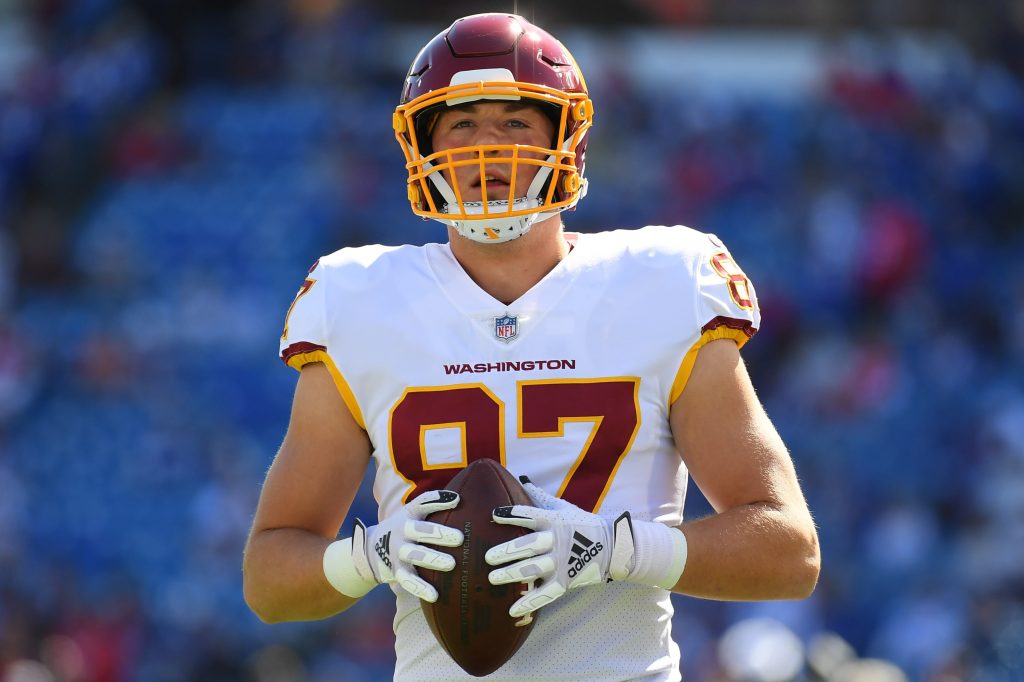
23. Washington TE John Bates, 24 | Last year: N/A
22. Nationals 3B Carter Kieboom, 24 | Last year: No. 23
21. Washington DE James Smith-Williams, 24 | Last year: N/A
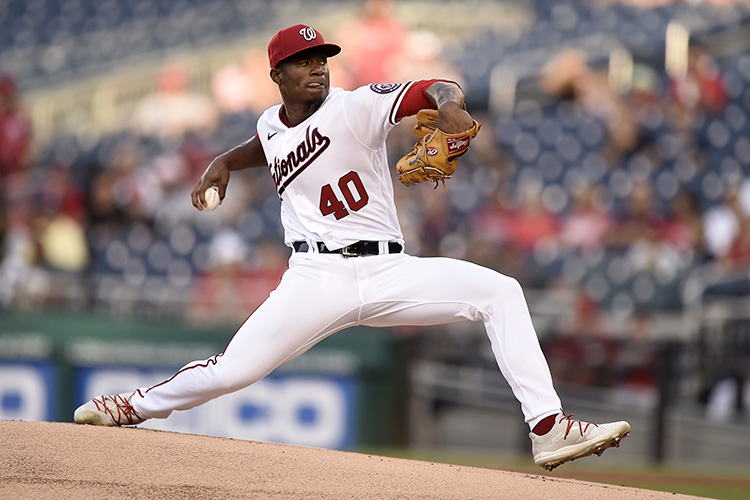
20. Nationals RP Mason Thompson, 23 | Last year: N/A
Photo Credit: Rich Barnes – USA TODAY Sports
Lapierre headlined a great story in the season-opener, scoring a goal in his NHL debut in the Caps’ 5-2 win over the New York Rangers on Oct 13. The 19-year-old skated in just six games before being sent back down to the QMJHL, but may have the highest ceiling of any Caps prospect. While it was a short stint, Caps fans got an exciting look at someone who could be the team’s next star center.
Leason was not expected to get much NHL playing time this season, if at all, but as is the theme with all the Caps’ youngsters this year, injuries and COVID had other plans. The 2019 second-rounder has six (3g, 3a) points in 25 games, primarily skating on the bottom six, where he will likely remain once he becomes a full-time NHLer.
Bates was a bit of an afterthought as a fourth-round rookie tight end, especially with Logan Thomas ahead in the depth chart, but the block-first Bates got more attention on offense with Thomas sustaining multiple injuries throughout the year. He even played 100% of the offensive snaps in the season finale. With 249 yards on 20 receptions this season, Bates won’t be a TE1, but he looks like he’ll bring strong value for a Day 3 pick going forward.
Kieboom makes his third appearance on this list in a row, going from 23 to 22 to 23 again this year as his coronation as the Nats’ new cornerstone third baseman has not gone smoothly. His average (.207) and OPS (.617) improved just marginally in 62 games this season compared to 33 games in 2020, and his .958 fielding percentage was seventh-worst in the NL among third basemen (min. 60 games). It’s his final year eligible on this list, and perhaps his final chance to prove he belongs in the majors.
Smith-Williams got unexpected playing time this year after long term injuries to Chase Young and Montez Sweat on the edge. The former seventh-rounder responded with 2.5 sacks and 30 combined tackles (0 missed) in 14 games and six starts.
Thompson was one of the few young trade deadline acquisitions this summer that made an impact right away. The hard-throwing reliever came from the Padres in exchange for former championship-sealing closer Daniel Hudson, and the righty struggled a bit statistically – 4.15 ERA, 1.938 WHIP and a 1-3 record – but showed promise as an arm the rebuilding Nationals should be able to develop.
19. Washington LS Camaron Cheeseman, 23 | Last year: N/A
18. Washington LB Jamin Davis, 23 | Last year: N/A
17. Capitals C/W Aliaksei Protas, 20* | Last year: N/A
16. Nationals 2B Luis Garcia, 21 | Last year: No. 19
15. Nationals SP Josiah Gray, 24 | Last year: N/A
Photo Credit: Greg Fiume/Getty Images
Cheeseman may have been better suited for the Green Bay Packers, but it was Washington that drafted him in the sixth round this year. The long snapper replaced Nick Sundberg after he spent 11 years with the job. Cheeseman was voted as a Pro Bowl alternate, and if he sticks around as long as Sundberg, he could be a fan favorite for years to come.
Davis had a disappointing rookie season given all his expectations as a first-round pick. It seemed like Ron Rivera & Co. never really learned how to use him. An athletic freak drafted to fill the Mike linebacker position, it seems like Davis profiles more as an outside linebacker that will hopefully be more impactful in Year Two.
Protas was another Cap not expected to arrive to the NHL this season, but the 2019 third-rounder has been one of the biggest revelations. His massive size (6-6, 225 lbs) and positional versatility (center and wing plus first-line, fourth-line and special teams) combined with the fact that he turned 21 just over a week ago makes Protas an exciting prospect alongside Lapierre and Connor McMichael.
Garcia spent a solid two-plus months as the starting second baseman after the July sell-off, and while he’ll likely start 2022 coming off the bench, he’s shown flashes of brilliance that could see him age into a starting-quality middle infielder. His .242 average wasn’t stellar, and his 17.4 strikeout percentage is far from elite, but there’s time for Garcia to develop into a key piece for the Nats in the near future.
Gray was one of the two top prospects sent by the Dodgers in the Max Scherzer/Trea Turner trade, and looked sharp as a starter down the stretch despite having limited run support and the rough tendency of giving up home runs. Weirdly enough, his first eight earned runs in a Nationals uniform all came from solo home runs. The hope is Gray will settle in and eventually become a top two starter in the rotation; he certainly looks the part, but time will tell.
14. Nationals C Keibert Ruiz, 23 | Last year: N/A
13. Wizards F Rui Hachimura, 23 | Last year: No. 7
12. Capitals C/W Connor McMichael, 20* | Last year: N/A
11. Capitals RW Daniel Sprong, 24 | Last year: N/A
Photo Credit: Geoff Burke-USA TODAY Sports
Ruiz was the other big name in the Scherzer-Turner trade with the Dodgers, and while he played the least of the new young players, he showed why he became the organization’s top prospect immediately upon arrival. He could mature defensively (especially with framing) behind the plate, but the Venezuelan went 23-for-81 (.284) and struck out just four times. It’ll be exciting to see how Ruiz and Riley Adams, 26, work together in their first full season in Washington.
Hachimura just recently returned to the Wizards lineup after missing the first half of the season due to undisclosed personal reasons. Even in missing so much time, he remains a top young player in DC, but he does drop a some spots from last year just given the lack of availability. He rejoins a crowded front court after the additions from the Russell Westbrook trade, but he’s still been one of the best Wizards players over the past couple seasons.
McMichael debuted at No. 25 on this list in 2020 after an absurd OHL season as an 18-year-old. In retrospect, it was probably premature to put a junior-level player that high, especially over prospects in the AHL, but now turning 21 today (Happy birthday, Connor!), McMichael has established himself as a full-time NHLer earlier than expected. He has 10 points (5g, 5a) in 34 games, despite averaging just over 11 minutes per game.
Sprong was a goal-scoring wizard last season in limited time, with 1.70 five-on-five goals per 60 minutes last season (2nd in the NHL, min. 10 games). The Dutchman figured to be a middle-six regular entering the season, but has bounced in and out of the lineup with concerns about defensive effort and overall effectiveness. He still leads all Caps under 25 with 11 points (6g, 5a) in 31 games, but there’s still more to be desired from his play.
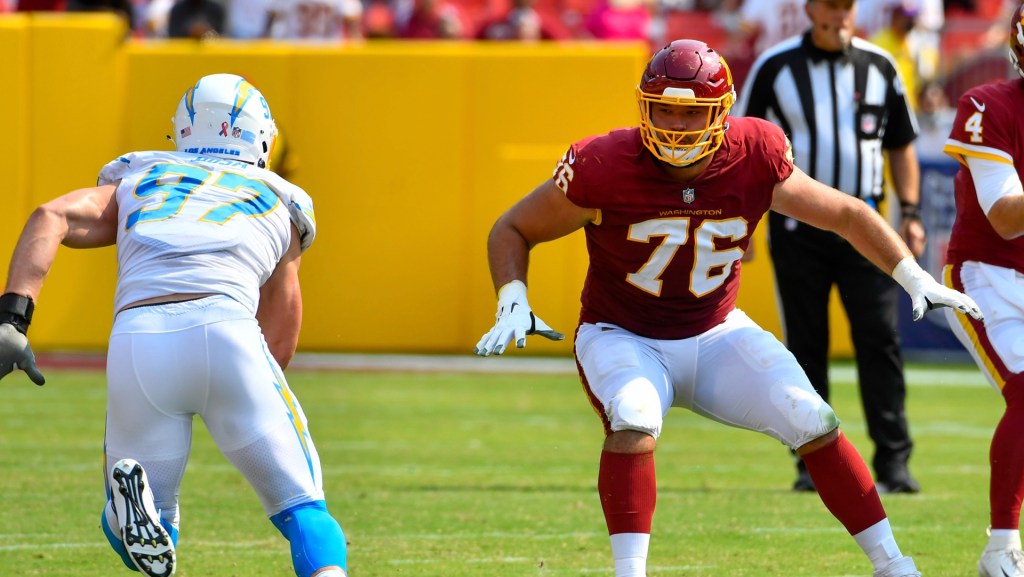
Cosmi played just nine games due to injuries, but the 2021 second-rounder established his role as the full-time right tackle moving forward. The former Texas Longhorn committed just two penalties and allowed four sacks this season, according to Pro Football Focus. If he can stay healthy next year, I expect him to take a leap, especially if All-Pro guard Brandon Scherff departs. Cosmi will have more responsibility to keep Washington’s O-Line among the NFL’s best.
9. Wizards F Deni Avidija, 20* | Last year: No. 13
Despite turning 21 a couple weeks ago, Avdija is arguably the Wizards’ best pure defensive player. His offense isn’t there yet (7.1 points per game and a .299 three-point percentage), but if the Wizards can find a good role for him, even as a substitute, the Israeli could become an All-Defensive selection in the near future.
8. Capitals G Ilya Samsonov, 24 | Last year: No. 5
Samsonov’s tenure in Washington has been up-and-down, and that continues to be the case in his third season. His .903 save percentage and 2.76 goals against average are mediocre at best, and while he’s put together dazzling performances some nights, he’s gotten blown up on others. The Caps are still struggling to find consistency between the pipes, which could have them in the market for a veteran goalie at the trade deadline. Samsonov has shown what he can do at his best, but his inability to play his best more often prevents him from being higher on this list.
7. Washington DE Chase Young, 22 | Last year: No. 3
Young was a top three young talent last year, but injuries and a sophomore slump had him slip a little bit. He played just nine games before tearing his ACL, but his play was not as eye-popping as his Defensive Rookie of the Year campaign a year ago. There’s hope Young completes a Nick Bosa-esque comeback (15.5 sacks, four forced fumbles, NFL-best 21 tackles for loss) next season, but we’ll have to wait and see.
The shot-blocking center splits time with Montrezl Harrell, but the younger Gafford is making an impact on both ends in his first full season in Washington. His .698 field goal percentage is second in the NBA behind just Rudy Gobert (.706), and his 1.8 blocks per game rank sixth. He plays less than 23 minutes per game, but his per 36 rates are 15.3 points and 10.6 rebounds per game. He may never own a majority role, especially with Thomas Bryant returning from his ACL injury, but Gafford should be kept in a Wizards uniform for a long time.
5. Washington DT Daron Payne, 24 | Last year: No. 8
Having completed his fourth season and not even turning 25 yet, Payne is an underrated piece in the big-name defensive line. He finished third on the team with 4.5 sacks as an interior lineman, and was second with 27 quarterback pressures (hurries + knockdowns + sacks). His name has surfaced in trade rumors for a veteran quarterback, and with big money invested in Pro Bowler Jonathan Allen and money on the way for Chase Young and Montez Sweat, Payne may be the odd one out, but for now he’s a top 5 under 25 player.
4. Washington RB Antonio Gibson, 23 | Last year: No. 9
The second-year back seemed poised for a breakout year, and while he did eclipse 1,000 rushing yards and break the franchise record for most touchdowns in a player’s first two seasons (21), ball security and injuries remained an issue from last year. He appeared in 16 games but was limited in a handful of them. Not to focus on the negative, Gibson remains one of the top young players in Washington, and should remain a dynamic force on offense, especially if he reduces the fumbling.
3. Capitals D Martin Fehervary, 22 | Last year: No. 25
Taking a huge leap is Fehervary, who has been nothing short of remarkable since his promotion as a full-time player on the Capitals roster. Initially expected to slot in on the third pair, Fehervary has skated on the first pair with John Carlson and has demonstrated solid two-way ability and speed that has improved this defense drastically. The Caps needed to get productive youth in their lineup, and the Slovak has brought exactly that.
2. Washington S Kamren Curl, 22 | Last year: No. 6
After putting together a campaign that rivaled 2020 Defensive Rookie of the Year finalist Jeremy Chinn for best among rookie safeties last year, Curl continues to prove himself as one of Washington’s biggest draft steals in years. The 2020 seventh-rounder has been the team’s most reliable defensive player not named Jonathan Allen, ranking third on the team in solo tackles (62) and boasting the second-lowest missed tackle percentage among the team’s defensive starters (5.7%). If he keeps up this production, Curl will be a reliable part of the secondary for years to come.
1. Nationals OF Juan Soto, 23 | Last year: No. 1
Photo Credit: Getty Images
For the third year in a row, Soto occupies the top spot on this list. There’s no debate; Soto recently put up one of the best second halves for a hitter in MLB history, slashing .348/.525/.639 after the All-Star break. He finished second in NL MVP voting, proving that at just 23 he is one of the best players in baseball. He is a joy to watch any time he steps to the plate, and while there’s a few years until he hits free agency, his days in a Nationals uniform could be numbered, given the Nats’ track record with retaining star position players. That’s a conversation for another day, but enjoy him while he’s here.
275. Despite playing on what’s been the Washington Capitals’ worst power play in recent memory, Alex Ovechkin passed Dave Andreychuk to move into sole possession of first on the all-time power play goals list, with 275 in his career.
While that milestone is well worth celebrating, in the grand chase that this column focuses on, Ovechkin has (predictably) slowed down a bit from his initial red-hot pace, but he’s still right behind Edmonton’s Leon Draisaitl for most in the NHL.
With 24 goals in 35 games, Ovechkin’s goal scoring rate is now .686 goals per game. In this past month alone, keeping in mind that multiple games have been postponed, he has scored four goals in nine games.
Nearing the halfway point of the season, assuming the Capitals end up playing all 82 games this season, Ovechkin is now on pace for 56. Chances are that’ll miss a few games down the stretch for maintenance or otherwise (hopefully not a COVID list stint), but 50 goals is still in the cards.
The good news is that there will be no Olympic break for NHL players. That’s bad news for anyone wanting to see Connor McDavid, Auston Matthews and a handful of other stars play in their first Olympics, as well as older players (including Ovechkin) taking what could be their last shot at Olympic glory, but for the goal record chase, it’s good.
Losing Ovechkin to an injury at all will be devastating, but if it happened at the Olympics… I guess it wouldn’t make much of a difference but for some reason that would feel worse to me. I guess the point is rather than spending two weeks scoring non-NHL goals, he will now be able to focus fully on the Capitals, and keep upping his totals.
And despite breaking the power play record this month, he’s gonna have to do the brunt of the work at even strength because the power play is just abysmal:
Not having Nicklas Backstrom or TJ Oshie for much of that stretch hurts, but there has to be more to it than that. There have been complaints about the power play even when it wasn’t struggling, and many fans begging for assistant coach Blaine Forsythe to switch things up.
Regardless of where the issues lie, the Capitals (and goal chase) could really use another Ovechkin hot streak. Sitting at 754 career goals, Ovechkin needs just 13 more to pass Jaromir Jagr for third all-time, which will likely happen in mid-March, barring any drastic changes to the schedule.
As mentioned, he’s on pace for 56, but we’ll stay conservative and project him to score an even 50. That would mean he ends the season with 780 career goals, 14 ahead of Jagr for third on the all-time list, and 21 behind Gordie Howe for second.
Ovechkin would presumably pass Howe for second all-time next season, but he’d be 114 behind Gretzky next year if he does indeed finish 2021-22 with 50. With four years left on his contract, his required “goals per season” would drop from 33 to 28.5.
That means even a 30-goal season next year would keep him ahead of pace, and I have a hard time believing a healthy Ovechkin would score fewer than 30 goals next season.
As many have speculated, it seems like 50 is the magic number this season. 45 would be good, but this may be the last chance Ovechkin has at a 50-goal campaign. Let’s hope it doesn’t pass him by.
10 editions of Chasing Gretzky; what a milestone. I expect 30-40+ of these when all is said and done, but by finally reaching double-digits, I decided to do something special.
As part of a separate project for my college sports journalism class, I had the opportunity to speak to two Caps reporters who I have a great deal of respect for: JJ Regan from NBC Sports Washington and Tarik El-Bashir from The Athletic.
We discussed multiple topics about this year’s Capitals team that I may publish in a later piece, but I made sure to carve out some extra time to talk about Alex Ovechkin and his goal chase. (It was still relevant to the project, but the timing worked out well with the 10th edition coming up.)
So in addition to my own reaction to the past month, I’ve included the insights of Regan and El-Bashir. Some responses have been lightly edited for clarity and brevity.
After an elite opening month of the season, Ovechkin has just about kept up his red-hot scoring pace to make for his most productive start ever. Up to 20g-21a-41p through 26 games, he scored nine goals in 14 games over this past month.
He has already surpassed his assist totals from each of the past two seasons (18 in 45 games in 2020-21, 19 in 68 games in 2019-20). I keep saying he’s going to slow down this season but… when?
The current COVID outbreak won’t help. With Nic Dowd, Garnet Hathaway and Trevor van Riemsdyk all on the COVID list, the Capitals canceled practice today. Hopefully this won’t escalate much further and cause Ovechkin and the rest of the team to get out of rhythm.
We’re gonna focus on the positive here, and with 20 goals through 26 games, Ovechkin is now on pace to end the season with 63 if he plays all 82 games. Anticipate some missed games, and that number “falls” to roughly 58, depending on how many games you have him missing.
That would place him with 788 career goals, 22 ahead of Jaromir Jagr for third on the all-time list, and 13 behind Gordie Howe for second. It would also mean he would only need to average 26.5 goals per season over the next four years of his contract.
If we want to be more conservative and put him squarely at 50 goals this season, he’ll finish with 780, and need to average 28.5 goals per season going forward. Rather than go much further into the hard numbers, I’m gonna turn the floor over to this edition’s guests to get their thoughts.
Point blank: Do you think Ovechkin will break Gretzky’s goal record?
JJ Regan, NBC Sports Washington: So for years and years and years, I said no… And, you know, just the fact that he’s even made it realistic is an absolutely incredible testament to how great he is, and he’s probably already the best goal-scorer of all time.
I’m starting to change my opinion because every year I go into the season saying: ‘This is the year where he cannot possibly score as many goals as he has been,’ and he’s off to his best start ever at 36. That’s insane, and he’s not doing it on the power play. As soon as they get a decent power play, these goals may go up even more… I’m starting to believe that there’s a real chance.
He’s got to pass 33 goals this year. He can’t score 33 goals at the age of 40. I hate saying he can’t do something because every time I do, he makes me look like an idiot, but at some point, Father Time is going to catch up with him… He’s got to get 40, maybe 45 this year. If he does that, then absolutely I think he can break the record.
Tarik El-Bashir, The Athletic: If he keeps playing the way he’s playing, he’s gonna pass Wayne Gretzky in three years. It’s not even gonna take the whole five years… Let’s say he gets 45 to 50 this year, and let’s say he gets 40 next year. That’s 90 right there. He’d need just 75 goals in the last three years of his deal. He’s gonna get that.
To me, and this is kind of DC homer in me a little bit coming out, I think the question is gonna be how far can he get past Gretzky at this point? Like, can you get to 900-something and make it so Connor McDavid can’t catch him?
With his injuries and COVID stint last season leading to less production and generating some doubters for this season and beyond, what have you seen Ovechkin do this season compared to recent years that’s leading to this type of production?
Regan: Well, the big thing as compared to last year — and he’s talked about this several times — is that he knew when this season would start. He’s really good at offseason training and being prepared for the start of the season, and I think last year, not knowing exactly when the season would start, and not being built up to that point really affected him.
And then you miss a week in the season early on. It’s hard to really amp your game up to the way that he would want to be. He wasn’t terrible last year; it was just not up to the standard that we’ve seen from him, which made a lot of people think ‘Okay, here’s the regression, here it comes,’ and then he’s just been unbelievable at the start of the year. So I think the offseason training was the big factor there.
El-Bashir: He won’t tell me the truth, but he looks lighter to me. Look at pictures of him now… He lost 15-20 pounds this summer. This would be speculation, he literally won’t tell me. Just last time I asked, he was like, “Tarik, I will not tell you how much I weigh. Think of me as woman.”
But you can see it. You can see it in his play, you can see it in his face, you can see it in his midsection. He trimmed up, and that’s not new. Most players when they get into their mid-30s, if they’re still playing, trim down.
Justin Williams was a stick. They literally called him “stick” because he was so skinny. Williams lost weight when he was here, so I think taking care of his body has become more of a priority for Ovechkin, and I think that’s part of the reason why he’s having the success he’s having right now.
How has he/his game evolved to the point that allows him to continue scoring at a high rate?
Regan: Five years ago, if I told you a 36-year-old Alex Ovechkin can score a hat trick, and none of those goals will be on power play, you probably wouldn’t believe me. That’s what he’s doing right now… Over the years, he’s adjusted his game.
The patented Ovechkin goal 10 years ago was the rush from the other end of the ice where he cuts through the center of the ice, uses the defenseman as the screen and just rockets a shot in between his legs. We don’t see as much of that anymore. We see a lot of rebounds, we see a lot of deflections. We see a lot of dirty goals that we just didn’t see in the earlier part of his career, so he’s adjusted his game tremendously for where he is at this point in his career.
El-Bashir: He takes a lot better care of his body now. He has a personal trainer that basically lives with him 12 months out of the year… When he was a kid, he would walk in the rink and be eating a chocolate chip scone and sweet drink from Starbucks. I’m talking his second or third year*. He didn’t realize how much work goes into nutrition and recovery. He relied on just freaking athleticism for a long time, but not anymore.
(*In his third season, Ovechkin won his only Art Ross trophy to date and his first Hart Trophy, with career-highs in goals (65) and points (112), so… make of that what you will)
What will happen if he’s just short of the record by the end of his current contract?
Regan: I don’t think we’re going to see him hang on to be a three or five goal-scorer on the fourth line at the age of 42. He’s not going to be a Jagr or anything like that.
But you think if he’s within 10 goals after this contract is up, and he’s scored 15 goals — he’s still a somewhat productive player — you got to think they’re gonna bring him back to at least score some empty net goals and get that record at that point. I came into this contract thinking ‘He’s got to have one more big season to make it realistic.’ He’s having that season now.
Interestingly, El-Bashir partially disagrees…
El-Bashir: One thing he has mentioned more to me recently is his adoration and admiration of the dudes who played and produced late into their 40s. He talks about Jagr, he talks about Joe Thornton, he talks about Zdeno Chara. Like, if this dude stays healthy, he’s gonna play these five years out, get to 40 years old, and he’s gonna sign one year contracts until his wife goes ‘I want to go back to Russia.’ He may never do that, but I could see him play on two or three one-year contracts after this contract just to keep building that cushion.
[Referencing Ovi’s fist pound through the glass with his son, Sergei, after netting a hat trick against Florida on Nov. 26] That’s a big thing for him. He really, really wants his two sons to remember him as a great player. Not just read in books and old newspaper articles about how great he was. He wants them to remember what Capital One Arena looks like when it loses their s*** over him scoring a hat trick… He might play seven more years, it would not surprise me. I think if he stays in the 20-goal range, he sticks around as long as he can.
I do think at some point, he’s gonna want to go to Dynamo Moscow and play a year or two before transitioning into the general manager of Team Russia. He’s gonna stay in the game.
No matter how long Ovi sticks around, it’s clear how important this season will be in determining how much easier it is for the record to be broken. We can all hope he keeps up his current goal pace for as long as he can.
Between two lockouts and two other seasons shortened by the pandemic, every obstacle has been thrown in Alex Ovechkin’s path for the all-time NHL goal record. After injuries and a stint on the COVID list last season combined for one of his worst scoring seasons in recent memory (even with fewer games on the schedule), it was fair to wonder if the Russian Machine had finally broken.
So what happened next? Oh, he only put up a start to the season that earned him the NHL’s First Star of the Month for October.
Despite being a game-time decision on opening night against the New York Rangers due to another injury, this time sustained in the preseason, Ovechkin played and notched two goals and two assists to give both himself and the Washington Capitals a fast start to the 2021-22 season.
He kept it going too, now up to 18 points (3rd in the entire NHL, and most among anyone who is NOT one of the two superstars in Edmonton) and a league-leading 10 goals through 11 games.
Starting the season just one goal behind Marcel Dionne on the all-time leaderboard, Ovi passed him for sole possession of fifth on the list in the first game. He’s now just one goal behind Brett Hull in fourth.
With Ovi’s recently signed five-year contract, there’s a firm layout of the runway he has left to pass Wayne Gretzky, which I went over in the previous edition.
Now with this start, we can forecast a range of possibilities based on the Great Eight’s track record over his most recent seasons.
With the last five years combining two pandemic seasons, three Rocket Richards and the one (relatively) down year where he scored 33 goals in 82 games back in 2016-17, it seems like a well-balanced sample to project how Ovi should perform in the long run, especially when (if?) age begins to catch up with him.
Over those five seasons (2016-17 to 2020-21), the Capitals played 371 games, and Ovechkin played in 358 of them, which is 96.5 percent. Ovechkin scored 205 goals across those 358 games, which amounts to 0.576 goals per game over the past five seasons. For his career, including the start of this season, he’s averaged ~0.6126.
Again, when (if??) durability becomes a bigger factor, I wouldn’t be shocked if Ovechkin appears in less than 96.5 percent of Washington’s games over the next five years. We’ve talked about a major injury derailing his chances, but how many games can he miss while still having a realistic shot?
After 11 games this season, there are 399 left in Ovechkin’s contract. With 740 career goals at this point, he needs 155 more to pass Gretzky.
If Ovechkin plays in 96.5 percent of games over the rest of his contract and maintains that 0.576 GPG average, he’ll end up with 221 goals in 385 games. That would leave him with a total of 961, smashing Gretzky’s 894.
Even if he only scores 0.40 GPG (his worst single-season rate) across all 385 games, he’ll end up with 154, tying Gretzky at 894 exactly by the end of his contract.
Just like it’s unrealistic to expect him to score at such a low rate over each of the next five seasons, it may be unrealistic to expect him to play 96.5 percent of the time.
Even if he plays 90 percent of the games and scores 0.576 GPG, he’ll end up with 206 goals in 359 games, leaving him with 946 and still crushing the record of 894.
Drop it down to 80 percent of the games, which would mean he’d miss a season’s worth of games over the next five years, and with 0.576 GPG, that gives him 183 goals in 319 games, which still has him establishing the 900 goal club with 923 total.
0.576 GPG over the rest of Ovi’s contract
% GP
GP
Goals
Career Goals
100
399
230
970
96.5
385
221
961
90
359
206
946
80
319
183
923
And even if you believe 0.576 GPG is way too generous of an estimate for a player entering his late 30s, even someone like Ovechkin, the fact that he’s going far beyond 900 in these estimations shows the breathing room he has. Just to get 155 and pass Gretzky by exactly one in that timeframe would require him to score 0.485 GPG.
For someone with a 0.613 career GPG to score at least 0.485 GPG in the latter stages of his career, and still break the record after missing a season’s worth of games seems more than doable.
0.485 GPG over the rest of Ovi’s contract
% GP
GP
Goals
Career Goals
100
399
193
933
96.5
385
186
927
90
359
174
914
80
319
154
894*
*894 is obviously tied with Gretzky’s record
Knocking on every piece of wood in sight, we can hope that he doesn’t suffer more than one devastating injury (and obviously that he doesn’t have any at all), but knowing that he can still break the record even after missing that much time is reassuring.
His scoring pace this season will slow down eventually, but he’s in good shape for 50 or more. The more he scores this season, the easier the record will be to attain, so while the Caps are dealing with a lot of negatives between the injuries, inconsistent goaltending and poor overtime record, it’s nice seeing Ovechkin get off to such a great start.
Cover Photo Credit: John McCreary/NHLI via Getty Images
The Washington Football Team snuck past the New York Giants 30-29 on a last-second field goal on Thursday Night Football. Washington is now 1-1 on the season and looking to upset Buffalo next week.
A win is a win, and the finish was exciting, but that does not change the fact that this team is not who we thought they were.
After a lackluster performance against an admittedly stellar LA Chargers offense, allowing 14 of 19 third down conversions, and after making Giants quarterback DanielJones look like Lamar Jackson White – I mean, Lamar Jackson Lite – the Washington defense cannot be considered a top-tier unit.
It’s not all terrible; Jonathan Allen is a beast, and Benjamin St-Juste looks better than a typical rookie.
Still, the “vaunted” defensive line cannot produce enough pressure, and the secondary is leaving too many guys wide open. The Darius Slayton near-touchdown will be what everyone talks about (and rightly so, William Jackson III might show up on IR next week after getting burned like that), but all night Giants’ receivers had moments with no one within a 10-yard radius.
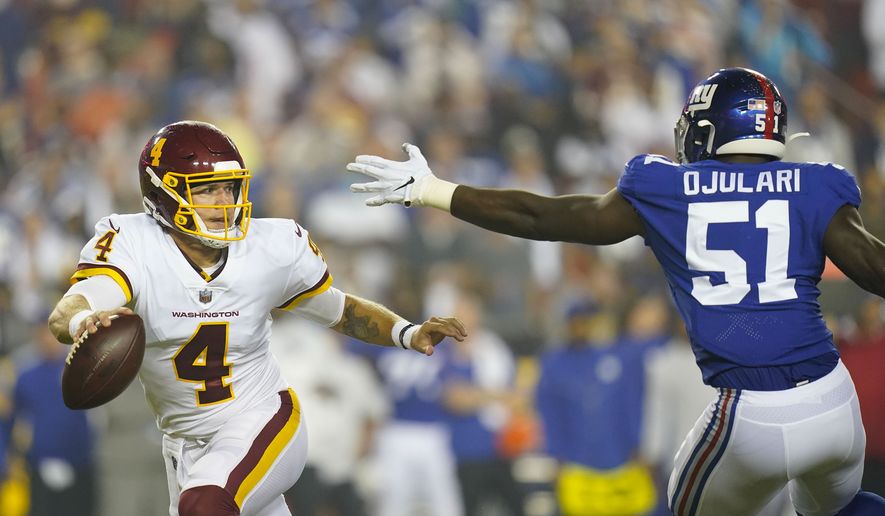
With the Slayton dagger averted, the offense had the opportunity to run the clock out with under three minutes to go. Just a couple first-down conversions, and the game ends 27-26, but Washington hurler Taylor Heinicke’s second-down dart to Terry McLaurin gets picked by James Bradberry to put the Giants within 30 yards of the end zone. Even with the questionable play call (passing on 2nd and 7 when trying to milk the clock?), you just can’t turn the ball over in that situation.
Credit the defense for holding the Giants to just a field goal. That doesn’t excuse the overall performance these past two weeks, but at least they got the stop where it mattered.
Now, Heinicke, after having the game in his hands, had two minutes and one timeout to drive down the field and take it back. And he did… sort of.
He drove the offense down to setup a 48-yard attempt for the inconsistent DustinHopkins, who of course missed and sealed a 29-27 loss.
But wait, the Giants were offsides! A gift from Dexter Lawrence. Hopkins has another shot, this time from 43 yards, and (barely) gets the ball inside the right goal post. After all the back-and-forth, Washington gets the victory.
A win is a win, but boy were there a lot of breaks.
Every positive about this performance has a qualifier:
Last night, Heinicke drives the offense down the field within field goal range on the final drive, and earlier in the fourth tossed a beautiful dime to Ricky Seals-Jones in the back corner of the end zone to take the lead. The moment was not too big for him.
But… he put too much air under a lot of his passes, was not as effective as he could have been when running the ball himself, and of course threw the inexcusable interception. That latter point has Kirk Cousins written all over it.
My biggest gripe about Heinicke is he hasn’t shown he can win games. I’ll give him a pass in last year’s Wild Card Game; he was electric and no way they beat Tom Brady and the eventual Super Bowl champions.
He can drive the offense better than any Washington quarterback since Cousins, but can he win games? Even with the limited sample size, I wasn’t sure. Last night’s performance was a mostly positive indicator, so hopefully experience brings out more of the good and less of the bad.
Another positive: Washington won the game on a last-second field goal.
But… without getting bailed out by opportune penalties a handful of times (the missed 48-yarder, the long Jones touchdown, etc.), this game easily would have been a loss. Washington dodged a bullet, but if this season is Russian Roulette, there are a lot more loaded up in the chamber.
Positive #3: The offensive line looked marginally better than last week
But… way too many penalties, especially from rookie Sam Cosmi. Call it growing pains, but man has got to stop holding. The line itself needs to play better in general, and the first step is limiting penalties.
Positive #4: Logan Thomas and McLaurin were reliable as always.
But… ok there’s not a qualifier for everything. Those two, and really most of the receiving corps, bailed out Heinicke multiple times on those high balls. Those guys are some dawgs. I just hope we see Curtis Samuel at 100 percent this season.
It’s only Week 2; there’s time for change. Regardless, we need to stop kidding ourselves with this defense. The hype entering this season is gone. It’s time to start delivering. The national media will be slow to catch up and will still call this group “elite.” I don’t want to hear any of it anymore.
Oh gee, how on Earth will Josh Allen respond to this terrifying defensive line, along with the rest of the defense? Did you know all four starters on this line were former first-round picks?
Shut up, play-by-play announcer yet to be determined. It took one of the Giants’ starting offensive linemen breaking his leg for the pass rush to look passable, pun not intended. (On a serious note, wishing a speedy recovery to Nick Gates. Hate to see that happen to anyone.)
Even after that, with the exception of a few breakthrough plays, the pressure was lackluster. The defense has to perform up to their standard, plain and simple. Until that happens, enough with the acclaims.
A win is a win, I’ll take that any day of the week. Especially over a division rival, and especially if it means breaking a five-game losing streak against this team. Still, it’s difficult to feel totally satisfied.



 The Wildcard