The Pohory-list: Top 10 too early/too late DC athletes

By: Joe Pohoryles

When thinking about the greatest players in DC professional sports history, names like Darrell Green, Elvin Hayes and Alex Ovechkin come to mind. Each of these men, and many more, set records and won championships repping the District. They’ll be remembered as Redskins and Wizards/Bullets and Capitals (and as the franchise gets older, Nationals) for the rest of time.

But what about the all-time greats who achieved their success in other cities on other teams, but also played in Washington? Where DC served as merely a pitstop, a footnote in the story of their illustrious careers? In this completely unnecessary list, I observe the greatest players who were in DC either too early or too late in their careers, and are remembered for their play on other teams.

I’ll be ranking the 10 greatest athletes that fall under this category. They will not be ranked by their performance in DC, but rather their careers as a whole. I’ll admit, the order is somewhat arbitrary, as it’s difficult to compare the success of a football player to that of a basketball player, but I tried my best.

10. Dwight Howard (Career: 2004-present; Wizards: 2018-2019)
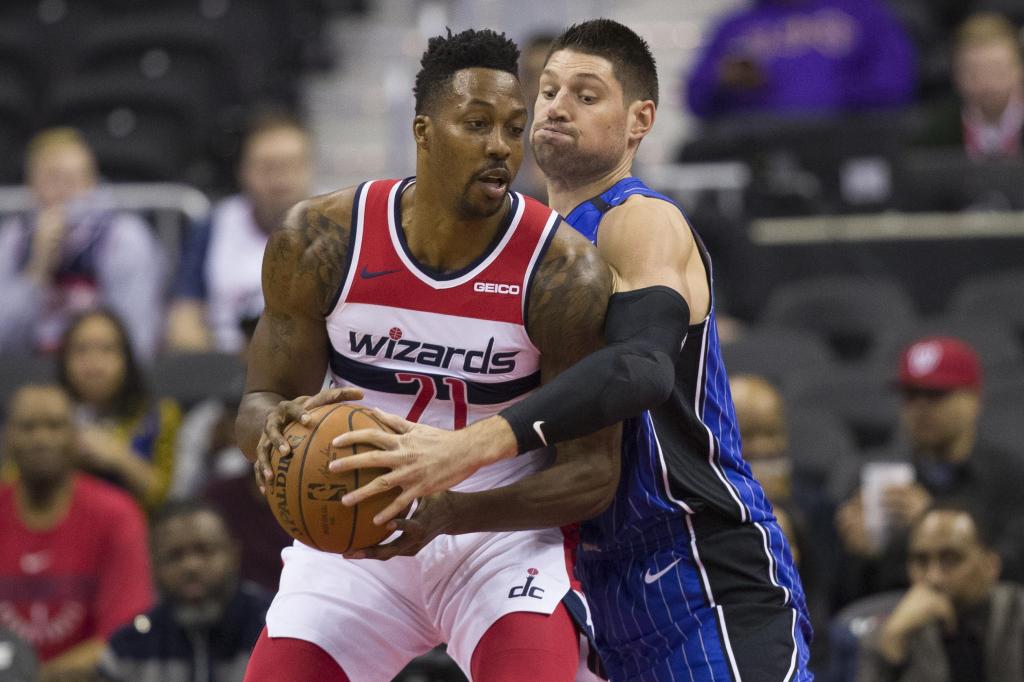
Photo Credit: AP Photo/Alex Brandon

Notable Accolades:

  • 8x All-Star
  • 5x First Team All-NBA
  • 1x Second Team, 2x Third Team
  • 3x Defensive POTY
  • 5x All-Defensive Team
  • 5x rebounding leader

The first overall pick of the 2004 NBA draft, Dwight Howard quickly became one of the biggest stars in the league with the Orlando Magic. His success in Orlando culminated in an NBA Finals appearance in 2009, defeating the reigning champion Boston Celtics and LeBron James’ Cleveland Cavaliers on the way. They fell short against a Kobe Bryant-led Los Angeles Lakers squad, but Howard’s dominance signaled more greatness to come. 

That never came to be, as a fallout with coach Stan Van Gundy in 2012 led to a trade to the Lakers, and he’s been bouncing around the league ever since. He played in just nine games for the Wizards in the 2018-19 season, suffering from back issues for most of the year. While it has been nearly a decade since we have seen a peak Dwight Howard, his prime is rivaled by few.

9. Sergei Fedorov (NHL Career: 1990-2009; Capitals: 2008-2009)
Photo Credit: Wikimedia Commons

Notable Accolades:

  • 6x All-Star
  • 1994 First All-Star Team
  • 1994 Hart Trophy
  • 1994 Pearson Award
  • 2x Selke Trophy
  • 3x Stanley Cup Champion
  • Hall of Fame (2015)

Fedorov gained his fame for his unique playing style with the Detroit Red Wings in the 1990s and early-2000s. He played 1,248 NHL games, notching 1,179 career points, and became the first European-trained player to win the Hart Trophy (MVP) in 1994. The versatile Soviet was primarily a center, but also spent time at the wing and defense, something you never see at the professional level, and was revered as an all-time great postseason performer.

Fedorov played just 70 games in Washington, after a 2008 deadline trade. He would set the record for goals scored by a Russian in NHL history, finishing at 483, (before the record was smashed by Ovi back in 2015). Playing in DC from age 38-39, his best years were far behind him, which included three Stanley Cups in Detroit, but he managed to score a Game 7 game-winner vs. the Rangers in the first round of the 2009 playoffs.

8. Ivan “Pudge” Rodriguez (MLB career: 1991-2011; Nationals: 2010-2011)
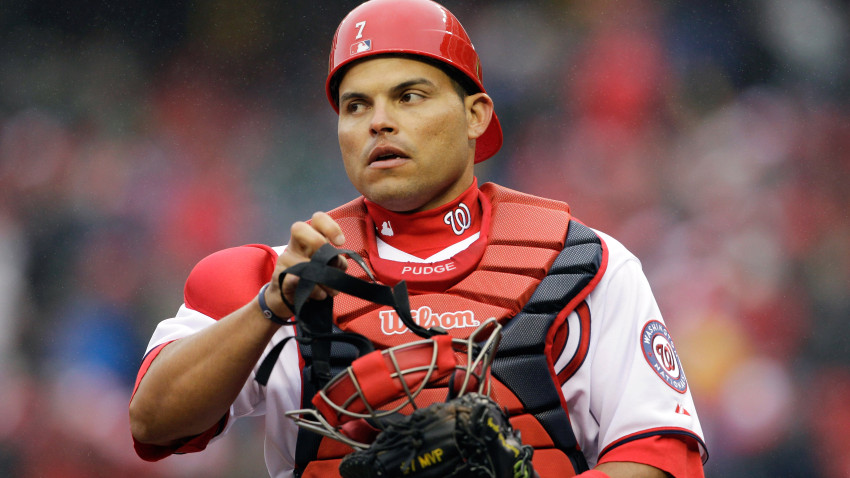
Photo Credit: Rob Carr/Getty Images

Notable Accolades:

  • 14x All-Star
  • 1999 AL MVP
  • 2003 NLCS MVP, World Series Champion
  • 13x Gold Glove Award
  • 7x Silver Slugger Award
  • Hall of Fame (2017)

The only National on this list is also the only Hall of Famer to wear the curly W, but he earned his first-ballot ticket to Cooperstown long before 2010. He finished just 156 hits shy of 3,000 on his career, and had 311 home runs to go with 1,332 RBI. Looking beyond the plate, he is widely regarded as one of the greatest defensive catchers of all time. 

Like Fedorov, he spent the last couple years of his long career in DC, playing 155 games in two seasons. Despite a .296 career batting average, the late-30s Pudge hit just .255 in his two seasons, and jacked just six home runs. One interesting fact is he caught for Stephen Strasburg’s legendary MLB debut, who may one day join Rodriguez in the Hall.

7. Adrian Peterson (Career: 2007-present; Redskins: 2018-present)
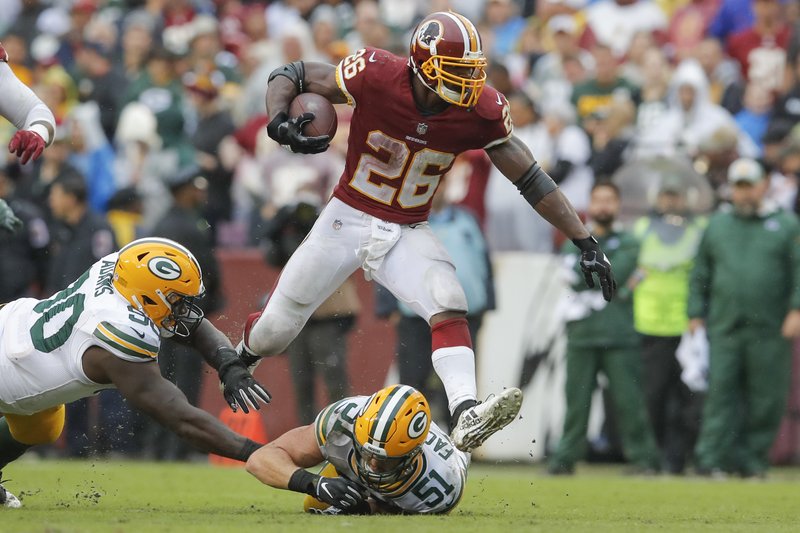
Photo Credit: APnews.com

Notable Accolades:

  • 7x Pro Bowl
  • 4x First Team All-Pro
  • 3x Second Team
  • 2012 MVP, Offensive POTY
  • 2x Bert Bell Award
  • 3x rushing champion
  • 2x rushing touchdowns leader

“All Day” is one of the greatest running backs in NFL history, and indisputably the best of his generation. The longtime Vikings star currently sits in the top 10 for career rushing yards and touchdowns, and has sustained success even as a Redskin, notching his eighth 1,000-yard season of his career in 2018.

Peterson finished just seven yards shy of the single-season rushing record during his 2012 MVP campaign, which unbelievably came after a torn ACL from late in 2011 (against the Redskins).

He also owns the single-game record with 296 yards. AP almost wasn’t a Redskin at all, as he was signed to a minimum deal only after rookie Derrius Guice tore his ACL in the preseason. Luckily, fans in Washington have been blessed to see a future Hall of Famer flash signs of his former MVP self in burgundy and gold. That’s all fans can really be excited about these days.

6. Deacon Jones (Career: 1961-1974; Redskins: 1974)
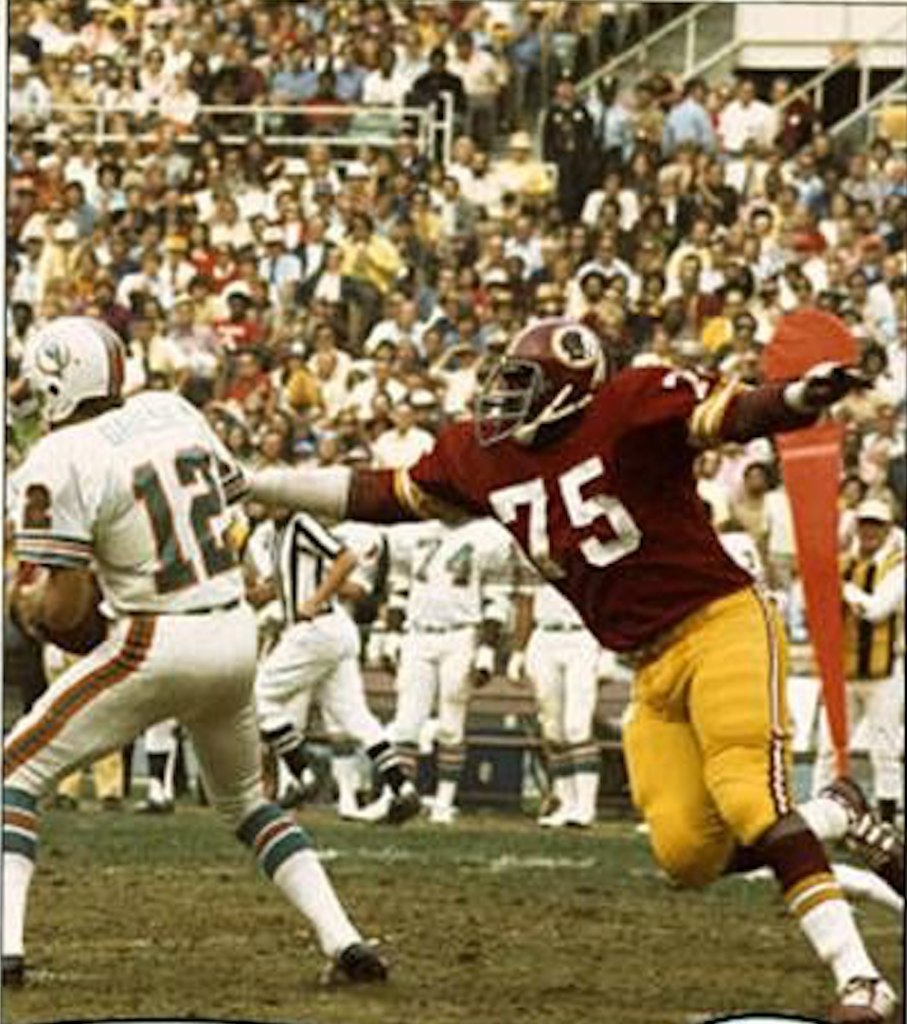
Photo Credit: Pinterest.com

Notable Accolades:

  • 8x Pro Bowl
  • 5x First Team All-Pro
  • 3x Second Team
  • 2x Defensive POTY
  • NFL 100 All-Time Team
  • Hall of Fame (1980)

Jones headlined the “Fearsome Foursome” defensive line with the Los Angeles Rams in the 1960s, one of the best units in history. Jones himself revolutionized the defensive end position, with his speed and aggression often proving too much for opponents to handle. He is credited for coining the term “sack,” and while quarterback sacks never became an official statistic until 1982, it is reported Jones totaled 173 ½  sacks over his career, which would be the record at his retirement, and currently third behind Bruce Smith and Reggie White.

Jones recorded just three of those sacks with the Redskins, following a successful two year stint with the San Diego Chargers, long after he recorded 18+ sacks in five straight seasons from 1964-1968 with the Rams, including a would-be record 22 in 14 games (achieved twice, in ‘64 and ‘68). His best days may have been behind him, but it can always be said that the “Secretary of Defense,” was a Redskin, at least briefly.

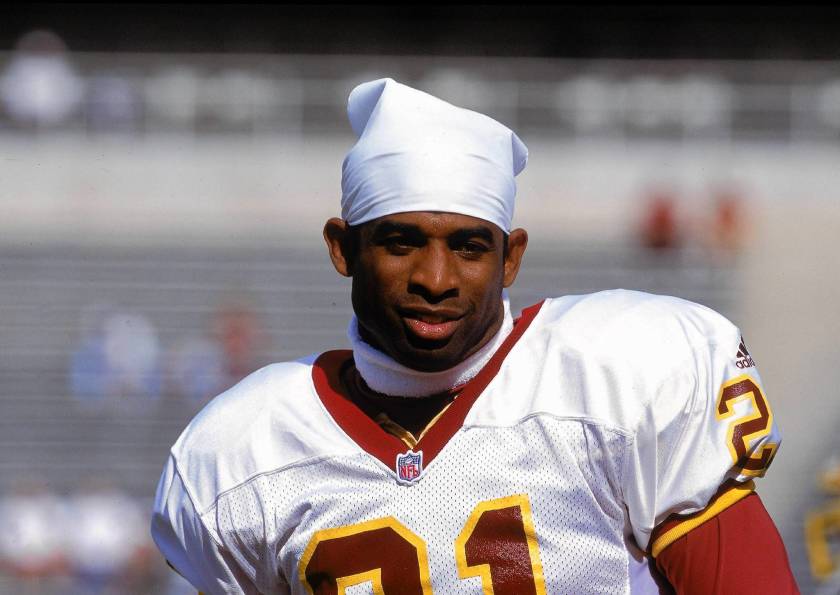
5. Deion Sanders (NFL Career: 1989-2000, 2004-2005; Redskins: 2000)
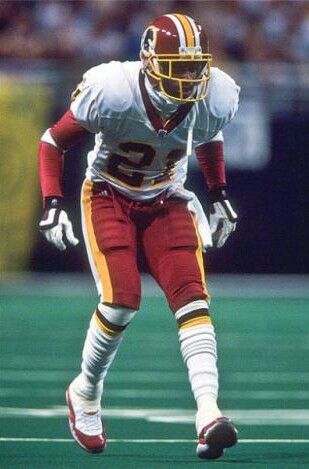
Photo Credit: Pinterest.com

Notable Accolades:

  • 8x Pro Bowl
  • 11x First Team All-Pro (nine as CB, one each at KR and PR)
  • 1994 Defensive POTY
  • 2x Super Bowl Champion
  • NFL 100 All-Time Team
  • Part-time MLB player
  • Hall of Fame (2011)

“Prime Time” was among the most flamboyant and talented characters in professional sports through the 1990s, but it was at the turn of the millenium that owner Dan Snyder decided to make a splashy move, signing a 32-year-old Sanders to a seven-year/$56 million deal, but Sanders retired abruptly after just one season. Before that, Sanders developed a reputation as one of the best pass-defenders (and athletes) in the history of the game. He would even line up at wide receiver occasionally, becoming the first two-way starter since Roy Green and Chuck Bednarik.

He recorded 41 tackles (his fifth-highest single season total) and four interceptions in his lone season in DC, and later came out of retirement in 2004 to play for the Baltimore Ravens for two seasons. Sanders will be remembered more as an Atlanta Brave than a Redskin, and baseball was his second sport, but he was still one of the greatest players to come through Washington.

4. Jaromir Jagr (NHL Career: 1990-2018; Capitals: 2001-2004)
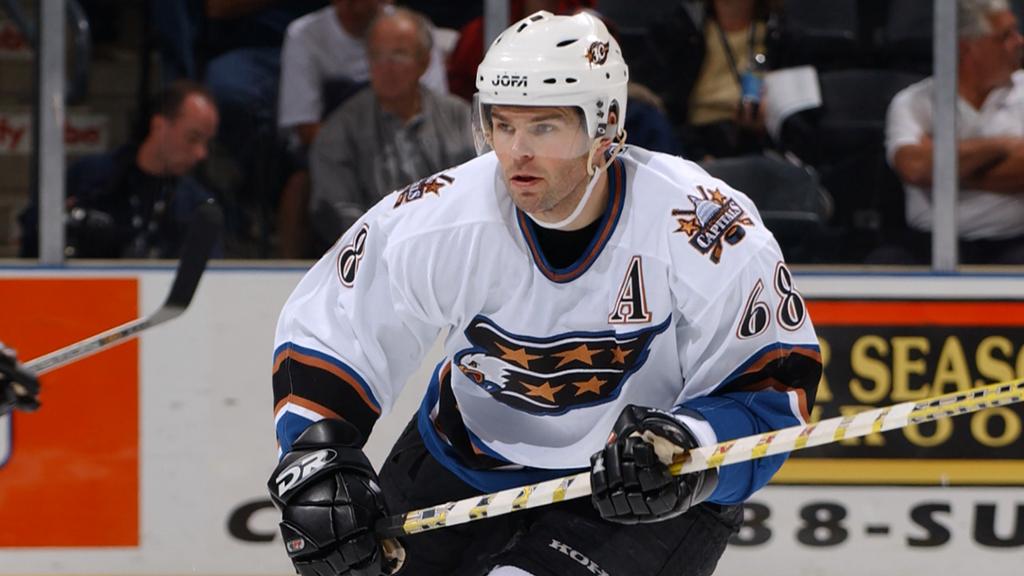
Photo Credit: NHL.com

Notable Accolades:

  • 13x All-Star
  • 7x NHL First All-Star Team
  • 1x Second All-Star
  • 5x Art Ross Trophy
  • 1999 Hart Trophy
  • 3x Pearson Award
  • 2016 Masterson Trophy
  • 2x Stanley Cup Champion
  • 2nd all-time point scorer in NHL history (1,921)

The 47-year-old Czech is still going strong for his hometown team, HC Kladno, but through the 1990s was a star for the Pittsburgh Penguins, winning two Stanley Cups while developing into one of the great point scorers in the league. After 11 seasons in Pittsburgh, he signed with the Caps in the largest deal in league history at the time (seven years/$77 million), but stuck around for just two-and-a-half seasons, unable to get to 40 goals or 50 assists in any season despite totaling 121 points in his final year in Pittsburgh. 

Jagr was able to get back to the 100-point threshold, totaling 123 in 2005-06 at age 33 with the New York Rangers, and after a three-and-a-half season stint there, bounced around the league until playing his final NHL game with the Calgary Flames at age 45 in the 2017-18 season. Jagr was a big disappointment in the District given the size of his contract, but was still one of the greatest players to wear the red sweaters.

3. Moses Malone (Career: 1974-1995; Bullets: 1986-1988)
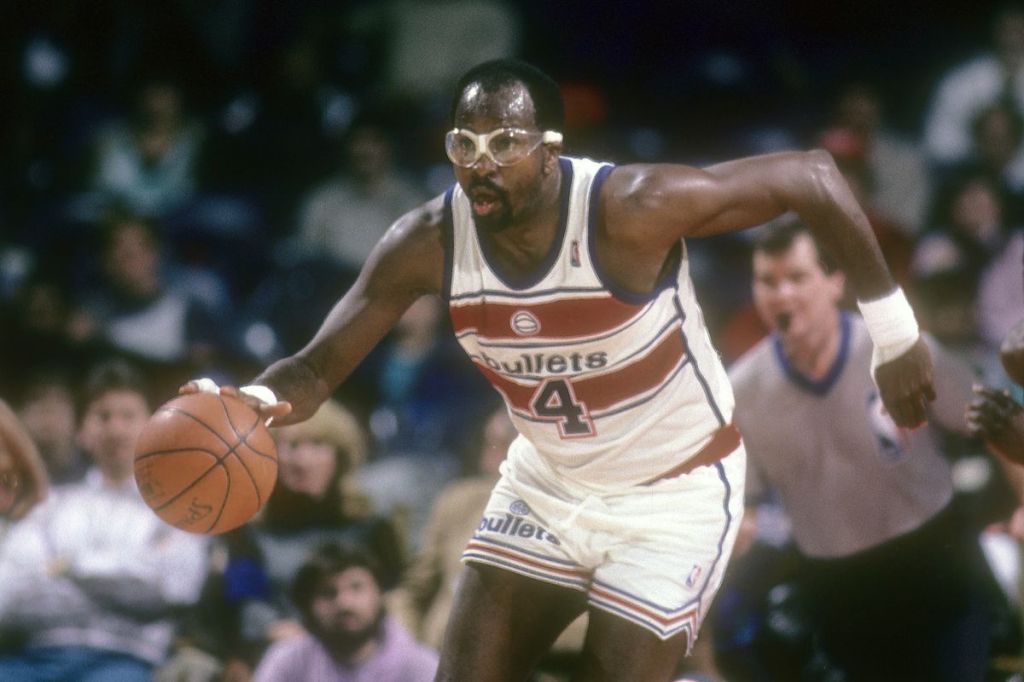
Photo Credit: BulletsForever.com

Notable Accolades:

  • 12x All-Star, 1x ABA All-Star
  • 4x First Team All-NBA
  • 4x Second Team
  • 3x MVP
  • 1983 NBA Champion, Finals MVP
  • 2x All-Defensive Team
  • 6x rebounding leader
  • Hall of Fame (2001)

The late, great “Chairman of the Boards” played two All-Star seasons in Washington, but he’ll be remembered more as a 76er and Rocket. He sits ninth all-time in career points and third all-time in rebounds, and he has the most combined ABA/NBA offensive rebounds by a wide margin. After a start in the ABA, Malone became one of the greatest players in NBA history after the merger, wearing down opponents with physicality and an unmatched motor.

Malone’s stint in Washington was still impressive, earning All-NBA Second Team honors his first season while finishing ninth in the league in points and rebounds. The next year, he recorded 55 triple-doubles in 76 games. Malone and the Bullets made the playoffs during both of his seasons, but could never make it past the first round, to no fault of Malone, who averaged 20.7 and 18.6 points along with 12.7 and 11.2 rebounds in the two series, respectively.

2. Bruce Smith (Career: 1985-2003; Redskins: 2000-2003)

Photo Credit: Pinterest.com

Notable Accolades:

  • 11x Pro Bowl
  • 8x First Team All-Pro
  • 2x Second Team
  • 2x Defensive POTY
  • 4x AFC Defensive POTY
  • 4x AFC Champion
  • NFL 100 All-Time Team
  • NFL Sack Record (200)
  • Hall of Fame (2009)

The Norfolk, Virginia native was selected first overall in the 1985 draft by the Buffalo Bills, and instantly became a force on the defensive line. “The Sack Man” played a key role in the Bills’ four consecutive Super Bowl appearances in the early-1990s. In 279 games, Smith totaled a record 200 sacks, and is considered one of the greatest players in NFL history.

Signed alongside Sanders at 37 years old, Smith stuck around for four seasons, playing in all 16 games three times, including his final age-40 season in 2003. Despite his older age, Smith was able to register 10 sacks in 2000, and nine in 2002, adding more evidence to his greatness. Smith will always be a Bill, but his late-30s stint with the Redskins was impressive in its own, less significant right.

1. Michael Jordan (Career: 1984-1993, 1995-1998, 2001-2003; Wizards: 2001-2003)
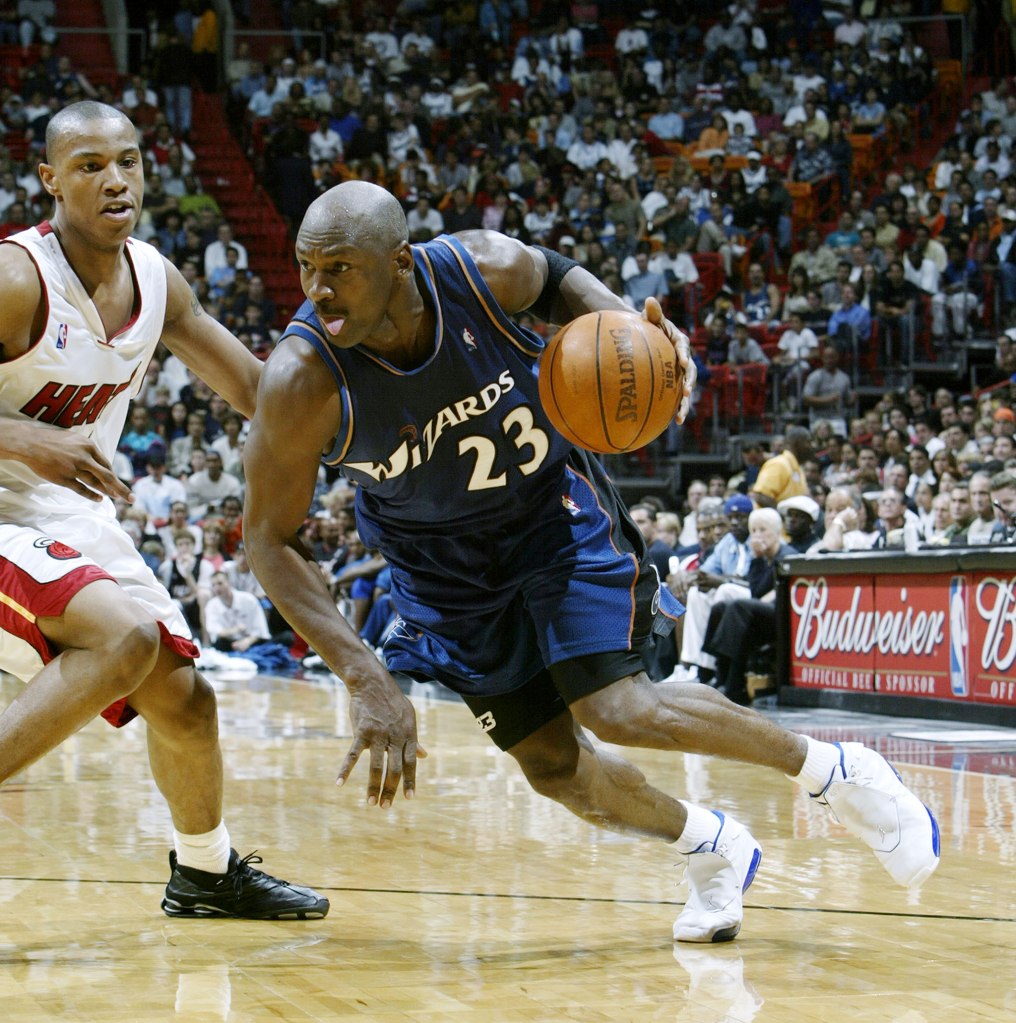
Photo Credit: ESPN.com

Notable Accolades:

  • 14x All-Star
  • 10x First Team All-NBA
  • 1x Second Team
  • 5x MVP
  • 6x NBA Champion, Finals MVP
  • 1988 Defensive POTY
  • 9x All-Defensive Team
  • 10x Scoring Champion
  • 3x Steals Leader
  • Hall of Fame (2009)

This one is obvious, and probably the first name you thought of when you read the headline. MJ is, by most accounts, the greatest basketball player of all time (although LeBron James has been added to the debate in recent years), and likely the most recognized/marketed athlete in history. His success in the NBA exclusively came with the Chicago Bulls, “three-peating” twice to win six NBA championships in the 1990s. I could go on and on about his greatness, but you likely know all there is to know.

Looking back on his time in DC, “His Airness” joined the organization not as a player, but a part-owner during the 1999-2000 season, taking over basketball operations. He infamously selected Kwame Brown, among the biggest busts in history, with the first overall pick in 2001. He soon joined Brown and the team in his second comeback at the start of the 2001-02 season, leading the team in scoring with 22.9 points per game at the age of 38. His final season he played all 82 games, averaging 20.0 points, 6.1 rebounds and 3.8 assists. All of the Wizards’ home games were sold out, and they were the second-most watched team of the season. A falling out with owner Abe Pollin prevented him from returning to his front office job in DC, but he later became the Charlotte owner, and the ever-growing popularity of his Jordan shoe brand has made him a billionaire.

Also considered: Champ Bailey (Redskins), Phil Housley (Capitals), Paul Pierce (Wizards), Mitch Richmond (Wizards), Alfonso Soriano (Nationals)

Looking back at these great players, it’s unfortunate they could not have spent their primes in Washington. While we’ll always appreciate the contributions of Green, Hayes and Ovi, it’s nice to at least have some claim to the guys on this list. 

2019 All-Fantasy Football Teams

By: Joe Pohoryles

Every year, millions of people play fantasy sports. Whether it’s daily fantasy or season-long, fantasy sports serve as a means for friends and family to bond over sports in an engaging, exciting, yet often disappointing way. Whether you win your league championship or fail to win a single match-up, fantasy sports provides a fun way to watch games.

The 2019 NFL season marks my 10th season playing fantasy football. I’ve appeared in two championship games, winning one of them, back in 2015. I’ve been able to root for all-time greats, like Randy Moss, as well as current superstars like Christian McCaffrey, giving me something fun in football to distract from dismal Redskins seasons.

Since 2016, I’ve constructed my picks for All-Fantasy teams, similar to the All-Pro teams we see in the real NFL. Fantasy football is entirely based on statistics, so differentiating the good from the great is fairly easy, but I don’t stick to the simple rankings based on total points scored. It’s the players who put up consistently great numbers week to week that are truly fantasy football All Stars. Would you rather have a player who, through four games, scores 35, 5, 24, and 7, or a player who puts up 17, 21, 16, and 13?

Personally, I want a player like the latter, someone who I can consistently rely on to put up double-digit points, with potential for a big-time game rather than a player like the former who, while capable of monster performances, cannot be trusted due to several lackluster scores that can cost you an entire match-up. In this scenario, Player A scored 71 points through four weeks, while Player B put up 67. Under standard ranking systems, Player A would be ranked above Player B, but is he really the better player?

This is why I don’t trust the point-total rankings and try to look at the context. I even came up with my own adjusted points per game metric to eliminate outlier performances in an effort to determine who the best week-to-week players are. It’s a fairly simple process, and hardly advanced analytics, but I believe it’s a good indicator.

Here’s how it works:

  • I count the player’s scores from Weeks 1-16. Most fantasy seasons end in Week 16, as many starters on NFL playoff teams sit out Week 17.
  • Factoring in the bye week, a player who plays every game in a fantasy season will have 15 games.
  • I then look for their two highest-scoring performances and two lowest-scoring performances, and throw them away.
  • This adjusted point total is then averaged out among the remaining games (i.e. four games removed from a 15-game player will have their new total averaged out across 11 games. 14-game players will be averaged out across 10, and so on).
  • In close cases, I also took into account who posted fewer single-digit games, more 20-plus/30-plus point games, etc.
  • These new averages paint a picture of who truly was the best, most consistent player. It eliminates the outliers, both high and low, without compromising the sample size.

I did not base my rankings solely on my adjusted PPG metric, as more context is necessary in many cases. For example, New York Giants’ stud running back Saquon Barkley’s adjusted PPG was 16.69, while Jacksonville Jaguars’ bruiser Leonard Fournette posted 15.94 points per game. As you’ll see, Fournette earned Third Team honors, while Barkley is honorable mention. Why? Fournette played all 15 games, while Barkley played 12. Staying healthy is important, and the margin between these two averages is not large enough to justify Barkley being placed above Fournette.

Another thing to keep in mind is that this is purely based on fantasy football performance across the 2019 season. This is NOT my opinion of the best players in football. Sticking with the Barkley/Fournette comparison, if the Redskins could pick either one to join the team straight-up, disregarding contract considerations, I’d take Barkley 10 times out of 10. The fact of the matter is, for the 2019 fantasy football season, Fournette was slightly better.

Without further ado, here are The Wildcard‘s official 2019 All-Fantasy Football teams. Along with the traditional First, Second, Third and Honorable Mention, I have an All-Breakout team, honoring the players who burst on to the scene this season, an All-Bust team, consisting of the players who disappointed the most this season, and several others. (Note: These rankings are based on the PPR format).

First Team All-Fantasy

QB: Lamar Jackson, Bal

RB: Christian McCaffrey, Car*

RB: Dalvin Cook, Min

WR: Michael Thomas, NO

WR: Chris Godwin, TB

TE: Travis Kelce, KC

Flex (RB): Austin Ekeler, LAC

Flex (WR): Deandre Hopkins, Hou

D/ST: Patriots, NE

K: Harrison Butker, KC

*Fantasy MVP: Despite the breakout of dual-threat phenom Lamar Jackson, and the insane record-breaking season Michael Thomas put up in New Orleans, Christian McCaffrey is the 2019 Fantasy MVP. Jackson and Thomas are easily the best of their respective positions, but McCaffrey was worlds above the next best running backs, which tends to be the most valuable position in fantasy.

McCaffrey’s adjusted points per game was an astounding 30.30. He put up single-digits just once, in Week 2, but was otherworldly the rest of the season. The next best adjusted PPG for running backs belonged to Dalvin Cook with 21.23, well ahead of the rest of the pack, but still NINE whole points behind McCaffrey. McCaffrey even bested Jackson, who had 28.28 adjusted PPG, despite quarterbacks being the highest-scoring position. Lamar may be the NFL MVP, but the fantasy title belongs solely to McCaffrey.

Second Team All-Fantasy:

QB: Deshaun Watson, Hou

RB: Ezekiel Elliott, Dal

RB: Aaron Jones, GB

WR: Julio Jones, Atl

WR: Julian Edelman, NE

TE: George Kittle, SF

Flex (RB): Derrick Henry, Ten

Flex (WR): Allen Robinson II, Chi

D/ST: Steelers, Pit

K: Wil Lutz, NO

Third Team All-Fantasy

QB: Patrick Mahomes, KC

RB: Leonard Fournette, Jac

RB: Alvin Kamara, NO

WR: Kenny Golladay, Det

WR: Cooper Kupp, LAR

TE: Austin Hooper, Atl

Flex (RB): Chris Carson, Sea

Flex (WR): Mike Evans, TB

D/ST: 49ers, SF

K: Matt Gay, TB

Honorable Mention:

QB- Dak Prescott, Dal; Russell Wilson, Sea; Josh Allen, Buf; Jameis Winston, TB

RB – Nick Chubb, Cle; Saquon Barkley, NYG; Mark Ingram II, Bal

WR – DJ Moore, Car; Devante Parker, Mia; Amari Cooper, Dal; Keenan Allen, LAC

TE – Zach Ertz, Phi; Darren Waller, Oak; Mark Andrews, Bal

D/ST – Ravens, Bal; Vikings, Min

K – Justin Tucker, Bal

All-Bust Team

QB: Baker Mayfield, Cle

RB: David Johnson, Ari

RB: Damien Williams, KC

WR: Odell Beckham, Jr., Cle

WR: JuJu Smith-Schuster, Pit

TE: OJ Howard, TB

D/ST: Bears, Chi

K: Adam Vinatieri, Ind

All-Breakout Team

QB: Lamar Jackson, Bal

RB: Austin Ekeler, LAC

RB: Aaron Jones, GB

WR: Chris Godwin, TB

WR: Devante Parker, Mia

TE: Austin Hooper, Atl

Flex (RB): Miles Sanders, Phi

Flex (WR): DJ Chark Jr., Jac

D/ST: 49ers, SF

K: Matt Gay, TB

All-Injured Team

QB: Drew Brees, NO

RB: James Conner, Pit

RB: Jordan Howard, Phi

WR: Tyreek Hill, KC

WR: Davante Adams, GB

TE: Austin Hooper, Atl

K: Stephen Gostkowski, NE

All-Rookie Team

QB: Kyler Murray, Ari

RB: Miles Sanders, Phi

RB: Josh Jacobs, Oak

WR: A.J. Brown, Ten

WR: Terry McLaurin, Wsh

TE: Noah Fant, Den

K: Matt Gay, TB

Washington Redskins 2010s All-Decade Team

Ryan Kerrigan celebrates a sack against the Eagles in 2017. Kerrigan has been one of the most consistent forces on the Redskins since he was drafted 16th overall in 2011, not missing a start until the end of the 2019 season. (Photo Credit: Wikimedia Commons)

By: Joe Pohoryles

Offense:

*= still on team

^=on team prior to 2010

Skill positions:

QB – Kirk Cousins (2012-2017)

RB – Alfred Morris (2012-2015)

RB – Chris Thompson* (2013-2019)

WR – Pierre Garcon (2012-2016)

WR – Desean Jackson (2014-2016)

TE – Jordan Reed* (2013-2019)

Cousins was not supposed to be the guy on this list when he entered the league, but here is. Coming in immediately as RG3’s backup, Kirk soon developed to be a fringe top 15 quarterback in the Gruden-McVay system, breaking several single-season franchise passer marks and leading the team to a division title in a weak 2015 NFC East, but never really much else in terms of winning. He’s now got Minnesota in prime playoff position with Washington fully in his rear view after years of mediocrity and contract disputes.

Morris completed the star backfield of 2012, and even sustained a couple years of success afterward. He finished second in rushing yards (1,613) in the entire NFL his rookie season behind near-record-breaking league MVP (and future Redskin) Adrian Peterson. After tallying over 1,000 rushing yards and receiving a Pro Bowl nod in both his second and third season, Morris finished his fourth and final season in Washington with 751 rushing yards and just one touchdown in a more crowded backfield. His reign was not long, but he was the team’s best back by far.

Thompson has dealt with injuries that have hampered his production throughout his career, but when healthy he’s proven to be a big offensive weapon catching passes out of the backfield. He’s also maintained his spot on the roster longer than most skill position players on the team, an impressive task for any NFL player, let alone a team like the Redskins.

Garcon was the team’s top targeted and most consistent receiver through both the RG3 and Cousins eras, his best season coming in 2013, where he had a league-leading 113 receptions for 1,346 yards and five touchdowns. After missing six games in 2012, Garcon started or played in the remaining 64 games of his Redskins career, always holding a main stake in the offense.

D-Jax was in Washington for just three years and will be remembered mainly as an Eagle, but he posted two 1,000+ yard seasons (the lone exception being his second season in which he played just 10 games), and was lethal as a deep threat. His best years were behind him, but his production exceeded that of the inconsistent Jamison Crowder, and the aged Santana Moss, whose best years came prior to 2010.

Reed is one of the biggest “what ifs” in modern football. He has never made it through a full season, and has not even touched the field in 2019. When he’s out there, he has proven to be an absolute beast, and a rare bright spot on the offense. Despite the injuries, he has a career average of 830 yards and six touchdowns per 16 games. Sadly, he has never been able to reach that mark, topping out at 14 games in 2015. Still, he is without a doubt one of the best pass-catchers of the decade on this team, and is the obvious pick for tight end.

Offensive line:

LT – Trent Williams* (2010-2019)

LG – Kory Lichtensteiger (2010-2016)

C – Will Montgomery (2010-2013)^

RG – Brandon Scherff* (2015-2019)

RT – Morgan Moses* (2015-2019)

Here we see a mix of early decade and late decade stalwarts in the O-line, with Williams serving as the common denominator. The starting left tackle since being drafted 4th overall in 2010, Williams has developed into one of the best tackles in football, making seven straight Pro Bowls from 2012-2018. That streak will end this season, as Williams has held out all season due to a falling out with the medical staff and management in yet another display of the organization’s incompetence. It’s an unfortunate end to one of the best Redskins in recent history, but he deserves all the success he can find with another organization.

The versatile Lichtensteiger has spent time at left guard and center, and has provided solid protection as one of the unsung heroes of the offensive line for most of seven seasons. He even has the third-highest Approximate Value (the Pro Football Reference metric for comparing players across all positions) of modern linemen on the team behind Williams and Moses.

Montgomery was a reliable center through the ups of 2012 and the downs of, well, pretty much every other year he was here. He was on the team prior to 2010, but still held down the starting role well into the decade.

Initially selected as the bookend opposite Williams when drafted fifth overall in 2015, Scherff proved he was more valuable on the interior, emerging as one of the best guards in the league. The three-time Pro Bowler reaches free agency this year, and it is uncertain whether the team will pay up, but his impact on the team is unquestionable.

Moses has been a steal since the Redskins selected him in the third round in 2014, although he missed his entire rookie season due to a lisfranc injury. Once he finally took the field, Moses cemented himself as another key piece in the revamped offensive line, earning a five-year, $38.5 million contract in 2017 that should ensure he sticks around despite the possible departures of Williams and Scherff.

Defense: (Set up as a 3-4, as that was the most used formation)

Defensive line:

DL – Chris Baker (2012-2016)

DL – Barry Cofield (2011-2014)

DL – Preston Smith (2015-2018)

Baker was never one to rack up sacks, compiling 11.5 in five seasons, but he still provided enough pressure and personality to be a leader on defense, especially toward the end of his time on the team. Kedric Golston was also considered for this slot, but the brunt of his production came prior to 2010.

Cofield started every game in his first three seasons, commanding the nose tackle position. Another guy who did not fill up the stat sheet, Cofield remained a consistent presence on the defensive line, bringing the pressure and batting down passes from time to time.

Smith played in every game during his four seasons, starting each one after his rookie season, upping his tackle numbers every season. His sack numbers would rise and fall, topping out at eight in both his first and third season, but the Mississippi State product was always a solid end. Of course, his breakout season comes the year he leaves with the Green Bay Packers. Guys like Jonathan Allen, Da’Ron Payne and Matt Ioannidis have been good, but the sample size is too small to justify a spot.

Linebackers:

OLB – Ryan Kerrigan* (2011-2019)

ILB – London Fletcher (2010-2013)^

ILB – Perry Riley (2010-2015)

OLB – Brian Orakpo (2010-2014)^

Kerrigan headlines what’s arguably the best positional group on the team. As one of the best defensive players, Kerrigan never missed a game until the 2019 season, starting his first 140 career games. The Iron Man has made four Pro Bowls, including three in a row from 2016-2018, and has put up career numbers in line with J.J. Watt and Von Miller, proving just how underrated he is.

Fletcher was the heart and soul of the Redskins defense from the mid-2000s until he retired after the 2013 season. All four of his Pro Bowls came in Washington, more impressively in his age 34-37 seasons. Another Iron Man, he started all 112 games from 2007-2013, and was a tackling machine, accumulating well over 100 tackles every season. I believe he should be a Hall of Famer, but I do not predict he will get the votes. 

Riley was a fixture in the linebacking core for the first half of the decade. While he does not have the same level of recognition as the other guys in this unit, Riley put up solid production in the tackling department and remained a constant through the revolving door of inside linebackers in D.C.

Orakpo became an instant fan favorite upon being drafted 13th overall in 2009, and was immediately a sack machine, putting up 11 in his rookie season, and never less than 8.5 as a Redskin. His potential was hampered by two separate pectoral muscle tears in the 2012 and 2015 seasons, the latter even putting his career in jeopardy, but he rebounded with four strong seasons with the Tennessee Titans. 

Interesting fact: These exact four linebackers began the 2012 division-winning season as the starting linebackers, before Orakpo suffered his first major injury in Week 2.

Secondary:

CB – Deangelo Hall (2010-2017)^

CB – Bashaud Breeland (2014-2017)

S – Reed Doughty (2010-2013)^

S – DJ Swearinger (2017-2018)

Hall spent parts of 10 seasons in Washington, serving mainly as the team’s top cornerback before he aged into a reserve role at both corner and safety. Despite the team’s reputation for having a porous secondary in the early parts of the decade, Hall brought his Pro Bowl level talents locking down receivers for most of the decade.

Breeland started at least 14 games in each of his four seasons on the team, and soon developed into a better corner than his counterpart Josh Norman, who never lived up to his huge contract and even got benched in 2019. Never a Pro Bowl talent, Breeland still brought solid defense every season he played.

Doughty first established a bigger role upon the death of Sean Taylor, who maybe would have made this list despite being drafted back in 2004. It is sad to think about what we missed out on from Taylor, but Doughty remained a reliable presence in the secondary throughout the remainder of his NFL career, with all eight of his seasons spent in Washington.

Swearinger spent just two seasons in Washington, but in 2018 was arguably the best safety in the NFL. He had four interceptions in each year, and his ferocity and leadership made him the closest thing to a Sean Taylor reincarnation that we’ve seen (although I don’t think any comparison would do Taylor justice). DJ may still be a defensive leader here were it not for a falling out with the coaching staff – yet another example of organizational incompetence – but he’s still one of the best safeties in recent memory.

Special Teams:

K – Dustin Hopkins* (2015-2019)

P – Tress Way* (2014-2019)

ST- Lorenzo Alexander (2010-2012)^

Hopkins was able to keep the starting kicking job in a decade that saw the likes of Shaun Suisham, Graham Gano and Billy Cundiff, among others, come and go without success. He’s no Justin Tucker, but he’s been good enough to hold down one of the most unstable jobs in professional sports for a considerable amount of time.

Way is actually one of the best players on the team, which is fitting given he’s a punter. Way had a “perfect season,” in 2018, not allowing any touchbacks, and finally made his first Pro Bowl in 2019 after several years of snubs.

Alexander started his Redskins career in 2007 as a reserve linebacker, but by 2010 became one of the best special teamers in the league. He was elected to Pro Bowls in the 2011 and 2012 seasons as a special teams player, and has since become an All-Pro linebacker for the Buffalo Bills.


Washington Nationals 2010s All-Decade Team

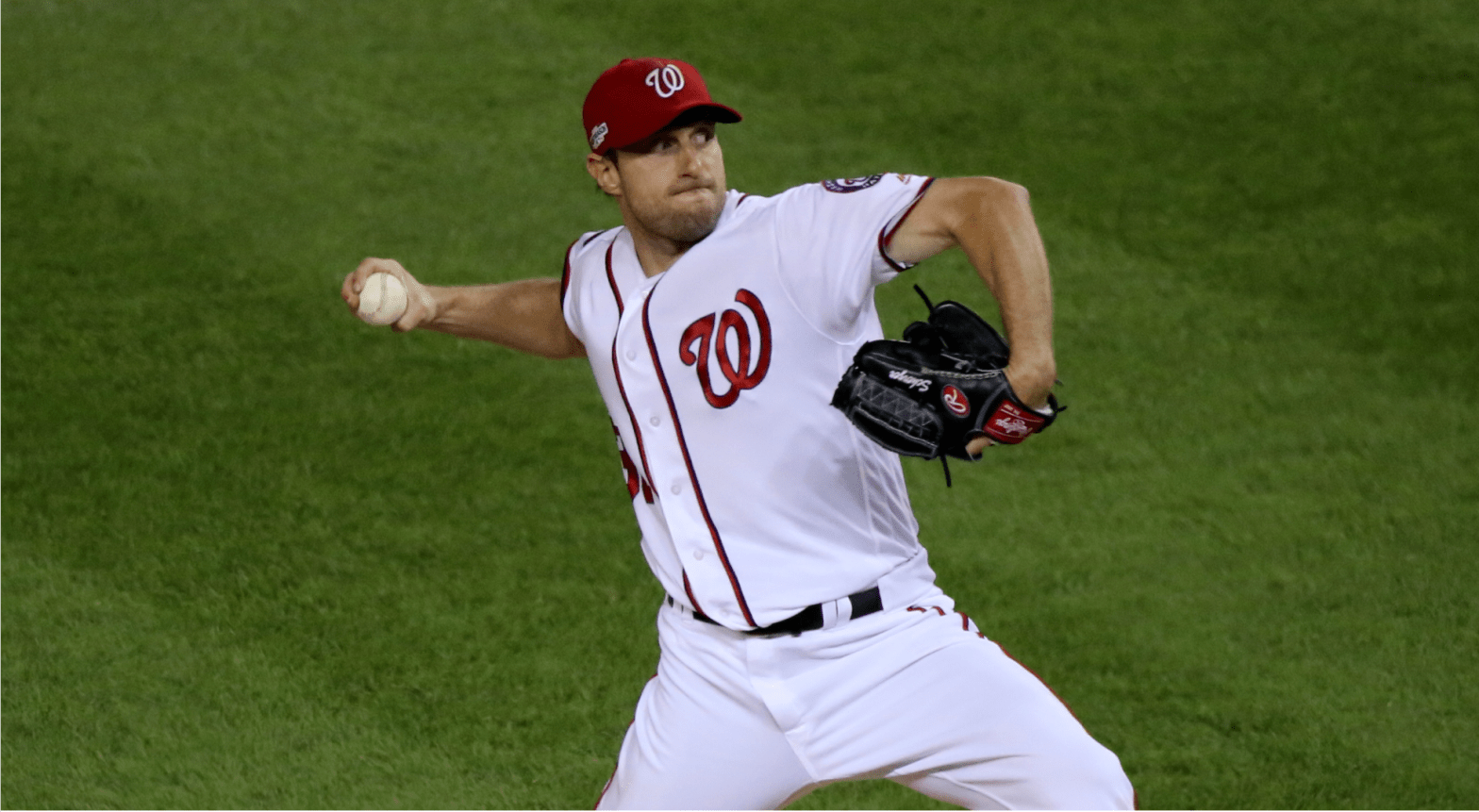
Max Scherzer delivers a pitch during Game 5 of the 2016 NLDS against the Los Angeles Dodgers on Oct. 13, 2016. Since arriving as a free agent in 2015, Scherzer has won two Cy Young Awards, and led the team to its first World Series title in franchise history. (Photo Credit: Wikimedia Commons)

By: Joe Pohoryles

Starting rotation

*= Still with team

^= Played with team prior to 2010

SP Max Scherzer* (2015-2019)

SP Stephen Strasburg* (2010-2019)

SP Gio Gonzalez (2012-2018)

SP Jordan Zimmermann (2010-2015)^

SP Tanner Roark (2013-2018)

Scherzer and Strasburg speak for themselves. Gonzalez and Zimmermann were consistently in the 2-3 roles in the rotation during their time in DC, putting up multiple respectable seasons and highlight performances. Each made a couple All Star teams, and even finished in the top 5 in the Cy Young voting in one season (Gio was 3rd in 2012, Zimmermann 5th in 2014).

Roark is maybe less obvious, and I considered placing Patrick Corbin here due to his role in the World Series title run, but the truth is Roark was a major part of this team before falling off toward the end. He trails only the four other starters on this list and Livan Hernandez in WAR for all Nats pitchers, with 17.3. He had 64 wins, a 3.59 ERA across 935 innings pitched and 732 strikeouts. For most of his time here, Roark was a high-end 4-5 pitcher, and earned his spot. Corbin has just one year under his belt in DC, but here’s to hoping he’s a no-brainer for the 2020s team.

Bullpen:

RP Tyler Clippard (2010-2014)^

RP Daniel Hudson (2019)

CL Sean Doolittle* (2017-2019)

Undoubtedly the worst part of the Nationals organization during their time in playoff relevancy, I opted to roll with two relievers and one closer. Any more would have been too generous. Doolittle has been the one bright spot since he was traded from the A’s, earning an All-Star appearance in 2018 before serving as one of the only true bullpen arms the team could rely on in the 2019 postseason. 

The only other pitcher who earns that same distinction was a Nat for just half a season (pending free agency). Hudson took over the closer position from a struggling Doolittle upon his arrival at the 2019 trade deadline, and immediately made major contributions, all the way to pitching the final out in Game 7 of the World Series, striking out Michael Brantley. Maybe I have recency bias, but I’d say championship performance elevates value, and frankly there are not too many candidates to replace him here. I’ll give Doolittle the closer distinction as that’s been his primary role, despite Hudson taking over.

Clippard was always a solid bullpen arm with the Nats, and while he was not always the designated closer, still managed to earn 34 saves with the team this decade. He pitched nearly 400 innings, had a 2.63 ERA, and struck out 455 batters. That excludes his first two seasons on the team in 2008 and ‘09. He made two All Star Games.

Perhaps Drew Storen could have a spot on here, but he blew crucial leads in the Nats’ first two playoff series (The decisive Game 5 vs. the Cardinals in 2012, then Game 2 vs. the Giants in 2014, one out away from tying the series 1-1). While he put together some solid regular season performances, the bad outweighs the good.

Line-up: (in order of position)

C Wilson Ramos (2010-2016)

1B Ryan Zimmerman (2010-2019)^

2B Daniel Murphy (2016-2018)

SS Ian Desmond (2010-2015)^

3B Anthony Rendon (2013-2019)

OF Jayson Werth (2011-2017)

OF Bryce Harper (2012-2018)

OF Juan Soto* (2018-2019)

Ramos is the best catcher the team has seen in the 2010s, and it’s not even close. He was the starter for most of his time here, and put in several solid seasons at the plate that peaked with a 2016 All-Star/Silver Slugger season before leaving for the Rays in free agency.

Zim is “Mr. National.” His better years were earlier in the decade, but let’s not forget he was an All-Star as recently as 2017, and he was fittingly the first National to hit a home run in the World Series. Forget about it.

Murph followed up a jaw-dropping 2015 NLCS with the rival Mets to be one of the Nats best hitters as a member of this team. His defense was a concern upon signing, and while he never performed close to a Gold Glove level, it was never as big of a liability that was expected.

The biggest toss-up on this entire roster is Desmond vs. Turner at shortstop. Desmond is 18th, and Turner is 19th in franchise history for WAR among position players (fourth and fifth if you only count Nationals, and exclude Jose Vidro, who played mainly with the Expos, and was a Nat for two seasons). I give Desmond the nod because he was the better defender, while Turner is just marginally the better hitter (and yet Desmond leads in both Offensive and Defensive WAR). Turner is no slouch on defense, but Desmond played a major role in leading the Nats to relevancy, so I’ll give him the slightest edge.

Tony Two-Bags played most of his career as the most criminally underrated player in baseball, finally getting national recognition in 2019 as a first-time All-Star, MVP finalist, inaugural First Team All-MLB third baseman and a World Series championship. That would be his final year in DC, but for the majority of his career he was the best two-way player on the team.

Werth’s arrival was yet another major move in turning this franchise around, and his veteran leadership may have outweighed his on-field production. He averaged 22 home runs and 79 RBIs per 162 games across seven seasons, and he delivered the biggest postseason moment in team history prior to 2019, forcing Game 5 in the 2012 NLDS with a walk-off home run. His play deteriorated as he got up in age, but his impact on the franchise is unquestionable.

And then there’s the Boy Wonder. Harper lit up the city, going first overall a year after Strasburg, debuting at 19 in 2012 and winning Rookie of the Year. Him and RG3 leading a new era of DC sports… what a shame. Before he angered fans by bolting to the rival Phillies after the 2018 season, Bryce was a major force and fan favorite. 

Overrated? Perhaps. He got an All Star slot in a couple seasons which he probably should not have. He also became the youngest unanimous MVP in 2015. He is currently 7th in WAR in franchise history for non-pitchers, and sits behind just Zim when counting only Nats. Harper never brought DC to the promised land, but that was not entirely his fault. And while we will boo him for the remaining 12 years of his mega deal, he was one of the best Nationals of the decade.

And then there’s the real Boy Wonder. The Magic Juan’d. Childish Bambino. He goes by many names, but Juan Soto broke onto the scene at just 19, in a similar fashion as his predecessor, Harper, who he shared a clubhouse with for just one season. While he did not generate as much hype, he certainly brought up as much flair and production, if not more. Beyond mashing at the plate, Soto’s defense from left field made him even more valuable. His second season led to a Gold Glove nomination, a Second Team All-MLB nod, and several game-changing moments in the World Series run. In just two seasons, Soto shuffled his way to franchise icon status, and his best is yet to come. Let’s just hope it comes in a Nats uniform.

Bench:

1B Adam LaRoche (2011-2014)

SS Trea Turner* (2015-2019)

2B Danny Espinosa (2010-2016)

1B/2B/OF Howie Kendrick* (2017-2019)

LaRoche was one of the better veteran bats in the lineup, and did not have many defensive duties as a first baseman. He finished 6th in MVP voting in 2012, and earned a Gold Glove and Silver Slugger selection in what was easily his best season.

I already spoke about Turner, who you could easily argue deserves the starting nod. It all depends on how you look at it.

Espinosa was not a good hitter by any means, with a .226 batting average in his seven seasons, but that was not what he was mainly paid for. He spent many years as the starting second baseman playing really stellar defense. He kept his error totals in the single digits in all but two seasons, and his fielding percentage was consistently in the .98-.99 range.

Much like Soto, you cannot tell the story of the Nationals this decade without bringing up Howie Kendrick. The 2019 playoff hero, he came up big in every series: a go-ahead grand slam in Game 5 of the NLDS to give the Nats their first postseason series win ever, an NLCS MVP earned by hitting all over the Cardinals, and a go-ahead two-run shot late in Game 7, solidifying the most improbable championship run. Looking past the 2019 postseason, he was still one of the best hitters in baseball from a batting average standpoint whenever he was healthy. Were there better players on the Nats this decade besides Kendrick? Yes, but he proved he belonged on this list more than once in October.

Washington Capitals 2010s All-Decade Team

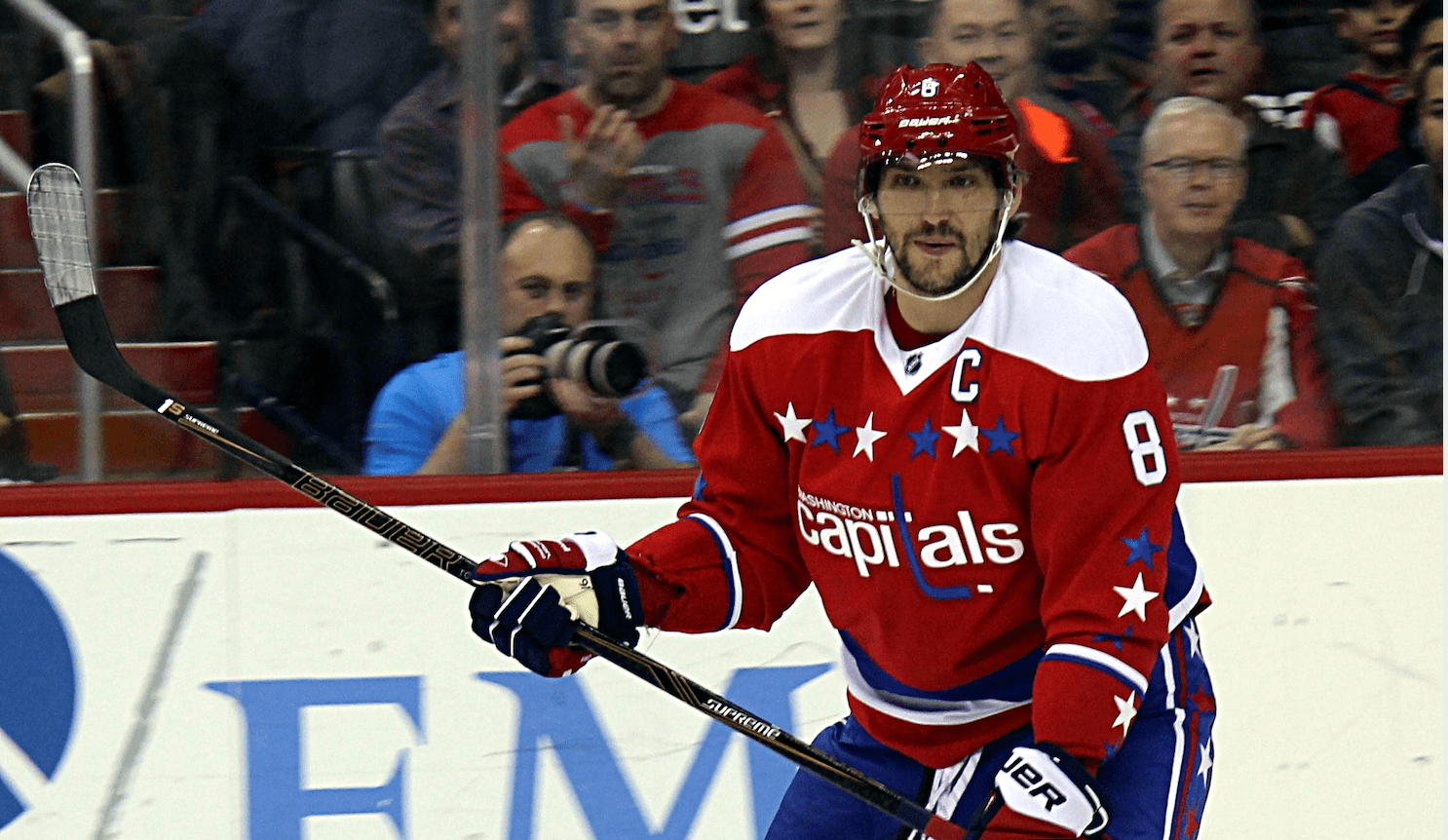
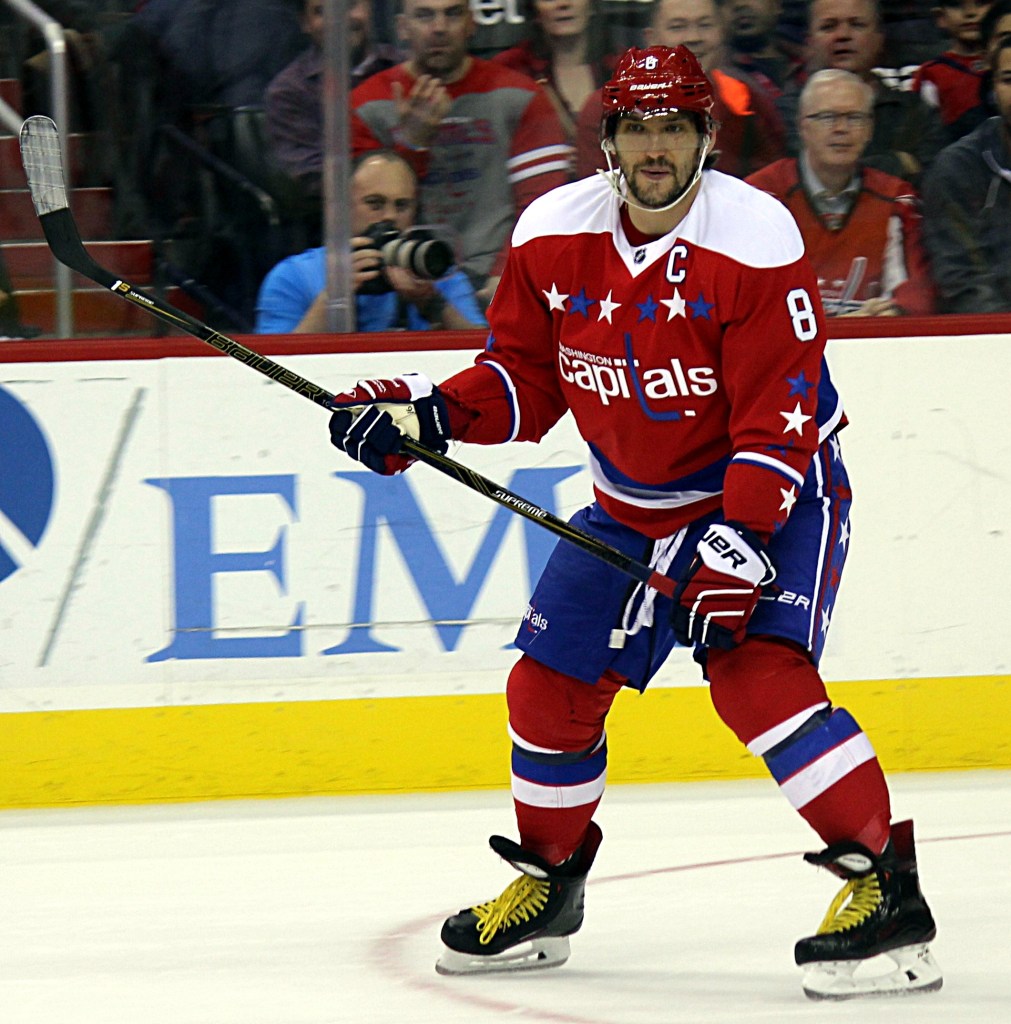
Alexander Ovechkin awaits a pass against the Pittsburgh Penguins on Mar. 1, 2016. The three-time Hart Trophy winner is the greatest player in franchise history, making his spot on the All-Decade Team obvious. (Photo Credit: Wikimedia Commons)

By: Joe Pohoryles

Forwards: (stayed true to C vs W, but not necessarily LW or RW)

*=still with team

^=on team prior to 2010

First line:

Alex Ovechkin* (2010-2019)^ 

Nicklas Backstrom* (2010-2019)^

TJ Oshie* (2015-2019)

Not much to explain here. Ovi is arguably the greatest scorer of all time, still chasing Wayne Gretzky’s goal record as of right now, and is the long-time face of the franchise. Backstrom is a future Hall of Famer leading the franchise in assists by a wide margin, and will undoubtedly join the Great 8 in the rafters when all is said and done.

Oshie is less tenured than the other names on this list, but since his trade from St. Louis he has been a fan favorite. He handles the puck like few others, is consistently among the top offensive producers, and fights for every loose puck on the boards til the whistle blows. He may be best known for his heroics in Sochi back in 2014, but fans in DC will remember his brilliance and work ethic for years to come.

Second line:

Marcus Johansson (2010-2017)

Evgeny Kuznetsov* (2014-2019)

Jason Chimera (2010-2016)

MoJo spent his seven seasons on the Caps as a middle six forward, and could be counted on to provide 40-50 points each season. He was never a star, and could be streaky with his goal-scoring, but with 290 points (102g, 188a) across 501 games in DC, MoJo ranks 26th in franchise history and seventh among players who were with the team for at least five seasons since 2010. A strong, if understated, presence on the team.

Kuzy brings a level of swagger and skill to his game that makes him so fun to watch. He has had some ups and downs in terms of production, but at his best he’s one of the best centers in the game. He made a case for the Conn Smythe in the 2018 Cup run, scoring more points (32) than anyone in a single postseason since Evgeni Malkin in 2009. He vanquished Malkin’s squad to get out of the second round for the first time in the Ovechkin era, and will hopefully play a large role for this team for a long time.

Chimera spent his entire Caps career on the wrong side of 30, but nevertheless managed to play nearly every game each season, never missing more than six games, and playing all 82 three times. His speed may have been even more impressive, using his jets to beat guys 10 years his junior to pucks. He was never a marquee name, but he was a consistent piece in a squad that saw a lot of turnover.

Extra Skater:

Tom Wilson* (2013-2019)

Wilson probably needs one more quality season to surpass Chimera for the final second line spot, but that will of course take place in 2020. Initially a fourth-line bruiser, Wilson has come into his own as a legitimate top-six forward capable of doing damage, and not just on the opposing players. Hated by every other fanbase, and loved dearly by his own, Wilson has stepped up his game every season in recent years. At age 25 and already in his seventh full professional season, Wilson is well on his way to all-time Caps greatness, if not more. I also considered Brooks Laich as the extra skater, but the long-time Cap’s best years were prior to 2010.

Defensemen: (Best D regardless of L or R)

Top pair:

John Carlson* (2010-2019)^

Mike Green (2010-2015)^

Overlooked for years as one of the NHL’s top defensemen, Carlson is finally getting attention on the national stage, but he has been the Caps’ best blue liner for a long time. While he protects his own netminder, Carlson is no stranger to terrorizing others. He sits 10th in franchise history for points, and is a good bet to be ninth by the end of this season, which would mean passing the only defenseman ahead of him on the list (Sorry, Calle Johansson). On the first year of an eight-year mega-extension, Carlson should continue to command the blue line in DC for years to come.

Green spent 10 seasons in DC, five of which came after 2010. He was one of the most productive defensemen in the league. He led all defensemen in goals during the 2012-13 season, and he even earned a reputation of notching game-winning goals in the third period or overtime, developing the moniker “Game Over.” A two-time Norris trophy finalist, Green also got things done in the defensive end, and quickly became a fan favorite.

Second pair: 

Karl Alzner (2010-2017)^

Matt Niskanen (2014-2019)

Never quite reaching the level of a fifth overall pick, Alzner was consistently a top four defensemen that could always be relied on to put in quality minutes. He holds the record for most consecutive games played with the franchise, at 423, so he was always a key blueliner during his time here. He left the summer before the 2017-2018 season for the Canadiens, citing he “wanted to win,” which left a sour taste in fans’ mouths. Of course, the Caps went on to win the Cup that next season, and Montreal missed the playoffs entirely. Still, Alzner deserves the spot.

Nisky was fourth behind Ovi, Backstrom and Carlson when it came to most NHL games played without appearing in a Stanley Cup Final among active players. That, of course, all changed in 2018, and he played a major role in that. He was not quite as tenured in DC as the other defensemen on this list, but he was relied on as heavily as any of them, averaging over 20 minutes of ice time each season, bringing strong defense any time he stepped on the ice.

Goaltender:

Braden Holtby* (2010-2019)

This position is the easiest one to decide. Holtby has pretty much retained the starting netminder position since he reached the NHL. He has made several All Star teams and won a Vezina trophy in the process. Oh yeah, he also backstopped the team to a Stanley Cup. This could be his final season in Washington, but Holts has been one of the top goaltenders in hockey for most of his career, and (I’ll say this at the risk of upsetting the old heads) rivals Olie Kolzig for best in franchise history. This one’s a no-brainer.

Washington Wizards 2010s All-Decade Team

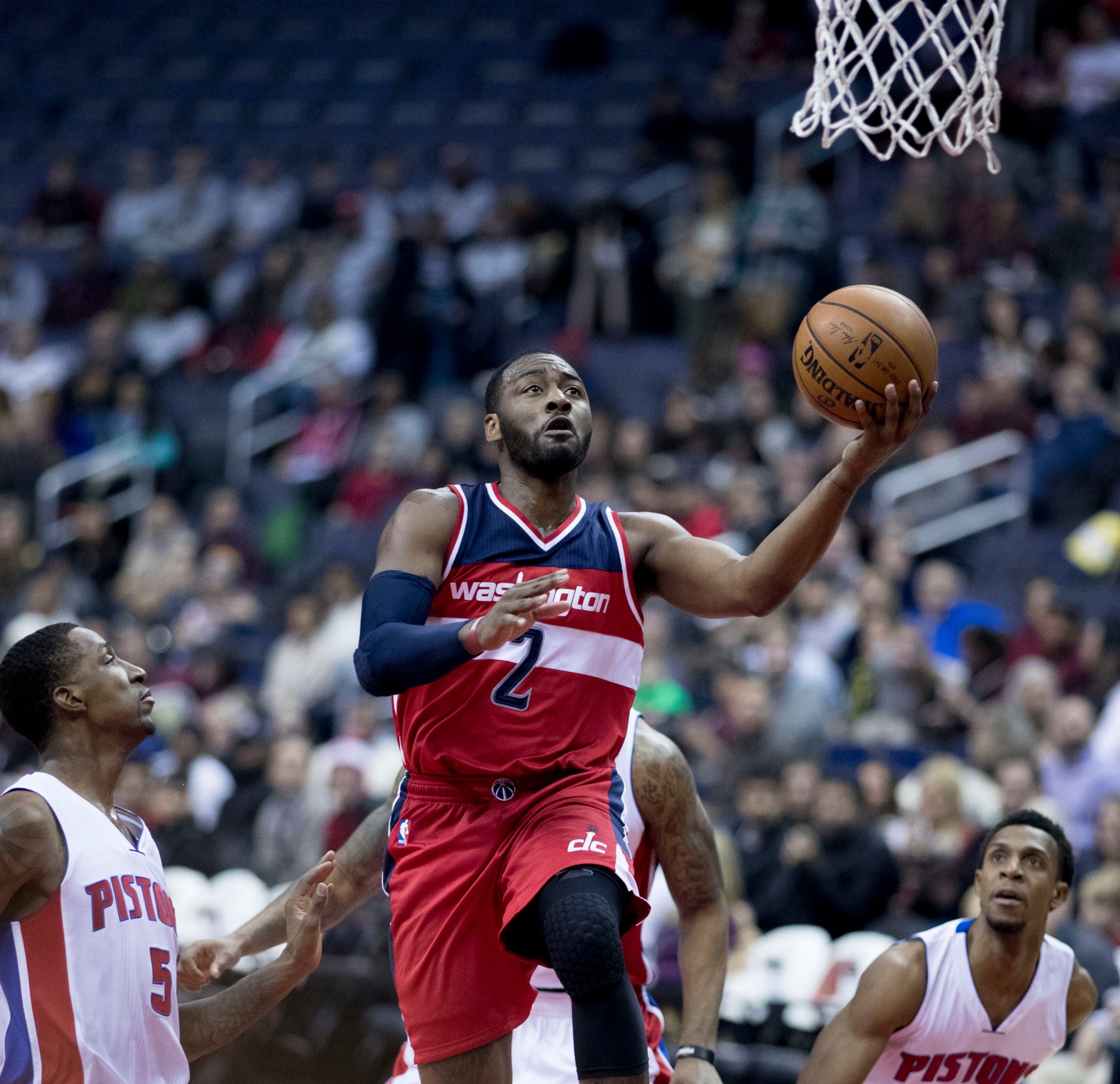
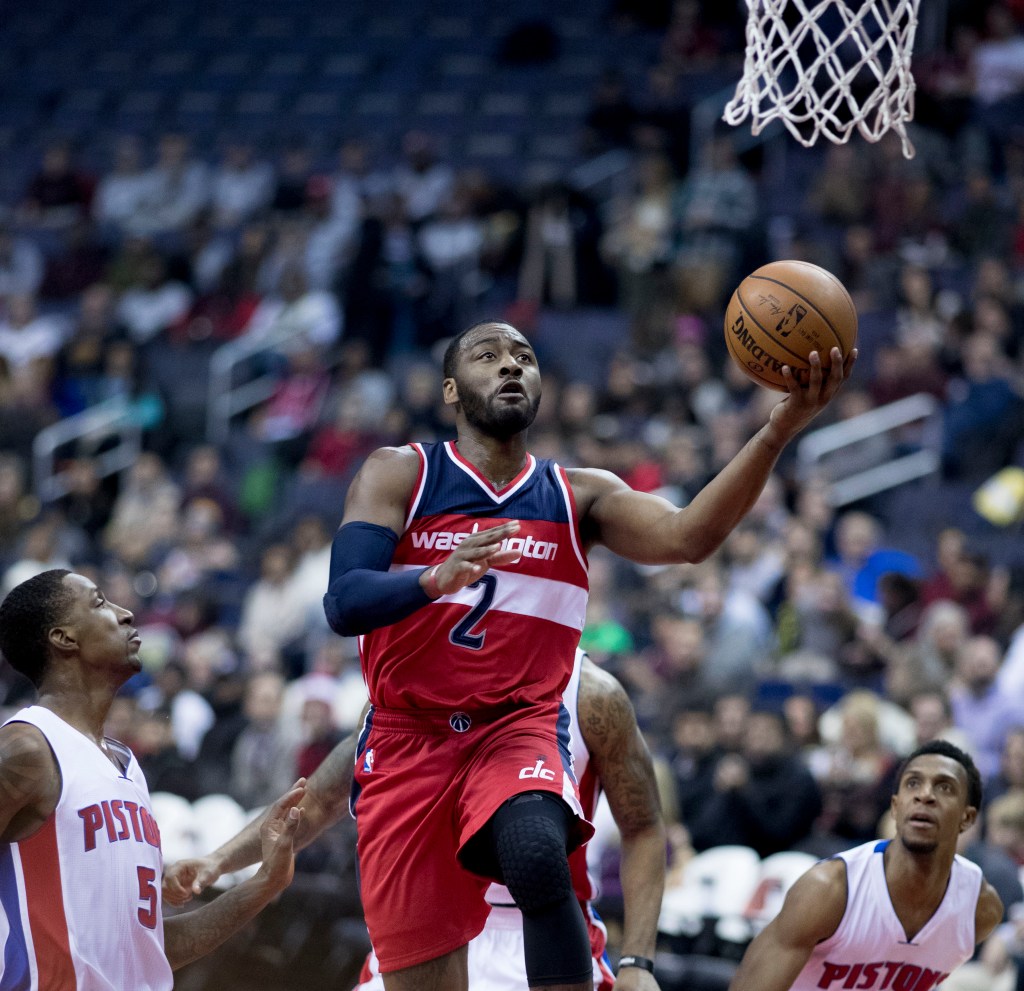
John Wall soars in for a layup against the Detroit Pistons on Dec. 16, 2016. Wall has made an All-NBA team in addition to five All-Star teams since being drafted as the franchise savior in 2010. (Photo Credit: Wikimedia Commons).

By: Joe Pohoryles

Starters:

*= still on team

Backcourt:

G: John Wall* (2010-2019)

G: Bradley Beal* (2012-2019)

Need I explain either of these?

1st and 3rd overall picks, respectively. Seven combined All-Star appearances. One All-NBA point guard, and one should-be All-NBA shooting guard. The unquestionable faces of the franchise. ‘Nuff said.

Frontcourt:

F: Otto Porter Jr. (2013-2019)

F: Markieff Morris (2016-2019)

C: Marcin Gortat (2013-2018)

No disrespect to these three, but the quality drops off significantly after Wall and Beal. Porter had some good seasons, but never really became what one would expect from a third overall pick (albeit, he came from a notoriously weak 2013 draft class… sigh, twelve picks before Giannis). That said, he improved every season and became a reliable starter, and sits as the third-most tenured Wizard of the decade behind the All-Star backcourt, playing parts of six seasons.

Morris arrived in a deadline trade in 2016 and served as the team’s main power forward for several solid seasons before departing in another deadline trade to the Thunder.

Gortat was Wall’s main pick-and-roll partner, leading him to a top ten 2-pt field goal percentage in the league across three consecutive seasons (2015-2017). His defense deteriorated down the stretch, but the Polish Hammer played a key role in each playoff run as the main center of the decade.

Bench:

F: Nenê Hilário (sixth man) (2012-2016)

Difficult decision between him and Morris, as both put up similar stats in the same role, but a prime Morris was a better player than Nenê playing on the wrong side of 30. Would not be a stretch to consider him the All-Decade PF, as he played a big role in turning the Wizards into a perennial playoff team before his departure.

F: Kelly Oubre Jr. (2015-2019)

“Wave Papi” took the league by storm on the fashion circuit before making too much noise on the court, but the promise he showed in his first three-and-a-half professional seasons was undeniable. In his sophomore and third year, he played 160 of 164 possible games, averaging double-digit points (11.8) for the first time in the latter season. He has jumped to the next level since being traded to the Suns, this year averaging 17.1 points as a starter for their best team in years. Barring a return, his best years will not be in Washington, but he still made his mark on this team.

F: Paul Pierce (2014-2015)

Pierce made a greater impact for the Wizards in just one season than countless others did in recent memory, and it feels weird to put him here, but Game 3 against the Hawks in the 2015 second round, where he “called game,” is the second-greatest Wizards playoff moment of the decade behind Wall’s Game 6 “This is my city!” series-saving three against the Celtics in 2017 (as sad as that list may be). Pierce had a series-saving shot of his own in Game 6 of that Hawks series waved off, ending the season and his time as a Wizard.

Pierce will always be remembered as a Celtic, but his 2015 playoffs and the leadership he instilled in Wall and Beal stamped its mark on the franchise, and I believe he should be recognized for that.

Honorable Mention: I did not want to make the bench all forwards, but the next best guards essentially boiled down to Tomas Satoransky and Garrett Temple. Sato performed admirably in Wall’s place last season, and was a serviceable bench piece, but only had one strong season (without the same impact as Pierce). Temple was nothing more than a backup guard who really only comes into the conversation due to his length of time with the team, and I didn’t feel either justified a true position, but I’ll leave them in as honorable mention as if we had to fill backup guard spots in this All-Decade roster.