DC Sports By The Numbers (60-69)

By: Joe Pohoryles

The Washington, D.C. sports teams have seen plenty of athletes do incredible things while representing the nation’s capital. One of the most recognizable features of these athletes is the numbers they sport on their uniforms.

As we forge on in these times with little going on in the sports world, I will spend the next week-and-a-half exploring which players were the best to wear every possible jersey number, continuing today with 60-69.

Of course comparing players across different sports is difficult, but this will take a look at the most impactful and iconic DC sports figures. Some of the names on this will be more prominent than others; several lesser worn numbers will merely be default picks. In any case, it should be interesting to see the distribution.

If you missed the earlier parts of the list, you can find them here: 0-9, 10-19, 20-29, 30-39, 40-49, 50-59

(Note: For NBA and NHL, a player’s tenure is marked by the year their first season ended until the year their final season ended. For example, John Wall was drafted in 2010 and was a rookie in the 2010-11 season, but since the season ended in 2011, his tenure is listed as 2011-present. This is not necessary for MLB — where the entire season is played in the same calendar year — or NFL — where only the postseason is played in a different calendar year.)

*= the player’s tenure on the team extended longer before or after the stated dates, but said player wore a different number in those other years

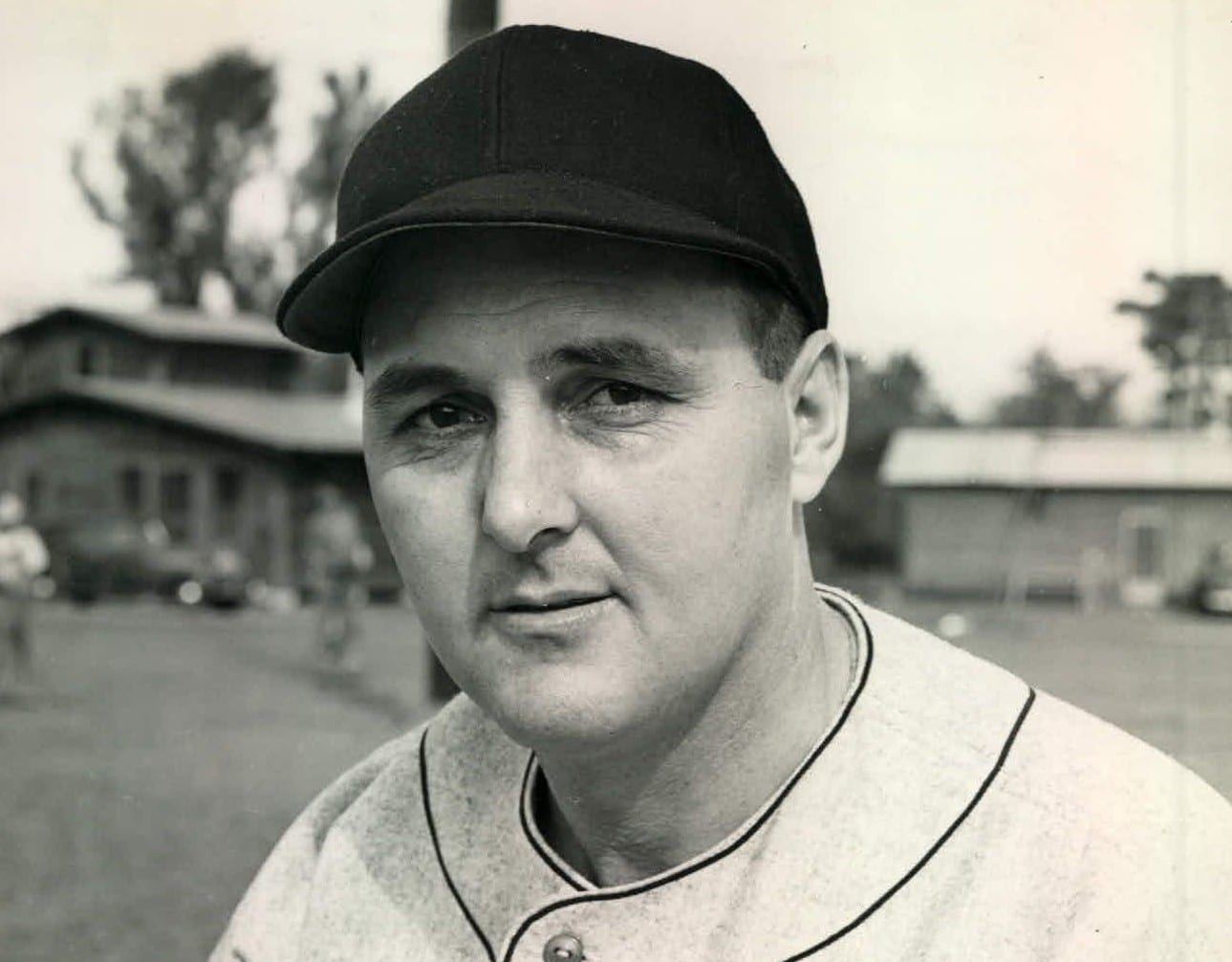
60) Chris Samuels, Washington Redskins’ offensive tackle (2000-2009)

Runner-up: John Wilbur, Washington Redskins’ guard (1971-1974)
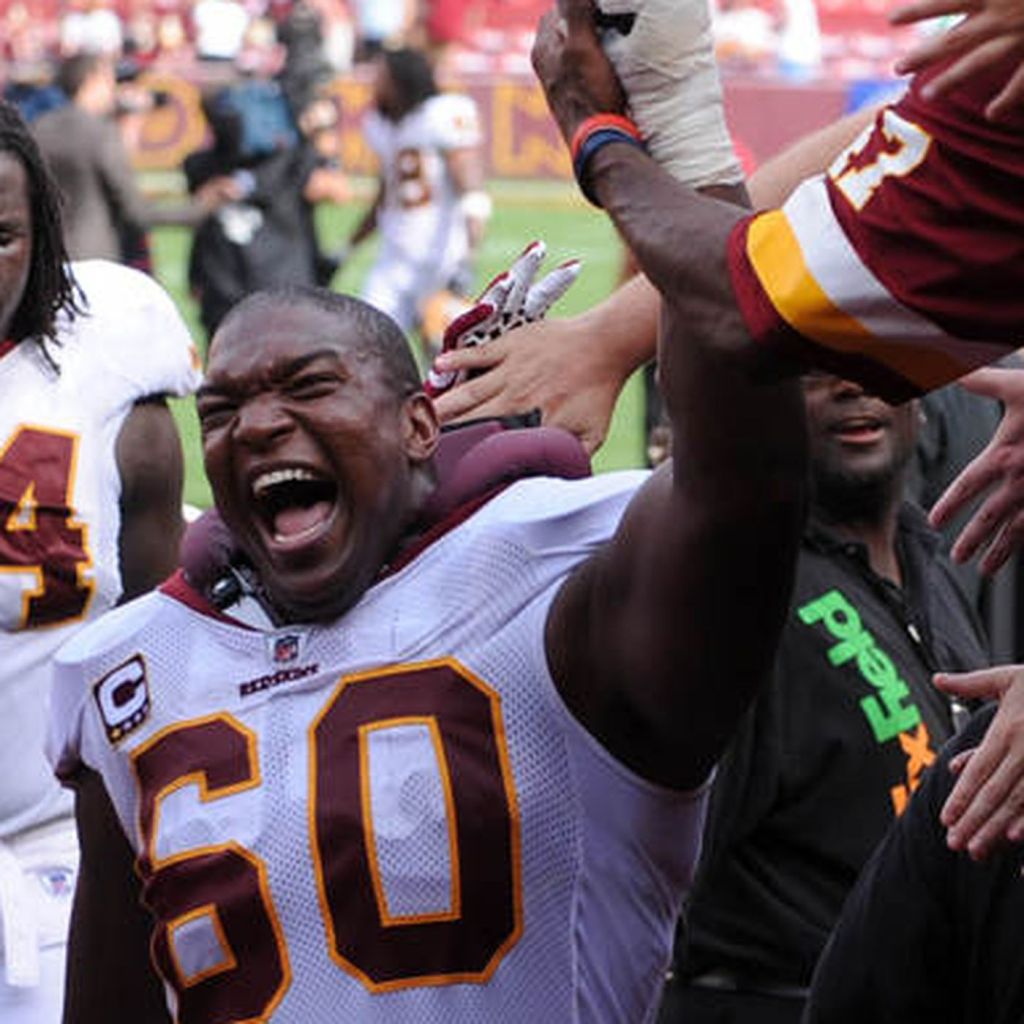
Photo Credit: SB Nation Hog Haven

Samuels spent all 10 NFL seasons in Washington as the star left tackle, starting all 141 games he played out of a possible 160. The six-time Pro Bowler was selected third overall in the 2000 draft right after the team picked LaVar Arrington second. The Alabama native was the team’s top offensive lineman of the 2000s, and once he retired he remained in the area, working as an offensive coordinator for Winston Churchill High School in Potomac followed by Northwest High School in Germantown as of 2019.

Wilbur spent time with the Dallas Cowboys and Los Angeles Rams before coming to DC, helping the team to Super Bowl VII in 1972. Though he was not an all-time great offensive lineman, Wilbur had a lasting effect on the league. He was among the first players to tighten his jersey sleeves, which soon after became adopted league-wide. He also served as treasurer for the NFLPA.

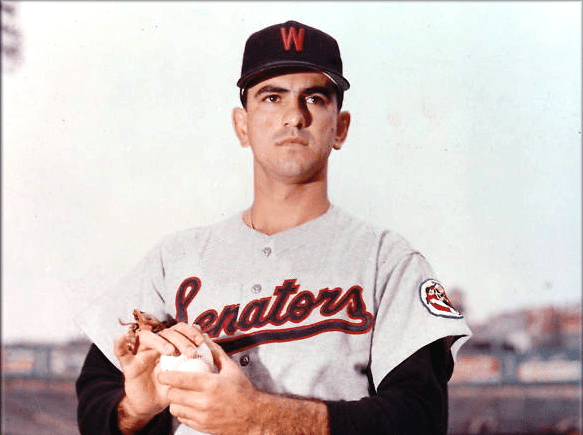
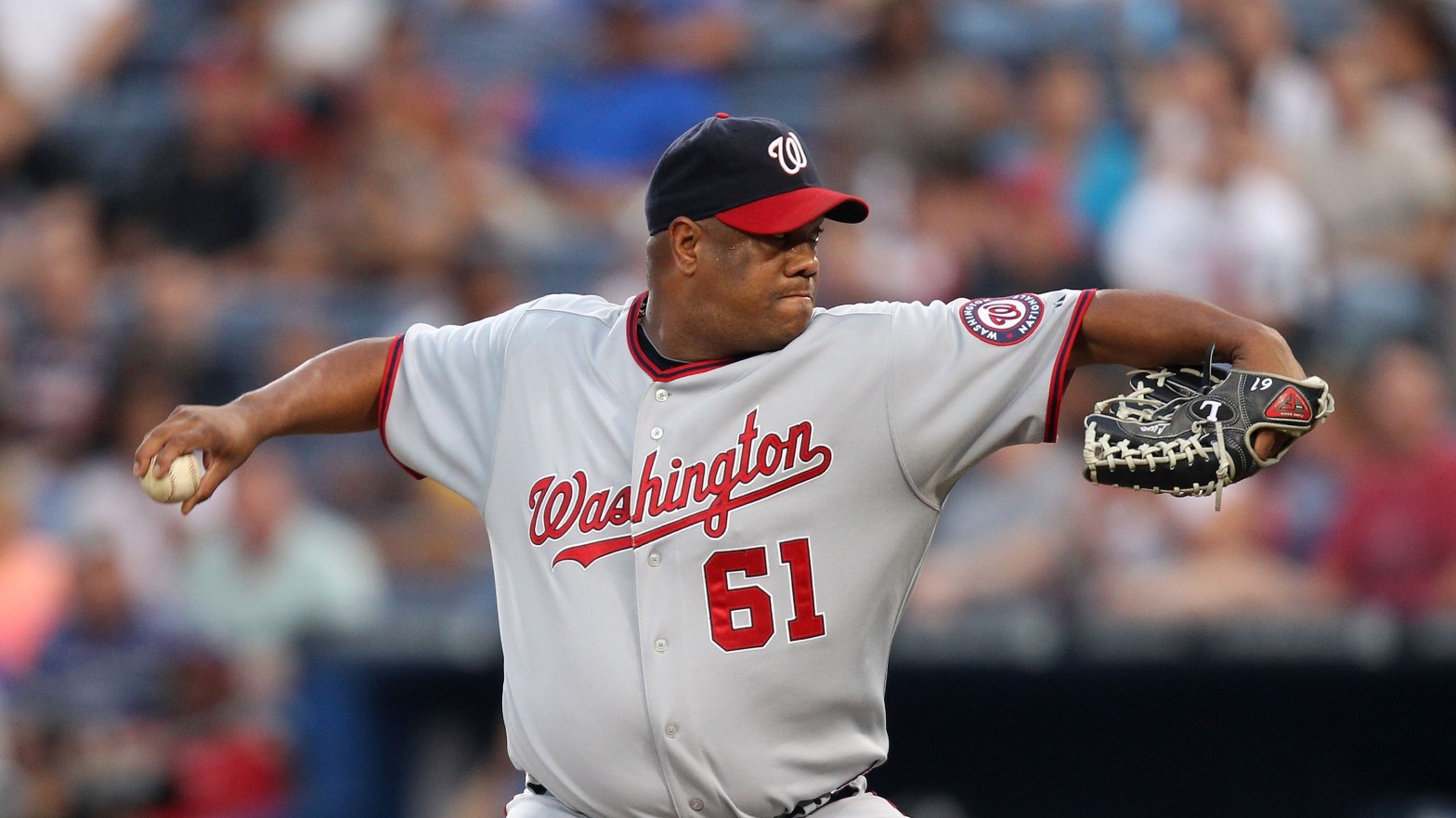
61) Livan Hernandez, Washington Nationals’ pitcher (2005-2006*, 2009-2011)

Runner-up: Fran O’Brien, Washington Redskins’ tackle (1960-1966)
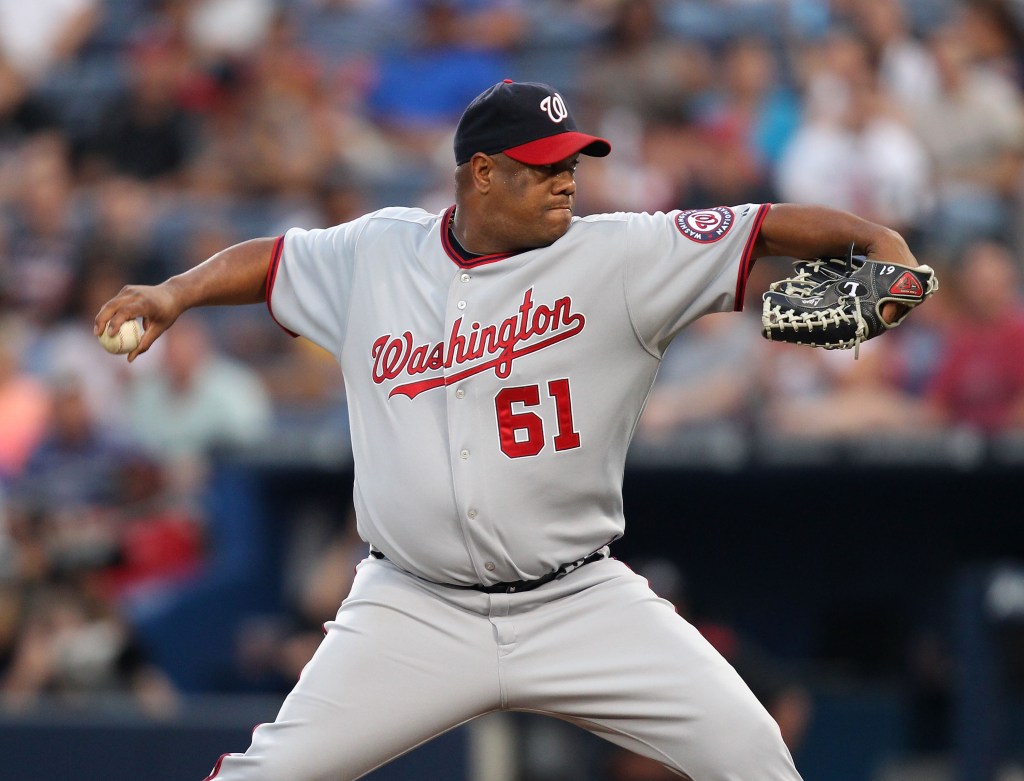
Photo Credit: Mike Zarrilli/Getty Images

Hernandez became famous as one of the first prominent Cuban defectors to reach the major leagues, along with his brother Orlando “El Duque” Hernandez. He rose to fame by winning NLCS MVP and World Series MVP with the Florida Marlins in 1997. He was with the Expos when they moved to DC to become the Nats, and was one of the team’s first ever All-Stars in 2005. He left after ’06, but returned in ’09 for a second stint. In 2010, he was second on the team in WAR (and first among pitchers) with 3.1.

O’Brien spent just over six seasons as a starting tackle, mainly on the right side. Though he spent limited time in Cleveland and Pittsburgh, he spent the majority of his career in DC. After retiring in Pittsburgh, O’Brien returned to the DC area to manage restaurants in Washington, Annapolis and Rehoboth Beach.

62) Sean Doolittle, Washington Nationals’ pitcher (2017-2018*)

Runner-up: Ray Schoenke, Washington Redskins’ guard (1966-1975)
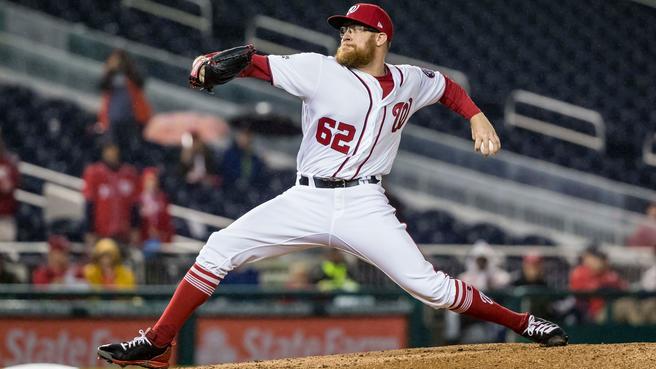
Photo Credit: USA Today Sports

Doolittle remains on the Nats, but he switched to No. 63 in 2019. He had proven himself as the bullpen’s most reliable arm since he was traded from Oakland in 2017, and he was named to the All-Star team in 2018. His 2019 season was not as strong, but only Daniel Hudson and he were the true relievers trusted to pitch in close games during the 2019 postseason run. Once baseball resumes, he’ll be back setting up and making saves for the team.

Schoenke was a warrior on the offensive line for the Skins. After bouncing around between the Cowboys, Browns and Green Bay Packers for the first few years of his career, he found his footing in Washington and held a starting spot in the offensive line for the better part of 10 years. Nicknamed “The Mummy,” for the number of injuries he sustained and the amount of tape that he needed (he later underwent five surgeries and two knee replacements), Schoenke continually to provide solid protection for the team’s skill players.

63) Raleigh McKenzie, Washington Redskins’ guard/center (1985-1994)

Runner-up: Rod Breedlove, Washington Redskins’ linebacker (1960-1964)
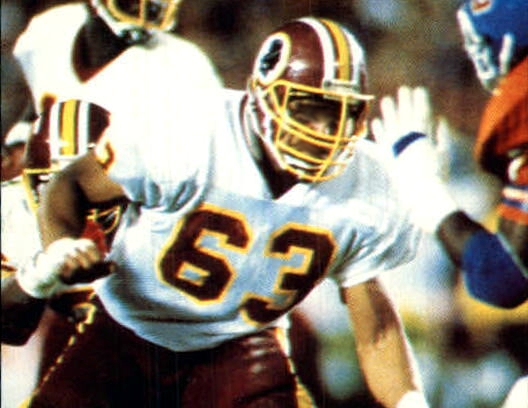
Photo Credit: Wikimedia Commons

McKenzie was a versatile piece in a Redskins’ offensive line that won two Super Bowls (XXII and XXVI), starting in all five offensive line positions throughout his career, but mainly playing center and guard. One of the more underrated players in that era, McKenzie still made the 70 Greatest Redskins list. His brother, Reggie, was the general manager from 2012-2018 after an NFL career of his own.

Breedlove, a Cumberland native and former Terrapin, ended up in Washington and spent the middle three of five seasons as the team’s starting right outside linebacker. He made the Pro Bowl in ’62, totaling three interceptions and three fumble recoveries that season. Absolutely no disrespect intended, but he may have the most porn star-sounding name that I’ve ever encountered. If only he wore No. 69…

64) Kedric Golston, Washington Redskins’ defensive tackle (2006-2016)

Runner-up: Ron Saul, Washington Redskins’ guard (1976-1981)
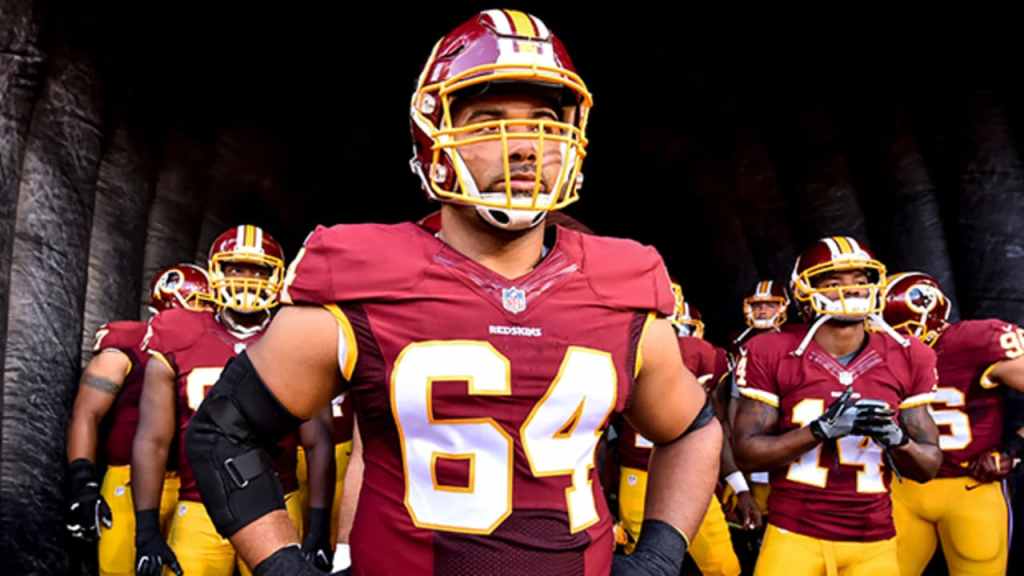
Photo Credit: Redskins.com

Golston was a consistent force on the Redskins’ defensive line, shuffling in and out of the starting lineup throughout his 11-year career, played entirely in Washington. He remained in the area after his career ended, as he works real estate and runs a Pilates studio in Ashburn.

Saul started his career in Houston, but never really held down a starting position until he came to Washington. He was the team’s starting left guard from 1975-1981, just missing out on the team’s first Super Bowl, but still providing solid coverage in his time here.

65) Dave Butz, Washington Redskins’ defensive tackle (1975-1988)

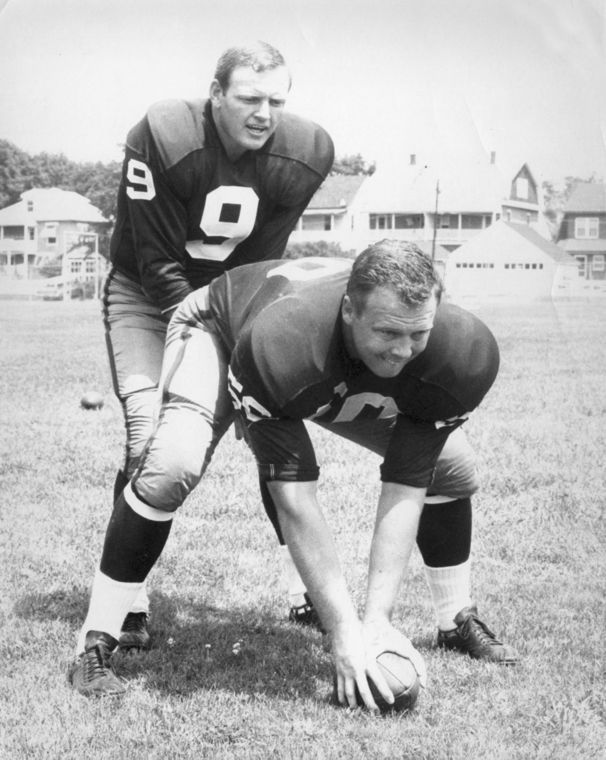
Runner-up: Vince Promuto, Washington Redskins’ guard (1960-1970)
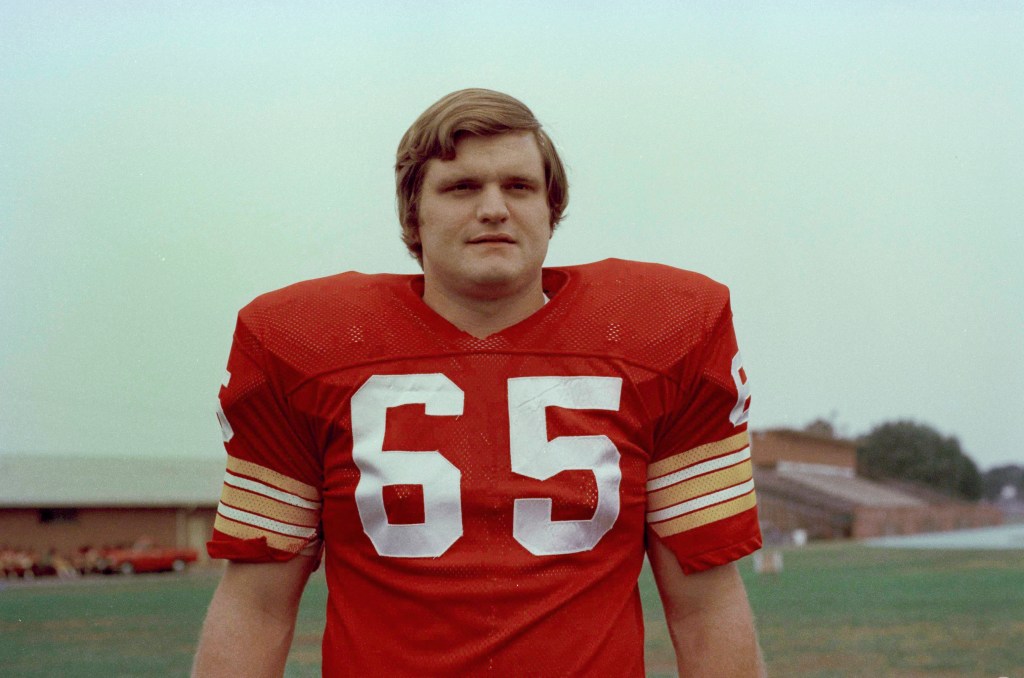
Photo Credit: AP Photo

Butz was one of the NFL’s best defensive players in the 1980s, peaking in 1983 when he was named First Team All-Pro and Defensive Player of the Year. At 6’8″ and north of 300 pounds, Butz was an absolute nightmare to play against. He remained a starter on the defensive line well into his 30s, starting all 16 games in 1988 at 38 years old, his final season. The league started tracking sacks mid-way through his career, so he is credited with just 35.5, but it is estimated that he accumulated roughly 59.5.

Promuto spent his entire career in Washington, starting 112 games mainly at right guard. He made the Pro Bowl twice in ’63 and ’64. He was one of the team’s better offensive linemen of the 1960s.

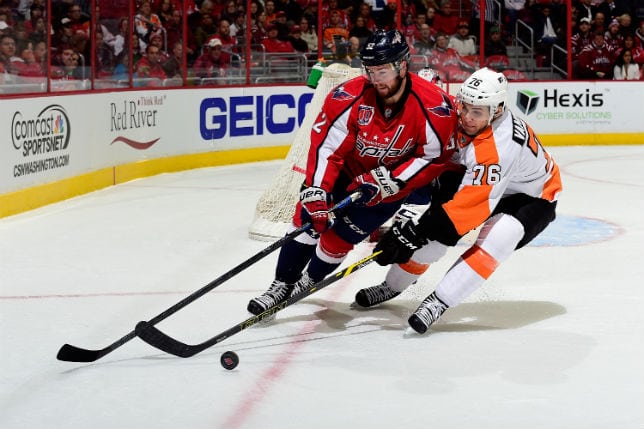
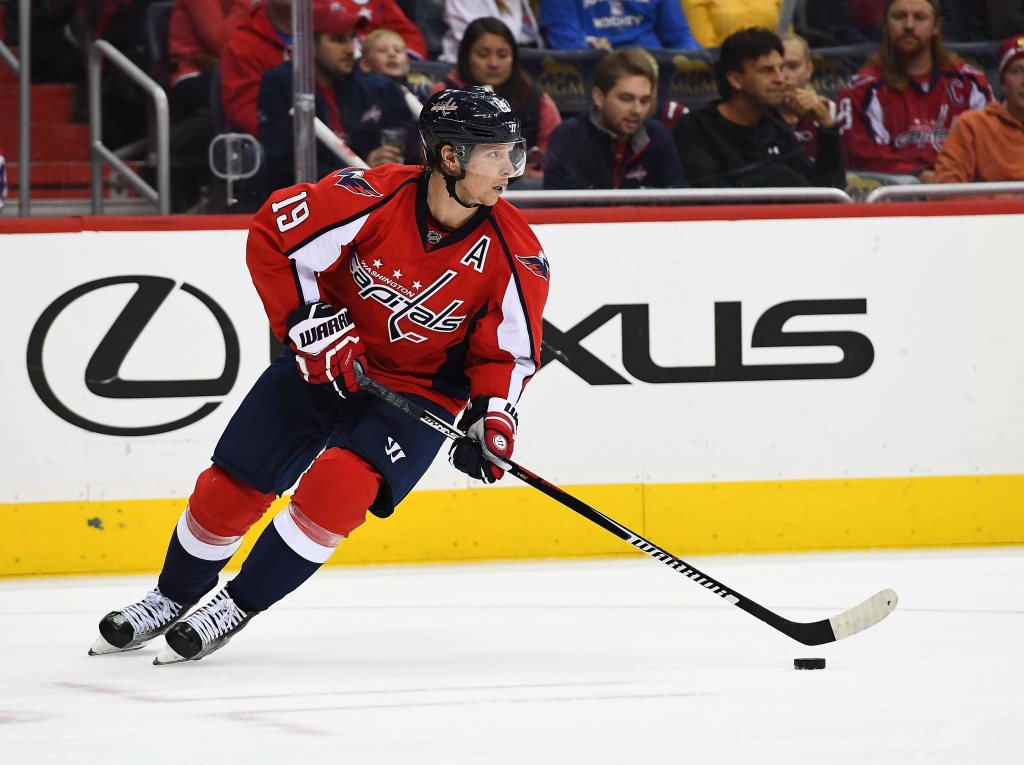
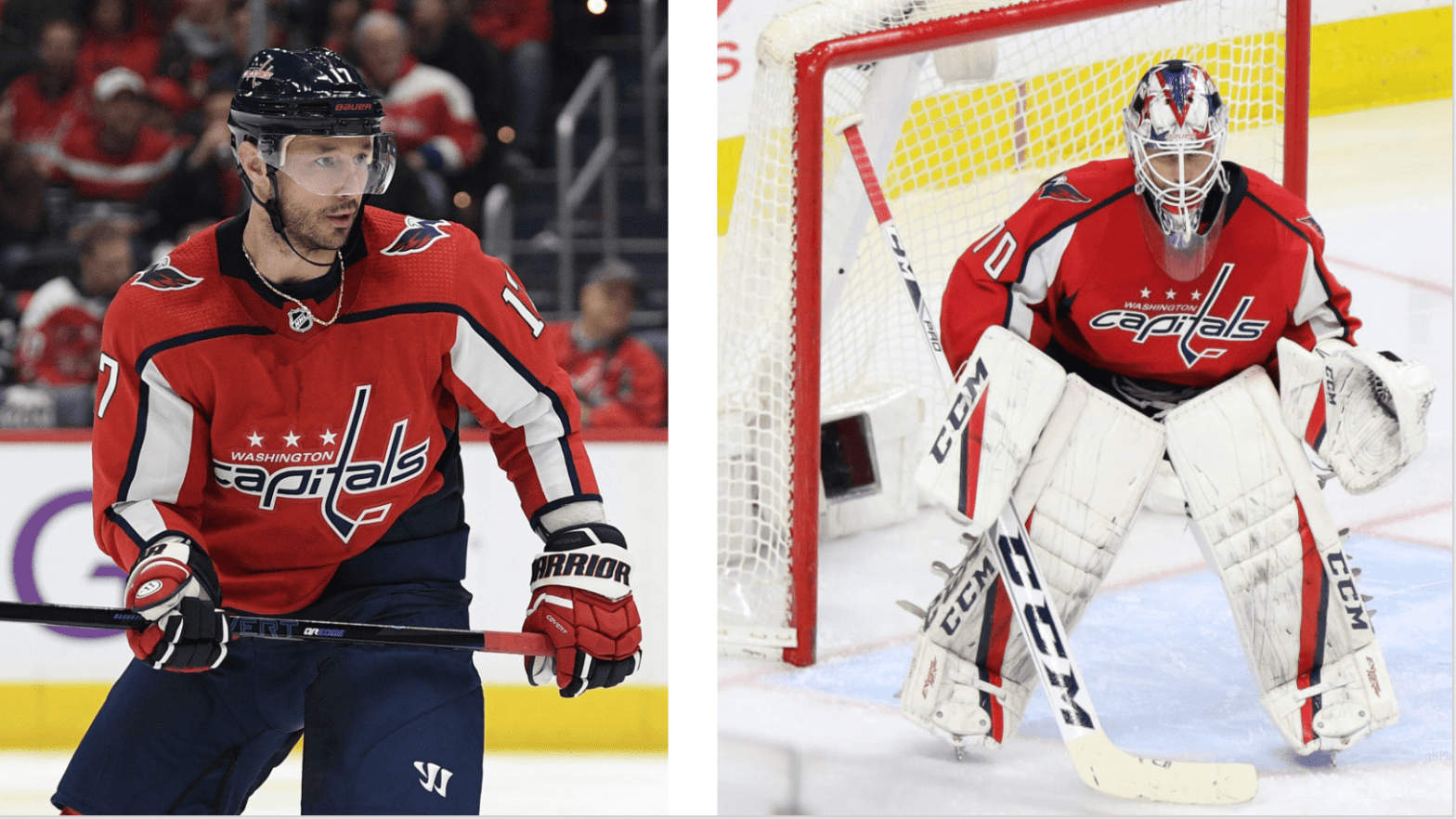
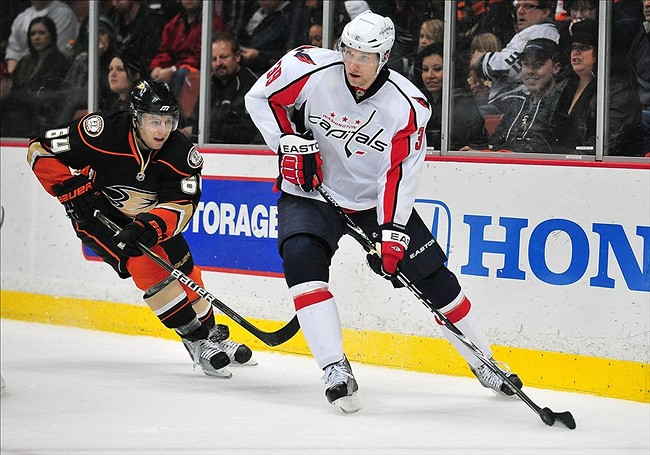
Andre Burakovsky was among the Capitals’ most promising young players, but with such a loaded lineup, he had difficulty standing out, and his inconsistent play frustrated coaches and fans alike. Though he left the team after 2019 and found a better role in Colorado, Burakovsky will be remembered in Washington for his two goals in the 4-0 Game 7 win in the 2018 Eastern Conference Finals to send the team to the Cup Final. Had he lasted longer and done more, he would have officially made this list.

66) Joe Jacoby, Washington Redskins’ offensive tackle (1981-1993)

Runner-up: Chris Chester, Washington Redskins’ guard (2011-2014)
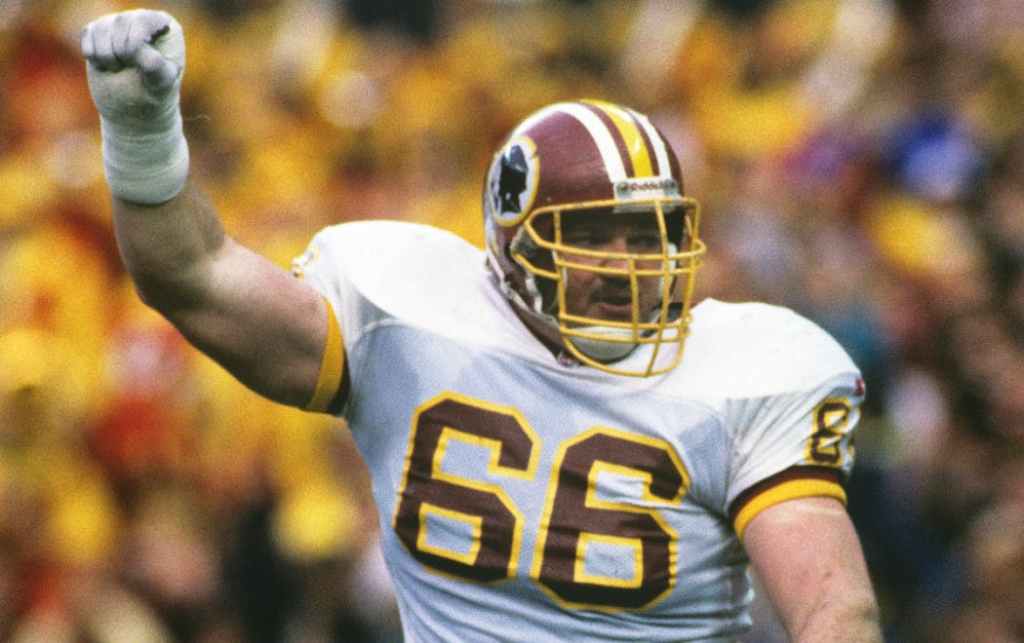
Photo Credit: Sports Illustrated

A founding member of “The Hogs,” Jacoby was on the team for all three Super Bowl wins, and he is arguably the best player in the team’s history to not be in the Hall of Fame. His biggest moment in an incredible career was probably as the lead blocker in John Riggins‘ iconic rushing touchdown in Super XVII. Jacoby made the Pro Bowl four years in a row from 1983-1986, and was First Team All-Pro in ’83, ’84 and ’87.

Chester started all 64 games in his four seasons with the team. He was no superstar, but in an offensive line that saw plenty of turnover due to injuries, Chester’s constant presence and solid blocking was a valuable piece for the offensive line.

67) Ray Brown, Washington Redskins’ guard (1989-1995, 2004-2005)

Runner-up: Rusty Tillman, Washington Redskins’ linebacker/kick returner (1970-1977)
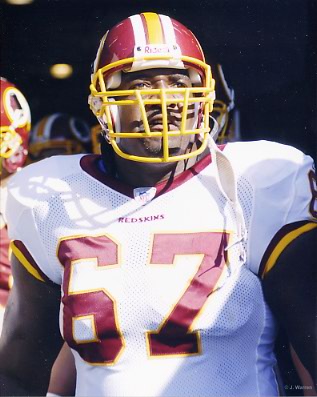
Photo Credit: Google Images

Brown spent 20 seasons as a quality lineman for a handful of teams, and he made the Pro Bowl in 2001 with the San Francisco 49ers. He missed the entire 1991 season in Washington with an injured elbow. Of course, the team won the Super Bowl that year, so he missed out on the team’s run. He rejoined the team in ’04 at age 42, starting in 14 games. The following season he played in all but one regular season game, and became one of the oldest players to start in a playoff game.

Tillman spent his entire career in Washington, but spent most of his time as a second-unit linebacker, starting just three games out of the 107 he played. He had a bigger role in special teams, where he was nicknamed “The King.” He played seven different special teams positions and served as a captain from ’74 to ’77.

68) Russ Grimm, Washington Redskins’ guard (1981-1991)

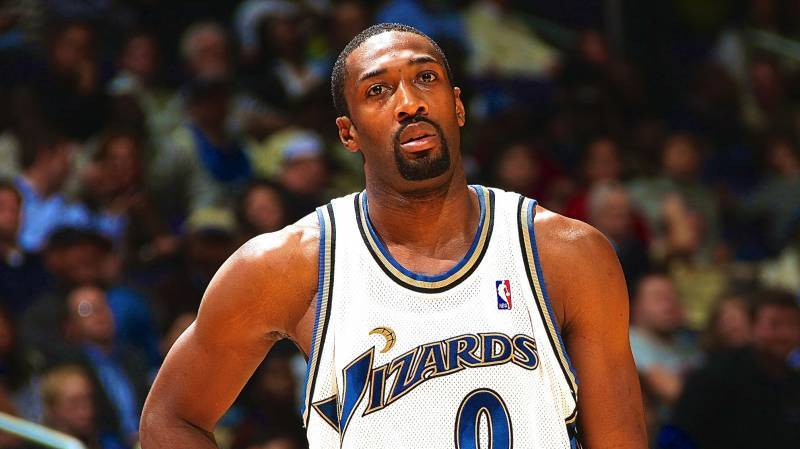
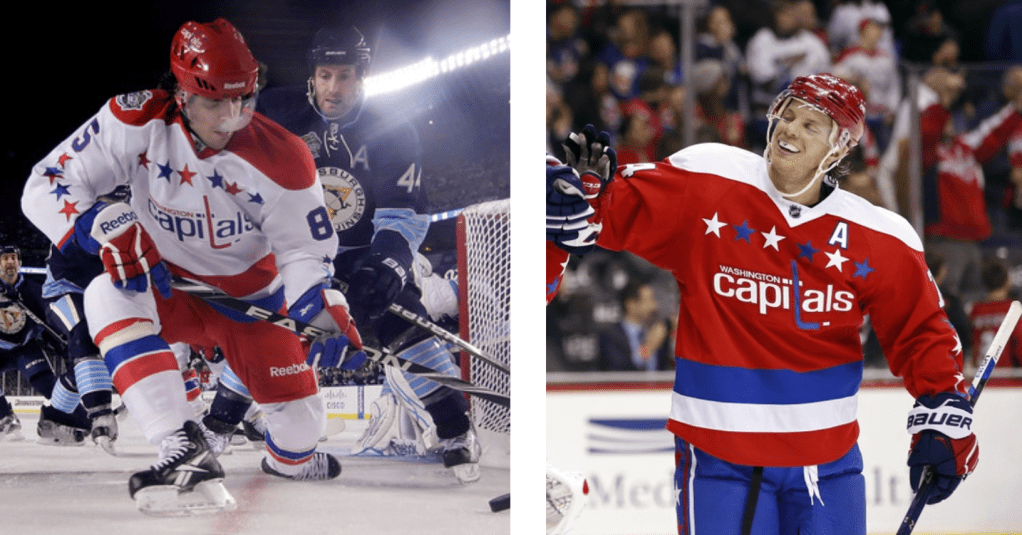
Runner-up: Jaromir Jagr, Washington Capitals’ (2002-2004)
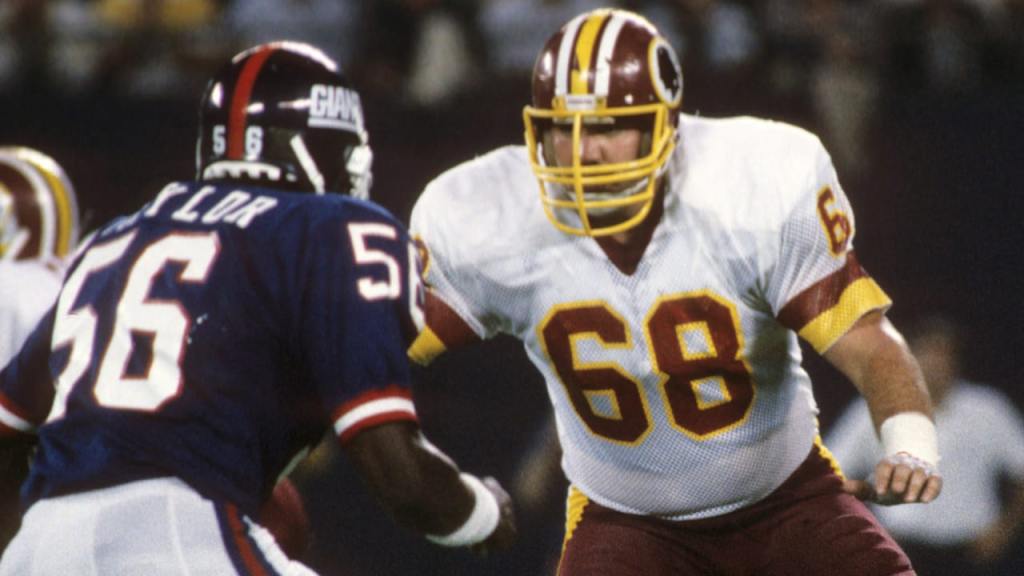
Photo Credit: Redskins.com

Another headlining member of “The Hogs,” Grimm played on all three Super Bowl-winning teams and is one of the best offensive linemen in franchise history. He went to the Pro Bowl and was named First Team All-Pro in the same four seasons from ’83 to ’86, and he was named to the NFL 1980s All-Decade Team. He was inducted into the Hall of Fame in 2010.

Jagr has the second-most points in NHL history behind Wayne Gretzky, playing 24 NHL seasons, playing from as early as 18 to as late as 45 (and he still plays in Europe today at 48 years old). Along the way, Jagr spent a few years in Washington. He was not a success here, as in his first season he failed to lead the team to the playoffs or finish as a top scorer for the first time in his career. He was eventually forced out to the Rangers in ’04, where he found new success. Though not close to the best Capital of all-time, his standing as one of the greatest NHLers ever makes him one of the best to wear 68 in DC.

69) Mark Schlereth, Washington Redskins’ guard (1989-1994)

Runner-up: Perry Brooks, Washington Redskins’ defensive tackle (1978-1984)
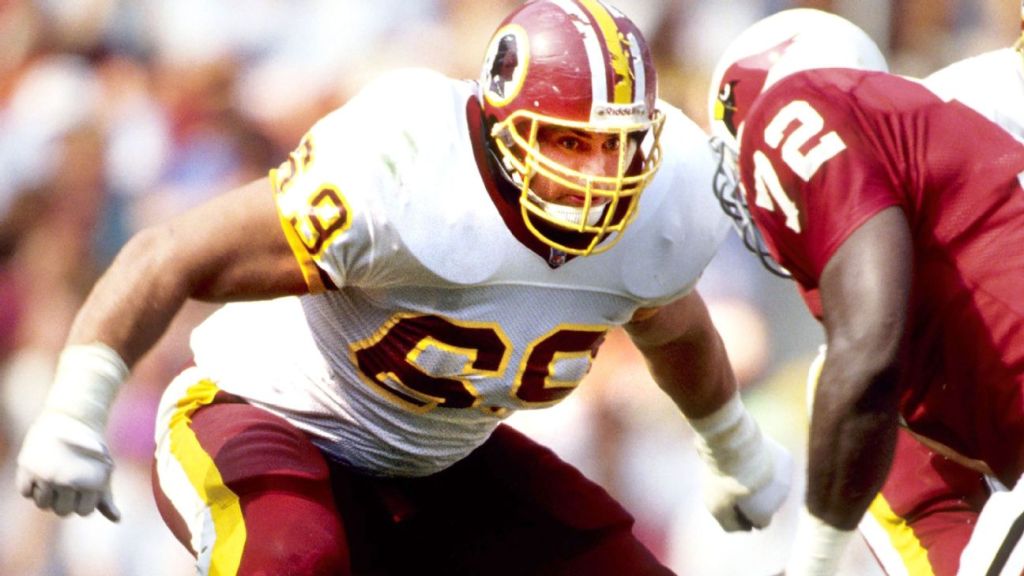
Photo Credit: USA Today Sports

Schlereth was a later member of “The Hogs,” helping the team win Super Bowl XXVI in the ’91 season before winning two Super Bowls with the Denver Broncos in ’97 and ’98. He made his first of two career Pro Bowl appearances during that ’91 championship season in Washington, and he takes the title as the nicest player in DC sports history.

Brooks is yet another Redskins’ lifer, spending most of his career as a reserve lineman. He started 12 games in ’81, but never started more than five in a single season during the rest of his career. Still, he helped contribute on defense during the team’s first Super Bowl-winning season.

DC Sports By The Numbers (50-59)

By: Joe Pohoryles

The Washington, D.C. sports teams have seen plenty of athletes do incredible things while representing the nation’s capital. One of the most recognizable features of these athletes is the numbers they sport on their uniforms.

As we forge on in these times with little going on in the sports world, I will spend the next week-and-a-half exploring which players were the best to wear every possible jersey number, continuing today with 50-59.

Of course comparing players across different sports is difficult, but this will take a look at the most impactful and iconic DC sports figures. Some of the names on this will be more prominent than others; several lesser worn numbers will merely be default picks. In any case, it should be interesting to see the distribution.

If you missed the earlier parts of the list, you can find them here: 0-9, 10-19, 20-29, 30-39, 40-49

(Note: For NBA and NHL, a player’s tenure is marked by the year their first season ended until the year their final season ended. For example, John Wall was drafted in 2010 and was a rookie in the 2010-11 season, but since the season ended in 2011, his tenure is listed as 2011-present. This is not necessary for MLB — where the entire season is played in the same calendar year — or NFL — where only the postseason is played in a different calendar year.)

*= the player’s tenure on the team extended longer before or after the stated dates, but said player wore a different number in those other years

50) Fred Hageman, Washington Redskins’ linebacker/center (1961-1964)

Runner-up: Derek Smith, Washington Redskins’ linebacker (1997-2000)

Photo Credit: Pinterest

Hageman managed to play on both sides of the ball during his career, finishing as runner-up for Rookie of the Year in 1961 as a middle linebacker. The following season he was moved to center and anchored a strong offensive line. His career lasted just four seasons, but all came with the Redskins, and he was a high-impact performer on both sides of the ball.

Smith spent the first four years of his NFL career in Washington, playing in all 64 games and starting in 61. He was second on the team in combined tackles in 1998, and was in the top five every season. He went on to spend seven seasons with the 49ers in San Francisco, but he was a solid defensive contributor during his time in Washington.
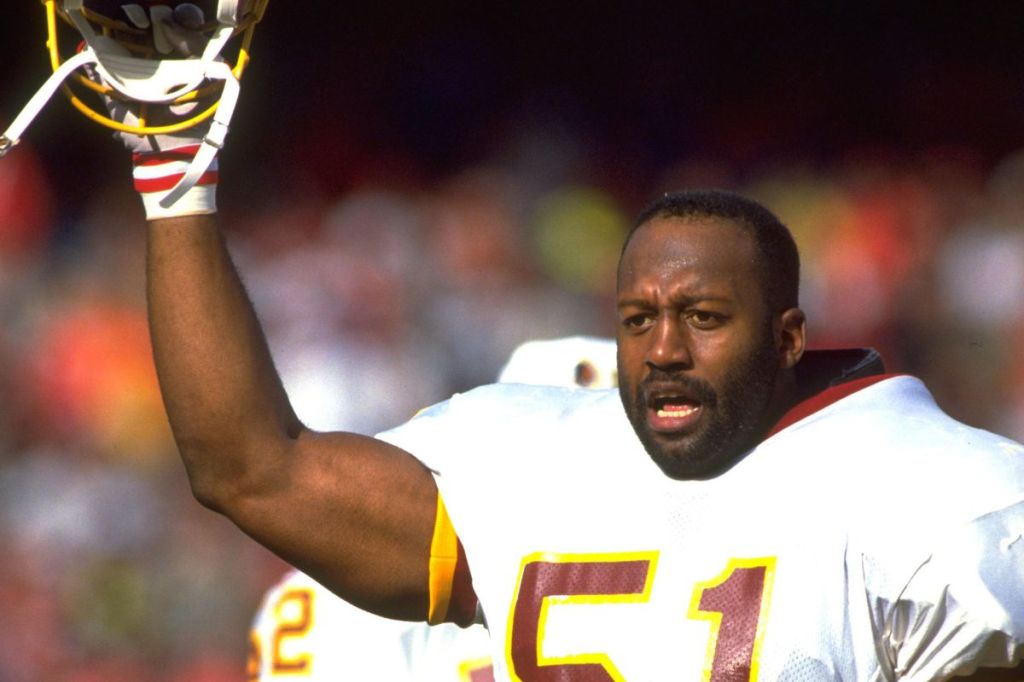
51) Monte Coleman, Washington Redskins’ linebacker (1979-1994)

Runner-up: Gerard King, Washington Wizards’ forward (2000-2001)

Photo Credit: SB Nation Hog Haven

Coleman played on all three Super Bowl-winning teams in franchise history, and he is one of just three players to play at least 16 seasons on the team, the other two being Sammy Baugh (16 seasons) and Darrell Green (20). His 215 games played is second behind Green for most in franchise history, and he’s fourth in sacks with 43.5. An easy pick for 51, Coleman was a defensive star throughout the team’s glory years.

King won the 1999 NBA Championship with the San Antonio Spurs as a rookie before spending two seasons in Washington as a rotation player. His best season came in 1999-2000, where he started a career-high 28 games and averaged 5.3 points and 4.0 rebounds in 17.1 minutes per game (all career-highs). His NBA career was over after his second season with the team in 2000-01.

52) Mike Green, Washington Capitals’ defenseman (2006-2015)

Runner-up: Neal Olkewicz, Washington Redskins’ linebacker (1979-1989)

Photo Credit: Patrick McDermott/Getty Images

Green, a two-time First Team All-Star, was an offensive force from the blue line during his 10 seasons in Washington. From his heavy slap shot to his reputation for game-winning heroics — he scored four game-winning goals three seasons in a row from 2007-08 to 2009-10 — Green established himself as a top offensive defenseman in the NHL. He tallied a career-high 76 points in 2009-10 after racking up 73 the season before, which led NHL defensemen both years. A defining piece of the “Young Gun” era, Green moved on to Detroit in 2015, and was recently traded to Edmonton.

Olkewicz spent all 11 of his NFL seasons at middle linebacker after playing college ball at the University of Maryland. He was on the team for the franchise’s first two Super Bowls, and was the team’s defensive MVP in 1988. He was named to the 70 Greatest Redskins list assembled in honor of the team’s 70th season in 2002.

53) Jeff Bostic, Washington Redskins’ center (1980-1993)

Runner-up: Harold McLinton, Washington Redskins’ linebacker (1969-1978)

Photo Credit: Washington Redskins Twitter

Bostic was a key member of “The Hogs,” spending all 14 NFL seasons in Washington. He made his only Pro Bowl in 1983, and he was a member of all three Super Bowl champions in franchise history. He dealt with a number of injuries throughout his career, but when healthy worked the center position masterfully for one of the most famous offensive line groups in NFL history.

McLinton spent all 10 of his NFL seasons in burgundy and gold, helping the team reach the Super Bowl in 1972. He started 104 of the 127 games he played, and held down the starting middle linebacker role from 1973 until the end of his career in ’78.

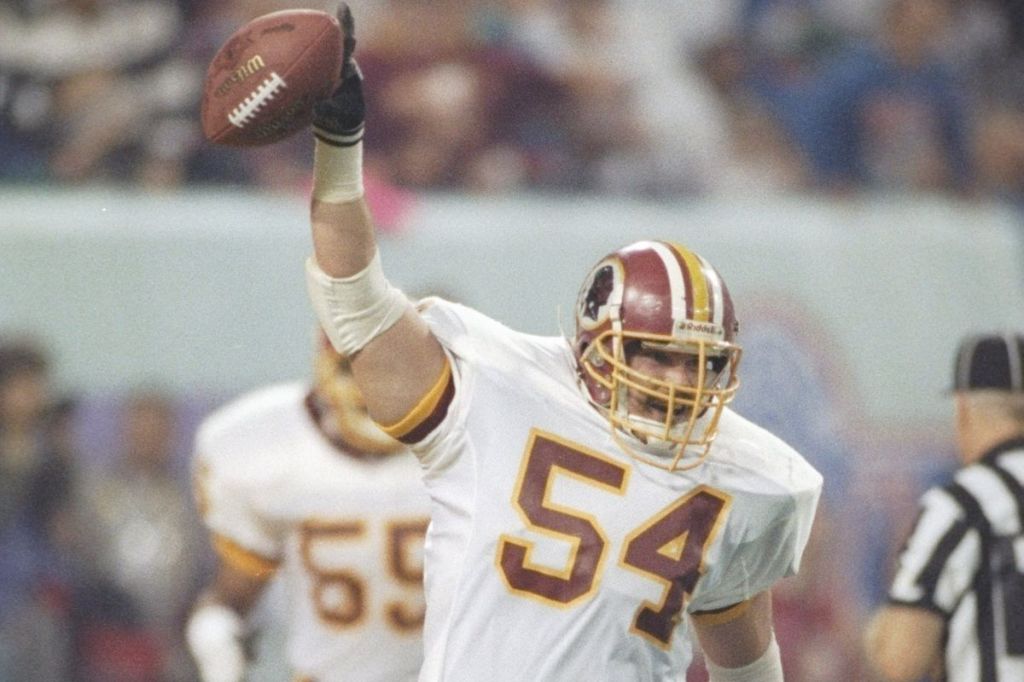
54) Kurt Gouveia, Washington Redskins’ linebacker (1987-1994*)

Runner-up: Bob Kuziel, Washington Redskins’ center (1975-1980)

Photo Credit: SB Nation Hog Haven

Gouveia won two Super Bowls with the Redskins in 1987 and 1991. He had a larger role in the ’91 run, where he intercepted a pass in each of their three playoff games that season, including the Super Bowl. He only had two career interceptions before that postseason, making it one of the more impressive playoff performances in franchise history. The Hawaiian linebacker was most recently the linebackers coach for the DC Defenders of the XFL.

Kuziel spent three seasons at starter for the center position from 1978 to ’80, succeeding Len Hauss and preceding Bostic as the team’s starting center. Though those are both guys who are difficult to be compared to, Kuziel managed to hold his own in the Skins’ O-line of the late ’70s.

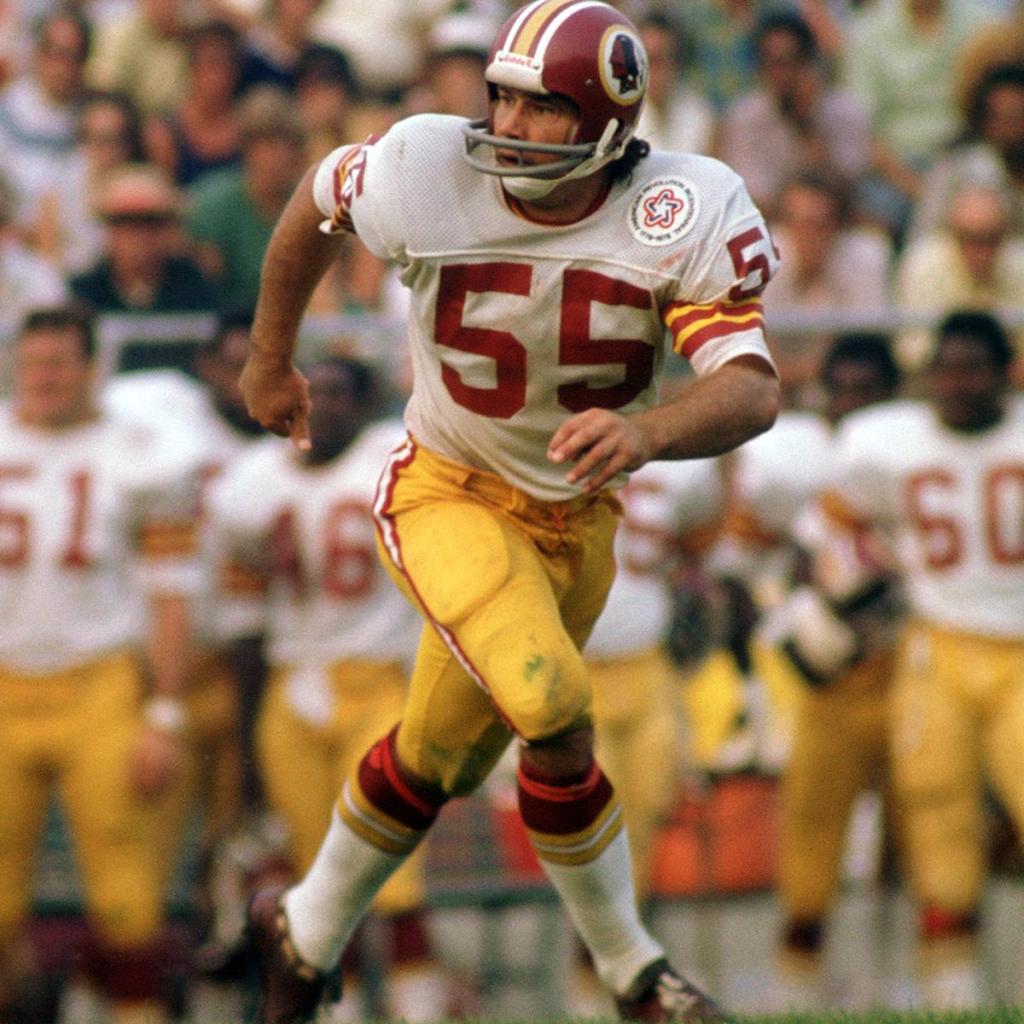
55) Chris Hanburger, Washington Redskins’ linebacker (1965-1978)

Runner-up: Sergei Gonchar, Washington Capitals’ defenseman (1995-2004)

Photo Credit: Washington Redskins Twitter

Hanburger was one of the best outside linebackers of his era, earning nine Pro Bowl selections as well as five First Team All-Pro selections. The Hall of Famer is yet another Redskins lifer on this list, spending all 14 seasons in Washington and starting 135 straight games from 1968-1977. One of the most impactful players in franchise history, Hanburger is the clear choice for No. 55.

Gonchar became the first Russian defenseman to score over 20 goals in the regular season when he netted 21 in 1998-99, but that is just the tip of the iceberg when it comes to offensive ability. He tallied at least 50 points in the following four seasons, including a career-high 67 in 2002-03, earning Second Team All-Star in the latter two seasons. Gonchar was traded to Boston in the middle of his tenth season with the team, but he was a huge part of the franchise in the late ’90s and early 2000s.

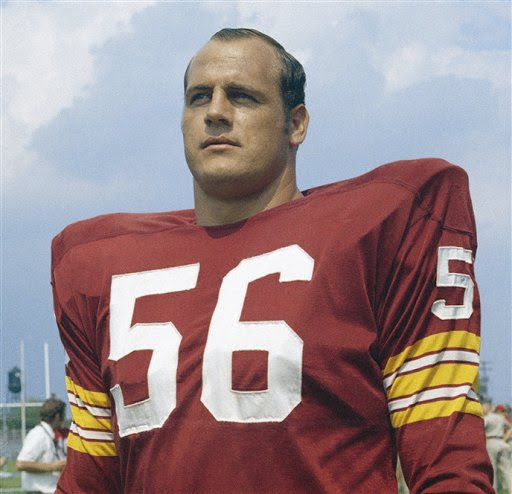
56) Len Hauss, Washington Redskins’ center (1964-1977)

Runner-up: LaVar Arrington, Washington Redskins’ linebacker (2000-2005)

Photo Credit: Google Images

One of the greatest centers in franchise history, Hauss was the pre-Hogs center for the Redskins, and he was a staple in the offensive line for all 14 seasons that he played in the NFL. He never missed a single game and started all but two (both in his rookie season), giving him a 192-game starting streak that he took to retirement. He made it to five Pro Bowls in that stretch, and earned Second Team All-Pro in 1974 and ’75. He also helped the team to Super Bowl VII in ’72.

Arrington was the big defensive star of college football in 1999, winning the Bednarik Award and being named consensus First Team All-American at Penn State. He was picked second overall in the 2000 draft. Arrington made it to the Pro Bowl three years in a row from 2001-2003, after he led the team in tackles with 99 in ’01, then was tied for ninth in the league with a career-high 11 sacks. He then led the league with six forced fumbles in ’03. Injuries and issues with the coaching staff derailed his career, but he still had a great deal of success.

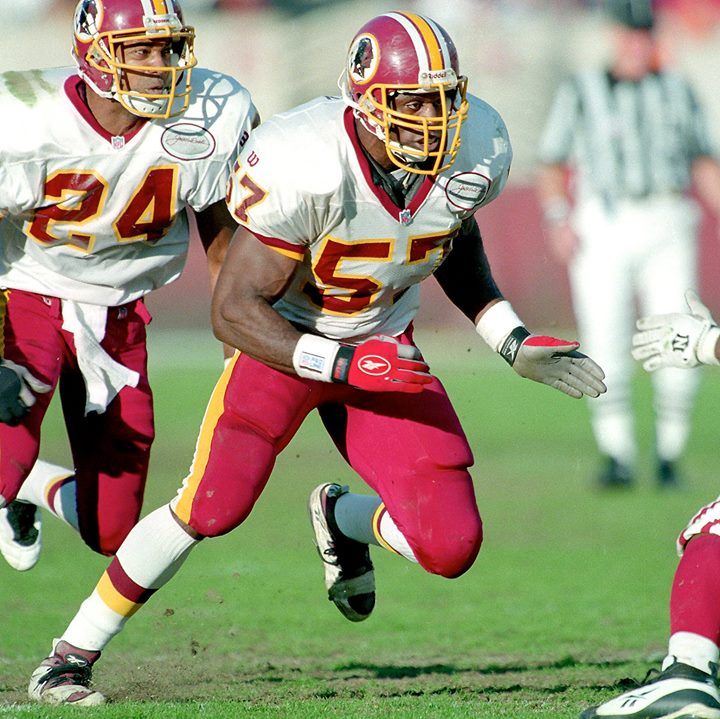
57) Ken Harvey, Washington Redskins’ linebacker (1994-1998)

Runner-up: Rich Milot, Washington Redskins’ linebacker (1979-1987)

Photo Credit: Pinterest

Harvey spent the first six seasons of his career in Arizona with the Cardinals, but it wasn’t until he joined the Redskins at age 29 that he truly blossomed. Harvey started every game during his first three seasons on the team, and made it to the Pro Bowl during every season he played in Washington except for his last one. Harvey led the team in sacks in ’94, ’95 and ’97, and he was second in ’96. A major defensive rushing force of the mid-to-late ’90s, Harvey was named to the 70 Greatest Redskins list in 2002.

Milot spent his entire nine year career in Washington, spending most of it as a starting linebacker. He was on the team for their first two Super Bowls, which oddly enough were the only two seasons in which he played fewer than 10 games. He posted a career-high 4.0 sacks in 1984.

Tanner Roark had an up-and-down tenure with the Nats from 2013-2018, but he finished 10th in Cy Young voting in 2016, and helped the team win the NL East three times. He has a case for No. 57.

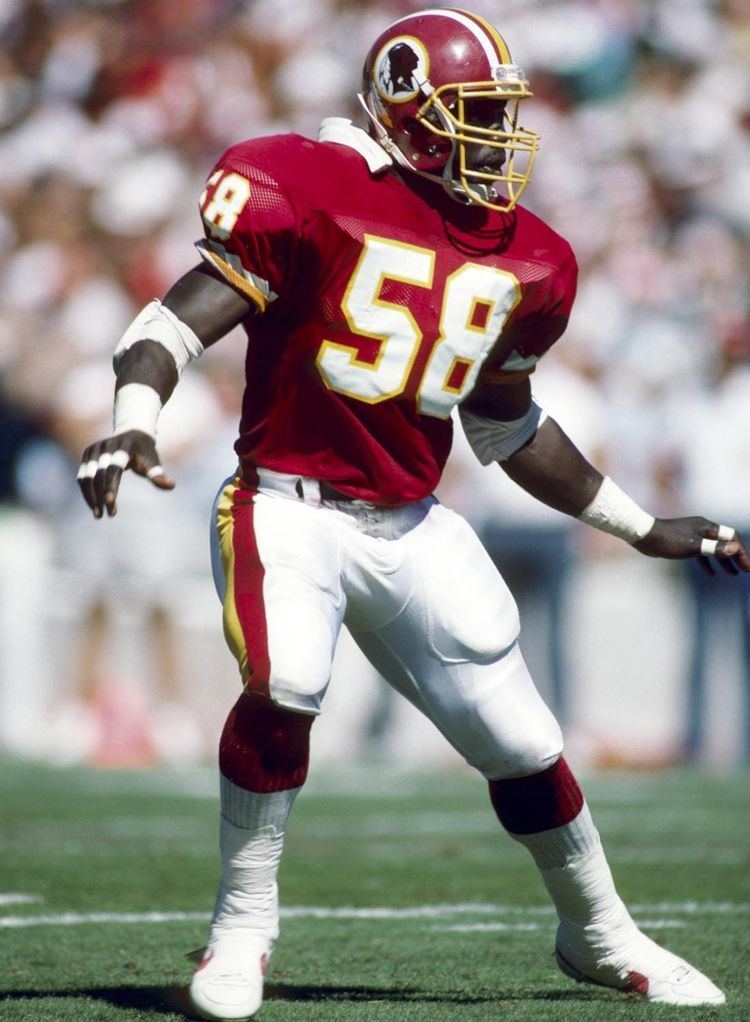
58) Wilber Marshall, Washington Redskins’ linebacker (1988-1992)

Runner-up: Antonio Pierce, Washington Redskins’ linebacker (2001-2004)

Photo Credit: Alchetron

Marshall started 79 of 80 games that he played in Washington, and was a major part of the 1991 team that won Super Bowl XVII, finishing tied for second on the team in tackles and third in sacks that season. The following season Marshall was named First Team All-Pro. Marshall also happened to be a key member of the legendary ’85 Bears that won Super Bowl XX, but in Washington he was the best to wear 58.
Pierce is best known for winning the Super Bowl with the Giants in 2007, but before that he played three relatively unspectacular seasons before hitting his stride in his fourth and final season in Washington. He started all 16 games in 2004, finishing 13th in the league with 87 solo tackles, which was good enough for most on the team alongside Pro Bowl teammate Marcus Washington. Afterwards, he departed to the Giants and found even more success, but he still made a brief impact in DC.

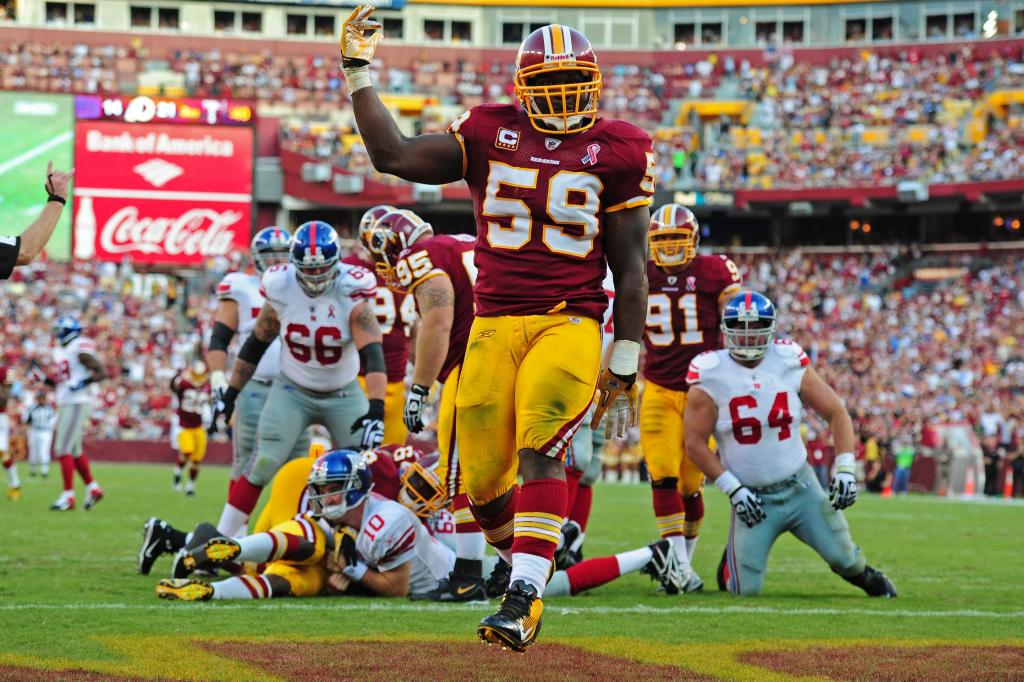
59) London Fletcher, Washington Redskins’ linebacker (2007-2013)

Runner-up: Brad Dusek, Washington Redskins’ linebacker (1974-1981)

Photo Credit: Scott Cunningham/Getty Images

Fletcher spent four years in St. Louis (winning a Super Bowl) and five years in Buffalo before joining the Redskins. The true definition of an iron man, Fletcher started each of the final 215 games of his career from 2000-2013, and played in all 256 games of his career. Fletcher established himself as defensive leader, making four Pro Bowls in a row from 2009-2012 (his age 34-37 seasons). He led the league with 166 tackles in 2011. One of the great, underrated linebackers of his generation, Fletcher is the easy pick for No. 59.

Dusek had a starting streak of his own, starting all 74 games from 1975-1979, and he started 14 of 16 games in ’80. Though he never totaled any sacks during his career, Dusek held his own in the defense of that era. Yet another player to spend his whole career with the Redskins, Dusek never got the league-wide accolades but still had a knack for getting the ball, scooping up at least one fumble in every season, including a career-high four fumble recoveries in ’75. Unfortunately, Dusek was diagnosed with ALS in 2018, and continues to fight the disease. Keep fighting, Brad.

DC Sports By The Numbers (40-49)

By: Joe Pohoryles

The Washington, D.C. sports teams have seen plenty of athletes do incredible things while representing the nation’s capital. One of the most recognizable features of these athletes is the numbers they sport on their uniforms.

As we forge on in these times with little going on in the sports world, I will spend the next week-and-a-half exploring which players were the best to wear every possible jersey number, continuing today with 40-49.

Of course comparing players across different sports is difficult, but this will take a look at the most impactful and iconic DC sports figures. Some of the names on this will be more prominent than others; several lesser worn numbers will merely be default picks. In any case, it should be interesting to see the distribution.

If you missed the earlier parts of the list, you can find them here: 0-9, 10-19, 20-29, 30-39

(Note: For NBA and NHL, a player’s tenure is marked by the year their first season ended until the year their final season ended. For example, John Wall was drafted in 2010 and was a rookie in the 2010-11 season, but since the season ended in 2011, his tenure is listed as 2011-present. This is not necessary for MLB — where the entire season is played in the same calendar year — or NFL — where only the postseason is played in a different calendar year.)

*= the player’s tenure on the team extended longer before or after the stated dates, but said player wore a different number in those other years

40) Calbert Cheaney, Washington Bullets’/Wizards’ guard/forward (1994-1998)

Runner-up: Alvin Walton, Washington Redskins’ safety (1986-1991)

Photo Credit: Indiana Basketball Hall of Fame

Cheaney, one of the greatest Indiana Hoosiers of all time, spent the first six seasons of his NBA career in Washington, mainly as a starter on the wing. Averaging fairly modest numbers while in DC, Cheaney’s best season came in 1994-95, where he averaged 16.6 points, 4.1 rebounds and 2.3 assists. He helped the team make the playoffs for the first time in nine years in the 1996-97 season.
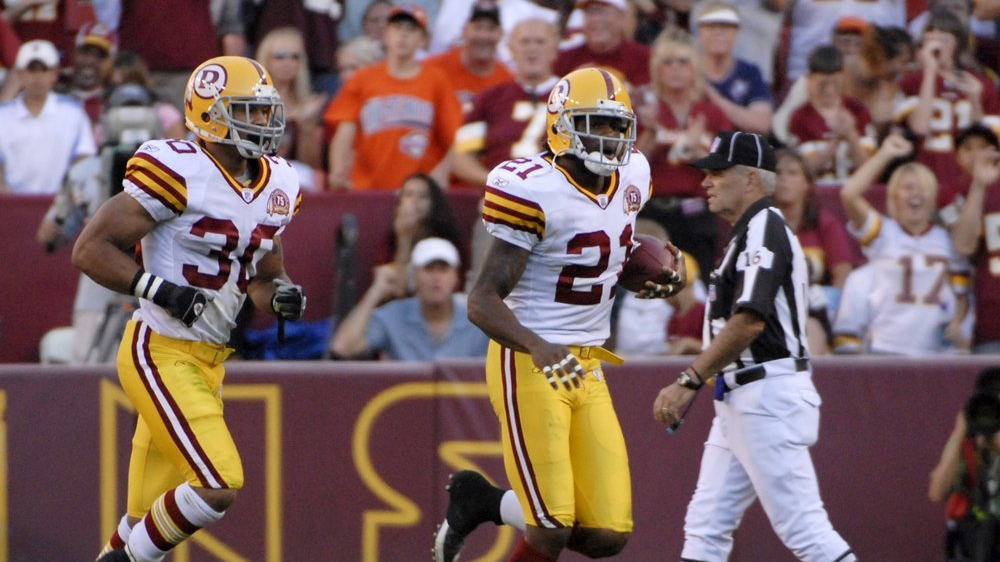
Walton’s six NFL seasons all came in Washington, where he spent the middle four as a starter at safety. While he was not a stand-out defensive back league-wide, he brought solid play to the Redskins’ secondary, and started at strong safety in the Super Bowl XXII win over the Broncos. He was also on the roster for the Super Bowl XXVI victory, albeit in a much smaller role.

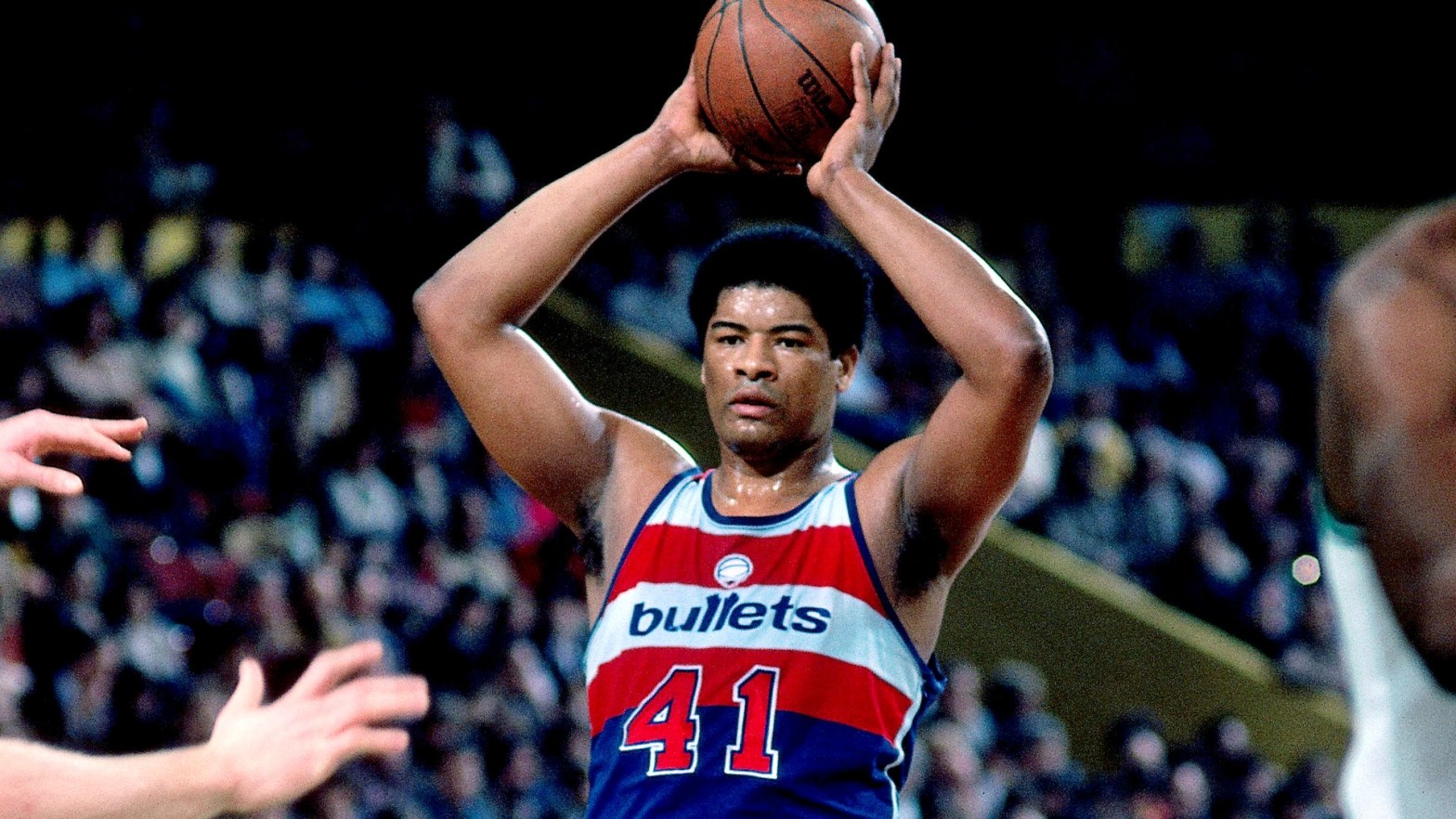
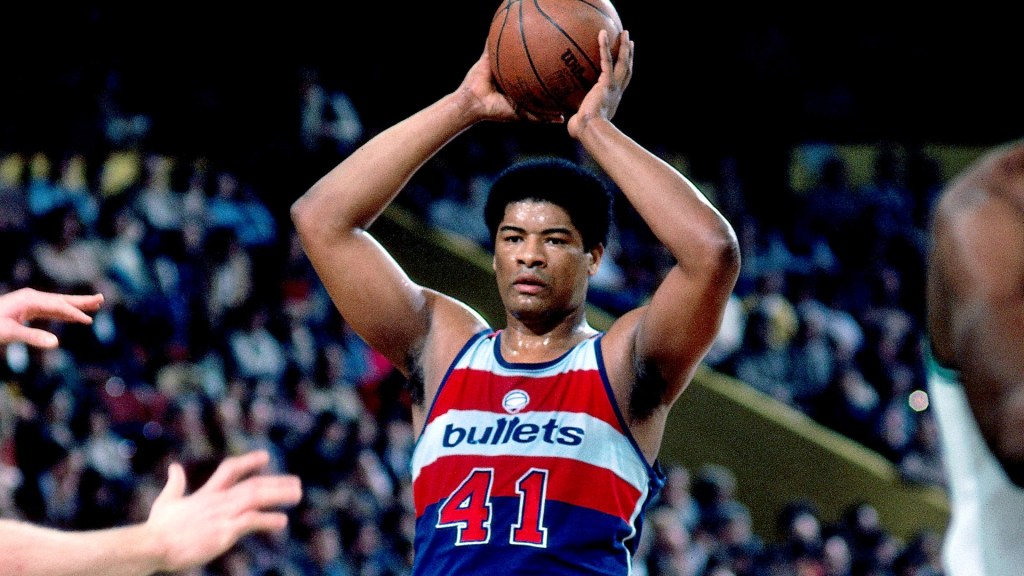
41) Wes Unseld, Capital/Washington Bullets’ center (1974-1981*)

Runner-up: Mike Bass, Washington Redskins’ cornerback (1969-1975)

Photo Credit: NBA.com

Unseld spent his entire career with the Bullets’ franchise, starting in Baltimore in the 1968-69 season, where he won Rookie of the Year and league MVP; he was the first and only MVP in franchise history, and the first rookie to win MVP since Wilt Chamberlain. Unseld averaged 13.8 points and 18.2 rebounds that season, and remained a fixture in the Bullets’ lineup for the rest of his career. The Hall of Famer led the league with 14.8 rebounds per game in 1974-75, and he has the most games played and total rebounds in franchise history. Probably the most popular player in franchise history, Unseld was the best to wear No. 41, which has since been retired by the team.

Bass spent seven seasons as a cornerback in Washington, starting all 104 games he played with the team. Bass played a crucial role in the team’s run to Super Bowl VII in the 1972 season, playing lockdown defense against the Cowboys in the NFC Championship game before scoring the only touchdown in the 14-7 loss to the Dolphins in the Big Game. His 30 interceptions are the fourth-most in franchise history.

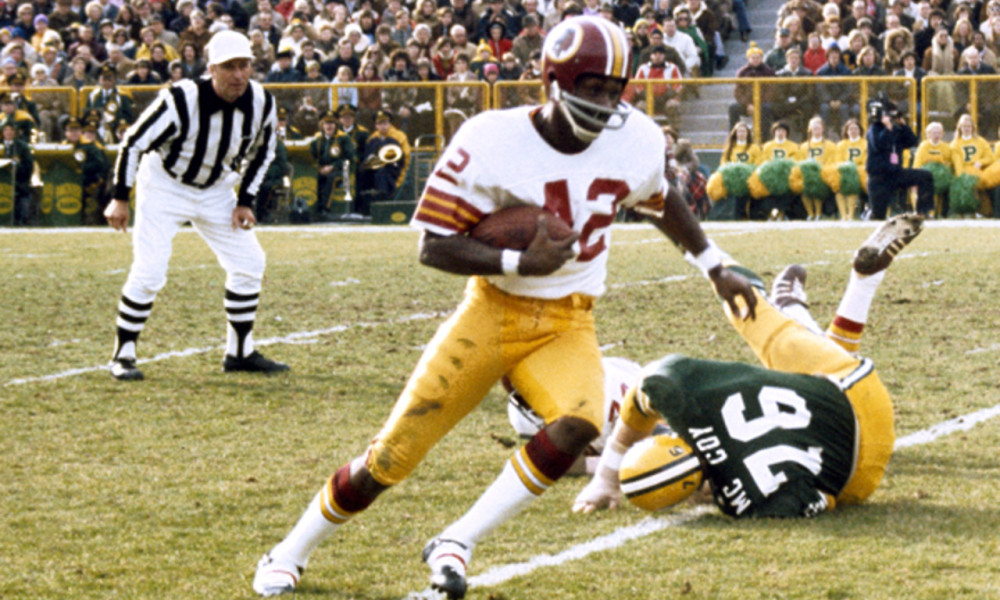
42) Charley Taylor, Washington Redskins’ running back/receiver (1964-1977)

Runner-up: Greg Ballard, Washington Bullets’ forward (1978-1985)

Photo Credit: Redskins Wire USA Today

Taylor was the epitome of “skill player” for the Redskins in the 1960s and ’70s, finishing in the top 10 in rushing yards and receiving yards in his rookie season, his 53 receptions setting a new record among running backs. After being switched to a receiver in 1966, Taylor led the league in receptions two seasons in a row in ’67 and ’68. After 14 seasons in Washington, Taylor retired as the NFL’s all-time leading receiver (9,110 yards and 79 touchdowns on 649 receptions). Taylor is now second behind Art Monk among franchise leaders in receiving yards, and the eight-time Pro Bowler was elected to the Hall of Fame in 1984.

Ballard was a rookie on the 1978 championship, averaging 3.7 points and 4.2 rebounds playing roughly 10 minutes per game in the Finals. Ballard did not elevate to a starting role until 1979-80, and he became the team’s leading scorer in 1981-82, averaging 18.8 points to go with 8.0 rebounds. The small forward also shot 40.9% from three-point land, his best rate by far as a starter. The Bullets consistently made the playoffs with Ballard leading the front court, but rarely got past the first round.

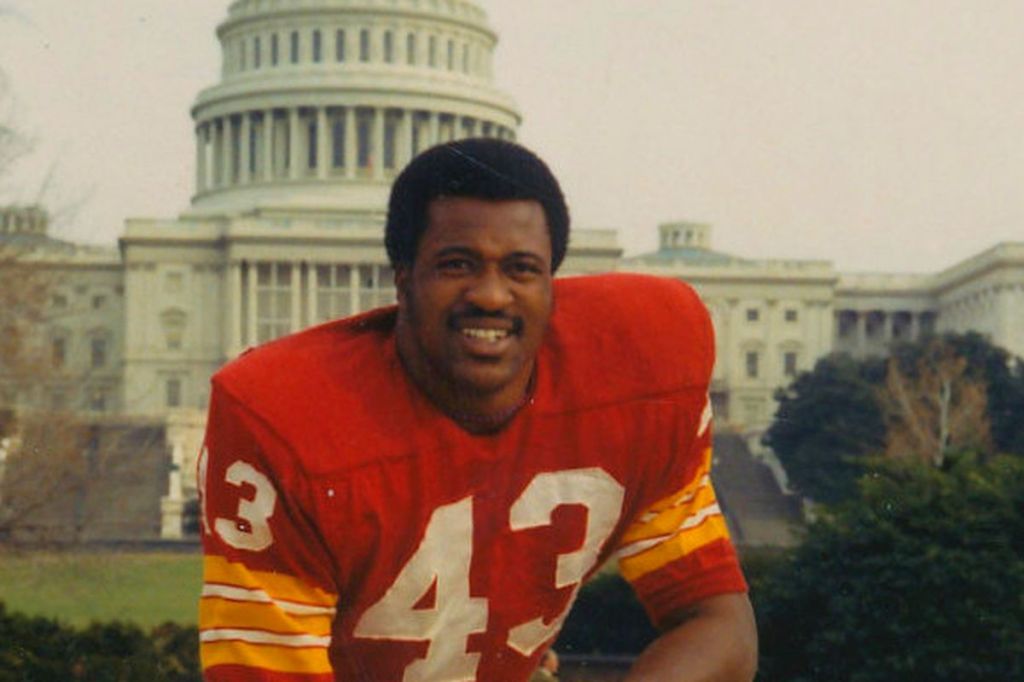
43) Larry Brown, Washington Redskins’ running back (1969-1976)

Runner-up: Jeff Ruland, Washington Bullets’ forward/center (1982-1986)

Photo Credit: SB Nation Hog Haven

Legendary coach Vince Lombardi spent just one season as the Redskins’ coach before his death in 1969, so it would be no surprise if he never had enough time to make a massive impact on the franchise. But he did; Brown had issues with timing and ball security when he entered the league, but Lombardi coached him up to greatness after noticing Brown’s hearing impairment (and adjusting how Brown listened to snap counts). After several solid seasons in a pass-heavy offense, including an Offensive Rookie of the Year season in ’69, Brown helped lead the team to Super Bowl VII in ’72, leading the league in rushing yards per game (101.3) and total scrimmage yards (1,689) to win league MVP. Brown spent all eight of his NFL seasons in Washington, and was named All-Pro three times.

Ruland brought physicality and accurate inside shooting to the Bullets’ front court, finishing with the 10th-highest field goal percentage in the league during his rookie season, earning him All-Rookie honors. Ruland stepped up in ’84, averaging 22.2 points and 12.3 rebounds per game to go with a career-high 57.9 shooting percentage to make his first All-Star Game. He made the All-Star Game again in ’85 after averaging similar numbers, and spent five of his seven NBA seasons as a main contributor to several playoff teams.

When it’s all said and done, the Capitals’ Tom Wilson may contend for best 43, or at least runner-up.

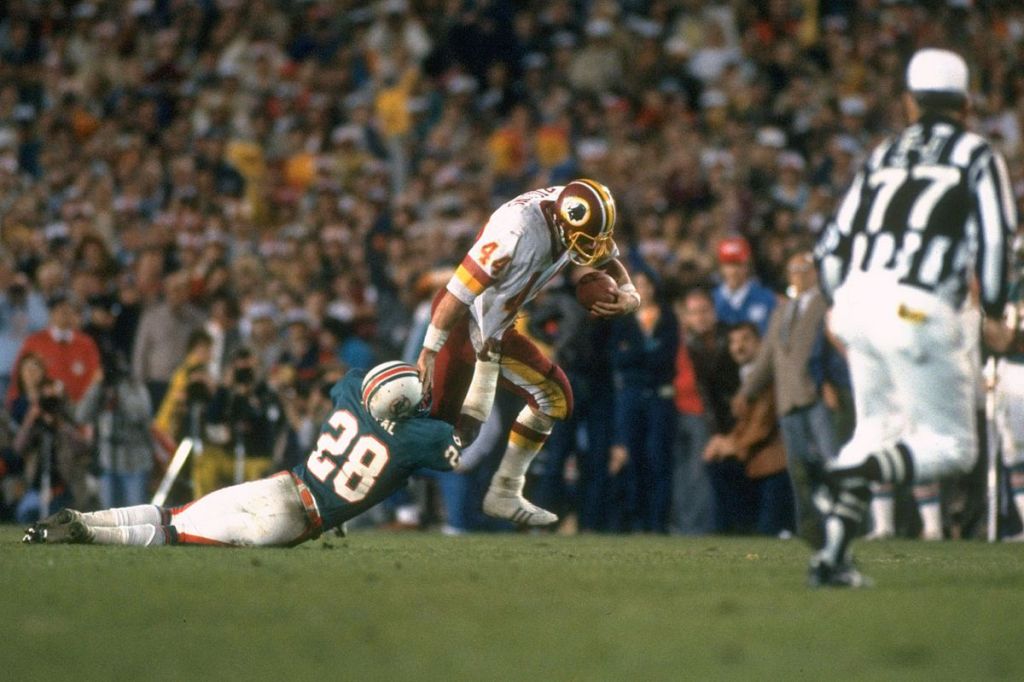
44) John Riggins, Washington Redskins’ running back (1976-1985)

Runner-up: Harvey Grant, Washington Bullets’/Wizards’ forward (1989-1993, 1998)

Photo Credit: SB Nation Hog Haven

Riggins had some of his best career seasons in his mid-30s, leading the league in touchdowns in both 1983 (24) and ’84 (14) at 34 and 35 years old, respectively. He owns one of the greatest moments in franchise history, with his late-game, stiff-arm 43-yard touchdown on fourth & inches in Super Bowl XVII. His 166 rushing yards on 38 attempts earned him MVP of the game and led Washington to its first Super Bowl win in franchise history, as well as its first championship since 1942. He was a fan favorite throughout his tenure on the team, and was voted to the Hall of Fame in 1992.

Grant held a large role in the team’s front court during the early 1990s, with his scoring taking a leap from 8.2 per game in 1989-90 all the way up to 18.2 in 1990-91, where he finished second for that year’s Most Improved Player award. He played on some pretty poor Bullets teams before getting traded to Portland and eventually returning for one season in 1997-98. His three sons, Jerai, Jerian and Jerami, starred at DeMatha in the late 2000s/early 2010s, and the latter two made it to the NBA themselves.

45) Phil Chenier, Capital/Washington Bullets’ guard (1974-1979*)

Runner-up: Barry Wilburn, Washington Redskins’ cornerback (1985-1989)

Photo Credit: SB Nation Bullets Forever

The three-time All-Star Chenier started with the Baltimore Bullets in 1971-72, and was a high-impact player from the jump, averaging 30.9 minutes per game in his rookie season. Chenier soon developed into one of the top shooting guards in the league, averaging no less than 19.7 points per season from 1972-73 to 1976-77. A back injury in the 1977-78 prevented him from playing in the championship that season and dramatically altered his career path, and he eventually retired after the 1980-81 season with the Golden State Warriors. Chenier came back to Washington and served as the full-time TV color commentator from 1987-2017, cementing his legacy as a big-time part of this organization.
Wilburn was the star corner of the Redskins’ 1987 championship season (even with Darrell Green playing opposite him). Wilburn led the league with nine interceptions that season and was voted First Team All-Pro, capping off a tremendous season with two interceptions in the Super XXII victory over the Broncos. That was his best season by far, but his impact on that championship team will live in history forever.

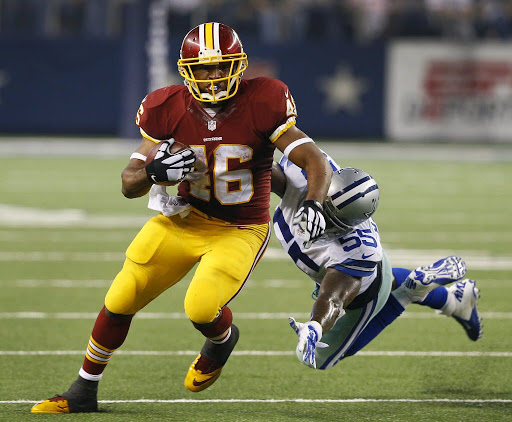
46) Alfred Morris, Washington Redskins’ running back (2012-2016)

Runner-up: Patrick Corbin, Washington Nationals’ pitcher (2019-present)

Photo Credit: Tom Fox/The Dallas Morning News

“Thoroughbred Fred” was the most recent example of Mike Shanahan finding a running back diamond in the rough, as the 2012 sixth-round pick finished second in rushing yards as a rookie with 1,613 yards. The only man who had more was 2012 MVP and Comeback Player of the Year (and current Redskin) Adrian Peterson, who finished with a near-record breaking 2,097 yards. Morris and Robert Griffin III headlined a rookie backfield that led the team to its first division championship since 1999, and while Morris never returned to the level of his rookie season, he made the Pro Bowl twice in 2013 and ’14, starting all 64 games he played in a Redskins uniform and rushing over 1,000 yards in every season except his last (751 in 2015).

Corbin has been on the Nationals for just one season and still has five years left on his $140 million deal, but the lefty not only pitched in the three-headed monster with Max Scherzer and Stephen Strasburg, but he also played a significant role out of the bullpen during the World Series run. His three shutout innings in relief in Game 7 of the World Series was among the clutchest performances in team history, and hopefully he is just getting started in Washington.

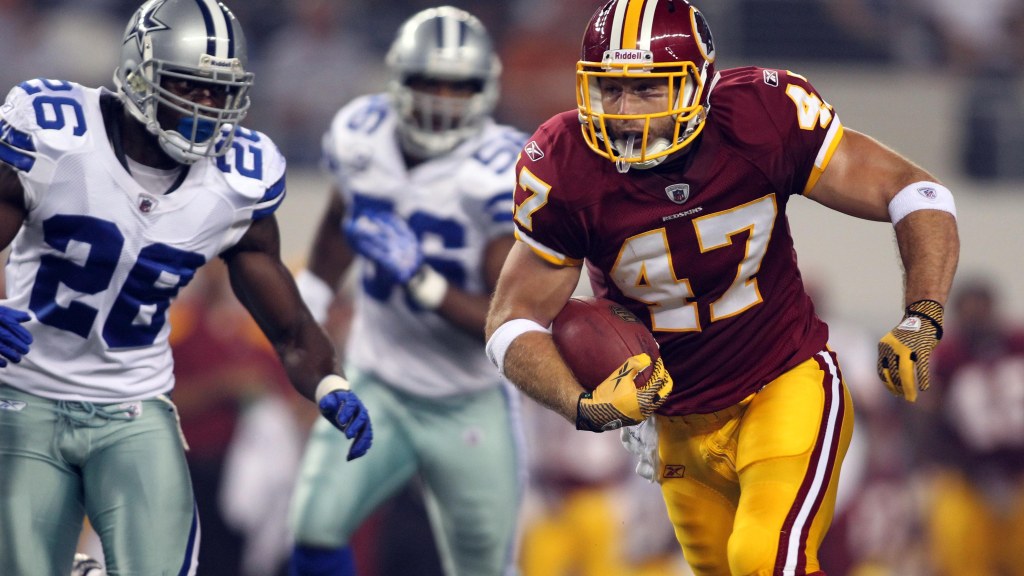
47) Chris Cooley, Washington Redskins’ tight end (2004-2012)

Runner-up: Gio Gonzalez, Washington Nationals’ pitcher (2012-2018)

Photo Credit: Tim Heitman/US Presswire

Cooley spent much of the 2000s as one of the team’s leading receiving threats, holding down the tight end position for around six seasons from 2005-2010, making the Pro Bowl twice in 2007 and ’08. Having literally the coolest name on the planet (pun very much intended), he was an easy fan favorite, and his eccentric personality off the field endeared fans as well.

Gonzalez spent six seasons mainly as a high-end third starter, having his best season in 2012, where he was named an All-Star and led the majors in wins. He finished third in Cy Young voting, after pushing the team to its first ever postseason appearance, but he never returned to that level. Still, he remained a fixture in the rotation before being traded to Milwaukee as the Nats fell further out of the playoff race that season. He didn’t get to win the World Series, but he still contributed a lot to the franchise in the years leading up to it.
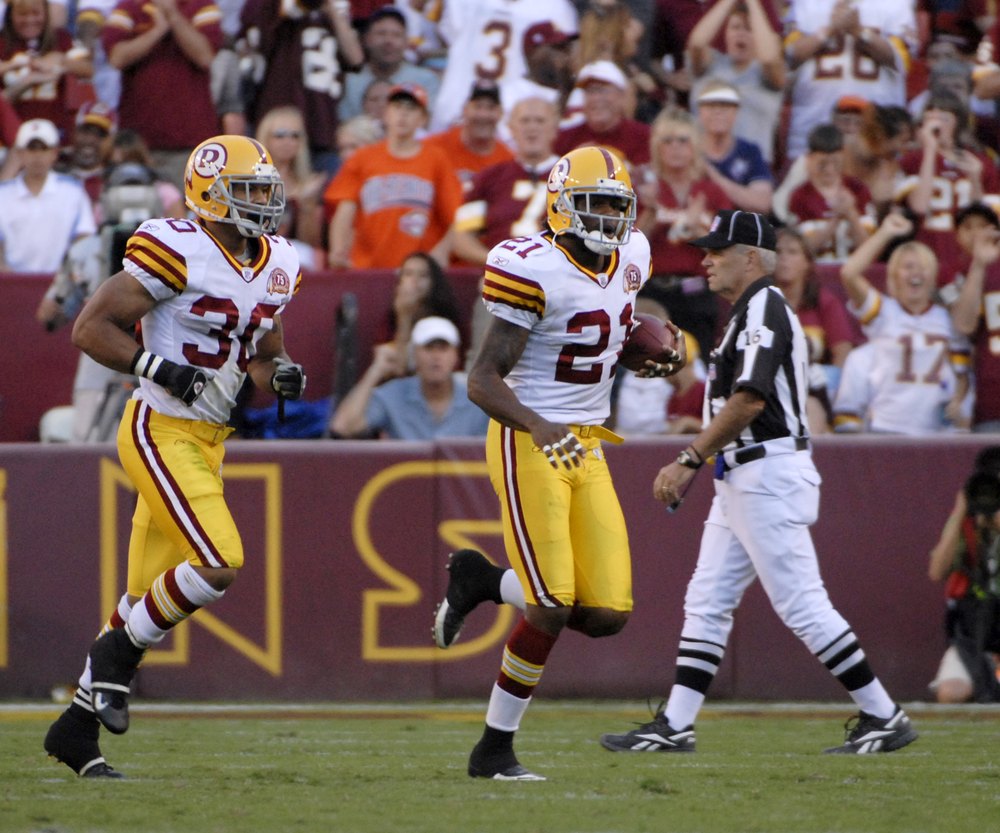
48) Stephen Davis, Washington Redskins’ running back (1996-2002)

Runner-up: Ken Coffey, Washington Redskins’ safety (1983-1984, 1986)

Photo Credit: Dave Ellis/AP Photo, The Potomac News

Davis began his career primarily as a fullback before breaking out in 1999, setting the single-season franchise record with 1,405 rushing yards and leading the league with 17 rushing touchdowns. Davis was voted to his first Pro Bowl that season, and made it again in 2000 after rushing 1,318 yards and 11 touchdowns. Davis led the league in rushing attempts with 356 in 2001, allowing him to break his own single-season rushing record with 1,432 yards. His reign in Washington did not last long, but that three year stretch was among the most dominant for a running back in franchise history.

Coffey spent three total seasons as a safety, finishing tied for third on the team in 1983 with four interceptions. He was never a dominating, ball-hawking safety, but he turned in three solid seasons. While he does not have the most impressive resume, he is still one of the best players to wear No. 48 in the city’s history.

49) Bobby Mitchell, Washington Redskins’ running back/flanker (1962-1968)

Runner-up: Billy Brewer, Washington Redskins’ safety (1960)

Photo Credit: 106.7 The Fan

Mitchell, who died just days ago on Apr. 5, was the first black player in team history. The speedy, versatile Mitchell led the league in receiving yards two years in a row from 1962-63, with 1,384 and 1,436 yards, respectively. A three-time First Team All-Pro, Mitchell was ahead of his time and was a major offensive contributor for the Redskins in the ’60s. He was voted to the Hall of Fame in 1983. Rest in peace, Bobby Mitchell.

Brewer played just 11 games in the NFL, starting six. He recovered one fumble during the 1960 season, but had no interceptions. He was an alright player, at least not a defensive liability, but his NFL career was short. Still, he remains the second-most impactful player to wear No. 49.

DC Sports By The Numbers (30-39)

By: Joe Pohoryles

The Washington, D.C. sports teams have seen plenty of athletes do incredible things while representing the nation’s capital. One of the most recognizable features of these athletes is the numbers they sport on their uniforms.

As we forge on in these times with little going on in the sports world, I will spend the next week-and-a-half exploring which players were the best to wear every possible jersey number, continuing today with 30-39.

Of course comparing players across different sports is difficult, but this will take a look at the most impactful and iconic DC sports figures. Some of the names on this will be more prominent than others; several lesser worn numbers will merely be default picks. In any case, it should be interesting to see the distribution.
If you missed the earlier parts of the list, you can find them here: 0-9, 10-19, 20-29

(Note: For NBA and NHL, a player’s tenure is marked by the year their first season ended until the year their final season ended. For example, John Wall was drafted in 2010 and was a rookie in the 2010-11 season, but since the season ended in 2011, his tenure is listed as 2011-present. This is not necessary for MLB — where the entire season is played in the same calendar year — or NFL — where only the postseason is played in a different calendar year.)

*= the player’s tenure on the team extended longer before or after the stated dates, but said player wore a different number in those other years

30) Brian Mitchell, Washington Redskins’ running back/return specialist (1990-1999)

Runner-up: Bernard King, Washington Bullets’ forward (1988-1991)

Photo Credit: 106.7 The Fan

B-Mitch’s 23,330 all-purpose yards rank second in NFL history behind Jerry Rice, and his 13 special teams touchdowns rank second behind Devin Hester. One of the best returners of all-time, Mitchell was a huge X-factor for the Redskins in the 1990s. Mitchell led the league with 600 punt return yards in 1991, and the Skins went on to win the Super Bowl that season. He and Jim Brown are the only players to lead the league in all-purpose yards at least four times; Mitchell did so from 1994-1996 and 1998. With all those names he shares company with, it’s a shame he is not more recognized on a national scale.
King spent time with several other teams in his career, but the Hall of Famer had a short stint of success with the Bullets in the late 1980s. He improved his numbers every season he played in Washington, culminating in his final All-Star appearance as well as a Third Team All-NBA selection in his final season with the team, averaging 28.4 points, 5.0 rebounds and 4.6 assists.

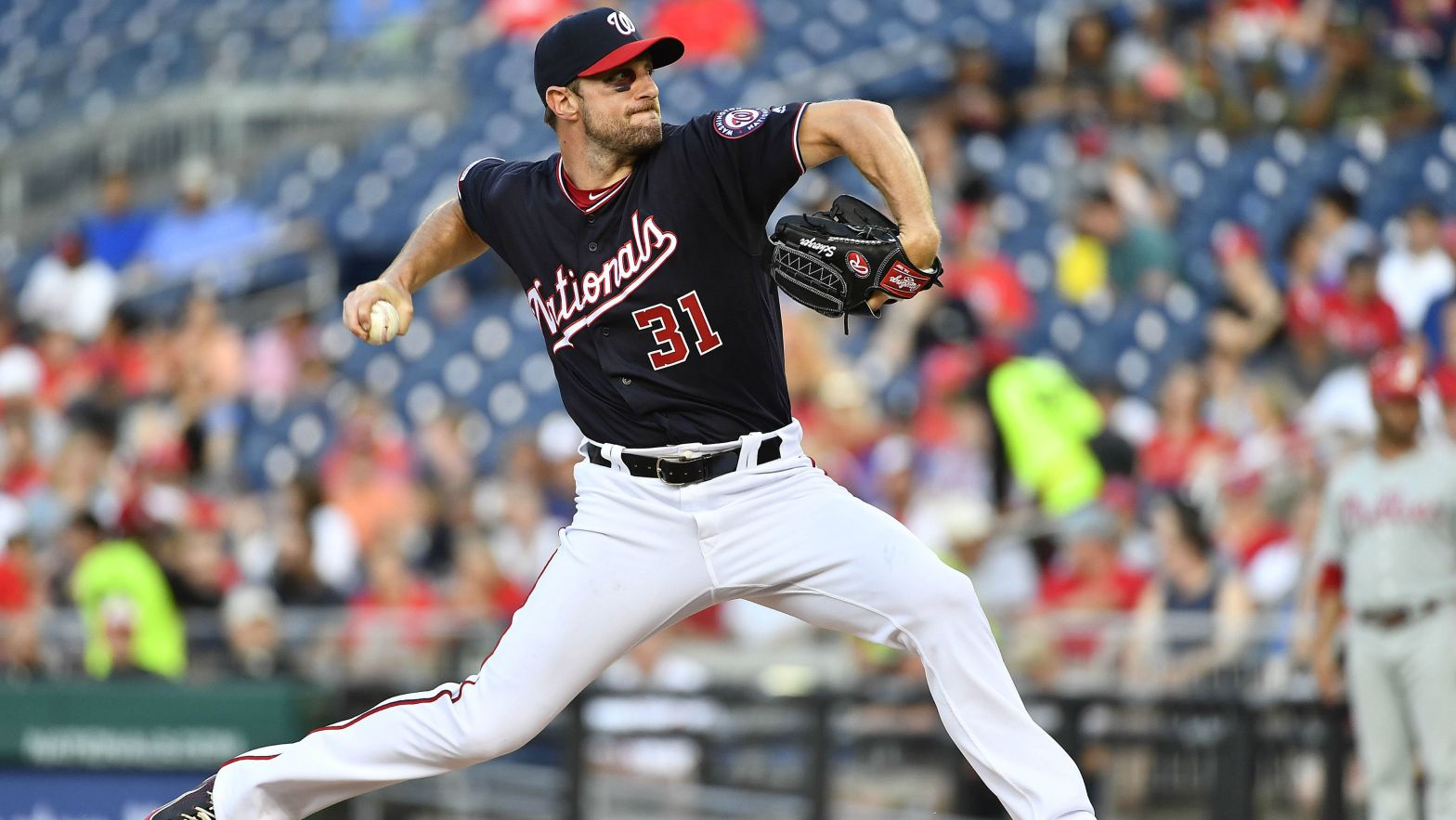
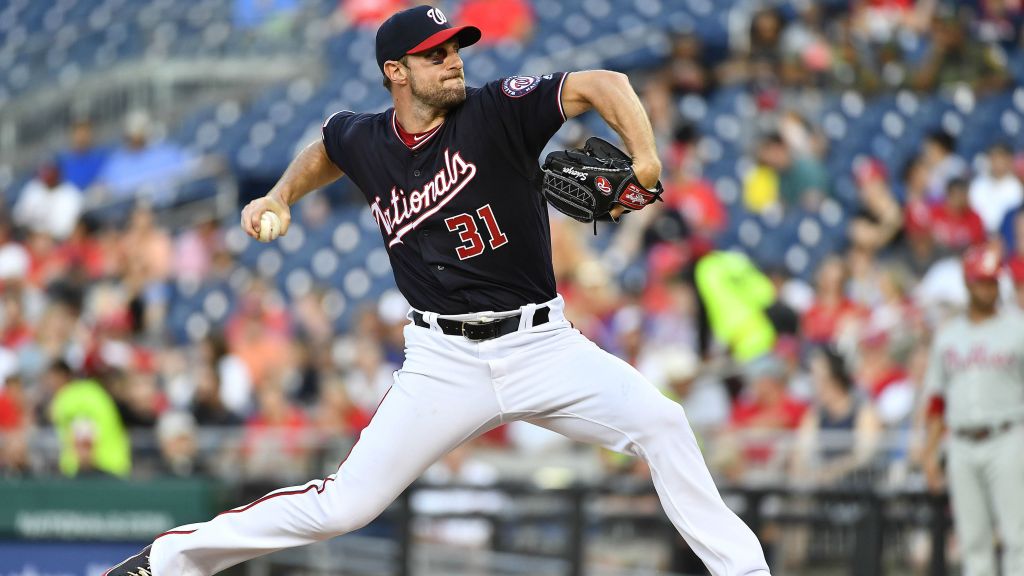
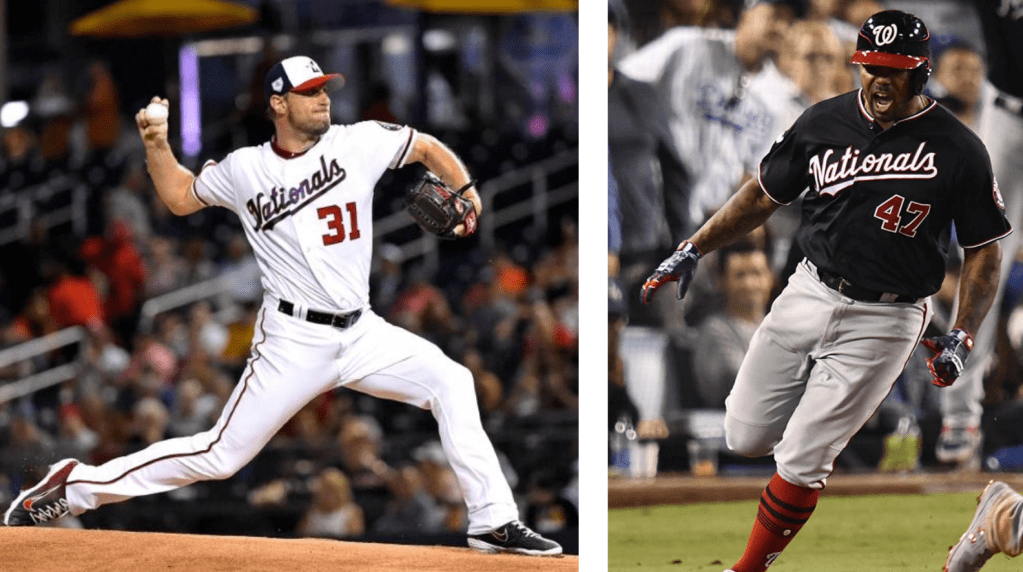
31) Max Scherzer, Washington Nationals’ pitcher (2015-present)

Runner-up: Charley Harraway, Washington Redskins’ running back/fullback (1969-1973)

Photo Credit: NBC Sports Washington

Scherzer joined the Nats as a free agent from Detroit in 2015, immediately becoming the ace in a formidable starting rotation. Since then, Mad Max has finished in the top five in Cy Young voting all five seasons in Washington, winning it twice. He also led the National League in strikeouts three years in a row (2016-2018), and helped lead the team to its first World Series championship in 2019. Already the most decorated pitcher in Nats’ history, Scherzer is the clear pick for No. 31.

Harraway began his career with the Browns before signing in Washington during Vince Lombardi’s first and only season as head coach in 1969. Harraway was Larry Brown’s partner in the backfield, and their rushing attack propelled the team to a string of playoff runs in the early 1970s, including their appearance in Super VII.

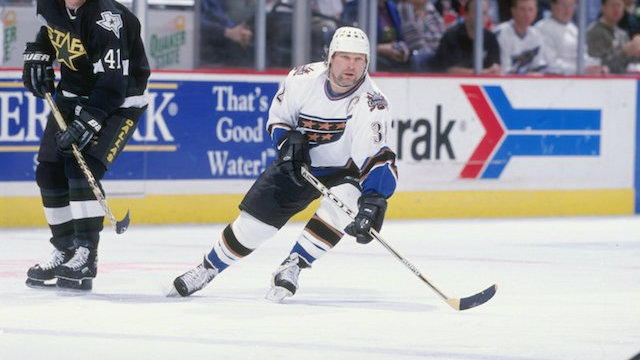
32) Dale Hunter, Washington Capitals’ forward (1988-1999)

Runner-up: Chuck Hinton, Washington Senators’ outfielder (1961-1964)

Photo Credit: NoVa Caps Fans.com

Hunter captained the team to its first Stanley Cup Finals appearance in 1998, holding the position from 1994-99. An aggressive forward, Hunter holds the franchise record for penalty minutes with 2,003 (Scott Stevens is second with 1,628), and his 3,565 career penalty minutes are the second-most in NHL history, but he was not just a bruiser. His offensive prowess, while not among the game’s best, still gave him 1,020 career points, making him the only NHLer with 1,000 career points and 3,000 penalty minutes. He’s one of four Caps players with his number retired, proving his significant impact on the franchise.

Hinton was the last Senator to hit .300 in a season, finishing fourth in the American League with .310 in 1962. He led the team in batting average in ’63 and ’64 as well, and he was selected to the All-Star Game in the latter season. The Senators finished with over 100 losses in all four seasons that he was on the team, so to still be recognized as the American League’s best while on a terrible team proves the talent Hinton brought to the diamond.

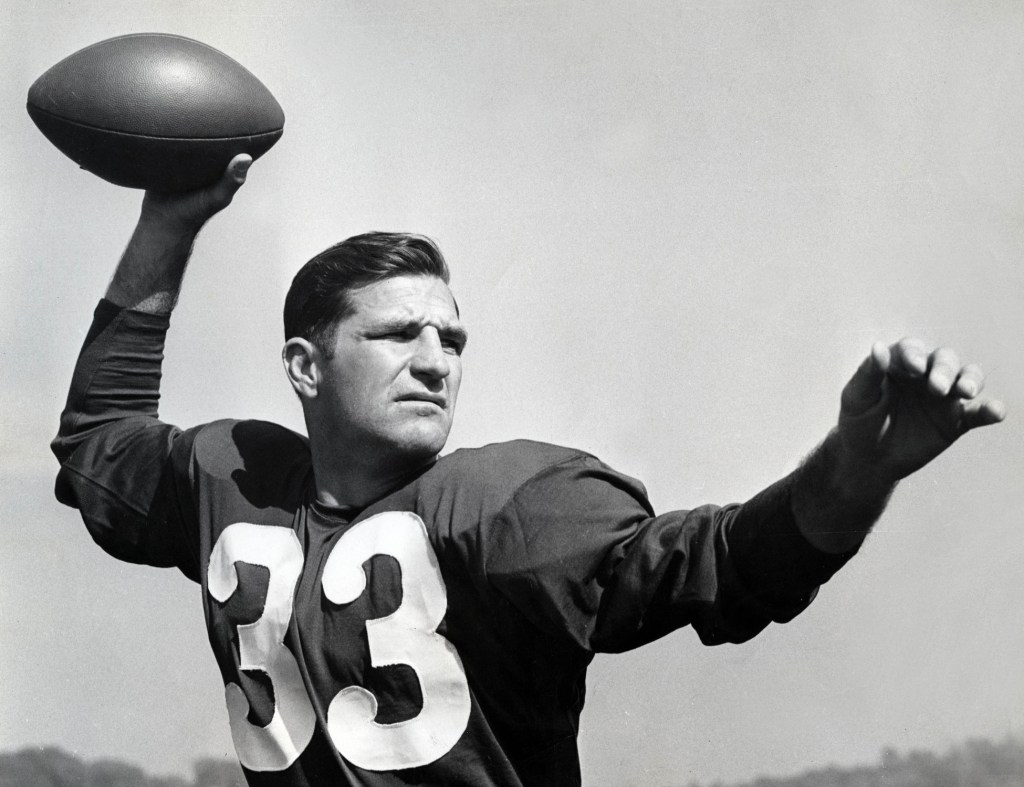
33) Sammy Baugh, Washington Redskins’ quarterback/defensive back/punter (1937-1952)

Runner-up: Don Beaupre, Washington Capitals’ goaltender (1990-1994)

Photo Credit: Redskins Wire USA Today

Baugh revolutionized the quarterback position, becoming the first to play the position as it is today. He led the franchise to its first NFL championship as a rookie in 1937, and that was just the beginning. He led the league in completion percentage eight times, passing yards four times, and quarterback rating three times. Playing as a safety on defense and a punter on special teams, Baugh led the league in completion percentage, yards per punt and interceptions (catching them, not throwing them) in 1943. He’s the only player to have his number officially retired by the Redskins, and he’s third in franchise history in both passing yards (21,886) and interceptions (31; again not in terms of throwing them). A charter member of the Pro Football Hall of Fame, Baugh remains one of the biggest names not just in franchise history, but of the entire league’s as well.

Beaupre preceded Olaf Kolzig as the Capitals’ starting netminder, and he turned in several solid seasons in the early 1990s. He made his second NHL All-Star Game in 1993, and led the NHL with five shutouts in 1990-91. The team made it to the playoffs every season he played in Washington, and his 128 wins are third in franchise history behind Kolzig and Braden Holtby.

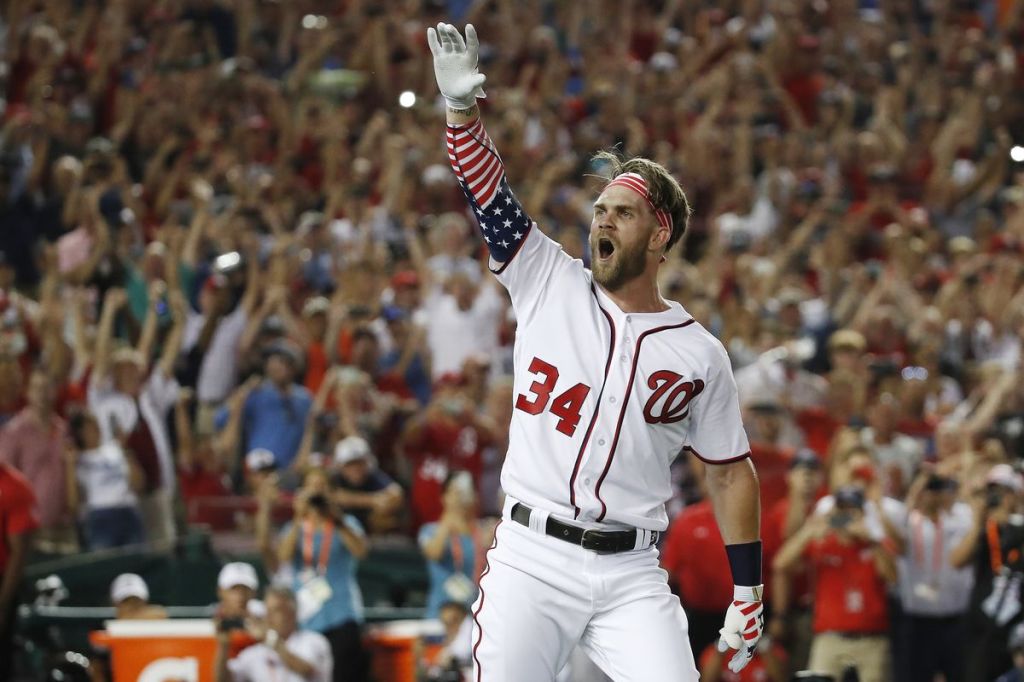
34) Bryce Harper, Washington Nationals’ outfielder (2012-2018)

Runner-up: Al Iafrate, Washington Capitals’ defenseman (1991-1994)

Photo Credit: Alex Brandon/AP

Harper came with a lot of hype as the first overall pick of the 2010 draft, and immediately became a star once he arrived in the majors in 2012, winning NL Rookie of the Year and helping the team win its first division title at just 19 years old. Headlining a 2015 World Series favorite that fell short of even making the playoffs, Harper still managed to become the youngest unanimous MVP in baseball history at 23 with 42 home runs (most in the NL) and a .330/.460/.649 slash line, with his OBP and slugging percentage leading the majors. He never achieved much team success, as he joined the rival Philadelphia Phillies right before the 2019 season. While most fans hated him upon his departure, he still became the best No. 34 in the city’s history.

Iafrate was a part of an offensively potent defensive unit, notching a career-high 66 points in 1992-93, where he earned Second Team All-Star honors. He also rocked the NHL All-Star weekend that year by setting a record in the hardest shot competition; his 105.2 mph shot would stand as the record for 16 years before being broken by Boston’s Zdeno Chara, who hit 105.4 mph in 2009. Iafrate’s time in DC was relatively short, but it was certainly the most productive stretch of his career.

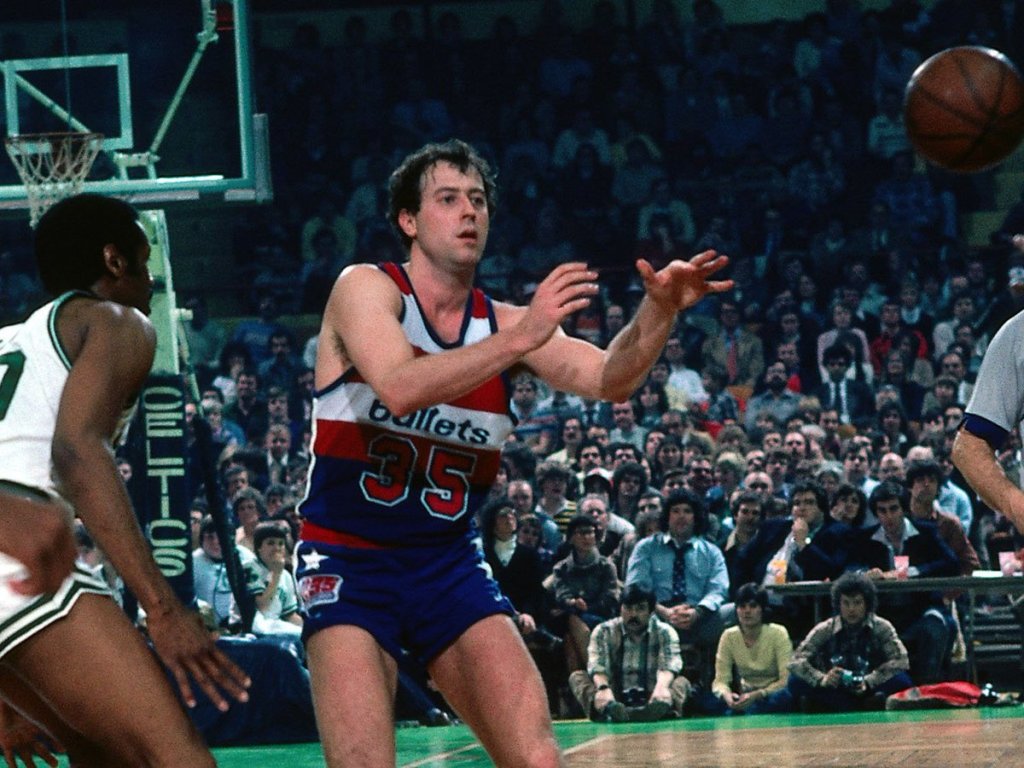
35) Kevin Grevey, Washington Bullets’ guard/forward (1976-1983)

Runner-up: Al Jensen, Washington Capitals’ goaltender (1982-1987)

Photo Credit: Washington Wizards Twitter

After a legendary career at the University of Kentucky, Grevey played a supporting role to Elvin Hayes and Wes Unseld in the late 1970s, his best seasons coming in ’78 and ’79. Averaging a modest 14.3 points, 2.9 rebounds and 2.5 assists during his time as a starter in Washington, it was his efficient shooting that boosted the team on offense. He shot 43.5 percent from the field and 35.1 percent from three during his Bullets tenure. After two years in Milwaukee, Grevey returned to the DC area and opened a sports bar that closed in 2016, displaying his connection to the area.

Jensen backstopped the Caps to their first postseason appearance in franchise history in 1983, and it was the following season where his performance peaked. He led the league with four shutouts, posted a career-best 2.92 goals against average and finished tied for third with fellow Caps netminder Pat Riggin in the Vezina Trophy voting.

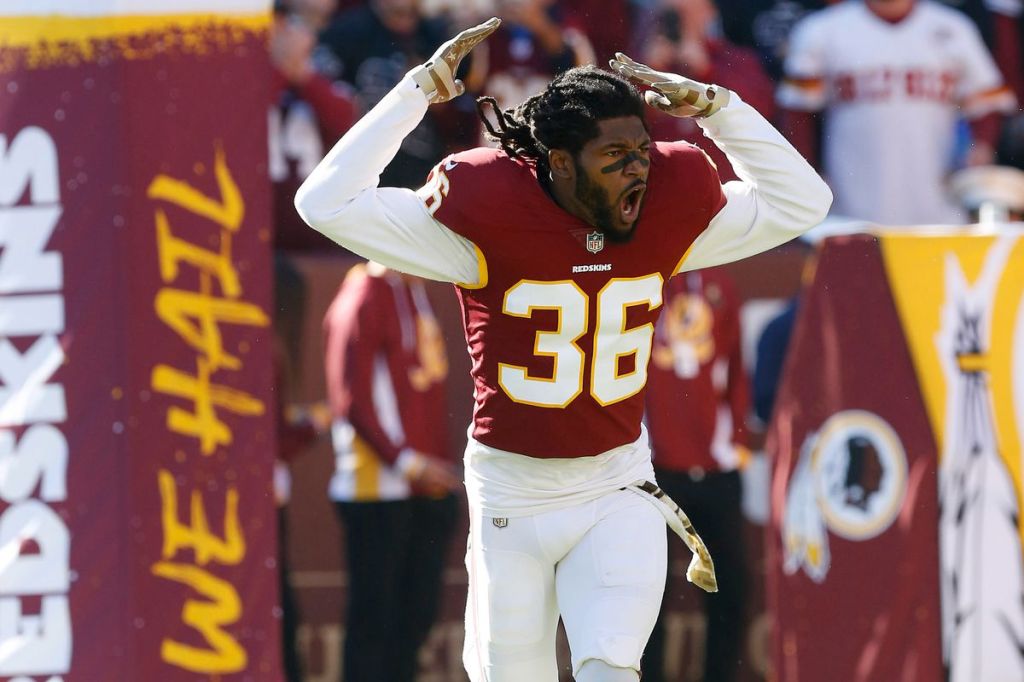
36) DJ Swearinger Sr., Washington Redskins’ safety (2017-2018)

Runner-up: Timmy Smith, Washington Redskins’ running back (1987-1988)

Photo Credit: Geoff Burke/USA Today Sports

Swearinger did not wear burgundy and gold for long, but he was among the best safeties in the league when did, especially in 2018. After leading the team in tackles in 2017, Swearinger was the highest-rated safety by Pro Football Focus for much of 2018. A falling out with Jay Gruden and the coaching staff led to his surprising dismissal from the team, prematurely ending what was budding into a standout career with the team, but he was still good enough to top all other No. 36’s in Washington.

Smith played fewer games in Washington than Swearinger did, and had a largely unimpressive NFL career with the exception of one game, but it was the most important one of his life. As a 23-year-old rookie, Smith broke the Super Bowl rushing record with 204 yards and two touchdowns in Super Bowl XXII against the Denver Broncos. Had Doug Williams not put together an equally-impressive performance, Smith could have easily been named MVP. It was his first career start, and coach Joe Gibbs did not tell him he’d be starting until warm-ups. He was off the team by 1989, but his Super Bowl performance will always be a significant part of the franchise’s history.

Sean Taylor was better than each of these guys while wearing No. 36, but since he already took claim of the No. 21 spot, he does not apply here, but given who he’s up against maybe he should…

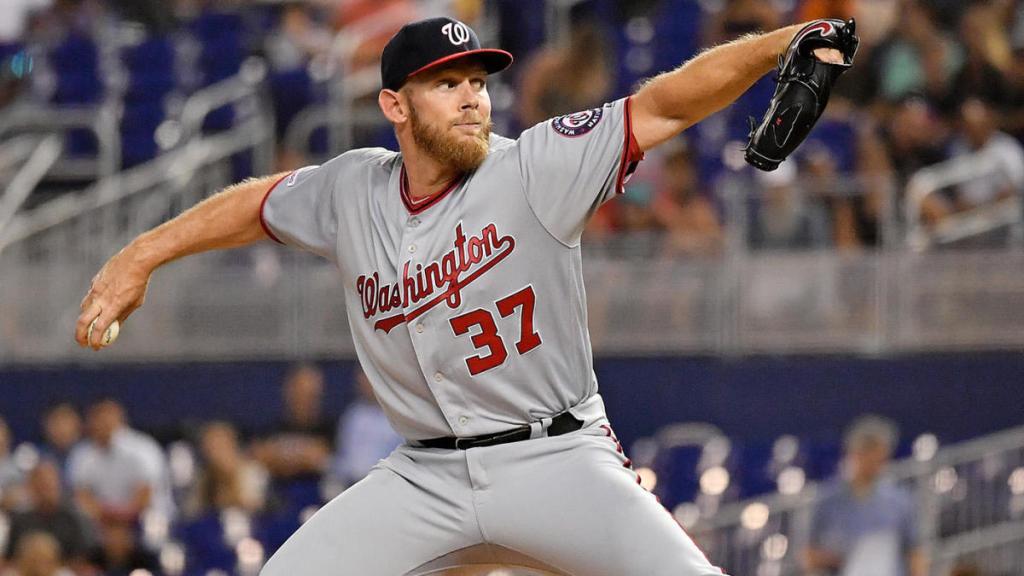
37) Stephen Strasburg, Washington Nationals’ pitcher (2010-present)

Runner-up: Olaf Kolzig, Washington Capitals’ goaltender (1990-2008)

Photo Credit: Jasen Vinlove/USA Today Sports

In probably the toughest match-up since No. 11 with Hayes, Mike Gartner and Ryan Zimmerman, Strasburg earns the title for No. 37. His arrival to the majors in 2010 instilled a new sense of hope within the franchise. As the most hyped prospect of all-time, he electrified Nats fans in his thrilling 14-strikeout debut before succumbing to an elbow injury requiring Tommy John surgery just a couple months later. Injuries have impacted him throughout his career, but he has still finished in the top 10 for Cy Young voting three times, including a third place finish in 2017. His 2019 postseason performance, culminating in World Series MVP honors, solidified his legacy as a National, and his new seven-year mega-deal should keep him in Washington for the rest of his career (hopefully).

Kolzig has the most games played and wins among goalies in franchise history, and he was in net for the team’s run to the Stanley Cup Final in 1998. He won his first and only Vezina Trophy two seasons later in 1999-2000. He spent his entire career in Washington, with the exception of eight games with the Tampa Bay Lightning in 2008-09. As a full-time starter, he posted an impressive .908 save percentage and 2.67 goals against average.

Pat Fischer was an All-Pro corner for the Redskins from 1968-1977, and is fully worthy of a spot here, but with Kolzig and Strasburg spending most/all of their career in Washington, as opposed to Fischer — who spent seven seasons in St. Louis — they get the slightest edge.

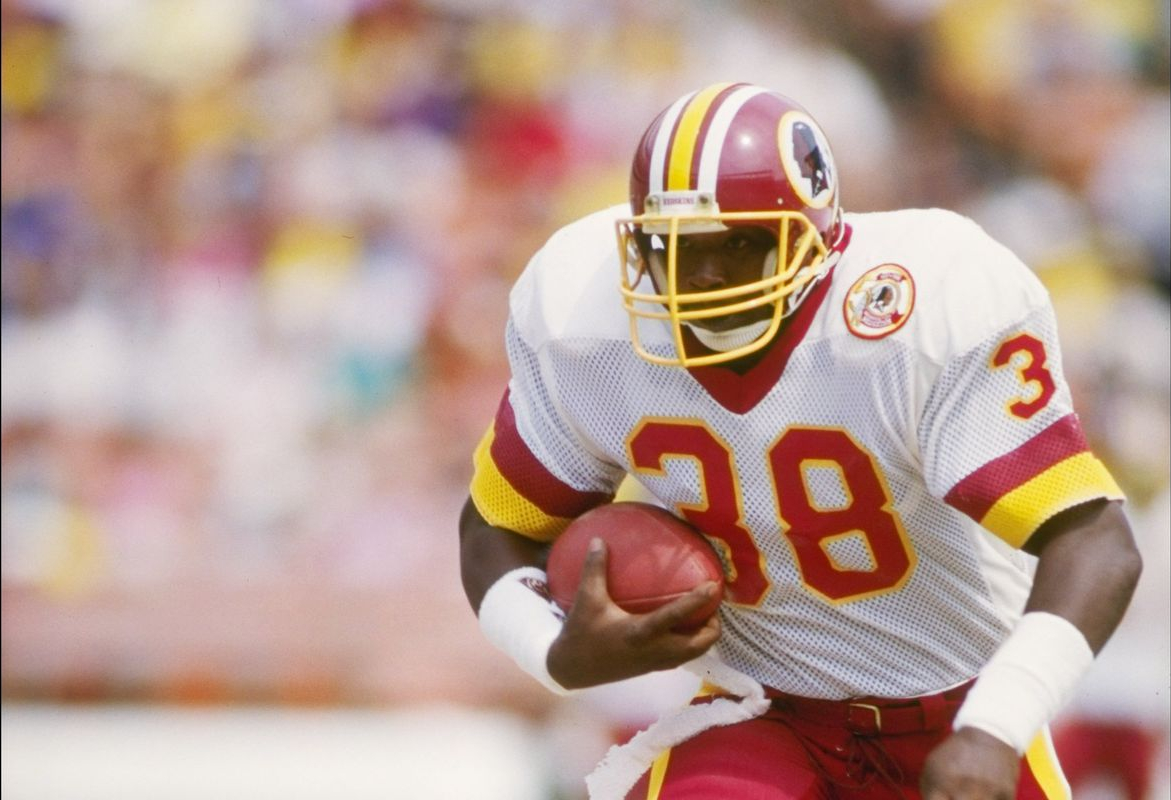
38) George Rogers, Washington Redskins’ running back (1985-1987)

Runner-up: Mike Morse, Washington Nationals’ outfielder/first baseman (2011-2012*)

Photo Credit: SB Nation Hog Haven

Rogers’ best years came with the New Orleans Saints, and in 1981 he led the league with 1,674 rushing yards and was named First Team All-Pro and Offensive Rookie of the Year. Still, he had two 1,000 yard seasons with the Redskins, and topped the league with 18 rushing touchdowns in 1986 to go with 1,203 rushing yards.

Morse spent four seasons in Washington, mainly as a bench bat. He got a substantial amount of playing time in 2011 as the starting first baseman, and was by all accounts the team’s best offensive player. He led the team in WAR (3.4), home runs (31), RBI (95), hits (158), total bases (287) and every slash line category (.303/.360/.550). As a result, he finished 19th in MVP voting that season, but fell back to Earth in 2012 as the starting left fielder. A true one-season wonder, Morse is still among the best to wear No. 38 in Washington.

39) David Steckel, Washington Capitals’ forward (2008-2011*)

Runner-up: David Amerson, Washington Redskins’ cornerback (2013-2015)

Photo Credit: Gary A. Vasquez/US Presswire

Steckel was a fine player: a bottom-six center who would tally 10-20 points per season and was one of the team’s best face-off men and penalty killers. He spent close to four full seasons contributing in this role, and at a towering 6’6″, Steckel’s physicality was a valuable asset for the team. He certainly does not stand out when you look at the other names on this list, but of people to wear No. 39, he did the most in DC.

Amerson was the team’s first pick in 2013: a second-rounder tasked to aid a weak secondary. He contributed decently as a reserve corner during his rookie season, starting eight out of 16 games and nabbing two interceptions. He was elevated to a starting role in 2014, and while he did not intercept any passes, he was second on the team with seven pass deflections, and he upped his total tackles to 66 compared 48 the year prior. He fell out of the rotation in 2015, and was soon waived. Still, with a lesser-used number such as 39, he makes this list.

DC Sports By The Numbers (20-29)

By: Joe Pohoryles

The Washington, D.C. sports teams have seen plenty of athletes do incredible things while representing the nation’s capital. One of the most recognizable features of these athletes is the numbers they sport on their uniforms.

As we forge on in these times with little going on in the sports world, I will spend the next week-and-a-half exploring which players were the best to wear every possible jersey number, continuing today with 20-29.

Of course comparing players across different sports is difficult, but this will take a look at the most impactful and iconic DC sports figures. Some of the names on this will be more prominent than others; several lesser worn numbers will merely be default picks. In any case, it should be interesting to see the distribution.

If you missed the earlier parts of the list, you can find them here: 0-9, 10-19

(Note: For NBA and NHL, a player’s tenure is marked by the year their first season ended until the year their final season ended. For example, John Wall was drafted in 2010 and was a rookie in the 2010-11 season, but since the season ended in 2011, his tenure is listed as 2011-present. This is not necessary for MLB — where the entire season is played in the same calendar year — or NFL — where only the postseason is played in a different calendar year.)

*= the player’s tenure on the team extended longer before or after the stated dates, but said player wore a different number in those other years

20) Michal Pivonka, Washington Capitals’ forward (1987-1999)

Runner-up: Ian Desmond, Washington Nationals’ shortstop (2012-2015*)

Photo Credit: NHL.com

Pivonka is third in franchise history for career assists with 418, behind Nicklas Backstrom and Alex Ovechkin. He spent all 13 NHL seasons with the Capitals and was often a spearhead of the offense, leading the team in points twice. By the time the team made their first Cup Final in 1998, his production had gone way down, but he was still a valuable piece of the team for well over a decade.

Desmond was a big piece of the upstart Nationals, and made key contributions to those first playoff teams in 2012 and 2014. An above-average hitter, Desmond earned three Silver Slugger awards in a row from 2012-2014, coinciding with three consecutive 20 home run/20 bases stolen seasons. He dropped off a bit in his final season with the team, but his role in building up the team into a playoff contender was significant.

21) Sean Taylor, Washington Redskins’ safety (2005-2007*)

Runner-up: Dennis Maruk, Washington Capitals’ forward (1979-1983)

Photo Credit: SB Nation Hog Haven

Taylor, the hardest-hitting safety of his time, thrilled Redskins fans with his big impact plays, developing into a superstar before his career and life was tragically cut short in a 2007 home invasion at just 24 years old. Even with two Pro Bowl and one First Team All-Pro selection, Taylor had barely reached his potential. Still, he was able to inspire the next generation of safeties, such as Landon Collins, DJ Swearinger and Ha Ha Clinton-Dix, who have all donned the burgundy and gold in recent years. Looking at his on-field play and off-field impact, Taylor is the clear pick for No. 21.

Maruk spent three years in the NHL, bouncing around between Oakland, Cleveland and Minnesota before joining the Caps and leading the team in points in his first season at just 23 years old. He continued to lead the team in scoring in four of the next five seasons, including his single-season franchise record 136 points (60g, 76a) in 80 games during the 1981-82 season. The following season, his offensive prowess finally broke Washington into the playoffs for the first time in franchise history.

Terry Allen had a couple elite seasons with the Redskins in the late 1990s, rushing for over 1,300 yards in ’96 and ’97, as well as a league-high 21 rushing touchdowns in ’97. His production dropped off afterwards, but he was certainly in contention for runner-up.

22) Dino Cicciarelli, Washington Capitals’ forward (1989-1992)

Runner-up: Mike Thomas, Washington Redskins’ running back (1975-1978)

Photo Credit: Denis Brodeur/Getty

Cicciarelli spent most of his 19-year Hall of Fame career elsewhere, but he was still among the team’s best offensive players when he was here. Ciccarelli’s 608 career goals are the most all-time among undrafted draft-eligible players (19th most overall).

Thomas was a top 10 rusher in each of his first two NFL seasons, winning Offensive Rookie of the Year in 1975 and making the Pro Bowl in ’76. Like Ciccarelli, Thomas was not in DC for long, but of any DC athlete to wear No. 22, he is certainly near the top.

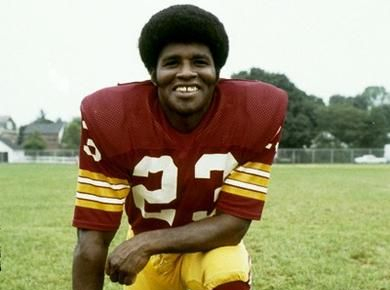
23) Brig Owens, Washington Redskins’ safety (1966-1977)

Runner-up: DeAngelo Hall, Washington Redskins’ cornerback (2008-2017)

Photo Credit: Pinterest

Owens spent his entire 11-year career in Washington, starting all 14 regular season games seven times. He never made any Pro Bowls, but he still brought strong play to the secondary unit, making him a fan favorite. He helped lead the team to its first Super Bowl appearance in 1972, and holds the franchise record for interception return yards (686) and is second behind Darrell Green in interceptions (36).

Hall led an otherwise dismal secondary for many years in the early 2010s. His biggest season was 2010, where he had a four-interception game against the Chicago Bears on Oct. 24, and made it to the Pro Bowl at the end of the season, where he earned the game’s MVP honors. His play steadily declined afterwards, but he remained a leader on defense throughout.

Todd Bowles is another defensive back worth consideration. He started at safety for the Redskins during Super Bowl XXII, and held down a starting role for much of the late ’80s.

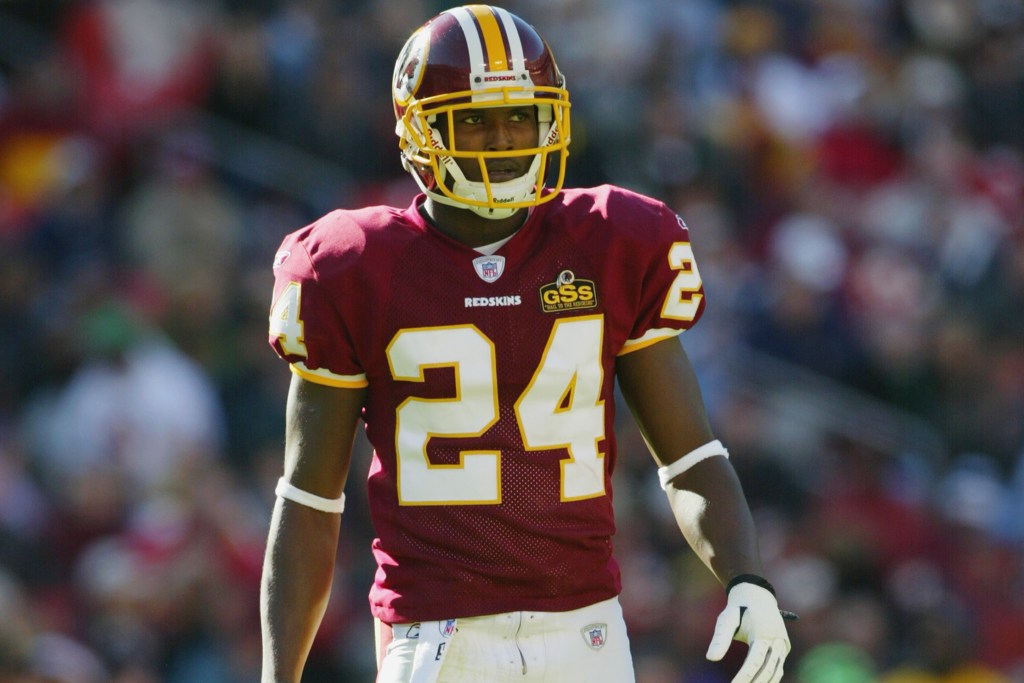
24) Champ Bailey, Washington Redskins’ cornerback (1999-2003)

Runner-up: Jeff Malone, Washington Bullets’ forward (1984-1990)

Photo Credit: Jamie Squire/Getty

Another Hall of Famer best known as a player for a different team, Bailey was still elite in his first five NFL seasons in Washington. Even with Green and Deion Sanders as teammates, Bailey still stood out in the secondary. He started every single one of his 80 games with the Redskins, finishing with 18 interceptions and four Pro Bowl appearances by the time he was traded to the Denver Broncos in 2004.

Malone spent his first seven NBA seasons in Washington, holding down the starting two-guard spot beginning in his sophomore season. He averaged 20.2 points during his time with the Bullets, despite not being an elite three-point shooter. Both of his All-Star Game appearances came as a Bullet in 1986 and ’87. The team never achieved much success in Malone’s tenure, but that had more to do with the supporting cast.

25) Mitch Kupchak, Washington Bullets’ forward (1977-1981)

Runner-up: Jason Chimera, Washington Capitals’ forward (2010-2016)

Photo Credit: Washington Wizards Twitter

Kupchak was selected to the 1977 All-Rookie team and contributed major minutes to the 1978 title team. He averaged a career-high 15.9 points and 6.9 rebounds in 1977-78, and put in several more productive seasons at power forward before catching the Los Angeles Lakers’ Magic Johnson’s eye; Johnson reportedly lobbied owner Jerry Buss to go after Kupchak. He was a part of two more championship teams in LA, but it was in Washington where he was most productive.

Chimera’s role with the Caps was as a speedy, aggressive bottom-six forward. Still, he had two 40-point seasons and another one with 39, and he consistently stayed on the ice. He appeared in all 82 games four times, and appeared in 81 in 2010-11. He was never counted on to be a top producer to begin with, but his level of play never really tailed off from a third-liner level. At age 36, his final season with the team, he played all 82 games and tallied 40 points (20g, 20a).

Gus Johnson would be the clear choice here, but he played with the Bullets while they were still in Baltimore.

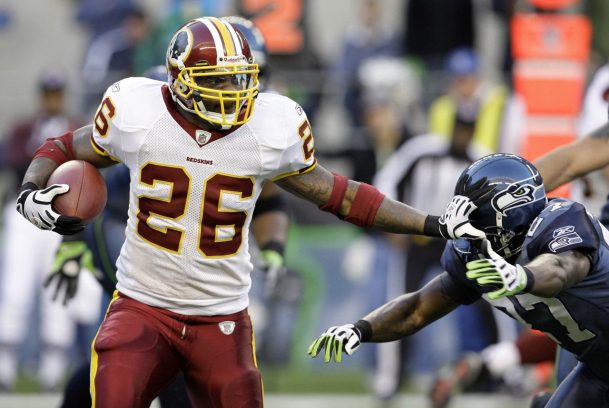
26) Clinton Portis, Washington Redskins’ running back (2004-2010)

Runner-up: Paul Krause, Washington Redskins’ safety (1964-1967)

Photo Credit: Redskins.com

Portis arrived from Denver in the Bailey trade, and became the lead running back for the next five to six seasons. Portis dealt with injuries throughout his tenure in Washington, but when healthy he was a top five running back from a statistical standpoint. In the four seasons in which he played more than eight games, he rushed for well over 1,000 yards each time. People look down on his output since the team had to give up a Hall of Fame corner to get him, but the truth is he’s one of the better running backs in franchise history.

Krause was certainly the bigger figure in NFL history, but relative to the Washington area, he is not as prominent as he was with the Minnesota Vikings. Still, he earned First Team All-Pro in his first two professional seasons in 1964 and ’65, foreshadowing the all-time great player he would become.

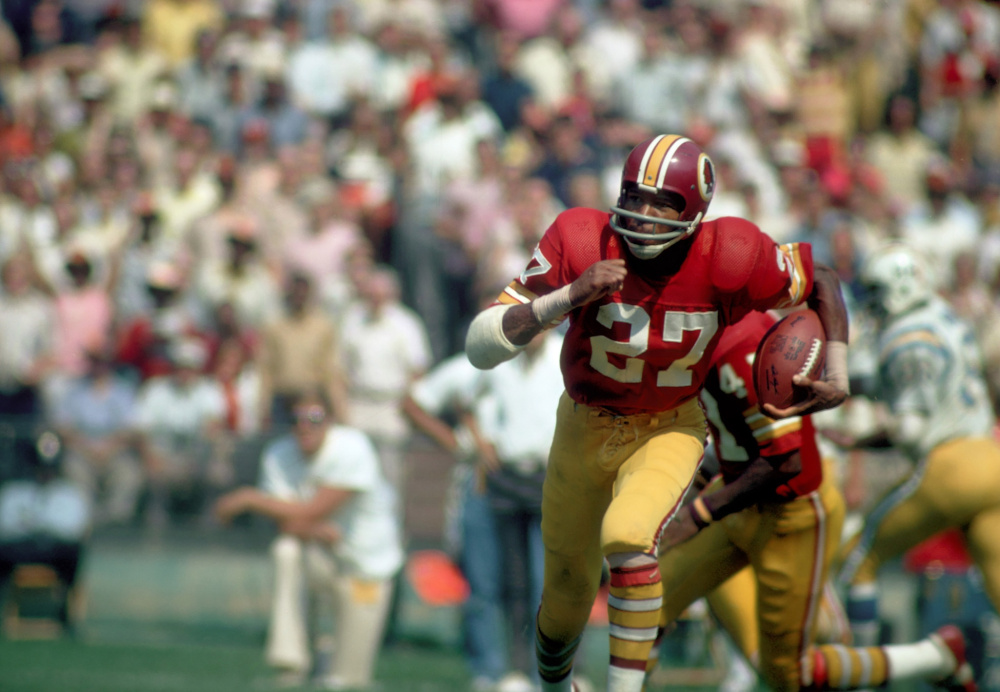
27) Ken Houston, Washington Redskins’ safety (1973-1980)

Runner-up: Dave Christian, Washington Capitals’ forward (1984-1989)

Photo Credit: Tony Tomsic/USA Today

Houston fittingly began his career in Houston with the Oilers, where he starred for six seasons before being traded to Washington for five players. Houston continued to ball out, making the Pro Bowl in the first seven of his eight years with the team. The iron man started every possible game for six straight seasons, earning two First Team All-Pro and five Second Team All-Pro selections en route to a Hall of Fame career.

Christian is perhaps most notable for being a member of the 1980 U.S. Olympic hockey team from the Miracle On Ice, but went on to turn in six-plus highly productive seasons in Washington. He finished second on the team in scoring in his first season with 81 points (29g, 52a), and leading the team in 1985-86 with 83 (41g, 42a).

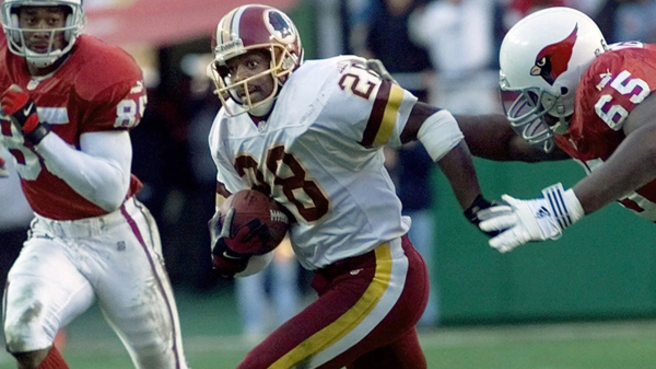
28) Darrell Green, Washington Redskins’ cornerback (1983-2002)

Runner-up: Jayson Werth, Washington Nationals’ outfielder (2011-2017)

Photo Credit: NBC Sports Washington

Green is the greatest player in franchise history, and one of the greatest corners of all time. He holds the record for most interceptions in franchise history (54), most games started and played (258, 295) and holds the NFL record for most consecutive seasons with an interception (19). The “Ageless Wonder” rarely sat out; from 1993-1999 he started all 112 games played in that stretch, during his age 33-39 seasons. One of the fastest players ever, the four-time First Team All-Pro scorched on special teams and shut down on defense, helping lead the team to two of its three Super Bowl victories.

Werth does not have quite the same pedigree as Green, but he was a veteran leader of a young, up-and-coming roster as it grew to a perennial playoff contender. Until the 2019 postseason, Werth owned the best playoff moment in team history: a walk-off home run in Game 4 of the 2012 NLDS to force a winner-take-all Game 5. His stats did not live up to his gargantuan $126 million contract, but he was still a valuable piece in Nats history.

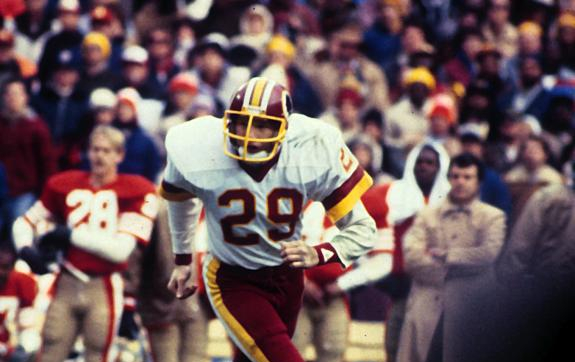
29) Mark Murphy, Washington Redskins’ safety (1977-1984)

Runner-up: Sam Shade, Washington Redskins’ safety (1999-2002)

Photo Credit: Redskins Historian.com

Murphy rounds out the former defensive backs that have absolutely dominated the 20-29 number range. His best season came in 1983, where he led the NFL with nine interceptions and earned Pro Bowl and First Team All-Pro honors. The year before, he helped seal the Redskins’ Super Bowl XVII victory with a late interception. Murphy is now the President and CEO of the Green Bay Packers, but as a player he spent all eight professional seasons in Washington.

Shade lived up to his name, not allowing opposing receivers much daylight. The safety led the team in tackles in 1999 and 2000, his first two seasons on the team. Getting to play with the likes of Sanders, Bailey and Green, among other high-caliber defensive backs certainly boosted his production, but he made his presence known in his four seasons in Washington.

DC Sports By The Numbers (10-19)

By: Joe Pohoryles

The Washington, D.C. sports teams have seen plenty of athletes do incredible things while representing the nation’s capital. One of the most recognizable features of these athletes is the numbers they sport on their uniforms.

As we forge on in these times with little going on in the sports world, I will spend the next week-and-a-half exploring which players were the best to wear every possible jersey number, continuing today with 10-19.

Of course comparing players across different sports is difficult, but this will take a look at the most impactful and iconic DC sports figures. Some of the names on this will be more prominent than others; several lesser worn numbers will merely be default picks. In any case, it should be interesting to see the distribution.

To see the best to wear 0-9, click here.

(Note: For NBA and NHL, a player’s tenure is marked by the year their first season ended until the year their final season ended. For example, John Wall was drafted in 2010 and was a rookie in the 2010-11 season, but since the season ended in 2011, his tenure is listed as 2011-present. This is not necessary for MLB — where the entire season is played in the same calendar year — or NFL — where only the postseason is played in a different calendar year.)

*= the player’s tenure on the team extended longer before or after the stated dates, but said player wore a different number in those other years

10) Kelly Miller, Washington Capitals’ forward (1987-1999)

Runner-up: Bobby Carpenter, Washington Capitals’ forward (1982-1987)

Photo Credit: NoVa Caps Fans

Miller played 940 games with the Caps, the fifth-most in franchise history, and his 408 points are tied for 16th-most in franchise history. Miller was never a high-volume point-scoring forward, though he was consistently among the team’s top 10 point scorers for the bulk of his career. His defensive work was his biggest calling card, and he received Selke Trophy votes seven times in his career (six with the Caps), including a third-place finish in 1991-92. Overlapping with all-time greats such as Rod Langway and Dale Hunter, his place in franchise history is a bit overshadowed, but as a longtime contributor for some great Caps teams, he tops all No. 10s in the city’s history.

Carpenter — the second American-born first-round pick ever — was drafted third overall in the 1981 NHL entry draft and spent his first five-plus NHL seasons in Washington. He played 80 games in each of his five full seasons with the team, and was a top five scorer on the team in each of his age 18-21 seasons. His clashes with coach Bryan Murray led to his 1987 trade to the New York Rangers (in fact Miller himself was part of the trade), but Carpenter played an instrumental offensive role for those first playoff teams of the early ’80s.

Earl Monroe would have been in contention, but he played for the Bullets when the franchise was still in Baltimore, then went on to star in nine seasons with the New York Knicks. You also have to consider Manute Bol, who finished his career with more career blocks(!) than points, and was amongst the tallest players in NBA history (measured between 7’6″ and 7’7″). Bol certainly has that “icon” factor going for him. Then, of course, there’s Robert Griffin III, whose overall story is one of disappointment, but will always be a major figure in Redskins history, for better or worse.

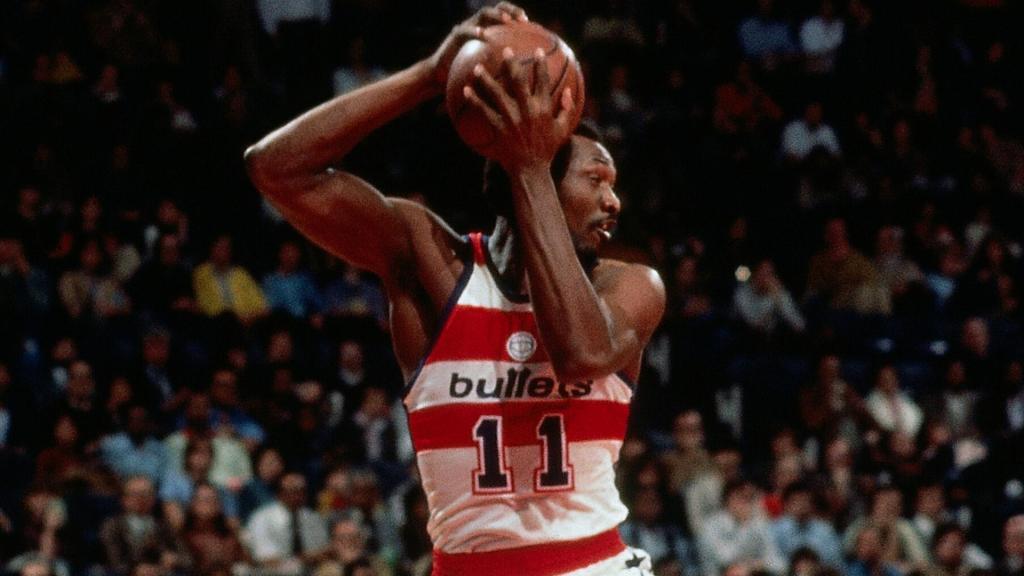
11) Elvin Hayes, Washington Bullets’ forward (1973-1981)

Runner-up: Ryan Zimmerman, Washington Nationals’ third/first baseman (2005-present)

Photo Credit: NBA.com

Hayes is the all-time leading scorer for the franchise by a wide margin (over 4,000 points), and he led the team to its only NBA championship to date in 1978. He holds the ninth-most points in NBA history (27,313) and fourth-most rebounds (16,279). A 12-time All-Star, six-time All-NBA selection and two-time rebounding champion, Hayes is the best player to wear a Bullets uniform.

Zimmerman is “Mr. National.” He was the team’s first draft pick after they moved to DC from Montreal and remained a fixture at third base until moving to first as he got older. He was the star during all the down years, and was a key contributor to the many playoff teams from 2012-2017. Finally in 2019, despite not playing a regular starting role, Zimmerman provided multiple crucial at bats en route to the franchise’s first World Series. Fittingly, the two-time All-Star was the first Nationals player to hit a home run in the World Series. He may not earn Hall of Fame status, but his importance in DC sports history is undeniable.

Before anybody starts a riot about snubbing Mike Gartner, he is obviously another worthy option, and was better in his respective sport than Zimmerman, but with everything Zimmerman means to Nats baseball, Zim gets a bump as an impactful Nats lifer. Gartner was an all-time great Capital, but with the significance of the two guys ahead of him, he just barely misses out.

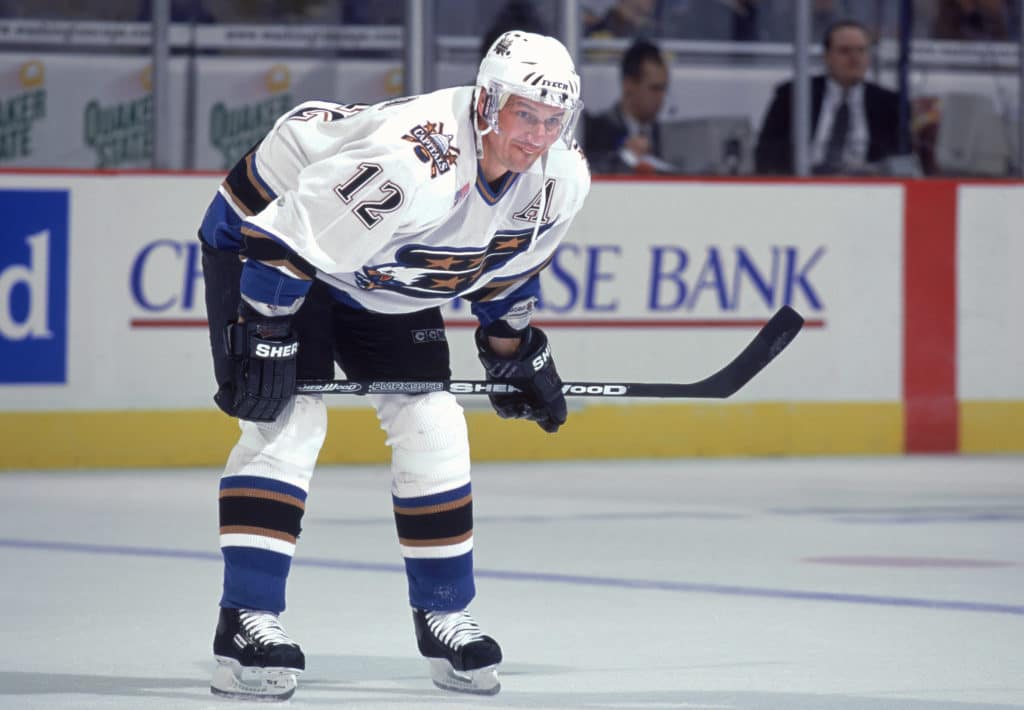
12) Peter Bondra, Washington Capitals’ forward (1991-2004)

Runner-up: Gus Frerotte, Washington Redskins’ quarterback (1994-1998)

Photo Credit: The Athletic

Bondra was the Caps’ star of the ’90s, leading the team in points as early as his third season (the first of five times he would do that). He finished amongst the top 10 point scorers on the team every season, and led the league in goals twice. He retired with the franchise record in career goals and points (both eventually broken by Alex Ovechkin). He is the best Washingtonian athlete to wear No. 12 by far.

Frerotte was the Kirk Cousins before Kirk Cousins. The Skins drafted Frerotte in the seventh round of the 1994 draft. The team had selected Heath Shuler third overall in that same draft as the quarterback of the future. Shuler’s injuries and struggles prevented him from taking the starting job, and so Frerotte took the job and held the role until 1998. Along the way, he put together a Pro Bowl season in 1996, but the team never achieved much during his stint.

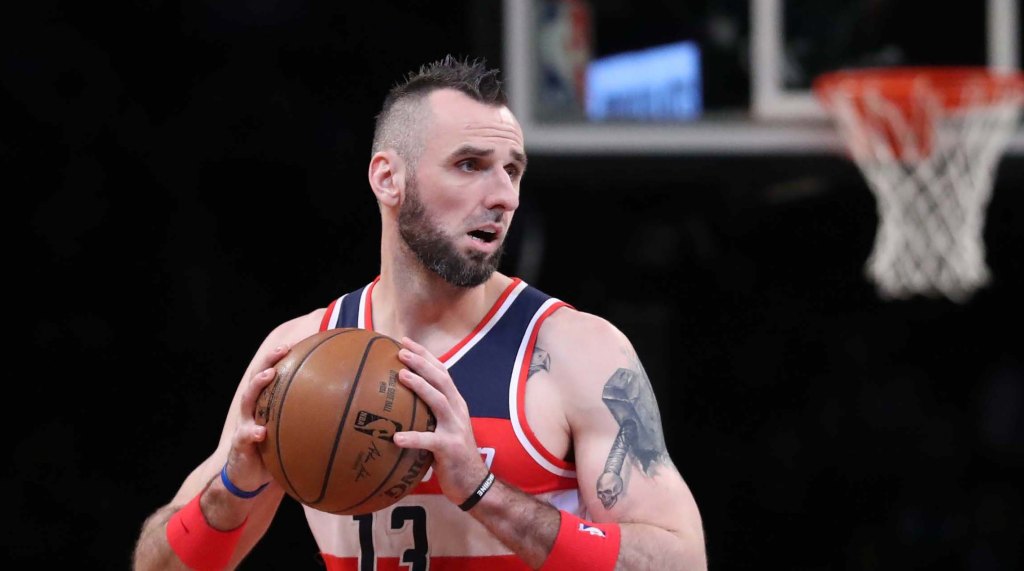
13) Marcin Gortat, Washington Wizards’ center (2016-2018*)

Runner-up: Jake Scott, Washington Redskins’ safety (1976-1978)

Photo Credit: Anthony Gruppuso/USA Today Sports

Gortat was the starting center and Wall’s main pick-and-roll partner on the Wizards’ playoff teams of the mid-to-late 2010s. While he was never revered among the best in the league, the Polish Hammer anchored the front court for the better part of the decade (2014-2018). In his five seasons with the team, he started fewer than 80 games just once (74 in 2015-16), and started all 82 games three times. He may not be an all-time great, but he’s a defining character in his era of Wizards basketball.

Scott, the two-time All-Pro and Hall of Fame safety, is a controversial choice for this list. He is best known for being a core member of the 1970s Miami Dolphins, where he made five consecutive Pro Bowls from ’71-’75 and won Super Bowl VII against the Redskins with Miami’s 17-0 team of 1972. He spent three productive seasons in Washington, but his best days were behind him. He did play high school ball for Washington-Lee (VA) and Bullis (MD), but as a pro he will always be remembered more as a Dolphin. Still, he is the best player overall to wear No. 13, and is only topped by Gortat because of the latter’s larger significance to his respective team’s history.

There is a big opportunity for Jakub Vrana to overtake both names by the end of his career (or even within the next few years). After all, he was a rookie when he scored the first goal in Game 5 of the 2018 Stanley Cup Finals, and has since developed into a key member of the team’s present and future.

14) Eddie LeBaron, Washington Redskins’ quarterback (1952-1953, 1955-1959)

Runner-up: Gaétan Duchesne, Washington Capitals’ forward (1982-1987)

Photo Credit: @SportsPaperInfo on Twitter

At 5’7″, LeBaron would not have been glanced at by today’s NFL scouts, but the 1950s were a different time. He earned three Pro Bowl appearances during his two stints in Washington, and was the top-rated quarterback of the 1958 season. He is not typically listed amongst the best Redskins’ quarterbacks of all time, but of players in DC to wear No. 14, he’s at the top.

Duchesne spent his first six NHL seasons in Washington as a more defensive-minded forward. He received votes for the Selke Trophy (top defensive forward) in each season as a Cap with the exception of his rookie season. He was never the biggest star on the team, but his production made him a key contributor.

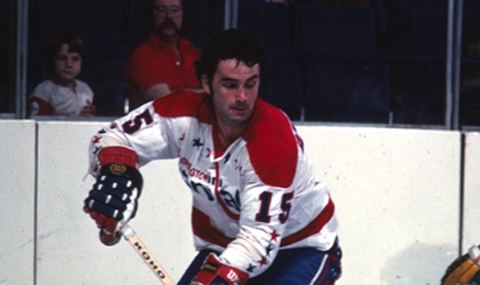
15) Guy Charron, Washington Capitals’ forward (1977-1981)

Runner-up: Cristian Guzmán, Washington Nationals’ shortstop (2005-2010)

Photo Credit: Alchetron.com

Charron spent the back end of his NHL career in Washington, but he led the team in points in each of his first two seasons, and was second on the team during his third season in 1978/79. His point production tailed off after that, but Charron was a strong veteran presence that helped build the franchise into an eventual playoff contender.

Guzmán had a rocky tenure with those early Nationals teams, suffering a couple major injuries that held him out for long stretches, but when healthy he was among the team’s stronger players. He was the team’s only representative at the 2008 All-Star Game, and was fourth in the National League in hits and batting average that season. He does not get much recognition, but without too many bright spots in that era, he was one of the few.

16) Dutch Leonard, Washington Senators’ pitcher (1938-1946)

Runner-up: Bengte-Ake Gustafsson, Washington Capitals’ forward (1980-1989)

Photo Credit: Ghosts of DC.org

Emil John Leonard made four of his five All-Star Games as a member of the Senators, and the knuckleball pitcher had a 3.27 ERA and 657 strikeouts across his nine seasons in Washington. He was a solid starting pitcher for his era. Probably the most interesting fact about his career is that he pitched a complete-game victory against the New York Yankees right before Lou Gehrig’s famous farewell speech at Yankee Stadium in 1939.

Gustafsson was consistently among the top point scorers on the team in his nine years with the Caps. He spent his entire NHL career in Washington, and brought more than just offense; the Swede finished in the top five of Selke trophy voting twice during his career. His consistency made him a big asset for the Caps of the ’80s, never playing fewer than 67 games and scoring fewer than 55 points (with the exception of 1984-85).

His successor in the No. 16 sweater, Alan May, has a case as well. He endeared fans with his gritty playing style, and led the team in penalty minutes during each of his four full seasons with the team, establishing his role as the enforcer.

17) Camilo Pascual, Washington Senators’ pitcher (1957-1960, 1967-1969*)

Runner-up: Doug Williams, Washington Redskins’ quarterback (1986-1989)

Photo Credit: Pinterest

Pascual started his career with the original Washington Senators in 1954. He remained on the team through their 1961 move to Minnesota until 1966 when he was traded to… the new Washington Senators (today’s Texas Rangers). Despite the poor play around him, Pascual shined, especially in the early 1960s. He had the highest WAR in the American League in the 1959 season (8.6), while finishing second in strikeouts. He had the sixth-most strikeouts in the AL during 1960. As a member of both Senators franchises who brought high-end production, he certainly earns his place on this list.

Williams only started 14 of the 21 regular season games he played for Washington, but he put up a legendary performance in Super Bowl XXII to become the first black quarterback to win a Super Bowl. Williams went 18-29 for a then-record 340 yards and four touchdowns to earn MVP honors. It was the second Super Bowl win in franchise history, and Williams will always hold a big place in DC sports history for the performance.

Billy Kilmer is worth mentioning as well. He took the Redskins’ starting quarterback job away from Sonny Jurgensen after the latter’s injury in 1971 and held it until 1978, when Joe Theismann took over. Kilmer led the league in touchdown passes in 1972, where he received his only Pro Bowl selection.

18) Craig Laughlin, Washington Capitals’ forward (1983-1988)

Runner-up: Alex Carrasquel, Washington Senators’ pitcher (1942-1945*)

Photo Credit: NHL.com

Laughlin was a smaller piece in the trade that brought Langway to Washington, and it paid dividends. He was a top seven scorer in each of his five full seasons with the team, peaking in 1985/86 with 75 points (30g, 45a) in 75 games, which was tied for second on the team. He had the fifth-highest shooting percentage — 18.0 percent — in franchise history. Before he became the TV color commentator for the Caps with NBC Sports Washington, “Locker” was a key contributor on several playoff teams.

Carrasquel was the first Venezuelan-born player to play in the majors, debuting with Washington in 1939 at 26 years old. Despite the Senators constantly finishing toward the bottom of the American League during the 1940s, Carrasquel managed to finish .500 or better from 1940-1945. His numbers didn’t pop off the page, but with not much run support, Carrasquel put together seven solid seasons for the lowly Senators.

19) Nicklas Backstrom, Washington Capitals’ forward (2008-present)

Runner-up: Bob Porterfield, Washington Senators’ pitcher (1951-1955)

Photo Credit: Brad Mills/USA Today Sports

Backstrom has been another key franchise figure for his entire career. Having to play in the shadow of Ovechkin has deprived him of All-Star nods in years that he should have received, but he has been crucial to the franchise’s success over the past decade regardless. He is the franchise leader in assists (684) and plus/minus (+119), and is the best, most significant DC athlete to wear the No. 19 by far.

Porterfield was traded to Washington from the Yankees in 1951, and went on to lead the American League with 22 wins in 1953 and finished seventh in MVP voting. He made his only All-Star Game in 1954, with worse numbers than ’53, but nonetheless served as a solid starter before moving on to play for the Boston Red Sox in 1956.

DC Sports By The Numbers (0-9)

By: Joe Pohoryles

The Washington, D.C. sports teams have seen plenty of athletes do incredible things while representing the nation’s capital. One of the most recognizable features of these athletes is the numbers they sport on their uniforms.

As we forge on in these times with little going on in the sports world, I will spend the next week-and-a-half exploring which players were the best to wear every possible jersey number, starting today with the single digits.

Of course comparing players across different sports is difficult, but this will take a look at the most impactful and iconic DC sports figures. Some of the names on this will be more prominent than others; several lesser worn numbers will merely be default picks. In any case, it should be interesting to see the distribution.

Football uses every number from 1-99, so there should be many Redskins to choose from. Hockey does not have too many high number players compared to 1-40, but with Edmonton’s Connor McDavid (97) and Pittsburgh’s Sidney Crosby (87) being two of the best players in the game, those high numbers certainly have a presence, so there may be some Capitals who sneak in at the top.

Baseball also uses every number in the book, but with the relatively short existence of the Nationals, there will not be nearly as many options to choose from (although there are a few Washington Senators on here). Basketball also presents the choice of every number to be utilized, but with so few players to fill up a roster, many numbers are rarely touched (if ever).

Without further ado, here are the best players in DC major sports history to wear to wear a single-digit number:

(Note: For NBA and NHL, a player’s tenure is marked by the year their first season ended until the year their final season ended. For example, John Wall was drafted in 2010 and was a rookie in the 2010-11 season, but since the season ended in 2011, his tenure is listed as 2011-present. This is not necessary for MLB — where the entire season is played in the same calendar year — or NFL — where only the postseason is played in a different calendar year.)

*= the player’s tenure on the team extended longer before or after the stated dates, but said player wore a different number

0/00) Gilbert Arenas, Washington Wizards’ guard (2004-2010*)

Runner-up: Kevin Duckworth, Washington Bullets’ center (1994-1995)

Photo Credit: Bleacher Report

“Agent Zero” started his career with the Golden State Warriors before spending seven-plus seasons as the Wizards’ starting point guard and franchise star. A three-time All-Star, Arenas was a fan favorite in the 2000s before his career got derailed by the infamous locker room incident of Dec. 2009. That offseason, the team drafted John Wall and brought in a new era for the 2010s, but Arenas will always hold a prominent place in franchise history.

After Arenas, the options are fairly slim. Duckworth spent two seasons in DC averaging 6.8 points and 4.8 rebounds.

1) Eddie Yost, Washington Senators’ third baseman (1951-1958*)

Runner-up: Rod Strickland, Washington Bullets/Wizards’ guard (1997-2001)

Photo Credit: The New York Times

Surprisingly, the DC area has never had an ultra-prominent player wear the number one, at least in a long time. Yost spent 14 total seasons with the Senators (1944, 1946-1958), accumulating 1,521 hits, 101 home runs, 550 RBI and a .253/.389/.368 slash line. The numbers didn’t pop off the page, but he debuted at age 17 and finished with a 35.0 career WAR. More amazingly, he was walked 1,614 times throughout his whole career, which ranks 11th in the major leagues all-time. “The Walking Man,” was a fixture at third for Washington and was amongst the best third basemen of his era.

Strickland joined Washington for his age 30 season, but held down the starting point guard role for four-plus seasons before being traded to Portland during the 2000-01 season. He averaged 15.1 points and 8.7 assists during his time in Washington, leading the league in assists during the 1997-98 season with 10.5 per game. He’s not really a franchise icon, but he certainly brought solid production for nearly half a decade.

2) John Wall, Washington Wizards’ guard (2011-present)

Runner-up: Matt Niskanen, Washington Capitals’ defenseman (2015-2019)

Photo Credit: Basketball Insiders

The successor to Arenas’s throne, Wall helped lead the Wizards back to relevancy as the face of the franchise. The five-time All-Star owns the franchise record record for assists (5,282) and steals (976) as well as top ten spots in every major offensive category. Wall defines the Wizards of the 2010s, and fans are eagerly awaiting his return for the 2020-21 season (along with the NBA’s return as a whole).

Niskanen is hardly a franchise face, but his impact on the franchise is undeniable. He was never the team’s best defenseman, but Nisky played a key role in the Caps’ Stanley Cup run in 2018, and came a long way in doing so. Entering the 2018 Cup Final, the top four active players with the most NHL games without playing in a Cup Final was Alex Ovechkin, Nicklas Backstrom, John Carlson and… Niskanen. The other three have been (and hopefully will remain) Caps’ lifers, but of all the other DC athletes to wear No. 2, Niskanen was the most impactful.

I do sort of wish I could give the runner-up spot to God Shammgod for his name alone, but he played just 20 career NBA games, all in the 1997-98 season with the Wizards.

3) Mark Moseley, Washington Redskins’ kicker (1974-1986)

Runner-up: Bradley Beal, Washington Wizards’ guard (2013-present)

Photo Credit: Malcolm Emmons/US Presswire

This one is a tougher call, but when you’re the only pure placekicker to win MVP in the league’s history, you earn some notoriety. Outside that wacky, strike-shortened 1982 season, Moseley spent 13 seasons as the Redskins’ kicker, and finished as the franchise leader in points with 1,207. As is common with kickers who remain with one team for a long time, Moseley became popular with fans as well, securing his place as an all-time DC sports figure, especially among those who wore No. 3.

Beal has a case for the title, as his role with the Wizards is objectively larger than Moseley’s was with the Redskins. Beal has been leading the team with Wall out, and has been a fan favorite since his rookie season. He even surpassed Wall this season on the franchise points leaderboard, sitting behind only Elvin Hayes’s 15,551 points with 11,425. Still, Moseley’s success, popularity and tenure exceed that of Beal’s. That said, Beal’s story is not yet finished, so this order could change when it’s all said and done.

The Capitals’ Scott Stevens is also worth a mention as the Hall of Fame defenseman spent his first eight years in the NHL with Washington. However, Stevens won three Cups (and the 2000 Conn Smythe) during the final 13 years of his career with the New Jersey Devils. He made four end-of-season All-Star teams in New Jersey compared to just one in Washington. While he was a great player with both teams, his time in New Jersey weakens his case as the best No. 3 in DC.

4) Kevin Hatcher, Washington Capitals’ defenseman (1985-1994)

Runner-up: Moses Malone, Washington Bullets’ center (1987-88)

Photo Credit: NoVa Caps Fans

Hatcher spent 10 seasons as one of the team’s top scoring defensemen. Leading the blue line with Rod Langway, Hatcher was instrumental in the franchise’s first postseason streak from 1983-1996, making the playoffs every season he played on the team. His 426 points with the Caps are the fourth-most in franchise history among defensemen (13th overall). The longtime Cap served as the seventh team captain in franchise history during his final two seasons with the team, sharing the position with Langway in 1992-93 before wearing the ‘C’ by himself the following season after Langway’s retirement.

Malone is a top 10 center in NBA history, and while he is best remembered for playing with the Houston Rockets and Philadelphia 76ers, in two seasons with Washington, he led the team to the playoffs and was named an All-Star both years, averaging 22.2 points, 11.2 rebounds and 1.1 blocks per game across those two years. After his departure, the team failed to make the playoffs again until 1997, nine years later. Had he spent most of his career in Washington, he would have been the top choice for No. 4.

Antawn Jamison is another candidate. He spent five-and-half seasons in Washington as a core player behind Arenas. He made the All-Star Game twice while in DC, and averaged 20.6 points and 8.8 rebounds. He also shot 43.6% or better from the field each season. It’s difficult to live up to even two years of Moses Malone, but Jamison still left an imprint in Wizards’ basketball.

5) Rod Langway, Washington Capitals’ defenseman (1983-1993)

Runner-up: Cecil Travis, Washington Senators’ shortstop/third baseman (1935-1941*)

Photo Credit: Nova Caps Fans.com

Before the Ovechkin era came around, Langway was the most important player in Capitals’ history. After arriving in a trade from Montreal, Langway was immediately named team captain and led the Caps to their very first playoff appearance in franchise history, winning his first Norris Trophy (for best defenseman) along the way. The team subsequently made the playoffs every year from 1983-1996. The Hall of Famer helped turn the franchise around and remains a present figure within the organization. No one will wear No. 5 for the Caps again, and Langway is the reason.

No one reading this will remember Cecil Travis’s playing days, but Travis played in 12 major league seasons — all with the Senators — from 1933-1941 and 1945-1947. Despite World War II taking away a large chunk of his prime, Travis finished with 1,544 hits, 657 RBI (yet only 27 home runs), and an impressive .314/.370/.416 slash line. The three-time All-Star’s .314 batting average is a record amongst American League shortstops, and ranks just third behind Honus Wagner (.327) and Arky Vaughn (.318) among shortstops all-time. He died at 93 years old in 2006.

Perhaps Kwame Brown, the Washington Wizards’ center from 2002-2005 and former first overall pick, could warrant a look at runner-up for No. 5, although for all the wrong reasons. Brown is widely regarded as the biggest bust in NBA history, and was the subject of an all-time rant from ESPN’s Stephen A. Smith back in 2008. Best player to wear No. 5? Not a chance. A DC Sports icon? Maybe in the worst way, but it may still count.

The video is just one minute long. If you have not seen this, I urge you to click, whether you like Stephen A. or not.

6) Anthony Rendon, Washington Nationals’ third baseman (2013-2019)

Runner-up: Calle Johansson, Washington Capitals’ defenseman (1989-2003)

Photo Credit: Michael Reaves/Getty Images

Once the sixth overall pick in a loaded 2011 MLB draft, Rendon developed into one of the best third basemen in baseball, culminating in a World Series title and NL MVP nomination. Despite over five years of good play, Rendon did not make an All-Star team until 2019 (injuries had something to do with that), but this offseason he earned a seven-year/$245 million contract with the Los Angeles Angels that has him leaving DC on top. With not too many big-time No. 6’s in DC history, Rendon is the clear best.

With 983 games played for Washington, Johansson has the most games played in franchise history of anyone not named “Ovechkin,” and while he was never a major superstar, the defenseman spent 14-plus seasons as an integral part of the blue line. He even spent some time as an assistant for the team, so he’s deeply rooted in the franchise.

7) Joe Theismann, Washington Redskins’ quarterback (1974-1985)

Runner-up: Yvon Labre, Washington Capitals’ defenseman (1975-1981)

Photo Credit: Associated Press

After leading the team to the Super Bowl in the 1982 season at age 33, Theismann earned First Team All-Pro honors for the first and only time in his career the following season at 34 years old. He spent his entire career in Washington and was respected so much that his number was never assigned to anyone until 2019, when first-round pick Dwayne Haskins Jr. took the number out of its unofficial retirement (with Theismann’s permission). Maybe someday Haskins can earn his way to the top spot, but for now it belongs to this all-time Redskins great.

Labre was the face of the early Capitals’ early years, serving as captain from 1976-78. While the team never achieved any tangible success in this period (and in most years, the opposite of success), Labre brought physical play to the ice and helped grow the presence of the game in the DC area. He was the first in the organization to have his number retired, and while his name may not be at the top of any franchise leaderboards, he is a major figure in Caps history.

8) Alex Ovechkin, Washington Capitals’ winger (2006-present)

Runner-up: Kirk Cousins, Washington Redskins’ quarterback (2014-2017*)

Photo Credit: WTOP News

I have made my feelings about “The Great Eight” very clear on this website, so there is not much more I can add. Still, Ovi is an all-time great who was still rolling at 34 before the season shut down (the regular season was supposed to have ended last night). He was on his way to breaking Wayne Gretzky’s all-time goal record, but this break in play may jeopardize that. Regardless, his legacy is cemented. After years of early playoff exits, he finally led the team to the Cup and will be a DC sports legend forever.

Cousins is the next-best No. 8, which I found hard to believe. If we included Baltimore, Cal Ripken Jr. would have been the easy pick, but that is obviously not the case. Cousins put up several years of top five offensive stats in the Jay GrudenSean McVay system, and led the team to a playoff appearance in 2015, but never seemed able to truly step up in big moments. He finally won a playoff game with the Minnesota Vikings last season, but individual performance is the only thing he can really hang his hat on in DC (which is not entirely his fault, given the supporting cast and front office, but you’d think there would be a more impactful No. 8 to choose from).

Walt Bellamy would have been in consideration for runner-up, but the Hall of Famer played for the Wizards’ franchise while it was still in Chicago, then Baltimore from 1962-1966, so he is not quite a DC athlete. All four of his All-Star appearances came with the Packers/Zephyrs/Bullets franchise.

9) Sonny Jurgensen, Washington Redskins’ quarterback (1964-1974)

Runner-up: Frank Howard, Washington Senators’ outfielder (1965-1968*)

Photo Credit: Redskins.com

Arguably the best quarterback in franchise history, Jurgensen began his career in Philadelphia, where he won the NFL Championship in 1960. After being traded to Washington in 1963 and taking over as starter in 1964, Jurgensen made it to the Pro Bowl and was named Second Team All-Pro in his first season. Three more Pro Bowls and one First Team All-Pro selection later, he ranks second in franchise history for passing yards (22,585), touchdowns (179) and wins (52). He received the same treatment as Theismann, as the Hall of Famer’s number has not been assigned to anyone since his retirement.

Howard spent the back-half of his prime with the Senators after beginning his career with the Los Angeles Dodgers. In 1968, Howard led the majors with 44 home runs, and in 1970 he led the American League in home runs (44), RBI (126) and walks (132) to finish fifth in MVP voting. The four-time All-Star retired with franchise records in games played, at bats, home runs, RBI, runs, hits, doubles, total bases and slugging percentage (all have since been broken within the Texas Rangers franchise).

The Pohory-list: Ranking alternate uniforms among the major four teams

By: Joe Pohoryles

When watching sports, the action on the playing field is the main draw. Nothing beats rooting for your team’s victory with family and friends. Yet these days, sports leagues everywhere have come up with ways to make watching the game even more enticing: alternate jersey designs.

With jerseys designed for special occasions, fans can watch their teams in action with a fresh look, and have the chance to purchase them to add to their collection. Some alternate jerseys are terrific, even favored to the regular home and away kits, while others are failed experiments best left unmentioned.

The four major sports teams of the DC area have had their share of alternate uniforms in recent history, and so we’ll take a look at the 14 alternate uniforms the teams have had over the past 15 years, from the worst to the best.

The Ugly and Underwhelming

14. Wizards’ Baltimore Pride (2015-16)

Photo Credit: SB Nation Bullets Forever

This throwback paid homage to the Baltimore Bullets of the late ’60s and early ’70s, and while the sentiment is nice, the turnout was anything but. NBA teams have pulled off good-looking short sleeve uniforms, but the Wizards did not follow suit. The stripe placement is odd, especially with the turn it takes on the shorts, and the logo’s placement just makes for a big blue and white clash on a red backdrop. Credit the organization for trying to put out something different, but the idea could have been executed much better.

13. Redskins’ 1930s Throwback (2012-present)

Photo Credit: NBC Sports Washington

This uni brings a modern touch to the earliest look in franchise history. The dark burgundy is a fine start, but the dijon mustard-colored pants and the dark gold (nearly brown) numbers clash in an overall ugly color combination. The best part of the jersey — the leatherhead-style helmet — cannot even be worn anymore because of the NFL’s rule implemented in 2013 that states a team can only use one helmet style for the whole season. It’s just not a pretty jersey, and without its best part, it loses some historical significance, too.

12. Wizards’ Navy w/ Red Top (Statement) (2014-present)

Photo Credit: NBA Shop

Nothing is inherently ugly about this one, and it even got updated for the 2019-20 season to feature the “The District” text featured on earlier Wizards alternates (as you’ll see further down). Its tameness is what holds it back; it does not look all that different from the normal home/away styles, and does nothing to make it look better. It’s not terrible, but it’s also not incredible.

The Pretty Good

11. Redskins’ Gold Color Rush (2016-present)

Photo Credit: NFL and Nike

From this one forward, I actually like the look. These all-gold Color Rush uniforms offer a nice alternative to the usual burgundy and white, but unfortunately they have never been seen in action. The organization, as of 2017, was opposed to the look and have yet to wear it on the field. Why they did not get involved during the design process is beyond me (maybe they were not allowed to, but that does not really make sense). It’s not the best-looking color rush uniform in the league, but I think it’s a fine once-a-year jersey to change things up.

10. Nationals’ Stars & Stripes Curly W (2017-present)

Photo Credit: MLB Shop

A simple, patriotic twist adds a little extra flavor to an overall tame jersey that’s not all that different from the usual uniforms. The difference in shades of blue for the navy version throws me off a little, but I think the white one looks really clean. As the nation’s capital, the American flag design is fitting, and also subtle enough to not completely overwhelm the jersey. Not to mention, with baseball being a summer sport, this is the perfect jersey for Nats fans to wear for the Fourth of July. Not a significant change, but still something that is an improvement from the original design.

9. Capitals’ 2015 Winter Classic

Photo Credit: Ride The Wave Media

Unlike the 2011 Winter Classic, where the team first introduced their throwback editions, new designs were brought in for 2015. This new spin brought a different shade of red and a simple, but retro-looking ‘W’ logo. Personally, I don’t even think it needs the ‘Capitals’ text across the front and would look nicer with the ‘W’ alone, but it doesn’t take away from the look. They have not really worn it since that Winter Classic (at least that I can remember), but I think it should make a comeback.

8. Wizards’ Gold + B/W (2006-2009)

Photo Credit: Bleacher Report

I already know this placement is controversial, as many regard it as one of the uglier jerseys in recent NBA history, but for whatever reason I like it. The shade of gold is not the prettiest, but I don’t think it’s that egregious; at least it doesn’t clash in any way like it does with the Redskins’ throwbacks. It’s difficult to see in the photo above, but the sides are lined with black stars, going with the ones on the shoulder fronts. Unlike other NBA jerseys, it doesn’t do too much; it differs from the usual blue and white color scheme without going overboard. To me, the style just screams ‘mid-2000s’, and I’ll always have a soft spot for it.

7. Wizards’ “The District” variations (The City) (2017-2019)

Photo Credit: Next Impulse Sports; SB Nation Bullets Forever; The Washington Post

Either Nike got lazy with their “The City” edition designs for the Wizards, or they just really loved this one, because the three jerseys above were the special Nike jerseys, respectively, for three consecutive seasons. While other teams got totally different styles from year-to-year, the Wizards just went from white to black to red. Despite the lack of creativity on Nike’s part, it’s a fine look. I’m a big fan of having “The District” on the front, and the Washington Monument on the sides is a nice touch, but otherwise the solid color schemes limit its potential.

6. Capitals’ 2018 Stadium Series

Photo Credit: Nick Wass/AP

This one is interesting because the Caps exclusively wear red or white, so it was cool to see them in navy for once. The red stripes and white shoulders accent it well, though I’m not super fond of the front logo. Obviously, it uses the shortened team nickname, so it’s a more casual twist, but I did not believe it was the best option. That’s my only complaint; I think it would look so much better with the team’s W-shaped eagle (or “Weagle”) logo:

Photo Credit: Russian Machine Never Breaks / KP8 Design

Seriously, how awesome does that look? I’d say enough to vault into the top three, at least. Maybe add a couple white stars to the front, too. Either way, this is another one I’d like to see them wear more than once.

5. Wizards’ DC Stars & Stripes (The City) (2019-present)

Photo Credit: Washington Wizards Twitter

After three years of the same “The District” design, Nike finally brought back the stars and stripes look that fans fell in love with in 2016 (foreshadowing to later in this list). Instead, the front features the DC logo, which differentiates from the usual “Washington” or “Wizards” text across the front. The DC flag design on the waistband is also a cool touch. The all-whites allows the red and blue to pop, and returns a spin on a fan favorite design.

The Crème de la Crème

4. Redskins’ 1970-71 Throwback (c. 2007)

Photo Credit: Drew Hallowell/Getty

Fans have not seen this look on the field since the 2007 season, and that’s a shame. In fact, the franchise only had this as their actual uniform from 1970-71, so this clean look has been criminally underused. The inverted colors on the helmet with the ‘R’ logo is a nice change-up, and pairs with the pants nicely. Although it’s a white jersey, there is still a strong presence of burgundy and gold from the numbers to the sleeves. Even if they never use the Color Rush, they can at least bring this back. I wouldn’t complain.

3. 2011 Winter Classic/Original Throwback (2011-present)

Photo Credit: Zimbio; Puck Prose

The white version was reintroduced for the 2011 Winter Classic, while the red one was brought back into the mix a few years later, after the franchise wore these jerseys from its inception in 1974 until 1995. They’re similar to the current jerseys, but are a lot cooler (in my opinion). The stars on the throwbacks are much more prominent, and I like how they are included on the sleeves here, alternating between blue and red/white (something the regular jerseys lack). It’s just a nice-looking sweater, and I’m happy the team uses them a fair amount.

2. Nationals’ Navy/White Alternates (2018-present)

Photo Credit: Reuters; The Washington Post

There may be bias here considering the Nats went through their entire World Series run primarily sporting their navy alternates, but I have always been a fan of the scripture/underlined front text on baseball jerseys, as seen across the league (Dodgers, Orioles, etc.). This style has not been featured much before on Nats jerseys, except for the away jerseys that said ‘Washington,’ so it’s nice to see the actual team name in this format. The white version has only been used in spring training, but I think I like it slightly more than the navy ones. (I’m starting to sense I have an affinity for white jerseys). Either way, this is a look I can’t get enough of, and I hope it’s here to stay.

1. Wizards’ Stars & Stripes (2016-2017)

Photo Credit: Uni Watch

Ok, maybe this isn’t the most alternative-looking jersey on this list, and it’s very similar to the current The City edition, but this one came first, and I like it better than the new one (although I’ll take the new one over nothing). I honestly thought this should have become the official home or away jersey. The logo front of the newer version seems more gimmicky, whereas the “Washington” text across the front has a crisp look to it. The subtle red and white border surrounding the numbers makes it less bland. The stars and stripes’ location on the side make it so it’s not an overtly patriotic look, yet it still brings the whole thing together. Everyone else can pack it up and go home; in my eyes, nothing beats these.

(Cover Photo Credit: Washington Wizards YouTube)

Caps Free Agency Preview

By: Joe Pohoryles

With all sports stopped, there is little certainty about if/when the NHL season will continue. As we sit and wait for things to return to normal, now is an opportunity to look forward to some names for the Caps to go after as they will be tasked to re-tool in 2020 free agency.

The team was struggling before the season was suspended, but they still posed a potent threat in the Eastern Conference, and had a great chance to win their second Cup in three seasons. That chance may never come, and if that is the case, the team must focus on pushing that momentum over to next season.

For the 2020-21 season, there are currently 16 players under contract. Radko Gudas, Braden Holtby and trade deadline acquisitions Brenden Dillon and Ilya Kovalchuk will be unrestricted free agents this offseason. Travis Boyd, Jonas Siegenthaler and Brendan Leipsic will each be restricted free agents.

With 16 spots accounted for and four to seven slots needed to be filled, the team is projected to have just over $14 million in cap space. The top six forwards are all under contract, as is third center Lars Eller, so there is not much need for major offensive additions, despite the core aging even more.

Even depth forwards are mostly accounted for. Carl Hagelin, Richard Panik and Garnet Hathaway each have three years left on their contracts, and Nic Dowd has two years on his. It’s clear that defense and goaltending should be the main priority in free agency.

It is widely expected that the team will be without Holtby due to the tight salary cap situation. Despite Holtby’s up-and-down play this season, his loss would be a blow to the team. It’s comforting knowing Ilya Samsonov was among the best rookie netminders this season, but the team still needs to fill the hole expected to be left behind by Holtby.

Some productive veterans on the market include Jaroslav Halak, Anton Khudobin and Robin Lehner. Halak spent time in Washington at the end of the 2013-14 season, but has since played serviceably as Tukka Rask’s backup in Boston. Halak will be 35 next season, is a capable veteran to help take the load off of Samsonov, and would not demand a significant increase from his current $2.25 million salary.

Khudobin has less experience, but has played at least 30 games each of the past three years, including the past two as Ben Bishop’s backup in Dallas. His .930 save percentage was leading the entire league this season, and paired nicely with a 2.22 goals against average. He’s no one-year wonder either; he posted a .923 save percentage and 2.57 GAA last season, so his services will likely be wanted by at least several other teams, which would jack up the price from his current $2.5 million salary. He’s at least worth looking at.

Lehner, on the other hand, has thrived in tandem situations, and is just 29 years old. He was a Vezina finalist in 2019 with the Islanders and posted a .920 save percentage and 2.89 GAA this season with Chicago and Vegas. He played with Corey Crawford in Chicago, and just started gearing up for a playoff run as Marc André-Fleury’s backup with the Golden Knights, and has held his own compared to two netminders that have five Stanley Cups combined. Lehner carries a $5 million salary this season, and with Vegas trading for him during the deadline, they may want to pay a premium to retain him.

Other free agent options that could come at lower cap hits include the New York Islanders’ Thomas Greiss and the Calgary Flames’ Cam Talbot, but the Caps could really use a solid veteran presence besides Samsonov, no matter who they end up bringing in.

For the blue line, Dillon and Siegenthaler should be the top in-house priorities, in my opinion. The Caps are only playing $1.635 million of Dillon’s $3.9 million salary, so he’ll command more in cap space should the Caps re-sign him, but based on how he’s meshed with the defensive unit and the physicality and big game experience he brings to the table, I’d like to see him stick around.

Siegenthaler, meanwhile, will be just 23 years old next season and should continue to develop. He will be getting out of his entry-level contract, and as a restricted free agent should be easier to maintain. After making $750k this season, his salary should increase to somewhere between $1-3 million wherever he signs. With everyone else on the blue line between 28-30 years old, Siegenthaler brings some youth.

Gudas has been solid, and if there is room for him as well I’m fine with that, especially if Siegenthaler and/or Dillon walk, but with no true second-pair right pair defenseman between Nick Jensen, Siegenthaler and Gudas, I’d like to see if they can lure one in through free agency.

Of the possible new faces to the Caps’ defensive unit, at least two are currently in the organization. Both Martin Fehervary and Alex Alexeyev could secure full-time spots next season depending on the way free agency shakes out. Both are left shots, although Fehervary has experience playing on the right, so those are each enticing, young options.

Of the free agents, the realistic options are fairly slim, especially given the lack of cap flexibility. One interesting name is a familiar face: Kevin Shattenkirk of the Tampa Bay Lightning. He spent 19 games in Washington after the 2017 trade deadline before signing with the New York Rangers. The 31-year-old has a $1.75 million cap hit as Tampa’s second pair right defenseman, and has 34 points in 70 games with a +/- of +22. His current contract has a no-trade clause, so I’d imagine it would be difficult to pry him out of Tampa Bay’s hands, but if the opportunity presents itself, he seems suitable in that second pair role.

There are a handful of intriguing RFAs, such as Brandon Montour of Buffalo, Vancouver’s Troy Stecher and Ryan Pulock of the Islanders, but as they are each key contributors for their respective teams entering their age 26 seasons, it would be hard to picture the Caps having a real shot at any of them. Maybe the Caps will throw extra money at someone they really like, but $14 million is not an exorbitant amount to spread across four to seven players.

Looking at the other free agents, I would be surprised if Kovalchuk stayed, given the Caps’ priorities and how much he enjoyed playing in Montreal. Maybe it’s too early to tell. If the Caps can manage to sign him for a similar price to his 2020 salary of $700k, then I’m all for it.

Leipsic has been a fine fourth-line winger, and at just $700k this year, I would not imagine he would command much more should he re-sign, so that will mainly depend on whether the Caps want him back or not.

As mentioned, there is not much cap room to make a major splash for the offense, and with the top six already settled for the long term (except for Alex Ovechkin, who will be entering the final year of his 13-year contract), there is not a significant need for one. Either way, next time I’ll take a look at some potential offensive depth targets.

(Cover Photo Credit: Kovalcuk- The Washington Post; Holtby- The Hockey Writers)

Bracketology: Favorite DC athlete (Elite 8 + Final Four)

By: Joe Pohoryles

March Madness is supposed to be in full swing. Instead, the worldwide COVID-19 pandemic has stopped the sports world in its tracks. NFL free agency is buzzing, but there are few leagues with actual gameplay to watch.

To stay in the spirit of bracket season, I have constructed a 32-team bracket built to determine the most popular athlete in DC sports. Separated into four regions, each making up the four major teams, a favorite athlete can be narrowed down. Combined with the Wizards region are the ‘Wildcards,’ representing athletes from the non-major teams. The Wildcards are with the Wizards because NBA rosters hold 12-15 players, which would give a disproportionate amount of spots to Wizards players, compared to the roster sizes of the other three teams. Since there are other athletes in DC more deserving of a spot than the eighth-most liked player on the Wizards, the Wizards and Wildcards each take up four spots in their own region.

In addition, the eighth-seed in the Wizards/Wildcards region is blank, allowing you to insert any DC athlete of your choosing if one of your favorites is not already featured on the bracket.

The seeding is determined by social media following, more specifically Instagram. (Any players that do not have Instagram accounts were substituted with Twitter.) To reiterate, the seeding is NOT based on my own personal opinion, but rather based on how popular the player is on social media. I find this to be a better form of initially ranking as opposed to just randomly seeding. It shows which players are generally favorited compared to others, and any “upsets” could rightfully be considered such, as your own opinion would differ from the consensus.

Below I will be breaking down my own personal selections, but I’d love to hear your opinions. Feel free to share your thoughts in a comment on this post, or reach out to me on Twitter (@Joe_Poho) or Instagram (@joepoho). I may even publish some of the submissions. Happy bracketing!

For the First round (Part 1) results, click here.

For the First round (Part 2) results, click here.

For Sweet 16 results, click here.

Elite 8

‘Capitals’ region

(1) Alex Ovechkin vs. (3) TJ Oshie

With everything Alex Ovechkin means to the Capitals franchise, it’s nearly impossible for him to beaten. Even if TJ Oshie is a strong fan favorite.

Winner: (1) Alex Ovechkin

‘Nationals’ region

(1) Juan Soto vs. (2) Max Scherzer

Each will enter 2020 as the Nats’ best position player and pitcher, respectively. The swagger Max Scherzer brings to the mound, paired with the results he turns in year after year makes him a favorite of mine. Still, Juan Soto brings a similar level of personality to the diamond, and is the future of the team and Major League Baseball as a whole. It will be exciting to see what else he can accomplish. (Hopefully more World Series trophies).

Winner: (1) Juan Soto

‘Redskins’ region

(4) Ryan Kerrigan vs. (6) Terry McLaurin

Ryan Kerrigan has stuck with this franchise through the highs and (many more) lows, and has brought a consistent level of greatness throughout. Terry McLaurin is on the rise, and will hopefully improve upon a terrific rookie season, but as exciting as he’s been, he still has a ways to go before matching what Kerrigan has meant to the team.

Winner: (4) Ryan Kerrigan

‘Wizards/Wildcards’ region

(1) John Wall vs. (3) Elena Delle Donne

John Wall has yet to accomplish any real tangible achievements for the franchise, but he still led them back to the playoffs from the depths of the league. As much as Elena Delle Donne has done individually and for the Mystics franchise, my fandom for the Wizards outweighs the Mystics. Wall is certainly favored more after being the best player on the team for most of my life.

Winner: (1) John Wall

Final Four

Semifinal One

(1) Alex Ovechkin vs. (1) John Wall

Winner: (1) Alex Ovechkin

Semifinal Two

(1) Juan Soto vs. (4) Ryan Kerrigan

Winner: (1) Juan Soto

Championship

(1) Alex Ovechkin vs. (1) Juan Soto

The established superstar champion against the up-and-coming superstar champion. They both mean a lot to their teams and the city, and it’s difficult to choose between the two. Ultimately, one is a generational player whom I’ve had the pleasure of watching for pretty much my whole life, and was the first to break the city-wide drought in championships. There is only one Ovechkin, and he stands victorious against the entire field.

Winner: (1) Alex Ovechkin

Here’s a look at the final bracket, and I’d still like to see what opinions the rest of you have:

(Cover Photo Credit: Kerrigan- ProFootballRumors.com; Wall- Ned Dishman/Getty Images)