The Pohory-list: Weirdest Minor League Team Names

By: Joe Pohoryles

Looking at all the big-time players on Washington’s teams today, it’s easy to name the ones who jumped on to the scene right away. Alex Ovechkin and John Wall are both former No. 1 overall picks who pretty much instantly became the best player on their respective teams. Max Scherzer joined the Nats in free agency and immediately slotted into the ace spot in the rotation. Terry McLaurin has played just one season in the NFL, but the former third-round pick has already established himself as the team’s top receiving threat.

Yet some had to wait to join the big stages, and spent the earliest days of their professional careers developing in the minor leagues. The Nationals, Capitals and Wizards have a combined eight minor league affiliates, and they have each played a role in shaping the parent clubs of today.

The NFL does not have any minor league system, although given that the majority of the Redskins’ young core players came out of Alabama or Ohio State, perhaps they should count as de facto affiliates.

With the true minor league teams, they not only allow major teams to develop players, but also provide less expensive, live-sports entertainment to much smaller markets. They also provide the opportunity for eccentric team names, like the Montgomery Biscuits (Tampa Bay Rays Double-A), the New Orleans Babycakes (Miami Marlins Triple-A) and the Rocky Mountain Vibes (Milwaukee Brewers Rookie League). Those are all baseball teams, but today we will be looking at all eight affiliates to the major DC teams and ranking them from least unique to most bizarre.

Eccentricity rankings:

8. Fredericksburg Nationals (Nationals; Class A-Advanced)

The team formerly known as the Potomac Nationals have moved to Fredericksburg for the 2020 season, but for this list, the location doesn’t matter so much. As far as team names go, adopting the exact same one as the parent club is the opposite of unique.

7. Harrisburg Senators (Nationals; Double-A)

Although the Senators’ name appears to pay homage to Washington’s previous major league team, that was not the origin of Harrisburg’s team name. The Senators were an affiliate of the Nats’ predecessors, the Montreal Expos, beginning in 1991, long before it was even considered that the Expos would move to Washington. The fact they ended up as an affiliate to Washington’s major league team is pure coincidence.

Instead, the Senators’ name stems from the city of Harrisburg itself. Harrisburg is the capital of Pennsylvania, which houses the state legislature. It’s essentially the same as the Washington Senators but on a state level. Though it’s fitting for the Nationals to have the Senators as a minor league affiliate, it’s not close to the most unique name.

6. Hagerstown Suns (Nationals; Single-A)

As far as team names go, ‘Suns’ and ‘Senators’ are probably on the same level of uniqueness; both have major teams that share the same name (Phoenix Suns and Ottawa Senators). I’ll give Hagerstown a slight edge since their location is more obscure than Harrisburg. Whichever way you slice it, the Suns are not exactly the most exciting name out there.

5. Fresno Grizzlies (Nationals; Triple-A)

For a long time, the Nats’ Triple-A team was the Syracuse Chiefs. I felt Syracuse was fairly distant for a Triple-A team, which consistently has guys getting called up to or sent down from DC. Then Syracuse became the New York Mets’ affiliate (and were renamed the Syracuse Mets), and the Nats received a team on the other side of the country to be its new Triple-A affiliate. Guess Syracuse wasn’t so far after all.

With the name and colors meant to resemble California’s state flag, it’s at least fitting to the location, but otherwise, it doesn’t do much to move the needle.

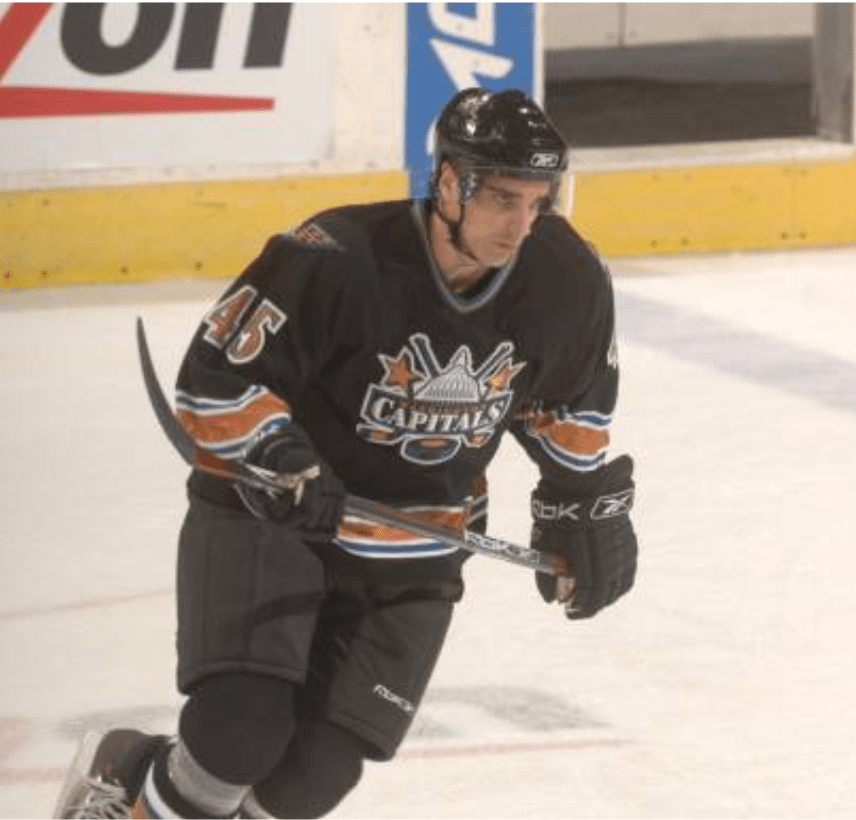
4. Hershey Bears (Capitals; AHL)

The Bears name alone certainly isn’t unique, in fact, ‘Bears’ is a less specific team name than ‘Grizzlies.’ Still, this specific team gets extra points because it plays in one of coolest minor league cities/towns in the country. Playing in the Giant Center just outside Hersheypark (home of The Great Bear roller coaster, built in 1998), the Bears are one of the most successful minor league franchises of all time, with 11 Calder Cup wins and 23 conference championships.

Starting in 1932 as the Hershey B’ars, the team’s name became the Bears by 1936. Frankly, a team named the ‘Hershey Bars’ would top this list for how perfect it would be, but it was just not meant to be. The generic nature of the name ‘Bears’ holds it back slightly, but with chocolate-colored uniforms and the team’s location, it definitely has an eccentric nature.

3. South Carolina Stingrays (Capitals; ECHL)

This one is my personal favorite of the eight teams, it’s just not nearly as crazy as the next two. The Tampa Bay Rays exist in baseball, which is supposed to represent “a ray of sunshine” rather than the Devil Rays they were originally named for, but it’s far from a common team name on a national scale. Retaining the ‘Sting’ part in the name is much cooler, and the name fits the location well.

Pretty much every “tough” animal in existence has been used for a sports team constantly, so it’s nice to see such an underutilized one in action (although I’m sure it’s used much more in sunny coastal areas). Perhaps the most eccentric thing about this team is that it plays ice hockey in North Charleston.

2. Capital City Go-Go (Wizards; G-League)

The name certainly fits the area well, as go-go music originated in Washington, D.C. and remains popular. Personally, I don’t think it’s the best choice for a sports team name, but there is a precedent for sports teams having a music-related name (i.e. the New Orleans/Utah Jazz and St. Louis Blues). I do, however, like the location name ‘Capital City’ as an alternative for ‘Washington.’

Whether you like it or hate it, it’s undoubtedly unique, but somehow not the weirdest name on this list.

1. Auburn Doubledays (Nationals; Short Season-A)

Upon first glance, I thought the Doubledays were an oddly-phrased reference to doubleheaders, a common practice in baseball, and figured it to be pretty weak. After researching the team’s origin, however, I discovered the team is instead named after Civil War general and Auburn, New York native Abner Doubleday, the man who was widely credited, then widely discredited, for inventing the game of baseball. There is a lot to unpack here.

First, this man’s real last name was Doubleday. Second, he played a massive role in two infamous Civil War battles, firing the first shot at Fort Sumter (the first battle of the war), and was extremely involved in the Battle of Gettysburg. His post-war career included working in Washington as a military administrator, and he later worked in San Francisco, where he helped obtain the first patent for the city’s cable car system. Afterwards, he moved to New York City to become the president of the Theosophical Society. Then of couse there’s the whole baseball thing.

It seems like I just described four or five different people in the last paragraph, but it was all Doubleday. In late 1907, Doubleday was officially credited by then-National League president Abraham G. Mills’ committee for inventing the game of baseball in Cooperstown, New York, where the Baseball Hall of Fame stands today. Plenty of writers and baseball historians have overwhelmingly refuted the claim, and it is now accepted as myth.

Instead, just a two-hour drive from Cooperstown, Doubleday still lives on in baseball lore through this Short Season-A affiliate to the Nats. You will be hard-pressed to find a more eccentric, obscure team name and origin anywhere else.

Notable former affiliates:

Vermont Lake Monsters (Nationals; Short Season-A 2005-2010)

This has to be among the best team names I’ve seen for any sport at any level. Playing on the University of Vermont’s field in Burlington, the Lake Monsters are now affiliated with the Oakland Athletics, but I’d say getting a Lake Monsters t-shirt is a worthy investment no matter which team you’re a fan of.

Fort Wayne Komets (Capitals; IHL 1981-1990)

The name ‘Comets’ is far from common, but definitely not unheard of. But Komets? What’s the significance with the K? A hockey legend from Fort Wayne nicknamed Komet? Is there a former Civil War general from Fort Wayne rumored to have founded the game of hockey? Close. The team founder, Ernie Berg, opted to spell it with a K because his wife’s name was Katherine… and she went by Kay.

Romantic gesture? Sure. Obscure backstory? Definitely. The current Vegas Golden Knights affiliate, originally founded in 1952, has been a longtime fixture in minor league hockey; only the Original Six NHL Teams and the Hershey Bears have played in the same city under the same name for longer.

Savannah Sand Gnats (Nationals; Single-A 2005-2006)

Seems only right that a Nats’ affiliate would be the Gnats. However, the affiliation did not last long. Still, the name ‘Sand Gnats’ is about as on-brand for a minor league baseball team as possible. The team is now a Mets affiliate, and has since relocated to Columbia, South Carolina as the Columbia Fireflies. I guess if Nats fans can’t enjoy the Sand Gnats as an affiliate, no one can.

Philadelphia Firebirds (Capitals; NAHL 1974-1977)

The fact that the Caps had a minor league affiliate in a larger market than the parent club is laughable, but regardless the team name is awesome. The Firebirds were affiliated with a handful of other NHL teams throughout its run from 1974-1980, but this name needs to return in 2020. The team’s most notable former player was Mike Eruzione, captain of the United States’ “Miracle on Ice” team from the 1980 Winter Olympics. The former Boston University forward played just six games with the Firebirds in the 1978-79 season.

New Orleans Zephyrs (Nationals; Triple-A 2005-2006)

The Babycakes were previously named the Zephyrs, after the Zephyr Roller Coaster at the Pontchartrain Beach amusement park. The name ‘Zephyrs’ also has indirect ties to DC sports, as the Wizards franchise began as the Chicago Zephyrs.

Quad City Mallards (Capitals; UHL 1998-2001, 2004-2005)

The Mallards were located in Moline, Illinois, but the Quad Cities region also encapsulates Rock Island in Illinois and Davenport and Bettendorf in Iowa (and technically East Moline, IL, but that would make it five cities, which messes things up). ‘Quad City’ has to be among the best location names I’ve heard, and Mallards are definitely a unique mascot.

The black, green, orange and white color scheme is wacky, but also represent the animal well. I also appreciate the irony in a team from a region called ‘Quad City’ being represented by an animal whose legs are eaten across the country; I guess having a turkey or chicken mascot would have been more fitting. Unfortunately, the team was replaced by the Quad City Storm in 2018, ending the run of a great team name.

Honestly, every one of these former affiliates would have ranked in the top three of the actual list, so it’s a shame they’re no longer affiliated to DC teams, but it was certainly fun while it lasted.
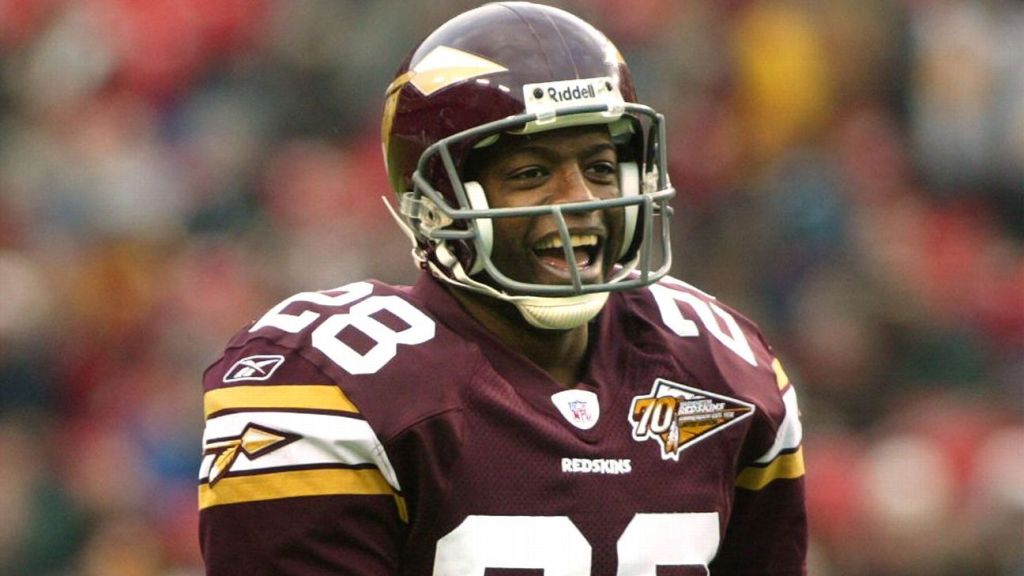
The Tenure Trials: Redskins

By: Joe Pohoryles

As I continue to come up with content ideas amidst the sports-less COVID-19 pandemic, a question appeared in my mind:

For each Washington team, who has played the most games/minutes/innings for the team?

With just a handful of guesses, I figured I could name the correct player for all four major DC sports team. These are the players we celebrate most; the more years they play for the franchise, the more recognizable they become.

Then a follow-up question came to mind:

Which players have played the fewest games/minutes/innings for these teams?

This question is harder to guess the correct answer to. Sure, there have been countless players that spent the majority of their career in the minor leagues or the practice squad, and the only time they were on the main roster was to provide depth of some kind. The team is ravaged by injuries, so the player is sent up just to be a body on the bench, getting zero action, and then is sent back down to where they came from. You hardly notice they were ever there.

They may spend one game sitting on the bench, or maybe they stay there for a full season, and while every player in the locker room brings at least some level of importance to the team, from a fan’s perspective these players did not make any tangible impact when looking back at team history.

That’s not to shame these players. Only the best of the best crack into the highest level of sports, and to even get close is a testament to the player’s talent and hard work, but for the purposes of answering the two questions that came to my mind, they mean nothing.

I wanted to find out the players who had the shortest active playing time in franchise history. For example, JamesOn Curry is notorious for having the shortest career in NBA history, appearing for just 3.9 seconds on Jan. 25, 2010 with the Los Angeles Clippers. Who holds that record for the Wizards? Who has the fewest plate appearances/innings pitched in Nationals history? Who played the fewest snaps for the Redskins? Who skated the fewest minutes for the Capitals?

All these questions have been answered in the past few days, concluding with the Redskins in The Wildcard’s newest series: The Tenure Trials.

The longest-tenured player in Redskins history is…

Darrell Green (295 games from 1983-2002)

Photo Credit: Lawrence Jackson/AP

Green, whose entire 20-year career was spent in Washington, has the most games played in franchise history by a wide margin. The next player on the list is former linebacker Monte Coleman, who played 215 games across 16 seasons from 1979-1994. Green is, by most accounts, the best player in team history, and as an all-time great cornerback, he was named to the NFL 100 All-Time Team in 2019.

To have a 20-year career in the NFL is an incredible achievement on its own, but to do it with one team is even more rare. Green, offensive tackle Jackie Slater (Los Angeles/St. Louis Rams), kicker Jason Hanson (Detroit Lions) and kicker/offensive tackle Lou Groza (Cleveland Browns) are the only players to spend the entirety of 20-plus-year career in the NFL with one team. Tampa Bay Buccaneers quarterback Tom Brady played 20 seasons with the New England Patriots before signing in Tampa this offseason, moving his name off that list.

Green has put himself in all types of legendary company throughout his NFL career, and there is no better representative for longest-tenured Redskin.

The shortest-tenured player in Redskins history is…

Ryan Grant (1 snap in one game in 2012)

Photo Credit: Brian Murphy

According to Pro Football Reference, 98 players have appeared in just one game for the Washington Redskins, so in order to narrow it down between those players, you have to find whoever played the fewest snaps. Unfortunately, the NFL did not start officially tracking snap counts until 2012, making it impossible to discern the snap totals prior to 2012.

Luckily, there is one player who at least shares the title of least active Redskin of all-time, as Grant played the minimum possible number of snaps. He should not be confused with Ryan Grant, the former Redskins wide receiver who played all 64 games across four seasons with the team from 2014-2017, and most recently played for the Oakland Raiders in 2019.

This Ryan Grant was better known as a Green Bay Packers running back from 2007-2012. Didn’t know he suited up for the Redskins as well? Neither did I, and I was in attendance for the lone game he played in.

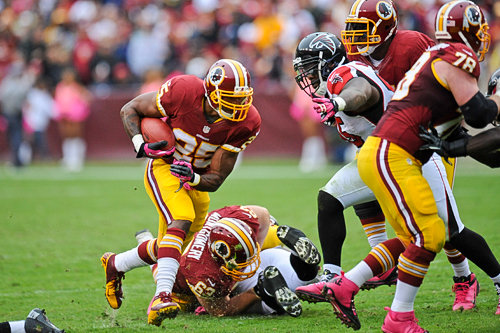
On Oct. 7, 2012 in Week 5 against the Atlanta Falcons, the score was 7-0 in favor of Washington thanks to a Ryan Kerrigan pick-six early in the second quarter. With around four minutes left in the half, the Skins were quickly marching down the field. Starting the drive on their own 32, quarterback Robert Griffin III connected with running back Alfred Morris on a screen pass that Morris took 20 yards. The next play, Morris took it on a hand-off for 29 yards to quickly reach the Falcons’ red zone. In need of a break after amassing a total of 49 yards in consecutive plays, Morris went to the sideline. For the first time as a Washington Redskin, Grant entered an NFL game.

1st & 10 on Atlanta’s 19, RG3 took the snap and handed it to Grant, who hit a gap in the offensive line to gain five yards. It was now 2nd & 5 from Atlanta’s 14, but that was it for Grant. Off the field he went, and the drive would eventually end with a missed 31-yard field goal attempt from Billy Cundiff. The Redskins would go on to lose 24-17.

Grant was released less than three weeks later, on Oct. 23, ending his Redskins career with just one snap under his belt. It easily could have been a snap in which he was not directly involved with the play — a hand-off to a different player in the backfield, a pass to a receiver, a quarterback sneak — or it could have been a poor play, like a five-yard loss rather than a five-yard gain. Instead, Grant’s singular moment with the Redskins had him at the center of attention, and in a game where 4.0 yards per carry is considered good for a running back, his five-yard rush would be considered a good play in all NFL circles.

Not to mention, this five-yard rush occurred in the red zone, in a one-possession game just minutes before halftime. The drive ended in a missed field goal, sure, and in the grand scheme of things Grant’s play was largely inconsequential, but to have just one play to make some kind of impact, Grant could have done much worse.

He would end up signing back with the Packers on Dec. 5, 2012 to finish off the season in Green Bay, and he retired at season’s end. His first stint in Green Bay was much more successful; after rushing for 956 yards and eight touchdowns in 15 games as a rookie in 2007, Grant eclipsed 1,200 yards in each of the following two years. His best year came in 2009, where he started all 16 games and rushed for 1,253 yards and 11 touchdowns (seventh-most in the NFL that year for both categories).

In 2010, the season the Packers won the Super Bowl, Grant suffered a season-ending ankle injury in Week 1, which led to the emergence of James Starks. By 2011, Grant and Starks were in a committee, and Grant rushed for 559 yards as the Packers went 15-1, losing to the New York Giants in the Divisional round of the playoffs.

While there’s no way to find any player with just one snap prior to 2012, there have been two Redskins players that slot in just behind Grant, as each have just two snaps with the team: Jester Weah and Demetrius Rhaney.

Weah, a former University of Pittsburgh wide receiver, played two special teams snaps with the team in 2019. He totaled 870 yards and 10 touchdowns as a junior at Pitt in 2016, and followed that up with 698 yards and four touchdowns in 2017. He spent 2018 on the Houston Texans’ practice squad as an undrafted free agent before joining the Redskins in 2019. If his last name seems familiar to any soccer fans, it’s because his uncle is George Weah, the only African player to win the Ballon d’Or (and the current president of Liberia), and his cousin is Tim Weah, a 20-year-old forward for the United States national team.

Rhaney is a center from Tennessee State who was a seventh-round pick in 2014 to the St. Louis Rams. After playing 370 total snaps with the Rams from 2015 to 2016, Rhaney landed with the Redskins and played just two special teams snaps in 2017. Rhaney left the team after 2018, and went to play with the Memphis Express of the AAF, then joined the CFL’s Hamilton Tiger-Cats when the AAF folded. He spent the 2019 offseason with the Buffalo Bills, but was waived before the season. His most recent stop was with the Houston Roughnecks in the XFL.

(Cover Photo Credit: Wikimedia Commons)

The Tenure Trials: Capitals

By: Joe Pohoryles

As I continue to come up with content ideas amidst the sports-less COVID-19 pandemic, a question appeared in my mind:

For each Washington team, who has played the most games/minutes/innings for the team?

With just a handful of guesses, I figured I could name the correct player for all four major DC sports team. These are the players we celebrate most; the more years they play for the franchise, the more recognizable they become.

Then a follow-up question came to mind:

Which players have played the fewest games/minutes/innings for these teams?

This question is harder to guess the correct answer to. Sure, there have been countless players that spent the majority of their career in the minor leagues or the practice squad, and the only time they were on the main roster was to provide depth of some kind. The team is ravaged by injuries, so the player is sent up just to be a body on the bench, getting zero action, and then is sent back down to where they came from. You hardly notice they were ever there.

They may spend one game sitting on the bench, or maybe they stay there for a full season, and while every player in the locker room brings at least some level of importance to the team, from a fan’s perspective these players did not make any tangible impact when looking back at team history.

That’s not to shame these players. Only the best of the best crack into the highest level of sports, and to even get close is a testament to the player’s talent and hard work, but for the purposes of answering the two questions that came to my mind, they mean nothing.

I wanted to find out the players who had the shortest active playing time in franchise history. For example, JamesOn Curry is notorious for having the shortest career in NBA history, appearing for just 3.9 seconds on Jan. 25, 2010 with the Los Angeles Clippers. Who holds that record for the Wizards? Who has the fewest plate appearances/innings pitched in Nationals history? Who played the fewest snaps for the Redskins? Who skated the fewest minutes for the Capitals?

All these questions will be answered in the coming days, continuing with the Capitals in The Wildcard’s newest series: The Tenure Trials.

The longest-tenured skater in Capitals history is…

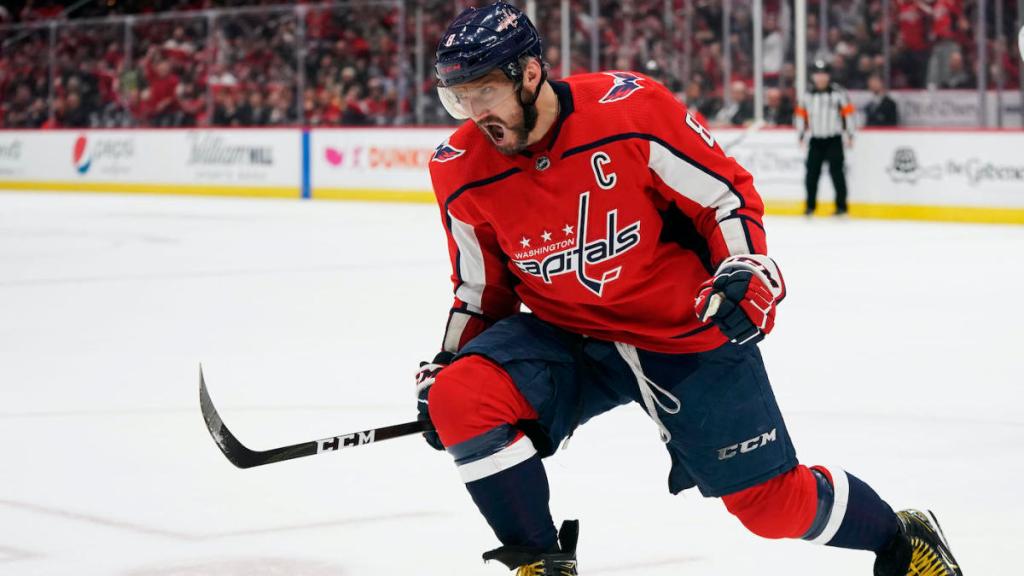
Alex Ovechkin (24,132 minutes in 1,152 games from 2005-2020)

Photo Credit: Patrick McDermott/NHLI via Getty Images

Ovechkin was a star from the moment he joined the Caps, and the electric goal-scorer has his trophy case loaded with all kinds of hardware. After 15 seasons in Washington, Ovi joins Calle Johansson (15) and Olaf Kolzig (16) as the only players in franchise history to have spent at least 15 seasons with the team. (And even Kolzig had just 24 appearances across his first four seasons, not becoming the starter until his seventh year).

Ovi has long been the face of the franchise, and will remain one beyond his retirement, so it’s only fitting that he has played the most minutes of any skater and the most games of any player in franchise history.

The longest-tenured goaltender in Capitals history is…

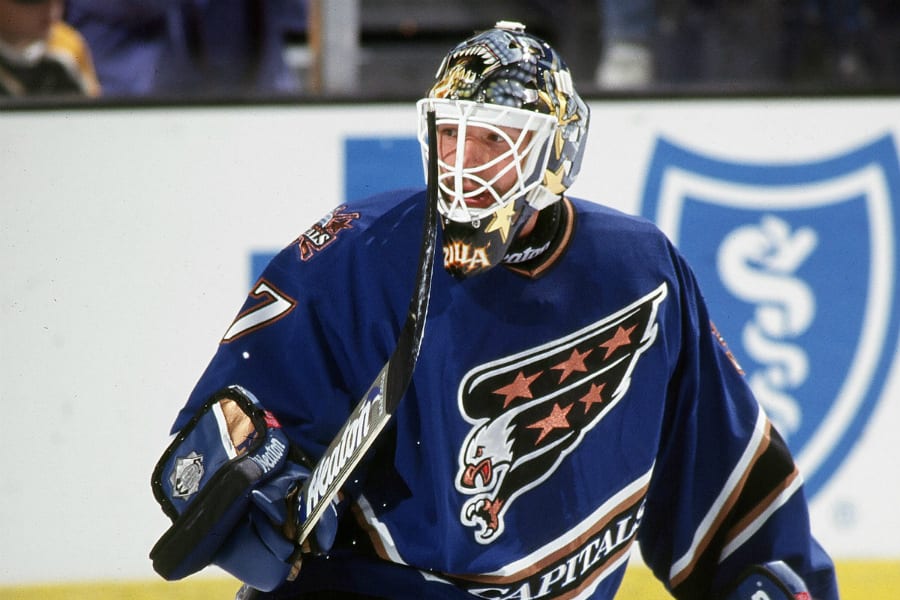
Olaf Kolzig (41,260 minutes in 711 games from 1989-2008)

Photo Credit: Steve Babineau/NHLI via Getty Images

I pretty much alluded to this answer in the previous paragraph, but any casual Caps fan would’ve known the answer anyway. Kolzig was a significant piece of the franchise in the late 1990s and early 2000s. Despite debuting in 1989, he did not really become the starter until 1997-98, then went on to spend close to a full decade dominating for the Caps in net.

Nobody has been on the ice for the Capitals as much as Kolzig, and it’s not even close either. The player with the second-most minutes in franchise history is fellow goaltender Braden Holtby (26,828 minutes), and he is still over 14,000 minutes behind Kolzig.

The shortest-tenured skater in Capitals history is…

Jonas Johansson (4 minutes and 14 seconds in one game in 2006)

Photo Credit: Mitchell Layton/Getty Images

Johansson was the 28th overall pick in 2002 to the Colorado Avalanche. He arrived to the Caps in 2003 in a deal that included longtime Cap Steve Konowalchuk. Johansson bounced around the lower ranks of North American hockey for a few years, with stints in the WHL, ECHL and AHL, before getting his call-up in the 2005-06 regular season finale.

The last-place Caps were facing the playoff-bound Tampa Bay Lightning, and called up Johansson to replace Brian Sutherby in the lineup for no apparent reason. (Sutherby was not listed on the injury report.) Sutherby had notched 30 points (14g, 16a) on the season, so perhaps it was a team with nothing to lose (or gain) trying to give their minor league prospects some NHL reps.

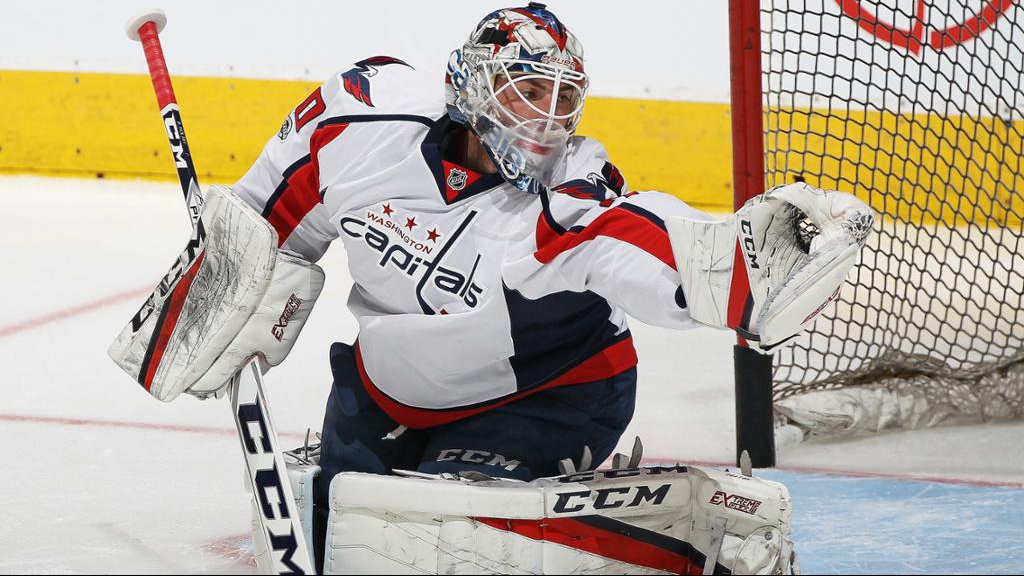
In any case, Johansson appeared for just five shifts in the 4-1 win over Tampa, committing an interference penalty early in the second period to give himself nearly half as many career penalty minutes (2) as he had career time-on-ice (4:14). His NHL debut came and went; the NHL season was over, and Johansson rejoined the South Carolina Stingrays (ECHL) for their playoff push, never to be called up to the parent club again. (The Stingrays would go on to lose in the quarterfinals to the Gwinnett Gladiators.)

After spending the 2006-07 season in the AHL with the Hershey Bears and Grand Rapids Griffins, where he totaled 29 points (8g, 21a) in 56 games, Johansson returned to Europe to play in his native Sweden. Johansson was still playing as of 2018-19, where he tallied 18 points (4g, 14a) in 11 games with HA74, a team in the fourth-tier of Swedish hockey.

The shortest-tenured goaltender in Capitals history is…

Robbie Moore (19 minutes and 43 seconds in one game in 1982)

*No available image of Moore with the Capitals (Photo Credit: my.hockeybuzz.com)

Moore, standing at 5’5″ and 155 pounds, was a star college goaltender, spending time at both the University of Western Ontario and the University of Michigan. At Michigan, he was named NCAA West First Team All-American in 1974, and he holds the school record for most career saves with 4,434, which is exactly 900 more than the next closest netminder (Scott Sharples’ 3,534 from 1987-90). Moore has also played the fifth-most games among goaltenders in Michigan history (128), and his 47 wins rank ninth.

Despite his collegiate success, Moore went undrafted in the NHL, but ended up signing with the Philadelphia Flyers in 1978. He spent most of his career in the AHL. With the Maine Mariners, Philadelphia’s AHL affiliate, Moore won the Calder Cup in 1979. He also played in five NHL games in 1979, debuting on Mar. 6 after the Flyers’ starting netminder, Hall of Famer Bernie Parent, suffered a career-ending eye injury when an errant stick struck him through the right eye hole of his mask.

Moore backstopped a 5-0 shutout against the Colorado Rockies in his NHL debut, and finished the regular season with a 3-0-1 record in five games to go with a 1.77 goals against average, .927 save percentage and two shutouts. Moore also appeared in five games for the Flyers in the 1979 playoffs, going 3-2-0 with an abysmal 4.06 GAA and .854 save percentage as the Flyers advanced past the Vancouver Canucks but fell to the New York Rangers in the quarterfinals.

Moore spent the following season in the AHL exclusively, and after signing with the Minnesota North Stars organization, he was later sent to the Caps in 1982. Moore spent most of his time in Hershey, but got one final NHL appearance on Oct. 10, 1982. Moore appeared in the third period of a 6-4 loss to his former team, the Philadelphia Flyers. The Caps’ starter, Pat Riggin, was pulled entering the third period after allowing four goals on 18 shots.

With the team down 4-2, Moore allowed one goal on seven shots, but goals from teammates Chris Valentine and Milan Novy cut the deficit to 5-4. Moore was pulled with 17 seconds left in the game to give the Caps an extra attacker, but instead the Flyers were able to notch an empty net goal to secure a 6-4 win. Moore did not appear with the Caps, or any NHL team, ever again, and he spent the following season with the Milwaukee Admirals of the IHL before retiring from professional hockey in 1984.

Close behind Moore for shortest tenure among goalies in franchise history is Corey Hirsch, who appeared for a full 20 minute period. Hirsch also entered at the beginning of the third period while the team was trailing, but this time there was a happy ending.

On Mar. 11, 2001 against the Ottawa Senators, the Caps were down 5-2 entering the third. Coach Ron Wilson pulled Kolzig and gave Hirsch the nod for the final frame. Hirsch faced eight shots, saving all of them, and earned the win after Andrei Nikolishin, Trent Whitfield, Sergei Gonchar and Konowalchuk all scored in the third to give the team a 6-5 comeback win.

Konowalchuk’s game-winner came with just 1:28 left in the game, making it one of the more exciting wins of the season. Hirsch came in, held down the fort as the rest of the team battled for the win, and never appeared for the Caps again, playing just 17 seconds more than Moore.

(Cover Photo Credit: NBC Sports Washington)

The Tenure Trials: Nationals

By: Joe Pohoryles

As I continue to come up with content ideas amidst the sports-less COVID-19 pandemic, a question appeared in my mind:

For each Washington team, who has played the most games/minutes/innings for the team?

With just a handful of guesses, I figured I could name the correct player for all four major DC sports team. These are the players we celebrate most; the more years they play for the franchise, the more recognizable they become.

Then a follow-up question came to mind:

Which players have played the fewest games/minutes/innings for these teams?

This question is harder to guess the correct answer to. Sure, there have been countless players that spent the majority of their career in the minor leagues or the practice squad, and the only time they were on the main roster was to provide depth of some kind. The team is ravaged by injuries, so the player is sent up just to be a body on the bench, getting zero action, and then is sent back down to where they came from. You hardly notice they were ever there.

They may spend one game sitting on the bench, or maybe they stay there for a full season, and while every player in the locker room brings at least some level of importance to the team, from a fan’s perspective these players did not make any tangible impact when looking back at team history.

That’s not to shame these players. Only the best of the best crack into the highest level of sports, and to even get close is a testament to the player’s talent and hard work, but for the purposes of answering the two questions that came to my mind, they mean nothing.

I wanted to find out the players who had the shortest active playing time in franchise history. For example, JamesOn Curry is notorious for having the shortest career in NBA history, appearing for just 3.9 seconds on Jan. 25, 2010 with the Los Angeles Clippers. Who holds that record for the Wizards franchise? Who has the fewest plate appearances/innings pitched in Nationals history? Who played the fewest snaps for the Redskins? Who skated the fewest minutes for the Capitals?

All these questions will be answered in the coming days, continuing with the Nationals in The Wildcard’s newest series: The Tenure Trials.

The longest-tenured position player in Nationals history is…

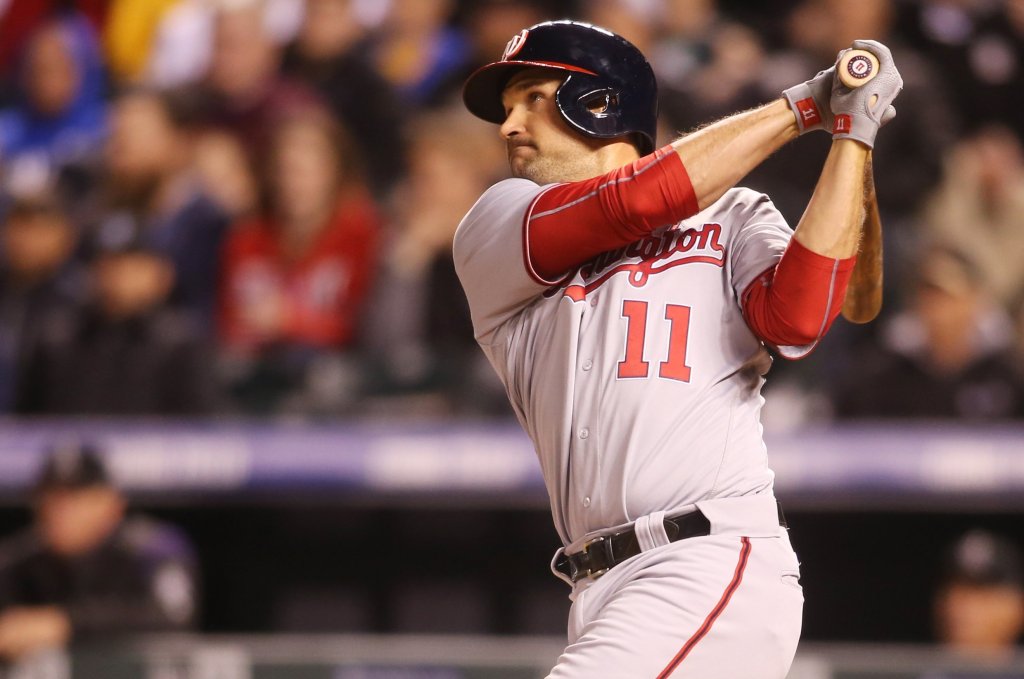
Ryan Zimmerman (7,129 plate appearances and 1,689 games played from 2005-2019)

Photo Credit: Wall Street Journal

Looking at the history of the Expos/Nationals franchise, only Tim Wallach has more plate appearances (7,174), but Zimmerman has the chance to surpass him this season, whenever baseball does return. When strictly looking at Nationals players, however, Zim is ahead by a wide margin, which is clear just by knowing the history of the team. (For the record, Bryce Harper is second in team history with 3,957 plate appearances, and Anthony Rendon is right behind with 3,927. Neither are threats to catch up anymore, so Zim will hold the lead for the foreseeable future.)

As the team’s first ever draft pick, the longtime third baseman was for awhile the lone bright spot in an otherwise dismal team. With a knack for hitting walk-off home runs, Zimmerman has been a fan favorite since he stepped foot in DC. From being the team’s first homegrown star to delivering game-changing home runs at age 35 in the 2019 playoffs, Zimmerman will always be “Mr. National,” even if/when his franchise records are broken.

The longest-tenured pitcher in Nationals history is…

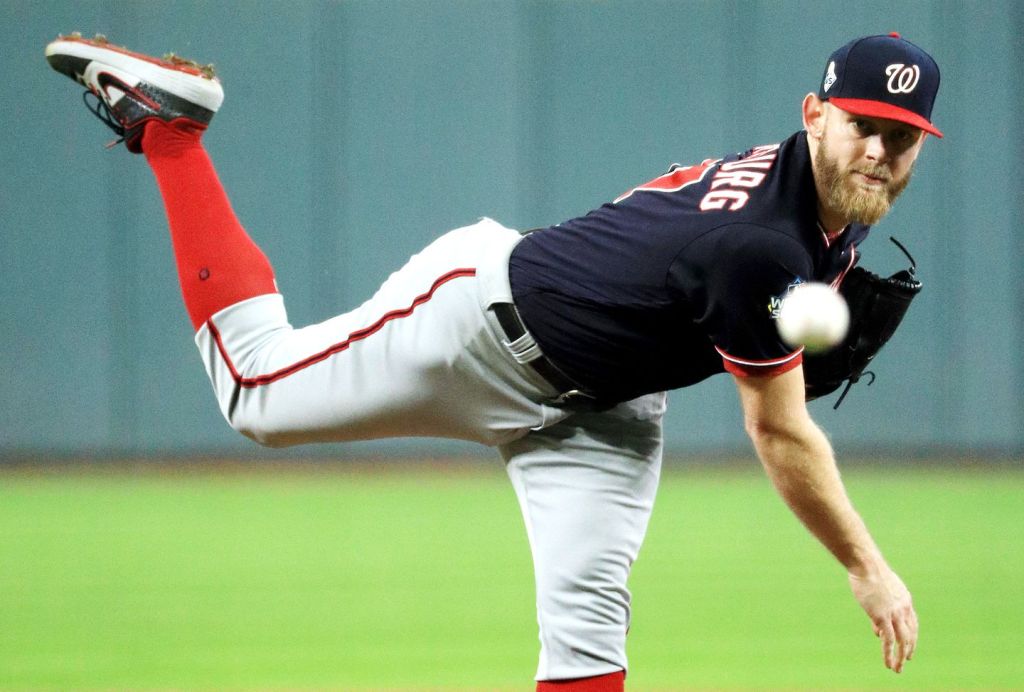
Stephen Strasburg (1,438.2 IP, 5,821 batters faced from 2010-2019)

Photo Credit: Mike Ehrmann/Getty Images

Yet another obvious answer; Strasburg’s arrival changed the trajectory of the franchise. Entering his 11th season on a freshly signed seven-year extension, Strasburg could very well retire with more years on the team than Zimmerman. While injuries have hindered him along the way, Strasburg has been among the best pitchers in the National League for awhile now, and if he can continue elevating his player through his 30s, he may finish with even more hardware.

The shortest-tenured position player in Nationals history is…

Tres Barrera (2 plate appearances and 2 innings played in 2019)

Photo Credit: Nationals Communications

Technically, the fewest plate appearances belong to Matt White (1 PA in one game in 2005), but since he was a pitcher by trade, I did not count him as a position player. He also pitched four innings in his lone season with the team, giving him more tenure than Barrera anyway.

Barrera, a catcher from Texas, was a sixth-round pick by the Nationals in 2016. His major league debut came on Sept. 14, 2019, pinch-hitting in the ninth inning of a 10-1 loss to the Atlanta Braves. His second appearance came two weeks later in the final game of the season, where he was slotted at catcher for the final two innings of an 8-2 win over the Cleveland Indians on Sept. 29. Neither plate appearances resulted in hits.

The former UT-Austin catcher spent most of 2019 with Double-A Harrisburg, totaling eight home runs, 46 RBI and 136 total bases while slashing .249/.323/.381 in 101 games. He joined the team for Spring Training in 2020, recording one hit in seven at bats across six games.

Barrera has a chance to expand upon his major league resume in 2020 and beyond, but for now he holds the title of least active positional player in team history.

The shortest-tenured pitcher in Nationals history is…

James Bourque (0.2 IP, 6 batters faced in 2019)

Photo Credit: MASN Sports

This one comes with a caveat as well. Gerardo Parra, instrumental as a locker room personality and bench hitter during the Nationals’ World Series run, has the fewest innings pitched in team history. In 0.0 IP, he faced five batters, walking four and allowing five runs in the 8th inning of an 18-7 loss to the Arizona Diamondbacks on Aug. 3, 2019. However, he is primarily an outfielder, and thus has seen much more action in the field and at the plate than Bourque ever has.

Similarly, Mark Reynolds, longtime major league infielder, faced the fewest batters in team history (0.1 IP, 1 batter faced), having much more success than Parra, albeit without much significance. He pitched the final out in a 10-2 loss to the Miami Marlins on Jul. 8, 2018. While he may technically have the shortest pitching career in team history, Reynolds also appeared in 86 games in his lone season in Washington, and had 235 plate appearances.

Ironically, the statistically shortest-tenured batter was a pitcher by trade, and the shortest-tenured pitcher was an infielder.

Bourque, meanwhile, had a rough go in his only major league appearance. He walked two batters and allowed three hits and four runs, ballooning his ERA to 54.00. The Nats ended up winning the game 9-6 over the Marlins on May 26, 2019, but Bourque never got any more action that season.

Much like Barrera, Bourque’s story isn’t over yet. Spending most of the season in Triple-A Fresno, Bourque appeared in 33 games, earning a 4-1 record, but posting a 5.56 ERA. He had a much better stint in 14 games with Harrisburg, where he had a 3-0 record in 14 appearances, earning six saves and garnering 33 strikeouts to go with a 1.33 ERA.

The former Michigan pitcher also appeared in Spring Training in 2020, and was even among the better performers as of Mar. 10, when I discussed the top players at Spring Training. In 6.1 IP across six games, Bourque led all pitchers on the team with 11 strikeouts. He finished with an 0-1 record, allowing three hits, two earned runs and one walk, but still flashed potential for future use in the majors.

(Cover Photo Credit: Cheryl Nichols/Stock Photo)

The Tenure Trials: Wizards

By: Joe Pohoryles

As I continue to come up with content ideas amidst the sports-less COVID-19 pandemic, a question appeared in my mind:

For each Washington team, who has played the most games/minutes/innings for the team?

With just a handful of guesses, I figured I could name the correct player for all four major DC sports team. These are the players we celebrate most; the more years they play for the franchise, the more recognizable they become.

Then a follow-up question came to mind:

Which players have played the fewest games/minutes/innings for these teams?

This question is harder to guess the correct answer to. Sure, there have been countless players that spent the majority of their career in the minor leagues or the practice squad, and the only time they were on the main roster was to provide depth of some kind. The team is ravaged by injuries, so the player is sent up just to be a body on the bench, getting zero action, and then is sent back down to where they came from. You hardly notice they were ever there.

They may spend one game sitting on the bench, or maybe they stay there for a full season, and while every player in the locker room brings at least some level of importance to the team, from a fan’s perspective these players did not make any tangible impact when looking back at team history.

That’s not to shame these players. Only the best of the best crack into the highest level of sports, and to even get close is a testament to the player’s talent and hard work, but for the purposes of answering the two questions that came to my mind, they mean nothing.

I wanted to find out the players who had the shortest active playing time in franchise history. For example, JamesOn Curry is notorious for having the shortest career in NBA history, appearing for just 3.9 seconds on Jan. 25, 2010 with the Los Angeles Clippers. Who holds that record for the Wizards franchise? Who has the fewest plate appearances/innings pitched in Nationals history? Who played the fewest snaps for the Redskins? Who skated the fewest minutes for the Capitals?

All these questions will be answered in the coming days, starting first with the Wizards in The Wildcard’s newest series: The Tenure Trials.

The longest-tenured player is Wizards/Bullets history is…

Wes Unseld (35,832 minutes in 984 games from 1968-1981)

Photo Credit: NBA.com

No surprise here. Unseld has been involved with the franchise at every level: star player, head coach and front office executive. He is the only player in franchise to win MVP, and he did so as a rookie. He helped the team to its only championship, and his jersey is still sold in the Wizards’ team shop at Capital One Arena. The only current players within shouting distance are John Wall, who at 20,545 minutes played is still over 15,000 minutes behind, and Bradley Beal, who is exactly 17,000 minutes behind with 18,832. One or both may surpass him one day, but for the foreseeable future Unseld — who spent all 13 of his NBA seasons with the franchise — holds the title of “Mr. Wizard,” (although I guess “Mr. Bullet” would be more fitting).

Now less predictably, the shortest-tenured player in franchise history is…

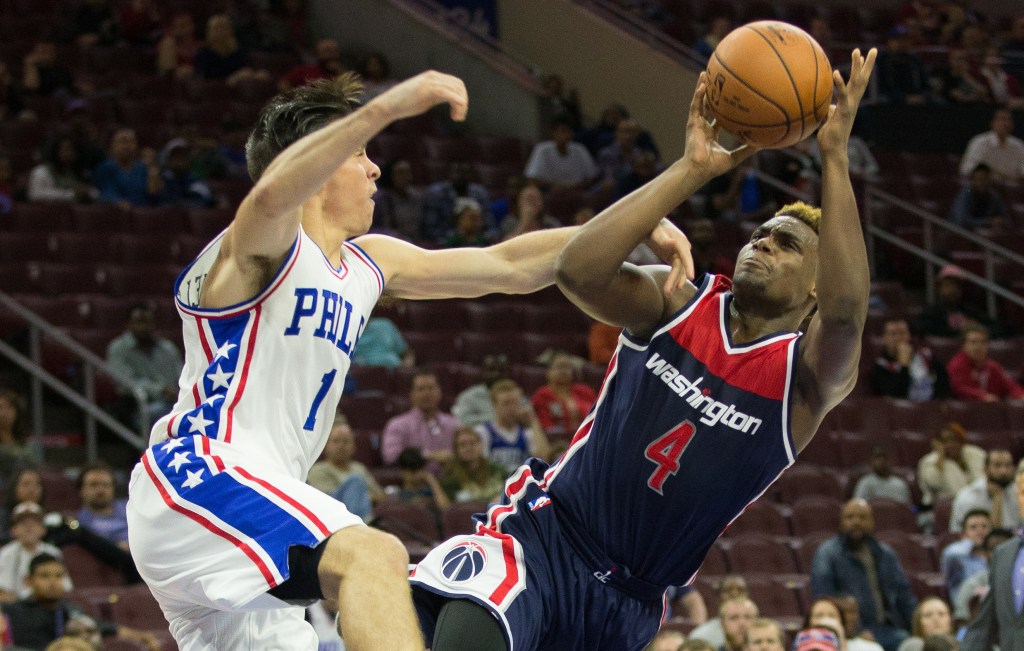
Danuel House (50 seconds in one game in 2016)

The picture comes from the pre-season before his rookie campaign. After all, playing just 50 seconds of true game time doesn’t leave much of a window for photo ops. (Photo Credit: Bill Streicher/USA TODAY Sports)

House is probably most notable for his starring role with Texas A&M from 2014-2016, where he helped the Aggies reach the Sweet 16 in the 2016 NCAA Tournament after they won a share of the SEC regular season title. House was undrafted before joining the Wizards’ Summer League team, which earned him a contract with the parent club. His only regular season action in Washington came on Nov. 11, 2016 against the Cleveland Cavaliers. In 50 seconds of game time, he recorded one rebound, and that was it for House in Washington.

House fractured his wrist nearly three weeks after his debut, forcing him to miss any potential playing opportunities for over six weeks. After a brief rehab stint in the D-League (now the G-League), House was waived on Mar. 1, 2017.

That did not signal the end of House’s NBA career, however, as he joined the Phoenix Suns the next season, appearing in 23 games and starting three. He found an even bigger role on an even better team in 2018-19 with the Houston Rockets. Carving out a key place in the Rockets’ rotation, House earned a three-year/$11.1 million extension after his first season in Houston, and by the time the 2019-20 season was suspended, House’s stat line looked like this:

GPGSMPFG%3PFG%FT%RPGAPGSPGBPGPPG
584730.0.427.363.8004.21.31.10.610.2
All statistics from Pro-Basketball-Reference

With the exception of the three shooting percentages, House set a career-high in every category. Perhaps House, a Houston native, benefitted from playing so close to home. Either way, while House reaches new heights in his NBA career, it’ll be tough to beat him for the title of least tenured player in franchise history.

(Cover Photo Credit: NBA.com)

Redskins Draft Breakdown

By: Joe Pohoryles

After three days of drafting, the Redskins have 11 new players: eight via the draft, and three from free agency, with more likely on the way. The team wasn’t able to fill every need this weekend, but by-and-large the class of 2020 could be as impactful as last year’s class.

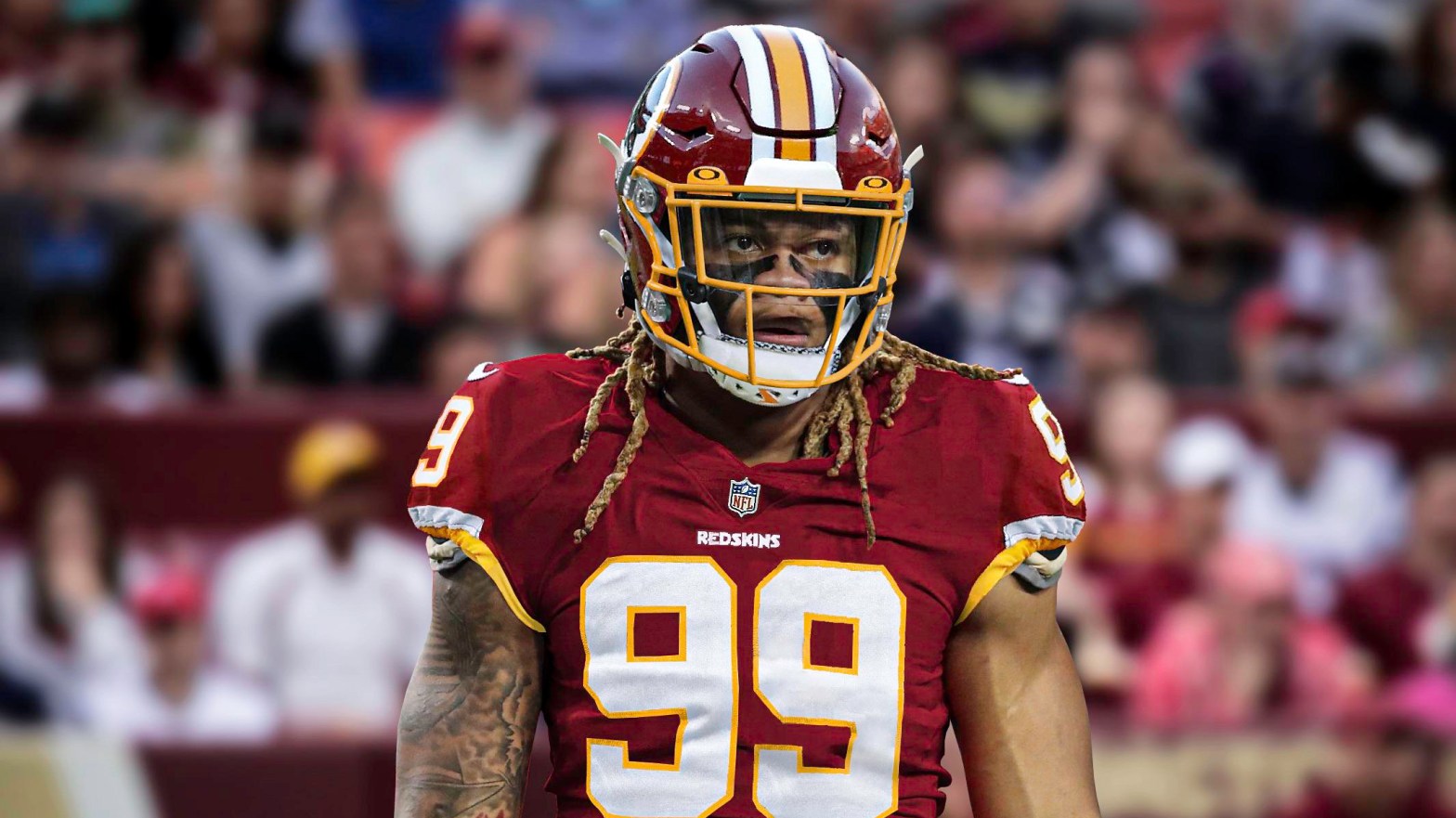
Of course the majority of the impact may come from one player alone in Chase Young, the crown jewel of the draft. The Hyattsville native should line up well in an imposing front seven, joining four other former first-round picks, and a couple of former fifth-round steals in Matthew Ioannidis and Cole Holcomb. With the selection of Young, Washington became the first team in the common era to draft a defensive lineman in the first round in four straight years (2017 – Jonathan Allen, 17th overall; 2018 – Da’Ron Payne, 13th overall; 2019 – Montez Sweat, 26th overall). Not to mention, Ryan Kerrigan was drafted 16th overall in 2011, so there is a ton of first-rate talent on the defensive front.

Looking past Young, I will be giving my initial impressions of the rest of the 2020 draft class, giving my choices for best/worst value, as well as lamenting over a few who got away. This has the potential to age very poorly, but I will continue to update this post over the next few days, so make sure to keep checking back in.

Best Value: Saahdiq Charles, OT, LSU

The team finally got longtime left tackle Trent Williams off their hands in a trade with San Francisco, who would end up losing their own longtime left tackle, Joe Staley, to retirement. In return, the team received a 2020 fifth-rounder and 2021 third-rounder. Immediately following the announcement of the trade, the Skins were on the clock in the fourth round, and they picked someone who could soon develop into Williams’ replacement.

Charles just helped the Tigers win the 2020 National Championship, but he spent much of the season on the sideline due to off-field issues. His character had a lot to do with his placement in the draft; NFL Network’s Daniel Jeremiah ranked Charles as his 63rd-ranked prospect. Franchises like the Patriots and Steelers have enough stability to have few issues with taking a gamble on a loose cannon-type of player, as their culture will most likely whip them into shape. The Redskins are not one of those franchises — in fact, far from it.

Coach Ron Rivera is looking to change the culture in DC, and is renowned as a coach who earns the respect of his players, so he’s probably the best man for the job in that department. Brandon Scherff and Morgan Moses, as two of the team’s top offensive linemen and now the longest-tenured offensive starters on the team, could also be candidates to keep Charles on the right track as he transitions to the NFL.

Otherwise, the talent is there. He probably cannot be relied on as a starter right away, and maybe not until his second or third season, but to get any offensive line depth after losing the top tackle is a good thing. Getting a second/third-round caliber player with big-game experience in the fourth round has the potential to be a major move for the Skins, which is why I put Charles as the Best Value pick, but it will all be contingent on whether he can stay out of trouble.

My second choice for Best Value would probably be Antonio Gandy-Golden, the fourth-round wide receiver from Liberty. First off, what a name, and second, he could slot into the receiving rotation almost immediately in 2020.

Coming from a small school in a mid-major conference, it’s difficult to get much attention, but AGG’s stats pop right off the page. He put up at least 1,000 yards three seasons in a row, and garnered between 69-71 receptions and 9-10 touchdowns in each of the three seasons.

The receiving core is in need of talent, so getting a receiver who is used to a high volume with such a late pick is a plus. With Terry McLaurin and likely Steven Sims Jr. (or even Kelvin Harmon and 2020 third-rounder Antonio Gibson) ahead of him in the depth chart, he won’t be pressured to be a top producer right away, but he may very well turn into one of the biggest steals of the draft.

Worst Value: Antonio Gibson, WR/RB, Memphis

With the team’s first pick after Young, it made sense for the team to address a need on the other side of the ball. I don’t hate the player; I think Gibson could become very useful as a do-it-all player, as he lines up at both back and receiver, and he has experience returning. I simply thought the Redskins took him too early.

I don’t have my ear to the ground when it comes to the rumblings of NFL GMs across the league, but there was not much buzz surrounding Gibson as a top-of-the-third-round prospect. Perhaps he would have been gone by the time the Redskins picked again at 108, but in that case you may as well trade back to accrue a little capital. Maybe they found no willing partners.

In any case, he’s on the team now, and there is still reason for excitement. He was the American Athletic Conference Special Teams Player of the Year in 2019, so the return game could be where his presence is felt the quickest. On offense, the team’s backfield consists of the oft-injured Derrius Guice, the 35-year-old Adrian Peterson, also oft-injured Bryce Love, Peyton Barber, JD McKissic and Josh Ferguson. Not all of these names will be on the roster at the beginning of the season, but given the injury history at the top of the depth chart, having an extra player with rushing experience is a good idea.

McKissic was slated to be the go-to receiving back, but given Gibson’s upside it wouldn’t be a surprise to see him take over that role at some point this season. It’ll be interesting to see where exactly he fits in.

The UDFAs

The biggest name to join the Skins this weekend (maybe outside Young) was not even drafted. Tight end Thaddeus Moss, son of Hall of Fame receiver Randy Moss, signed with the team shortly after the draft as a free agent. Many were screaming to have his name called on Day 3, but with no one calling his name at all, the team was able to nab him up quickly.
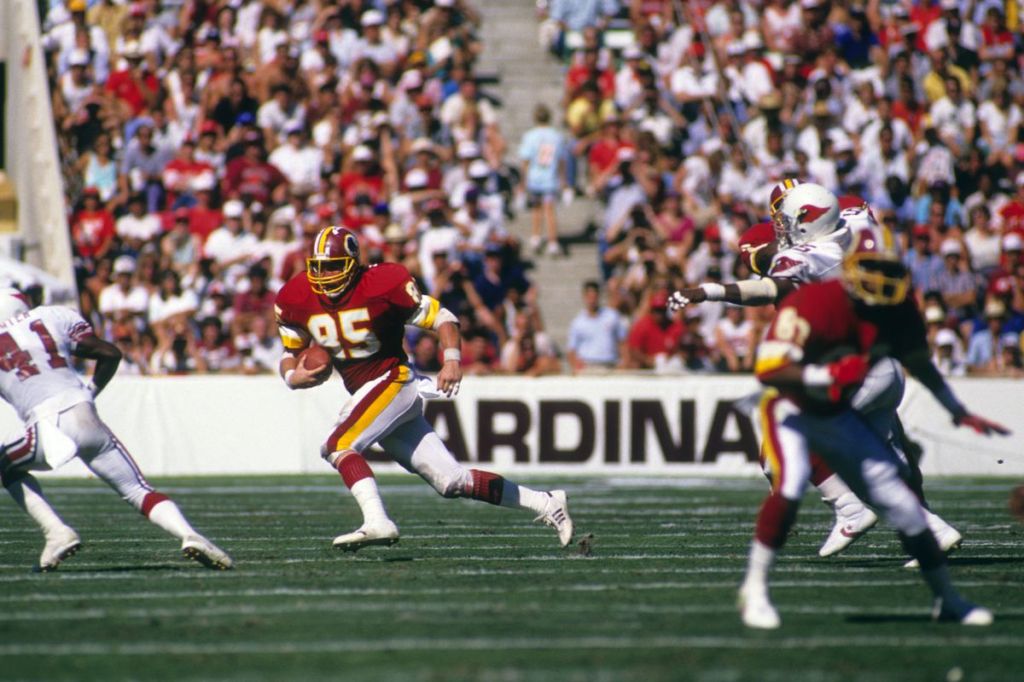
Moss definitely benefitted from receiving passes from 2020 first overall pick Joe Burrow in a record-setting offense in 2019, but in such a thin tight end group, Moss has the chance to contribute right away. He won’t be a cog in the receiving rotation, at least not for awhile, but with run blocking being his best skill, he should be a great help to an offensive line that has lost Williams and breakout left guard Ereck Flowers this offseason.

He does not completely solve the tight end situation, but fans should be happy with his signing.

The Redskins also signed a quarterback with a chance to sit behind Dwayne Haskins Jr. and recent acquisition Kyle Allen. Steven Montez, from Colorado, spent three years as the starting quarterback for the Buffaloes, but never led the team to much success despite passing for 2,800 or more yards in all three seasons as starter. He’s a mobile, athletic player, but likely won’t see important playing time anytime soon.

Rounding out the undrafted free agents are a pair of wide receivers: Isaiah Wright out of Temple and Johnathan Johnson from Mizzou.

Wright did not get much usage at wide receiver at Temple, but was one of the team’s top returners. A speedy, tough player, Wright could provide value on special teams, but otherwise appears unlikely to nail down a consistent role in the receiving corps, if he can make the roster at all.

Johnson was signed after this post was initially published, making him the fourth UDFA. He had a much bigger role in his offense relative to Wright, as Johnson ended his career as a Tiger with the sixth-most career receiving yards in program history. Injuries hurt his production as a senior, and his draft stock, but he played in 13 games in each of his sophomore and junior seasons, totaling 724 and 737 yards, respectively.

He seems like a more traditional receiving option, and while he may be a long shot to make the active roster, he has the pedigree to crack into an NFL roster at some point, whether it’s in DC or elsewhere.

The Ones Who Got Away

The Redskins had a large gap between pick No. 2 and pick No. 66, but surprisingly enough there was a player many experts had going in the late first/early second round who was still available at 66. Not only that, but he would have filled a position of need very well. Houston’s offensive tackle Josh Jones was there for the taking. A prime candidate to slip into the void Williams left behind, Jones seemed like the clear choice.

Instead, the team took Gibson, and Jones went to the Cardinals just six picks later. Unlike Charles, who has several red flags, there was no obvious reason for Jones to slip that far. At worst, he appears to be a raw prospect who may need at least a year to become a full-time starter, but if that’s a red flag, then nearly every player drafted has that red flag. It would have been the team’s best valued pick by a mile in my eyes, but it wasn’t meant to be.

Another player plenty of Redskins fans had their eyes on in the later rounds was Virginia’s Bryce Hall. With the team in need of secondary depth, Hall, a 2018 Second Team All-American, could have been a great sleeper pick. A season-ending ankle injury in early October 2019 tanked his draft stock, but the Redskins had plenty of opportunities to get him. Instead, Hall went to the Jets just two picks after the Skins selected Keith Ismael, a center from San Diego State, and just four picks before the team selected Khaleke Hudson, an outside linebacker from Michigan.

The Others

Along with Ismael and Hudson, the team selected Arkansas defensive back Kamren Curl and NC State defensive end James Smith-Williams.

Ismael mainly played center while at San Diego State, but has experience at both right and left guard. He earned First Team All-Mountain West honors in his junior and senior seasons, following a Second Team selection as a sophomore.

With Pro Bowler Scherff slotted in at right guard, Chase Roullier holding down the center position, and Wes Schweitzer and Wes Martin likely to compete for starter at left guard, it seems unlikely Ismael will see much starting time immediately, but he seems better suited for a reserve role anyway. Given the O-line’s injury history, though, his versatility and durability could come in handy sooner rather than later.

Hudson, meanwhile, entered college as a safety, but found his role at Michigan as a hybrid linebacker. He was named 2019 Second Team All-Big Ten after leading the Wolverines in tackles (97), and should bring Rivera and Jack Del Rio the versatility that they love in their defensive players.

Curl and Smith-Williams were both seventh-rounders, and are not guaranteed to be on the roster by Week 1, much less major on-field contributors. Given the current state of the secondary compared to the that of the defensive line, I’d say Curl has the better chance to make the roster, but both bring upside.

Curl was a three-year starter at Arkansas, and while he wasn’t a major ball-hawking threat (just two career interceptions in college) or a strong tackler, but he provides good coverage in certain schemes, such as a traditional box safety or in Cover 2 situations.

Smith-Williams spent five seasons as NC State, but played more than six games in a single season just once (11 in 2018). Injuries have plagued him his entire career, but he is regarded for having high intelligence, great character and strong leadership ability.

Not to mention, he’s an athletic freak. Standing 6’4″ 265 pounds, Smith-Williams blazed a 4.6 40-yard dash and has a 123″ broad jump, which ranked in the 96th and 93rd percentile, respectively. He’s even drawn comparisons to new teammate and longtime defensive leader Kerrigan.

With the guys at the top of the depth chart at defensive line, it will be difficult for Smith-Williams to break in, but he appears to be as strong of a late-round flier as any.

(Cover Photo Credit: jondewi on Reddit/Swapcenter)

Redskins Draft Primer

By: Joe Pohoryles

With the 2020 NFL Draft beginning tomorrow night at 8 p.m., it is an exciting time for Redskins football. As holders of the No. 2 overall pick, the team has the opportunity to select the player who many believe is the best in the draft: Ohio State edge rusher Chase Young. They may also have the opportunity to trade back for a king’s ransom, acquiring capital to select multiple high-end prospects. Either way, it’s a win-win, and could mark the first step in getting this franchise back into the playoffs.

Barring any trades, the Redskins will be done early on the first night of the draft, and will have to wait quite awhile before getting started on Day 2. Since last year’s trade with the Colts allowed the team to select Montez Sweat 26th overall, the Colts own the Skins’ second-rounder this year (the 34th overall pick).

Of course, it is possible the Skins could get back into the second round without even moving out from the No. 2 spot. With Trent Williams on the trade block, there has been increasing buzz surrounding potential moves to finally get Williams out of town. Whether that will actually net a second-rounder or better remains to be seen, but a third- or fourth-rounder and/or an immediately impactful player are not out of the question for a return.

There are multiple possibilities with draft night, but here are a few scenarios, ranging from the expected to the practically impossible.

Scenario 1: Chalk

Redskins don’t make any moves with their early round picks, select Chase Young at No. 2

While teams have been sending offers Washington’s way, it appears most likely that the team will stand pat and take Young. It could all be smoke and mirrors, and the team may shock us, but with a prospect as highly regarded as Young up for grabs, it appears unlikely that the new defensive-minded head coach, Ron Rivera, will pass that up.

That would leave the team with their third-round pick at No. 66, where they could choose a lower-tier receiver in what many regard as the deepest wide receiver class in the history of the draft, such as Penn State’s KJ Hamler, Notre Dame’s Chase Claypool, or really any of the best available receivers at that point. The team struck gold with Terry McLaurin in the third round last year, and would be lucky to find another strong receiving option to help Dwayne Haskins take a step forward in his sophomore season.

They could choose to reach for a tight end prospect, as that is one of their biggest positional needs, but they may be better off waiting until the fourth-round. Notre Dame’s Cole Kmet and Dayton’s Adam Trautman are massive, both standing around 6’5″, and played significant roles in their offenses in college. They may be off the board by the Skins’ 108 pick in the fourth round, so the team will have to decide whether it’s worth it to take them that high when pretty much every tight end prospect in this class will need a couple seasons to develop into full-time threats.

No matter which names they go for, pass-catchers should be a priority for the team on Day 2.

Scenario 2: Trade down, miss out on Young

Redskins trade down from No. 2, receive multiple first-rounders and a second… possibly more

If the team really does not feel strongly enough about Young (which doesn’t appear to be the case) or a trading partner blows the Skins away with its offer, the team could opt to trade down and receive more capital.

Miami stands out as the best potential partner. They have plenty of early picks, and the Dolphins appear to be in the market for a new quarterback. By trading up to No. 2, Miami would have its choice between Alabama’s Tua Tagovailoa and Oregon’s Justin Herbert. The Redskins, meanwhile, would likely acquire the No. 5 pick, either the No. 18 or No. 26 overall pick, plus the No. 39 pick, and possibly a future first-rounder or two.

It has been reported that Miami is looking to trade up for the best offensive tackle instead of a quarterback, so this specific partnership makes this situation even less likely, but it’s worth observing the players who could be available if the team were to move back for multiple picks, no matter who they end up trading with.

Here are some of the names the team would have a good chance of selecting at each of Miami’s early positions in 2020:

No. 5: CB Jeff Okudah, LB Isaiah Simmons, OT Tristan Wirfs, OT Jedrick Wills Jr.

Assuming Miami takes a quarterback and the Lions snag Young, the Giants could either trade back from No. 4 to allow a team to take the third quarterback on the board, or stay at No. 4 and pick their top choice from the names above.

That would leave Washington with their choice of the rest. Okudah and Simmons both play positions of need on defense, and would make an immediate impact. Wirfs, Wills, and even Georgia’s Andrew Thomas and Louisville’s Meckhi Beckton could all be in the mix to replace Williams at left tackle.

No. 18: CB CJ Henderson, DE AJ Epenesa, CB AJ Terrell, WR Jalen Reagor, CB Jaylon Johnson

No. 26: WR Denzel Mims, CB Trevon Diggs, WR Justin Jefferson, LB Kenneth Murray

The list extends beyond these names, but these are all players in positions of need. It would be unlikely that the team receives both of these picks, but with either one they have the option to add to the defense or get a high-end receiver. Of course, I am personally against drafting wide receivers in the first round, especially in a class as deep as this one looks to be, but it’s an option that is certainly on the table.
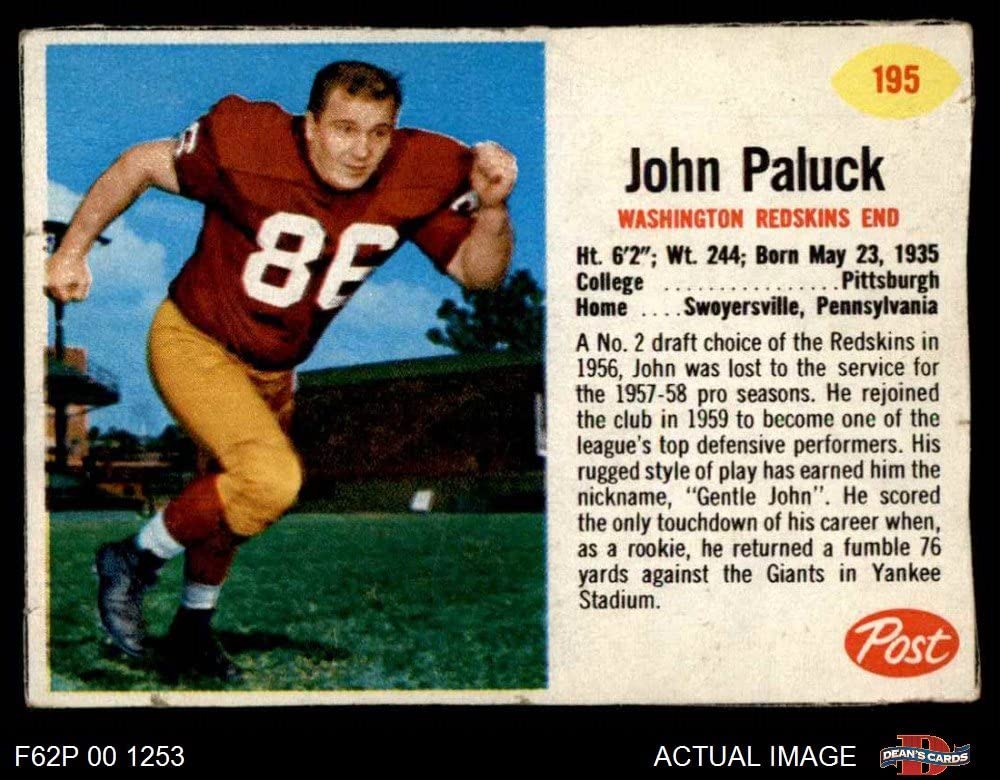
No. 39: OT Ezra Cleveland, CB Kristian Fulton, DE Zack Baun, CB Jeff Gladney

No. 56: LB Jordyn Brooks, LB Akeem-Davis Gaither, LB Malik Harrison, WR Leviska Shenault Jr.

The second-rounders are harder to predict, as I’m positive there are teams with first-round grades on any of the players above, and projected first-rounders could slip into the second round. Nevertheless, the players picked here would not necessarily be instant-star players. Chances are they would be worked into the starting lineup over time.
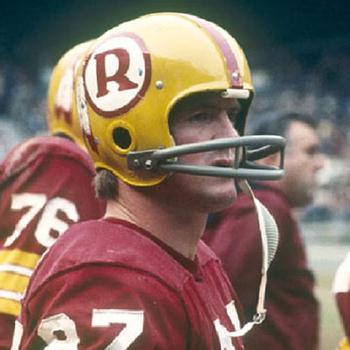
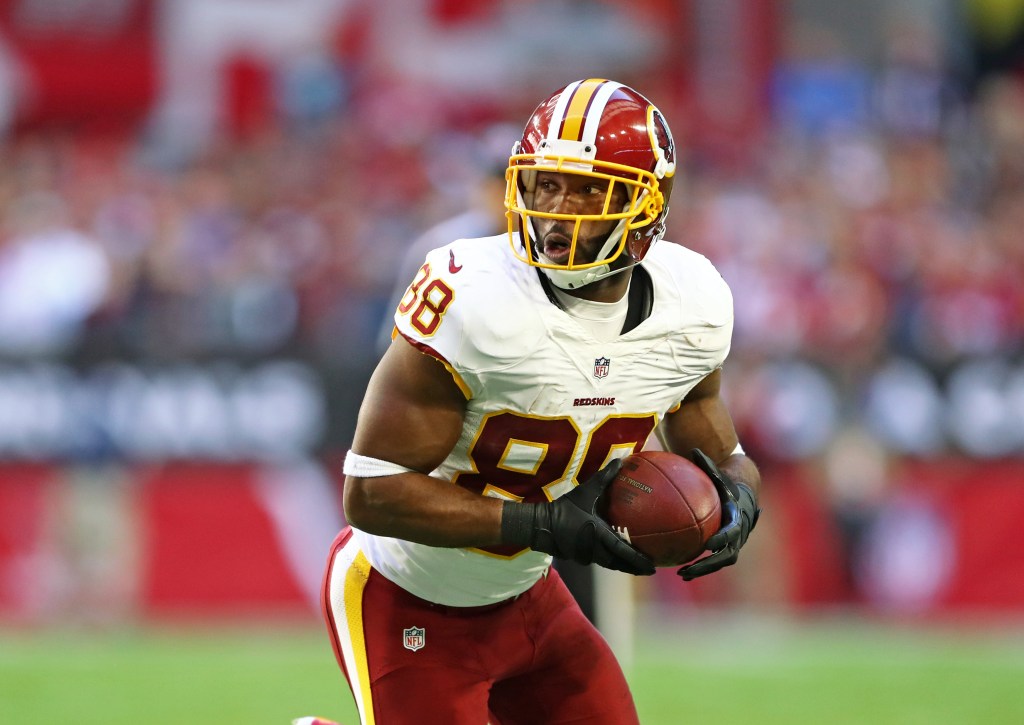
Looking at all these names and keeping in mind any others I may have left off, would the Redskins rather have their choice of three to four of these guys instead of Young? Personally, I’d go with Young. He seems like the surest thing in the draft, and the team cannot afford to miss on their early picks if they’re looking to get better soon.

Not only that, but looking at Nick Bosa’s impact for the San Francisco 49ers’ defense has me excited for the potential Young could have. I’m not saying the Skins will be in the Super Bowl next year, but if Young truly is the type of player everyone is saying he is, it would be difficult to pass up on. The only players I listed above who I believe could even come close to Young’s potential impact is Okudah and Simmons, and if the Skins were to trade with a team outside the top five instead of Miami, there’s no guarantee either would be available by the time the Skins picked.

Scenario 3: The Dream Scenario

I will preface this by saying there is no way everything I describe here falls into place. In fact, there’s no guarantee anything I say here will happen, but it’s fun to dream. First, the Redskins keep the No. 2 pick and select Young. With Williams on the block, there have been reports that the Cleveland Browns are interested in a trade. As I mentioned before, I would be shocked if the team gets anything better than a second-rounder, but since this is the dream scenario, they get a first-rounder. In a simple deal, Cleveland sends the 10th overall pick to Washington in exchange for Williams.

Another team rumored to be in the running for Williams is the Tampa Bay Buccaneers, although the biggest doubt for a deal there would be the financial situation of Tampa. The addition of Tom Brady and Rob Gronkowski to a team with an already lethal receiving core and solid defense makes the Bucs possible Super Bowl contenders, so Tampa may want to go cheaper in finding a new left tackle.

Luckily the 2020 draft is loaded with top-end prospects at the tackle position. With Miami already looking to trade up for a tackle, there is a good chance the best ones go quickly. Maybe after missing out on Williams, the Bucs want to crawl up from 14th overall and into the top 10 to get their star tackle of the future. In this situation, the Redskins give Tampa the 10th pick in exchange for the 14th pick and the 45th pick. (An even better situation would be receiving OJ Howard in a similar deal in order to solve the tight end situation, but not only would that be even more unlikely than this scenario already is, but a deal for Howard fell through two months ago.)

The Redskins staying at No. 2 to take the consensus top prospect and getting rid of a disgruntled player while simultaneously getting a second-rounder back AND an additional first-rounder would be the best possible scenario. Even if the team can get just a second for Williams, that’s worth celebrating.

In this specific instance, the team could take the 14th pick and trade back even further to pick up even more capital, but to keep things simple, we’ll take a look at some holes they could fill.

The team could try to replace Williams at 14 with Houston’s Josh Jones, or they could make up for the departure of Quinton Dunbar with a defensive back like Henderson or Johnson, as mentioned before. If they wanted to go the wide receiver route, there would be a decent chance that either CeeDee Lamb or Jerry Jeudy would be available, but they could address that position at 45.

With a new second-rounder, players like Michael Pittman Jr., a receiver from USC, or any of the players I mentioned as potential second-rounders in the previous scenario could be there for the taking.

To wrap things up, there are always winners and losers in the NFL Draft, and there are always plenty of surprises. Perhaps nothing crazy will happen; the Skins take a top prospect and call it a night. Maybe the football world will turn upside down. In any case, with this being a time without much sports going on, the draft will be an even bigger spectacle than it is on a normal year, so let’s hope the Redskins make all the right moves with the lights shining brighter.

(Cover Photo Credit: Kirby Lee-USA Today Sports)

DC Sports By The Numbers (90-99)

By: Joe Pohoryles

The Washington, D.C. sports teams have seen plenty of athletes do incredible things while representing the nation’s capital. One of the most recognizable features of these athletes is the numbers they sport on their uniforms.

As we forge on in these times with little going on in the sports world, I will spend the next week-and-a-half exploring which players were the best to wear every possible jersey number, finishing today with 90-99.

Of course comparing players across different sports is difficult, but this will take a look at the most impactful and iconic DC sports figures. Some of the names on this will be more prominent than others; several lesser worn numbers will merely be default picks. In any case, it should be interesting to see the distribution.

If you missed the earlier parts of the list, you can find them here: 0-9, 10-19, 20-29, 30-39, 40-49, 50-59, 60-69, 70-79, 80-89

(Note: For NBA and NHL, a player’s tenure is marked by the year their first season ended until the year their final season ended. For example, John Wall was drafted in 2010 and was a rookie in the 2010-11 season, but since the season ended in 2011, his tenure is listed as 2011-present. This is not necessary for MLB — where the entire season is played in the same calendar year — or NFL — where only the postseason is played in a different calendar year.)

*= the player’s tenure on the team extended longer before or after the stated dates, but said player wore a different number in those other years

90) Joe Juneau, Washington Capitals’ forward (1994-1999)

Runner-up: Marcus Johansson, Washington Capitals’ forward (2011-2017)

Photo Credit: NoVa Caps Fans

Juneau averaged 0.75 points per game in his time in Washington, and was consistently among the team’s top five scorers every season. His 43 points in the shortened 1994-95 season co-led the team in his first full season with the team. His overtime goal in Game 6 of the 1998 Eastern Conference Finals sent the team to its first Stanley Cup Final in franchise history, and he scored 17 points in 21 games that postseason, which was tied for most on the team.

MoJo is not a high-profile player, but his point production quietly made him a top seven scorer on the team year in and year out. Goal-scoring was never his forte, but he still managed to reliably tally 40-50 points nearly every season. His 58 points in 2016-17 remain his career-high, and while he was not on the team when they won the Stanley Cup, he had his hand in plenty of successful campaigns.

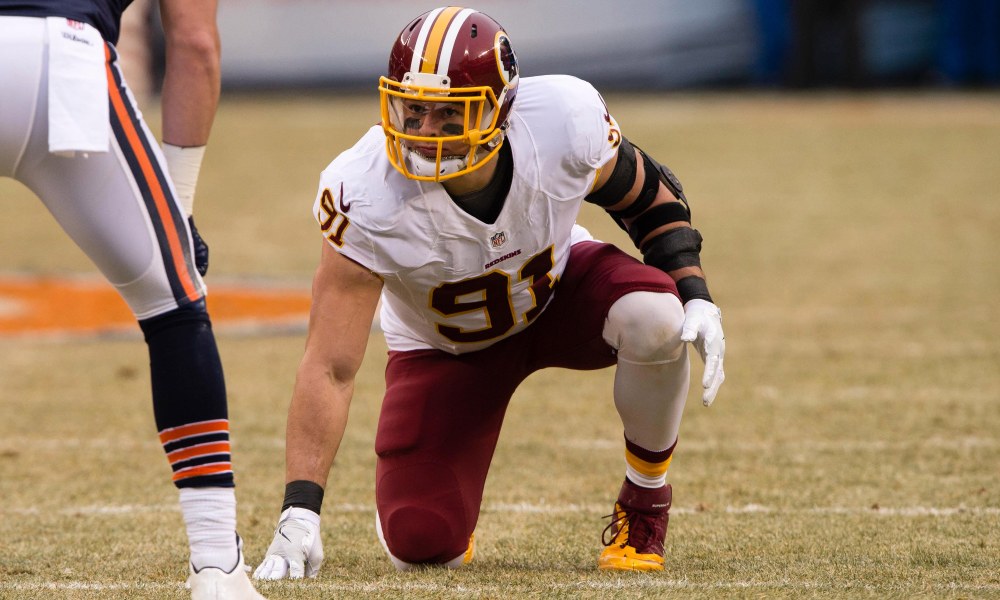
91) Ryan Kerrigan, Washington Redskins’ linebacker (2011-present)

Runner-up: Sergei Fedorov, Washington Capitals’ forward (2008-2009)

Photo Credit: Jerome Miron/USA Today Sports

Kerrigan has been among the team’s best defensive players for most of his career. He has been to four Pro Bowls, and is just one sack away from tying Dexter Manley’s franchise sack record of 91.0. His 90.0 career sack total is sixth-most among active players, and within spitting distance of 2011 draft classmates JJ Watt and Von Miller. Despite this, he’s been an underrated defensive star throughout his career, but in Washington he’s placed exactly where he deserves to be when looking at all other 91s.

Fedorov spent most of his career with the Detroit Red Wings, winning three Stanley Cups (including one against the Caps in 1998) and making a name for himself as one of the best players of the 1990s. He was one of the first star players to defect from the Soviet Union, and by the time he made it to Washington, he was well past his prime. The Hall of Famer played just 70 total regular season games in Washington across two seasons, but he was the team’s fifth-highest point scorer in the 2009 playoffs at 39 years old (the four ahead of him were 24 or younger).

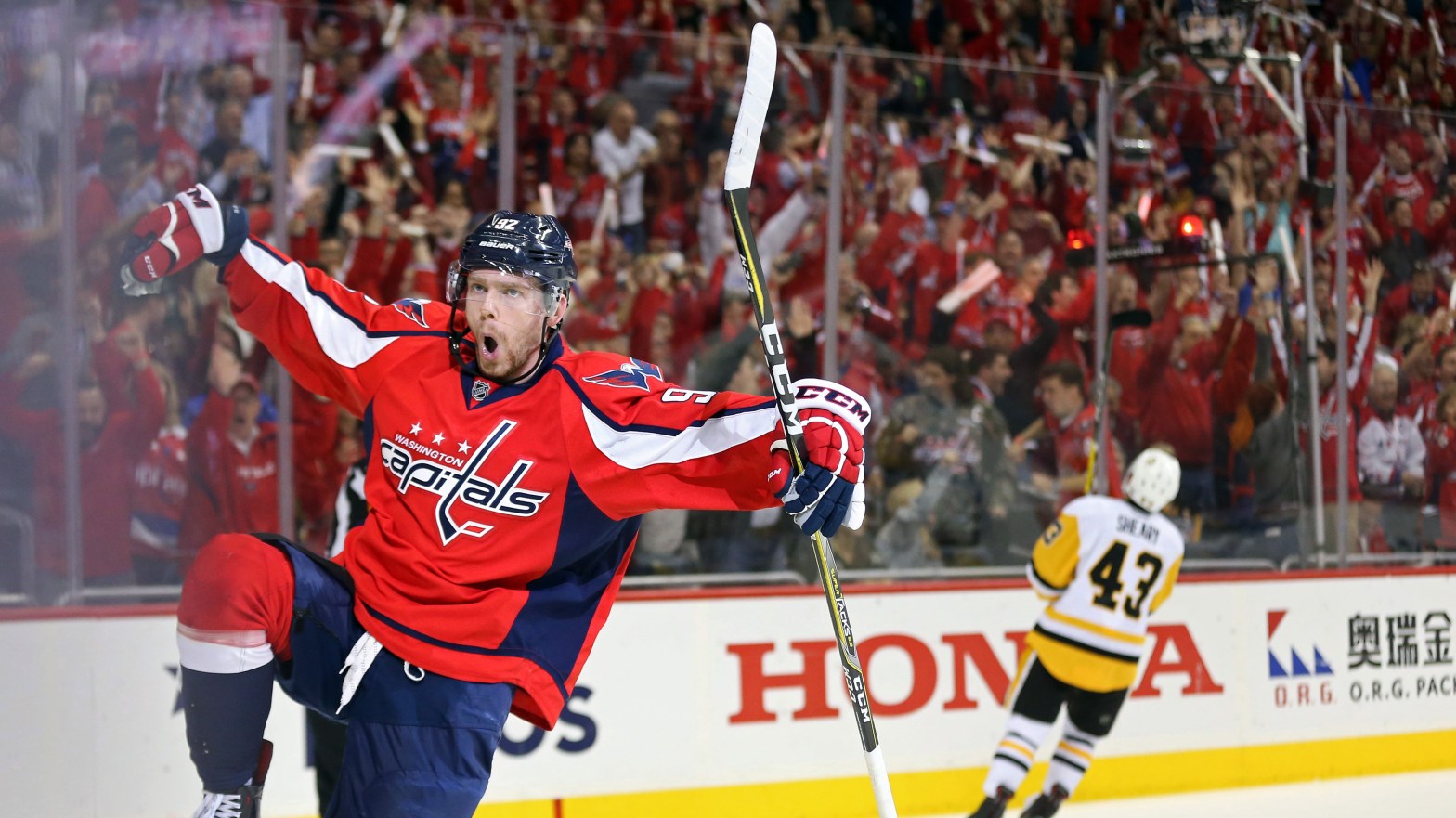
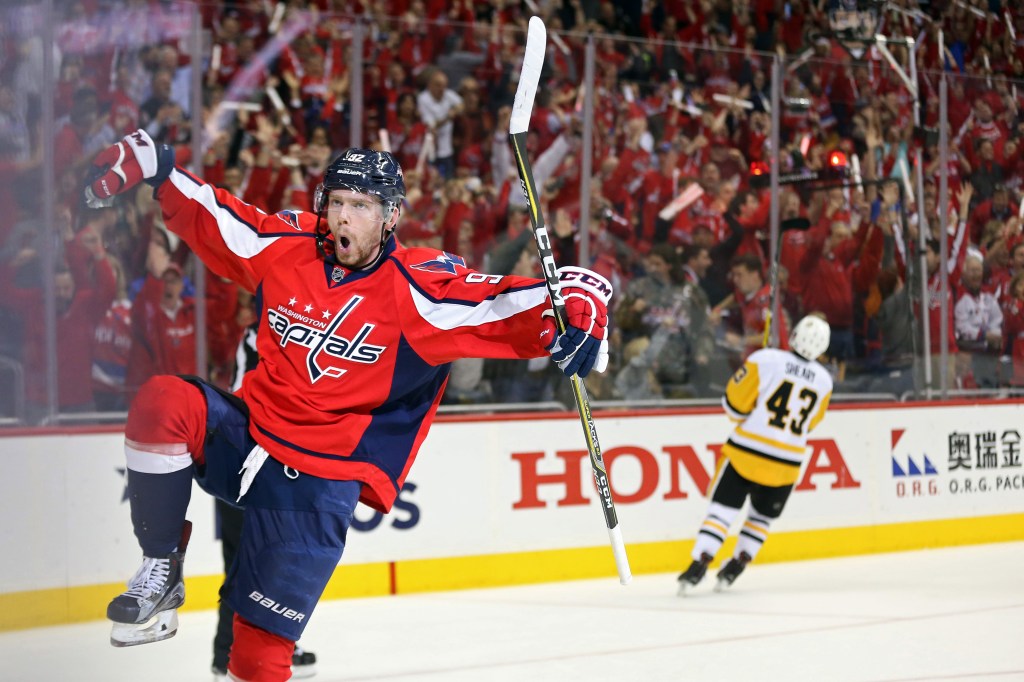
92) Evgeny Kuznetsov, Washington Capitals’ forward (2014-present)

Runner-up: Chris Baker, Washington Redskins’ defensive tackle (2012-2016)

Photo Credit: Geoff Burke/USA Today Sports

Kuzy has had an up-and-down career so far, at times looking like one of the best players in the world, and at other points looking like he isn’t trying as hard as he should be. Still, he remains one of the team’s top offensive players. At nearly 28 years old, he is one of the few pieces of the championship core still in his physical prime. His performance in the 2018 postseason was one for the ages, leading the team with 32 points in 24 games, which was the highest total since Evgeni Malkin in 2009. He’ll remain a franchise cornerstone for the foreseeable future.

Baker spent the latter two of his four seasons in Washington as a starting defensive lineman. His best season came in 2015, where he finished sixth on the team with 53 combined tackles and third on the team with 6.0 sacks.

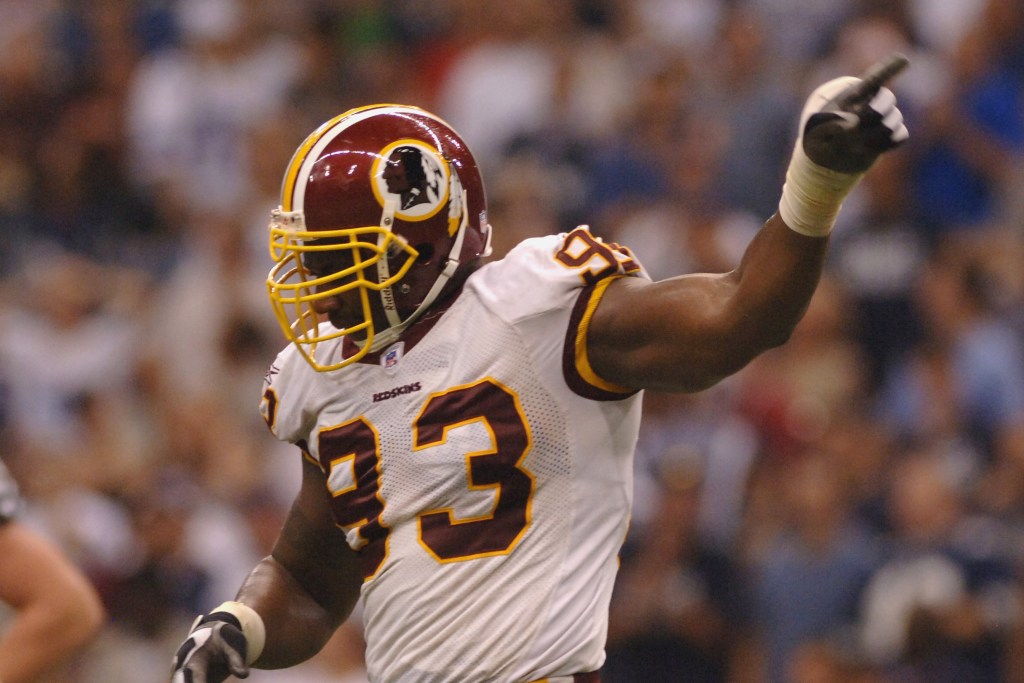
93) Phillip Daniels, Washington Redskins’ defensive end (2004-2010)

Runner-up: Jonathan Allen, Washington Redskins’ defensive tackle (2018-2019*)

Photo Credit: A. Messerschmidt/Getty Images

Daniels started his career in Seattle and Chicago before spending the final six years in Washington. Spending the bulk of his time here as a starting defensive end, Daniels’s veteran leadership was as impactful as his play on the field. Then-head coach Mike Shanahan valued Daniels’s leadership ability so much that he added Daniels to the coaching staff upon his retirement after the 2010 season.

Allen was a surprise addition to the team in 2017, slipping all the way down to the 17th overall pick when just months before he was a projected top five pick. Since then, he’s developed into a defensive leader who will need to remain a major force if this team has any hopes of turning things around. He’s entering his fourth season, and he has a good chance to end his career as the best No. 93 in city history.

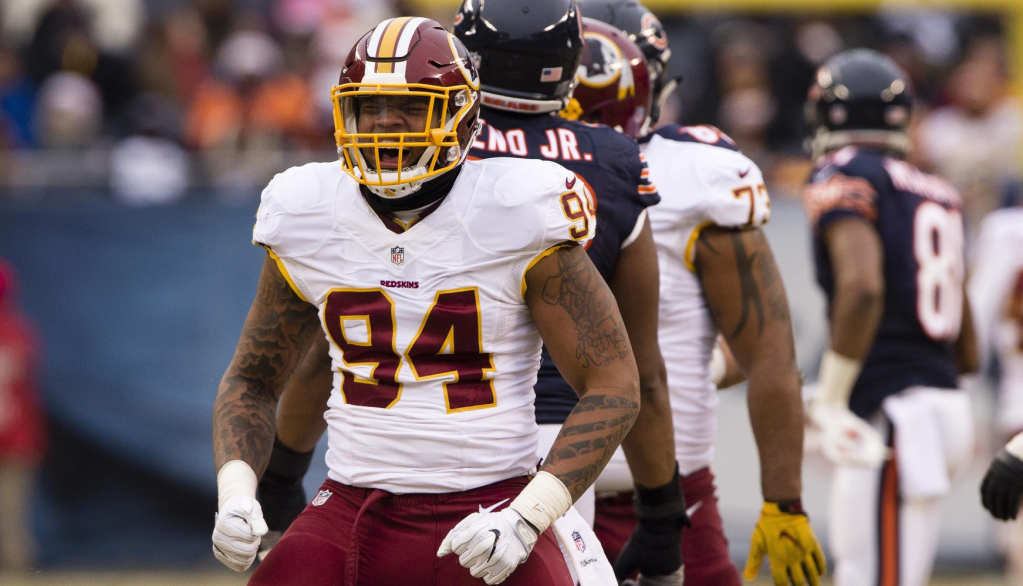
94) Preston Smith, Washington Redskins’ defensive end/linebacker (2015-2018)

Runner-up: Dana Stubblefield, Washington Redskins’ defensive tackle (1998-2000)

Photo Credit: NBC Sports Washington

Smith played in all 64 games during his four seasons in Washington, and he started every game in the final three seasons. After recording eight sacks as a rookie, Smith nailed down a key role in the Redskins’ defensive line. He did not truly break out until 2019, his first season with the Green Bay Packers, where he totaled a career-high 12.0 sacks and helped the team reach the NFC Championship.

Stubblefield was a star in the mid-1990s for the San Francisco 49ers, winning Defensive Rookie of the Year in 1993, Defensive Player of the Year in 1997, and earning three All-Pro selections. He was not the same player by the time he reached Washington, but in 1999 he put up the third-highest combined tackle total of his career (44), the highest two being his rookie and Defensive Player of the Year seasons.

95) Dan Wilkinson, Washington Redskins’ defensive tackle (1998-2002)

Runner-up: William Gaines, Washington Redskins’ defensive tackle (1995-1997)

Photo Credit: Pinterest

The first overall pick of the 1994 draft to Cincinnati left town after just four seasons. He joined the team at the same time as Stubblefield, suddenly giving the team a supposedly elite defensive line. While the results were not awful, the line did not perform as well as predicted, Wilkinson still managed to spend five seasons as a fixture on the defensive line.

Gaines did not have a long career, but three of his four NFL seasons came in Washington. He recorded two sacks in 1995, which were the only two of his entire career and were tied for fifth on the team that season. He was never a full-time starter, but was a solid reserve lineman.

96) Phil Housley, Washington Capitals’ defenseman (1997-1998)

Runner-up: Cornelius Griffin, Washington Redskins’ defensive tackle (2004-2009)

Photo Credit: Craig Melvin/Getty Images

Housley, a Hall of Fame defenseman, was one of the best American hockey players of all-time. His 1,232 points and 1,495 games played were the most of any American at the time of his retirement. He never won a Stanley Cup, but he came closest with the Caps in 1998, in the second of two seasons he played with the team. He was the top scoring defenseman on the Caps in his first season, and a top seven scorer team-wide both years. He won’t be primarily remembered as a Capital, but his impact was undeniable in his short tenure here.

Griffin played the final six seasons of his career with the Redskins after playing the first four with the New York Giants. He led the NFL with 21 tackles for loss in 2004, his first season in Washington, and his 70 combined tackles on the season was a career-high (also fifth-most on the team).

97) Renaldo Wynn, Washington Redskins’ defensive end/tackle (2002-2006, 2009)

Runner-up: Lorenzo Alexander, Washington Redskins’ linebacker (2010-2012*)

Photo Credit: NFLPA

Wynn had two stints with the franchise, although he played just two games during the second one in 2009. In his first stint, he played in all but one game across five seasons. Wynn helped the team reach the playoffs for the first time since 1999 during the 2005 season.

Alexander was a special teams star with Washington in the early 2010s. He was named special teams captain in 2010, and even made the Pro Bowl in 2012. It wasn’t until he reached Buffalo in 2016 that he truly blossomed as a starting linebacker, but he was still a strong contributor during his early days in Washington.

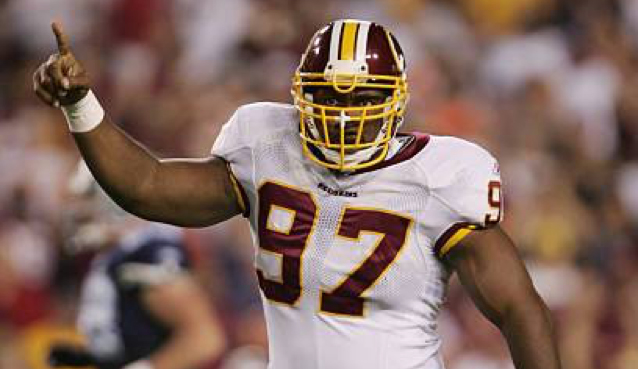
98) Brian Orakpo, Washington Redskins’ linebacker (2009-2014)

Runner-up: Lemar Marshall, Washington Redskins’ linebacker (2004-2006*)

Photo Credit: Nick Wass/AP Photo

Orakpo arrived in 2009 with much hype as a young defensive star, and his career-high 11.0 sacks as a rookie co-led the team that season and helped make him the first Redskins rookie to make the Pro Bowl since Tony Green in 1978. He was the only rookie in the entire NFC to be an initial vote on the roster. He immediately became a fan favorite, and while two separate pectoral muscle tears in 2012 and 2014 threatened his career, he was still one of the Redskins’ top defensive players of the early-2010s.

Marshall was an undrafted free agent who spent his first couple seasons as a reserve player before taking a leap in 2004 to replace the injured LaVar Arrington. Once fully entrenched in a starting role, Marshall put up over 100 combined tackles in both the 2005 and ’06 seasons, leading the team in ’05 with 101. His 2007 release from the team was considered a surprise move, as he was among the team’s better defensive players from the mid-2000s.

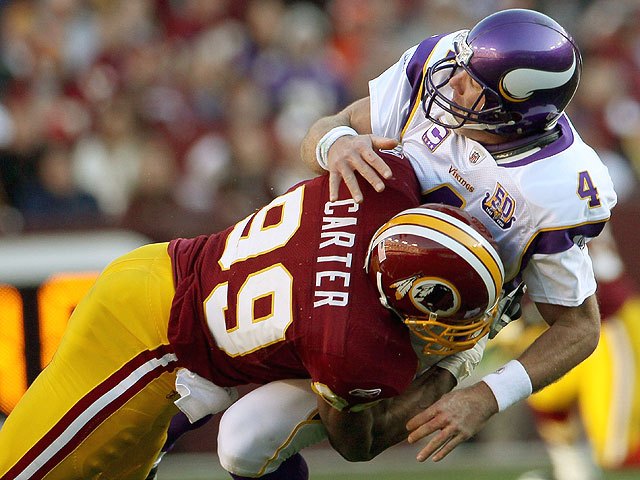
99) Andre Carter, Washington Redskins’ defensive end (2006-2010)

Runner-up: Marco Coleman, Washington Redskins’ defensive end (1999-2001)

Photo Credit: Win McNamee/Getty Images

Carter was a starting defensive end as soon as he joined the team from San Francisco. After putting up six sacks in 2006, Carter led the team with 10.5 sacks in ’07, then led the team again in ’09 with 11.0 sacks (tied with Orakpo). He had a bit of an up-and-down tenure with the team in terms of production, but he as a whole he was an effective pass rusher.

Coleman made his only Pro Bowl in 2000, recording a career-high 12.0 sacks to go with two forced fumbles. He started all 44 games that he played across three seasons, missing just four games during the 2001 season. He was still a big piece of the defensive line in ’99 and ’01, but playing just three seasons in DC limited his all-time impact.

Now finally…

We have gone through No. 0 to No. 99, naming the top two players to wear each number, plus a few honorable mentions sprinkled in. Over 200 athletes named, and the Redskins make up well over half of the list, which doesn’t come as a surprise given how every number except for zero is used in the NFL. NFL rosters are also the largest of the four major sports, and the team has been here the longest (even when accounting the Washington Senators, there was a 30-plus year gap of no baseball in the city). The overall breakdown looks like this:

Redskins – 63 (plus 59 runner-ups)

Capitals – 19 (plus 19 runner-ups)

Nationals/Senators – 9 (plus 12 runner-ups)

Wizards/Bullets – 9 (plus 10 runner-ups)

DC Sports By The Numbers (80-89)

By: Joe Pohoryles

The Washington, D.C. sports teams have seen plenty of athletes do incredible things while representing the nation’s capital. One of the most recognizable features of these athletes is the numbers they sport on their uniforms.

As we forge on in these times with little going on in the sports world, I will spend the next week-and-a-half exploring which players were the best to wear every possible jersey number, continuing today with 80-89.

Of course comparing players across different sports is difficult, but this will take a look at the most impactful and iconic DC sports figures. Some of the names on this will be more prominent than others; several lesser worn numbers will merely be default picks. In any case, it should be interesting to see the distribution.

If you missed the earlier parts of the list, you can find them here: 0-9, 10-19, 20-29, 30-39, 40-49, 50-59, 60-69, 70-79

(Note: For NBA and NHL, a player’s tenure is marked by the year their first season ended until the year their final season ended. For example, John Wall was drafted in 2010 and was a rookie in the 2010-11 season, but since the season ended in 2011, his tenure is listed as 2011-present. This is not necessary for MLB — where the entire season is played in the same calendar year — or NFL — where only the postseason is played in a different calendar year.)

*= the player’s tenure on the team extended longer before or after the stated dates, but said player wore a different number in those other years

80) Gene Brito, Washington Redskins’ tight end/defensive end (1951-1953, 1955-1958)

Runner-up: Roy Jefferson, Washington Redskins’ wide receiver (1971-1976)

Photo Credit: Bleacher Report

Brito played on both sides of the ball during his career, but excelled on defense. He made his first Pro Bowl in 1953, spent a year in the CFL with the Calgary Stampeders, then returned to the NFL in 1955, leading to his second Pro Bowl, a First Team All-Pro selection, and the Player of the Year title from the Washington D.C. Touchdown Club. He was named All-Pro four more times (three First Team), and was named to the 80 Greatest Redskins.

Jefferson had more success with the Pittsburgh Steelers, but he made the Pro Bowl and was named Second Team All-Pro during his first season in Washington, and he helped the team get to the Super Bowl in 1972.

81) Art Monk, Washington Redskins’ wide receiver (1980-1993)

Runner-up: Joe Walton, Washington Redskins’ tight end/defensive end (1957-1960)

Photo Credit: AP Photo/NFL Photos

The Hall of Fame receiver was on the team for all three Super Bowl wins. His best season came in 1984, where he broke the NFL single-season receptions record with 106, and was named First Team All-Pro. By the end of his career, Monk briefly held league records for career receptions (940) and career yards among active players (12,721) until being surpassed by Jerry Rice in both categories within weeks of Monk setting the record. The best receiver in franchise history, Monk is the easy choice for 81.

Walton is another two-way player on this list, although he was not quite as prolific as Briton. His father, Frank “Tiger” Walton, played for the team in the mid-1940s, and Joe followed in his footsteps. After his career, the younger Walton spent decades as a coach, serving as the Skins’ offensive coordinator from 1978-1980, before eventually getting the head coaching job with the New York Jets (1983-1989), then Robert Morris University (1994-2013).

82) Michael Westbrook, Washington Redskins’ wide receiver (1995-2001)

Runner-up: Antwaan Randle El, Washington Redskins’ wide receiver/return specialist (2006-2009)

Photo Credit: SB Nation Hog Haven

Westbrook was the fourth overall pick in the 1995 draft, and while he did total over 1,000 receiving yards in 1999, injuries prevented him from reaching his full potential. After his NFL career, Westbrook got into mixed martial arts, going 1-1 with one additional no contest in three career fights.

Randle El started his career in Pittsburgh, where he won Super Bowl XL and became the first wide receiver in NFL history to throw a touchdown pass in the Super Bowl. With the Redskins, Randle El scored 11 touchdowns: eight receiving, two passing and one punt return. He totaled a career-high 728 receiving yards in 2007.

83) Ricky Sanders, Washington Redskins’ wide receiver (1987-1993*)

Runner-up: Jay Beagle, Washington Capitals’ forward (2009-2018)

Photo Credit: Redskins.com

Sanders made up one-third of the Redskins’ receiving corps nicknamed “The Posse,” along with Monk and Gary Clark in 1989, in which all three totaled over 1,000 receiving yards. In Super XXII, he was one of a handful of Redskins who broke Super Bowl records in the 42-10 beatdown of the Denver Broncos, including most receiving yards (193), most total yards (235) and most touchdowns in one quarter (2), among others. Sanders won his second Super Bowl with the Redskins in the 1991 season.

Beagle was not a player to light up the stat sheet, but he was a solid bottom-six forward and penalty-killing face-off specialist. He won 56.4% of his face-offs in 10 seasons with the Capitals, and as a longtime Cap became a popular player with fans. Beagle jerseys were always visible in Capital One Arena alongside the usual top players. When the Capitals won the Stanley Cup in 2018, Beagle became the first player to win the Kelly Cup of the ECHL, the Calder Cup of the AHL, and the Stanley Cup, making him a champion on the three highest levels of professional American hockey.

84) Gary Clark, Washington Redskins’ wide receiver (1985-1992)

Runner-up: Jean Fugett, Washington Redskins’ tight end (1976-1979)

Photo Credit: Rick Stewart/Getty Images

Clark, the third member on this list who was part of “The Posse,” of 1989, was perhaps the most consistent receiver in franchise history when it comes to year-to-year production. In eight seasons, Clark never totaled fewer than 892 receiving yards in a season, and he eclipsed 1,000 yards five times. Clark was a four-time Pro Bowler, three-time All-Pro and two-time Super Bowl champion.

Fugett started his career in Dallas, but did not become a regular starter until he joined the Redskins. A Baltimore native, Fugett made his only Pro Bowl in 1977 after totaling 631 receiving yards and five touchdowns, both career-highs. He set a new career-high the following year with seven touchdowns, which led the team that year.

85) Don Warren, Washington Redskins’ tight end (1979-1992)

Runner-up: Henry Ellard, Washington Redskins’ wide receiver (1994-1998)

Photo Credit: SB Nation Hog Haven

Warren spent all 14 NFL seasons in Washington, serving as the team’s starting tight end for the vast majority of his career. Better known for his blocking, Warren was one of the few non-offensive linemen who were a part of “The Hogs.” Warren started 181 of the 193 games he played in a Redskins uniform, and was with the team during all three Super Bowl wins.

Ellard spent the majority of his career as a receiver and returner for the Rams, but still managed to record three 1,000 yard seasons in a row with the Redskins in his mid-30s. The former All-Pro led the team in receiving yards in all three of those seasons, from ’94-’96,

Vernon Davis is a DC native and former Terp who spent the twilight years of his career in burgundy and gold, contributing as a backup for the oft-injured Jordan Reed. It would have been a treat to see a prime Davis fly down the field for the Redskins; he likely would have topped Warren if he had.

86) John Paluck, Washington Redskins’ defensive end (1959-1965*)

Runner-up: Jordan Reed, Washington Redskins’ tight end (2013-2019)

Photo Credit: Amazon.com

Paluck was a second-round pick in 1956, where he wore No. 85, and then spent the next two years in the military. Upon rejoining the team in 1959, Paluck became the starter at left defensive end. Despite making just one Pro Bowl in his career, Paluck was among the best defensive players of the early ’60s.

Reed never played a full 16 games in a season, and his injury history, which includes seven documented concussions, is cause for great concern for his life after football. When healthy, Reed was one of the most underrated offensive forces in the league. His size (6’3″, 242 pounds) and athleticism made him a match-up nightmare, and he was one of Kirk Cousins’s top targets amidst the team’s inconsistencies at wide receiver.

87) Jerry Smith, Washington Redskins’ tight end (1965-1977)

Runner-up: Charlie Brown, Washington Redskins’ wide receiver (1982-1984)

Photo Credit: Helmet Hut.com

Smith spent all 13 NFL seasons in Washington, and became arguably the greatest tight end in franchise history. A two-time Pro Bowler and two-time All-Pro, Smith retired with the most career touchdowns by a tight end. It was revealed after his death that he was gay. Spending his whole career in the closet, Smith was one of the first high-profile gay athletes, and many people, including longtime teammate and friend Brig Owens, believe he should be in the Hall of Fame, and he would already be if he were heterosexual. With career stats better than Hall of Famers like Mike Ditka and Dave Casper, he definitely should be in Canton.

Brown helped the team win Super Bowl XVII in his rookie season, totaling 690 receiving yards in nine games to earn a trip to the Pro Bowl. He had a career year the following season, where he led the team with 1,225 yards and made his second Pro Bowl. He was traded to Atlanta after his third season, but he accomplished a lot on both a team and personal level in his short time here.

Rod Gardner was a starting receiver in Washington for four seasons (2001-2004), and put up at least 600 receiving yards each season. He had 1,006 receiving yards on 71 receptions in 2002, both team- and career-highs.

88) Pierre Garcon, Washington Redskins’ wide receiver (2012-2016)

Runner-up: Chet Ostrowski, Washington Redskins’ defensive end (1954-1959)

Photo Credit: Mark J. Rebilas/USA Today Sports

Garcon was a breakout performer with the Colts after being drafted in the sixth round in 2008, but after signing a five-year/$42.5 million deal with the Skins in 2012, he became the team’s top pass-catching target for Robert Griffin III. The following season, Garcon led the league with 113 receptions and posted a career-high 1,346 receiving yards. In his final four seasons with the team, Garcon played in all 64 games, starting in all but two. As the team’s best receiver of the 2010s, Garcon is also the best to wear 88.

Ostrowski spent the mid- to late-1950s as the team’s starting right defensive end. He spent all six NFL seasons in Washington, totaling two career interceptions and four fumble recoveries. His three fumble recoveries in 1955 were second behind Brito on the team.

Gerardo Parra did not even spend a full season in a Nats uniform, joining the team from San Francisco in May. After adopting the children’s song “Baby Shark” as his walk-up song to get out of a hitting slump, Parra sparked a movement that carried the Nats to their title. Despite not getting much playing time, he was the heart of the clubhouse. Is he the best player in DC history to wear 88? Not even close, but his importance to the 2019 Nationals warrants a mention.

89) Santana Moss, Washington Redskins’ wide receiver (2005-2014)

Runner-up: Dave Robinson, Washington Redskins’ linebacker (1973-1974)

Photo Credit: MSN.com

Moss spent the first four seasons of his career on the New York Jets. His first season in Washington was his best; he totaled a single-season franchise record 1,483 yards (which was also second-most in the league that season) on 84 receptions. He was named to his only Pro Bowl as well as Second Team All-Pro. He eclipsed 1,000 yards two more times in his career, and his 7,867 receiving yards with the Redskins are the fourth-most in franchise history.

Robinson put together a Hall of Fame career mainly with the Green Bay Packers. He spent just the final two seasons of his 12-year career in Washington, but he started all 28 games. He totaled six interceptions and three fumble recoveries across those two seasons.

DC Sports By The Numbers (70-79)

By: Joe Pohoryles

The Washington, D.C. sports teams have seen plenty of athletes do incredible things while representing the nation’s capital. One of the most recognizable features of these athletes is the numbers they sport on their uniforms.

As we forge on in these times with little going on in the sports world, I will spend the next week-and-a-half exploring which players were the best to wear every possible jersey number, continuing today with 70-79.

Of course comparing players across different sports is difficult, but this will take a look at the most impactful and iconic DC sports figures. Some of the names on this will be more prominent than others; several lesser worn numbers will merely be default picks. In any case, it should be interesting to see the distribution.

If you missed the earlier parts of the list, you can find them here: 0-9, 10-19, 20-29, 30-39, 40-49, 50-59, 60-69

(Note: For NBA and NHL, a player’s tenure is marked by the year their first season ended until the year their final season ended. For example, John Wall was drafted in 2010 and was a rookie in the 2010-11 season, but since the season ended in 2011, his tenure is listed as 2011-present. This is not necessary for MLB — where the entire season is played in the same calendar year — or NFL — where only the postseason is played in a different calendar year.)

*= the player’s tenure on the team extended longer before or after the stated dates, but said player wore a different number in those other years

70) Braden Holtby, Washington Capitals’ goaltender (2011-present)

Runner-up: Sam Huff, Washington Redskins linebacker (1964-1967, 1969)

Photo Credit: NHL.com

Holtby has been among the best netminders in the league for the past five or six years, and while he regressed slightly in 2019-20, the 2016 Vezina Trophy winner still performed masterfully in the team’s run to the Stanley Cup in 2018. He led the league in wins in 2015-16 and 2016-17, and has made it to the All-Star games for the past five years in a row (2016-2020). He is a free agent this offseason, but regardless of whether he stays or goes, he will be remembered most for his success with the Caps.

Huff, a Hall of Fame linebacker, spent the bulk of his career with the New York Giants, where he was named an All-Pro six times (First Team twice) and a Pro Bowler four times. Still, upon joining the Skins in ’64, Huff immediately became a game-changing linebacker, leading what became the league’s second-ranked defense in 1965. He achieved more success in New York, but he still remains an all-time great Redskin.

71) Charles Mann, Washington Redskins’ defensive end (1983-1993)

Runner-up: Trent Williams, Washington Redskins’ offensive tackle (2010-present)

Photo Credit: Mark Wilson/AP

Mann and Dexter Manley made up the most fitting edge rushing partners (in both performance and names, although the jury is still out on Da’Ron Payne and Montez Sweat in the name department). Mann became the team’s starting left defensive end by his second season, and recorded four double-digit sack seasons, with a career-high 14.5 in ’85, plus a 9.5-sack season in ’87. The two-time Second Team All-Pro won two Super Bowls in Washington, and departed Washington with 82.0 sacks, which stands as third in franchise history behind Manley and Ryan Kerrigan.

Williams was drafted fourth overall in 2010 in an effort to replace the recently retired Chris Samuels at left tackle. Williams instantly slotted in as the team’s top offensive lineman, and before long was consistently the team’s best offensive player, making the Pro Bowl seven seasons in a row from 2012-2018. His relationship with the organization quickly deteriorated in 2019, where he did not play a single snap, and it appears unlikely that he will ever play in Washington again.

72) Dexter Manley, Washington Redskins’ defensive end (1981-1989)

Runner-up: Diron Talbert, Washington Redskins’ defensive tackle (1971-1980)

Photo Credit: Redskins.com

Manley, as mentioned above, rushed opposite Mann in a lethal edge rushing combination. The “Secretary of Defense” holds the franchise record with 91.0 sacks. (Kerrigan may be poised to break that whenever football returns, as he currently sits at 90.0 career sacks.) Manley’s best season came in 1986, where he set a franchise single-season record with 18.5 sacks and was named First Team All-Pro for the only time in his career. Like Mann, Manley won two Super Bowls in Washington.

Talbert began his career with the Rams in LA, but joined the Redskins after four seasons. In the subsequent 10 seasons in Washington, Talbert missed just four games, all in 1978. A Pro Bowler in ’74, Talbert played a big role in heightening the team’s rivalry with the Dallas Cowboys, playing with an unparalleled level of passion and aggression during those match-ups in particular.

73) Mark May, Washington Redskins’ guard/tackle (1981-1989)

Runner-up: Paul Laaveg, Washington Redskins’ guard (1970-1975)

Photo Credit: Stephen Dunn/Getty Images

Another member of “The Hogs,” May started 115 games in Washington and helped win two Super Bowls. Though he suffered a couple big injuries during his career, from 1983 to 1988, May started 89 of a possible 96 games, making him a reliable piece of the offensive line for much of the ’80s, and one of the official 70 Greatest Redskins.

Laaveg spent all six NFL seasons in Washington. He served as the starting left guard from ’72 to ’74, where he started all 42 games in that stretch. He wasn’t an extraordinary player, but he contributed to the team’s Super Bowl appearance in ’72.

74) John Carlson, Washington Capitals’ defenseman (2010-present)

Runner-up: George Starke, Washington Redskins’ offensive tackle (1973-1984)

Photo Credit: Karl B. DeBlaker/AP

Carlson is the team’s third-most tenured player behind Alex Ovechkin and Nicklas Backstrom, and has been the best defenseman on the team for awhile. The two-time All-Star and 2019 Second Team All-Star has emerged as a top-tier offensive defenseman league-wide in the past few years. Carlson was in contention for his first Norris Trophy this season, and with his contract running through 2026-27, he should continue to be a key member of the franchise for years to come.

Starke was the most senior member of “The Hogs,” and his veteran experience was invaluable for the legendary offensive line group. He won just one Super Bowl, while most of his other Hog counterparts were on the team for two or all three Super Bowls, but he helped set in motion the success that followed his retirement. It’s difficult to place him as a runner-up, given his cultural significance to the franchise, but he is still among the best to wear 74.

75) Terry Hermeling, Washington Redskins’ guard/tackle (1972-1980*)

Runner-up: Brandon Scherff, Washington Redskins’ guard (2015-present)

Photo Credit: Pinterest

Hermeling spent his entire 11-year career in Washington, spending his first couple seasons in different numbers before settling on 75. Hermeling shuffled around the line, but spent the most time at left tackle, where he helped the team win the NFC Championship in 1972 and contributed to the league’s top passing offense in ’75. He started 103 games over his career, and was named as one of the 80 Greatest Redskins.

Scherff became a key piece of the team’s offensive line right out of the gate. After he was drafted fifth overall in 2015, the Iowa native started all 16 games as a rookie. He made his first Pro Bowl the following year, and has since made it to the Pro Bowl two times in the past three years. The team inked him to the franchise tag this offseason, with hopes of signing a long-term deal in the near future. Injuries have hampered Scherff over the past few years, but when healthy he’s proven to be a top-tier guard. Just five years in, he’s building a stellar career, which will hopefully continue in Washington.

76) Jon Jansen, Washington Redskins’ offensive tackle (1999-2008)

Runner-up: Ed Simmons, Washington Redskins’ offensive tackle (1987-1997)

Photo Credit: Jim McIsaac/Getty Images

The longtime bookend to Samuels, Jansen accrued fewer accolades, but was one of the better pieces of the Skins’ offensive line in his era. After quickly learning the offensive system as a rookie, Jansen and the rest of the line helped running back Stephen Davis rush for over 1,000 yards three years in a row (1999-2001). Jansen started every game during the first five seasons of his career, before missing all of 2004 with a ruptured Achilles tendon, but returning to start in all 16 games again in ’05. Once nicknamed “the Rock,” for his durability, injuries cut down his effectiveness by the end of his tenure, but he is still among the team’s best tackles of the past 20 years.

Simmons won two Super Bowls with the Redskins, and yet both came in the only two seasons of his 11-year career in which he played fewer than 13 games. Still, Simmons spent a good chunk of the ’90s as the team’s starting right tackle.

77) Adam Oates, Washington Capitals’ forward (1997-2002)

Runner-up: TJ Oshie, Washington Capitals’ forward (2016-present)

Photo Credit: Doug Pensinger/Allsport

Oates, a Hockey Hall of Famer, had a rough beginning when he was traded to the Capitals. First, he held out to try and negotiate a new contract, then threatened to retire the following offseason after initially agreeing to play. Once a contract was settled, though, Oates became a top point producer. In his mid-30s, his 100-plus point seasons from St. Louis and Boston were behind him, but he led the league in assists in 2000-01 and 2001-02, and helped lead the team to the 1998 Stanley Cup Final. He became captain in 1999-2000, and eventually had an unsuccessful stint as coach for two seasons (2013-2014).

Oshie became a household name among U.S. hockey fans for his shootout heroics in the 2014 Sochi Winter Olympics, so when the Capitals acquired Oshie from St. Louis prior to the 2015-16 season, fans were ecstatic. His nifty scoring ability and strong work ethic made him an instant fan favorite, and after helping the team win the Stanley Cup in 2018 with 21 points in 24 games, he was selected to his first All-Star Game in 2020. Under contract until 2025, Oshie should remain a popular piece of the franchise well into his 30s.

78) Tim Johnson, Washington Redskins’ defensive tackle (1990-1995)

Runner-up: Bruce Smith, Washington Redskins’ defensive end (2000-2003)

Photo Credit: Pinterest

Johnson spent four of his six seasons in Washington as a starting interior lineman, starting all 16 games in the 1991 championship season, and finishing fifth on the team in tackles in ’93, when he was elected 1993 Redskin of the Year. He was an active figure in the community, sponsoring several philanthropic events in the DC area, and he continues to serve the community in Orlando, where he currently resides.

Smith was well-past his prime by the time he reached Washington, but being arguably the best defensive lineman of all-time, he still served as a productive piece of the defense even in his late 30s/early 40s. Smith certainly has a better overall resume than Johnson, but since he achieved much more in Buffalo, he would be a bit of a cheap pick for best to wear No. 78.

79) Jim Lachey, Washington Redskins’ offensive tackle (1988-1995)

Runner-up: Ron McDole, Washington Redskins’ defensive end (1971-1978)

Photo Credit: Pinterest

Lachey, a later member of “The Hogs,” was the team’s star left tackle of the late ’80s and early ’90s. His best season came in 1991, where he made his third Pro Bowl, was named First Team All-Pro for the third year in a row and helped the team win its third Super Bowl in franchise history. Though he arrived in the late stages of the Hogs’ dynasty, he was just as important to the franchise’s success.

The brunt of McDole’s success came in Buffalo in the mid-1960s, where he was one of the AFL’s top defensive players. He was 32 by the time he arrived in Washington, but he played in all 114 games across his eight seasons, starting all but seven (six of which came in his final season in ’78). He recorded a career-high three interceptions in 1971, making up a large chunk of his 12 career interceptions, which are the most all-time among defensive linemen.