The Nationals’ best and worst free agency signings of the decade

In professional sports, free agents can make a world of difference for a team. Building through the draft is important, but being able to bring in an established player who can immediately bolster the roster can turn a playoff team into a championship contender. In other cases, teams just need a less expensive veteran to add some depth.

Washington is not considered a major spot for free agents, as it doesn’t boast the same type of weather and nightlife as Los Angeles and Miami, nor does it have the same market opportunities as New York or Chicago, but that has not stopped the team from bringing in major additions over the years.

Some have worked out great, like London Fletcher, who signed a five-year deal with the Redskins in 2007 and immediately became a major presence for the defense. Others have been disastrous, like Albert Haynesworth, who signed a seven-year/$100 million deal in 2009 but barely lasted two seasons.

Looking from 2010 to 2019, I will be breaking down the best and worst free agency signings from each of the four major Washington teams, continuing with the Nationals. These signings do NOT include contract extensions for players already on the team or players who came in from a trade. These are only for players who came to DC from another team through free agency.

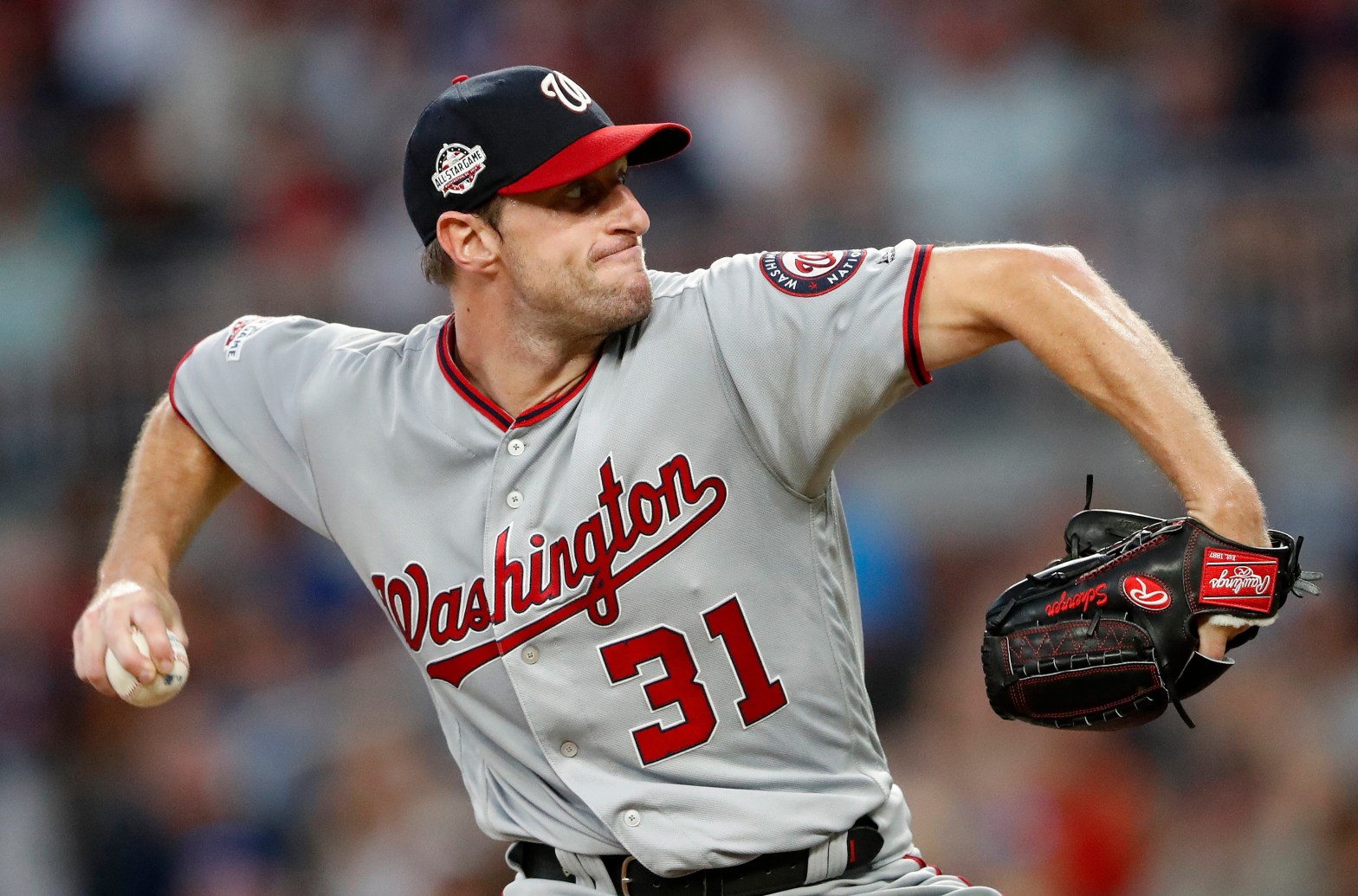
Best: Max Scherzer (2015)

Photo Credit: John Bazemore/AP Photo

Initial deal: Seven years, $210 million

Subsequent deal(s): N/A

Five All-Star Games, three NL strikeout championships, two Cy Young awards and one World Series later, Scherzer is the obvious choice for best free agency signing of the decade, and he most certainly earns that distinction for the history of the franchise, if not the entire city.

Mad Max was considered a short-sighted acquisition when the team signed the 30-year-old to a huge seven-year deal in 2015, but it quickly proved to be a bargain. Scherzer has finished in the top five of NL Cy Young voting in each of his five seasons in Washington, winning it twice while finishing in the top three in the past two seasons.

He became the No. 1 pitcher immediately upon coming to DC, creating arguably the best one-two punch in the majors with Stephen Strasburg behind him in the rotation. It took five years, but Scherzer finally helped deliver a World Series bookended by a gritty effort in Game 7 just days after being scratched from his scheduled Game 5 start. He reached 300 strikeouts in a season for the first time in 2018, which led the majors, and his 2,692 career strikeouts rank 24th all-time. Among active pitchers, he has the second-most behind former Detroit teammate Justin Verlander (18th all-time with 3,006).

After two years in Arizona and five in Detroit, Scherzer will be entering his sixth season in Washington — assuming there is a season at all — so the Nationals are officially the team with which he’s spent the most time. With all he’s accomplished in that span, and whatever’s left in these next two-plus years, it’s probable that whenever Scherzer gets his deserved induction to Cooperstown, he could be the first to go in with a Curly ‘W’ on his cap.

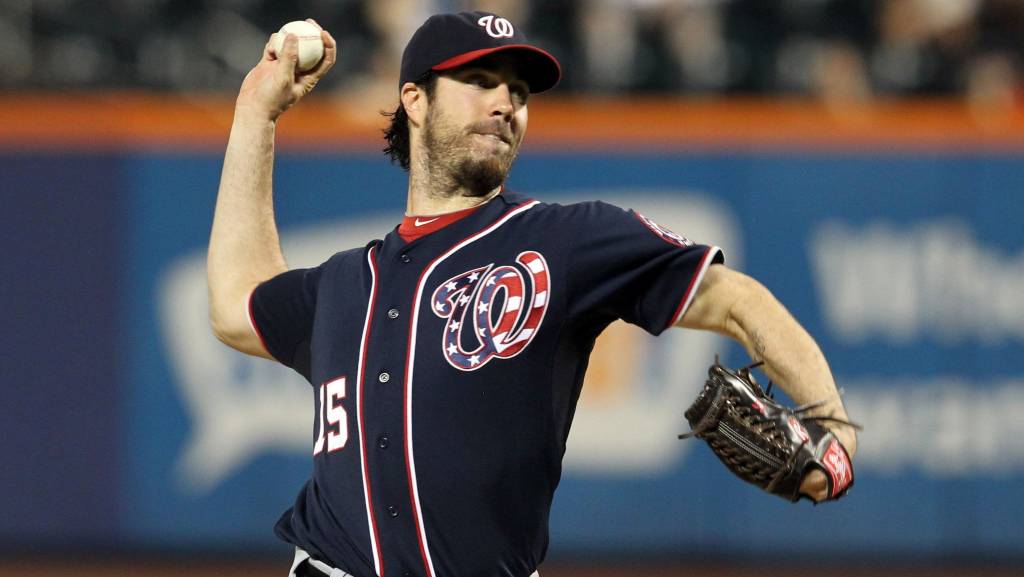
Worst: Dan Haren (2013)

Photo Credit: Brad Penner/USA TODAY Sports

Initial deal: One year, $13 million

Subsequent deal(s): N/A

Fresh off the team’s first ever postseason appearance, the Nationals brought in the three-time All-Star Haren to add a veteran arm into the rotation. With the rest of the rotation 27 or younger, the 32-year-old Haren had finished seventh in AL Cy Young voting just two seasons prior, and his $13 million salary made him the third-highest paid player on the team behind Jayson Werth and Ryan Zimmerman.

Unlike those two, who were both top five on the team in WAR that season (Werth was the best on the team with 4.6), Haren finished the season with a WAR of 0.1, and for a stretch was statistically among the worst hurlers in the game. By late June, his ERA had swelled to a major league-worst 6.15, and the 19 home runs he gave up through 15 starts were also the most in the league.

He spent time on the DL for physical and psychological reasons. Aside from shoulder issues, he later admitted to be in a dark place mentally, which could account for most of his struggles on the mound. He was able to finish the season on a higher note, however, going 6-3 with a 3.14 ERA in his final 13 games, but it wasn’t enough as the 86-76 Nationals were unable to return to the postseason. The blame cannot be put on Haren entirely, but a better season on his part obviously would have helped.

Across the entire season, Haren went 10-14 with a 4.67 ERA (eighth-highest in the majors that season), allowing 179 hits, 88 earned runs and 28 home runs (which was tied for seventh most in the majors). Luckily for the Nationals, the deal lasted just one season and they were not committed to him anymore after 2013. He went on to sign a one-year/$10 million deal with the Los Angeles Dodgers the following season.

Some would point to Werth’s massive seven-year/$126 million deal as a bad signing given the size, but Werth spent the majority of his contract as an impactful veteran leading a young team. There have also been other players signed to smaller deals that just didn’t pan out. Haren, meanwhile, was paid a top three salary team-wide with the purpose of bolstering the starting rotation. The contract length prevented it from being disastrous, but given the salary and expected level of output, the signing of Haren was the worst of the decade.

The Capitals’ best and worst free agency signings of the decade

In professional sports, free agents can make a world of difference for a team. Building through the draft is important, but being able to bring in an established player who can immediately bolster the roster can turn a playoff team into a championship contender. In other cases, teams just need a less expensive veteran to add some depth.

Washington is not considered a major spot for free agents, as it doesn’t boast the same type of weather and nightlife as Los Angeles and Miami, nor does it have the same market opportunities as New York or Chicago, but that has not stopped the team from bringing in major additions over the years.

Some have worked out great, like London Fletcher, who signed a five-year deal with the Redskins in 2007 and immediately became a major presence for the defense. Others have been disastrous, like Albert Haynesworth, who signed a seven-year/$100 million deal in 2009 but barely lasted two seasons.

Looking from 2010 to 2019, I will be breaking down the best and worst free agency signings from each of the four major Washington teams, starting with the Capitals. These signings do NOT include contract extensions for players already on the team or players who came in from a trade. These are only for players who came to DC from another team through free agency.

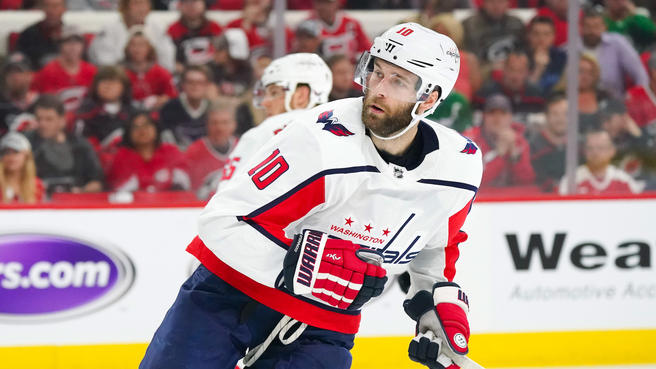
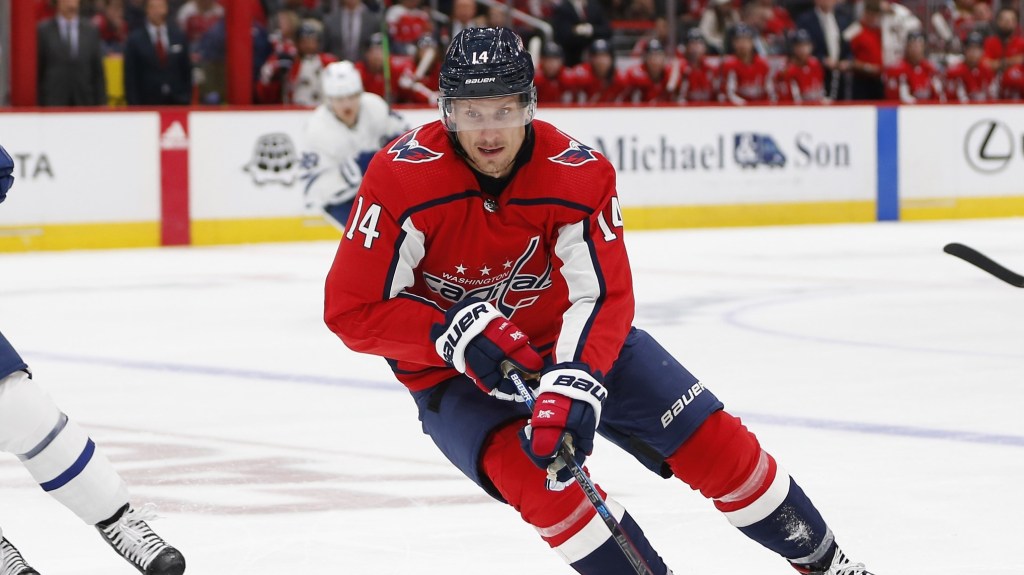
Best: Brett Connolly (2016)

Photo Credit: USA TODAY Sports

Initial deal: One year, $850,000

Subsequent deal(s): Two years, $3 million

The 2010 sixth overall pick flamed out in Tampa Bay and Boston before the Capitals signed him in 2016 on a “prove it” deal. Still just 24 years old, it was Connolly’s last real chance to prove he could stick around in the NHL.

Joining the reigning Presidents’ Trophy winners, Connolly shuffled in and out of the lineup from time to time as there was a lot of competition for playing time. He appeared in 66 games, scoring a career-high 15 goals and an additional eight assists as the Caps won the Presidents’ Trophy for the second year in a row.

His performance in 2016-17 earned him a two-year extension, where he became a staple on the third line. He scored 15 goals to go with 12 assists to give him a career-high in points (27). He tallied nine additional points in the playoffs that year (6g, 3a) en route to a Stanley Cup victory. Lars Eller will always be remembered as the man who scored the game-winning goal in the Game 5 Cup-clincher, but it was Connolly who thrusted the puck on net. He beat Vegas goalie Marc-Andre Fleury through the five-hole before the puck came to a rest on the crease. Eller swung in to knock it into a gaping net, and the rest was history.

It was the following year where Connolly really exploded, however, as he dusted his previous career-highs with 22 goals and 24 assists for 46 points, good enough for seventh on the team. His production from the third line would have served the Capitals well down the road, but with his two-year extension ending, Connolly received better offers that the cash-strapped Capitals couldn’t match.

Connolly eventually settled on a four-year, $14 million deal with the Florida Panthers, where he posted 33 points (19g, 14a) through 69 games in 2019-20.

Worst: Richard Panik (2019)

Photo Credit: NBC Sports Washington

Initial deal: Four years, $11 million

Subsequent deal(s): N/A

It could be premature to list Panik here, as it’s been just one shortened season to go off of, and his play had been improving prior to the stoppage, but given the price tag compared to some of the other sour deals over the past decade, it’s looking like Panik gets the title.

I would love to put Brendan Leipsic here, as the fourth-liner was released from the team after a handful of his misogynistic and vulgar Instagram direct messages were leaked in early May. He made disparaging comments about former teammates from other teams, several of their wives, and even his Capitals linemates, Nic Dowd and Garnet Hathaway. He just signed to the KHL last week.

The truth is that Leipsic was brought in on a one-year/$700,000 year deal without any guarantee that he would remain with the team after training camp. It was as low-risk as they come. Panik, meanwhile, was given four years and paid to be a productive third-liner. He hasn’t clicked with Eller and Carl Hagelin, and the arrival of Ilya Kovalchuk has bumped him down to the fourth line, which is probably a better fit for him. A solid, yet highly paid fourth-liner is better than a detrimental third-liner, but it’s still a disappointing result.

Essentially brought in to replace Connolly, Panik has not been able to effectively compensate for Connolly’s loss. With Kovalchuk likely to leave after the 2020 playoffs, Panik could have another chance to earn his third line spot back. There’s still time for him, but the first-year results have been poor. If anything, this pick is a testament to how well the team’s free agency signings have been over the past 10 years.

Wall to Mureșan: An all-time Wizards/Bullets first round

Following up on my Redskins and Capitals all-time first round picks, the Wizards/Bullets version will be the last. Since the Nationals have only been around for about 15 years, they only have a handful of first round picks in the team’s history, and there are many draft slots that they have never occupied. It would be a pretty barren list, so I will skip the Nationals.

The Wizards/Bullets franchise has a fair share of gaps as well, at least when it comes to their history in Washington. With first-round draft picks often being dealt away in trades, it’s not rare for a team to not have any first-round picks for a stretch of time. The Wizards did not have a first-round draft pick in 2014, 2016 or 2017, for example.

It’s also common for a team to immediately trade their drafted player in the same night. For example, in 2015, the team traded their first-round pick Jerian Grant on draft night. (Though they did end up netting Kelly Oubre Jr., another 2015 first-rounder. Plus, these trades are usually agreed upon beforehand.)

These gaps and trades will be compensated by including the team’s selections from when it was in Baltimore. While I have normally excluded Baltimore players from these types of lists, an exception seems necessary this time around. Those Baltimore picks will be indicated with an asterisk.

Like always, some of the players on this list were not first-round picks in their respective draft classes, but the list is based only on their overall selection spot.

1- John Wall (PG – 2010)

Wizards fans were ecstatic when the team earned the No. 1 pick in the 2010 Draft Lottery, and with Wall, the explosive point guard out of Kentucky, coming to DC, the team would get a franchise player to build around and move past the repercussions of the Gilbert Arenas locker room incident. Wall developed into a perennial All-Star that has led the team on multiple playoff runs in his career, but never past the second round.

He remains the only 2010 draft pick still with the team that drafted him, and after sitting out the past 18 months due to an Achilles injury, he is expected to make his return for the 2020-21 season.

Hall of Famer Walt Bellamy (C – 1961) was drafted by the Chicago Zephyrs first overall in 1961, and moved with the team to Baltimore in 1963, but he only played just over four seasons with the franchise.

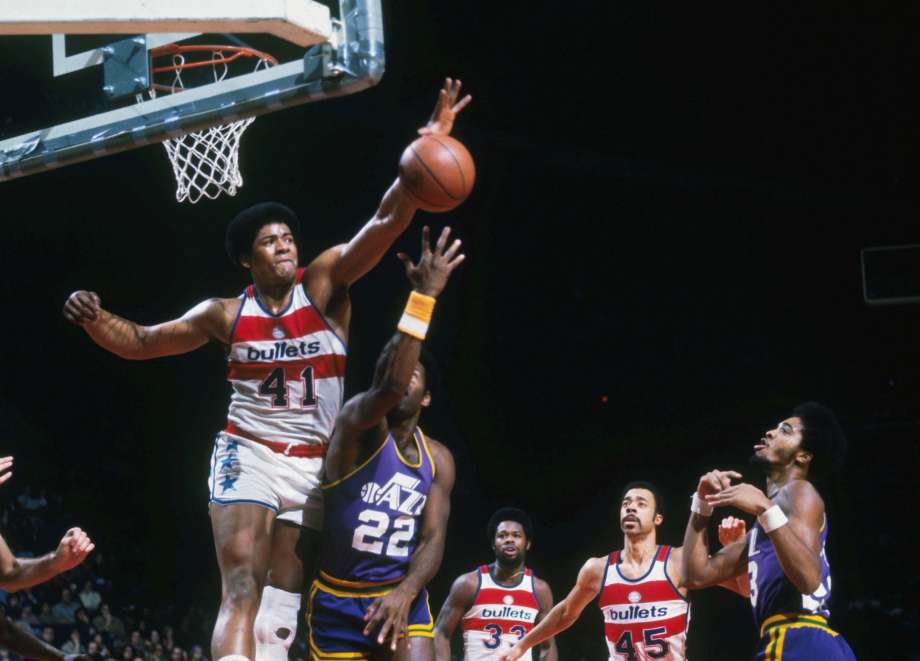
2- Wes Unseld* (C – 1968)

Unseld, who died recently on June 2, was a Baltimore pick, but remained with the franchise for the entirety of his career, which included eight seasons in Washington. The Hall of Fame center was a star player from his very first season, winning Rookie of the Year and MVP in 1968-69, his first season. He also won the only championship in franchise history in 1978.

Earl Monroe (PG/SG – 1967) was picked in the same slot a year prior, but spent just over four years in Baltimore before spending the next nine seasons with the New York Knicks.

3- Bradley Beal (SG – 2012)

Beal was drafted just two years after Wall to help aid the team into playoff contention. The two-time All-Star has been playing at an All-NBA level in Wall’s absence, but the lack of team success has led to recent snubs.

Beal has also been the subject of potential trade talks to contending teams, but Beal himself has expressed he wants to finish his career in DC. Hopefully he can experience some real postseason success before he retires.

4- Greg Ballard (SF – 1977)

Ballard was a rookie during the Bullets’ championship season, but didn’t become a starter until his third season, where an uptick in minutes led to dramatically better stats. His best statistical season came in 1981-82 when he averaged a team-leading 18.8 points plus 8.0 rebounds and 3.2 assists (both third-most on the team).

His playoff success was behind him, but Ballard remained a key player on the team through the early 1980s.

5- Juwan Howard (PF/C – 1994)

The former Michigan “Fab Five” member (and current head basketball coach) played 19 seasons in the NBA, but the first six-and-a-half were in Washington. He was named to his only All-Star team and All-NBA team in 1995-96, when he averaged 22.1 points, 8.1 rebounds and 4.4 assists as a second-year pro.

Besides his rookie season (17.0 PPG) and sixth year (14.9 PPG), he never averaged fewer than 18 points per game while in Washington. Michael Jordan traded Howard to the Dallas Mavericks during the 2001 trade deadline, which led to Howard journeying around the league for the rest of his career. His final three years as a veteran bench player with the LeBron James & Dwyane Wade-led Miami Heat earned him two championships.

6- Calbert Cheaney (SG – 1993)

The Indiana Hoosiers legend spent close to half of his 13-year NBA career in Washington. He never led the team in scoring, but he averaged double-digits in his first five seasons, before his minutes and production dropped off in the following years.

7- Rip Hamilton (SG/SF – 1999)

Before he made three All-Star teams and won the 2004 NBA Finals with the Detroit Pistons, Hamilton was a rising star with the Wizards, spending his first three professional seasons in DC. He finished as the second-highest scorer in his second and third seasons before getting traded to Detroit entering the 2002-03 season. He’s the only seventh pick in team history.

8- N/A

The only eighth pick in franchise history was from when the team was in Chicago, so while it doesn’t technically count for this list, it’s worth mentioning.

Terry Dischinger (SF – 1962), like Hamilton, spent the majority of his career with Detroit. He was drafted to the Zephyrs, where he was named an All-Star and Rookie of the Year after averaging a career-high 25.5 points and 8.0 rebounds in his first season.

He moved with the team to Baltimore where he made a second All-Star appearance. He was traded to Detroit after just two seasons in a deal that involved eight players. A member of the 1960 U.S. Men’s Basketball Olympic Team that won gold in Rome, Dischinger is in the Hall of Fame as a member of the team.

9- Tom Hammonds (PF – 1989)

Hammonds spent the first three seasons of his NBA career as a reserve forward for the Bullets. His best season came in 1991-92, where he averaged double-digit points for the first and only time in his career (11.9), and he also set career-highs in rebounds (5.0) and assists (1.0) per game.

If Rui Hachimura (PF – 2019) can continue to develop into a quality starter, he should be able to overtake Hammonds in a couple years.

10- Gus Johnson* (SF/PF – 1963)

The Hall of Fame forward was a walking double-double in the 1960s. The five-time All-Star averaged 17.1 points and 13.6 rebounds as a rookie, and continued to put up similar numbers through the first eight years of his career.

His 18.2 points and career-high 17.1 rebounds per game in 1970-71 helped lead the Bullets to their first NBA Finals appearance, where they were swept by Kareem Abdul-Jabbar, Oscar Robertson and the Milwaukee Bucks. Johnson spent nearly his whole career in Baltimore, and his No. 25 is one of five numbers retired by the franchise.

Jeff Malone (SG – 1983) is also a 10th overall pick, and the two-time All-Star played a significant role with the Bullets for seven years.

11- Frank Johnson (PG – 1981)

Johnson had an up-and-down career in Washington, elevating to the starting point guard role and leading the team with 8.1 assists per game in his second season, then later playing a total 77 games across three seasons from 1984-87.

Johnson spent seven years with Washington before getting released in 1988. He went on to make brief stops in New Jersey, Orlando and Houston before spending three years in Europe, then wrapping up his career with Phoenix.

12- Harvey Grant (PF – 1988)

Grant spent seven total seasons in DC in two separate stints. The first lasted his first five NBA seasons, where he became one of the most productive players on the team. He averaged more than 18 points three years in a row from 1990-93, and he was consistently among the top three scorers and rebounders.

After a three year stop in Portland, Grant returned to Washington for two more seasons in 1996, yet in a smaller role than before. His brother, Horace Grant, won four NBA championships, including three with Jordan’s Chicago Bulls. He also has three basketball playing sons, including Jerian Grant, who as mentioned before was also a Washington draft pick.

13- Mitch Kupchak (C – 1976)

Kupchak’s impact was immediate for the Bullets, as he was voted to the All-Rookie Team in 1977, then helped the team win the championship in a larger role the following year. He was third on the team in both points (15.9) and rebounds (6.9) per game during that championship season.

He later played with the Showtime Lakers, but a bad knee injury in 1981 kept him out for most of the 1981-82 season and the entire ’82-83 season. He became an assistant GM for the Lakers upon his retirement in 1986, and succeeded Jerry West for main decision-making powers in 2000. After getting fired in 2017, he now serves as GM for the Charlotte Hornets.

14- Larry Wright (PG – 1976)

The Louisiana native Wright actually played for Western High School in Washington, D.C. before being drafted by the Bullets 14th overall in 1976. In four seasons with the Bullets, Wright never put up stats that popped off the page, but came off the bench for 18-20 minutes a night to pour in some points and dish out a few assists.

He helped the team win the championship in 1978 before going on to star in Italy for six years. He went back to coach at his alma mater, Grambling State, shortly after retiring. He spent three years as an assistant from 1990-92, then later earned the head job in 1999, a position he held until 2008.

15- Troy Brown Jr. (SF – 2018)

Brown is the only other 15th pick besides Neil Johnson (PF – 1966), who was sent to the New York Knicks less than a year after being drafted and didn’t play a single game in Baltimore.

Brown, meanwhile, was a raw prospect coming out of Oregon, and saw increased minutes in his second season due to the number of injuries on the roster. His production took a big step forward this season, and he will hopefully continue to progress as the team works its way into regular playoff contention.

16- Nick Young (SG – 2007)

“Swaggy P,” the only 16th pick in team history, spent four-and-a-half seasons in Washington, and before he reached a higher profile as a member of the Lakers in Kobe Bryant’s final seasons, or won a championship with the Golden State Warriors in 2018, Young was a solid role player for the Wizards.

Young did not elevate to a starting role until 2010-11, where he led the team with 17.4 points per game. He spent most of the 2011-12 season with the Wizards before he was traded to the LA Clippers in a three-team trade that netted the Wizards Nenê, Brian Cook and a 2015 second-round pick (Arturas Gudaitis eventually selected).

17- Juan Dixon (PG/SG – 2002)

The Maryland Terrapins legend spent his first three NBA seasons in Washington before returning in 2008-09 for a final year. He played a reserve role throughout his time in Washington, never starting more than 16 games in a given season.

The only other notable 17th pick in franchise history is Hall of Fame coach Don Nelson (SF – 1962), who spent one season with the Chicago Zephyrs before playing with the Lakers for two seasons, then the Boston Celtics for the final 11 years of his career.

18- Kevin Grevey (SG/SF – 1975)

Of the first 30 draft slots, the Wizards/Bullets have selected 18th overall the most (seven times). Grevey is yet another 1978 championship team member to make this list. The Kentucky Wildcats legend spent eight seasons in Washington and consistently finished among the team’s top scorers.

19- LaBradford Smith (SG – 1991)

Smith played just over two seasons with the Bullets in the early 1990s, and his biggest claim to fame was scoring 37 points on Jordan and the Chicago Bulls in 1993, where Jordan alleged Smith said, “Nice game, Mike,” as they were walking off the floor. The teams played each other the following night, where Jordan dropped 36 in the first half. Nearly 20 years later, during the 10-part ESPN documentary ‘The Last Dance,’ Jordan revealed Smith actually never said anything, and that he made it up for self-motivation.

Besides those 15 seconds of fame, Smith was just a typical reserve player; he averaged just 9.3 points that season. Smith later spent time in the now-defunct Continental Basketball Association (CBA) and in Europe before his career came to a close.

20- Malkin Strong* (PF/C – 1967)

The Seattle University Hall of Famer was selected 20th overall to the Bullets, but never played a single game in the NBA.

York Larese (SG – 1961) is the only other 20th pick, but he was selected when the team was still in Chicago. He played just 59 career games, all in the 1961-62 season, and just eight with the Packers. The other 51 were with the Philadelphia Warriors.

21- Anthony Jones (SG – 1986)

Jones played just 16 games in Washington before he was waived after averaging 2.3 points in 7.1 minutes per game. The DC native played with three other teams in three NBA seasons, primarily with the Dallas Mavericks.

The other 21st picks were Joe Newton (C – 1965), who didn’t play in the NBA, and Don Kojis (SF – 1961), who was drafted by Chicago and played one season in Baltimore.

22- Truck Robinson (PF – 1974)

Robinson spent his first two-and-a-half seasons in Washington, not taking a jump in production until his third year, when he was traded to the Atlanta Hawks. He was averaging 16.0 points and 8.9 rebounds before the trade. He just missed out on the 1978 championship, but he did make his first All-Star team and First Team All-NBA after leading the league in minutes played and rebounds while with the New Orleans Jazz. Robinson was an All-Star again in 1981 with the Phoenix Suns.

23- N/A

Jeff Cohen (PF – 1961) is the only 23rd pick in franchise history, but he was selected when the team was still in Chicago. He never played in the NBA, opting for the American Basketball League (ABL) instead.

24- N/A

Not a single player, whether the team was in Chicago, Baltimore or Washington, has been taken 24th overall.

25- Bryan Warrick (PG – 1982)

Warrick played four seasons in the NBA, the first two coming in Washington, as a reserve guard. He played in 43 games as a rookie, starting 20 of them, where he averaged 4.0 points and 2.9 assists in 16.9 minutes per game. He had a smaller role in his second season, playing just 32 games with no starts, only averaging about eight minutes per game. His other NBA stints included the Clippers, Milwaukee Bucks and Indiana Pacers.

The only other 25th pick was Tom Patterson (SF/PF – 1972), who the Bullets selected with the pick received by the Phoenix Suns in the Gus Johnson trade. Patterson spent two seasons with the Bullets before he was waived.

26- Ron Nelson* (SG – 1968)

Nelson is the only 26th overall pick in franchise history, but he never played a game with the Bullets, opting to sign with The Floridians in the American Basketball Association (ABA). He averaged 3.2 points and 0.8 assists in 8.3 minutes per game in his only ABA season (1970-71).

27- N/A

Like the 24th slot, no player has been selected 27th overall in franchise history.

28- Nolen Ellison* (PG – 1963)/Pete Spoden* (PF/C – 1964)

Ellison and Spoden share this honor because there’s no real way to differentiate them on the NBA level; neither played a single NBA game. Drafted in back-to-back years by Baltimore, neither ever signed with the team.

29- Willie Scott* (F – 1969)

Scott, the only 29th pick in franchise history, never played in the NBA, instead playing just eight games in the ABA with the Dallas Chaparrals. He totaled 13 points, four rebounds, two assists, eight turnovers and 16 personal fouls across 51 minutes of ABA play.

30- Gheorghe Mureșan (C – 1993)

Mureșan played the first four of his six NBA seasons in Washington. At 7’7″, he was the tallest NBA player ever. His best season came in 1995-96 when he started 76 games, led the league in field goal percentage (.584), and put up career-highs in points (14.5), rebounds (9.6) and blocks (2.3) per game. Those efforts earned him the Most Improved Player award.

He improved his field goal percentage to .604 the following year, leading the league for the second year in a row.

(Cover Photo Credit: Brandon Wade/AP; The Romania Journal)

Alex to Alex: An all-time Capitals first round

The 2020 MLB Draft took place a few days ago, where the Nationals welcomed six new prospects. The NBA draft will not take place until October, while the NHL’s draft date is still up in the air.

In any case, following up on my recent all-time Redskins first round, I have assembled an all-time Capitals first round, listing the best players taken in each of the top 31 spots. Like last time, not every player drafted was a first-round pick at the time of their selection, but this is based on overall selection either way.

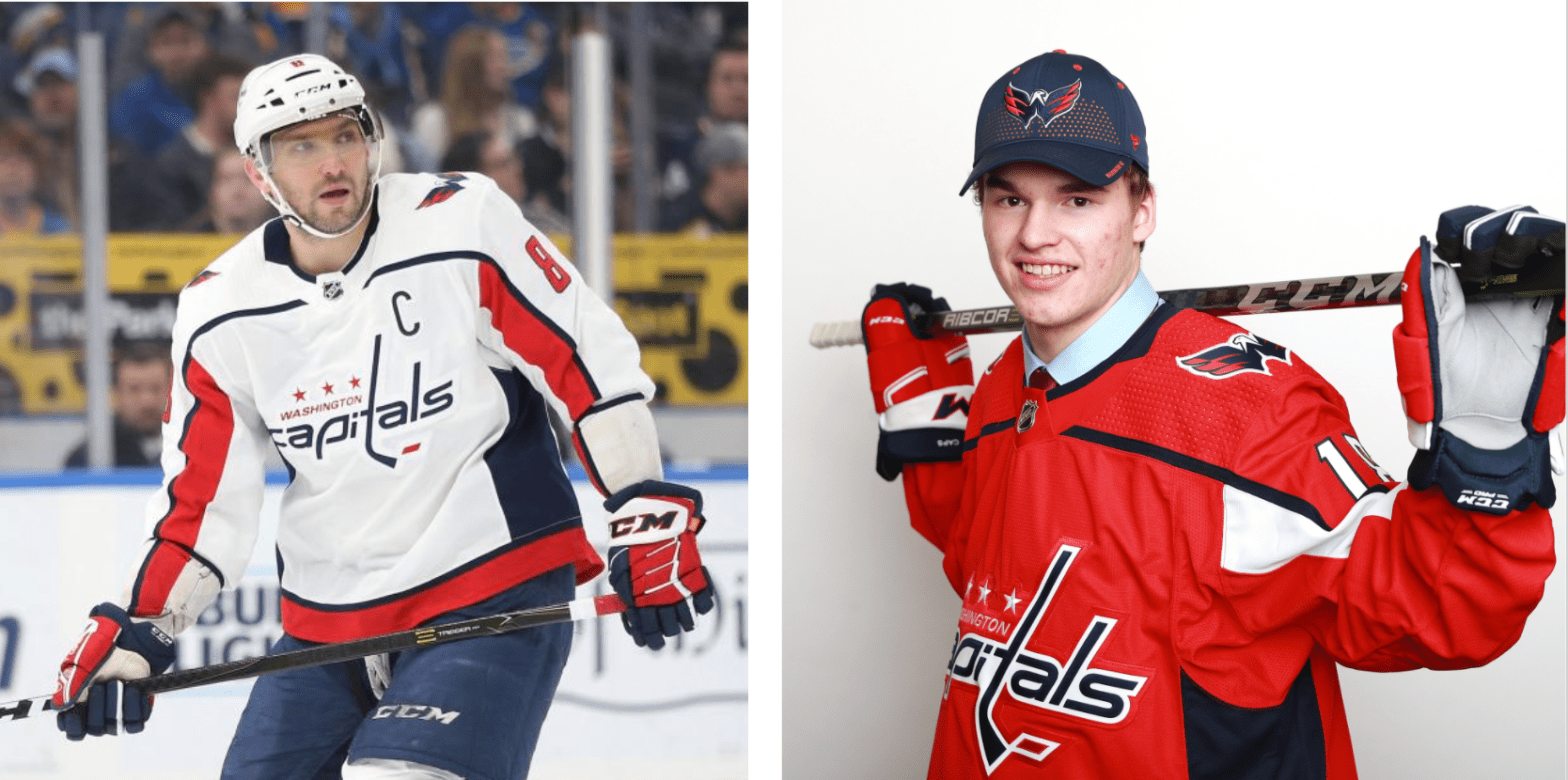
1- Alex Ovechkin (LW – 2004)

The selection of Ovechkin completely turned the franchise around. By his third season in the NHL, he won his first Hart Trophy as league MVP, and the Capitals started their run of 12 playoff appearances over the next 13 years. They were among the winningest teams of the 2010s, and after many postseason struggles, finally won the Stanley Cup in 2018. Ovi is currently chasing the all-time NHL goals record, although the suspension of the season has lowered his chances. As the greatest player in franchise history, he’s the clear choice for No. 1.

2- Ryan Walter (C/LW – 1978)

Walter, the only second overall pick in team history, spent just four seasons in Washington after being selected in 1978, but he served as an instant boost to a struggling Capitals team. He was fifth on the team in scoring as a rookie with 56 points (28g, 28a), and he was named team captain by his second season.

Walter improved his point totals every season, always finishing in the top three on the team, and his 87 points in 1981-82 was a career-high. He was dealt away that offseason in the Rod Langway trade, and he spent the next nine seasons in Montreal before finishing his career in Vancouver.

3- Bobby Carpenter (C – 1981)

Carpenter was the second American ever drafted in the first round, and was the first to play directly after high school. It didn’t take long for him to start making an impact; 12 seconds into his first NHL shift, he assisted a goal by Walter, which remains the quickest debut assist in NHL history. He would total 67 points as an 18-year-old rookie. He scored 53 goals in 1984-85, which made him the first American to score 50 goals in a season.

The Massachusetts native only spent five-and-a-half seasons with the team after clashes with coach Bryan Murray led to a trade to the New York Rangers. He would eventually return to Washington in 1992, but left after just one season.

4- Nicklas Backstrom (C – 2006)

There are three fourth overall picks in franchise history: Backstrom, the franchise leader in assists and +/-, Mike Gartner, the Hall of Fame forward who is seventh in NHL history with 708 goals (just two ahead of Ovechkin), and Alexandre Volchkov, a defenseman drafted in 1996 who appeared in just three NHL games in the 1999-2000 season.

This is the second list in which I’ve snubbed Gartner, so I really owe him more recognition. Both Gartner and Backstrom are in the top five of every major offensive category in franchise history, so you could reasonably put either in this position, but with Backstrom having the second-most points scored in team history and nearly 200 more games played in Washington than Gartner, the Swede gets the nod. The Stanley Cup helps his case, too. Call it youth or recency bias, but I’m sticking to it.

5- Scott Stevens (D – 1982)

Stevens spent most of his career with the New Jersey Devils, where he won three Stanley Cups, a Conn Smythe Trophy, and made four All-Star Teams (three of them Second Team), but his first eight professional seasons were in Washington. Learning alongside Langway, Stevens quickly developed into a point-producing, hard-hitting defenseman that fans fell in love with.

He left the team without achieving any real playoff success, but he made his first All-Star Team when he was voted First Team in 1987-88 and finished second in Norris Trophy voting.

6- N/A

Never in the team’s history have the Capitals selected sixth overall.

7- Kris Beech (C – 1999)

The 6-8 pick range is pretty barren in Capitals history, as Beech is the only seventh pick in franchise history. He played just four games with the Capitals in 2000-01 before spending a couple years with the Pittsburgh Penguins organization.

He returned to the Capitals in 2006, and he played in 64 games the following season, totaling a career-high 26 points (8g, 18a) before bouncing around between three organizations in 2007-08, never appearing in the NHL again.

8- N/A

Like the sixth slot, the Capitals have yet to select anyone eighth overall.

9- John Slaney (D – 1990)

Slaney played just 63 games with the Capitals across two seasons in the mid-1990s, and he spent much of his playing career in the AHL. He scored his 454th AHL point in 2005, becoming the highest-scoring defenseman in AHL history (he was surpassed by Bryan Helmer in 2011).

Nick Boynton (D – 1997) had a longer NHL career, and is the only other player the Caps selected with the ninth pick, but he never actually played with the Capitals, spending most of his career in Boston.

10- Nolan Baumgartner (D – 1994)

Baumgartner is another player who spent most of his career in the AHL, with his only full NHL season coming in 2005-06 with the Vancouver Canucks. He’s the only 10th pick in team history. Baumgartner played 18 games with the Caps across four different seasons in the late 1990s, tallying two assists.

11- Brendan Witt (D – 1993)

Witt played nine-plus seasons with the Caps, and for a short time served as co-captain with Steve Konowalchuk. Witt was not an offensive-minded blueliner, never scoring more than 12 points in a single season with Washington, but he constantly brought physicality on the defensive end.

Filip Forsberg (C – 2012), the All-Star forward who was infamously traded away from the Capitals in one of the most lopsided trades in NHL history, is the only other 11th pick in team history.

12- Steve Eminger (D – 2002)

Eminger, the only 12th pick in team history, did not live up to expectations, playing just 17 games in his first season before being sent back to the juniors. Eminger spent the next few seasons bouncing back and forth between the Capitals and the AHL before the team finally traded him prior to the 2008 draft. Eminger along with the 84th overall pick was sent to the Philadelphia Flyers in exchange for the 27th overall pick, which turned out to be John Carlson.

13- Alexander Semin (LW – 2002)

Semin first played during the 2003-04 season, totaling 22 points in 52 games, and later developed into an offensive weapon alongside the blossoming Ovechkin. He helped turn the Caps into a perennial playoff contender, and was consistently a top three scorer on the team. His 197 goals with Caps are sixth-most in franchise history. He last played in the NHL with Montreal in 2015-16, but he is still playing in the KHL at 36 years old.

Jakub Vrana is the only other 13th pick in team history, and projects to be a key offensive piece through the post-Ovechkin years, as much of the core around him continues to age.

14- Sergei Gonchar (D – 1992)

Gonchar was a major presence on the blue line for close to 10 years. Consistently the team’s top scoring defenseman (especially in the back half of his Caps tenure), Gonchar earned Second Team All-Star two years in a row in 2002 and 2003, his last two full seasons in DC. He was the team’s top scoring defenseman in their 1998 run to the Stanley Cup Finals and played over 10 more NHL seasons after leaving Washington, primarily in Pittsburgh.

15- Greg Carroll (C – 1976)

Carroll was drafted by both the Capitals and the Cincinnati Stingers of the World Hockey Association (WHA). He opted to sign with the latter and spent two seasons in the WHA before signing with the Caps.

Carroll played just 24 games with the Caps in 1978-79, scoring 11 points (5g, 6a). He was waived in January of ’79 after refusing to go down to the AHL. He was later picked up by the Detroit Red Wings to finish the season, then spent the 1979-80 season with the Hartford Whalers, scoring 32 points in 71 games as a teammate of 51-year-old Gordie Howe in Mr. Hockey’s final season. It would be 23-year-old Carroll’s final NHL season as well.

16- Tom Wilson (RW – 2012)

Wilson was selected just five picks after Forsberg, and was able to solidify a full-time role as early as 2013-14, playing all 82 games and tallying 10 points (3g, 7a). His physical playing style made him an enforcer in the bottom six, and he quickly built up a resume of dishing cheap shots, making him hated by many opposing fanbases.

The feeling is very different among the Washington fans, who have viewed him favorably from the start. Developing into a top line winger, Wilson has the makings of a future team captain should he remain with the team later in his career. He holds the distinction of being the only 16th pick in team history.

17- Kevin Hatcher (D – 1984)

Hatcher was another blueliner brought in around the time the Caps started experiencing regular season success, joining Langway and Stevens in an improving defensive unit. He led the team in scoring in 1990-91 with 74 points (24g, 50a), and two years later finished fourth in Norris Trophy voting after totaling a career-high 79 points.

Hatcher was traded to Dallas prior to the 1994-95 season, but his consistent production on the blue line makes him an easy choice for pick 17.

18- Eric Fehr (RW – 2003)

Fehr had two separate stints with the Caps, spending six total seasons as a depth scorer. He notably scored two goals in the 2011 Winter Classic to give the Caps a 3-1 win over Pittsburgh, and he later won the Stanley Cup with the Penguins in 2016.

19- Olaf Kolzig (G – 1989)

Kolzig’s 711 games played and 301 wins are both the most in franchise history, and his 35 shutouts are tied for most with Braden Holtby. Kolzig spent nearly 20 years in the Capitals organization, but was the main starter for 10 seasons. He backstopped the team to the 1998 Stanley Cup Finals and won the Vezina Trophy the following year (he also finished fourth in the Hart Trophy voting that year).

20- Paul Mulvey (LW – 1978)

Mulvey is the only 20th pick in franchise history, and he spent three of his four NHL seasons with the Caps. His career-high 34 points in 1979-80 was sixth-best on the team that year. He was sent to Pittsburgh before the 1981-82 season as compensation for the Caps signing Orest Kindrachuk, who was forced to retire due to injury after just four games.

21- Mark Lofthouse (RW/C – 1977)

Lofthouse was drafted by the Capitals in the NHL and the Winnipeg Jets of the WHA, and he opted to sign with the Caps. Lofthouse spent the next several years splitting time between Washington and Hershey.

The other two 21st picks in team history are Trevor Halverson (LW – 1991), who played just 17 NHL games in 1998-99, and Anton Gustafsson (C – 2008), who never reached the NHL.

22- Ilya Samsonov (G – 2015)

Samsonov became the team’s first ever 22nd pick in team history in 2015, and his progression to the NHL escalated quicker than most. He spent a few more years in the KHL before coming to North America, where he split time in net with Vitek Vanecek on the Hershey Bears. After just 37 games in 2018-19, Samsonov was elevated to the NHL roster for 2019-20 where he played a reserve role behind Holtby.

He finished the season with a 16-6-2 record in 26 games (22 starts), a 2.55 goals against average and .913 save percentage. He became the fastest rookie in franchise history to reach 10 wins, needing just 12 games to do so. With Holtby’s impending free agency, Samsonov has the chance to be the Caps’ future in net.

23- Andre Burakovsky (LW – 2013)

Burakovsky was a promising prospect when he reached the Caps, but up-and-down play prevented him from cementing a solid role. He spent most of his time on the third line, and the highlight of his Capitals career will be his two goals in Game 7 of the 2018 Eastern Conference Finals that helped push the team to the Stanley Cup Finals.

He was traded to the Colorado Avalanche after the 2018-19 season, where he finally found his form. In just 58 games this season, he set career-highs in goals (20), assists (25) and points (45). He may find greener pastures with a contender like Colorado, but his role in Washington’s Cup run was unforgettable.

24- Marcus Johansson (C/W – 2009)

Johansson was not the most notable player on the Caps, but he would consistently finish among the top five scorers on the team during his seven seasons in Washington. He put up a career-high 58 points (24g, 34a) in 2016-17, but the team’s cap situation led to his trade to the New Jersey Devils entering the 2017-18 season. He missed the 2018 Stanley Cup, but he did reach the Finals the following season with the Boston Bruins.

25- Connor McMichael (C – 2019)

This pick may be a tad premature; McMichael was only drafted a year ago and is likely a couple years away from being a full-time NHLer. However, the only other 25th pick in team history is Eric Lavigne (D – 1991), who played just one game in the NHL (with the Los Angeles Kings in 1994-95).

McMichael spent this past season in the OHL with the London Knights, where he lit it up with 102 points in 52 games (47g, 55a), good enough for third in the league. With the expanded roster limits for the 2020 playoffs, there’s a chance that the 19-year-old McMichael will be added to the playoff roster. He projects to be a major piece of the Capitals’ future, so here’s hoping that he lives up to the expectations he’s set for himself.

26- Evgeny Kuznetsov (C – 2010)

Kuznetsov has had his ups-and-downs, both on and off the ice, sometimes looking like one of the greatest players in the world and other times like he’s just going through the motions. Kuzy is one of the larger personalities on the Caps, and his team-leading 32 points in the 2018 playoffs cemented his status in DC as he played such a massive role in the championship run.

He’ll remain a significant part of the offense, so hopefully he’ll be ready to go off in the playoffs this year.

27- John Carlson (D – 2008)

The Eminger trade netted the pick used to take Carlson, and it was the best-case scenario. Carlson has been a staple on the blue line for the past 10 years, and he was recently promoted to assistant captain after Brooks Orpik’s retirement following the 2018-19 season. He’s been playing at an All-Star level for the past few years, and will likely finish in the top two for the Norris Trophy this year.

He’s an essential part of the team, and the Caps certainly made the best out of a disappointing pick from years before.

28- Lucas Johansen (D – 2016)

Ironically, I listed Johansen as the Capitals’ worst draft pick of the decade; a player like him should have made it to the NHL by now, but he remains in Hershey. That’s not entirely his fault; injuries have set him back a great deal, and the Caps have a talented roster to begin with. There’s still time for him to break in to the NHL, but it may have to be elsewhere.

In any case, he’s the only 28th pick in team history, so he gets this spot by default.

29- Mike Green (D – 2004)

Taken in the same class as Ovechkin, Green would shape up the Capitals’ defensive core as an elite offensive defenseman. Everything from his nasty slap shots to his patented faux hawk made him a fan favorite. His 31 goals in 2008-09 are tied for the 11th-most in a season by a defenseman, and the most of any this century.

He spent 10 years in Washington and was one of the most productive defensemen of his era. He was recently traded from the Detroit Red Wings to the Edmonton Oilers in the 2020 trade deadline.

30- Rod Pasma (D – 1990)

Pasma is the only 30th pick in franchise history, and is one of the few players on the list without any NHL experience. The defenseman spent most of his career in the OHL and just never broke through to the upper levels of hockey.

31- Alexander Alexeyev (D – 2018)

The team’s first draft pick after winning the Stanley Cup, Alexeyev may be another premature pick. The only other 31st pick in franchise history is Charlie Stephens (C/RW – 1999), who never signed and was re-drafted two years later by the Avalanche, for whom he played eight games across two seasons.

Alexeyev may possibly find a spot on the playoff team this summer, but will hopefully make his way onto the roster for good in the next couple seasons.

(Cover Photo Credit: Bill Greenblatt/UPI; Tom Pennington/Getty Images)

Gilmer to Ramsey: An all-time Redskins first round

The 2020 NFL Draft took place over a month ago, and as the NBA, NHL and MLB continue to layout plans for their returns, each league’s respective drafts are on the forefront on many fans’ minds. The 2020 MLB First-Year Player Draft will begin tonight, and the Nationals select 22nd overall this year.

The Wizards, meanwhile, could look for some lottery luck if the team cannot manage to sneak into the playoffs after the eight-game restart. The Capitals will be eager to find another high-caliber player to beef up their prospect pool when the NHL Draft rolls around.

In light of all the draft talk, I went back to find the best players selected in every first round draft slot in Washington Redskins’ history. In other words, I wanted to find the best No. 1 overall pick in franchise history, the best No. 2 overall pick, and so on, all the way to No. 32. Granted, not every player on this list was selected in the first round of their respective drafts (the NFL did not expand to 32 teams until 2002), but since this is based on the overall selection, they qualify.

Of the top 32 selections, the most common draft slot in franchise history has been fourth overall, where the team has picked nine players all-time. The second-most common is 28th, where eight players have been selected.

On the other side of the spectrum, there is one first round draft slot that the Redskins have never occupied. From 1-32, here are the best players to be selected in each draft slot:

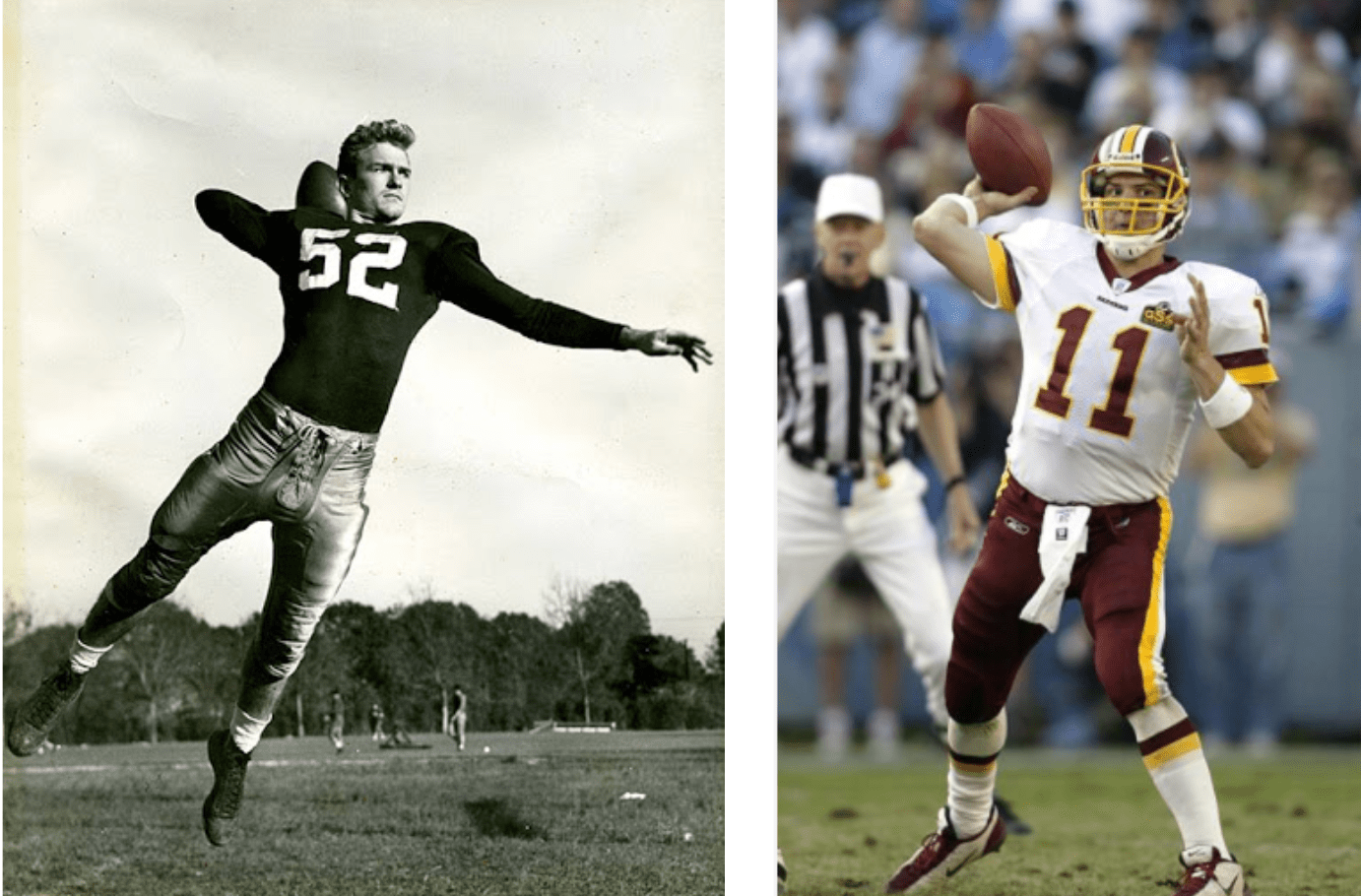
1- Harry Gilmer (QB/HB – 1948)

Gilmer is just one of the only two first overall picks in franchise history, the other being Ernie Davis in 1962. The Heisman Trophy-winning running back from Syracuse was swiftly traded to the Cleveland Browns because then-Redskins owner George Preston Marshall refused to integrate the team. Davis was diagnosed with leukemia that summer and died a year later without appearing in an NFL game.

Gilmer, meanwhile, is a Crimson Tide legend and College Football Hall of Famer who essentially earns this spot by default. Still, he earned two Pro Bowl appearances before being traded to the Detroit Lions in 1954.

2- LaVar Arrington (OLB – 2000)

Arrington brought a lot of excitement to Washington when he was selected second overall out of Penn State in 2000. While he didn’t make as big an impact as many predicted, Arrington was still a two-time Second Team All-Pro and three-time Pro Bowler. He was also named one of the 80 Greatest Redskins in 2012.

With Chase Young, a similarly hyped defensive star from a Big Ten powerhouse, coming to the Redskins in the exact same draft slot 20 years after Arrington, people have been drawing comparisons between the two. Hopefully Young will be able to take claim of this spot when all is said and done.

3- Charley Taylor (WR/HB – 1964)

Taylor was one of the greatest receivers of his era, as the Hall of Famer spent his entire 14-year career with the Redskins (although he missed 1976 with a knee injury). He retired with the most receiving yards in league history at the time (9,110), and he was a staple on All-NFL and Pro Bowl ballots.

4- Trent Williams (OT – 2010)

While his time in Washington came to an unceremonious end during the 2020 Draft, 10 years after he entered the NFL, Williams spent most of the decade as the team’s best offensive player. After making seven straight Pro Bowls from 2012-18, conflicts with management led to a lengthy holdout, causing him to sit out the 2019 season entirely.

Now looking to contend with the San Francisco 49ers, the end of Williams’s tenure in Washington may have ended ugly, but he is undoubtedly the best No. 4 pick in team history.

5- Sean Taylor (S – 2004)

Taylor and Brandon Scherff are the only fifth overall picks in team history; not a bad pair. Taylor was a fan favorite from the start, and his hard-hitting play style made him one of the most feared safeties in the league. He was blossoming into a superstar before he was tragically killed in his Florida home during the 2007 season.

His legacy lives on in the hearts of fans everywhere, and while Scherff may have a case in a few years, Taylor is the clear choice.

6- Sammy Baugh (QB – 1937)

Baugh was taken out of TCU and immediately made an impact, winning the NFL Championship in his first season. Baugh would go on to win again in 1942 all while revolutionizing the quarterback position. Baugh was a presence in all three phases of the game, starring as a defensive back and punter in addition to quarterback.

His number 33 is the only one officially retired by the franchise, and he was inducted to the Pro Football Hall of Fame in its inaugural class in 1963.

7- Champ Bailey (CB – 1999)

Bailey is best-known for his 10 years with the Denver Broncos, but prior to that he made four Pro Bowls in five seasons with Washington. The Hall of Fame corner started all 80 games from 1999-2003 before he was traded for running back Clinton Portis. His place in Redskins history may be complicated (the team did not congratulate him for his Hall of Fame induction until months after the announcement), but he is still one of the greatest draft picks in team history.

8- Rob Goode (FB – 1949)

Goode is lesser known in the annals of Redskins history, but the fullback had a star run for the Redskins in the 1950s. In 1951 at 24 years old, Goode finished the season with 951 rushing yards and a league-best nine touchdowns en route to his first Pro Bowl selection. Goode went on to serve in the Korean War following that huge 1951 season, but returned in 1954 and made his second and final Pro Bowl despite rushing for just 462 yards without any touchdowns.

Goode spent the final eight games of his career with the Eagles in 1955, and never came close to the numbers he put up in ’51, so it’s worth wondering how well he would do in the two seasons he missed.

9- Andy Farkas (FB – 1938)

Farkas joined the team on the heels of their 1937 championship but was able to make an impact instantly, leading the league with six rushing touchdowns as a rookie. Farkas took a step up the following season, leading the league in scrimmage yards (984) and touchdowns (10) to earn First Team All-Pro and a Pro Bowl selection.

Farkas played just one game in 1940 and put up mediocre numbers in ’41 before bouncing back in 1942, finishing with 611 scrimmage yards and five touchdowns to earn his second First Team All-Pro and Pro Bowl nods along with the Redskins’ second NFL championship. Farkas spent the next two seasons in Washington before finishing with Detroit in 1945, but he was named one of the 70 Greatest Redskins in 2002.

10- Jack Jenkins (FB- 1943)

Jenkins played just 22 games across three seasons, having to miss the 1944 and ’45 seasons due to World War II. He came back in 1946 with a career-high 200 rushing yards and the only rushing touchdown in his entire career before ending his career with a 54-yard campaign in 1947.

The only other 10th pick in team history, Forest Evashevski (1941), never appeared in an NFL game.

11- Keith Topping (E – 1936)

Coming out of Stanford, Topping is the only 11th overall pick in team history. The 1936 Rose Bowl MVP never appeared for the Redskins, instead spending a couple seasons with the Danbury Trojans in the American Association (AA).

12- Jim Smith (DB/RS – 1968)

Smith played just one season in the NFL, but started 13 of 14 games as a return specialist. He returned six punts and three kickoffs, averaging 6.3 yards per punt return and 20.3 per kick return. He never found pay dirt on any of them, but he totaled 160 all-purpose yards in his lone season.

The only other 12th pick was halfback Ed Vereb out of Maryland (1960). The Bowie native played just nine games in 1960, totaling 157 scrimmage yards (just 38 from rushing), zero touchdowns and three fumbles.

13- Brian Orakpo (OLB – 2009)

Orakpo came to Washington with much fanfare, totaling a career-high 11.0 sacks as a rookie to earn a trip to the Pro Bowl. He made another Pro Bowl appearance in his second season before putting together a solid third season in 2011. Two separate pectoral injuries hampered his career, but he managed to make a third Pro Bowl in Washington before spending the final four years of his career with the Tennessee Titans.

14- N/A

In the entire history of the Washington Redskins organization, the team has never selected from the 14th overall position. They’ve selected three players 13th overall and five with 15th pick, including Da’Ron Payne (13th – 2018) and Dwayne Haskins Jr. (15th – 2019) in back-to-back years, but not a single player at 14.

15- Rod Gardner (WR – 2001)

Gardner had four solid seasons with the Redskins in the early 2000s, peaking in 2002 with 1,006 receiving yards and eight touchdowns (both career-highs). He totaled 741 yards the year prior as a rookie, and put up 600 and 650 yards in the next two seasons, respectively, before petering out of the league with three other teams by 2006.

If Haskins can develop into the long-term starting quarterback in Washington, he should be able to earn this spot with ease.

16- Ryan Kerrigan (OLB – 2011)

Kerrigan has been a lasting force on the Redskins defense, not missing a game until just last year. With 90.0 career sacks, he is just one sack away from tying the franchise record, and he will be a veteran presence on an exciting young pass rushing group. The former All-American at Purdue has made four Pro Bowls and is a defining member of the 2010s Redskins.

17- Kenard Lang (DE – 1997)

Lang was a force in Washington during his five seasons with the team. He didn’t pile up huge sack numbers, but he still made his presence known on the field. He forced at least two fumbles in three separate seasons while with the Redskins, including three in both 1999 and 2001. Lang also deflected at least four passes a year from ’99 onward. He recorded a career-high 52 solo tackles in 2002 before moving on to spend the next four years in Cleveland, then played his final season with Denver in 2006.

Tom Carter (DB – 1993) also has a case here. He spent four full seasons in Washington and started every game of the latter three seasons, grabbing no fewer than three interceptions in each season, topping out at six during his rookie year. Carter would go on to play in Chicago and Cincinnati before his career came to a close.

18- Art Monk (WR – 1980)

The Redskins have the distinction of drafting two Hall of Fame players with the 18th overall pick, the other being Paul Krause in 1964. Since Monk was the more notable Redskin, I gave him the nod.

Monk recorded five 1,000 yard seasons, and he led the league in receptions in 1984, when he made his first Pro Bowl appearance and earned First Team All-Pro. He holds the franchise record in scrimmage yards (13,053), receiving yards (12,026) and receptions (888), and his 940 career receptions was the league record at the time of his retirement.

19- Hall Haynes (DB – 1950)

Haynes spent just two seasons in Washington as a safety and punter, and he even has limited experience as a running back and returner. His playing days were interrupted by the Korean War, as he missed the 1951 and ’52 seasons. Haynes recorded four interceptions in his rookie season, taking one back for a touchdown.

20- Mark May (OG/OT – 1981)

May spent nine seasons in Washington as a member of “The Hogs,” winning two of the franchise’s three Super Bowls playing on the right side of the offensive line. He is not the most decorated of the group, but he made the Pro Bowl in 1988 and was named one of the 80 Greatest Redskins.

21- Joe Walton (E – 1957)

Walton spent four years in Washington playing on both sides of the ball, totaling at least 300 receiving yards and three touchdowns in the final three seasons, including 532 yards and five touchdowns in ’58. Walton spent the final three years of his career as a tight end for the New York Giants, where he put up similar numbers.

22- Lonnie Sanders (DB – 1963)

Sanders joins Josh Doctson (WR – 2016) as the only players to be selected 22nd overall, and with Doctson flaming out in just three seasons, Sanders is the clear pick. He was a main starter at cornerback for the first three seasons of his career, and he started all 14 games in each of his first two seasons, but was later relegated to a smaller role for the final two years.

23- John Adams (T – 1945)

While his name makes him sound like second overall pick, it’s at least somewhat fitting that he spent his entire five-year career in Washington. He was never a full-time starter on the offensive line, but he did play at least 10 games every season.

24- John Paluck (DE – 1956)

Paluck led the league as a rookie with 76 fumble return yards, taking a loose ball all the way back for a score in 1956. He recovered two other fumbles that year before missing the next two seasons for military service. He returned in 1959, where he remained a main starter on the defensive line for the next seven seasons. He made just one Pro Bowl (in 1964), but was still regarded as a top defensive player league-wide.

25- Jason Campbell (QB – 2005)

Taken just one selection after the Green Bay Packers took Aaron Rodgers, Campbell came to Washington with hopes to turn the franchise around. Campbell didn’t play a single game in his rookie season, sitting behind Mark Brunell and Patrick Ramsey. He didn’t play a full 16 games until his fourth year in 2008, where he passed for 3,245 yards, 13 touchdowns and six interceptions as the team went 8-8.

He set career-highs the following season with a 64.5 completion percentage, 3,618 yards and 20 touchdowns to go with 15 interceptions. After five years, the franchise decided to go in a different direction, ending his tenure in Washington.

26- Montez Sweat (DE – 2019)

Sweat was drafted just last year, and he put together a solid rookie campaign, where he started all 16 games. He totaled 7.0 sacks, 50 combined tackles and two forced fumbles. He still has a ways to go before establishing himself, but the first results were promising.

He earns this spot because he was just the second player to be drafted 26th overall in franchise history, and the first, Maurice Elder (B – 1937), did not play a single game in the NFL.

27- Paul Dekker (E – 1953)

Dekker played just one NFL season, recording 182 yards and one touchdown on 14 receptions across 11 games. Dekker holds the distinction of being the only Redskins player selected 27th overall, giving him this spot by default.

28- Darrell Green (CB – 1983)

Green requires little explanation, as the corner taken with the last first round pick of the 1983 Draft, right after the team had won its first Super Bowl, went on to win the team’s other two Super Bowls and become the greatest player in Redskins history. The Hall of Fame corner is the only choice here, despite there being seven other 28th picks in franchise history.

29 – Walt Yowarsky (DE – 1951)

Yowarski spent just two seasons in Washington, in 1951 and ’54, taking a two-year gap off due to the Korean War. He started all 12 games as a rookie, then started 10 games in 1954 before moving on to Detroit and the New York Giants, where he won the 1956 NFL Championship.

There were two other 29th picks: Paul Tangora (G – 1936), who never played in the NFL, and Bob Mitinger (LB – 1968), who opted to join the San Diego Chargers in the AFL instead.

30 – Markus Koch (DE – 1986)

Koch spent his entire six-year career in Washington. The German-born defensive lineman helped the team win Super Bowl XXII in the 1987 season, and he recorded a career-high 3.5 sacks the following year. While many label Sebastian Vollmer (Patriots’ OT 2009-16) as the first German to be drafted into the NFL and win a Super Bowl, it is actually Koch who earns that distinction.

31- Tre’ Johnson (G – 1994)

Johnson spent eight total seasons in Washington, leaving for Cleveland in 2001 after the first seven then returning for one last year in 2002. The guard held down a starting role for five years, earning his only Pro Bowl appearance in 1999.

32- Patrick Ramsey (QB – 2002)

Ramsey had a rough go in Washington, eclipsing 2,000 passing yards in a season just once in 2003, where he was also sacked 30 times in 11 games, the most of any quarterback who played fewer than 14 games that season. Ramsey shuffled around with Brunell on the depth chart until Campbell took over the starting role in 2006, and Ramsey was traded to the New York Jets.

(Cover Photo Credit: Wikimedia Commons, Getty Images)

Predicting the likeliest first round opponents for Capitals

On this day two years ago, the Capitals ended a 26-year championship drought that had plagued the city of Washington, winning the first Stanley Cup in franchise history. The team met a disappointing end in the first round of their title defense last year, and with the pandemic shutting down the NHL season nearly three months ago, the Caps will soon have their chance to win a second Cup once the season starts up again.

The NHL recently announced a return-to-play plan. Unlike the NBA, which plans to continue with eight regular season games per team before starting the playoffs, the NHL 2019-20 regular season is officially over.

In a 24-team postseason format, the top four teams in each conference get a de facto bye, while seeds five through 12 will face-off in a best-of-five series to narrow the field down to the traditional 16. The fifth seed will play the 12th, the sixth will play the 11th, and so on. The top four teams with the bye will play a round robin to determine the seedings for the next round.

The Capitals are currently the third seed in the Eastern Conference, sharing the bye with the Boston Bruins, Tampa Bay Lightning and Philadelphia Flyers. No matter where the Caps are seeded, they will be facing one of the eight teams that’s playing in the preliminary round.

Now in a vacuum, they have an equal chance of facing any of the eight teams. There are 16 possible outcomes for the slate of first round winners in the East, and with the top four seeds up grabs, there are 64 total outcomes for whom the Capitals face in the second round.

After the preliminary round, the lowest-seeded team that advances will face whatever team earns the top seed in the East, while the highest-seeded winner facing the four seed, and the middle teams will be matched accordingly.

However, hockey is not played in a vacuum, so some outcomes are more likely than others. For example, the only way the Capitals would face the No. 12 Montreal Canadiens is if the Capitals earned the top seed in the East and the Canadiens beat the fifth-seeded Pittsburgh Penguins in their preliminary series. Likewise the only way the Caps could face the Penguins in the next round is if the Caps finish as the fourth seed and the Penguins beat the Canadiens.

With every team coming in from such a long lay-off, it’ll be difficult to predict how the top four teams will stack up after the round robin, and it may be even more difficult to predict the winners of the five-game play-in series.

As difficult as it will be to map out, by breaking down every possible outcome of the round robin and preliminary series, we can try to determine the likeliest first round opponents for the Caps.

If the Capitals earn the first seed…

… by finishing ahead of the top teams in the conference, there would theoretically be a 50 percent chance that they would face the Canadiens. However, Montreal has the slimmest odds of advancing in the Eastern Conference, so by eliminating all outcomes in which the Canadiens beat the Penguins, it becomes less obvious.

In the remaining eight outcomes, the Caps would face the No. 11 New York Rangers four times. The No. 10 Florida Panthers come up twice, and then the No. 9 Columbus Blue Jackets and No. 8 Toronto Maple Leafs each claim one of the other two outcomes.

There are bound to be upsets in this preliminary round, and the only way the No. 1 Capitals would face either Toronto or Columbus is if all the other higher-seeded teams won their series. It’s safe to assume that won’t happen, so we can eliminate Toronto and Columbus as well.

With that, only Florida and New York remain, with the Rangers being the likelier opponent. Both the Rangers (+120) and Panthers (+100) are relatively slim underdogs in their respective series. The Panthers will face the No. 7 New York Islanders, led by former Capitals coach Barry Trotz. The Rangers take on the No. 6 Carolina Hurricanes, which will be boosted by the return of Sami Vatanen and likely Dougie Hamilton to the lineup.

The Rangers have dark horse MVP candidate Artemi Panarin leading the scoring output, and have a favorable playoff history against the Capitals in recent years. Do they have enough to get past the same Canes team that added several significant pieces at this year’s trade deadline, including the Rangers’ own Brady Skjei, who was sent to Carolina in exchange for a 2020 first-round pick?

Florida, meanwhile, has a three-time Stanley Cup champion at head coach in Joel Quenneville, the former Chicago Blackhawks boss. They also have a two-time Vezina Trophy winner in net with Sergei Bobrovsky. Former Capital Brett Connolly also holds a decent stake in the Panthers’ offense.

Both teams have their strengths, but neither seem like major title contenders. If the Caps draw either team, they should be able to get past them without too much trouble, but after such a long layoff, who knows what to expect from any team.

Likeliest opponent: No. 11 New York Rangers

If the Capitals earn the second seed…

… and just can’t quite snatch up the top spot, the prospective pool of first round opponent becomes much fuzzier. While there is no chance the team would face Montreal or Pittsburgh, or even Carolina, every other team has a fairly decent shot to be the opponent.

In this case, the only chance the Rangers would have to face the Caps is if both Montreal and the Rangers win their play-in series, which seems fairly unlikely relative to the other outcomes. Similarly, the only way Florida would be the team the Caps face as the No. 2 is if the Rangers also win (and Montreal loses).

That leaves the Islanders, Maple Leafs and Blue Jackets. The Islanders managed to sweep the Penguins in the first round last year, and with Mathew Barzal leading the way, could surprise many teams if they get hot. If both Pittsburgh and Carolina win their respective series, and the Isles beat Florida, then the Caps would face the Islanders regardless of the Columbus-Toronto series.

Toronto and Columbus are both interesting teams. Toronto has a bevy of individual talent, but has underperformed in recent years. Toronto was also turning in inconsistent results by the time the season was canceled.

Columbus lost their star netminder (Bobrovsky) and best skater (Panarin) in free agency after winning their first postseason series in franchise history. Their current goalie tandem of Joonas Korpisalo and Elvis Merzlikins did better than expected. This preliminary series could be the most interesting.

For the talent and depth the Capitals boast, neither Toronto nor Columbus should pose as a major threat to upset, but with the annual volatility that comes with the Stanley Cup playoffs, the biggest threats will be whoever gets hot.

Likeliest opponent: Winner of No. 8 Toronto Maple Leafs/No. 9 Columbus Blue Jackets

If the Capitals earn the third seed…

… and remain in the same spot in which they entered the restart, then perhaps they’ll get what they deserve. Much like the second seed, there are plenty of opponents with a fair shot at facing the Caps first. Theoretically, the Islanders and Hurricanes are the most likely teams, but looking closer, Carolina is far more likely.

The Hurricanes dragged the Capitals to a seven-game first round series, finally winning in double overtime of Game 7 after the Caps had led the series 2-0. As mentioned, Carolina will be fully healthy after their players had been piling up on the injury list prior to the shutdown, so if they can get past New York, the Hurricanes could be a major threat.

Should the Rangers overcome Carolina, the Islanders would be the best bet. The Caps never had the chance to face their former coach last year, but there are several plausible outcomes in which New York will be their opponent in the first round.

There is a situation in which the winner of the Toronto-Columbus series would face the No. 3 Caps, but that would require both Carolina AND the Islanders to lose the preliminary series (and Pittsburgh to win, of course).

Likeliest opponent: No. 6 Carolina Hurricanes

If the Capitals earn the fourth seed…

… and just can’t manage to top the other three teams, then all signs would point to a first round meeting with Pittsburgh. In any situation in which the Penguins beat Montreal, the Pens would be the Capitals’ opponent.

This would mean a rematch from the 2018 Second Round and their fourth postseason meeting in five years. Both teams fell in the first round last year, ending a three-year streak of playoff meetings. Though Washington got the series win in their last meeting, Pittsburgh has the overwhelming lead all-time, losing just one series to Washington prior to 2018.

Facing a fully-rested Sidney Crosby and Evgeni Malkin is a tall task, but would make for an enticing first round series nonetheless.

If Montreal were to get the upset, however, then Carolina would be most likely, followed by the Islanders. Of course, the highest-seeded team that remains after the preliminary round will face the No. 4 seed, so no matter how crazy the opening series gets, the presumed strongest team left will come to Washington.

Likeliest opponent: No. 5 Pittsburgh Penguins

There is a real possibility that the Capitals won’t face any of these teams I labeled as likely opponents. While the Panthers and Islanders aren’t the most likely for any situation, they are the second- or third-most likely in multiple scenarios, so they are both definitely teams to look out for.

If Montreal upsets Pittsburgh, that would change the odds for most of the situations entirely. It will be impossible to make a solid prediction until the top four seedings are sorted out, but looking at the likely outcomes, plus the fact that teams will be re-seeded after each round, it would be a major advantage if the Caps can snag one of the top two seeds.

This has the potential to be the craziest Stanley Cup playoffs in history, so I cannot wait until it gets underway.

(Cover Photo Credit: Getty Images)

NBA returning July 31; what does that mean for Wizards?

As reported this morning, the NBA is planning to restart on July 31 after suspending the season due to the COVID-19 outbreak in mid-March. 22 of the league’s 30 teams will be returning to action, as all 16 teams currently in a playoff spot plus the six teams within six games of the eighth seed in each conference will have a chance for the NBA title in October. In the West, those fringe teams include the Portland Trail Blazers, New Orleans Pelicans, Sacramento Kings, San Antonio Spurs and Phoenix Suns.

The lone outside team in the East? Our very own Washington Wizards. At 24-40, sitting 5.5 games behind the eight-seed Orlando Magic, the Wizards just barely made the cut.

It’s a definitive light at the end of the tunnel. Just under two months until live major American sports begin again. The NHL is still working out the timing of their 24-team playoffs this summer, in which the Capitals will try to win their second Stanley Cup in three years, but until a date is decided, the NBA’s return will be the main focal point on sports fans’ minds.

As reported above, the Wizards will have to finish out eight games of regular season play before determining whether they have a chance at the eighth seed, which would result in a first round matchup against reigning league MVP Giannis Antetokounmpo and the league-best Milwaukee Bucks.

Is this really the most the Wizards have to look forward to? A date with the heavy Eastern Conference favorite and possible league champion? I guess a playoff appearance is better than nothing, and without any “can’t-miss” prospects at the top of this year’s draft, there isn’t a major incentive to improve the team’s lottery odds.

What would really make things interesting is if the supposedly healthy John Wall returned to finish out the season, but he is following through with his plan to sit out until 2020-21. Instead, the team will be moving forward with the likely starting lineup of:

PG: Shabazz Napier

SG: Bradley Beal

SF: Jerome Robinson

PF: Rui Hachimura

C: Thomas Bryant

Of course, guys like Dāvis Bertāns, Troy Brown Jr., Moritz Wagner and Isaac Bonga will be in the rotation. In fact, I wouldn’t be surprised if Bertāns is pushed into a starting role with the stakes of these upcoming games being so high, but no matter how you slice it, this roster is not the most formidable group, especially compared to the rest of the field.

So what will the eight regular season games look like? Yahoo Sports reported that the teams will play out the next eight games on their schedule. If they’re scheduled to take on a bottom team that won’t be in Orlando, it skips to the next game.

If this is truly how the schedule works, this is what the Wizards’ remaining schedule will look like:

Boston Celtics (3rd in East)

Oklahoma City Thunder (5th in West)

Philadelphia 76ers (6th in East)

Brooklyn Nets (7th in East)

Atlanta Hawks (14th in East)

Milwaukee Bucks (1st in East)

Boston Celtics

Phoenix Suns (13th in West)

Milwaukee Bucks

As you can see, it doesn’t differ much from what their schedule would have been under normal circumstances, but since the Hawks will be out of contention and not included in the restart, the Wizards will have their original ninth matchup bumped up to eight. As luck would have it, it’s a second meeting against the Bucks.

It would be nice if they had two games against the Brooklyn Nets and Orlando Magic, the seventh and eighth seeds, respectively. It would allow the Wizards to have more control over their fate. Instead, they face Brooklyn just once, have no meetings with Orlando, and have half of their games against two top teams in the Eastern Conference.

The logistics surrounding every remaining team playing their next eight games against eligible teams are still hazy. For example, the Wizards play the 76ers just once in their next eight games, but from the 76ers perspective, their next eight eligible games look like this:

  • Indiana
  • Washington
  • Toronto
  • Phoenix
  • Portland
  • Washington
  • Orlando
  • Milwaukee

It’s impossible for the Wizards to play Philly just once while the Sixers play the Wizards twice, so one of these two schedules will have to be altered. I’d imagine this isn’t the only case in the league, so stuff will have to be worked out on that end, and it’s entirely possible that the schedule laid out for Washington will look totally different come July 31.

No matter who they end up playing, the Wizards will have to be within four games of the eighth spot to qualify for the play-in tournament.

If the Wizards stumble around for their eight games, unable to get any closer to Orlando/Brooklyn in the bottom of the standings, then the season ends there. If they manage to win at least two more games than Orlando OR Brooklyn, then they will force the play-in tournament.

The Wizards’ spot in the standings at the end of the eight games will determine the stakes for the two-game-maximum play-in tournament:

  • If the Wizards finish ninth, but within four games, then they will play the eighth seed in a play-in series. The Wizards would need to beat said eighth seed twice in a row in order to earn the final playoff spot; the other would need to beat the Wizards just once.
  • If the Wizards finish eighth, then the same rules apply, except the Wizards would have to beat the ninth seed just once to secure their spot, while the ninth seed would have to beat the Wizards twice.
  • If the Wizards finish seventh (which would take a miracle beyond reasonable possibility), they would be locked in to face the two-seed, bypassing the play-in tournament.

Essentially, the play-in tournament would be like starting a seven-game series where the eighth seed enters with an automatic 3-2 series lead over the ninth. It’s an interesting concept, and definitely provides a proper advantage to the eighth seed. It will be a tough road for the Wizards, but as a 24-win team, it’s a gift that they’re in this position at all.

There is still plenty of time for details to be sorted out, and once schedules become finalized it will be easier to compare the Wizards’ chances of success with the other fringe teams, but for now we at least have July 31 to look forward to.

(Cover Photo Credit: Don Juan Moore/Getty Images)

In Memoriam: Wes Unseld

This morning, the most significant person in Bullets/Wizards franchise history died. Wes Unseld was 74, and according to family members, had been suffering from health issues, including pneumonia. Unseld was not only a star player for 13 seasons, but also the team’s head coach from 1987-1994, and as general manager from 1996-2003.

The franchise’s only MVP is also the only player besides Wilt Chamberlain to win Rookie of the Year and MVP in the same season. The five-time All-Star is in the top 10 of every major offensive category in franchise history (except three-point shots), and has played the most games in franchise history.

Unseld played center despite being listed at 6’7″, making him one of the greatest undersized centers of all-time. A large body under the basket, Unseld was still able to beat his taller opponents to rebounds. According to ESPN, his 13,769 rebounds are the most by a player 6’8″ or shorter.

His outlet passes were also revered around the league. His ability to come down with a rebound, and instantly fling the ball to a streaking teammate created plenty of fast break points. In fact, his 3,822 assists are second-most in franchise history behind John Wall, whose position specifically calls for setting up teammates (unlike Unseld’s).

In 1978 alongside Elvin Hayes, Unseld led the Bullets to their first and only NBA championship. He also played in three other NBA Finals in the 1970s, but fell short all three times (’71, ’75, ’79). The Bullets/Wizards have not been to the Finals since that last appearance in ’79.

As one of the greatest players of the 1970s, Unseld was inducted into the Hall of Fame in 1988, and his jersey (No. 41) is one of five retired by the franchise. He was also named to the NBA 50th Anniversary All-Time team, which listed the 50 greatest players in league history in 1996. From second overall pick, Rookie of the Year and MVP to Finals MVP to Hall of Famer, Unseld stuck with the Bullets throughout, achieving just about everything one could hope to in the NBA.

Unseld played long before I was born, so I was never able to truly appreciate his game in real time, but hearing stories and watching game clips online made me understand his greatness in an era often overshadowed by the Bird-Magic rivalry of the 1980s. The Bullets aren’t exactly a prominent franchise in league history, but that should not take away from Unseld’s legacy.

Aside from basketball, Unseld worked with his wife in creating Unselds School in Baltimore, where he would assist in anything, from office work to field maintenance, and even coaching basketball. A prime example of his selfless personality, Unseld was known as a great leader and friend both on and off the court.

Unseld will always be remembered as an all-time great player in the Baltimore-Washington area, but perhaps more importantly, as an incredible person who did so much to help improve the community. Rest in Peace, Wes Unseld.

(Cover Photo Credit: Getty Images)

The Pohory-list: Top 10 coaches in city history (Part II)

Throughout Washington sports history, fans can point to the figures on the playing field that achieved great things, either individually or collectively. These players are represented by the jerseys we wear, the posters in our rooms and trading cards in our collections.

Behind those great players and teams were coaches. The relationship between a coach and his players can make or break a team. It’s a career with the worst job security in the world, so the ones who stick around long enough to achieve greatness are special.

While there have been plenty of poor coaching fits for the Washington teams over the years, there are a select few who have earned their place among the best in city history. Yesterday, I listed 10-6. Today I present the Top Five.

5. Dick Motta (Bullets; 1976-80)

Photo Credit: Getty Images

Notable accolades with team:

  • 1978-79 Atlantic Division champion
  • 1978 NBA champion
  • 1979 NBA Finals (Eastern Conference champion)

Motta took over the reins right after K.C. Jones was fired, and stuck around for just four seasons before taking the head coaching job with the upstart Dallas Mavericks in 1980. He still managed to accomplish a lot in those four years in Washington, winning the Eastern Conference championship in back-to-back seasons and winning the only NBA title in franchise history.

His .564 win percentage in Washington is second in franchise history behind Jones, and his 27 postseason wins rank first. The Bullets made the playoffs in each of his four seasons as coach, finishing below .500 just once in 1979-80, his final season with the team.

The 1971 Coach of the Year had a great impact on the future of the league as well. He has a list of great coaches and executives in his coaching tree, including Jerry Sloan and Danny Ainge. Former Bullets coach Bernie Bickerstaff (1997-99) and current Wizards coach Scott Brooks also stem from Motta’s tree.

Motta is one of the few coaches on this list who was not fired/retired. Instead, he resigned one day prior to the fourth anniversary of his hiring. The team failed to make the playoffs the following season for the first time since 1968. Had he stuck around, perhaps he would have accomplished more.

4. George Allen (Redskins; 1971-77)

Photo Credit: Sports Illustrated, Pro Football Hall of Fame

Notable accolades with team:

  • 1971 NFL Coach of the Year
  • 1972 NFC East champion
  • 1972 NFC Champion
  • Redskins Ring of Honor
  • Pro Football Hall of Fame

Allen succeeded Vince Lombardi as the full-time Redskins coach after the latter’s death in 1970 (Bill Austin served as head coach in an interim role for the 1970 season). Following much success, and a contentious exit, with the Los Angeles Rams, Allen came to Washington after receiving full control over football operations.

Allen brought in several of his players from LA through trade or otherwise, and immediately built the Redskins into a contender after decades of losing. After going 6-8 in 1970, the Redskins went 9-4-1 the following season (Allen’s first) to make the postseason for the first time since 1945. Allen earned Coach of the Year honors for the turnaround.

The following season, the team went 11-3, setting a franchise record for most wins in a season, and reached their first Super Bowl. The team would fall to the undefeated Miami Dolphins, but the win over the Dallas Cowboys in the NFC Championship game reinvigorated the Redskins-Cowboys rivalry.

Allen’s teams won at least nine games in every season he coached except for one (8-6 in 1975), and while they never reached another Super Bowl, Allen changed the trajectory of the franchise, leading to greater success in the 1980s and early ’90s.

Of course, his son, Bruce, became a Redskins executive in 2010, and made the opposite kind of impact, but that can’t be held against his father. George’s .691 win percentage is third in franchise history (second if you discount Dudley DeGroot, who coached 20 games in Washington with a .737 win percentage from 1944-45).

3. Barry Trotz (Capitals; 2014-18)

Photo Credit: NHL

Notable accolades with team:

  • 2016 Jack Adams Award
  • 2x Presidents’ Trophy winner
  • 3x Metropolitan Division champion
  • 2018 Stanley Cup Champion
  • Most wins in single season (56-18-8 in 2015-16)

Trotz came to the Capitals after 15 seasons as the Nashville Predators’ head coach, but he had been a scout and minor league coach in the Capitals’ organization in the late 1980s and early ’90s. After years building the expansion Predators into a competitive team, a poor 2013-14 season meant the end of the line for Trotz in Nashville, and with the Caps firing Adam Oates after missing the playoffs for the first time since 2007, it was a perfect match.

Immediately, Trotz’s coaching experience and pedigree combined with a deep Capitals roster meant Washington was the best team in the league for a large stretch, culminating in back-to-back Presidents’ Trophies in his second and third season in charge.

But you don’t play for Presidents’ Trophies, and after flaming out in the playoffs like in years past, frustration grew among the fanbase, and with reports in 2017-18 claiming Trotz had lost the locker room, people were calling for his head. It appeared the championship window had closed.

Instead, Trotz led the team through the 2018 playoffs to deliver the first Stanley Cup championship in franchise history. Disputes surrounding his contract renewal caused him to leave the team right after winning the Cup, and he now coaches the New York Islanders, who the Capitals may end up facing in the 24-team Stanley Cup playoffs this summer depending on how things shake out.

Despite coaching here for just four seasons, the greatness Trotz’s teams achieved in the regular season, and his success in 2018 that ended a city-wide championship drought, puts him high on the list.

2. Ray Flaherty (Redskins; 1936-42)

Photo Credit: Golden Rankings

Notable accolades with team:

  • 3x NFL East champion (4x if you count 1936 in Boston)
  • 2x NFL Champion
  • Pro Football Hall of Fame

Flaherty was a three-time All-Pro for the New York Giants in the late 1920s and early ’30s as an end, taking a one-year hiatus to coach his alma mater, Gonzaga, in football and basketball. He also spent a season playing minor league baseball. He became the first professional athlete to have his number retired (No. 1 for the Giants).

He immediately became the head coach for the Redskins in 1936, their final season in Boston. The team won the East division, but fell to the Green Bay Packers in the championship. The team moved to Washington the following year, drafted Sammy Baugh in the first round, and proceeded to revolutionize the passing game.

With Flaherty at the helm and Baugh leading the offense, the Skins won their first NFL Championship in 1937. Flaherty was the first to implement the screen pass in a game, and is credited with introducing the “two-platoon system” for rushing and passing (making them two different units of players).

He coached the team in the most lopsided defeat in NFL history: the 73-0 loss to the Chicago Bears in the 1940 NFL Championship, but went on to win the team’s second championship in 1942, his final season in charge. He served as a Naval officer in World War II, then moved on to coach the New York Yankees in the All-American Football Conference in 1946.

His .720 win percentage in Washington is the highest in franchise history (though as mentioned, DeGroot has a .737 win percentage in 20 games), and his two championships are the only non-Super Bowl championships in franchise history. Flaherty changed the game in Washington and across the league, and his success and dominance is hard for anyone to beat.

1. Joe Gibbs (Redskins; 1981-92; 2004-07)

Photo Credit: Barbara Kinney/USA TODAY

Notable accolades with team:

  • 5x NFC East champion
  • 1983 NFC Champion
  • 3x Super Bowl champion
  • 2x AP Coach of the Year
  • Redskins Ring of Honor
  • Pro Football Hall of Fame
  • NFL 100 Team

Gibbs is the clear choice here: three championships, multiple Coach of the Year awards and more seasons in Washington than any other coach in any sport. With 248 games under Gibbs’s belt, he holds the franchise record for most games coached by a wide margin; Norv Turner is second with 109.

Gibbs inherited a team that went 6-10 in 1980, struggled to reach 8-8 in his first year, then won the first Super Bowl in franchise history with a team that went 8-1 in a strike-shortened season.

The Redskins would go on to win at least 10 games in eight of the next ten seasons he was in charge, winning two more Super Bowls and losing one. He shockingly retired following the 1992 season at just 52 years old, citing desires to spend more time with family and health concerns. He spent the next 11 years overseeing his NASCAR team, Joe Gibbs Racing, before eventually being convinced out of football coaching retirement in 2004.

His second stint was much less successful, but he managed to bring the team to the playoffs twice in four seasons. His .674 winning percentage with the Redskins lowered to .621 after his second stint, but that still ranks third behind Flaherty and Allen among coaches who were with the team for more than 20 games.

When it comes to playoff performance in franchise history, however, it’s pretty much all Gibbs. Eight Redskins coaches have been to the playoffs, and Gibbs appeared in 24 games; the rest appeared in 18 combined, and Allen himself makes up seven of those 18. Gibbs also has 17 of the 23 playoff victories in franchise history. Pretty much all Super Bowl era success can be credited to Gibbs.

He was one of 10 coaches named to the NFL 100 All-Time team, and is the only coach to win three Super Bowls with three different starting quarterbacks and running backs. He was inducted to the Pro Football Hall of Fame in 1996, marking his place as one of the greatest NFL coaches of all time. He may not be the very best in football history, but in Washington, there’s no disputing he’s at the top.

Key snubs from Top 10:

Ron Wilson (Capitals; 1997-2002)

Wilson led the Caps to the Stanley Cup Finals in his first season, and led the team to three 40-plus-win seasons, but the two postseason appearances after the Finals run ended in the first round. The consistency wasn’t there, but the 1998 Finals run alone warrants at least some consideration.

Gene Shue (Bullets; 1966-1973, 1980-86)

From a franchise standpoint, Shue has a case for best coach in Bullets history, however, of his 13 seasons with the team, just six were in Washington in his second stint from 1980-86.

His first stint with the team was much more successful, but that came when the Bullets were still in Baltimore. He inherited a 4-21 team during the 1966-67 season, went 16-40 over the rest of the year, and just two seasons later, led the team to a 57-25 record. In his six full seasons in Baltimore from 1967-1973, he coached three 50-win teams, made the playoffs in each of the latter five seasons, and reached the NBA Finals in 1971.

His Washington career was less glamorous. Despite making the playoffs three times in five full seasons, the team made it past the first round just once, and never won more than 43 games. He was replaced during his sixth year by Kevin Loughery after going 32-37 in 1985-86. The team finished 39-43, still made the playoffs, then lost in the first round again.

Looking at the whole of his career, Shue put up a very impressive coaching resume with the Bullets, but the Washington part alone doesn’t quite stack up to the ones higher up on the list.

Dave Martinez (Nationals; 2018-present)

Any coach/manager that wins a championship deserves at least some consideration, but in the scope of Washington history, Martinez still has more to prove. Prior to the playoff run, especially when the team was bottoming out early in the 2019 season, nearly everyone wanted him out.

The players like him; they bought in, dug in their heels and fought all the way to the mountaintop. Ownership hasn’t stuck with the same manager for more than two seasons in recent years, but 2020 will be Martinez’s third in DC. If he can stick around, keep the team in playoff contention, and win another championship (or at least get close a few more times), that should be enough to shoot him far up the list.

It’s a possibility, but still way early to tell.

The Pohory-list: Top 10 coaches in city history (Part I)

Throughout Washington sports history, fans can point to the figures on the playing field that achieved great things, either individually or collectively. These players are represented by the jerseys we wear, the posters in our rooms and trading cards in our collections.

Behind those great players and teams were coaches. The relationship between a coach and his players can make or break a team. It’s a career with the worst job security in the world, so the ones who stick around long enough to achieve greatness are special.

While there have been plenty of poor coaching fits for the Washington teams over the years, there are a select few who have earned their place among the best in city history. Today, I will be listing the Top 10 coaches in city history, starting with 10-6. The top five will be coming tomorrow.

10. Dusty Baker (Nationals; 2016-2017)

Photo Credit: Kevin Dietsch/UPI

Notable accolades with team:

  • 2x NL East champion

Baker has been in Major League Baseball for 41 total years as a player or manager, and the Nationals were the most recent stop in his managerial career until he was hired by the Houston Astros following their cheating scandal that resulted in the firing of AJ Hinch.

In 2016, Baker took over a 83-79 team that missed the playoffs, then won 95 games the following season. The team lost the NLDS to the Los Angeles Dodgers in five games. In 2017, Baker’s Nats went 97-65, which was their second-highest win total in team history right behind 2012’s 98-win team.

The 2017 Nats went on to lose the NLDS in five games again, this time to the Chicago Cubs. After faltering in the Division Series four postseason appearances in a row, including twice under Baker, ownership decided to move in a different direction, convinced Baker couldn’t get them over the hump, so they didn’t offer him a new contract after 2017.

While Baker’s tenure with the team was short, it falls in line with the Nationals’ managerial history, which hasn’t had a manager last more than three seasons (although Frank Robinson spent three seasons as the Montreal Expos manager before the franchise moved to Washington, where he spent two additional seasons).

With two 95-win seasons, Baker holds the highest managerial win percentage (.593) not just in Nationals history, but the entire franchise’s history as well. The team also won the division both years Baker was manager, which is something no other manager in team history can hang their hat on (small sample size, but still). Not even World Series-winning Dave Martinez, who has not even won the division with the Nats.

Baker didn’t achieve any postseason success, but his regular season success in his short time here warrants a spot on the list.

9. Bruce Boudreau (Capitals; 2007-2011)

Photo Credit: John McDonnell/The Washington Post

Notable accolades with team:

  • 4x division champion
  • 2008 Jack Adams Award (Best Coach)
  • 2009-10 Presidents’ Trophy

Boudreau took on a Capitals team with a young core of Alex Ovechkin, Nicklas Backstrom, Mike Green and Alexander Semin and quickly developed the Caps into one of the NHL’s best teams. In his three full seasons with the team, the Caps won no fewer than 48 games in a season.

In 2009-10, the team set a franchise record with 54 wins and 121 points to earn the franchise’s first Presidents’ Trophy (given to the team that finishes with the best record in the league). The 2015-16 and ’16-’17 Capitals would win 56 and 55 games, respectively, but the ’09-’10 team’s 121 points still stand as most in franchise history.

Even with unprecedented regular season success with possibly the best collection of talent in franchise history, Boudreau’s Caps failed to advance far in the playoffs, even falling in the first round in 2010 after such a historic season.

After starting the 2011-12 season 12-9-1, Boudreau was fired in late November, anticlimactically ending a successful, yet underachieving stint in Washington. Had playoff success been maintained, Boudreau would be much higher on the list. His .672 point percentage is the second-highest in Capitals history behind Barry Trotz.

8. Davey Johnson (Nationals; 2011-2013)

Photo Credit: Wikimedia Commons

Notable accolades with team:

  • 2012 NL East champion
  • 2012 NL Manager of the Year
  • Best record in franchise history (98-64 in 2012)

Like Baker, Johnson is another baseball lifer who initially joined the Nats’ front office in 2006. He became manager once Jim Riggleman stepped down midway through the 2011 season. The team coasted to an 80-81 record, an 11-game improvement from the season before.

In his first full season in 2012, with the arrival of the highly-touted Bryce Harper and the return of Stephen Strasburg from Tommy John surgery, the Nats won a franchise-best 98 games to win their first division title in Washington and earn the best record in MLB. For all those feats, Johnson earned the title of top manager in the NL.

The team lost in five games to the St. Louis Cardinals in the NLDS, after leading Game 5 by a score of 6-0 at one point, but optimism was high about the team’s future. The team took a step back in 2013, finishing 86-76 and missing the playoffs. At season’s end, Johnson retired from managing.

Johnson helped lift the Nats from the league’s basement to the top of the standings, and his 224 wins in Washington are the most in team history. (Martinez needs just 50 more wins to top that.) Had he stuck around longer, perhaps the team would have made it further into the postseason, but he can still be credited with ushering the team into perennial playoff contention.

7. K.C. Jones (Bullets; 1973-1976)

Photo Credit: NBA.com

Notable accolades with team:

  • 2x division champion
  • 1975 NBA Finals (Eastern Conference champion)
  • Best record in franchise history (60-22 in 1974-75)

Jones is best known for winning 11 NBA championships with the Boston Celtics (eight as a player, two as a head coach, and one as an assistant). He was also an assistant coach for the Los Angeles Lakers’ 1972 championship team. In the midst of that winning, Jones came close to winning another championship as head coach of the Washington Bullets.

Jones became head coach for the franchise’s first season in Washington, going as the “Capital Bullets” before switching to “Washington” the following season. The team never won fewer than 47 games in his three seasons with the team, and in 1974-75 the team recorded the best record in franchise history (60-22) en route to an NBA Finals loss to the Golden State Warriors.

He got the franchise off to a great start in its new city, and despite being fired inexplicably after just three seasons, he set the team up for future success. His .630 win percentage as Bullets coach is the best in franchise history by a wide margin, the next-best belonging to Dick Motta (.564).

6. Bryan Murray (Capitals; 1981-1990)

Photo Credit: NoVa Caps Fans.com

Notable accolades with team:

  • 1988-89 Patrick Division champion
  • Led team to seven-straight playoff appearances (first seven in franchise history)
  • 1984 Jack Adams Award
  • Longest-tenured coach in franchise history (9 seasons)

Leading up to Murray’s hiring in 1981, the Capitals had struggled mightily for the first seven-plus years of their existence. The team had never finished better than fourth out of five teams in their division, and often finished last prior to Murray’s arrival.

With seven head coaches (and one interim) coming before him, no one was able to bring the Capitals to the playoffs. Murray inherited a 1-13-0 team, which finished off the season 26-41-13. It would be the only time under Murray that the Capitals would miss the playoffs.

The following season, his first full season at the helm, the team eclipsed 27 wins for the first time, getting all the way up to 39-25-16 before losing to the New York Islanders in the first round. Not much to brag about, but given the context, it was a major breakthrough. The Caps would win 46 games or more over the next three seasons, and continued to make the playoffs year after year.

Murray’s teams never made it past the second round; in fact it wasn’t until right after he was fired in 1990 that the team would go on to reach the conference finals. After starting the season 18-24-4, Murray was fired and replaced by his brother, Terry, who would remain as coach for three-and-a-half more seasons.

Murray doesn’t have any hardware (outside of his Coach of the Year trophy) to hang his hat on, but his role in turning around the franchise makes him an all-time great coach in the city’s history.

Check back in tomorrow to see the Top Five.