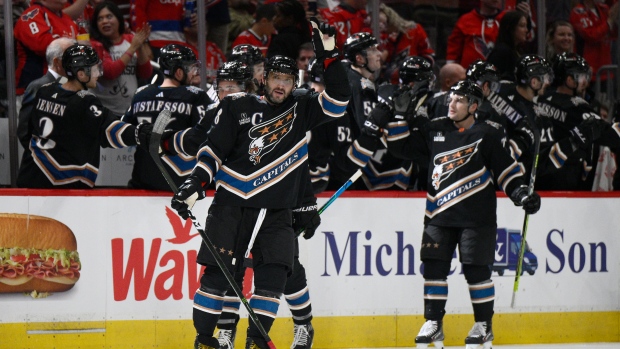
Alex Ovechkin is in unfamiliar territory. A slow start has turned into a slow season for the Great 8, who has just eight goals through 38 games in 2023-24. His 6.0 shooting percentage is the lowest it’s ever been. The 38-year-old Washington Capitals captain is on pace for just 17 goals in an 82-game season, which would be about half as much as his worst full-length season total of 33 in 2016-17.
It’s worth noting that the Capitals won the Presidents Trophy that year, and while that won’t be the case for this year’s version of the Caps, they’ve stayed afloat despite Ovechkin’s lack of production.
However his production is increasing, if ever so slightly, in recent games. Ovechkin is on a five-game point streak, with two goals and four assists over that span. Sitting at 830 career goals, Ovechkin is just 65 away from breaking the record. The 2023-24 season has been a setback, and while he’s all but assured of hitting a new career-low, there’s still over half the season left to make up ground and keep the record in reach.
Suppose he picks up his rate to average half a goal a game – or a goal every other game – down the stretch. 0.5 goals per game is well below his career average (0.60) and it would mean 22 goals over the next 44 games, which would put him at an even 30 on the season and 43 away from the record with two years left on his current contract.
That’s probably the best case scenario. The more realistic scenario will likely put him somewhere in the middle of half a goal a game and his current pace. Surely it can’t stay this low the whole season, right?
Instead, he’ll probably end the season in the 20-25 range, which would put him 48-53 goals away from breaking the record. Hopefully this season is an outlier and not a sign of what’s to come in the next couple years. Obviously the days of 50-goal seasons – or even 40 goals – are over, but if he can average 30-35 goals over an 82-game pace for the next two-and-a-half years, he should still be able to break the record before his contract ends.
For the Washington Capitals and Alex Ovechkin, it’s been a rough start to the 2023-24 season. The Capitals currently sit fifth in the Metropolitan Division at 5-4-1 and they take on the Florida Panthers tonight at 7:30 pm. The biggest news so far this season is Nicklas Backstrom stepping away from the game, and he’s reportedly expected to miss the rest of the season at minimum, which has made a bad start feel even worse.
To say it’s been a rough start for Ovechkin individually might be an exaggeration, as he leads the team with eight points through 10 games, but just two of those are goals.
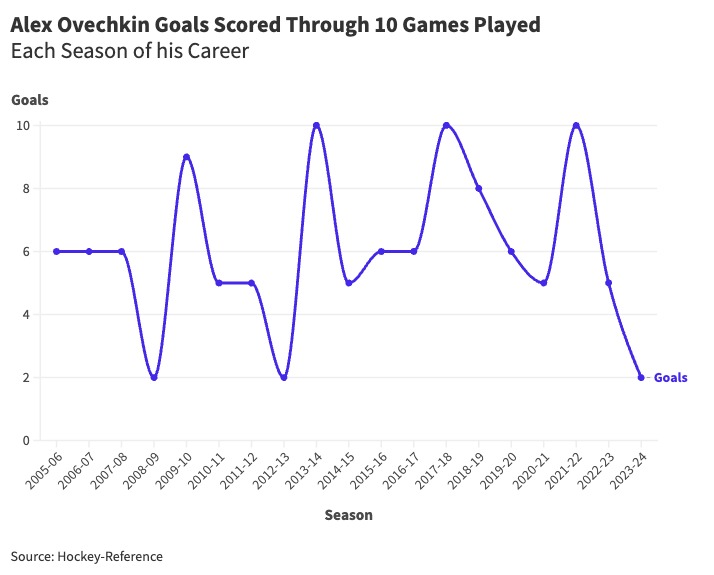
His two goals tie the worst 10-game goal-scoring start to a season in his career, and is his worst start in 11 years. He also started the season with two goals through 10 games in 2008-09 and 2012-13, and has never started with fewer than five in any other season.
The good news about those two outlier seasons? He still ended up leading the NHL in goals in each of those seasons, finishing with 56 in 2008-09 and 32 in the lockout-shortened 2012-13 season.
However, this year, at age 38, a Rocket Richard doesn’t appear to be the likeliest outcome, especially with the way players like Auston Matthews and Nikita Kucherov have been scoring. That said, this is still Alex Ovechkin, and even at the later stage of his career, he’s bound to pick up the pace eventually.
With 824 career goals, he’s now exactly 71 away from breaking Wayne Gretzky’s all-time goals record. His current pace, if he plays 75 games, would put him at just 15 on the season and 837 overall. Ovechkin has never come close to scoring just 15 goals in a full 82-game season – his lowest is 32 in 2010-11 – so ending the year at 837 seems like the bare-minimum, worst-case scenario.
Assuming he picks the pace up to his recent scoring average (.595 goals per game across the past three seasons) and plays around 65 more games, he should finish the year with about 40 goals, putting his career total at 862, which is 33 away from breaking the record.
Even after a slow start to this season, Ovechkin still has a realistic shot to hit the 40-goal mark based on his recent history. If he can do that, and stay healthy throughout this season and next, breaking the record near the end of 2024-25 would feel like a foregone conclusion rather than a possibility.
There’s still plenty of time to go with plenty of opportunity for things to change, for worse or for better, but not even his worst start in 11 years should be enough to raise alarm bells just yet. Now it’s all about how he finishes the calendar year.
[Referencing Ovi’s fist pound through the glass with his son, Sergei, after netting a hat trick against Florida on Nov. 26, 2021] That’s a big thing for him. He really, really wants his two sons to remember him as a great player. Not just read in books and old newspaper articles about how great he was. He wants them to remember what Capital One Arena looks like when it loses their s*** over him scoring a hat trick… He might play seven more years, it would not surprise me. I think if he stays in the 20-goal range, he sticks around as long as he can.
My earliest memory was Jeff Fatt of The Wiggles giving me a high-five at a concert in Baltimore’s Royal Farms Arena. I was two years old.
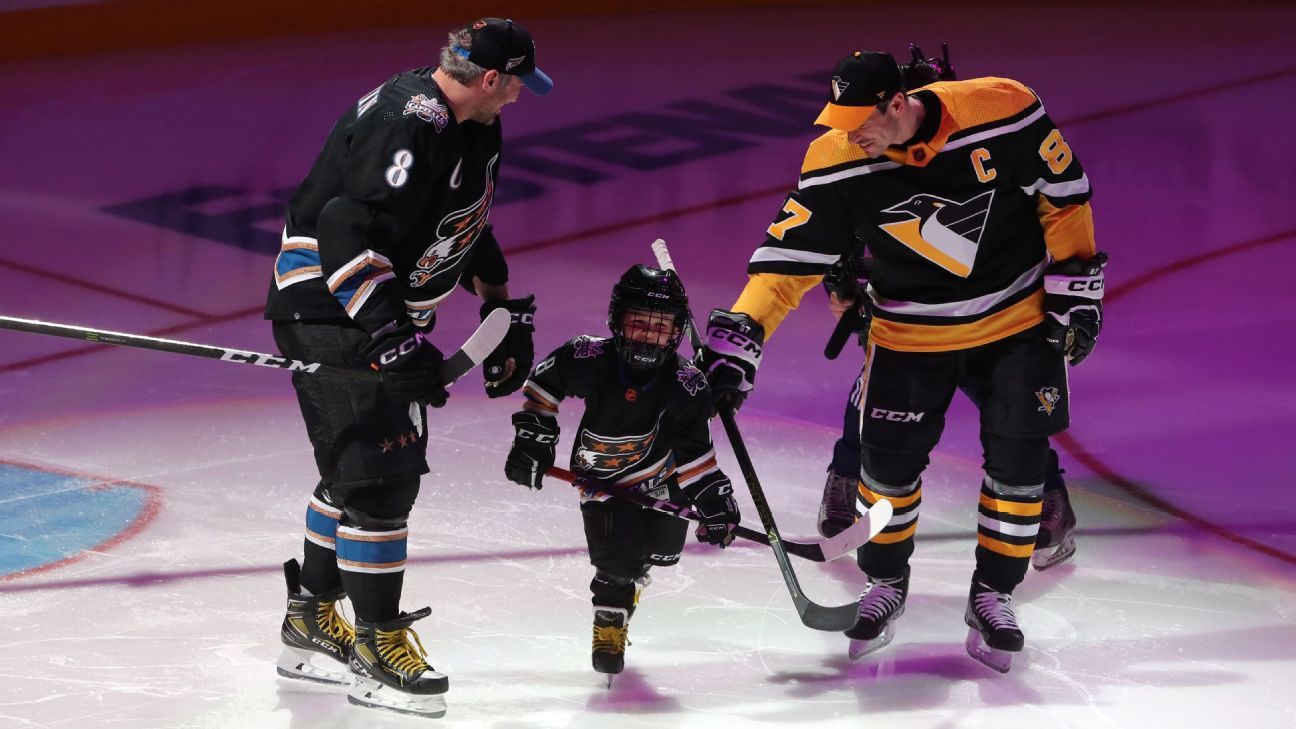
My point here is Sergei (4) and his younger brother Ilya (2) are beginning to reach the age where they will start remembering what their father does in the NHL. Both were born after the Caps won the Stanley Cup in 2018, and not-so-coincidentally, this was the first All-Star Weekend Ovechkin attended since that championship season despite being voted into the game every year.
Sharing that Breakaway Challenge moment with Sidney Crosby and Ovechkin (and Roberto Luongo in net) is something Sergei definitely won’t forget, and it’s clear that Ovechkin returned to the All-Star festivities to create memories and have fun with his children.
So with El-Bashir’s insider speculation in mind, it’s worth wondering how far we can project past Ovechkin’s current contract in this goal chase. I don’t want to get too far ahead of myself; I already projected Ovechkin will pass Wayne Gretzky exactly two years from now this month, but even if he slows down before then and it takes longer, it wouldn’t be surprising if he stays in the NHL beyond this contract because of his kids.
At the same time, I’d imagine Ovechkin, who raises his kids speaking his native language, will want to bring them back to Russia at some point, and finish his career where he started: Dynamo Moscow.
By the end of Ovechkin’s current contract, Sergei and Ilya will be eight and six, respectively. Maybe at that point, enough good NHL memories will be made and Ovi will be ready to return home. Just something to think about, although there’s a lot of time before we reach that point.
As for the main topic at hand, it’s perfect timing that LeBron James passed Kareem Abdul-Jabbar last night to become the NBA’s all-time leading scorer. Watching his jumper swish in and seeing the moment appreciated in its entirety — while cheesy and unnecessary to some — got me excited for what that moment could look like if/when Ovechkin’s time comes.
Ovechkin’s scoring rate slowed down before the All-Star break, scoring just three times in nine games since Jan. 8. He’s got 32 goals through 52 games. With 29 games left, he’s on pace for 49-50. If we factor in missing a few games down the stretch, it could be more like 47-48. Ending with 47 would leave Ovi at 827 in his career, just 68 away from breaking the record.
That would be accomplished by averaging 23 goals over the remaining three seasons in his contract. His goal scoring rate could be cut in half for the next three years, and he would still break the record.
A rejuvenated, post-All-Star break Ovechkin looking to keep his team in the playoff picture could be due for another spike, and I’ll have the chance to see his first game back in-person when the Capitals take on the Bruins in Boston on Saturday. I’ll see if I can get any more insight there for next time, but the biggest thing to look out for is the progress he makes with less than 30 games to go and a playoff spot on the line for the rest of the season.
Father Time may rear his ugly head and send Ovechkin’s production off a cliff in the coming years, but there’s no sign of it so far. Either way, Father Ovechkin seems to have an additional source of motivation now that he’s approaching the end of his career.
Cover Photo Credit: Chase Agnello-Dean/NHLI via Getty Images
For the fourth year, we have an updated edition of Washington, D.C. sports Top 25 players under the age of 25.
This list does not rank the potential of each player, but rather where each player currently stands based on their performance from the past year. A player’s talent, role on the team and production are taken into account. To see last year’s list, click here.
If the player was under 25 as of Jan. 1, 2023, they qualify for this list, and all ages listed for each player is their age as of Jan. 1 as well. Players who had birthdays since then are indicated by an asterisk.
Seven players from last year’s list aged out, with a couple not being eligible anyway after leaving DC (Daniel Sprong and Ilya Samsonov).
Two players who are under 25 and would have been eligible for this year’s list are no longer in DC. One is former Capitals fourth-line rotation winger Brett Leason.
The other is the man who was ranked No. 1 in all three years of its existence: Juan Soto.
In what would have been his final year of eligibility, Soto is — heartbreakingly — no longer a part of the Nationals organization, but would have run away with the No. 1 placement yet again if he was.
Instead, there will be a new No. 1 for the first time, and it may surprise you who it is. In forming this year’s list, one thing was made absolutely clear: There is no elite young talent in Washington, D.C. anymore.
The Capitals are old, the Nationals tore everything down with their new top prospects years away from breaking in, and the Wizards and Commanders are painfully mediocre with some solid pieces, but no game-changers (with one caveat to be elaborated below).
Nevertheless, in the post-Soto era, here is the Top 25 under 25.
25. Nationals SP MacKenzie Gore, 23 | Last year: N/A
One of the returning players in the Soto trade, the former third overall pick should factor in the starting rotation if he’s healthy. He posted a 4.50 ERA in 13 starts (16 app) for San Diego, going 4-4 with 72 strikeouts and walking 37 batters. He’s a question mark, but figures to be a bright spot (hopefully) for an otherwise dreadful-looking Nats team.
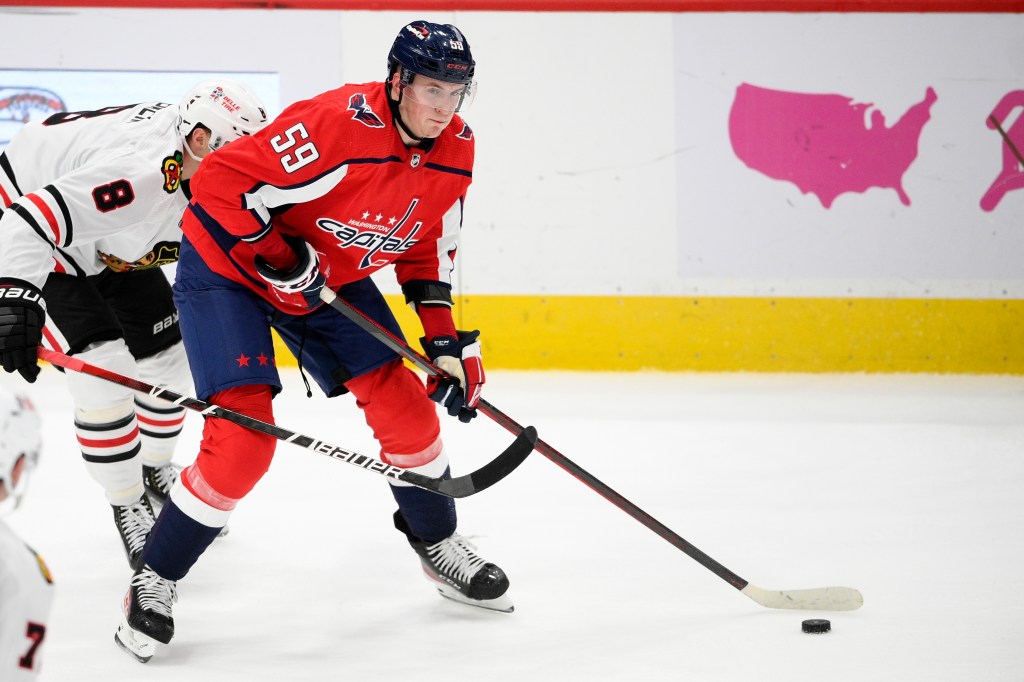
24. Capitals F Connor McMichael, 21* | Last year: No. 12
McMichael had a solid rookie campaign last year, but had trouble finishing plays. Regardless, he established himself as a legit young player that would factor into the team’s top six in the next 2-3 years. This season, he started out flat, fell out of the rotation and was demoted to AHL Hershey. He just turned 22, and there’s still time for him to break back in as players age out, but this fall was definitely a low point.
23. Commanders QB Sam Howell, 22 | Last year: N/A
Photo Credit: Scott Taetsch/Getty Images
Speaking of question mark, Howell made a strong impression in his lone start in Week 18 vs. Dallas, going 11-of-19 for 169 yards and a touchdown along with 35 yards on the ground and another touchdown in a 26-6 win. Aside from the stat line, he looked poised and confident for a guy making his first-ever start. He’s rumored to be the starter going into 2023, so we’ll see if he may finally be the answer.
22. Commanders DT John Ridgeway, 23 | Last year: N/A
With 2022 second-round pick Phidarian Mathis out for the season, Ridgeway was able to chip in as a rookie. Originally drafted by the Cowboys, Ridgeway was claimed off waivers and able to make an impact on defense and special teams, claiming a 31% snap count on defense and making 24 combined tackles (solo + assists).
21. Commanders LS Camaron Cheeseman, 24 | Last year: No. 19
I mean, he’s a long snapper, so… he did his job. His name will always get traction in the Pro Bowl voting, but the less attention he gets otherwise, the better for a player of his position.
20. Nationals RP Mason Thompson, 24 | Last year: No. 20
Another Nats pitcher who we didn’t get a full picture of due to injuries, but with 15 strikeouts over 24.2 innings in 24 relief appearances, Thompson will hopefully make strides if he’s healthy in 2023. His 2.92 ERA would have been tied for second-best on the team if he qualified, but like the others so far on this list, there isn’t a huge sample size to go off of.
19. Capitals D Alexander Alexeyev, 23 | Last year: N/A
The Capitals’ first draft pick after winning the Stanley Cup in 2018, the Russian is finally working his way into the defensive pairs. He has two assists in 12 games this season, and everyone on the team that has more than his 17 blocked shots has played 30 games or more. With such an old team, it’s been tougher and tougher for young guys to break in, but the fact that the former first-rounder is getting in the mix at all is a welcome sign.
18. Wizards G Jordan Goodwin, 24 | Last year: N/A
After making two appearances last year, Goodwin is averaging 6.7 points, 3.4 rebounds and 2.6 assists in 18.8 minutes per game through 37 games. On a frontcourt-heavy team, Goodwin has established a solid role off the bench and is able to play both guard positions. While he’s a G-League success story that should be appreciated, his ceiling likely isn’t much higher than what he’s reached this season.
17. Capitals F Aliaksei Protas, 21* | Last year: No. 17
Photo Credit: Nick Wass/AP Photo
The former third-round pick lasted longer on the Caps roster this season than the more-lauded McMichael, but the return of Nicklas Backstrom and Tom Wilson to the active roster meant the Belarussian had to return to Hershey. He’s bounced between the NHL and AHL a couple times this season, so it’s tough to expect consistent production with all the movement. Regardless, he will hopefully remain a fixture in the Caps’ bottom-six in the near future.
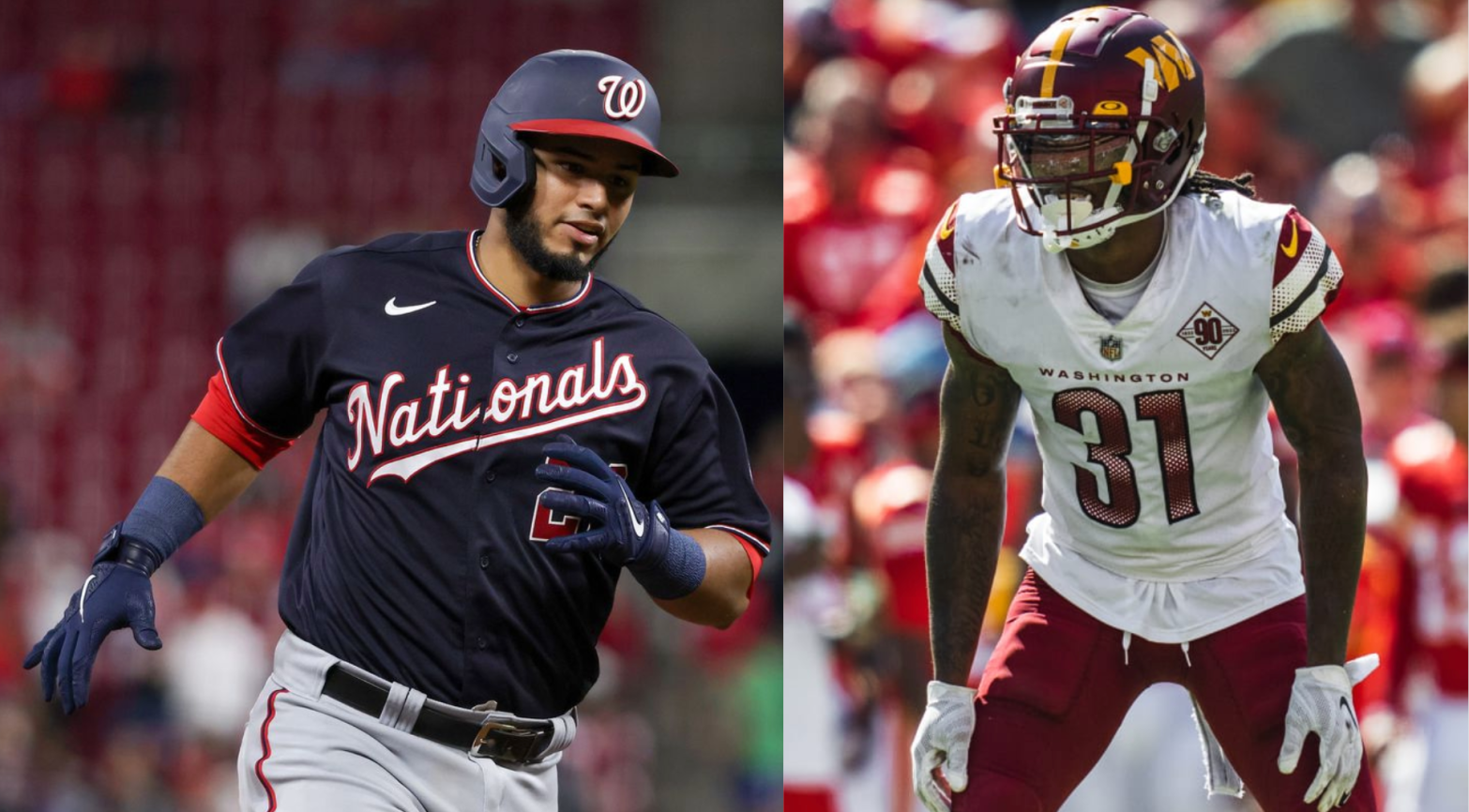
16. Commanders DE Chase Young, 23 | Last year: No. 7
This one is obviously controversial. On one hand, he barely played this year after tearing his ACL midway through the 2021 season, and played just three games to finish this year. At the same time, he has more talent than any other athlete on this list. He didn’t have great production, but he never really had a window to do it. The pressure is on for the former Offensive Rookie of the Year in 2023, but he’s the only young player in DC who can be considered a game-changing generational talent by a wide margin.
15. Wizards C Daniel Gafford, 24 | Last year: No. 6
Gafford looked like a strong offensive post threat with shot-blocking ability, but the addition of Kristaps Porzingis and the reliance on Kyle Kuzma at power forward has forced Gafford to take on a lesser role. He’s one of the better players on the team per 36 minutes (16.5 points, 10.4 rebounds), but at only 18.1 minutes per game, his impact only goes so far (8.3 points, 5.2 rebounds).
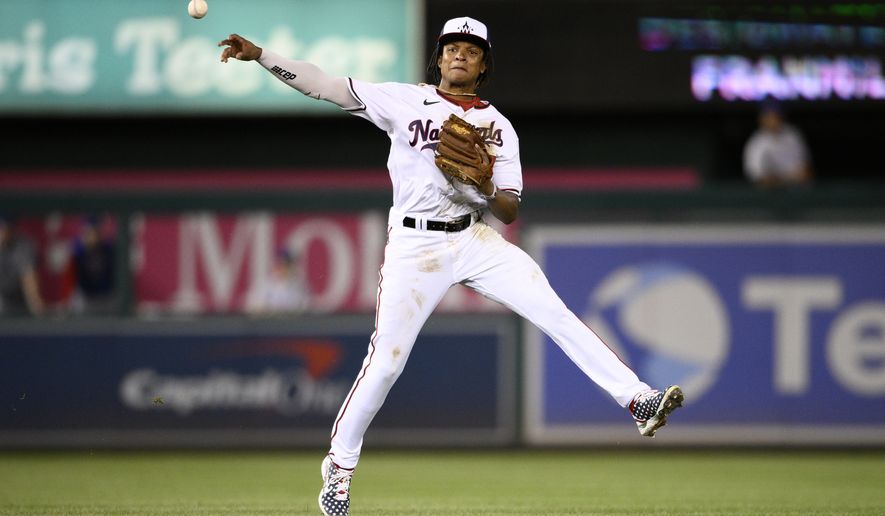
14. Nationals SS CJ Abrams, 22 | Last year: N/A
Photo Credit: Nick Wass/AP Photo
The most MLB-ready player in the Soto return, Abrams will have time to learn and grow on such a poor team. It took him some time to adjust to an everyday role, especially defensively, but he slashed .304/.312/.402 for a .714 OPS in the month of September and flashed some leather with some solid putouts down the stretch. He’s a raw player, but he could become very important as the shortstop of the future.
13. Commanders OT Sam Cosmi, 23 | Last year: No. 10
Injuries limited Cosmi to 14 games and six starts, but he’s played well most of the times he’s out there. He received a 71.6 grade from Pro Football Focus, which is lower than it was earlier in the season. His strength has been run blocking, and if he stays healthy, his athleticism combined with growing experience should lead to improvement across the board.
12. Nationals 2B/SS Luis Garcia, 22 | Last year: No. 16
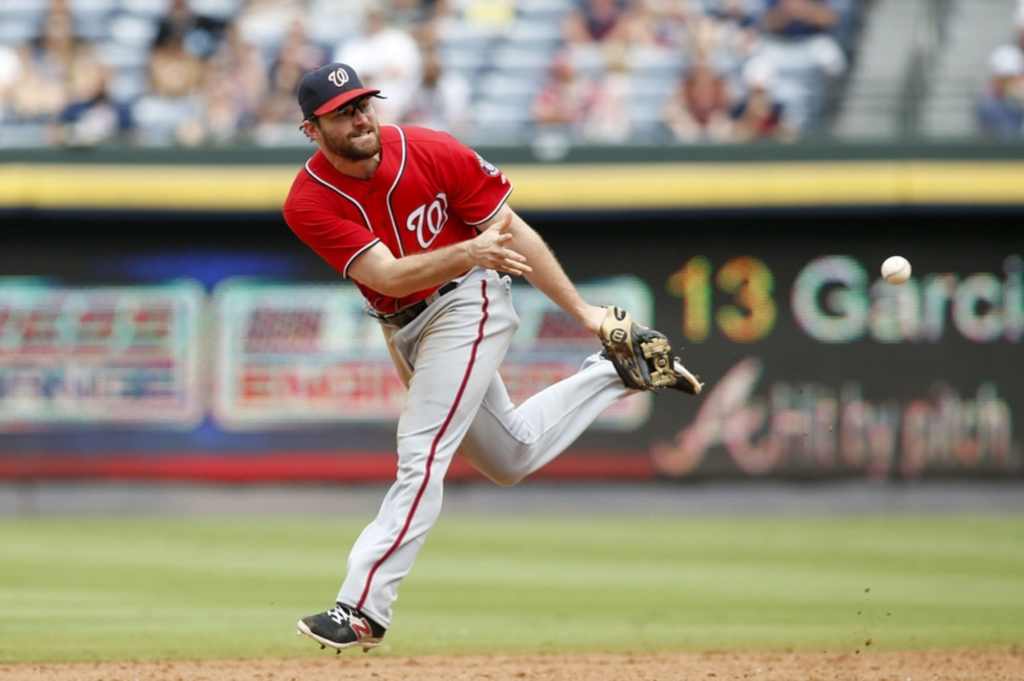
Starting the year in Triple-A, Garcia was called up in June and became an everyday player again, batting .275 with seven home runs and 45 RBI in 93 games. His defense at his natural position, shortstop, was often brutal, but the arrival of Abrams pushed Garcia back to second, and while his offensive production dipped to end the year, he’s a big part of the Nationals rebuild.
11. Commanders WR Jahan Dotson, 22 | Last year: N/A
Dotson also dealt with injuries, playing just 12 games, and after he was favored early in the year, the rookie slipped into the third option behind Terry McLaurin and Curtis Samuel. Even Antonio Gibson finished with more receptions (46), but with 523 yards on 35 catches and a team-leading seven receiving touchdowns, Dotson is bound to carve himself a bigger role in Year 2.
10. Wizards F Rui Hachimura*, 24 | Last year: No. 13
After an odd 2021-22 season, Hachimura has settled into a complimentary role, averaging 13.0 points and 4.3 rebounds in 24.3 minutes per game. However, it’s the final year of his contract, and it’s unclear where he falls in the Wizards future plans.
Edit: He was traded to the Los Angeles Lakers as I was putting this list together, so it’s become pretty clear now where he falls in (or I guess, out of) their future plans. Since he was still in Washington as of Jan. 1, I’m leaving him in.
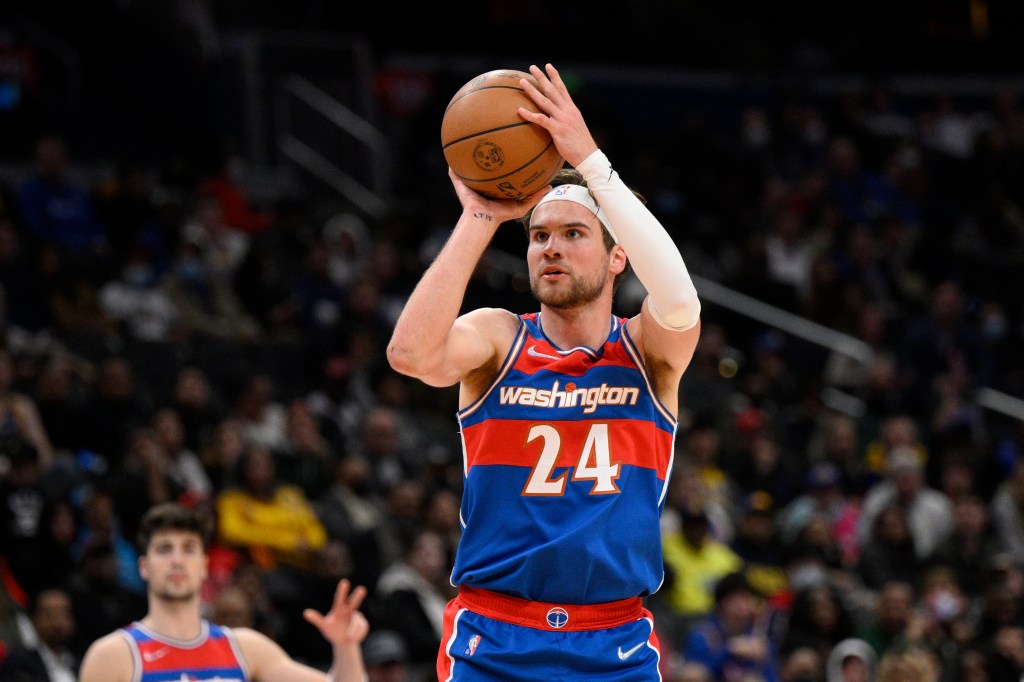
9. Wizards G/F Corey Kispert, 23 | Last year: N/A
Photo Credit: Nick Wass/AP Photo
Kispert was drafted to add a 3-point threat from the wing, and after an underwhelming rookie year, he’s developing into that role. He’s shooting 42.9% from behind the arc, best on the Wizards and good enough for eighth in the entire league. With all scoring production from Porzingis, Kuzma and Bradley Beal, that’s about as far as his contributions go, but he’s getting a lot of starts and minutes (top six on the team in each) and looks like a solid rotational piece going forward.
8. Wizards F Deni Avdija, 21* | Last year: No. 9
Despite just recently turning 22, the Israeli forward is in the middle of his third year. His shooting hasn’t been great (42.9%, 29.1% from 3), but with 6.2 rebounds, 2.5 assists and 1.4 “stocks” (steals + blocks) per game, he’s making his impact in other ways. His 1.6 defensive win shares ranks third on the team, and he continues to prove himself as one of the better defensive players on the team. If he can manage to improve his offensive production, he could become a strong two-way wing, but that’s far from a guarantee.
7. Capitals D Martin Fehervary, 23 | Last year: No. 3
Photo Credit: John McCreary/NHLI via Getty Images
With the shuffling of the defensive pairs this season, Fehervary has slipped down from his top pair spot with John Carlson, and he’s the only regular defenseman with a Corsi% below 50% on the team (47.7). Still, he leads the Caps blue liners in hits (135), is fourth in blocked shots (69) and remains the best young player on the team. (Albeit, there are fewer options for that with every season, it seems.)
6. Commanders RB Antonio Gibson, 24 | Last year: No. 4
With the addition of Brian Robinson Jr., Gibson relinquished his role as lead back despite eclipsing 1,000 yards on the ground last year. Robinson demonstrated his talent as a pure runner, while Gibson reverted to a hybrid role similar to what he played at Memphis. While his 546 rushing yards were the lowest output of his (short) career, his 353 receiving yards were a new career-high. With a new offensive coordinator coming in, it will be exciting to see what he comes up with for Gibson and Samuel, the other hybrid weapon.
5. Commanders RB Brian Robinson Jr., 23 | Last year: N/A
Photo Credit: Katherine Frey/Washington Post
In what could have been a tragic story after he was shot in the knee in August, it was thankfully the opposite for B-Rob. Getting out of that scary situation alive and able to walk was a blessing on its own, but the fact that he was back on an NFL field for Week 5 was nothing short of miraculous. His workload was inconsistent, but he ultimately ended the season with 797 yards and two touchdowns on 205 rushes. His role as the lead back was further cemented as the season went on, as he finished with 18+ carries and/or 80+ yards in four of the final five games. Paired with Gibson, Washington has a legit two-headed rushing attack going into 2023.
4. Nationals C Keibert Ruiz, 24 | Last year: No. 14
Ruiz entrenched himself as the starting catcher after arriving via trade at the deadline last season. His 112 games played was the fifth-most among Nats fielders. His .251 average was fourth-highest on the team, and he also boasted the fourth-highest WAR on the team, albeit it was 1.7. His defense and framing was raw, but he showed potential and proved he deserves to be one of the young pieces worth building around.
3. Commanders S Darrick Forrest, 23 | Last year: N/A
Forrest emerged out of nowhere, becoming a fixture in the secondary and looking like another draft steal alongside fellow diamond in the rough, Kamren Curl. The former fifth-rounder made his impact all over the field, leading the Commanders in interceptions (4) and forced fumbles (2, tied with Jonathan Allen). He ranked third in solo tackles (56), and if the second-year safety can make that kind of impact in Year 3 and beyond, the secondary will be in great shape.
2. Commanders S Kamren Curl, 23 | Last year: No. 2
If Curl was healthy for the full season, he probably would’ve been first on the list. Even in 12 games, he was one of the best defensive players on the team yet again. His 58 solo tackles ranked second on the team despite playing five fewer games than fellow safeties Forrest and Bobby McCain, who were right below him. He didn’t record any interceptions, but recorded a single sack and continues to deliver as a seventh-round steal.
In a massive turnaround, Davis solidified as one of the defensive leaders on the team, almost out of necessity. With the team carrying few linebackers to begin with, running a lot of 4-2-5 sets, Davis ascended as the play-caller of the defense after Cole Holcomb went down with a season-ending foot injury. He led the team in solo tackles (68) and assists (36), and recorded three sacks and two fumble recoveries. He wasn’t a superstar by any means, but after a discouraging rookie campaign, it appears Davis is beginning to reach his potential.
Two months ago, I predicted Alex Ovechkin would pass Gordie Howe for the No. 2 spot on the NHL all-time goal list between Dec. 23-31, with a specific prediction of Dec. 29 against the Ottawa Senators.
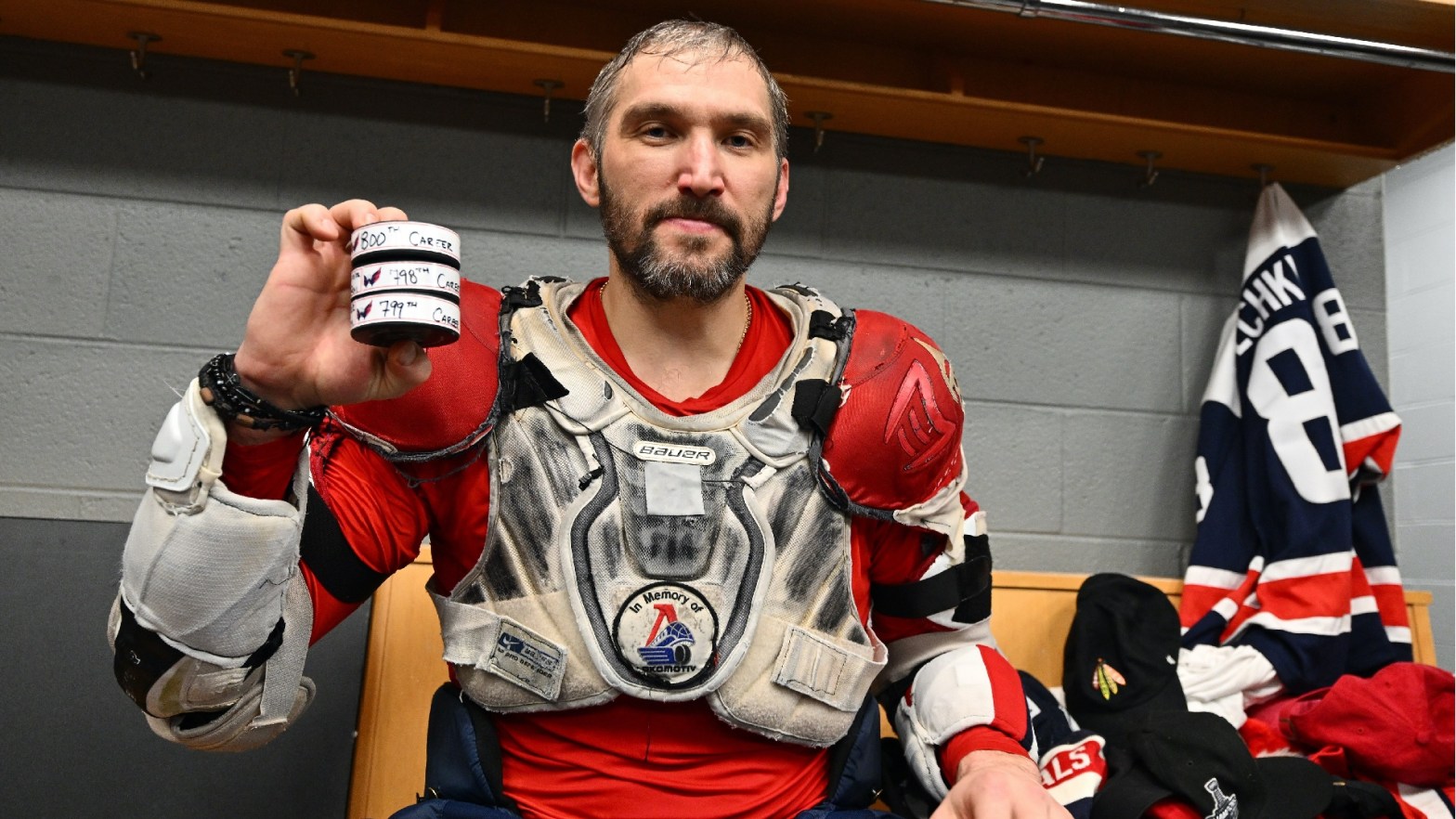
After reaching 800 on Dec. 13 with a hat trick against the Chicago Blackhawks, it seemed like he would blow past Howe’s 801 earlier than anticipated. A four-game drought followed, but he ultimately scored twice against the Winnipeg Jets on Dec. 23 to tie and pass Howe, just managing to sneak into the front of my predicted window. I’ll chalk that up as a win for my forecasting.
Since reaching 802 goals and taking sole possession of the No. 2 spot, Ovi has been on an absolute tear. He has seven goals over the past six games since he overtook Howe, good enough for 1.167 goals per game. Now with 29 goals in 42 games on the season, The Gr800 is on pace for 56-57 goals if he plays all 82 games.
If we knock off about five for maintenance days, which would match the 77 games he played last year, that pace is set for 53 goals. Ovechkin scored 50 goals for the ninth time last season, tying Mike Bossy and Wayne Gretzky for the most such seasons in a career. Reaching the 50-mark for the record 10th time seemed unlikely as Ovechkin goes up in age, but he continues to defy time.
Even if he slows down and fails to reach 50 again, staying in the ball park will still provide a tremendous boost to his chances of passing Gretzky in the long run. After his 50 goals last year, he only needed to average 29 goals across the next four seasons of his contract to pass Gretzky; he’s at 29 goals right now and we’re just barely past the halfway mark of this season.
That needed seasonal average is going down again, and it will continue to fall the more he scores. If he stays on track and finishes the season with 56 goals, that would mark 836 for his career and put him 59 goals away from passing Gretzky. He would only need to score 20 goals over each of the next three years to pass Gretzky before his current contract ends.
Even if he doesn’t reach 56 and instead falls in the range of 45-50, the needed seasonal average would drop from 29 to 22-24. It’s starting to look less like an ‘if’ and more like a ‘when.’
Last installment, I laid my projections for passing Gretzky at February 2025. If Ovechkin manages to reach 56 goals this year and is left 59 away, that projection would have to trickle back into 2024. I won’t go that far just yet, but the fact that it’s now 2023 and we could very well be less than two years away from Ovechkin becoming the all-time leading goal-scorer in NHL history is hard to fathom.
Can’t get too excited just yet; there’s a lot of goals to score and injuries/stoppages to avoid, but there is one man in sight now; the man we’ve been chasing all along. Everyone else has been encountered and left behind. Just 85 goals left to tie, 86 to pass. Here’s where the fun begins.
Alex Ovechkin, shortly after becoming the third player in NHL history to reach 800 career goals, could potentially tie and pass Gordie Howe (801) for second on the all-time list. Poetically, it would be against the Detroit Red Wings, the team Howe played with for 25 years.
This edition comes later in the month than usual. I could lie and say I was waiting for Ovechkin to pass 800 or something, but the truth is I just wrapped up final exams, and free time to sit and write this out has been hard to come by.
In any case, here we are. Ovechkin, who was named First Star of the Week, scored a hat trick against the Chicago Blackhawks on Dec. 13 to reach 800 in style. Last month, I predicted he would eclipse 800 between Dec. 23-31, while settling on Dec. 29 against the Ottawa Senators.
Instead, he decided to ramp up the pace, scoring 12 goals across 17 games since Nov. 8 — a white hot .706 goals per game rate. He’s gone goalless in his last two games since hitting 800, which puts him at .632 since Nov. 8. However, he’s at a total of .606 for the season so far, so the pace has still been higher.
If Ovechkin plays the same number of games he did last year (77), he’s on pace for 46 goals. If he remains on a .632 pace for the rest of the year, he’ll wind up with 47-48. With another big boost, 50 goals isn’t out of the question.
However, if he winds up with 45, he will finish the season with 825 goals and will be just 70 goals away from passing Wayne Gretzky. That would mean averaging 23.3 goals per season for the remaining three years of his contract, down from the 29 per year he needed entering this season.
I think it’s fair to assume Ovechkin could reach 40 goals in 2023-24, which would then have him enter 2024-25 with 865 goals and 30 away from passing Gretzky.
Barring any more major setbacks (which can’t be ruled out) or a steep drop in production, I would project Ovechkin to become the NHL all-time leading goal-scorer in February 2025.
He’s averaged .706, .533 and .649 goals per game in the past three seasons, respectively. The .533 was the season after the COVID shutdown in which Ovechkin experienced one of the lengthiest injury absences of his career, but that could be a fair estimate of the level he could be producing at in his early 40s since his career average currently stands at .612.
If he does indeed enter 2024-25 — his 20th NHL season — with 865 goals, a .533 goal rate would have him hitting 30 goals in the 56th game of the season. This year, the Caps play their 56th game on Feb. 14 against the Carolina Hurricanes.
This is projecting extremely far ahead and will obviously become more or less likely as time goes on, but a specific projection of the exact middle of February leaves room on either side to suggest it will likely fall somewhere in February.
That said, the projection will be extremely dependent on his goal-scoring rate over the next couple years, but with Ovechkin on the brink of passing Howe, the finish line is truly starting to come into view.
After a slow start to his 18th NHL season, Alex Ovechkin is kicking it up a notch. He failed to score in the first three games of the season for the first time since 2012-13, where he ended up finishing with a league-leading 32 goals in the 48-game lockout season.
Now he has eight goals through 14 games, and is riding a three-game goal streak for a Capitals team that is very injured and very mediocre with only one or two others besides Ovechkin generating offense.
The latest milestone in Ovechkin’s goal climb was reached during the 3-2 loss to Arizona on Nov. 5, in which he scored his 787th goal to pass Gordie Howe’s record of most goals with one team.
After tying the record the previous game, fittingly against Howe’s Detroit Red Wings, Ovi etched his name on a goal record that I believe to be the most impressive behind the all-time one.
18 years with one franchise, which will ultimately be 21 by the end of his contract, is a feat so rare that it takes a special type of player to achieve it. So few players play that long in professional sports at all, so sticking with one team is all the more impressive.
Only 18 players have spent their entire career with one team for 18+ years, including three active players (Ovechkin, Sidney Crosby, Patrice Bergeron). Of the 15 inactive players, only seven played into the 21st century.
There will certainly be others in the near future to reach this mark, but how many of those players will score as prolifically as Ovechkin? With so much movement in the free agency of today and increasing player empowerment, it feels as if fewer players stick with the same team forever than it has been in the past.
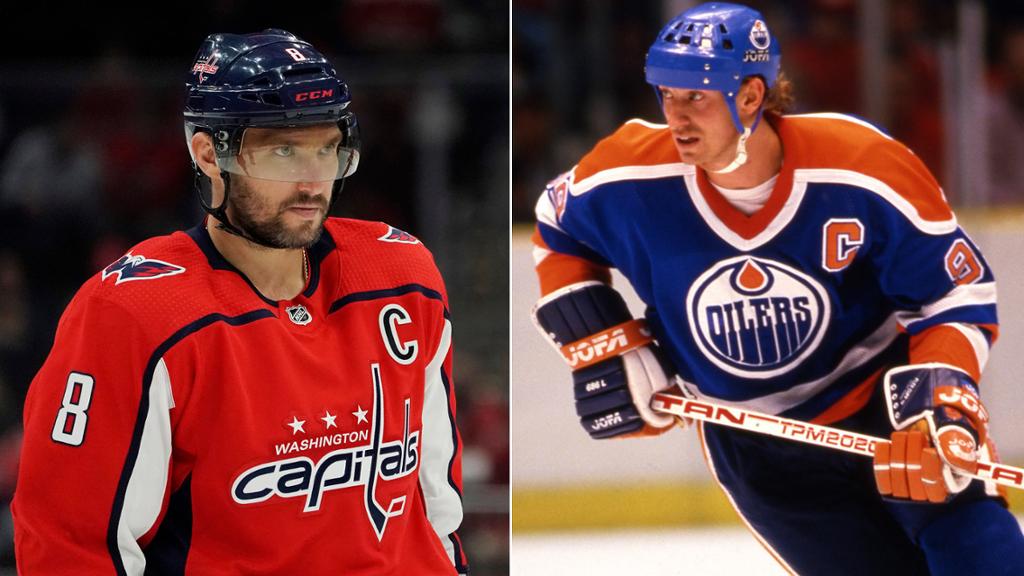
People thought Wayne Gretzky’s goal record was unbreakable, but it clearly is a possibility. However, with this one, 787 goals (now 788 and counting) with a single team just seems like something we will never see again.
Hopefully, Ovechkin will stay in Washington for the rest of his career. It appears it will end that way, but we can never rule out a situation like the man he just passed on the list. Howe spent 25 years in Detroit, before spending some time in the WHA, and one final year in the NHL with Hartford, scoring his final 15 goals at 51 years old to put him at 801 all-time.
Speaking of 801, that’s the next milestone to watch (after 800, of course). With Ovechkin just 14 goals away from taking sole possession of second on the NHL’s all-time goal list, I can try to forecast when that will occur.
Ovechkin’s 50 goals in 77 games last year was good enough for .649 goals per game. After picking up from this year’s slow start, he’s scoring at a rate of .571 GPG. If he falls somewhere in between those two rates, he should pass Howe before the end of the calendar year.
I would expect somewhere in between the Capitals Dec. 23 game against the Winnipeg Jets and New Year’s Eve against the Montreal Canadiens. If his pace slows down, it should come in the earliest days of 2023, but if I had to make a specific prediction, I will say Dec. 29 against the Ottawa Senators, so mark your calendars.
What would be truly spectacular is if he enters that game with 799 goals and scores a hat trick, reaching 800 then tying and passing Howe all in the same game. No matter how those moments happen, it will be special to witness, and potentially the last major milestone before passing Gretzky himself (should it come to be).
So enjoy the next couple months, and hope the Capitals can embody Ovechkin’s climb as the try to pull themselves back into a competitive standing.
After the Washington Capitals signed Darcy Kuemper to a five-year, $26.25 million deal yesterday to open NHL Free Agency, I couldn’t remember the last time the team committed that much money and term to one of the top names on the market.
No, it wasn’t the Columbus Blue Jackets surprisingly winning the Johnny Gaudreau sweepstakes, and Kuemper is not at the level of the best netminders in the league, but he was arguably the best option in net on the open market and will play the most important role on the team.
The point is, with much of the Caps core acquired via the draft or, in TJ Oshie’s case, by trade, there hasn’t been much room for a massive signing in quite some time.
As I pointed out in yesterday’s piece recapping the Kuemper signing, 2014 was the last time a signing even close to this level of impact was made. By inking Matt Niskanen (7 years/$40.25 million) and Brooks Orpik (5 years/$27.5 million) in 2014, the organization committed serious time and money to two of the 10 top players on the market, and it ultimately paid off, with both playing significant roles in the 2018 Stanley Cup team.
While we can only hope Kuemper will bring the same fortune, today we will be looking at the 10 best free agent signings over the past 10 years in DC Sports. This only considers players who signed from another team during the offseason, not players who re-signed even after hitting free agency.
This also is NOT a ranking of the best bargain signings. It is purely ranking the best free agent additions, even if it required a steep price.
The signings will be weighed both by individual performance and impact on the team’s success.
10. Kyle Schwarber, Washington Nationals (2021)
Photo Credit: Alex Brandon/AP Photo
Contract: 1 year, $10 million
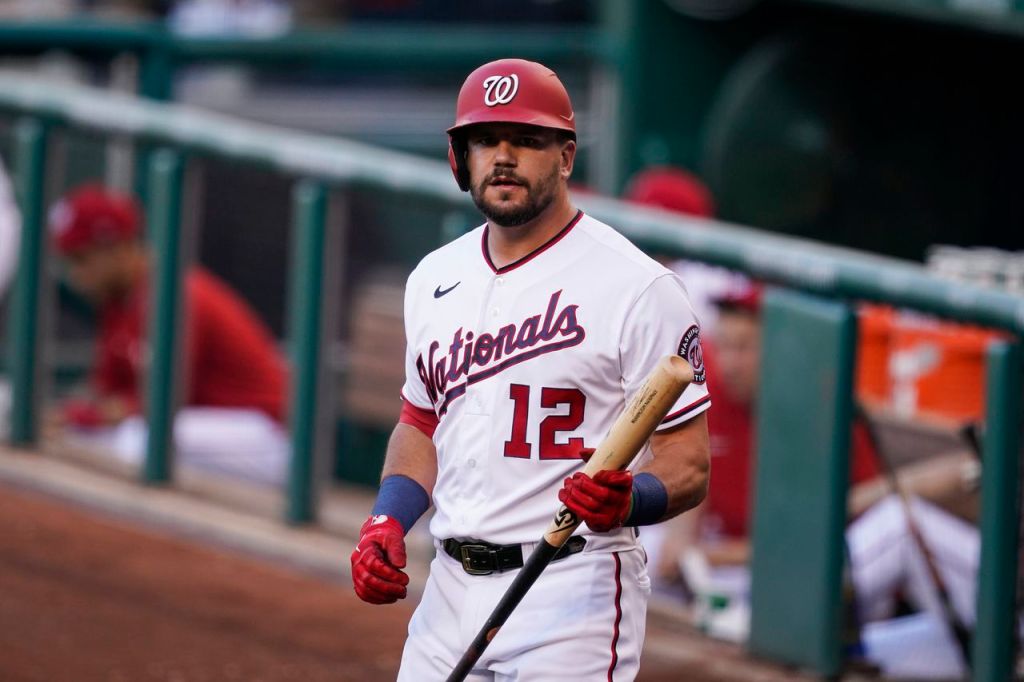
The Schwar-bombs in Nats Park in the Summer of 2021 feel like a fever dream, but for about four months, Schwarber was one of the best offensive players on the team. It seemed as if he hit a leadoff home run every game, and he practically did. His 16 home runs in an 18-game span in June 2021 has only been matched by Barry Bonds (2001) and Sammy Sosa (1998). A hamstring injury derailed his magical season, but not before he earned his first All-Star selection, and he was soon shipped up to Boston at the trade deadline amid the great fire sale of 2021. His impact wasn’t immense, but it was fun while it lasted.
9. Kurt Suzuki, Washington Nationals (2019)
Photo Credit: Mike Ehrmann/Getty Images
Contract: 2 years, $10 million
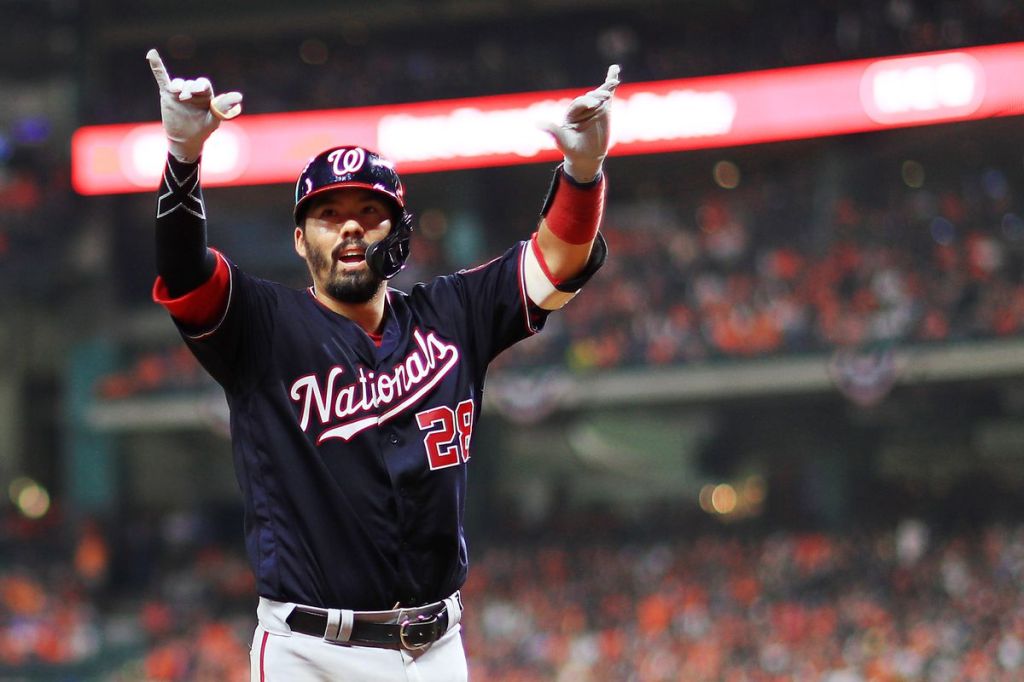
Suzuki first played for the Nats in 2012 after a trade from the Oakland Athletics, and he was later sent back to Oakland in 2013, but he signed back again in 2019 and formed a solid timeshare with Yan Gomes behind the plate. He posted an OPS of .809 and .745 in 2019 and 2020, respectively, albeit with a limited number of plate appearances, and hit the go-ahead home run in Game 2 of the World Series. He was never a star on the team, but he certainly made an impact in his return to Washington.
8. Thomas Bryant, Washington Wizards (2018)
Photo Credit: Stephen Gosling/NBAE via Getty Images
Contract: 1 year, $1.38 million
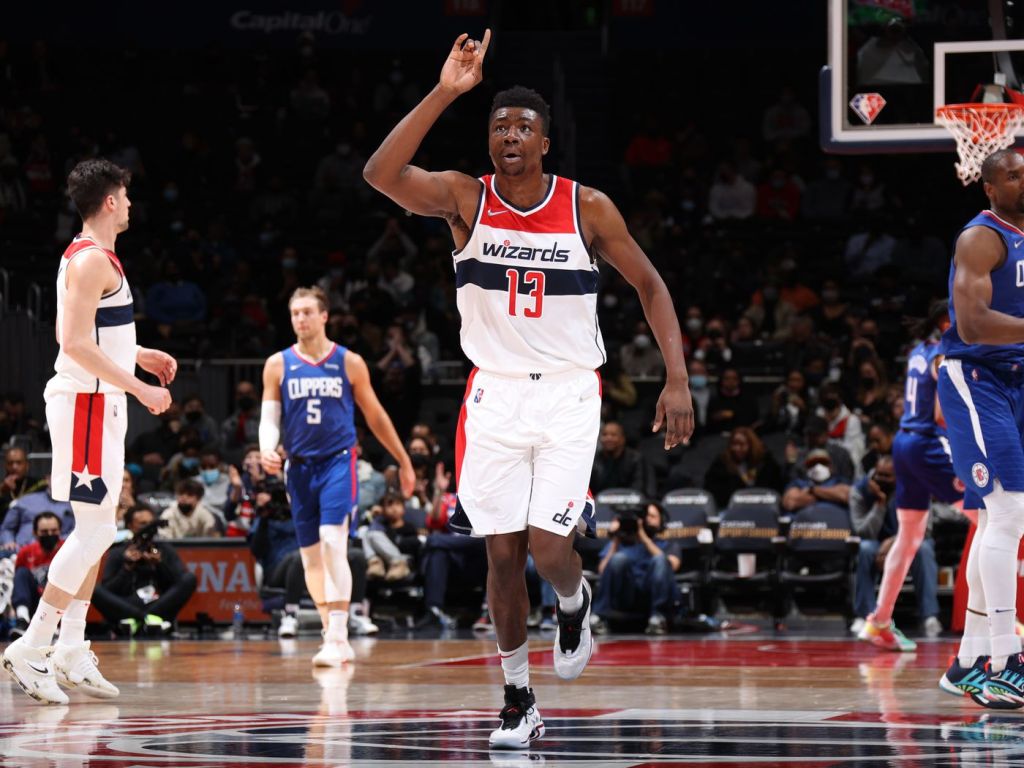
He just signed with the Los Angeles Lakers to take a shot at the starting role, but not too long ago it looked as if he would lock down that role in Washington. Claimed off waivers from the Lakers in 2018, Bryant developed into a quality stretch 5, improving his production with each season. He was averaging 14.3 points and 6.1 rebounds through 10 games in 2020-21 before he tore his ACL, missing the next year and ceding his spot in the rotation to Daniel Gafford and Kristaps Porzingis. All in all, Bryant worked out pretty well for a waiver pickup.
7. Paul Pierce, Washington Wizards (2014)
Photo Credit: Geoff Burke/USA TODAY Sports
Contract: 2 years, $11 million
Pierce opted out after the first year of this deal, but what a year it was. The Boston Celtics legend averaged 11.9 points, 4.0 rebounds and 2.0 assists across 73 games, mentoring a young John Wall and Bradley Beal along the way. He also loudly swept the Toronto Raptors to open the playoffs, “called game” with a memorable buzzer-beater in the second round against the Atlanta Hawks, and barely ran out of time before hitting another last-second shot that would have extended the Wizards season later in the series. ‘The Truth’ didn’t last long in DC, but in terms of leadership and postseason performance, he was among the most impactful.
6. Pierre Garcon, Washington Commanders (2012)
Photo Credit: Derick E. Hingle/US PRESSWIRE
Contract: 5 years, $42.5 million
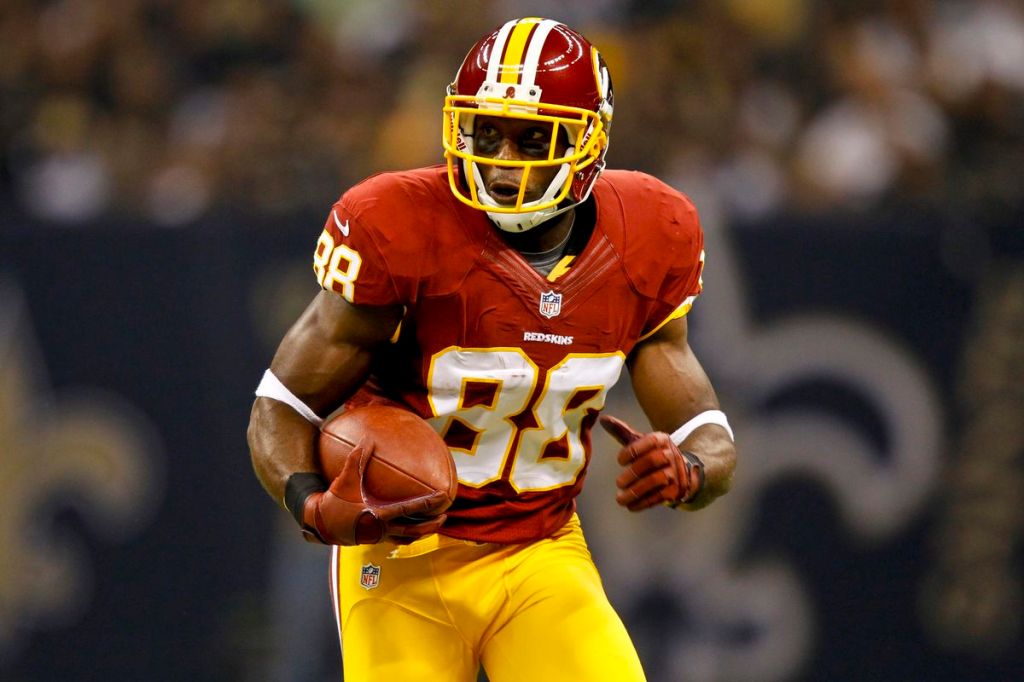
After drafting Robert Griffin III to take over at quarterback in 2012, Washington went out and snagged a top receiver for him. While RG3 didn’t pan out beyond his rookie season, Garcon proved to be Washington’s greatest free agent investment in recent memory. He led the NFL in receptions (113) in 2013, and while he only eclipsed 1,000 yards in a season once, he led the team in receiving yards three times (four among non-TEs). The team made the playoffs in two out of five seasons he was on the team, which is about as much success you can ask for in this era of team history.
5. Patrick Corbin, Washington Nationals (2019)
Photo Credit: Matt Slocum/AP Photo
Contract: 6 years, $140 million
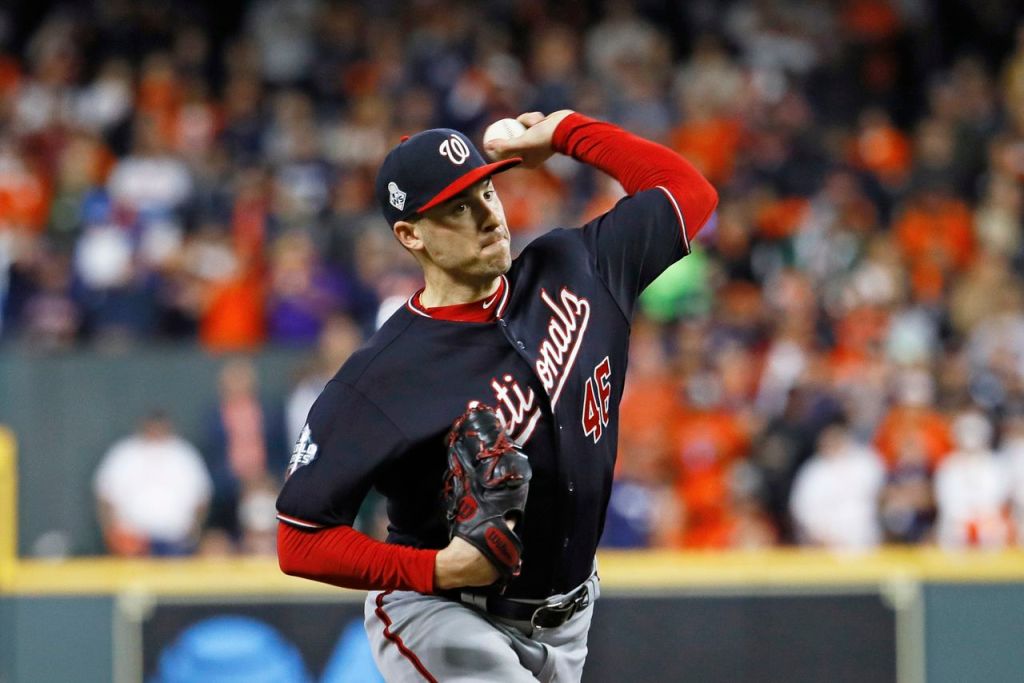
Instead of re-signing Bryce Harper, the Nats went out and brought in Corbin to create a three-headed monster in the starting rotation. Coming off an All-Star season in which he finished fifth in Cy Young voting, Corbin immediately made his mark, posting a 3.25 ERA and notching 238 strikeouts across 202 innings pitched. He played an instrumental role as a starter and out of the bullpen to deliver the Nats the 2019 World Series title, but since then, he inexplicably nosedived as one of the worst starting pitchers in baseball. He led the majors in earned runs (111) and losses (16) in 2021, and currently leads the majors in hits allowed (125) to go with a 5.70 ERA.
The contract has aged horribly, and if anything, this may look like one of the worst contracts in team history by the end, but what makes it top five in the last 10 years is purely what he meant to the team in 2019. The Nats would not have won the World Series without him, and while it’s been awful ever since, the Nats would take that deal 10 times out of 10.
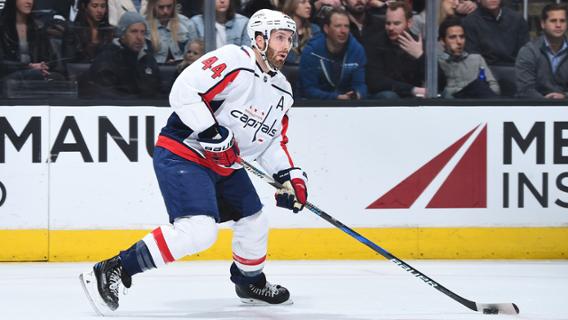
Orpik was a third-pair defenseman by the end of his stint, but he still played effective defense and brought invaluable leadership to the team. He wore an ‘A’ for much of his time here, and led the team in +/- during the 2018 postseason (+17). He was never a point-scoring defenseman, but the value of his signing goes far beyond the stat sheet.
3. Matt Niskanen, Washington Capitals (2014)
Photo Credit: Washington Capitals
Contract: 7 years, $40.25 million
Given Niskanen and Orpik came in the same year, it’s hard to separate these two. However, Niskanen was a much-needed fixture in the top four defensive pairings. He tallied between 29-39 points in each of his first four seasons, and wound up with 25 in his fifth and final one before getting traded away in 2019. Niskanen averaged the second-most ice time (25:23) in the 2018 Cup run, barely behind John Carlson (25:38), and the team has lacked a strong top four since his departure.
2. Daniel Murphy, Washington Nationals (2016)
Photo Credit: Brett Davis/USA TODAY Sports
Contract: 3 years, $37.5 million
Fresh off of winning NLCS MVP in 2015 with the New York Mets, Murphy signed in DC and instantly became one of the team’s best offensive players. He led the NL in slugging percentage (.595) and OPS (.985) in 2016 and finished as runner-up in MVP voting. He was an All-Star in both full seasons in DC, and despite getting traded away in 2018 and never achieving postseason success with the Nats, he played a massive role with some Nats teams that were among the best in baseball.
1. Max Scherzer, Washington Nationals (2015)
Photo Credit: Nick Wass/AP Photo
Contract: 7 years, $210 million
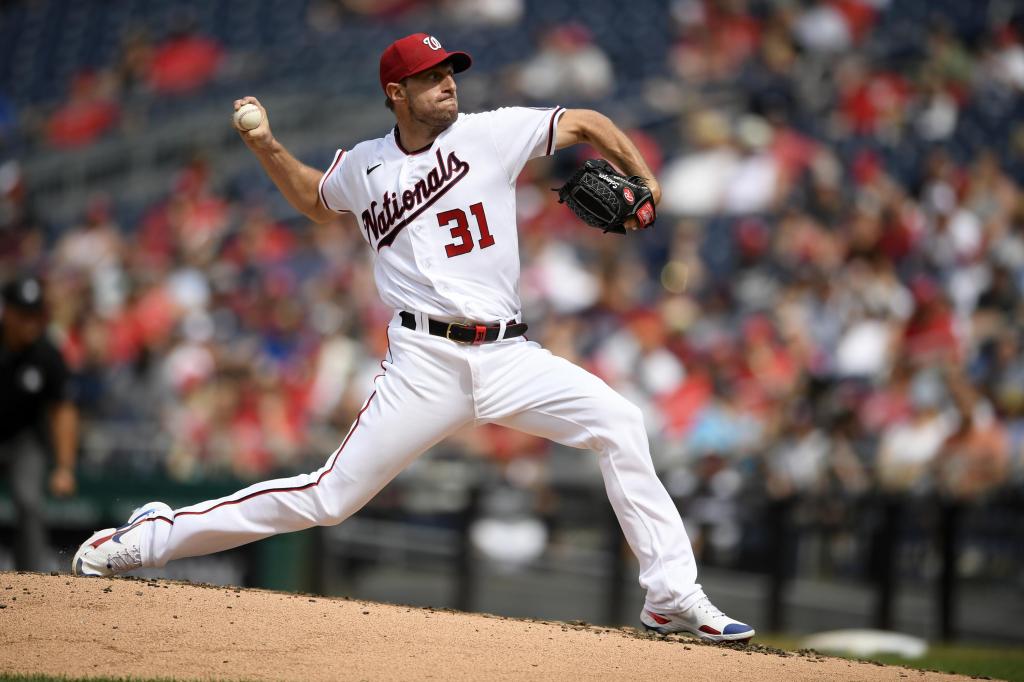
Getting Scherzer was not only the greatest free agent signing of the past 10 years, it is in the conversation for the best in baseball history. Viewed as a risky move at the time with Scherzer turning 30, ‘Mad Max’ immediately stepped in as the ace. He won two Cy Youngs, and finished top three in three other seasons. He notched a couple no-hitters, immaculate innings and even threw a 20-strikeout game. Oh, and he also led the team to a World Series title in 2019. He’s the greatest player to wear a Nationals uniform, he will be the first player in Cooperstown with a Nats ‘Curly W’ on his cap, and he’s the greatest free agent signing in DC history.
The Washington Capitals have completed their revamp in the crease.
After trading away Vitek Vanecek to the New Jersey Devils on July 8, and jettisoning Ilya Samsonov to the open market on July 11, the Capitals signed Darcy Kuemper and Charlie Lindgren to serve as the goaltenders for the foreseeable future.
Vanecek, 26, was sent to New Jersey along with the 46th overall pick in this year’s draft in exchange for the 37th and 70th picks. The Capitals selected Ryan Chesley, a US National Team Development Program defenseman headed to the University of Minnesota this fall, and Alexander Suzdalev, a Russia-born Swedish winger, with those picks.
Vanecek never projected to be a No. 1 netminder, but he showed promise throughout his tenure as a potential 1B. Instead, the move signaled that management chose to roll with Samsonov and a veteran to come in with a bigger role.
Then, the Capitals chose not to extend a qualifying offer to Samsonov as a restricted free agent. The 25-year-old former first-rounder was pegged as the franchise’s future from the moment he was drafted, but was never consistent and underwhelmed in tandem with Vanecek for a second year in a row.
The Caps would have had to offer $3-3.5 million to keep Samsonov around, which is too pricey for a backup goaltender. There was a chance he could have returned for a cheaper contract, but head coach Peter Laviolette suggested the team would be “moving in a different direction.” Samsonov wound up signing with the Toronto Maple Leafs on a one-year, $1.8 million deal.
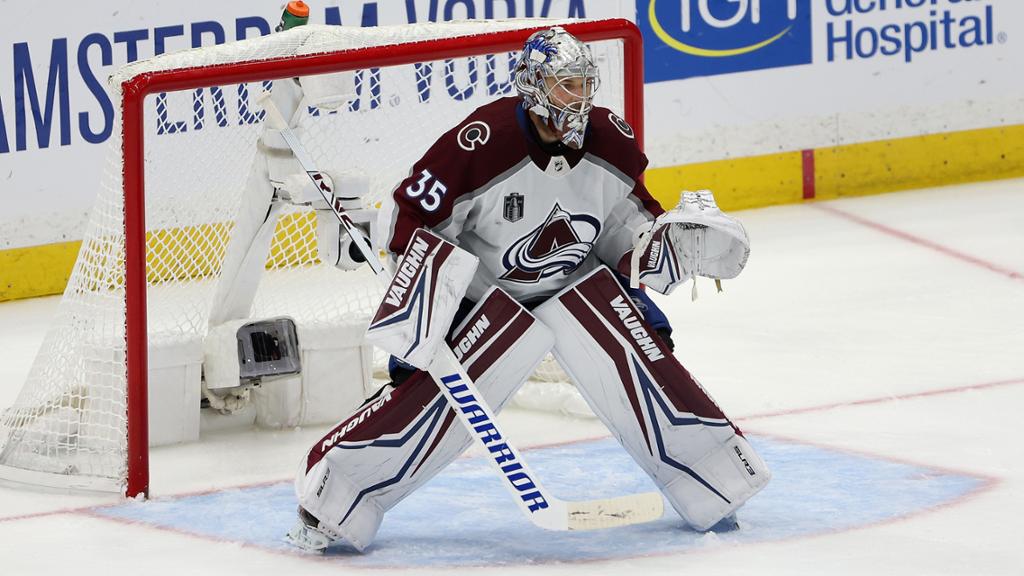
So with zero goaltenders on the active roster, the Capitals quickly filled the holes, first inking reigning Stanley Cup champion Kuemper, 32, to a five-year, $26.25 million contract as the new top goalie. Kuemper posted a 2.54 goals against average and .921 save percentage with Colorado this past year, and posted a .902 postseason save percentage en route to winning the Cup despite battling an eye injury.
It’s also the first time in a long time that the Caps have lured in a top name on the offseason open market. With most of the core being drafted or traded for, there hasn’t been much cap space for the Capitals to go all-in on free agents.
The last time the team made a move this significant, in terms of money and impact on the team, was in 2014. The Caps made major investments on the blue line, signing Matt Niskanen to a seven-year, $40.25 million deal and Brooks Orpik to a five-year, $27.5 million deal. Both were considered top 10 free agents in 2014, according to NBC. Kuemper slotted in 11th for NBC this year, and ranked in the top 10 and even top five in other publications.
It was a move that needed to be made, and when you consider that Kuemper was looking for six years at nearly $6 million per year, the deal looks pretty good.
Needing a backup, the Caps also signed Lindgren to a three-year, $3.3 million contract. Lindgren, 28, has played just 29 career NHL games, but had a terrific five-game stint in St. Louis this year. He went 5-0-0 and allowed five goals on 118 shots faced (.958 SV%) in 246 minutes (1.22 GAA). In the AHL with Springfield, Lindgren posted a 2.21 GAA and .925 save percentage in 34 games.
There was speculation Zach Fucale might get a shot as the backup, as the 27-year-old posted a shutout in his NHL debut last year and showed some promise across four games. He now figures to be third on the depth chart with the new signings, and should get plenty of playing time in Hershey.
With the additional signing of defenseman Erik Gustafsson (1yr/$800k) as potential third-pair replacement for Justin Schultz, who signed with Seattle today, the Caps now have just under $2 million in cap space to work with.
Assuming Carl Hagelin is placed on long term injured reserve (LTIR), that space will jump up to about $4.5 million. The Caps would have even more room to work with if Nicklas Backstrom and his $9.2 million cap hit are also placed on LTIR, but general manager Brian MacLellan seems adamant that Backstrom will try to return this season (or maybe it’s just an excuse for Ted Leonsis to avoid spending an extra $9 million this year).
While it would be smart to put Backstrom, who likely won’t play at all this year and will be hampered if he does, on LTIR and use the new cap space on a some high-quality forwards to bolster the roster, it appears that won’t be the case. It looks like Kuemper will be the only big move this offseason, and given the team needs, that certainly isn’t something to complain about.
It would be nice to welcome a couple bona fide top six forwards, but perhaps young internal candidates like Connor McMichael, Joe Snively and Aliaksei Protas will take big steps forward. Do I think they will outperform a player the likes of JT Miller or Nazem Kadri, both of whom have been linked to the Caps this offseason? No, but one thing is certain: The Caps have their goaltender, and that makes them a heck of a lot better than they were yesterday.
The Washington Capitals are fully entrenched in a playoff battle with the Presidents’ Trophy-winning Florida Panthers, and while the fight to advance and keep their season alive is still going, Alex Ovechkin’s fight to advance up the all-time ranks of NHL goals is done for another year.
Despite missing the last three games of the regular season, Ovechkin ended the season with 50 goals, tying him with Wayne Gretzky and Mike Bossy for the most 50-goal seasons in his career (9). If it weren’t for the COVID-shortened 2019-20 season, where he had 48 goals through 68 games, he would likely be all alone at the top with 10.
His career total now sits at 780, and he needs 115 more to pass Gretzky for the all-time record. Needing 33 goals per season entering the first year of his new contract, Ovechkin now needs to average 29 (technically 28.75) over the next four seasons.
While scoring 50 goals next season might be a stretch (though he’s proven plenty doubters wrong before), reaching 40-45 goals in 2022-23 would be massive. If he can finish with 45, a mark I think can be expected assuming he plays most of the season, he will have at least three seasons to score the remaining 70 (which is just 23-24 goals per season).
As far as when he’ll finally reach 895, as of now I expect him to do it nine (9) games into the 2025-26 season. This is subject to change, as it’s nearly impossible to project that far into the future, but if Ovechkin scores 45 next year, 35 in 2023-24 and 30 in 2024-25, that will leave him with 890 goals entering 2025-26.
Maybe the drop-off from 45 to 35 is too steep, but a drop-off will be come eventually as Ovechkin reaches his 40s. I still believe 30 goals in an 82-game season is a realistic benchmark for a 39-year-old Ovechkin in 2024-25.
If that all happens, and Ovechkin really needs just five goals entering his age-40 season, he’ll have plenty of runway to break it in that final year of his contract, but it should come pretty quickly.
Number of games it took Ovechkin to reach 5 goals each season over the past 5 years
Season
Games to reach 5 goals
2017-18
2
2018-19
6
2019-20
7
2020-21
8
2021-22
5
Over the past five seasons, it’s taken Ovechkin an average of six games (rounding up from 5.6) to reach five goals at the beginning of the season. If we take out the outlier of 2017-18, where he had seven goals after two games, the average rises to 6.5 games (or seven).
Assuming his pace slows down by the time he reaches 40, that average is bound to go up, which is why I’m circling around nine games into that season.
Of course, all these specific calculations and estimations are pointless at this stage– we don’t know if he’ll need exactly five goals entering that final contract year. He may wind up being 15-20 goals away, or he could even have the record by that point.
The overall point of this, I believe, is that this 50-goal season lengthened his runway significantly. While many people (myself included) have believed for a long time that Ovechkin will get the record, the COVID-shortened seasons and concerns about slowing down with age threw a real wrench into the progress.
After this year, needing to average under 30 goals per season after becoming the oldest player to score 50, and after taking regression into account, we can reasonably expect Ovechkin to break the record with plenty of room to spare in his current contract (almost a full season).
Now, if there’s an injury or another season-stoppage down the line, it won’t necessarily kill his chances (knock on wood). And even if he is just short by the end of his contract, we can reasonably expect him to sign on for one last year to get it done, so we aren’t facing a strict deadline either.
Even if he never notches another 50-goal season again, this year’s 50 truly was the magic number.
Oh wait, we’re not done?
Turns out 50 is the magic number in more than one way, and since we’re in the thick of the Stanley Cup Playoffs’ first round, this one has to do with the postseason.
We all know that playoff goals don’t count towards the all-time goals record (or at least now we do, since I just explained it), but they do have its own category. With his wide open snipe during Game 3, Ovechkin tied Patrick Marleau for most playoff goals by an active player (72). Marleau was not on an NHL team this season, but is still technically active.
The goal also brought him exactly 50 behind Gretzky (122) on the all-time playoff goals list, where Gretzky also leads all-time. Ovechkin sits tied for 14th on that list, and definitely won’t be passing Gretzky in this category.
Gretzky played 208 NHL playoff games, and Ovechkin has played just 144. Still, Gretzky’s postseason goals per game rate (.587) is higher than Ovechkin’s (.500) anyway.
However, for those who believe postseason goals should be lumped into the all-time NHL goal record, Ovechkin could still claim the combined crown even if he doesn’t catch up on the postseason list.
Gretzky’s 894 regular season goals plus 122 in the postseason make 1,016 total. Ovechkin’s combined total of 852 puts him 165 away from passing him, which is the distance he started with in the main list this season.
If Ovechkin keeps up his progress in the regular season, and keeps chipping in playoff goals (even if the Caps don’t make it far), he could have close to a full season in 2025-26 to increase his lead in the regular season tally. This would make up for his deficit in the postseason category, and could ultimately give him the combined regular season/postseason record as well.
Another extended postseason run (this year? Pretty please?) would go a long way as well, but it’s still doable if they continue exiting in the first round, or even miss the playoffs entirely. It would likely require Ovechkin playing beyond his current contract, but should only take a year or two more at most if that’s the case.
We have a handful of years to continue projecting, but looking back at 2021-22, it was a resounding success. After just 24 goals in 45 games last year, Ovi needed a bounce back year to get back on track, and at age 36, it wasn’t a guarantee.
With four years left in his contract, Ovechkin has lowered his necessary yearly average to under 30 goals. He has never scored fewer than 30 goals in a full 82-game season in his entire career. The chase for Gretzky is in great shape, and we can all be thankful.






 The Wildcard