
Well that escalated quickly.
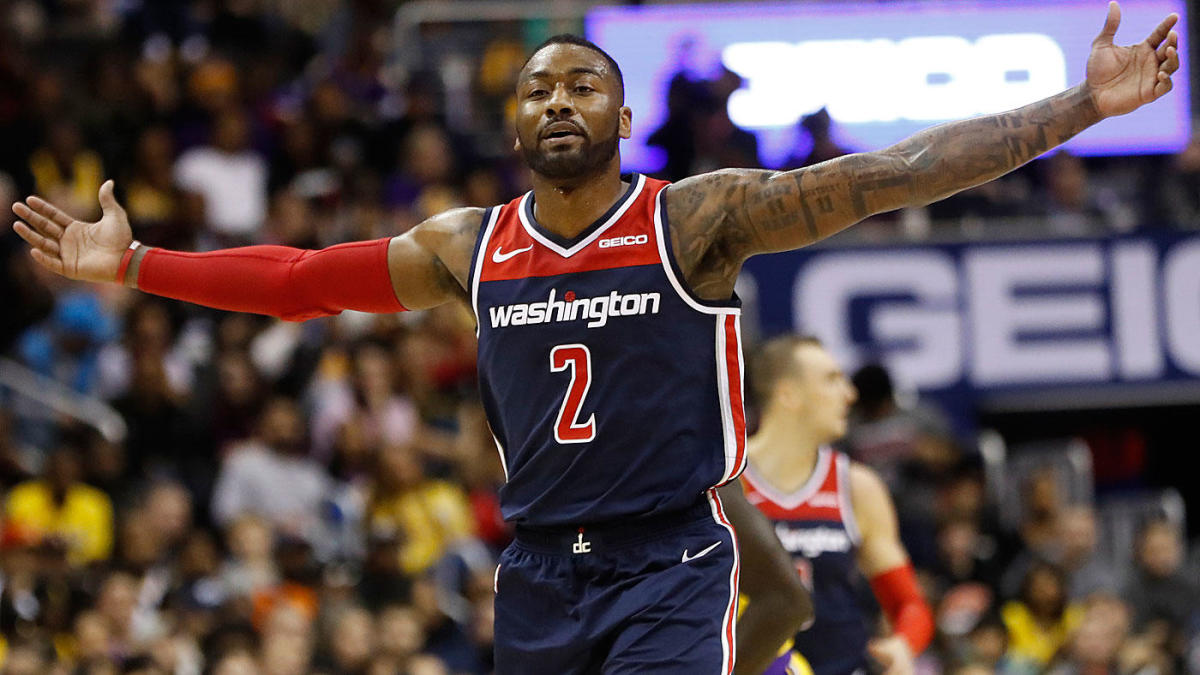
The Washington Wizards traded longtime franchise star John Wall and a protected 2023 first-round pick to the Houston Rockets for former MVP Russell Westbrook. Wall, once thought to be untradeable due to his contract ($42.8 million annual average) and his recent injury history (Dec. 26, 2018 was the last time he played in an NBA game), will now team up with James Harden in Houston.
The Wizards now bring in a point guard with a similar salary ($41.3 annual value) and a higher floor, but trending downwards in terms of production. The framework for this deal was floating around the league circles a few weeks ago, then died down. GM Tommy Sheppard even dismissed the notion that Wall was going anywhere. But here we are.
My initial reaction was shock and dismay. I saw the Woj bomb on Twitter, and “Marvin’s Room” by Drake started to play in my mind. Wall has been such a major part of my life as a Wizards fan.
In fact, only Udonis Haslem and Steph Curry had been with their respective teams longer than Wall prior to this trade (among active players). I was waiting two years to see him make a return, and right before the season begins, he’s shipped off to Houston.
I was anticipating him teaming back up with Bradley Beal and proving all the doubters wrong. Were they going to contend for an NBA title? Of course not, but I was hoping to see Wall prove he could still play at a high level and help push this team in the right direction. I thought we were saddled with his contract until 2023, so I was in it for the long haul.
Now Westbrook, who is two years older than Wall, will be partnered with Beal in an All-Star backcourt. Westbrook is coming off a rough performance in the 2020 NBA bubble and a tumultuous partnership with Harden, leaving many (myself included) in doubt of how well he can fit in with Beal in Washington.
Speaking of Beal, this much has to be clear: There is no way Sheppard made this trade without making sure Beal was at least open to the idea. Beal had been looking forward to getting back on the court with Wall this season, but other teams’ fanbases have been chomping at the bit waiting for Beal to announce a trade demand. If the Wizards are truly intent on not trading Beal away, then he had to have been ok with it.
(Quick sidebar to Lakers fans: A trade package headlined by Kyle Kuzma and a first-round pick will not get you Beal. You have nothing to send here. Please move on.)
If Sheppard wants to blow things up and trade Beal, fine, but you don’t pull a move like this behind his back to make him unhappy, demand a trade and lower your leverage.
Now to look at the key changes brought on by the trade itself, which from a distance, does not seem significant. Westbrook and Wall have pretty similar play styles, as both rely on explosive speed to get to the rim and aren’t terrific shooters. That said, Wall is less ball-dominant, and Westbrook is a better rebounder.
Westbrook is older, and it doesn’t appear his game is going to age well, so there’s risk in taking him on, but Wall poses the much bigger risk for Houston. After two years off, Wall could return close to original form, (I am as optimistic as anyone about that), but the reality is that is far from certain. Players around the league have said he looks really good, which I hope is the case, but physically, Westbrook will have the fewest question marks.
Now how will Westbrook and Beal mesh in DC? It’s clear that Beal will be the top dog, which is a role Wall seemed unwilling to relinquish upon his return. Westbrook was willing to come in behind Harden in Houston, so one would assume he’s fine with doing the same in Washington. This is Beal’s team, and he knows it.
Westbrook played incredibly under coach Scott Brooks in Oklahoma City, and their relationship is reportedly still very close, so if there’s any coach best prepared to fit Westbrook into a system, it’s Brooks.
Given the shooting ability from Beal and Dāvis Bertāns, Westbrook will have two premier three-point shooting options to distribute the ball to on offense, and hopefully his relentless motor will boost the team defensively.
If he can overcome his bubble performance, and return to the level of play in which he set career-highs in numerous offensive categories, the Wizards will have a higher floor entering the season, but what about the ceiling? Does it really change?
We can argue all day about whether swapping out Wall for Westbrook will improve or worsen the team, but it doesn’t really alter the team’s trajectory too much at the end of the day. When both are healthy, they have each proven they can lead non-contending teams to above-.500 seasons and make the playoffs.
The East has a lot of talented teams, though. Already, the Milwaukee Bucks, Miami Heat, Brooklyn Nets, Boston Celtics, Toronto Raptors and Philadelphia 76ers will be better than the Wizards (in no particular order), meaning the Wizards will have to contend with Indiana, Orlando and possibly Atlanta and Charlotte for the bottom-two seeds in the conference.
I think this would be the case if Wall were still on the team, so at the end of the day, this won’t change the outcome of the Wizards’ season, unless Westbrook’s fit is dramatically better or worse than expected.
A big reason why this deal was pulled off is because of how similar their contracts are. As mentioned, the average annual value of their contracts are practically the same, and both have player options for 2022-23. Given how much money they’re each scheduled to make that last season compared to how much a team would give them on the open market, chances are both will sign their player options, meaning both will be free agents in 2023.
Westbrook will be 36 by the end of the 2022-23 season, so the back end of his deal could really hamper the Wizards’ progress, especially with Rui Hachimura and Deni Avdija developing and requiring extensions around that point. Not everyone can be paid, so this could cause multiple headaches down the road.
No matter how this will turn out, it’s a hard pill to swallow knowing that watching Wall leave the court nearly two years ago would end up being the last time he wore a Wizards uniform.
Wall started as a rookie doing the Dougie during pregame introductions with an entire song about him that had elementary schoolers all over the DC area (myself included) flexing and rotating their fist back and forth. He leaves DC as a former All-NBA, five-time All-Star point guard that led the franchise on multiple playoff pushes, just barely missing out on the Eastern Conference Finals back in 2017.
He defines the post-Gilbert Arenas resurgence era, and his presence in helping out the Washington community will be sorely missed. This team never reached the heights of the greatest teams in the league, and the Wizards are not a prominent team in NBA circles, but Wall meant a lot to this city.
He had an incredible impact on the franchise, and he deserves an ovation the next time he returns to Capital One Arena — even if the ovation is virtual.
Cover Photo Credit: CBS Sports
 The Wildcard